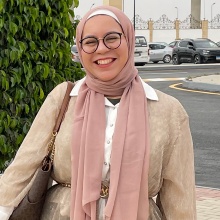
Nadeen Fathallah is a researcher at the University of Stuttgart, affiliated with the Analytic Computing group at KI. Her work spans AI applications for accessibility, computer vision, and knowledge engineering. Research Focus: Web accessibility, ontology learning, and LLM-based solutions for Deaf/Hard of Hearing communities Projects: Key contributor to the IKILeUS project (Integrated AI in Teaching) at the University of Stuttgart Teaching: Has served as teaching assistant and assistant lecturer at German International University, German University in Cairo, and The Knowledge Hub Her research explores: Automated detection/correction of web accessibility violations (e.g., AccessGuru platform) Improving video captions using large language models Accessibility tools for tabular data (EchoTables) Ontology learning pipelines (NeOn-GPT, LLMs4Life) Recent work shows a focus on combining LLMs with domain-specific challenges across multiple fields, particularly emphasizing inclusive design principles. Contact details: Office at Universitätsstraße 32, Stuttgart, Germany (Room: 2.312b). Available via +49 711 685 88130.
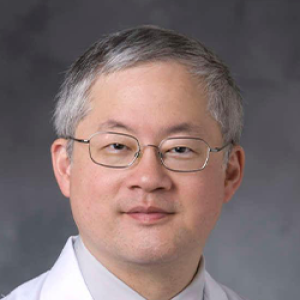
James E Tcheng, MD holds dual professorships at Duke University School of Medicine: Professor of Medicine and Professor of Family Medicine and Community Health (Informatics). Additionally, he serves as Associate Dean for Appointments, Promotion & Tenure (APT), overseeing faculty career progression. His clinical expertise centers on general and interventional cardiology, managing complex cardiovascular conditions including coronary artery disease and acute myocardial infarction. Dr. Tcheng's interdisciplinary research integrates clinical medicine with informatics: Cardiovascular Pharmacology : Expertise in antithrombotic and antiplatelet therapies for acute coronary syndromes Biomedical Informatics : Specialization in data standards, terminologies, and interoperability for clinical data capture Implementation Science : Focus on integrating clinical workflows with information technologies Healthcare Analytics : Application of data analytics to quality assurance and performance improvement In his administrative role, Dr. Tcheng champions transparent, equitable, and inclusive processes for faculty appointments, promotions, and tenure decisions, ensuring evaluation criteria reflect diverse academic contributions across the School of Medicine.
Professor Tamir Tuller is a Full Professor in the Department of Biomedical Engineering at Tel Aviv University's Faculty of Engineering, where he leads the Laboratory of Computational Systems and Synthetic Biology. He also maintains affiliations with the Edmond J. Safra Center for Bioinformatics. His research spans computational biology, bioinformatics, and systems biology with a focus on developing mathematical models of gene expression and biological systems. Prof. Tuller's research interests include computational modeling of gene expression, engineering of gene expression systems, deciphering the gene expression code, evolutionary systems biology, computational study of molecular evolution, and gene expression in diseases. His work particularly focuses on developing computational predictive models to mathematically analyze and simulate gene translation processes, devising approaches for engineering gene expression for biotechnological objectives, and analyzing large-scale genomic data to understand how gene expression is encoded in transcripts. Analysis of his 15 most recent publications reveals a strong trend toward computational approaches for understanding and engineering biological systems. His work integrates mathematical modeling, machine learning, and large-scale genomic analysis to address challenges in virology, cancer research, synthetic biology, and genome editing. Key themes include the relationship between RNA structure and viral pathogenesis, computational prediction of CRISPR efficiency, AI-driven analysis of evolutionary patterns in codon usage, and the development of novel tools for gene expression modeling. Prof. Tuller leads an active research laboratory focused on computational systems and synthetic biology. His team develops comprehensive computational models to study intracellular processes, particularly mRNA translation dynamics, and applies these models to problems in biotechnology, medicine, and agriculture. The lab's work bridges theoretical computational approaches with experimental validation, as evidenced by numerous publications demonstrating practical applications of their computational models. His research has significant implications for vaccine development (particularly for viruses like Zika and Hepatitis C), cancer diagnostics and treatment, synthetic biology applications, and improving genome editing technologies. The lab's EXPosition tool for CRISPR-Cas9 sgRNA evaluation represents a practical application of their computational models that has potential to enhance genome editing projects across multiple fields.
Alexandra Mestivier is a Lecturer in English linguistics at the Faculty of Arts and Languages (UFR EILA) of Paris Cité University, where she has been a member of the CLILLAC-ARP research team since 2009. She co-leads the cross-disciplinary axis on 'Corpus linguistics: variation, norms, textual genres' and the LSCT Master’s program (Translation, Interpretation, Specialized Languages, Corpus, Translation Studies course). Current projects: ANR MaTOS (Machine Translation for Open Science), OCTAVES (Tool for Collecting Learner Translations for Scientific Exploration), CarDiBioMed (Corpus-based Diachronic Analysis in Biomedical Translation). Her research focuses on: Corpus linguistics applied to terminology and translation Development of corpus compilation/query tools for translators Phraseological analysis in specialized translation Documentary research and framed memoirs As co-head of the LSCT Master’s program, she supervises theses in areas including: Medical and biomedical translation Political discourse analysis Automatic translation error evaluation Autism spectrum disorder research Environmental health studies Her lab affiliations include: CLILLAC-ARP (Centre de Linguistique Interlangues, de Lexicologie et d'Analyse Automatique - Approches en Recherche en Traduction)
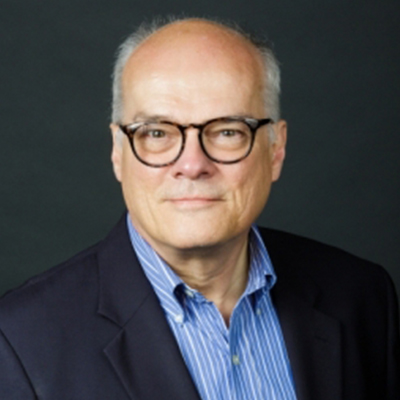
Hercules Dalianis is a Professor at the Department of Computer and Systems Sciences, Stockholm University. His research focuses on Natural Language Processing, particularly in clinical text mining for Swedish language data. He leads the Natural Language Processing Research Group and serves as director of the Health Bank - Swedish Health Record Research Bank infrastructure. MSc in Electrical Engineering (1984), KTH PhD in Technology (1996), KTH Professor of Computer and Systems Science (2011), Stockholm University His research addresses privacy-preserving NLP for clinical text analysis, including automated de-identification , domain adaptation of BERT models , and clinical entity recognition . Current projects like DataLEASH and Privacy-Preserving Techniques explore machine learning solutions that balance data utility with patient confidentiality. Key publication trends show emphasis on Swedish clinical text processing , ICD-10 coding automation , and privacy-aware language modeling . Collaborations span Karolinska University Hospital, Nordic healthcare institutions, and international AI research communities. He teaches courses in Internet Search Techniques and Business Intelligence (ISBI) , Natural Language Processing (NLP) , and Principles and Foundations of Artificial Intelligence (PFAI) . His work has produced the open-access textbook Clinical Text Mining: Secondary Use of Electronic Patient Records , establishing foundational frameworks for clinical NLP in low-resource languages.
Laura Sasu is a Lecturer at the Department of Theoretical and Applied Linguistics, Faculty of Letters, Universitatea Transilvania din Brașov (UNITBV). Her academic work spans interdisciplinary research in biomaterials, biomedical engineering, and robotics, with a primary focus on translation studies, terminology, and contrastive analysis. Research Interests: Translation Studies Terminology Contrastive Analysis Article Trends (2025–2019): Laura's publications cover biomaterials for implants, electrochemical detection methods, robotic systems, and environmental/health studies. Notable subfields include drug delivery systems, bioglass composites, noise pollution, and sustainable energy solutions.
Tamara Varela Vila is an Assistant Professor at the University of Vigo , affiliated with the Faculty of Philology and Translation and the Department of Translation and Linguistics . She is associated with the GALMA (Galician Observatory for Media Accessibility) research group and based on the Vigo campus. Education: Doctorate from University of Vigo (2015) with thesis: "Ontologies and Biomedical Translation: Creation of a Terminological Knowledge Base on Inborn Errors of Metabolism in French and Spanish" Research Interests: Biomedical translation Ontologies and terminology Media accessibility Cross-linguistic knowledge bases Translation technologies Galician language studies Her work focuses on integrating ontological frameworks into specialized translation practices, particularly for medical domains. She collaborates with the GALMA research group to advance accessibility in media through translation strategies.
Nicolas HIOT is a Post-doctoral fellow at the University of Orleans affiliated with the LIFO laboratory (Laboratoire d'Informatique Fondamentale d'Orléans) and the Pamda project. His research bridges database systems, natural language processing, and medical informatics with a focus on text-to-database integration and consistency maintenance. His research interests center on: Database Systems for medical applications with emphasis on consistency and evolution Natural Language Processing for clinical text analysis and relation extraction Knowledge Graph construction from unstructured textual data Medical Informatics applications for healthcare data management Analysis of his 15 most recent publications (2020-2024) reveals a cohesive research trajectory at the intersection of databases and NLP. Key thematic clusters include automated medical database construction from clinical texts, consistency management in evolving RDF/property graph systems, and clinical entity/relation extraction for knowledge graphs. His work consistently addresses real-world challenges in healthcare data integration through tools like DataFix and ArchiTXT, demonstrating strong translational potential. Nicolas HIOT actively contributes to the LIFO research laboratory at the University of Orleans, collaborating extensively with Jacques CHABIN, Mirian HALFELD-FERRARI, and Dominique LAURENT. His technical output includes multiple software systems for database evolution management and clinical text processing, reflecting both theoretical contributions and practical implementations in semantic data management.
John Holmes serves as Professor of Medical Informatics in the Department of Biostatistics and Epidemiology, Director of the Master's Degree Program in Biomedical Informatics, and Associate Director for Medical Informatics at the Institute for Biomedical Informatics, demonstrating leadership in academic and administrative roles within biomedical informatics. His research spans clinical decision support, clinical systems, clinical epidemiology, computer science, data mining, and machine learning, with emphasis on developing computational methodologies to enhance healthcare delivery through advanced data analysis and system integration. Current work focuses on translating machine learning innovations into practical clinical applications across diverse medical domains. Analysis of his 2023-2025 publications reveals dominant themes in concussion perception in youth sports, AI-driven medical imaging analysis, cardiovascular monitoring in chronic disease, and pulmonary hypertension treatment evaluation, consistently leveraging multi-center electronic health record data and collaborative research frameworks. Dr. Holmes has earned significant recognition through prestigious fellowships: Fellow of the American College of Epidemiology (FACE) Fellow of the American College of Medical Informatics (FACMI) Fellow of the International Academy of Health Sciences Informatics (FIAHSI) No information regarding student advising or grant funding was provided in the source material, though his editorial leadership is evident through publications like the President's Statement (2024) and special journal sections.
Danielle Mowery is an Assistant Professor at the Department of Biostatistics, Epidemiology, and Informatics at the University of Pennsylvania and serves as the Chief Research Information Officer (CRIO) at Penn Medicine. She also directs the IBI Clinical Research Informatics Core, focusing on leveraging technology to enhance clinical research infrastructure. Her research interests span natural language processing , knowledge representation , patient phenotyping , clinical research services , clinical/translational informatics , and learning health systems . These areas center on improving disease understanding, treatment efficacy analysis, and patient outcomes through computational methods. Recent publications highlight her work in large language models for clinical text analysis , multinational cohort studies for COVID-19 and long-term outcomes , and machine learning applications in dermatology and mental health . Her research emphasizes health equity , data harmonization , and automated health systems . FAMIA (Fellow of the American Medical Informatics Association)
Dr. Katerina Zdravkova is a Professor at the Institute of Informatics within the Faculty of Natural Sciences and Mathematics at Ss. Cyril and Methodius University in Skopje. With a Ph.D. in Computer Science and extensive international experience, she has held academic roles since 1989 and authored 4 international journal papers, 2 domestic papers, and 34 conference proceedings. Her work spans e-learning , machine translation , and software engineering , with a focus on Macedonian language technologies. Education : B.Sc. in Mathematics and Informatics (1983), M.Sc. in Computer Engineering (1988), Ph.D. in Artificial Intelligence (1993). Teaching : Delivered 15 undergraduate and graduate courses in informatics, computational linguistics, and software engineering. Research Interests include neural networks for language processing, computational linguistics for Macedonian morphology, and educational technology for cross-border course development. She pioneered machine translation systems and language resource annotation , integrating Web 2.0 into ethics education. Scientific Awards : Special IEEE Award for Exceptional Contribution Projects coordinated include UNESCO IITE initiatives, DAAD collaborations, Tempus curricula, and NATO research on trust management systems. She serves as a reviewer for international ministries and journals and as a program committee member in four conferences.
Steven Lierman is a Full Professor at KU Leuven's Faculty of Medicine, affiliated with the Department of Public Health and Primary Care and the Leuven Institute for Health Care Policy. He heads the Law, Healthcare Policy unit and is a member of iSi Health - KU Leuven Institute for Physics-based Modeling for In Silico Health. His institutional roles include membership in the Faculty Council of Medicine, Departmental Council for Public Health and Primary Care, and disciplinary committees. Lierman's research focuses on the intersection of healthcare, administrative law, and policy. Key areas include: Legal frameworks for healthcare quality and decision-making Administrative law in multi-layered governance systems Ethical-legal dimensions of biomedical research Public-private law interfaces in health policy His publications demonstrate consistent focus on healthcare jurisprudence, administrative remedies, and cross-border medical ethics. Recent works emphasize adolescent medical consent, end-of-life legislation, and comparative analyses of Belgian-Dutch legal systems, reflecting his expertise in translating legal theory into healthcare practice. Lierman leads multiple research initiatives including projects on whistleblower protection (2025-2029), healthy food environments (2024-2028), and quality healthcare frameworks in hospitals (2023-2027). During his 2023 sabbatical, he developed an administrative law textbook and conducted research collaborations at VU Amsterdam and Leiden University to strengthen public-private law dialogue. He teaches courses including Medical Law, Administrative Law, Health Law Seminars, and Ethics in Biomedical Research across multiple programs including Medicine, Law, and Clinical Psychology.
Swathi Kiran is a Professor at Boston University specializing in Language Processing and Recovery . Her career focuses on bilingual aphasia, aphasia rehabilitation, and functional neuroimaging, with a particular emphasis on language recovery mechanisms and impairments in naming, reading, and writing. Ph.D. in Speech Language Pathology, Northwestern University (2001) M.A. in Speech Language Pathology, Northwestern University (1998) B.Sc. in Speech Pathology/Audiology, All India Institute of Speech & Hearing (1995) Her research integrates neuroimaging , machine learning , and language therapy to address poststroke aphasia rehabilitation. Key themes include cross-language treatment effects , neuroplasticity , and signal quality optimization in fNIRS . She has pioneered the use of digital therapeutics like Constant Therapy and advanced lesion analysis techniques for predicting recovery trajectories. Recent work demonstrates her leadership in multimodal data fusion for aphasia severity prediction, computational modeling of treatment response, and cross-cultural assessment of language impairments. Her studies span Mandarin-English bilinguals, trilingual recovery patterns, and age-related cortical activity differences.
Dr. Jihad Sami Obeid is a Professor and SmartState Endowed Chair in Biomedical Informatics in the Department of Public Health Sciences at the Medical University of South Carolina (MUSC) College of Medicine. He serves as the Associate Director of the Biomedical Informatics Center (BMIC) and Director of the Social Determinants of Health Shared Resource (SHARE). A pediatrician by clinical training, Dr. Obeid completed formal training in Medical Informatics at the Division of Health Sciences and Technology, a joint Harvard-MIT fellowship program. Dr. Obeid's research focuses on artificial intelligence applications in healthcare, with particular emphasis on clinical text mining, deep learning, and large language models applied to electronic health record data. His work spans multiple domains including e-phenotyping, predictive modeling, natural language processing, social determinants of health, and electronic consent systems. He has developed innovative approaches for identifying patients with specific conditions like cirrhosis, suicidal behavior, and opioid overdose through analysis of clinical notes and structured EHR data. His publication record demonstrates consistent contributions to biomedical informatics, with recent work emphasizing AI applications for clinical decision support, public health surveillance (particularly regarding the opioid epidemic), and enhancing research data infrastructure. His research shows a clear trajectory toward increasingly sophisticated AI methodologies applied to complex healthcare problems, with a growing emphasis on explainable AI and practical clinical implementation. Fellow of the American Medical Informatics Association (FAMIA) SmartState Endowed Chair in Biomedical Informatics As an educator, Dr. Obeid founded and directs two key courses in Biomedical Informatics (MCR-746: Informatics and Data Management for Clinical Research and BDSI-712: Translational Informatics) and co-founded the AI Hub at MUSC. His leadership extends to operational informatics initiatives including the EHR Research Data Warehouse, REDCap implementation, and Profiles research networking system. He has served as principal investigator, co-investigator, and informatics leader on numerous federally funded projects and has led national working groups related to translational research informatics.
Lubdha M. Shah, MD, is a Professor in the Radiology & Imaging Sciences department at the University of Utah , with an Adjunct Associate Professor appointment in Neurosurgery . She serves as the Director of Spine Imaging and specializes in Neuroradiology and Neurointerventional Radiology . Her research focuses on advanced MRI techniques for spinal and neurological conditions, including functional MRI , diffusion tensor imaging , and MR spectroscopy . Recent work highlights disparities in imaging access, MR-guided focused ultrasound applications, and AI-generated editorial detection in radiology journals. Education: MD from University of Louisville; B.A. in Biology from Cornell University. Training: Residency in Diagnostic Radiology (Case Western Reserve), Fellowship in Neuroradiology (University of Utah), Chief Medical Residency (Duke University). Clinical Expertise: Neurointerventional spinal procedures (e.g., epidural steroid injections ), imaging of spinal tumors , degenerative diseases , and trauma . Board-certified in Diagnostic Radiology and Neuroradiology (American Board of Radiology).