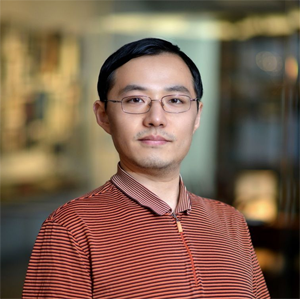
Dr. Jiamin Li is an Associate Professor at the School of Microelectronics, Southern University of Science and Technology (SUSTech), Shenzhen, China. She holds a Ph.D. and B.Eng. in Electrical and Computer Engineering from the National University of Singapore (NUS). Her research focuses on biomedical integrated circuits, energy harvesting, and wireless body-area networks. Education: Ph.D. and B.Eng. in Electrical and Computer Engineering from NUS Employment: Associate Professor (2024–Present), Assistant Professor (2022–2024) at SUSTech; Research Fellow at NUS Dr. Li's research addresses wireless body area powering , low-power biosignal interfaces , and intelligent biosignal processors . Her work leverages microsystem design for applications in biomedical engineering , particularly in energy-autonomous medical devices and human body-coupled communication . Her recent publications highlight advancements in concurrent power/data transmission , subharmonic pulse injection , and triboelectric energy harvesting for biomedical systems. Key venues include IEEE JSSC , Nature Electronics , and conferences like ISSCC and BioCAS. Awards: IEEE SSCS Predoctoral Achievement Award, ISSCC Best Demo Award, ASSCC SDC Best Design Award Committees: IEEE SSCS Women-in-Circuit (WiC) Committee, ISSCC Student Research Preview Committee Opportunities: Positions available for Ph.D., Master's, Postdoctoral Fellows, and Visiting Scholars
Dr. Yi-Feng Chen is a Research Assistant Professor and Master's Supervisor in the Department of Biomedical Engineering at the Southern University of Science and Technology (SUSTech) in Shenzhen, China. He joined SUSTech as a postdoctoral fellow in November 2020 and was promoted to Research Assistant Professor in February 2023. His academic journey includes interdisciplinary training across engineering, neuroscience, and biomedical applications. Dr. Chen's educational background includes: Ph.D. in Engineering from Wuhan University of Technology (2014-2017), supervised by Professor Quan Liu M.Sc. from Wuhan University of Technology (2011-2014), supervised by Professor Zhou Zude B.Sc. from Wuhan University of Technology (2007-2011) He also participated in exchange programs at Yuan Ze University in Taiwan (2012) and the University of Auckland in New Zealand (2015). Dr. Chen's research spans the intersection of biomedical engineering, neuroscience, and artificial intelligence, with particular focus on brain-computer interfaces and rehabilitation technologies. His work combines advanced signal processing techniques with clinical applications, especially in decoding neural signals for movement intention and monitoring brain states during anesthesia. His research has significant implications for neurorehabilitation, assistive technologies, and intraoperative neurophysiological monitoring. His recent publications demonstrate a clear trajectory toward increasingly sophisticated neural decoding techniques, with a focus on coordinated limb movements and practical rehabilitation applications. The work shows progression from basic EEG signal processing to complex bimanual movement decoding and robot-assisted rehabilitation systems, reflecting a translational research approach from basic science to clinical applications. Dr. Chen has secured significant research funding as principal investigator and core contributor on multiple projects: National Natural Science Foundation of China Youth Science Fund Project (2024-2026) Guangdong Natural Science Foundation General Project (2024-2026) Ministry of Science and Technology National Key R&D Program Project (2023-2026) Shenzhen Science and Technology Innovation Commission Key Project (2022-2025) As a Master's Supervisor, Dr. Chen mentors graduate students in biomedical engineering with focus on neural engineering and rehabilitation robotics. His laboratory collaborates closely with clinical partners to ensure research relevance to real-world medical challenges, particularly in neurorehabilitation and intraoperative monitoring.
Chao Liu is an Associate Professor at the Department of Biomedical Engineering , Southern University of Science and Technology (2024.11–present). Previously, he served as an Assistant Professor at the same institution (2019–2024.11) and completed a Postdoctoral Fellowship at New York University (2016–2019) with joint appointments in the Department of Biomedical Engineering and Orthopedics at NYU Langone Health . He holds a PhD in Biomedical Engineering (2016) and MASc in Mechanical Engineering (2010) from University of Toronto , following a BASc in Engineering Science (2008). Education : PhD (IBBME, U of Toronto, 2016), MASc (Mechanical Engineering, U of Toronto, 2010), BASc (Engineering Science, U of Toronto, 2008) His research focuses on mechanobiology of stem cells , bone tissue engineering , and functional implants . He investigates how mechanical forces modulate osteogenic and angiogenic stem cells, designs implants with micro-geometry to enhance cellular activity, and develops 3D real-time imaging modalities for bone repair processes. His work spans biomechanics , regenerative medicine , and cellular mechanotransduction . The selected publications from 2022 to 2010 reveal trends in mechanical force applications for bone regeneration, pharmacological impairments in healing, nanostructured biomaterials for stem cell differentiation, and microfluidic platforms for osteocyte studies. These works are published in journals like Bone , FASEB Journal , and ACS Applied Materials & Interfaces . Scientific Awards : International Conference BME Young Investigator Award (2019), IFMRS Travel Grant (2017), ASBMR Young Investigator Grant (2016), CIHR Travel Awards (2010–2014), Ontario Graduate Scholarship (2011–2013), Barbara and Frank Milligan Fellowship (2008, 2010) Chao Liu mentors graduate students, including Zhang Jianing (2022 Master’s graduate). His lab ( https://abtrl.bme.sustech.edu.cn/ ) recruits postdocs and research assistants for projects in mechanical force applications , micro-geometric implants , and 3D imaging . He has contributed to 14 journal articles with 714 citations and presented at 6 international conferences in the past three years.
Dr. Bai Ziqian is an Assistant Professor in the School of Automation and Intelligent Manufacturing at Southern University of Science and Technology (SUSTech) in Shenzhen, China. Recognized as a Pujiang Scholar and Shenzhen Pengcheng Peacock Talent, she has established herself as a leading researcher at the intersection of wearable technology, textile engineering, and human-computer interaction. Her work bridges technical innovation with practical design applications, focusing on user-centered solutions that enhance human experience through technology integration. Dr. Bai's educational background includes: PhD in Smart Wearable Product Design (2011-2015), Hong Kong Polytechnic University MA in Fashion and Textile Design (2005-2006), Hong Kong Polytechnic University BA in Fashion Design and Engineering (2001-2005), South China Agricultural University Her research spans wearable technology, tangible interactive interfaces, IoTs, ergonomics, functional garments, wearables for healthcare, material innovation, smart home applications, and user-centered design. Dr. Bai has pioneered work in smart wearable fabrics and sensing mechanisms based on flexible materials, with a particular focus on human-computer interaction theory and practice. She has established a research team that has mastered key technologies in smart fabrics, interactive textiles, physiological signal monitoring, and human-computer interaction systems. Her approach consistently emphasizes user-centered design principles, ensuring that technological innovations serve practical human needs while maintaining aesthetic appeal. Dr. Bai's publication record demonstrates a clear evolution from foundational work in photonic textiles toward increasingly sophisticated wearable healthcare and human-computer interaction systems. Her recent publications focus on advanced sensor technologies, energy harvesting for wearables, and sophisticated data analysis for human motion and physiological monitoring. The interdisciplinary nature of her work is evident in publications spanning materials science, biomedical engineering, textile technology, and design methodology, with papers appearing in high-impact journals including Advanced Functional Materials (IF: 19.5), ACS Sensors (IF: 8.9), and Computers in Industry (IF: 10). Dr. Bai has received numerous prestigious awards that highlight both the technical and artistic dimensions of her work: 2024 German Red Dot Design Award for Best Design 2013 Neo-Neon, permanent collection at China Silk Museum (State grade 1 museum) 2019 Finalist, ThermoBlanket, TechStyle for Social Good International Competition 2017 1st Prize Teaching Award, Donghua University 2017 China National Textile and Apparel Council Teaching Award Multiple Service Learning Awards from Hong Kong Polytechnic University She has successfully secured research funding from prestigious sources including the National Natural Science Foundation of China and Guangdong Province's General Project. Her projects include a collaborative effort with the Guangdong Provincial Department of Education and Li Ning Company on a 'flexible wearable lower limb functional electrical stimulation system.' Dr. Bai has extensive teaching experience across multiple institutions and has guided student teams to success in national competitions. She currently leads the Human-Computer Interaction Design Laboratory (HCID) at SUSTech, which focuses on advanced design, engineering, and technology research at the intersection of disciplines, training the next generation of interdisciplinary designers and engineers.
Li Yi is a Tenured Associate Professor at the School of Microelectronics, Southern University of Science and Technology (SUSTech) , with expertise in nanoplasmonics, nano-optics, and biochips. His career spans institutions including KU Leuven, Imperial College London, and Ludwig-Maximilians-Universität München. Education: Ph.D. (2015, KU Leuven & IMEC), M.S. (2010) and B.S. (2007) in Biomedical Engineering from Zhejiang University. Career: Associate Professor (2021–present) and Assistant Professor (2019–2020) at SUSTech; LMU Research Fellow (2018–2019); Research Associate (2015–2018) at Imperial College London. Research Interests focus on single-molecule biochips, DNA data storage, and nanopore sequencing. His work bridges nanotechnology with biomedical applications, including: Integrated circuit-compatible optical/electrical devices Computational lithography and nanoscale imaging Neural network training for biosensing Publications include >60 peer-reviewed articles with 25 H-index. His recent work emphasizes DNA-based data encryption, nanopore engineering, and portable biosensing systems. Key journals: Nature Communications, Nano Letters, ACS Nano. Scientific Awards : LMU Research Fellowship (Marie Curie COFUND) imec Excellent Scientific Award Shenzhen 'Peacock Plan' Category B Talent Outstanding Poster Award at Surface Plasmon Photonics 2017 Participation in Lindau Nobel Laureates Meeting (2019) Grants include Ministry of Science and Technology Key R&D Youth Program, NSFC General Program, and Guangdong Provincial Key Program. His lab develops: Fluidic nanopores for single-molecule sensing Optical antennas for enhanced detection Training programs in biochip design and nano-optics
Fei Chen is a Professor in the Department of Electronic and Electrical Engineering at Southern University of Science and Technology (SUSTech). With a PhD in Biomedical Engineering from The Chinese University of Hong Kong (2005), he has held academic positions including Associate Professor at SUSTech (2014-2020) and Research Assistant Professor at The University of Hong Kong (2012-2014). Education : PhD (Biomedical Engineering, CUHK), MPhil (Biomedical Engineering, Nanjing University), BSc (Microwave Physics, Nanjing University) His research focuses on speech perception , biomedical signal processing , and brain-computer interfaces , with applications in hearing assistance and neural engineering. His recent publications explore cortical auditory responses, frequency-compressed speech, and noise-robust intelligibility metrics. Dr. Chen is a Senior Member of IEEE , Full Member of the Acoustical Society of America , and recipient of the 2011 National Organization for Hearing Research Foundation Research Award (USA) and the 2015 Best Presentation Award at the Asia Pacific Conference of Speech, Language and Hearing.
Dr. Huan Hu is an Assistant Professor at the School of Microelectronics, Southern University of Science and Technology (SUSTech), Shenzhen, China. He holds a Ph.D. from Washington State University (2021) and has worked in industry at Skyworks Solutions and Biotronik/MSEI on low-power circuits for IoT and biomedical applications. Education: Ph.D., Washington State University, 2021 M.S., Oregon State University, 2015 B.S., University of Electronic Science and Technology of China, 2013 His research focuses on ultra-low power analog/mixed-signal integrated circuits for biomedical wearable/implantable devices and artificial intelligence of things, including applications in sensor interfaces, energy-efficient radios, and in-memory computing architectures. Recent publications highlight advancements in time-domain processing , biofuel cell integration , and injection-locked transmitters for IoT and biomedical applications, with awards including Shenzhen Overseas High-level Talent (2022) and IEEE RFIC Best Student Paper Award Nomination (2020). Scientific Awards: Shenzhen Overseas High-level Talent (Class C), 2022 RFIC Best Student Paper Award Nomination, 2020 Alaska Airline Travel Award, 2018 WSU Grand Challenges Fellowship, 2016-2017 OSU Laurels Scholarship, 2014-2015 He seeks motivated researchers for Research Assistant Professor , Postdoctoral Fellow , and Graduate Student positions in his group. Visit his lab page for details.
Xiaotian Liu is a Research Associate Professor in the Department of Neurobiology at Southern University of Science and Technology (SUSTech) , where he joined in September 2020. He is affiliated with School of Life Sciences and works within the research group of Academician Mingjie Zhang . His academic background includes a Ph.D. in Bioengineering from HKUST (2015-2019) and a B.Sc. in Biotechnology from USTC (2003-2008). His research focuses broadly on Structural and functional study of protein machinery , Molecular mechanism of biomolecular self-assembly , and Decoding and programming biological condensation formation . His work bridges structural biology, biochemical engineering, and biomaterials science, with a particular emphasis on protein structure-function relationships and their applications in biomedical and nanotechnological contexts. Across his publications from 2010 to 2023, Liu has contributed to understanding protein condensates, developing advanced bioimaging techniques, and engineering protein hydrogels for regenerative medicine. His recent work in Nature and Nature Methods highlights his leadership in fungal enzyme structural analysis and AI-driven microscopy. Hong Kong Technology Talent Scheme Postdoctoral Hub for ITF (2020) Chan Tak Kei & Wong Kwai Ying Bioengineering Student Research Award (2019) HKJEBN Scholarship for Talents (2016-2019) Xiaotian Liu is an active researcher within the Mingjie Zhang’s group , combining structural biology with materials science to address fundamental questions in cellular organization and biomedical engineering.
Weipeng Chen serves as an Assistant Professor in the Department of Biomedical Engineering at SUSTech's College of Engineering since July 2024, pioneering research in soft matter for smart ion transport systems targeting bioinspired energy conversion and neural signal transduction applications. His academic credentials include: Ph.D. from University of Chinese Academy of Sciences/Technical Institute of Physics and Chemistry, Chinese Academy of Sciences (2018-2021) Master's degree from Hainan University (2015-2018) Bachelor's degree from Hainan University (2011-2015) Chen's core research investigates dynamic micro-nano channels in soft matter to achieve ion gating through synergistic structural changes and interfacial energy barriers. This work enables breakthroughs in bioinspired salinity gradient energy harvesting and multi-stage neural signal transduction , establishing him at the materials science-biomedical engineering nexus with strong theoretical and applied dimensions. His publication trajectory reveals consistent innovation in hydrogel-based iontronic devices, with recent high-impact papers demonstrating sophisticated control over ion transport for osmotic energy conversion (2023-2024) and neural signal transmission (2023 Science paper). These works collectively advance nanofluidic principles toward practical bioelectronic and renewable energy applications. Research funding includes: Principal Investigator of a postdoctoral project Key technical contributor to two national key R&D projects in China While specific laboratory infrastructure isn't detailed, his work operates within SUSTech's Department of Biomedical Engineering ecosystem, likely involving interdisciplinary teams developing next-generation soft matter nanofluidic systems.
QIU Lei is a Professor at the Department of Electronic Science & Technology, TongJi University. His work focuses on analog and digital circuit design with applications in communication systems and biomedical engineering. Research Fields : High-Speed ADCs, Low Power Sensors, Signal Chain Processing, Cognitive Radio Courses Taught : Analog IC Analysis and Design (Undergraduate), Advanced IC Design (Graduate) QIU Lei’s research emphasizes high-speed and ultra-high-speed analog-to-digital converters (ADCs) using time- and frequency-interleaving architectures, low-power temperature sensors, and baseband processing systems. His publications highlight implementations in 65nm CMOS and SiGe BiCMOS technologies for applications like software-defined radio, PET imaging, and 5G mm-wave systems. Key trends in his work include digital calibration techniques for SAR ADCs, time skew compensation in time-interleaved systems, and energy-efficient circuit design for biomedical and radar applications. QIU Lei has supervised students in projects related to ADC architectures, cognitive radio receivers, and frequency synthesizers.
Sicong He is a Tenure-Track Assistant Professor at the School of Life Sciences, Southern University of Science and Technology (SUSTech), where he also holds a joint appointment with the Department of Biomedical Engineering. He received his B.Eng. in Optical Engineering from Zhejiang University in 2012 and his Ph.D. in Electronic and Computer Engineering from the Hong Kong University of Science and Technology in 2017. Following his doctoral studies, he completed a postdoctoral fellowship at the Hong Kong University of Science and Technology from 2017 to 2020 before joining SUSTech in December 2020. Dr. He's educational background includes: Ph.D., Electronic and Computer Engineering, Hong Kong University of Science and Technology (2012-2017) B.E., Optical Engineering, Zhejiang University (2008-2012) Dr. He's research focuses on the development of novel optical imaging techniques and their biological applications. His work spans three primary areas: adaptive-optics multiphoton fluorescence microscopy for high spatial-temporal resolution imaging, high resolution infrared laser-mediated gene induction microscopy for in vivo single-cell labeling and lineage tracing, and multimodal nonlinear optical microscopy integrating multiphoton fluorescence imaging, second/third harmonic generation, and stimulated Raman scattering. His research bridges optics, engineering, and life sciences, with applications in neuroscience, developmental biology, and hematology. He has developed imaging techniques that enable unprecedented visualization of biological processes at cellular and subcellular levels in living organisms. Analysis of Dr. He's publication record reveals a strong focus on advanced optical microscopy techniques applied to biological systems. His work demonstrates expertise in developing and applying adaptive optics, infrared laser-mediated techniques, and multimodal nonlinear optical imaging approaches. These techniques have been successfully applied to diverse biological questions spanning neuroscience (spinal cord imaging, brain imaging), developmental biology (lineage tracing in zebrafish), hematology (blood cell development), and metabolism (brown and beige fat studies). Dr. He has received several honors and awards including: Postgraduate Scholarship of Hong Kong University of Science and Technology (2012-2017) Top 100 Undergraduate Thesis Prize of Zhejiang University (2012) As a PhD supervisor at SUSTech, Dr. He mentors graduate students in interdisciplinary research at the intersection of optics, engineering, and life sciences. His laboratory likely focuses on developing next-generation optical imaging technologies while exploring their applications in various biological systems. He teaches undergraduate courses including Systems Biology (BIO304) and Signals and Systems (EE205), as well as the graduate course Advanced Techniques in Biomedical Imaging (BIO5038). Dr. He's laboratory is likely located in Room 410, Research Building 2 at SUSTech, where he continues to develop innovative optical imaging techniques and apply them to challenging biological questions.
Wang Baojun is a Qiushi Chair Professor and Doctoral Supervisor at Zhejiang University's School of Chemical Engineering and Bioengineering. He serves as Director of the Institute of Synthetic Biology at Zhejiang University Hangzhou Science and Technology Innovation Center and Vice President of the Institute of Biological and Molecular Intelligence. His research focuses on synthetic biology, gene circuit design, biosensing, and biomanufacturing. He holds a B.S. in Biomedical Engineering from Zhejiang University and a Ph.D. in Bioengineering from Imperial College London, followed by a tenure-track career as a Professor at the University of Edinburgh. Education: B.S., Zhejiang University; Ph.D., Imperial College London Key Positions: Director of Synthetic Biology Institute, Vice President of Biological/Molecular Intelligence Institute Research interests include synthetic biology tools (e.g., inteins, CRISPR), modular gene design, biosensing for health/environmental applications, and bio-manufacturing using cell-free systems. He has published over 30 papers as a senior author, including 8 in Nature-indexed journals, and secured funding from major agencies like the NSFC, UK Research & Innovation, and the Bill & Melinda Gates Foundation. Awards: Royal Society of Chemistry Fellowship, UK Leverhulme Trust Visiting Professorship His lab actively recruits researchers and students in synthetic and computational biology. He has advised numerous graduate students and leads interdisciplinary collaborations in biotechnology innovation. Labs: Zhejiang University Synthetic Biological Systems Design Laboratory (Wang Lab), 浙江-英国合成生物学与生物传感国际联合实验室
Heng Xu is an Associate Professor at the Institute of Theoretical and Interdisciplinary Physics within the School of Physics and Astronomy at Shanghai Jiao Tong University . His work bridges physics and biology to study living systems through quantitative methods. Education: Bachelor's in Physics (2003), Nanjing University PhD in Physics (2010), Brown University Dr. Xu's research focuses on transcriptional regulation in Drosophila melanogaster embryos, combining high-resolution fluorescence imaging , quantitative analysis , and stochastic modeling . His publications span biophysics, neurophysiology, and imaging technologies. Scientific Awards: Burroughs Wellcome Fund Career Award at the Scientific Interface (2014) Thousand Talents Program for Young Professionals (2017) Dr. Xu's lab develops optical tools for biological applications and investigates gene regulatory networks . He has contributed to single-cell analysis techniques and neuronal activity studies in model organisms.
Dr. Chuanfei Guo is a tenured Professor at the Southern University of Science and Technology (SUSTech) and serves as editor for Materials Today Physics and Soft Science . His research focuses on high-performance electronic skins , human-body flexible electronics , and unconventional micro-nano fabrication . Education : PhD in Materials Science (2011, National Center for Nanoscience and Technology) Appointments : Boston College (Postdoc, 2011-2012), University of Houston (Research Associate, 2013-2016), SUSTech (Associate Professor 2016-2021, Tenured Professor 2021-present) Research Themes : Development of ultra-sensitive electronic skins with cross-talk-free sensing and environmental stability Innovation in epidermal and implantable bioelectronics using conductive hydrogels Cost-effective biomimetic nanofabrication techniques for scalable microstructures Scientific Contributions include: Over 130 publications in top journals (Nature Materials, Nat. Commun., PNAS, etc.) 40+ patents (24 granted, including 4 US patents) Recipient of Beijing Natural Science Prize and Guangdong Distinguished Young Scholar Fund Leadership in Zhujiang Talent Program and SUSTech-MIT Joint Center projects
Dr. Fangyi Chen is an Associate Professor in the Department of Biomedical Engineering at Southern University of Science and Technology (SUSTech), where she has been faculty since 2012. She previously served as Executive Chair of the Department of Biomedical Engineering from 2016 to 2018. Her research focuses on auditory and vestibular physiology, with particular emphasis on developing innovative methods for evaluating hearing and balance function in model organisms. Dr. Chen received her academic training at prestigious institutions: BS in Biomedical Engineering from Tsinghua University (1997) MS in Biomedical Engineering from Tsinghua University (2000) PhD in Electrical Engineering from Boston University (2005) Postdoctoral training at Oregon Health and Science University (2005-2006) Dr. Chen's research program centers on auditory and vestibular physiology, with several major themes. She has pioneered the development of vestibular function testing systems for zebrafish and mice that use eye movements as primary parameters, enabling automated, quantitative, and precise evaluation of vestibular damage. Her work spans multiple disciplines including hearing physiology , vestibular function , inner ear hair cell development , mechanisms of vertigo and tinnitus , and animal behavior analysis . Her research instruments are used by institutions such as Stanford University, the University of Virginia, Creighton University, and Tsinghua University. Analysis of Dr. Chen's recent publications reveals a strong focus on translational research bridging basic science and clinical applications. Her work frequently employs zebrafish and mouse models to study hearing and balance disorders, with particular attention to hair cell development and regeneration , vestibular function assessment , and genetic models of hearing loss . Many of her publications appear in high-impact journals including Nature Neuroscience, Journal of Neuroscience, and Frontiers in Cellular Neuroscience, demonstrating the significance of her contributions to the field. Dr. Chen has received notable recognition for her work: The Recruitment Program of Global Youth Experts, China central government (2012) Postdoctoral Fellow, Cochlear Mechanics Lab, Oregon Hearing Research Center (2005-2006) Dean's Award for the best Poster in Science and Technology Day, Boston University (2003) Dean's Fellowship, College of Engineering, Boston University (2000-2001) Dr. Chen has been actively involved in mentoring students and securing research funding. Her laboratory has developed specialized equipment for vestibular function testing that is now used by multiple international institutions, indicating successful technology transfer and research impact. She has established collaborations with researchers across various disciplines, including neuroscience, genetics, and biomedical engineering. Her research team focuses on developing and applying advanced techniques for auditory and vestibular assessment, with particular expertise in video-oculography, behavioral analysis, and molecular approaches to study sensory function. The lab maintains specialized facilities for working with zebrafish and mouse models, including equipment for precise vestibular function testing without surgical intervention.