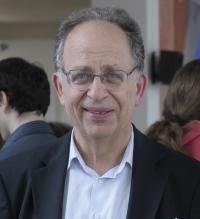
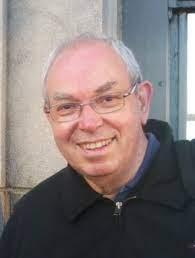
Dominik Huber is a researcher at the Chair of Bio- and Nanophotonics within the FAIM (Freiburg Alliances in Institutionalized Methodologies) at the University of Freiburg's Faculty of Engineering. Since December 2020, he has been investigating the interaction of particulate matter with lung cells. He holds a Master's degree in Microsystems Engineering from IMTEK (2017) and a second degree in Molecular Medicine from the University of Freiburg (2020). Research Interests : His work integrates biomedical microtechnology and molecular medicine to explore nanoscale interactions in medical contexts. Key areas include: Development of microsystems for lung cell studies Nanophotonics applications in diagnostics and therapy Particulate matter effects on cellular structures Affiliations : - Member of the Chair of Bio- and Nanophotonics led by Prof. Alexander Rohrbach - Part of the Faculty of Engineering's interdisciplinary research ecosystem
Dr. Hossein Tavana is a Professor and Department Chair in the College of Engineering and Polymer Science at the University of Akron, Ohio. He joined the university in 2010 and leads the Biomedical Engineering department, focusing on tissue engineering microtechnologies to mimic cellular microenvironments. His research spans 3D tumor models for studying cancer drug resistance, lung airway models for therapeutic delivery studies, and biofluid mechanics . Education: Ph.D. in Mechanical Engineering, University of Toronto (2006) M.A.Sc. in Mechanical Engineering, K.N. Toosi University of Technology (1999) B.Sc. in Mechanical Engineering, Tabriz University (1996) Research Interests: Dr. Tavana’s work lies at the intersection of Cancer Research , Microtechnology , and Tissue Engineering . He develops 3D tumor models to study drug resistance mechanisms and lung airway models to optimize therapeutic delivery. His projects combine experimental and computational approaches and involve collaborations with engineers, medical professionals, and clinical researchers. Article Trends: His publications emphasize 3D cell culture , microfluidic devices , and drug screening technologies . Topics include surfactant transport in lungs, kinase inhibition in cancer cells, and tumor-stromal interactions . Most works involve interdisciplinary methodologies and biomedical applications of engineering principles. Scientific Awards: BMES' Young Innovator in Cellular and Molecular Bioengineering Top 20 Young Investigator Frontiers in Bioengineering Prestigious postdoctoral fellowship at the University of Michigan's Biomedical Engineering Department Grants & Patents: He has secured 10 grants from the NIH and NSF to fund his interdisciplinary projects. He holds 6 patents in biomedical engineering technologies and has published 70 peer-reviewed papers. Labs & Teams: Dr. Tavana’s lab is based in Olson Research Center 301F (Lab Olson 311-313) at the University of Akron. His team collaborates with engineering , medical , and clinical investigators on projects funded by NIH , NSF , and DoD .
Dr. Claire Stanley is a Senior Lecturer in the Department of Bioengineering at Imperial College London, leading the Microbiome-Microscopy and Microfluidics Lab. Her research focuses on developing microfluidic ('Organ-on-a-Chip') technologies to study microbial interactions in soil environments at the single-cell level. She holds affiliations with the Fungal Science Network, Microbiome Network, and Organ-on-chip Network of Excellence. Education: PhD in Chemistry, Imperial College London (2007–2011) MRes in Protein and Membrane Chemical Biology (Distinction), Imperial College London (2006–2007) MChem in Chemistry (First Class), Durham University (2002–2006) Research Interests: Claire's work bridges bioengineering, microbiology, and plant biology. Key projects include bacterial-fungal interactions, fungal defense mechanisms against nematodes, and plant root adaptations to environmental heterogeneity. Her lab develops tools like the dual-flow-RootChip and AMF-SporeChip to study root-environment interactions and fungal dynamics. These platforms enable precise environmental control and high-resolution imaging of biological processes. Awards & Funding: Swiss National Science Foundation Ambizione Career Grant (2016–2019) £500k+ in personal research grants, plus contributions to >£7M collaborative grants Society of the Chemical Industry Scholarship (2008–2010) Collaborations & Labs: Claire collaborates internationally with institutions in Switzerland, Europe, and the U.S., including ETH Zürich, Agroscope, and the University of Neuchâtel. Her lab’s innovations in microfluidics have applications in biomedicine, environmental science, and agriculture.
Thomas P. Burg is a Professor (W3) at the Technical University of Darmstadt, leading the Integrated Micro- and Nanosystems group. His research focuses on biomedical microdevices, cryogenic microsystems, and nanofluidics. He previously held a Max Planck Research Group Leader (W2) position at the MPI for Biophysical Chemistry (2009–2018) and completed postdoctoral work at MIT (2005–2008). He earned a PhD in Electrical Engineering from MIT (2005) and a Diploma in Physics from ETH Zurich (2001). Research interests span cryomicroscopy, microfluidic cryofixation, and nanomechanical sensing. His work bridges microtechnology and biophysics, with applications in correlative light-electron microscopy and biosensing. Recent publications emphasize advancements in cryoimmersion microscopy, nanofluidic separation systems, and mass measurements of nanoparticles. Publications demonstrate expertise in interdisciplinary systems engineering, including aberration-corrected microscopy and high-throughput nanofluidic devices. While no awards are listed, his work has been published in prestigious journals like Nature and Proceedings of the National Academy of Sciences. His lab focuses on developing cutting-edge microsystems for biomedical and material science applications.
Kimberly Stroka is an Assistant Professor in the Fischell Department of Bioengineering at the University of Maryland, College Park. She serves as Co-Director of the NCI-UMD Partnership for Integrative Cancer Research and leads the Cell and Microenvironment Engineering Lab. Her work focuses on understanding how mechanical and biochemical cues from cellular microenvironments influence cell behavior in health, disease, and therapeutic contexts. Research interests include quantitative cell mechanobiology, biomechanics, and microfluidic device development for physiological system modeling. The lab employs advanced microscopy, computational analysis, and physics-based approaches to study cellular responses in controlled environments. Key projects investigate cell-cell junction mechanics in vascular systems, aquaporin roles in cell migration, and BBB modeling using iPSCs. Over 50 publications span interdisciplinary topics like tumor metastasis, extracellular vesicle communication, and mechanotransduction. No specific awards are listed, but ongoing funding supports lab operations. Prospective students are encouraged to contact Dr. Stroka directly. Lab activities emphasize team-based research with undergrad and graduate trainees addressing pressing biomedical challenges through engineering innovation.
Lopez Martinez, Joan Antoni is a researcher at the Universitat Politècnica de Catalunya (UPC), affiliated with the Escola Superior d'Enginyeries Industrial, Aeroespacial i Audiovisual de Terrassa (ESEIAAT) and the Department of Graphic and Design Engineering. He is a key member of the CATMech research group (Centre Avançat de Tecnologies Mecàniques), contributing to advanced mechanical technologies with a focus on microsystems and industrial applications. His research interests span Lab-on-a-Chip systems , microfluidics , microfabrication , medical devices , microplastics , product design , and sensors . His work integrates engineering principles with applications in health, environment, and education. He employs tools such as Ansys and Catia for simulation and design. The recent publications (2021–2025) reflect a strong trend in microfluidic diagnostics , gas and ionic sensors , environmental monitoring (especially microplastics), and educational innovation . These studies combine experimental design, numerical modeling, and practical implementation, often using 3D printing and advanced materials. His scientific awards include multiple recognitions for teaching excellence, such as the Reconeixement als mèrits docents d’especial qualitat and the Premi Societat Catalana de Tecnologia for student projects. These highlight his commitment to pedagogical innovation. Lopez Martinez has led and participated in numerous research and educational projects, including competitive R&D+i initiatives like SOCIAL BLOOMING HUB and EmotionalSigns , and educational innovations such as LAB-VIDEO UPC for remote engineering labs. His collaborations extend across departments and research groups at UPC, particularly with experts in mechanical, biomedical, and environmental engineering. He is actively involved in research labs and teams, primarily within the CATMech center and its Microtech division, where he contributes to industry-oriented microtechnology development. His work bridges fundamental research with practical applications in health, sustainability, and industrial innovation.
Dr. Xiao-Hua Qin serves as an Assistant Professor of Biomaterials Engineering at ETH Zurich's Institute for Biomechanics (IfB), leading the Laboratory for Bone Biomechanics. His research focuses on developing advanced in vitro bone models for medical applications with the explicit long-term goal of replacing animal experimentation through innovative biomaterial-tissue engineering integration. His primary research synthesizes materials science, biomedical engineering, and microtechnologies to pioneer biomaterials-driven tissue biomanufacturing approaches. This work addresses core mechanobiology and developmental biology questions while advancing regenerative medicine applications, with emphasis on bone tissue engineering and in vitro model development. Dr. Qin's scientific recognition includes a prestigious European Research Council (ERC) Starting Grant. He actively contributes to scholarly discourse as Editorial Board member of Biomedical Materials and Guest Editor for Biofabrication's 'Engineering with Living Materials' special issue. He co-teaches ETH Zurich's MaP Distinguished Lecture Series on Engineering with Living Materials and Multiscale Bone Biomechanics courses while directing a multidisciplinary research team in the Laboratory for Bone Biomechanics. His laboratory operations emphasize translational biomaterials research with direct medical applications.
Dr. Yasser Aboelkassem serves as Assistant Professor of Engineering in the Department of Computer Science, Engineering, and Physics at the College of Innovation and Technology, University of Michigan-Flint. His academic journey includes a Ph.D. in Engineering Science and Mechanics from Virginia Tech (2012), postdoctoral training at Yale University (2013-2015) and Johns Hopkins University (2016-2018), and a Research Assistant Professor position at UC San Diego (2018-2021). Educational background: Ph.D. in Engineering Science and Mechanics, Virginia Tech, 2012 Postdoctoral Fellow, Yale University, 2013-2015 Postdoctoral Associate, Johns Hopkins University, 2016-2018 His research program bridges cardiac electromechanics and bio-microfluidics through computational modeling, with particular emphasis on multiscale mathematical frameworks for cardiac function under disease conditions and reproductive biofluid dynamics. This work integrates engineering science, fluid dynamics, and experimental methods to develop medical devices and diagnostic tools, focusing on arterial blood flow, cardiac mechanics, microfluidic systems, and bioinspired technologies for societal impact. Analysis of his 2023-2025 publications reveals a strong trend toward computational innovation in cardiovascular systems, featuring increasing application of fractional calculus for vascular aging models, machine learning for cardiac mutation prediction, and bioinspired microfluidic designs for reproductive health and cardiac-on-chip platforms. These works consistently connect fundamental fluid dynamics principles with translational medical applications. Dr. Aboelkassem directs the Computational Medicine and Biomechanics Lab at UM-Flint, which develops non-invasive diagnostic tools and in silico systems for clinical investigations. Current projects include arterial blood flow modeling, cardiac mechanics simulations, bioinspired microtechnology development, and innovative medical devices aimed at advancing personalized medicine through engineering solutions.
Rajveer Singh Fandan is a researcher at the Technical University of Madrid, affiliated with the University Institute of Optoelectronic Systems and Microtechnology (ISOM) since 2016 and the Semiconductor Devices Research Group of ISOM. His research spans interdisciplinary domains including: Condensed Matter Physics Optics Nanotechnology Materials Science Electrical Engineering Mechanical Engineering Biomedical Engineering Acoustics His publications demonstrate significant academic engagement, with multiple papers receiving attention across news outlets, X (Twitter) platforms (1-7 user posts per paper), and Mendeley readership (13-39 readers per paper), reflecting impact in optoelectronics and semiconductor research. Fandan's work is centered within ISOM's infrastructure, specifically the Semiconductor Devices Research Group, focusing on advancing microtechnology and optoelectronic systems through experimental and applied approaches.
Abdel El Abed is a Lecturer associated with Axis 2, focusing on Optics and Microtechnologies applied to living systems. His work involves microfluidic systems for health, energy, and materials applications. Research Focus: Optics, Microtechnologies, and Microfluidics Application Areas: Health, Energy, and Materials Science
Clément Lafargue is a Lecturer at ENS Paris-Saclay , focusing on optics and microtechnologies applied to living systems. His research explores the intersection of optical methods and microfluidic systems for multifaceted applications in health, energy, and materials science. Research Interests: His work emphasizes advancing optical techniques to study biological processes and developing microfluidic technologies with cross-disciplinary implications. Key areas include: Optics for biomedical applications Microtechnology integration in health systems Microfluidic device design Energy-efficient material processing Biocompatible system development
François Marquier is a Professor at ENS Paris-Saclay , focusing on interdisciplinary research at the intersection of physics and life sciences. His work aligns with two primary axes: Axis 1 : Multi-scale light-matter interactions, spanning atomic to device-level studies Axis 2 : Application of optics and microtechnologies to biological systems His research emphasizes developing novel optical methodologies for investigating living matter, integrating principles from quantum physics, nanophotonics, and biomedical engineering. The absence of specific publications, awards, or student information in the provided text indicates these details are either non-publicly available or not explicitly mentioned in the source material.
Joseph Zyss is a Professor at ENS Paris-Saclay, focusing on interdisciplinary research at the intersection of optics, microtechnologies, and life sciences. His work spans two primary axes: (1) Multi-scale light-matter interactions from atomic to device levels, and (2) Optics and microtechnologies applied to living systems. Research Themes : Development of novel optical methods for studying biological systems, integration of microtechnologies in biomedical devices, and fundamental studies of light-matter coupling across scales. Applications : Bridging photonics with life sciences through innovative device structuring and biophotonic tools.
Michel Simonneau is a Professor at ENS Paris-Saclay, specializing in cutting-edge applications of optics and microtechnologies to biological systems. His research focuses on developing innovative optical methods for studying living organisms, particularly in the context of biophotonics and synaptic pathophysiology. Research Interests Biophotonics for biomedical applications Microtechnologies applied to living systems Optical imaging techniques Synapse function and dysfunction
Dr. Peter Deak is an Assistant Professor in the Department of Chemical and Biological Engineering at Drexel University’s College of Engineering. His research focuses on immunoengineering, particularly on modulating innate immune cells to develop therapeutics for autoimmune diseases, transplantation rejection, and chronic viral infections like HIV. Education: PhD in Bioengineering (2017) and MS in Chemical Engineering (2016) from University of Notre Dame; BS in Chemical Engineering (2012) from University of Dayton. His research spans three major areas: (1) Push/Pull Immunomodulation (PPI) for tolerogenic dendritic cells (TolDCs) to induce antigen-specific tolerance, (2) Targeted adjuvants for chronic viral infections using a "bait and switch immune activation" (BSIA) strategy, and (3) Development of autoinflammatory disease diagnostics via microfluidic chips. Key trends in his publications include immunomodulatory nanotechnology, dendritic cell biology, and translational approaches for allergies and autoimmunity. He has published in journals such as Biomaterials , PNAS , and Journal of Allergy and Clinical Immunology . Scientific Awards: NIH R21 Exploratory Research Award (Kidney transplantation) NIH R56 Award (HIV-targeted Liposomal Vaccines, $400,000) Margaret Q. Landenberger Foundation Award (Early Stage Faculty, $200,000) Dr. Deak leads the Deak Research Group, which investigates synergistic immunomodulatory combinations and delivery systems. His lab recently published in Cell Reports about dendritic cell subpopulations and in Frontiers in Immunology on cell-targeted vaccines.