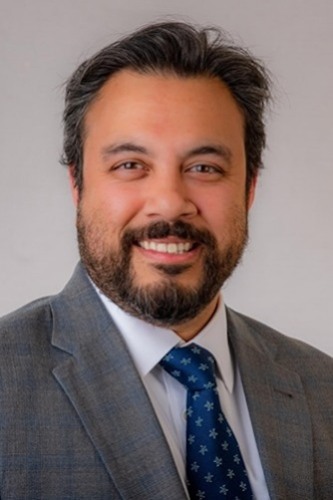
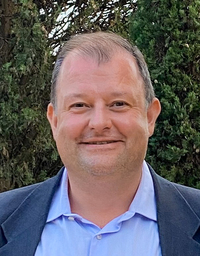
Neil Sarkar, PhD, MLIS, FACMI, is a healthcare informatics leader serving as President and CEO of The Rhode Island Quality Institute and Associate Professor at Brown University. His dual appointment spans Medical Science and Health Services, Policy and Practice departments. Formal education: PhD in Biomedical Informatics from Columbia University (2004) Key affiliations: Brown Center for Biomedical Informatics, Brown Institute for Translational Science Research focuses on biomedical informatics with applications to: Integrating unlinked biological and clinical data Comparative genomic/phenomic studies Predictive modeling for pregnancy complications Natural language processing in clinical contexts Translational bioinformatics solutions Recent publications demonstrate expertise in: Machine learning for clinical outcomes Data mining in public health Phylogenetic approaches to disease analysis Health information exchange applications Scientific recognition includes: Elected Fellow of American College of Medical Informatics Board Member and Treasurer of AMIA Founding Editor-in-Chief of JAMIA Open Research grants from: National Science Foundation (NSF) National Institutes of Health (NIH) Centers for Disease Control (CDC) US Department of Veterans Affairs Ellison Medical Foundation
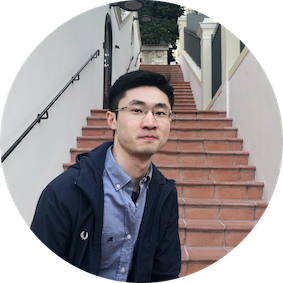
Irma Knevel is a Lecturer and Degree Programme Coordinator for Biomedical Engineering at the Faculty of Science and Engineering , University of Groningen. Her research spans ecology, plant biology, and environmental science, focusing on life-history traits, invasive species dynamics, and ecosystem conservation. Research Interests include plant ecology in fragmented landscapes, seed longevity, soil-plant interactions, and coastal dune stabilization. Her work aligns with global Sustainable Development Goals for environmental sustainability. Publications highlight collaborations with ecologists and botanists across Europe and South Africa. Email : i.c.knevel@rug.nl
Daniel Khashabi is an Assistant Professor in the Department of Computer Science at Johns Hopkins University, with affiliations to the Center for Language and Speech Processing, Data Science and AI Institute, Institute for Assured Autonomy, and Institute for Data-Intensive Engineering and Science. His research focuses on natural language as a communication medium between humans and AI systems , aiming to enhance helpfulness, reliability, and efficiency through themes like augmentation , generality , specificity , reasoning , interpretability , and safety in high-stakes AI deployment . He leads the Intelligence Amplification Lab (IALab) , co-advising PhD students with experts like Benjamin Van Durme and Nick Andrews. Recent publications address multilingual generation barriers , feedback integration challenges , scientific literature hierarchography , and safety benchmarking , reflecting his work in NLP , machine learning , and human-AI collaboration . Notable awards include Outstanding Paper at EMNLP 2023 and Best Video at ACL 2023 .
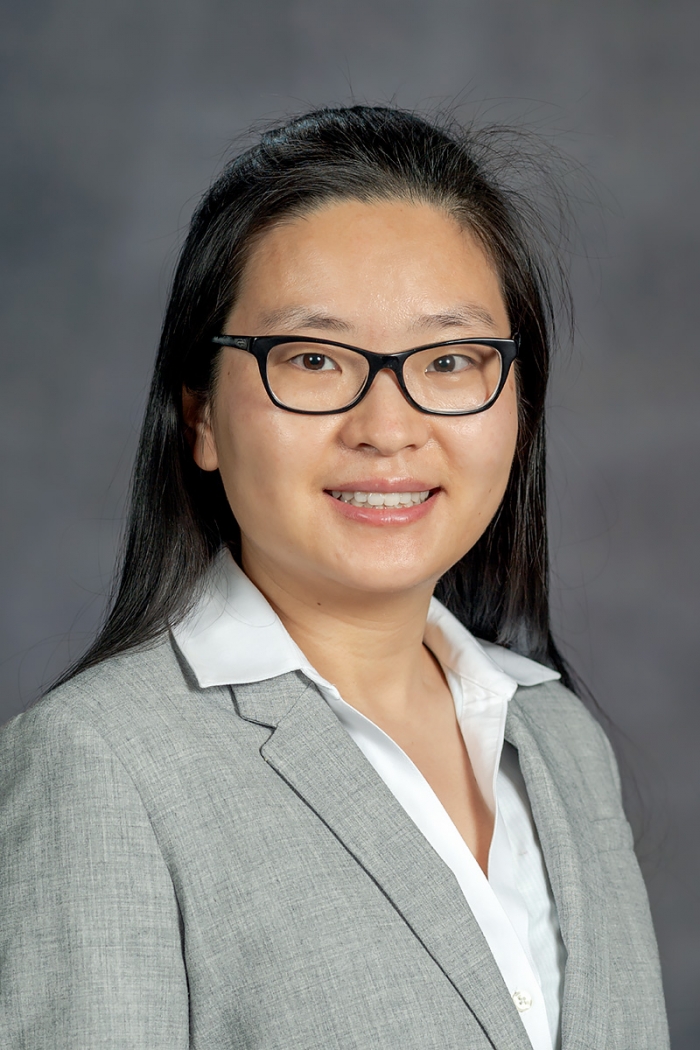
Hanchen Wang is a Postdoctoral Research Fellow at Stanford AI Lab and Genentech, working under Jure Leskovec and Aviv Regev. He holds a PhD in Computer Science from Cambridge University completed in 3 years under Joan Lasenby, and a BS in Physics from Nanjing University where he was valedictorian. His research bridges artificial intelligence and biomedical discovery, with appointments spanning both academic and industry settings. Wang's research focuses on AI for Science , particularly developing autonomous agents for biomedical discovery. His work spans multi-omics analysis , spatial transcriptomics , live-cell imaging , and perturbation assays , with applications in cancer therapeutics , autoimmune diseases , and neurological disorders . He has pioneered multiple AI agent frameworks including Biomni (a general-purpose biomedical agent), SpatialAgent, and PerTurboAgent for specialized biological discovery tasks. His publication record demonstrates significant impact across both computer science and biology venues, with first-author papers in Nature , Nature Biotechnology , and NeurIPS . His research has been deployed by Anthropic, Amazon Web Services, and Genentech, and featured in Nature , The Economist , and DeepMind communications. Chan Zuckerberg Initiative Faculty Applicant Bootcamp participant UCSF Gladstone Institute Trainee-to-Tenure Track Program member OpenAI Researcher Access Program recipient Multiple conference travel awards Wang actively mentors early-career researchers including PhD students from institutions like CSHL, MIT, Harvard, and KAIST. He serves as Area Chair for ICLR 2026, organizes workshops on AI for Science at major conferences, and gives invited talks at leading institutions including Harvard, Yale, and the Broad Institute. His research is supported by Genentech internal funding ($500k/year) and OpenAI resources.
Clément Aubert is an Associate Professor with tenure at Augusta University's School of Computer and Cyber Sciences. He specializes in formal methods, complexity theory, and reversible computing, with significant contributions to concurrency theory and implicit computational complexity. His research bridges theoretical computer science with practical applications in programming languages and security. Aubert's research focuses on reversible concurrent calculi, computational complexity analysis, and formal verification. His work explores how reversibility can provide insights into traditional computing problems, with applications in security protocols and distributed systems. He has developed static analysis techniques like the mwp-analysis for determining polynomial growth bounds in programs, contributing to the field of implicit computational complexity. His publication record shows consistent contributions to top theoretical computer science venues including CONCUR, RC (Reversible Computation), and POPL-affiliated workshops. His research combines deep theoretical insights with practical implementations, as evidenced by tools like pymwp. The publications demonstrate a clear trajectory from foundational work in complexity theory to applied research in concurrency and security. Tenure at Augusta University (2023) NSF funding for 'Concurrency in Reversible Computations' project Two research grants from Augusta University Research Development Travel Grant for NSF visit Aubert actively mentors students including Neea Rusch, Assya Sellak, and Gabriele Cecilia. He has organized multiple ICE (Interaction and Concurrency Experience) conferences and served on numerous program committees. His research group focuses on reversible computing implementations and complexity analysis tools. He collaborates extensively with researchers across Europe and the United States, maintaining strong connections with French institutions through CNRS.
Prof. Juan Manuel Górriz Sáez is a Full Professor at the University of Granada (Spain) in the Faculty of Science, Physics Section, and also serves as a Research Associate at the University of Cambridge (UK). He is the head of the SiPBA (Signal Processing and Biomedical Applications) research group and collaborates as principal investigator with top research centers worldwide including University of Regensburg, Northeastern University, University of Cambridge, LM University of Munich, University of Liege, University of Milan, and University of Aveiro. Dr. Górriz received his BSc degrees in Physics and Electronic Engineering from the University of Granada in 2000, followed by Ph.D. degrees from the Universities of Cádiz (2003) and Granada (2006). His research focuses on statistical signal processing in biomedical applications, with particular expertise in Voice Activity Detection, Distributed Speech Recognition, Blind Source Separation, and Independent Component Analysis. His work in image processing for biomedical applications includes anatomical/functional brain imaging (PET, SPECT, fMRI, MRI), development of computer-aided diagnosis systems, feature extraction algorithms, image registration algorithms, and supervised classification for neurological disease diagnosis. His research has significant applications in early detection of Alzheimer's disease and other neurological conditions. Analysis of his recent publications reveals a strong trend toward applying machine learning techniques, particularly support vector machines and random forests, to medical image analysis for Alzheimer's disease diagnosis. His work integrates advanced signal processing with clinical applications, focusing on feature extraction, dimensionality reduction, and pattern recognition in brain imaging data from SPECT, PET, and MRI modalities. ASI Award (2008) UGR Social Council Award (2010) Real Academia de Ingenieria Medal Award (2015) Dr. Górriz has supervised numerous PhD and Master's students through various funding mechanisms including FPI Grants, MICINN contracts, Excellence Grants, Erasmus Mundus programs, and DAAD Grants. His research has been supported by multiple competitive grants including PETRI DENCLASES (PET2006-0253), Proyecto de Excelencia TIC 2566, Proyecto de Excelencia TIC 4530, and Nuevas Técnicas de Reconstrucción, Procesado, Clasificación y Fusión de Imágenes Médicas para Diagnóstico Precoz de la Enfermedad de Alzheimer (TEC2008-02113/TEC). As head of the SiPBA research group, Dr. Górriz leads a multidisciplinary team of researchers focused on signal and image processing applications in biomedical contexts. The group maintains active collaborations with international research centers and has developed novel approaches for brain image analysis, particularly for early Alzheimer's disease detection.
Dr. Marcel Friedrichs is a Researcher at the Faculty of Engineering , Bielefeld University , Germany. He is affiliated with both the Algorithmic Cheminformatics Group and the Center for Biotechnology (CeBiTec) , contributing to interdisciplinary research at the intersection of computational methods and biomedical systems. Researcher in Algorithmic Cheminformatics Group Center for Biotechnology (CeBiTec) member Focus on graph-based data integration and biomedical networks Research Interests : Computational biology, systems biology, bioinformatics tool development, and medical biochemistry. His work emphasizes automated data integration, modeling of regulatory networks, and analysis of gene-disease comorbidities. Article Trends : Publications span 2018–2025, highlighting graph-based data integration, stem cell differentiation (cardiomyocytes), miRNA databases, clinical trial analysis, and pharmacological network modeling. Key keywords include Computational Biology , Medical Biochemistry , and Graph Theory . Labs & Teams : Algorithmic Cheminformatics Group (Faculty of Engineering) Center for Biotechnology (CeBiTec) Contributor to projects like BioDWH2 and GenCoNet
Tej Lamichhane is currently an Assistant Professor at the University of Central Oklahoma in the Department of Engineering & Physics. His academic career includes postdoctoral research at MIT and Oak Ridge National Lab, as well as a Ph.D. in Condensed Matter Physics (2013–2019) and a Master’s in Physics (2010–2013), both from Iowa State University and University of Texas at Arlington respectively. Ph.D., Condensed Matter Physics, Iowa State University (2019) Master of Science, Physics, University of Texas at Arlington (2013) His research focuses on data-driven design and discovery of quantum materials , rare-earth-free permanent magnets , and magnetocaloric materials , with applications in electrical motors , hydrogen evolution , and biomedical nanomaterials . He integrates materials databases , rational design , and additive manufacturing to develop functional materials like single crystals , thin films , and nanomaterials . His recent publications highlight a strong emphasis on additive manufacturing and magnetic materials , with applications in energy systems , quantum technologies , and environmental sustainability . Collaborative works span institutions like MIT, Oak Ridge National Lab, and industry (Intel Corporation), reflecting interdisciplinary and applied research trends. He teaches Materials Science , Modern Physics , Engineering Optics , and Mathematical Physics II at the University of Central Oklahoma. His research leverages computational methods to study structural-electronic-magnetic correlations in materials like Fe-3Si , Sm-Fe-N , and CaNi2 , aiming to bridge fundamental science and prototype development.
Solomon Berhe serves as an Assistant Professor of Computer Science at the University of the Pacific in Stockton, California, with his office located in Chambers 117. Contactable via sberhe@pacific.edu, he brings over two decades of industry software development experience since 2001, including leadership in Industry 4.0 systems for healthcare, automotive, retail, and e-mobility sectors prior to his academic career. His educational background features: Ph.D. in Computer Science and Software Engineering from the University of Connecticut (2011) Dr. Berhe's research centers on data-driven modeling of software ecosystems with emphasis on risk assessment for maintenance efforts and access control-based secure software engineering. His work extends NIST RBAC standards into adaptive workflow models, addressing real-world challenges in Industry 4.0 contexts through empirical studies of update patterns, dependency tracking, and security frameworks. Teaching responsibilities include foundational courses in Software Engineering, Database Systems, and Mobile Application Development. Analysis of his 2020-2025 publications reveals a strategic evolution toward IoT security applications and AI-driven ecosystem analysis, with notable contributions in UML-based security visualization, software update impact triage, and thermal-imaging animal detection systems. This trajectory demonstrates consistent bridging of theoretical models with industrial implementation challenges across healthcare and emerging technology domains. Scientific Awards: No awards or fellowships documented in provided information While specific advisees and active grants are not detailed, his publication record and industry collaborations indicate substantial engagement in graduate mentorship and potential research funding for projects at the software engineering-cybersecurity intersection, particularly in risk modeling for evolving software ecosystems.
Adriana Birlutiu is a Lecturer in the Computer Science Department at 1 December 1918 University of Alba Iulia , Romania. Her expertise lies in machine learning, computer vision, bioinformatics, and transfer learning, with a recent focus on porcelain-industry optimisation. Education Ph.D., Radboud University Nijmegen, Netherlands (2011) M.Sc., Babeș-Bolyai University of Cluj-Napoca & University of Lorraine (Erasmus), 2005 B.Sc., Babeș-Bolyai University of Cluj-Napoca, 2004 Research Interests Adriana's research spans machine learning , deep learning , computer vision , and bioinformatics . She has contributed to preference learning, domain adaptation, protein–protein interaction prediction, and automated quality control in porcelain manufacturing. Her recent projects integrate deep neural networks with industrial computer-vision systems to detect defects and recognise characters on ceramic surfaces. Publication Trends Across 15 recent publications (2010-2019), Adriana has consistently explored transfer learning , multi-task learning , and Bayesian methods . Articles cluster around two major axes: biomedical applications (protein networks, cancer relapse prediction, respiratory-motion modelling for radiotherapy) and industrial AI (porcelain defect detection, character recognition). The work shows a clear evolution from theoretical machine-learning foundations to practical, domain-specific implementations. Grants & Projects SIVAP (2016-2018): Intelligent ML & computer-vision system for porcelain manufacturing optimisation, UEFISCDI PN-III-P2-2.1-BG-2016-0333. CMRCC (2017-2018): Computational Models for Reproducing Ceramics Colors, UEFISCDI PN-III-P2-2.1-PED-2016-1835. Student Supervision & Mentoring Adriana has supervised more than 25 undergraduate and master’s theses. Her students have won multiple awards at national conferences such as In-Extenso and SCCSS-IEECC , covering topics from automated defect detection to web applications for academic scheduling. Teaching Responsibilities She teaches courses including Machine Learning , Mathematical Software , Fundamental Algorithms , Object-Oriented Databases , and Modelling and Simulation at both undergraduate and master levels.
Univ.-Prof. Dr. Christian Beecks is a full Professor at the Faculty of Mathematics and Computer Science, FernUniversity in Hagen, and heads the Intelligent Data Analysis research group at the Fraunhofer Institute for Applied Information Technology FIT. His work bridges theoretical advancements in machine learning with practical applications across industry and biomedicine. Education: PhD in Computer Science (RWTH Aachen University, 2007-2013) Diploma in Computer Science (RWTH Aachen University, 2001-2007) As a leading figure in data science, Beecks specializes in machine learning and big data analytics , focusing on scalable algorithms for complex data spaces. His research has produced over 100 peer-reviewed publications and notable contributions in time series analysis , clustering methods , and IoT data processing . Recent work explores Gaussian process modeling for anomaly detection and spatiotemporal signal analysis. His publications demonstrate expertise in automated pattern discovery and interpretable AI systems . Key themes include: clustering validation , time series representation , industrial applications , and knowledge ontologies . Technically, his team leverages Ptolemaic geometry , skyline queries , and component mining for real-world data challenges. 2021 SIAM Best Research Paper Award 2018 Warwick Workshop Best Poster Award 2015 & 2011 Best Paper Awards Through leadership roles at FernUniversity and Fraunhofer FIT, Beecks drives initiatives in competency-based education and AI workforce empowerment . His research groups develop frameworks for edge-to-cloud AI orchestration and automated model inference , with applications in manufacturing, biomedicine, and digital humanities. Current projects focus on data pooling, zero-touch orchestration, and educational AI tools like virtual tutors.
Dr. Xin Yang is an Assistant Professor in the Department of Computer Science at Middle Tennessee State University (MTSU) . With a focus on Machine Learning , Deep Learning , and Neuroimaging Data Analysis , he bridges computational methods with biomedical applications. His teaching responsibilities include CSCI-2170 Computer Science II , CSCI-3080 Discrete Structures , and CSCI-4410 Web Technologies . PhD, MTSU (2016) MS, MTSU (2014) ME, North China University of Technology (2012) BE, Qingdao University (2008) Dr. Yang’s research explores Autism Spectrum Disorder (ASD) classification using functional MRI data, image fusion techniques (visible and infrared), and imbalanced data handling . His work applies methods like Group ICA , Dictionary Learning , and Spearman’s Rank Correlation to analyze brain networks. Recent publications span 2024 to 2010 , with a focus on ASD classification , fMRI analysis , and image processing . Trends include convolutional neural networks , adversarial defense , and signal processing for biometric applications. USDA grant ($181,819, Co-PI, 2023) MT-IGO award ($10,000, PI, 2022) MTSU URECA and CBAS Scholar Week awards NSF EPSCoR and REU Site grants He mentors students in machine learning research and software development , including projects like Dijkstra’s algorithm for pathfinding and web-based calculators . His lab emphasizes hands-on AI applications and interdisciplinary collaboration in healthcare and data science.
Silvio C. E. Tosatto is a Full Professor of Bioinformatics at the Department of Biomedical Sciences, University of Padua (Italy), where he heads the BioComputing UP laboratory. He holds significant leadership roles within ELIXIR, the European infrastructure for life science data, serving as deputy Head of Node for ELIXIR Italy, member of the Data Platform Executive Committee, co-lead of the Cellular & Molecular Research priority area, and co-lead of the Machine Learning focus group. His research spans multiple areas of computational biology and bioinformatics with particular focus on protein structure analysis, machine learning applications in biology, cancer research, and personalized medicine. His work encompasses protein aggregation, repeat proteins, residue interaction networks, and infrastructure development for bioinformatics research. Analysis of his recent publications shows a strong emphasis on database development for protein science (Pfam, InterPro, RepeatsDB), integration of AI/ML approaches in biological data analysis, and applications in genetic variant interpretation for medical conditions like intellectual disability. His work demonstrates the convergence of traditional bioinformatics with modern machine learning techniques. Professor Tosatto maintains active research collaborations across Europe as evidenced by his extensive co-authorship networks. His leadership in ELIXIR highlights his significant contribution to European bioinformatics infrastructure development. He earned his PhD (Dr. rer. nat. with Magna cum laude distinction) in bioinformatics from Universität Mannheim in 2002, following a 1998 graduate degree in Computer Science & Business Administration from the same institution. He has been a Full Professor since October 2016. Fluent in English, Spanish, German, and Italian (native), Professor Tosatto operates effectively in international research environments and leads a productive research group focused on advancing computational approaches to biological problems.
Dr. Robert Schuler is a Senior Computer Scientist and Research Lead at the Information Sciences Institute (ISI) of the University of Southern California. He serves as the technical lead for the NIH/NIDCR-funded FaceBase Data Hub ( www.facebase.org ) and has pioneered large-scale research data Grids, including the Biomedical Informatics Research Network (BIRN), the Globus Project, and the Earth System Grid. His career spans academia, industry, and entrepreneurship, with expertise in database systems, data management, and distributed computing. Education : Ph.D., M.S., and B.S. in Computer Science from USC His research focuses on advancing scientific data management frameworks for collaborative research in craniofacial biology, neuroimaging, climate science, and enterprise applications. He has also contributed to digital rights management (via Xerox/ContentGuard) and enterprise monitoring systems (Candle Corp). Email : schuler@isi.edu
Laurent Debarbieux is a Researcher at the Pasteur Institute in Paris, France, affiliated with the Microbiology department. His work focuses on bacteriophage biology , phage therapy , and host-pathogen interactions . Current projects include: PHAGESAFETY (blood marker identification for phage toxicity) VHRdb (Viral Host Range database development) Phage-host molecular dynamics in Pseudomonas aeruginosa and Escherichia coli Research highlights: His studies explore phage therapy optimization through automated potency assays , biofilm disruption , and genotype-dependent resistance mechanisms . He investigates phage-plasmid coevolution , archaeal virus-host equilibrium , and spatio-temporal infection dynamics using gnotobiotic mouse models and high-throughput sequencing . Collaborative networks: Key collaborations with Jean-Marc Ghigo , Jean-Daniel Lelièvre , and Joshua S. Weitz Partnerships with Genoscope and MicroScope/MaGe platforms Methodological expertise: Cryo-electron tomography for virion assembly visualization RNA-Seq and NGS variant detection Development of automated pipetting protocols for phage testing