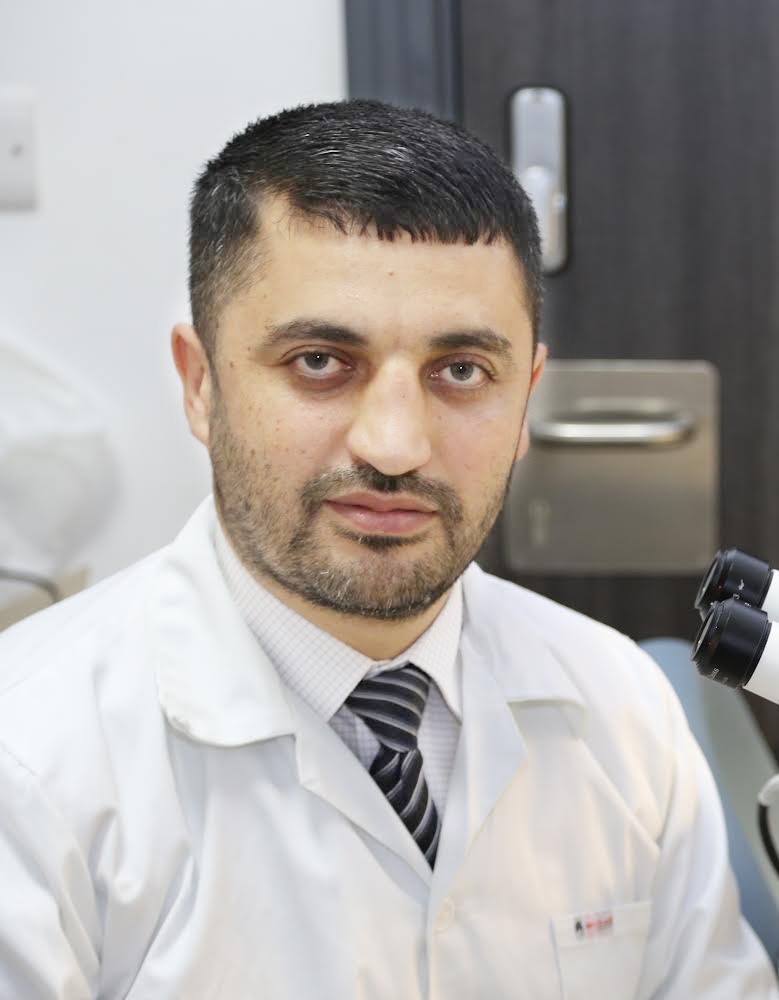
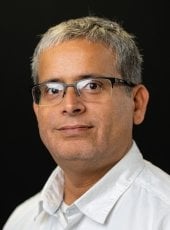
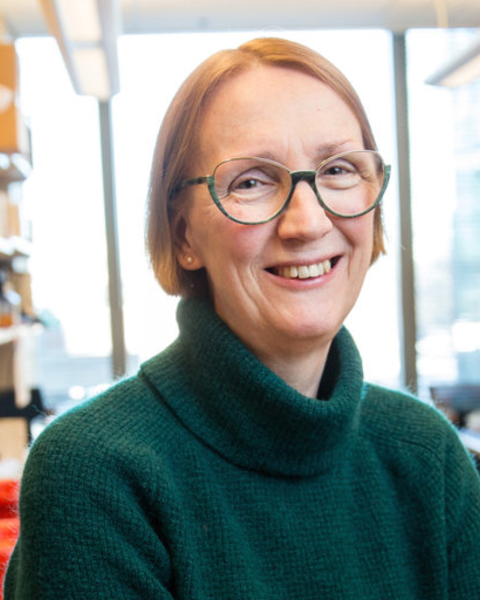
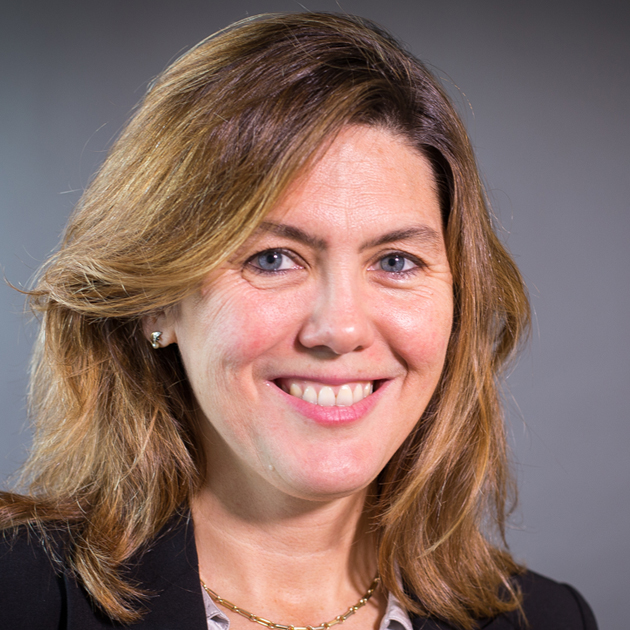
Anas Alazzam is a Full Professor in the Department of Mechanical & Nuclear Engineering at Khalifa University. He serves as Head of the Microfluidics Lab and Theme Leader in the System on Chip Lab (SOCL), focusing on advanced microsystem technologies. PhD in Mechanical Engineering, Concordia University M.Sc. in Mechanical Engineering, Jordan University of Science and Technology His research spans microfluidics, nanofluids, dielectrophoresis, MEMS, graphene-based materials, and phase change materials . Key applications include biomedical devices, energy systems, and self-powered electronics through iontronic and triboelectric technologies. Recent publications emphasize advanced nanofluids for solar energy absorption , biodegradable phase change materials , and self-powered electronic systems . His work integrates computational modeling with experimental validation in thermal systems and particle dynamics. Professor Alazzam teaches courses in fluid mechanics, MEMS theory, and micro/nanotechnology applications. His labs welcome graduate students for research in microfluidics, nanofluids, and microsystem design.
Thomas Huser is a Professor in the Department of Physics at the University of Bielefeld's Faculty of Physics, with an adjunct professorship in the Department of Internal Medicine at the University of California, Davis. His research group develops advanced optical microscopy techniques for biological applications, focusing on ultra-sensitive imaging of cellular and molecular systems. Physics MA, University of Basel (1992) Physics MS, University of Basel (1994) Physics Ph.D., University of Basel (1998) Postdoc in Materials Science, Lawrence Livermore National Laboratory (1998-2000) Huser's research spans multiple cutting-edge areas in biophotonics, including super-resolution optical microscopy, coherent anti-Stokes Raman spectroscopy (CARS), and nanosensor development. His work bridges physics, biology, and medicine, with applications in HIV research, liver cell imaging, and cancer studies. The group develops novel imaging techniques to study cellular structures at the nanoscale, including virological synapses, tunneling nanotubes, and endothelial fenestrations. His recent publications demonstrate a strong trend toward integrating advanced computational methods with optical microscopy, including deep learning for image reconstruction, novel optical designs using fiber components, and hyperspectral imaging techniques. The research spans fundamental physics of light-matter interactions to direct medical applications in liver disease, HIV transmission, and nanoparticle toxicity. Summa cum laude doctorate from University of Basel Norbert J. Kreidl Award from American Ceramic Society Excellence in Publication Award from LLNL Above and Beyond Teaching Award from Center for Biophotonics Guest Editor for Journal of Biophotonics Editorial roles at Applied Spectroscopy, Scientific Reports, and BME Frontiers Huser leads multiple major research projects funded by the European Union and German Research Foundation, including imaging aging endothelium at the nanoscale, microphysiological sample imaging for polypharmacy evaluation, and sino-German mobility programs for high-speed microscopy. His lab, the Biomolecular Photonics Group, develops innovative imaging technologies while maintaining strong clinical connections through collaborations with medical researchers. The Biomolecular Photonics Group operates state-of-the-art microscopy facilities including super-resolution systems, CARS microscopy, and custom-built imaging platforms. The group maintains international collaborations across Europe and the United States, with particular strengths in translating fundamental optical physics into biomedical applications.
Radheshyam Tewari is a Teaching Professor in the Mechanical and Aerospace Engineering (MAE) department at Michigan Technological University . He earned his PhD and MS in Mechanical Engineering from Michigan Tech and holds a BS in Mechanical Engineering from Maulana Azad National Institute of Technology, India. PhD, Michigan Technological University MS, Michigan Technological University BS, Maulana Azad National Institute of Technology, India Tewari's research spans interdisciplinary domains including implantable medical devices , micro- and nano-biosensors , micromachining , and semiconductor fabrication . His recent publications focus on education research , biomedical device manufacturing , and microfluidics . Notably, he coordinates the MAE Graduate Seminar Series , emphasizing cross-disciplinary knowledge sharing. Scientific contributions include work on graphene-based biosensors , PLA packaging for implants , and microfabrication processes . His teaching expertise encompasses quality engineering , six-sigma , design of experiments , and sustainable manufacturing .
Lisa Asciak is a Research Fellow at the School of Biomedical Engineering, University of Strathclyde, United Kingdom. Her work focuses on biomedical engineering with a specialization in 3D printing, precision surgery, and vascular graft development. She actively collaborates with colleagues like Dr. William Shu and Dr. Rosa Domingo-Roca. Research Fellow at University of Strathclyde Specializes in biomedical engineering Research Trends: Lisa's publications reveal expertise in 3D printing for medical applications, including cancer surgery simulations, vascular graft fabrication, and acoustic metamaterials. Her work bridges material science and clinical applications, emphasizing non-destructive analysis and digital twin concepts. Scientific Awards: Best presentation award in 'Supporting the Replacement of Animals in Science' (2024) John Gaylor Collaborative Fund (2022) Lisa contributes to collaborative projects and has been recognized for her research in precision surgical technologies and biofabrication.
Theo Sinnige is a Researcher at the Faculty of Veterinary Medicine , Utrecht University , affiliated with the Institute for Risk Assessment Sciences (IRAS) . His work focuses on environmental toxicology, drug metabolism, and chemical risk assessment. Research Areas : Environmental toxicology, in vitro toxicity testing, bioaccumulation, aquatic toxicology, and pharmacokinetic modeling. Research Trends : His recent publications (2023-2025) emphasize organoid-on-a-chip technologies for drug metabolism studies and intestinal permeability models, while earlier work centers on environmental pollutants, fish toxicity assays, and graphene oxide nanoparticle interactions. Keyword Analysis : Toxicology, Environmental Science, Pharmacology, Biomedical Engineering, Ecotoxicology, and Analytical Chemistry. Contact : t.sinnige@uu.nl
Ryan Smith is a Clinical Associate Professor at McMaster University with active clinical affiliations at Hamilton Health Sciences . His work spans anesthesiology, neuroscience, and biomedical engineering. BSc(H) from Acadia University M.D. from University of Calgary M.Sc. from University of Alberta Research focuses on neuroanesthesiology , perioperative medicine , and point-of-care ultrasound . Additional interests include quality improvement science and medical education delivery . Recent publications analyze: Light wavelength effects on brain activity (2016) Microcirculatory vasoreactivity (2014) Flexible solar cell technology (2014) Neurosurgical recovery protocols (2021) Scientific recognition includes: Fellow of the Royal College of Physicians and Surgeons of Canada
Dr. Mathis O. Riehle is a Senior Lecturer in Molecular Biosciences at the University of Glasgow. His research focuses on the molecular mechanisms of cell-surface interactions using micro- and nanofabrication technologies. He is affiliated with the Centre for Cell Engineering and Glasgow Science Centre. Research interests include Biomedical engineering of implantable devices Acoustic manipulation of cells and particles Nanotopography-guided tissue regeneration Biomaterials for nerve and bone repair Microfluidic systems for cell sorting Stem cell microenvironment engineering The 15 most recent publications highlight advancements in acoustic cell sorting, nerve repair scaffolds, and nanoscale mechanotransduction. Key trends involve using surface acoustic waves for particle separation, developing implants for CNS regeneration, and exploring topographical cues for stem cell behavior.
Jeantine Lunshof serves as Senior Research Scientist in the Department of Genetics at Harvard Medical School and Collaborative Ethics Lead at the Wyss Institute for Biologically Inspired Engineering at Harvard. She is also a Visiting Researcher at the Broad Institute of Harvard and MIT and a Visiting Scholar in the Department of Cell Biology at Erasmus University Medical Center in Rotterdam, Netherlands. Her educational background includes a B.A. in Philosophy and Tibetan Language and Culture from the University of Hamburg, an M.A. in Philosophy and Health Law from the University of Amsterdam, and a Ph.D. from VU University Amsterdam. Lunshof's research focuses on philosophical research ethics in synthetic biology and biologically inspired engineering, where disruptive technological innovations require epistemological and normative exploration. As a collaborator with George Church, she developed the 'Collaborative Ethics' model currently implemented across biologically inspired engineering at the Wyss Institute. Her work addresses conceptual and normative questions surrounding nervous system organoids, AI-designed biological systems, computer-designed programmable life forms like Xenobots, synthetic biology including genome recoding, and organ-on-chip translational research. Her scholarly work demonstrates a consistent focus on the ethical frameworks needed for translational research that bridges fundamental discoveries with real-world applications. Recent publications (2021-2024) show increasing attention to the philosophical implications of engineered living entities and the development of appropriate ethical guidance for emerging biotechnologies. Notable achievements include: Marie Curie International Outgoing Fellowship (2013-2015) for conceptual and normative questions in systems biology Kavli Frontiers of Science Fellow (2024) Lunshof teaches the annual graduate course Responsible Conduct of Science at Harvard Medical School's Division of Medical Sciences. She conducts her philosophical and ethical work as a full-time ethicist directly on the laboratory workfloor, collaborating with scientists to address ethical questions as they arise in research. Her innovative Open Consent model for the Personal Genome Project has reshaped concepts of privacy and consent in genomic research. She is actively involved in projects on iPSC-based therapies for hereditary anemias at Erasmus University and continues to explore the ethical dimensions of cutting-edge biological engineering at the Wyss Institute.
Lokesh Malik is a Postdoctoral Researcher at Aalto University's Department of Applied Physics. His research focuses on microfluidics, fluid dynamics, and acoustophoresis, with specific emphasis on droplet manipulation and ultrasound-driven particle transport. Role: Researcher Affiliation: Aalto University Department: Applied Physics Research Interests: Dr. Malik's work explores the intersection of physics and engineering, particularly: Ultrasound-actuated microfluidic systems Surface acoustic wave applications Viscoelastic fluid behavior Soft matter physics Fluid dynamics in microscale environments Acoustophoretic manipulation Publications Trends: His recent work (2021-2025) examines droplet dynamics, interfacial instabilities, and ultrasound-based particle transport mechanisms across microfluidic platforms, emphasizing applications in biomedical and materials engineering. Labs & Teams: He is affiliated with the Living, Fluid, & Soft Matter research group at Aalto University, specializing in fluid-structure interactions and microscale transport phenomena.
Davide Bucci is a Senior Lecturer at Grenoble INP - Phelma, where he serves as Head of the final year of the Biomedical Engineering program and Head of the Master 2 Nanomedicine and Structural Biology program. He is affiliated with the Institute of Microelectronics, Electromagnetism and Photonics (IMEP-LAHC) at Minatec and the Center for Radiofrequencies, Optics and Micro-nanoelectronics of the Alps (CROMA) at Univ. Grenoble Alpes. Dr. Bucci obtained his "diploma di laurea" in electronic engineering from the Politecnico di Torino in Italy in 2003, alongside an engineering degree from the Ecole Nationale Supérieure d'Electricité et Radioélectricité de Grenoble (ENSERG) through a double degree program. He completed his PhD in 2006 at IMEP, focusing on integrated optics on glass. His research focuses on integrated photonics on glass, ion-exchange techniques, and optofluidic sensors for biological applications and harsh environments. He leads the PHOTO team, which specializes in integrated optics on glass, integrated optical sensors, modeling of optical devices, and biophotonics. His recent publications demonstrate consistent contributions to photonic integrated circuits, optofluidic sensors for nuclear environments, and nanowire-based solar cell technologies. Dr. Bucci has published a book titled "Analog Electronics for Measuring Systems" (ISTE/Wiley, 2017) and has been leading the open-source FidoCadJ project since 2007. His research shows a clear progression from fundamental integrated optics to applied optofluidic sensors for biomedical and nuclear applications. He teaches numerous courses including Analog Electronics, Electronics of Measurement Systems, Microelectronics, Technology for Integrated Devices, and Guided Optics. He regularly mentors 3-5 student projects and final projects annually and participates in lifelong training activities organized by Grenoble INP. Dr. Bucci is also the correspondent for Grenoble INP of the AMI CMA program PFDS (Digital Health) and has established himself as a key researcher in glass-based photonic technologies with applications spanning biomedical engineering to nuclear safety monitoring.
Patricia Desgreys is a full professor at Institut Polytechnique de Paris , where she leads the Communication Circuits and Systems (C2S) research team within the Laboratory of Information Processing and Communication (LTCI) . Her work spans analog and mixed-signal (AMS) circuit design, cognitive radio systems, and digitally enhanced mixed-signal architectures for IoT and cyber-physical systems. Agrégation in Applied Physics, École Normale Supérieure de Cachan M.Sc. and Ph.D. in Microelectronics, University of Bordeaux (1995-1999) Her research focuses on AMS circuit design from transistor to architectural levels, including software-defined radio , cognitive radio , and neural-inspired analog-to-feature converters . She has contributed to digital predistortion techniques for power amplifiers, compressive sampling for astrophysical signals, and leadless pacemaker communication channels . Her 150+ publications highlight advancements in wireless systems, biomedical sensors, and 5G infrastructure. Recent work (2024) explores AI-driven analog design and 75 years of circuits innovation in IEEE Transactions. She has graduated 16 PhD students and co-authored the book Digitally Enhanced Mixed Signal Systems (IET, 2019). Her leadership includes Technical Program Chair roles at IEEE PRIME (2019), ICECS (2016), and NEWCAS (2012-2013), plus editorial work for IEEE TCAS-II special issues (2018-2019). She directs the ICS Master’s program (Institut Polytechnique de Paris/Paris-Saclay University) and teaches advanced electronics at SJTU-ParisTech in Shanghai . Her patents include signal sampling circuits and power amplifier linearization techniques.
Brendan Mullane is a Senior Research Fellow at the University of Limerick , affiliated with the Faculty of Science and Engineering and the Department of Electronic and Computer Engineering . Research Focus: Advanced analog/digital converter design, dynamic element matching, and biomedical signal processing. Key Contributions: Development of high-order noise shaping techniques for DACs, hardware implementations for brain injury detection, and optimization of ADC/DAC architectures. Contact: brendan.mullane@ul.ie Research Interests: Brendan's work centers on precision semiconductor design , with a focus on error correction in digital-to-analog converters and bandpass filtering techniques . His research bridges VLSI optimization and biomedical diagnostics , particularly in applying qEEG analysis for clinical applications. He has extensively explored mismatch shaping , inter-symbol interference mitigation , and switched-capacitor filter performance , contributing to the field of embedded systems for signal processing . Scientific Contributions: His publications demonstrate a strong emphasis on high-speed, low-noise analog circuits and on-chip testing methodologies . Key trends include programmable error shaping , real-time FFT processing , and IEEE 1500 standard optimization for ADC/DAC testability.
Prof. Santosh K. Misra is an Associate Professor at the Department of Biological Sciences and Bioengineering of the Indian Institute of Technology Kanpur . His research focuses on biomedical materials and devices for human sustainability , particularly in nanotechnology applications for crop protection , cancer therapy , and drug delivery . He leads the BioMeDHs Lab , which develops biodegradable nanoparticles and smart biomaterials for translatable medical solutions . Research Themes include: Nanoparticle-based diagnostics (e.g., portable eye injury sensors , cortisol detection chips ) Cancer-targeted therapies (e.g., STAT-3 modulators , photo-thermal DNA degradation ) Environmental remediation (e.g., oil spill cleanup , pharmaceutical contaminant filters ) Publication Trends highlight innovations in carbon nanomaterials for therapeutic delivery , antibacterial agents , and regenerative medicine . His work spans 2014–2025 with recent emphasis on 3D-printed stents , smart hydrogels , and transdermal melanoma treatments . Contact Information : Email: skmisra@iitk.ac.in Phone: +91 512-259-4013 (office) Fax: +91 512-259-4010
Seyed Alireza Tabatabaei Mashayekh is a researcher at the Institute of Integrated Photonics at RWTH Aachen University. His work focuses on photonic integrated circuits (PICs) and their applications in biomedical and quantum technologies. Research Interests : Biomedical Optics Integrated Optics Quantum Photonics Optical Communication Signal Processing Publications : His recent works cover STED microscopy, flow cytometry, soliton-based communication, and silicon photonics. Key subfields include biomedical imaging, laser engineering, and integrated circuit design. Advising : He served as a consultant for Arka Dipta Das's master's thesis on photonic integrated circuit control systems.
Dr Christopher Chapman is a Lecturer in Bioengineering at Queen Mary University of London's School of Engineering and Materials Science. He serves as the Biomedical Engineering Programme Director (Undergraduate) and Outreach and Recruitment Lead for The Centre for Bioengineering. With expertise in bioelectronics design and fabrication for central and peripheral nervous system targets, Chapman leads research focused on developing soft and flexible bioelectronic implants using both metals and conducting polymers. Lecturer in Bioengineering Biomedical Engineering Programme Director (Undergraduate) Outreach and Recruitment Lead, Centre for Bioengineering Member, Institute of Materials, Minerals, and Mining Member, Institute of Physics and Engineering in Medicine Chapman's research interests center around bioelectronics, implanted devices, cancer neuroscience, conductive polymers, and electrical stimulation and recording. His work combines functional materials with laser-based fabrication methods to develop bioelectronic implants for cancer therapeutics and monitoring. He specializes in creating soft, flexible bioelectronic systems that can provide both therapeutic effects and diagnostic feedback from the tumor microenvironment. Analysis of Chapman's recent publications reveals a strong focus on developing novel bioelectronic materials and devices, particularly using conductive polymers and elastomers. His research spans neural interfaces, cancer monitoring, and drug delivery systems, with increasing emphasis on cancer neuroscience applications in recent years. The publications demonstrate a progression from fundamental materials development to more clinically relevant applications, especially in tumor margin detection and cancer microenvironment monitoring. Chapman currently leads the Continuous Advanced Recording for Cancer Lab (CARC Lab), which focuses on four key research areas: materials development, in vitro models of cancer, clinical measurements, and therapeutic drug delivery. His research group includes PhD students Joshua Daoud and Ester Do Couto Lopes, who are working on multimodal bioelectronic sensor development for real-time monitoring of the brain tumor microenvironment. Chapman has secured significant research funding for his work, including a £403,666 grant from the ARIA Advanced Research and Invention Agency for 'Oligodendronics: Engineering biology for scalable neural interfaces', a £74,990 grant from Barts and the London Charity for 'Development of multimodal tumour margin detection paradigm for use in neurosurgical oncology', and a £20,000 grant from the Royal Society for 'Customizable conducting elastomers for bioelectronics sensors'.