Patrizia Proia is an Associate Professor at the University of Palermo, Department of Psychological, Pedagogical, Physical Exercise and Training Sciences. Her research focuses on exercise physiology, sports genetics, and neurobiological mechanisms linked to physical activity. She teaches courses in biochemistry, physiology of nutrition, and sports training adaptation. Current research on microbiome-exercise interactions Developing protocols for MS and Parkinson's rehabilitation Investigating genetic polymorphisms in elite athletes Exploring nutrigenomics and functional foods Recent publications analyze: Muscle regeneration through probiotic supplementation Impact of nanotechnological devices on pain management Epigenetic regulation of executive functions Bone health in gymnasts and cancer patients Role of gut microbiome in exercise response
Paolo Castellini is an Associate Professor at the Department of Industrial Engineering and Mathematical Sciences, Università Politecnica delle Marche (UNIVPM). His research focuses on mechanical measurements, vibration analysis, and advanced imaging techniques. He teaches courses in the College of Engineering and has published extensively on applications of hyperspectral imaging, 3D scanning, and neural networks in industrial and biomedical contexts. Office hours: Monday-Friday, 08:30-13:00 Email: p.castellini@univpm.it Location: via Brecce Bianche, 12, Ancona Recent research trends include vibration decoupling metastructures, microplastic detection in biological samples, and UAV-based photogrammetric analysis of olive trees. His publications emphasize non-destructive testing, acoustic beamforming, and uncertainty evaluation in measurement systems. Notable projects involve mmWave radar displacement analysis, cardiac simulators for prosthetic valves, and light-controlled polymer films for mechanical motion.
Angelika Manhart is an Assistant Professor in the Department of Mathematics at the University of Vienna's Faculty of Mathematics. With 26 publications spanning from 2014 to 2025, she has established herself as a leading researcher at the intersection of mathematical modeling and biological processes. Her work bridges rigorous mathematical analysis with biological insight to address fundamental questions in cellular mechanics and dynamics. Dr. Manhart's research focuses on mathematical biology, particularly the mechanics of cellular processes including cell movement, cytoskeletal dynamics, and tissue morphogenesis. She specializes in developing computational frameworks that capture the intricate interplay between physical forces and biological functions at the cellular level. Her work explores how mathematical models can elucidate complex phenomena such as actin network dynamics, nuclear positioning in muscle cells, and epithelial tissue formation. She employs techniques from partial differential equations, dynamical systems theory, and computational mathematics to address biological questions across multiple scales. Her publication record reveals a consistent trajectory of increasingly sophisticated modeling approaches, with recent work incorporating machine learning techniques and multiscale modeling. The research spans diverse biological contexts including wound healing, muscle development, microbial communities, and epithelial morphogenesis, demonstrating the versatility of mathematical approaches in biological inquiry. Several of her papers have received significant citations, with 'Nuclear Scaling Is Coordinated among Individual Nuclei in Multinucleated Muscle Fibers' (2019) accumulating 49 citations and 'Intracellular Fluid Mechanics: Coupling Cytoplasmic Flow with Active Cytoskeletal Gel' (2018) receiving 83 citations. Dr. Manhart actively collaborates with experimental biologists across institutions, as evidenced by her co-authorship with researchers from various biological disciplines. Her work has been presented at conferences including talks on 'Alignment processes in cells - From individual interactions to collectivity' (December 2024) and earlier presentations on 'Model and Simulation of Actin-dependent Cell Movement' (2014), reflecting her continued engagement with both theoretical and applied aspects of her field.
Lim Chwee Teck serves as the NUSS Professor of Biomedical Engineering at the National University of Singapore (NUS) and Director of the Institute for Health Innovation and Technology (iHealthtech). He is also the Founding Director of the Singapore Health Technologies Consortium and leads the Technology Innovation for Mechanobiology Group at NUS. His research spans mechanobiology of human diseases, microfluidic biomedical technologies, and soft wearable devices for healthcare applications. Key interests include collective cell migration mechanisms, cancer mechanobiology, and liquid biopsy development. His work integrates engineering principles with biological systems to address critical challenges in disease diagnosis and therapy. Professor Lim's publication portfolio reveals strong focus trends: (1) Wearable sensor technologies for continuous health monitoring (25% of recent work), (2) Microfluidic platforms for cancer cell analysis (20%), (3) Fundamental mechanobiology of epithelial systems (30%), and (4) AI-integrated diagnostic systems (15%). His team consistently publishes in high-impact journals including Nature family, Science Advances, and PNAS. Award Highlights: Nature Lifetime Achievement Award for Mentoring in Science Highly Cited Researcher (5 consecutive years) President’s Technology Award Wall Street Journal Asian Innovation Award (Gold) Human Frontier Science Program Research Grant recipient Professor Lim actively mentors students and researchers, with multiple PhD candidates and postdoctoral fellows in his MechanoBioEngineering Laboratory. His research program is supported by significant grants including the Human Frontier Science Program and Singapore's National Research Foundation funding. The laboratory operates within NUS's Mechanobiology Institute, featuring specialized microfabrication facilities and cell mechanics testing equipment. Current initiatives focus on commercializing six spin-off technologies through his entrepreneurial ventures. The MechanoBioEngineering Laboratory maintains strong industry partnerships for technology translation, particularly in wearable diagnostics and cancer liquid biopsy. Ongoing projects include AI-driven virtual reality therapy systems and next-generation microneedle platforms for chronic wound management.
Mikko P. Haataja is a Professor of Mechanical and Aerospace Engineering and Director of Graduate Studies at the Princeton Materials Institute, Princeton University. He leads the Haataja Group, specializing in theoretical and computational approaches to materials science and physical biology. His office is located in D404C Engineering Quad and he can be contacted at mhaataja@princeton.edu or (609) 258-9126. Education: Ph.D., Theoretical Condensed Matter Physics, McGill University, 2001 MSc, Electrical Engineering, Tampere University of Technology, Finland, 1995 Research Interests: Professor Haataja's work spans microstructure evolution during phase transformations, electrodeposited thin films, quantum heterostructures, lipid raft organization in cell membranes, and driven interface dynamics. Recent breakthroughs include dynamically programmable electromechanical 2D materials that enable strain-induced phase transitions in transition metal dichalcogenides for NEMS/MEMS applications. His group also pioneers research on intracellular phase transitions, investigating how biomolecular condensates regulate cellular organization through phase separation mechanisms. Publication Trends: Analysis of recent articles (2017-2024) reveals two dominant themes: 1) Biomolecular phase separation in cellular environments, exploring nucleation kinetics, mechanosensing, and optogenetic control of condensates; and 2) Advanced 2D materials engineering, focusing on defect-mediated phase programming, strain relaxation mechanisms, and electromechanical properties of transition metal dichalcogenides. Computational methods span atomistic simulations, phase-field modeling, and continuum theory. Laboratory Leadership: The Haataja Group develops multiscale computational frameworks to study materials physics and biological organization. Current projects include modeling amyloid fibril growth, liquid-liquid phase separation in constrained environments, redox instability in fuel cells, and twisted crystal growth in organic semiconductors. The group maintains strong collaborations with experimentalists for model validation.
Professor Bruce Abernethy is Executive Director of UQ's Engagement with the 2032 Olympic and Paralympic Games, following his tenure as Executive Dean of the Faculty of Health and Behavioural Sciences (2014-2023) at the University of Queensland. His academic leadership includes previous roles as Deputy Executive Dean, Associate Dean (Research), and Head of the School of Human Movement Studies (1991-2003). He also served as inaugural Chair Professor at the University of Hong Kong's Institute of Human Performance (2004-2011). His educational background includes First Class Honours and University Medallist status from the University of Queensland, complemented by a PhD from the University of Otago. Professional recognition includes Fellowships from the American Academy of Kinesiology and Physical Education, Australian Sports Medicine Federation, and Exercise and Sport Science Australia. Abernethy's research centers on the interdisciplinary study of skilled movement control and acquisition, bridging human movement science, experimental psychology, neuroscience, and medical sciences. His work investigates expert perception and production of human movement patterns, with particular focus on deception detection in sports, visual-motor expertise, and fundamental movement skills development. This spans applications from elite athletic performance to pediatric movement disorders. Analysis of his recent publications reveals sustained focus on perceptual-cognitive aspects of sport expertise, with recurring themes in deception detection (particularly in football/cricket), gaze behavior analysis, and perceptual training methodologies. His work increasingly integrates interdisciplinary approaches across motor control, cognitive psychology, and sports biomechanics, with strong emphasis on practical applications for athletic training and movement rehabilitation. International Fellow, American Academy of Kinesiology and Physical Education Fellow, Australian Sports Medicine Federation Fellow, Exercise and Sport Science Australia University Medallist, University of Queensland Professor Abernethy has supervised eight PhD candidates to completion between 2003-2022, with research spanning cricket batting expertise, perceptual training, and movement disorders. His funding portfolio demonstrates exceptional grant acquisition success, including sustained support from the Motor Accident Insurance Commission (1997-2019), Australian Research Council (multiple projects 1995-2011), Australian Football League, Australian Sports Commission, and Hong Kong Research Grants Council. Current engagement with the 2032 Games represents strategic alignment of his expertise with major international sporting events. His research is conducted through the Centre for Extracellular Vesicle Nanomedicine within UQ's Faculty of Health and Behavioural Sciences, collaborating with interdisciplinary teams across sports science, psychology, and medical research domains. This network supports his translational research from basic motor control principles to applied sporting and clinical contexts.
Valentina Agostini is an Associate Professor in the Department of Electronics and Telecommunications (DET) at Polytechnic University of Turin, where she has established herself as a leading researcher in biomedical engineering with expertise in human movement analysis and signal processing. She is also a member of the Interdepartmental Center PolitoBIOMed Lab - Biomedical Engineering Lab, contributing significantly to the university's biomedical research infrastructure. Her primary research interests include biomedical signal processing, gait analysis, motor control, muscle synergies, postural control, and neuroengineering. Dr. Agostini leads the Biolab: Biomedical Engineering Group within DET, conducting research at the intersection of engineering principles and clinical applications. Her work spans fundamental signal processing techniques to clinical applications for neurological disorders, orthopedic recovery, and aging populations. Dr. Agostini's recent publications demonstrate a strong focus on applying engineering methodologies to understand human movement, with increasing integration of machine learning and AI approaches. Her research shows evolution from foundational work on EMG signal processing toward sophisticated clinical applications, particularly for Parkinson's disease and cognitive-motor interactions. The trend indicates growing emphasis on wearable sensor technology, objective clinical assessment tools, and AI-driven diagnostic and therapeutic support systems. SIAMOC Best Methodological Paper Award (2009) Young Research Award from Società Italiana di Analisi del Movimento in Clinica (2010) AITA Best Paper Award (2013) MEMEA Best paper award from IEEE Instrumentation and Measurement Society (2014) Dr. Agostini serves as a dedicated mentor, currently supervising PhD student Fabrizio Sciscenti on neuroengineering techniques for Parkinson's Disease management. She leads significant research projects including S-CoDe (2025-2027) on stress and cognitive decline assessment, and PD_DBS (2023-2025) examining deep brain stimulation effects. Her editorial service includes Scientific Reports, Sensors, and Frontiers in Sports and Active Living, reflecting her standing in the international research community. She is a founding member of the National Bioengineering Group (GNB) and maintains active roles in professional societies including IEEE-HKN. Her laboratory work centers around the PolitoBIOMed Lab, where her team develops innovative approaches to biomedical signal processing, human movement analysis, and neuroengineering applications for healthcare, with particular focus on translating research findings into clinical practice for improved patient outcomes.
Dr. Kimia Witte is a Lecturer in Biomedical Engineering at the University of Strathclyde, UK, actively accepting PhD students. Her research focuses on innovative biomedical engineering approaches including stem cell manipulation using physical stimuli, biomaterial development for tissue regeneration, and diagnostic tool design. She specializes in creating bioinstructive environments for controlling cell behavior and developing novel biomaterial platforms. Research Focus Witte's core research integrates: Stem cell engineering using acoustic/physical stimulation Development of smart biomaterials for tissue regeneration Microfluidic platforms for diagnostic applications Mechanobiology approaches for clinical diagnostics Her work bridges fundamental biomaterial science with clinical applications in regenerative medicine and diagnostic technologies. Research Trends Analysis of her 12 most recent publications reveals: Strong focus on stem cell-microenvironment interactions Increasing emphasis on translationally-oriented research Development of novel diagnostic platforms Interdisciplinary approaches combining engineering, biology and materials science Progressive refinement of biomaterial systems Awards and Recognition Witte has received recognition for her scientific contributions including 1 prize (specific award unnamed in available data). Her publications show significant impact with multiple articles receiving 20+ citations. Academic Activities Maintains active research program with 18 projects and 3 datasets. Contributes to academic community through peer-reviewed publications and conference presentations. Collaborates with researchers across materials science, cell biology and clinical medicine disciplines.
Thomas Lecuit is a Professor at Collège de France , leading the Dynamics of Living Systems Chair . His research combines developmental biology , biophysics , and systems biology to study morphogenesis—the physical and informational processes driving biological form from cells to organisms. He heads a team at the Institut de Biologie du Développement in Marseille and directs the Turing Center for Living Systems , an interdisciplinary hub integrating physics, mathematics, and computational approaches. ERC Advanced Grant (2024) Chair of Excellence in Biology-Health (2024) Liliane Bettencourt Prize for Life Sciences (2015) CNRS Silver Medal (2015) His work reveals how mechanical forces , genetic programs , and self-organization govern tissue morphogenesis, dendrite development, and morphogenetic waves. Publications demonstrate predictive models for biological reproducibility and evolution, with applications in cell biology , neuroscience , and biological information theory . Lectures at Collège de France and international institutions explore themes like information flow and computation in living systems .
Rusty Stott serves as a Clinical Assistant Professor in the Department of Animal, Dairy, and Veterinary Sciences at Utah State University's College of Agriculture and Applied Sciences. His teaching portfolio includes core courses in animal handling, large animal theriogenology, and veterinary parasitology, reflecting his expertise in clinical veterinary education and livestock reproduction. His educational background comprises a Doctor of Veterinary Medicine from Kansas State University (2001), a Bachelor of Science in Animal Science with Pre-Veterinary emphasis from Brigham Young University (1997), and board certification in Theriogenology from the American College of Theriogenologists (2024). He maintains active licensure as a Utah veterinarian and controlled substance provider since 2005. Dr. Stott's research centers on assisted reproductive technologies, particularly somatic cell nuclear transfer in cattle, sheep, and goats, with significant contributions to embryo development, cloning efficiency, and transgenic animal models. His work extends to applied areas including dairy nutrition, parasite management, and orthopedic biomechanics in ruminants, demonstrating translational impact across veterinary medicine and animal production systems. His publication record shows consistent output in high-impact journals like Theriogenology and Reproduction, Fertility and Development , with recent emphasis on cytokine-mediated embryo development (2023-2024) and long-term collaborations in transgenic livestock models. The research portfolio bridges fundamental reproductive biology with practical agricultural applications. He has received exceptional recognition for teaching excellence, including ten major awards such as CAAS Faculty Mentor of the Year (2019), multiple WIMU Regional Program Teaching Awards (2015-2018), and repeated honors as Undergraduate Faculty Advisor of the Year (2010, 2014). As a dedicated mentor, Dr. Stott has guided numerous undergraduate students in animal science, evidenced by his departmental and college-level advising awards. His extension work as a Clinical Veterinarian supports ongoing practical applications of his research. Collaborative projects with Dr. Irina Polejaeva's laboratory and the WIMU Veterinary Program highlight his integration within regional research networks focused on advancing veterinary education and biotechnology.
Marcos Gridi-Papp is a Professor in the Department of Biological Sciences at University of the Pacific, specializing in the study of acoustic communication systems in animals. His research investigates the interplay between hearing, vocal anatomy, and communication behavior, with a focus on frogs and crickets. He also teaches courses related to biological sciences and advises biology and pre-dental majors. PhD in Integrative Biology, University of Texas, Austin (2003) MS in Ecology, State University of Campinas, Brazil (1997) BS in Biological Sciences, State University of Campinas, Brazil (1994) Gridi-Papp's research explores how anatomical structures influence vocal performance and auditory sensitivity. His lab investigates: Laryngeal morphology and vocal control in túngara frogs Auditory tuning mechanisms and ultrasound sensitivity Environmental impacts on communication strategies Physiological and behavioral adaptations in vocal systems Signal complexity evolution and middle ear mechanics Eustachian tube control and acoustic reflexes Recent research trends focus on: Bioacoustic adaptations in amphibians Behavioral responses to environmental changes Anatomical constraints on vocalization Acoustic signal optimization Frequency modulation mechanisms Multi-component call structures His lab offers research opportunities in anatomy, electrophysiology, animal behavior, and computational methods, supporting students with credit hours and technical training.
Niels Ørtenblad , a Professor at the Department of Sports Science and Clinical Biomechanics, University of Southern Denmark, is a leading researcher in muscle physiology and biomechanics. His work focuses on the interplay between subcellular structures like glycogen, sarcoplasmic reticulum, and mitochondria in skeletal muscle function. Research Unit of Muscle Physiology and Biomechanics Scandinavian Journal of Medicine & Science in Sports collaborations Research Interests: Muscle metabolism, calcium ion regulation, glycogen storage, mitochondrial dynamics, and the impact of exercise on subcellular organelles. His studies explore how localized glycogen depletion affects sarcoplasmic reticulum calcium release, impairing muscle function during metabolic stress. Recent Article Trends: Investigations into high-altitude adaptation, endurance athlete lipid-mitochondria interactions, glycogen's role in cardiovascular diseases, and strength training effects on calcium handling. These works span disciplines like Exercise Biochemistry , Cellular Physiology , and Sports Performance Optimization . Teaching: He supervises courses such as 'Muscle Metabolism and E-C Coupling – Role in Exercise, Training and Disease' and contributes to 'Exercise as Medicine - Musculoskeletal Disorders'. Activities: Frequent lecturer on topics like 'Role of glycogen in skeletal muscle Ca²⁺ regulation' and 'Neuroprotective effects of aerobic exercise in multiple sclerosis,' with international collaborations.
Lena Ting is Professor and McCamish Foundation Distinguished Chair in Biomedical Engineering at Georgia Institute of Technology's College of Engineering, Coulter Department of Biomedical Engineering, with a secondary appointment in Rehabilitation Medicine at Emory University. She co-directs the Georgia Tech and Emory Neural Engineering Center and leads the Neuromechanics Lab. Her research spans Neuromechanics of movement control Rehabilitation engineering for Parkinson's disease and stroke Computational modeling of sensorimotor systems Human-robot interaction for gait rehabilitation Cortical correlates of balance control She bridges engineering, neuroscience, and physiology to address movement impairments in aging, cerebral palsy, and neurological disorders. Her 15 most recent publications (2024-2025) reveal strong focus on Cortical biomarkers for balance dysfunction Individual-specific gait signatures Neuromechanical modeling of spasticity Non-mechanical human-robot interaction Computational frameworks for sensorimotor control with significant applications in Parkinson's disease, stroke rehabilitation, and cerebral palsy. Scientific recognition includes: McCamish Foundation Distinguished Chair Blue Sky Award for Parkinson's research She directs the Neuromechanics Lab which develops robotic devices, computational models, and AI-driven approaches to personalize rehabilitation. Current projects include physiologically-inspired exoskeleton controllers, gait rehabilitation predictors for stroke survivors, and precise clinical assessment methods. She leads multiple grants including a $15M NSF grant on muscle dynamics and Parkinson's disease research.
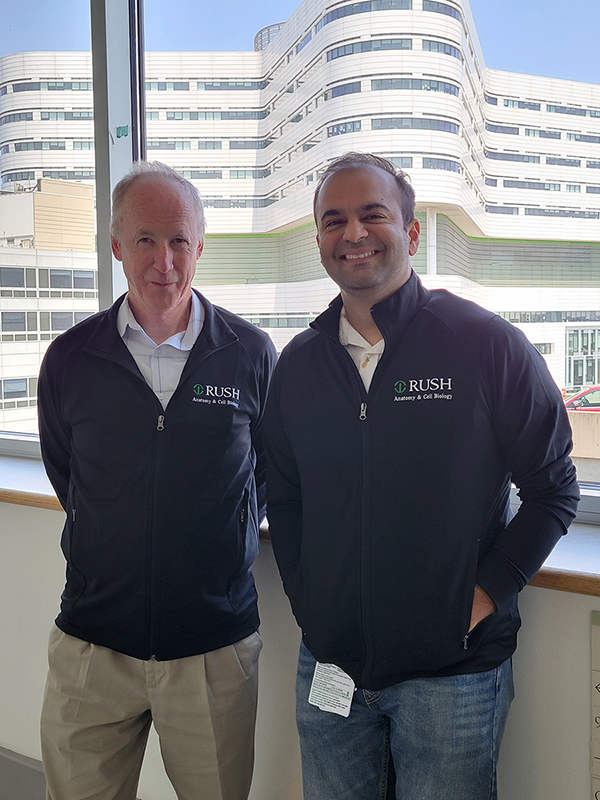
D. Rick Sumner, PhD, serves as Professor and Chair of the Department of Anatomy & Cell Biology at Rush Medical College, Rush University, and directs the Rush MicroCT and Histology Core. With over 30 years of continuous research funding from major institutions including NIH, DoD, NASA, and industry partners, his work has established him as a leading researcher in bone biology and orthopedic biomechanics. His laboratory maintains active collaborations with research groups both within Rush and internationally. Dr. Sumner's research focuses on fundamental aspects of bone biology with direct clinical applications. His primary areas of investigation include bone regeneration mechanisms, orthopedic implant fixation, and the role of bone in osteoarthritis pathogenesis. Specific projects examine the genetics of bone regeneration, effects of premature birth on postnatal bone development, early detection of particle-induced peri-implant osteolysis, and cartilage-bone interactions in osteoarthritis. His lab employs advanced imaging techniques including micro-computed tomography, backscatter scanning electron microscopy, and Fourier transform infrared spectroscopy, complemented by histology, mechanical testing, and biomarker analysis. Analysis of Dr. Sumner's recent publications reveals a strong interdisciplinary approach spanning bone biology, immunology, microbiome research, and circadian rhythms. His work demonstrates how bone health intersects with systemic conditions including inflammatory bowel disease, circadian disruption, and premature birth. The research consistently applies sophisticated imaging and analytical techniques to understand bone-implant interfaces and develop improved diagnostic and therapeutic approaches for orthopedic conditions. Dr. Sumner serves as Principal Investigator or Multiple Principal Investigator on multiple NIH grants including R01AR080118 (bisphosphonates and bone matrix), R01AR079179 (systems genetics of bone regeneration), R21HD102026 (bone health in formerly premature individuals), and P30AR079206 (Chicago Center on Musculoskeletal Pain). He has mentored numerous postdoctoral fellows including Frank Ko, PhD, and Brittany M. Wilson, PhD, who continue research in bone regeneration and implant osteolysis. Dr. Sumner's laboratory operates as the Laboratory of D. Rick Sumner within the Department of Anatomy & Cell Biology at Rush University Medical Center. The lab maintains the Rush MicroCT and Histology Core, providing advanced imaging capabilities for bone and implant research. His team includes bioinformaticians, postdoctoral researchers, and technical staff working collaboratively on multiple projects related to bone regeneration, implant fixation, and osteoarthritis mechanisms.
Milan Milivojević is an Associate Professor at the Faculty of Technology and Metallurgy , University of Belgrade, Department of Chemical Engineering. His work focuses on bioprocess engineering , adsorption processes , and wastewater treatment . Current faculty member with expertise in chemical and environmental engineering Active in techno-economic analysis of industrial processes Key research areas: composite materials , enzyme immobilization , pneumatic reactor design His 15 most recent publications (2013–2022) emphasize biological wastewater treatment , adsorption of pollutants using alginate-based composites, and optimization of industrial chemical processes . Notable subfields include nickel/chromium removal , synthesis of functional oligosaccharides , and techno-economic modeling . He has mentored 40+ students in doctoral and master’s theses (2014–2025), covering topics like adsorption of toxic ions , bioreactor systems , and chemical process analysis . Detailed project descriptions and student theses are archived in the Faculty of Technology and Metallurgy database.