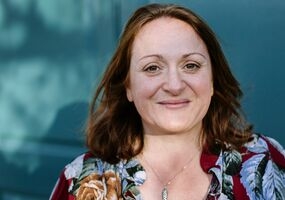
Professor Fay Couceiro is a Professor of Environmental Pollution in the School of Civil Engineering and Surveying at the University of Portsmouth. She leads the Microplastics Research Group and the 'Evaluating change across the plastics lifecycle' theme for the Revolution Plastics Institute, focusing on pollution sources, interventions, and collaborations with industry. She holds editorial roles at Cambridge Prisms: Plastics and peer reviews for multiple journals and funding bodies. Education: BSc in Marine Biology (Queen's University Belfast), PhD in Biogeochemistry (funded project on Strangford Lough), postdoctoral research at the University of Plymouth. Research Interests: Contaminants' fate, microplastics' environmental and health impacts, nutrient dynamics, heavy metals, and organic pollutants like PAHs. Her work integrates pure science with civil engineering solutions. Publications span 2007–2025, emphasizing microplastic toxicity, soil-oil interactions, and pollution mitigation strategies. Over 27 peer-reviewed articles highlight her contributions to environmental science. Advising & Grants: Supervises MSc/PhD students and collaborates with companies like Southern Water. Active in STEM outreach and UK research policy, including the EU's HR Excellence in Research accreditation process. Labs/Teams: Microplastics Research Group, Revolution Plastics Institute, and interdisciplinary teams in environmental technology and resilience.
John A. Rogers is the Louis Simpson and Kimberly Querrey Professor at Northwestern University, holding joint appointments in Materials Science and Engineering, Biomedical Engineering, Mechanical Engineering, Chemistry, and Neurological Surgery. He directs the Querrey-Simpson Institute for Bioelectronics. His work bridges soft materials science, bio-integrated electronics, and nanotechnology, with a focus on wearable medical devices, bioresorbable systems, and neural interfaces. Educations: B.A. & B.S. from University of Texas Austin (1989), S.M. from MIT (1992), Ph.D. in Physical Chemistry from MIT (1995). Prior roles include Director of Bell Labs' Condensed Matter Physics Department and faculty positions at University of Illinois at Urbana-Champaign. Research emphasizes soft materials for bio-inspired electronics, including flexible sensors, microfluidic platforms, and bioresorbable implants. His lab has pioneered epidermal electronics, injectable optoelectronics, and neural interfacing systems. Over 1000 peer-reviewed publications and 100+ patents highlight his contributions to nanotechnology and biomedical engineering. Awards include the Benjamin Franklin Medal (2019), MRS Medal (2018), and MacArthur Fellowship (2009). He is a member of the National Academies of Sciences, Engineering, and Medicine. Current projects span bioelectronic medicines, wearable health monitors, and advanced medical imaging tools.
Dr. Nhiem Tran is a Senior Lecturer in the Department of Applied Chemistry and Environmental Science at RMIT University's School of Science, part of the STEM College. He joined RMIT in 2015 as a Vice Chancellor's Research Fellow after completing his PhD in Physics at Brown University (USA, 2012) and postdoctoral research at Rhode Island Hospital (USA), CSIRO, and the Australian Synchrotron. His research focuses on developing biomaterials for drug delivery, gene therapy, and medical implants, particularly lipid nanoparticles and 3D-printed metallic implants. He leads the Biomaterial Interfaces group, investigating self-assembled lipid nanoparticles for cancer and autoimmune disease treatments. His work has resulted in over 65 high-impact publications and numerous awards, including the RMIT Vice Chancellor's Research Fellowship and the Stein/Bellet Foundation Fellowship. Tran's funding comes from grants such as the ARC Discovery Project, mRNA Victoria, and the CASS Foundation. His research interests span nanomedicine, biomedical engineering, and materials science, with a focus on applications in drug delivery, bacterial infection control, and orthopaedic implants. Education: PhD in Physics (Brown University, 2012) Key Projects: 3D-printed diamond-titanium implants, lipid nanoparticle drug carriers, and antimicrobial coatings. He actively supervises postgraduate research in areas like nanomaterials for drug delivery and biomedical applications.
Zoran Cenev holds a Tenure Track Assistant Professor position within the Mechatronics and Dynamics section of the Department of Mechanical and Production Engineering at the School of Engineering, Aarhus University. His primary institutional affiliation is with AU Engineering, and contact details include email zoran.cenev@mpe.au.dk and telephone +45 20 64 75 44, with office location Aarhus N, 5128-140. Research interests focus on interdisciplinary applications of magnetic and robotic systems: Robotic micromanipulation via electromagnetic needles Ferrofluid-based biofabrication for skeletal muscle engineering Laser-induced photothermal droplet control Theoretical modeling of particle dynamics at fluid interfaces Surface engineering for underwater metallic stability Nanostructure formation through ion bombardment His recent publications (2023-2025) reveal a dominant trend in adapting ferrofluids for biomedical automation, particularly 3D bioprinting of magnetically responsive tissues and droplet manipulation on engineered surfaces. This work bridges mechanical engineering with regenerative medicine, emphasizing practical implementations of theoretical models for microscale precision. Scientific awards are not documented in the provided information. As a faculty member, Dr. Cenev likely mentors graduate students and pursues research grants, though specific advisees or funding details are absent. Departmental laboratories and workshops support his experimental work in mechatronics, with emphasis on magnetic manipulation systems and surface characterization.
Dr. Yi Shen is a Senior Lecturer at the School of Chemical and Biomolecular Engineering, The University of Sydney, and Chair of RACI Women in Chemistry. She is also affiliated with multiple research institutes including Sydney Institute of Agriculture, Sydney Southeast Asia Centre, The Centre for Drug Discovery Innovation, and The University of Sydney Nano Institute. PhD in Soft Materials from ETH Zurich Postdoctoral research at University of Cambridge and Harvard University Her research focuses on protein phase behavior and functional biomaterials development, utilizing soft matter approaches and microfluidic techniques to address challenges in neurodegenerative diseases, sustainable materials, and biomedical engineering. She has published extensively in top journals like Nature Nanotechnology and PNAS, with a particular emphasis on: Protein liquid-liquid phase separation mechanisms Biomaterials from protein nanofibrils Microfluidic manipulation of biological systems Biodegradable bioplastics development Shear force effects on biomolecular systems Pathological protein aggregation dynamics Key scientific achievements include: 2022 ARC DECRA Fellowship 2022 Sydney Nano Frontier award 2018 ETH Zurich Spark Award (for Fe delivery system invention) 2012 Princeton Grand Challenges Program 2 patents pending 2 Nature Nanotechnology cover articles As an educator, she coordinates CHNG2802 Chemical Engineering Modelling and Analysis, co-teaches CHNG3804 Biochemical Engineering and CHNG5605 Bio-products: Laboratory to Marketplace, and guest lectures across biomedical and nanotechnology programs. Her lab actively collaborates with institutions in Switzerland (ETH Zurich), UK (Cambridge), and US (Harvard, Princeton), focusing on transforming biomolecular understanding into real-world applications in health, industry, and environmental sustainability.
Dr. Daniel Roxbury is an Associate Professor and Graduate Director at the Department of Chemical, Biomolecular and Materials Engineering within the University of Rhode Island's College of Engineering. With expertise in nanoscience and carbon nanomaterials, his research focuses on nano-bio interactions, developing functionalized nanotubes for biomedical applications and environmental monitoring through his NanoBio Engineering Laboratory. His work spans multiple disciplines including: Biomedical nanosensors Smart wearable biomaterials Targeted drug delivery systems Environmental nanotechnology Single-molecule imaging Nanotoxicology Recent publications emphasize machine learning-enhanced spectral analysis, coral reef conservation nanotechnology, and wearable stress monitoring textiles. His 2024 ACS Nano study introduces AI-driven macrophage phenotyping, while 2023 Nature Nanotechnology work explores coral reef restoration strategies using nanomaterials. Awarded the 2019 NSF CAREER grant for cellular nanometrology, he leads multiple NIH-funded projects including: $820,000 NSF CAREER: Spectral Imaging for Sub-Cellular Nanometrology $140,000 Miriam Hospital COBRE: Cortisol Detection Textiles $700,000 NSF EAGER: Multiplexed Wound Biomarker Detection His laboratory houses state-of-the-art equipment including: Near Infrared Hyperspectral Microscope Custom NIR Fluorescence Spectrometer Jasco UV/VIS/NIR Spectrophotometer Biosafety Cabinet Cell Culture Incubator Cryo-Storage System
Professor George Britovsek (FRSC) is a leading figure in catalysis and sustainable carbon management at Imperial College London . As Director of the MRes in Catalysis & Engineering and Head of Teaching in Inorganic Chemistry, he bridges academic leadership with cutting-edge research. His work focuses on transition metal complexes for converting ethylene , alkanes , biomass , and CO₂ into valuable chemicals and fuels through industrial collaborations. Education : M.Sc. (Technical University of Aachen, 1990), Ph.D. (Aachen, 1993) under Prof. W. Keim Postdoctoral Training : University of Tasmania (1994-1996), Imperial College London (1996-2000) His research interests span: Selective oxidation of alkanes using bio-inspired iron complexes Alkene conversions to functional polymers via novel catalysts CO₂ valorization into polymers and cyclic carbonates Biomass-derived feedstocks for chemical synthesis Recent catalysis trends highlight his work on: Designing Fe-N/C catalysts for epoxidation Developing PN3P pincer ligands for H₂ activation Creating degradable polyethylene via iron-catalyzed chain growth Modeling alternating α-olefin distributions in chromium systems Awards : Fellow of the Royal Society of Chemistry (FRSC) Students & Collaborators actively engage in: Photocatalytic polymer degradation Electrocatalytic CO₂ conversion Functionalized polymeric materials 3D-printed catalytic scaffolds His Britovsek Research Group operates at the Molecular Sciences Research Hub, White City Campus, advancing both homogeneous and heterogeneous catalysis through experimental and computational approaches.
Ahmed Elbanna is an Associate Professor at the University of Illinois Urbana-Champaign (UIUC), affiliated with the Grainger College of Engineering and the Department of Civil and Environmental Engineering. He holds a Ph.D. from Caltech (2011) and has been on UIUC faculty since 2013. His research focuses on mechanics of complex systems, including earthquake dynamics, metamaterials, and biomaterials. He has received prestigious awards such as the NSF CAREER Award (2018) and the Donald Biggar Willett Faculty Fellowship (2020). Education: Ph.D. Civil Engineering, California Institute of Technology (2011) M.S. Applied Mechanics, California Institute of Technology (2006) M.S. Structural Engineering, Cairo University (2005) B.S. Civil Engineering, Cairo University (2003) Research Interests: Elbanna’s work spans theoretical and applied mechanics, with emphasis on fracture, wave propagation, and critical phenomena in geophysical and biological systems. Key areas include: Earthquake mechanics and granular matter dynamics Mechanical metamaterials for wave control Networked biological materials (e.g., bone, hydrogels) Modeling epidemic dynamics during the COVID-19 pandemic Awards & Recognition: National Science Foundation CAREER Award (2018) Donald Biggar Willett Faculty Fellow (2020) Journal of Applied Mechanics Award (2019) UIUC Teaching Excellence Awards (2018–2024) Service & Leadership: Member of the UIUC Faculty Senate (2020–present) Co-Chair, Computational Mechanics Committee (ASCE EMI, 2024–present) Leader, Computational Science Group at Southern California Earthquake Center (2019–present) Labs & Groups: Leads the Mechanics of Complex Systems Lab at UIUC, focusing on interdisciplinary research in geophysics, materials science, and computational modeling.
Prof. Raul Fangueiro is a Full Professor and Vice-Dean at the School of Engineering, University of Minho, Portugal. As a Senior Researcher, he leads FIBRENAMICS – Institute of Innovation on Fiber-Based Materials and Composites. His work spans advanced materials (nano, smart, composites) and structures (3D, auxetic, multiscale) with applications in defense, healthcare, construction, and automotive sectors. Supervised over 20 PhD and Post-Doc researchers Scientific coordinator of 20+ national/international research projects Author of 200+ journal papers (H-index: 47), 500+ conference publications, 36 books, 40 patents Research focuses on nanotechnology , electrospinning , and sustainable material systems : Auxetic composites for personal protection Biodegradable nanofibers for medical use Smart textiles for biological/chemical resistance Recycled mineral/wood-based composites Graphene-reinforced green materials Multiscale fiber architectures Scientific recognition includes: Top 2% most influential scientist (Elsevier/Stanford 2020) Founder of AUXDEFENSE and ICNF conferences Editorial board member of leading composite journals Advisor to European Defense Agency/NATO working groups Active in industry-academia partnerships through spin-offs (Sciencentris, B4Logic, Beyond Composites, Givaware, Pixartidea) and collaborative projects with institutions like Instituto Superior Técnico, University of Aveiro, and international universities.
Josh Atkinson is an Assistant Professor in the Department of Civil and Environmental Engineering and the Omenn-Darling Bioengineering Institute at Princeton University. His research focuses on using synthetic biology and protein engineering to control electron transport in microbes for environmental applications, such as bioelectronic sensors and bioremediation. The Atkinson Lab investigates microbial energy processing, biofilm-electronic interfaces, and sustainable biotechnologies. Affiliations: Princeton University, Omenn-Darling Bioengineering Institute Research Interests: Microbial electron transport, bioelectronic systems, environmental monitoring, sustainable catalysis His work bridges disciplines like electrochemistry, bioengineering, and environmental science to engineer living materials for real-world challenges. The lab recruits students across levels, emphasizing diversity and interdisciplinary collaboration. Recent projects include real-time contaminant sensors and light-controlled biofilm patterning. Articles highlight innovations in bioelectronics and microbial systems engineering. The lab’s future directions involve scaling-up bioelectronic devices and enhancing microbial community understanding.
Jonathan Conway is an Assistant Professor in the Department of Chemical and Biological Engineering at Princeton University and an associated faculty member of the High Meadows Environmental Institute (HMEI). He leads the Conway Lab, which focuses on engineering plant-microbe interactions for applications in bioagriculture, bioenergy, and biochemical industries. Education: B.S. Chemical Engineering, University of Notre Dame (2011) M.S. Chemical Engineering, North Carolina State University (2013) Ph.D. Chemical Engineering, North Carolina State University (2017) Postdoctoral Fellow, University of North Carolina Chapel Hill & Howard Hughes Medical Institute (2017-2021) Research Interests: The Conway Lab develops genetic engineering approaches for non-model bacteria at plant-microbe interfaces. Key research areas include: chemical signaling between plants and microbes, microbiome impacts on plant immunity, environmental stress responses in agricultural systems, and enzymatic degradation of lignocellulosic biomass using thermophilic bacteria. The lab employs bacterial genetics, systems biology, and biomolecular engineering to create technologies for sustainable bioindustries. Publication Trends: Recent work demonstrates strong emphasis on molecular mechanisms of plant-microbe communication (2020-2024), enzyme characterization in biomass degradation (2024-2025), and development of synthetic microbial communities for climate resilience (2024). Earlier research focused on extremophile enzymology and metabolic engineering (2012-2019). Student Advising: Currently mentors 4 graduate students and 8 undergraduates. Alumni include 9 former advisees who graduated between 2022-2024. The lab actively recruits students through Princeton's Chemical Engineering graduate program and undergraduate research initiatives. Laboratory: The Conway Lab develops microfluidic systems for root microbiome studies and genetic tools for engineering plant-associated bacteria. Current projects include designing thermophilic microbial consortia for consolidated bioprocessing and characterizing bacterial immune evasion strategies.
Prof. Abbas Samani is a Professor at the Department of Electrical and Computer Engineering and holds a joint appointment in the Department of Medical Biophysics at Western University . He is a core faculty member of the Biomedical Engineering Graduate Program and an Associate Scientist at Imaging Research Laboratories of Robarts Research Institute . His academic journey includes a Ph.D. from the University of Waterloo, an M.Sc. from the University of Tehran, and a B.Sc. from Amirkabir University of Technology. His research focuses on biological tissue computational modeling and its applications in medical imaging, intervention, and image analysis . He develops computer/image-assisted tools for minimally invasive disease diagnosis and therapy , targeting heart disease, cancer, and lung disease . Key projects include myocardium biomechanical modeling , handheld medical devices for breast cancer screening , and lung disease diagnostics via CT image segmentation . His recent publications emphasize ultrasound elastography , finite element modeling , and inverse problems in biomechanics , primarily in journals like IEEE Transactions on Computational Imaging and Translational Oncology . His work spans both computational modeling and medical device development . Selected Graduate Supervision : Ph.D. Candidates : Seyed Hassan Haddad, Elham Karami, Seyed Mohammad Hesabgar Graduated Ph.D. Students : Ali Sadeghi Naini, Seyed Reza Mousavi M.Sc. Students : Cristian Linte, Patrick Courtis, Joseph O'Hagan, Hatef Mehrabian, Hirad Karimi, Hosein Amooshahi, Seyed Mohammad Hesabgar, Nastaran Ghadarghadr, Shadi Shavakh, Ehsan Salamati, Ehsan Omidi Teaching Contributions : Graduate: BME9519B/CAMI9519B/ECE9202B/ECE9022B - Advanced Image Processing and Analysis , MBP9530A - Human Biomechanics and Biomedical Applications Undergraduate: ECE4438B - Advanced Image Processing and Analysis , ES1050 - Introductory Engineering Design and Innovation Studio , MBP3330F - Human Biomechanics and Biomedical Applications Research Affiliations : Robarts Research Institute - Associate Scientist at Imaging Research Laboratories Western University - Core Faculty, Biomedical Engineering Graduate Program
Marcos Cruz is Professor of Innovative Environments at The Bartlett School of Architecture, University College London (UCL), where he leads research in bio-integrated design. He runs Bio-ID with Dr. Brenda Parker, a multidisciplinary research platform investigating design driven by biotechnology, computation, materials, and fabrication. Previously, he served as Director of The Bartlett from 2010-2014 and founded the BiotA Lab (2014-2018). His academic career spans multiple institutions including University College London (where he ran MArch Unit 20 for 19 years), University of Westminster (2008-2010), UCLA (2010), and IAAC (2014-present). Professor Cruz holds a Licenciatura from ESAP Porto, a Masters with distinction from UCL, and a PhD from UCL (2007), sponsored by the Portuguese Foundation for Science and Technology. His doctoral research on 'Neoplasmatic Architecture' earned him the RIBA President's Research Award in 2008. He is a registered architect with both the Architects Registration Board (ARB) and the Portuguese Architecture Chamber. His primary research area is Bio-Integrated Design, which explores how biotechnology and computation can reshape our built environment in response to climate change. This work goes beyond using nature as inspiration; instead, it treats nature as the medium for a multi-layered design approach. His key research project, Poikilohydric Living Walls, investigates integrating growth systems directly on building facades using algae and mosses that can switch photosynthetic activity on and off without additional maintenance. Another significant research area is The Body in Architecture, which examines the relationship between human flesh and architectural flesh, proposing a 'thick embodied flesh' that creates truly inhabitable architectural interfaces. His recent publications demonstrate a strong progression toward integrating living systems directly into building materials and facades. The research spans from microbial to tectonic scales, with increasing focus on biomaterials, robotic fabrication, and sustainable design approaches that actively participate in urban ecosystems rather than merely responding to them. RIBA President's Research Award (2008) for 'Neoplasmatic Architecture' Multiple Best Unit awards at Bartlett Summer Show (awarded by Thom Mayne, Paul Finch, Richard Rogers, Claude Parent, and Ross Lovegrove) Work part of permanent collection at FRAC Orleans Exhibitions at Venice and São Paulo Biennales Professor Cruz has supervised numerous PhD students through UCL's Research-by-Design programme and currently directs the MArch/MSc in Bio-Integrated Design. His research has been supported by EPSRC and involves industrial partners including Laing O'Rourke, Pennine Stone Limited, and Amorim, with academic partners at UCL Biochemical Engineering, University of Coimbra, and IST Tomar. He co-founded MAM-ARCH London (formerly marcosandmarjan) in 2000, whose work has built buildings and pavilions, won international competitions including the Kunsthaus Graz, and been exhibited globally. His practice represents a significant bridge between architectural design and biological systems, positioning him at the forefront of bio-integrated architectural research.
Dr. Qian Shunzhi is an Associate Professor and Program Director for the Bachelor of Engineering (Civil) at NTU's School of Civil and Environmental Engineering. He holds a PhD from the University of Michigan (2007), with prior faculty experience at Southeast University (2009-2013) and postdoctoral research at TU Delft (2007-2009). His research focuses on advanced construction materials like Engineered Cementitious Composites (ECC), self-healing concrete, and 3D-printable concrete, alongside life cycle assessment of infrastructure. Key interests include sustainable materials, CO2 sequestration, and material durability. Education: Bachelor's: Southeast University (Nanjing, 1998) Master's: Chinese Ministry of Transport Highway Research Institute (Beijing, 2001) PhD: University of Michigan (Ann Arbor, 2007) Research Interests: Novel cementitious composites for infrastructure resilience Recycled materials in construction 3D printing applications in concrete Material lifecycle analysis Notable contributions include bacterial encapsulation for self-healing, graphene-enhanced antibacterial surfaces, and CO2 sequestration via reactive materials. His work bridges material science, sustainability, and advanced manufacturing techniques.
Simon Sharpe is a Professor in the Department of Biochemistry at the University of Toronto and a Senior Scientist at The Hospital for Sick Children. His research focuses on the structural and dynamic properties of self-assembling proteins, particularly those involved in degenerative diseases, elastomeric proteins, and biological phase separation. The Sharpe Lab utilizes advanced biophysical techniques such as NMR spectroscopy, X-ray scattering, and electron microscopy to investigate these phenomena. BSc: Memorial University of Newfoundland (Cell Biology and Biochemistry, 1997) PhD: University of Western Ontario (Biochemistry, 2002) Postdoctoral Training: NIH (Solid-State NMR, 2002-2006) Research interests include: Protein self-assembly mechanisms Amyloid formation in neurodegenerative diseases Elastin and resilin biophysics Lipid-protein interactions Biological phase separation Structure-function relationships Lab members include Research Associate Dr. Sean Reichheld and PhD students James Otis, Asal Nady, and Robert Lu. The lab has dedicated access to 600 and 700 MHz NMR spectrometers and collaborates with SickKids facilities including the SBC Facility and Imaging Facility. Scientific awards: Canada Research Chair (2006-2016) Ontario Early Researcher Award (2010) Dr. Sharpe has taught courses including BCH374Y1 (Research Project in Biochemistry) and BCH425H (Structural Biology: Principles and Practice). His recent publications examine topics ranging from serum amyloid A structure to bacterial phase separation defenses, with methodologies combining solid-state NMR, fluorescence microscopy, and computational approaches.