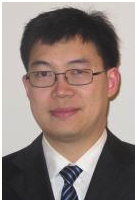
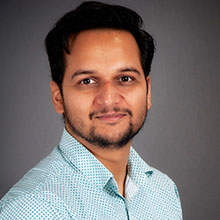
Lifeng Zhang is a Professor in the Department of Chemical and Biological Engineering at the University of Saskatchewan's College of Engineering. His work focuses on fluidization systems, clean energy, biomass utilization, and electrostatics in particulate handling. He holds a PhD from the University of Waterloo, with prior degrees from Zhejiang University and the Singapore-MIT Alliance. Research interests include advanced multiphase flow analysis, air pollution control, and process intensification techniques. Current projects involve enhanced fluidized bed drying, PEM fuel cell optimization, and green polymer development. His lab explores applications in sustainable energy and environmental engineering. Education highlights: B.Eng. (Zhejiang University), MSc. (Zhejiang University), MSc. (Singapore-MIT Alliance), PhD (University of Waterloo). Office: Room 1C122 Engineering Building, contact via lifeng.zhang@usask.ca or (306) 966-4799.
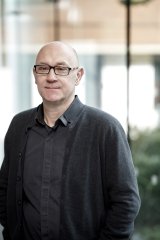
Dr. Zoran Visak is Senior Lecturer in Chemical Engineering at Aston University. His research focuses on sustainable solvents for lignocellulosic biomass treatment and thermodynamic properties of industrial mixtures. He has published over 50 papers on ionic liquids and phase equilibria. Visak teaches heat transfer and process design, and directs the Chemical Engineering program. His recent work explores ionic liquid/graphene composites for energy storage applications.
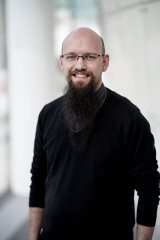
Professor Alan Goddard is a Professor of Biotechnology at the School of Biosciences, Aston University. He is affiliated with the Aston Institute for Membrane Excellence (AIME) as Training and Industry Lead, and the Biosciences Research Group. His research focuses on membrane proteins, lipid membranes, and bioinspired membrane technologies. He holds a BSc and PhD from the University of Warwick and a PGCE from the University of Lincoln. Research interests include GPCRs, transporters, membrane biogenesis, antimicrobial effects on membranes, and industrial biotechnology collaborations. He has supervised over 20 PhD/MSc students and postdoctoral researchers, many now in academic and industrial roles. Key grants include £500k Wolfson Foundation funding for the Wolfson Centre for Membrane Excellence and a £1.7M BBSRC Midlands Integrative Biosciences Training Partnership. He leads projects on bioinspired filtration membranes and membrane protein production optimization. Scientific achievements include developing lipid-based assays, advancing membrane protein purification methods, and characterizing microbial membrane adaptations. A Principal Fellow of the Higher Education Academy, he also contributes to editorial boards for journals like Antibiotics and Membranes.
Sanjay Mishra serves as Professor in the Department of Marketing and Business Law at the University of Kansas School of Business, where he integrates quantitative methodologies with consumer behavior research. His academic foundation includes a Ph.D. and MBA from Washington State University, an M.S. from Ohio State University, and a B.S. from the Indian Institute of Technology, establishing technical rigor across his career spanning four decades. Ph.D., Washington State University MBA, Washington State University M.S., Ohio State University B.S., Indian Institute of Technology Professor Mishra's research centers on consumer preference modeling, choice inconsistencies, advertising processing, and conjoint analysis applications, with significant contributions to new product development and innovation management. His work bridges theoretical marketing frameworks with practical business strategy, particularly examining cognitive processes in consumer decision-making and methodological validation in survey research. Recent expansions demonstrate interdisciplinary reach while maintaining core marketing science principles. Analysis of his 2022-2025 publications reveals strategic diversification into medical research (ophthalmology, immunology), environmental science (sustainable materials, biomimicry), and sociopolitical studies, yet consistently applies his expertise in choice architecture and quantitative modeling. Key trends include repulsion/attraction effect investigations, cross-cultural consumer behavior, and translational applications of marketing science to health and sustainability challenges. His scholarly impact is evidenced through publications in premier outlets including the Journal of Marketing Research, Journal of Business Research, and Marketing Letters, though specific awards remain unlisted in source materials. Professor Mishra's teaching portfolio spans Business in India, Marketing Management, New Product Development, Categorical Data Analysis, and multiple entrepreneurship courses, reflecting his commitment to bridging academic theory with real-world business applications. While student names and grant details are unspecified, his extensive publication record across marketing, engineering, and medical journals suggests active research mentorship and cross-disciplinary collaboration. Current work indicates growing engagement with health sciences and environmental sustainability through methodological innovations in consumer behavior analysis.
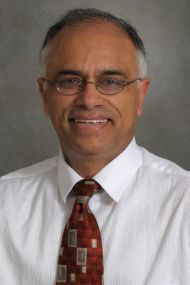
Devinder Mahajan is a tenured Professor in the Department of Materials Science and Chemical Engineering at Stony Brook University . He also serves as Graduate Program Director (CME) and Director of the Institute of Gas Innovation and Technology (I-GIT) at the Advanced Energy Research and Technology Center (AERTC). His career spans over four decades, including leadership roles at Brookhaven National Laboratory and international appointments in Italy, Japan, and China. Education : Ph.D. in Applied Chemistry (1979, University of British Columbia), M.Sc. (1976, University of British Columbia), B.Sc. (1972, Panjab University) Dr. Mahajan’s research focuses on low-carbon energy technologies , including CO 2 mitigation, methane hydrate utilization, biomass-to-fuels catalysis, ultra-deep hydrodesulfurization (HDS), extremophiles-mediated hydrogen production for fuel cells, and geothermal energy-minerals extraction. His work bridges chemical engineering, materials science, and environmental policy. His scientific publications (over 318) emphasize clean energy solutions, with recent articles exploring hydrogen storage in graphene materials, pipeline infrastructure for hydrogen blending, CO 2 clathrate hydrates, and photovoltaic/membrane distillation systems. These studies reflect his commitment to decarbonization and sustainable resource utilization. Notable scientific awards include: Marie Curie Senior Researcher (2013-17) Jefferson Science Fellow (2011-12) Outstanding Mentor Award (2009, 2007, U.S. Department of Energy) Crown and Eagle Medal of Honor (2006, RANS) Promising Inventor’s Award (2005, SUNY) Dr. Mahajan actively contributes to professional leadership , serving on editorial boards for the Journal of Renewable and Sustainable Energy and The Open Petroleum Journal . He has organized international workshops on biofuels, methane hydrates, and low-carbon societies, and advised U.S. and Chinese governments on energy policy.
Prof. Dr. Kai Jensen is a Professor and Head of Research Unit at the Institute of Plant Sciences and Microbiology, University of Hamburg. He leads the Applied Plant Ecology research group, focusing on coastal and salt marsh ecosystems, climate change impacts, microbial interactions, and carbon dynamics. His work integrates field studies, experimental approaches, and interdisciplinary collaborations to address global environmental challenges. Key areas include salt marsh biodiversity, biogeochemical cycles, and the effects of human activities on wetland ecosystems. Research Interests: Coastal ecology, salt marsh dynamics, climate change mitigation, microbial-plant interactions, urban ecology, and wetland conservation. His team explores topics such as root exudation, greenhouse gas fluxes, and the role of vegetation in carbon sequestration. The Applied Plant Ecology group collaborates with the Elbe Wetland Station Pevestorf and other institutions to advance ecological understanding and management strategies. Advising & Grants: Supervises multiple doctoral researchers and postdoctoral fellows, including studies on blue carbon, tidal wetland biogeochemistry, and plant-soil interactions. His projects often involve third-party funding and international partnerships. Technical and administrative support is provided by staff like Claudia Mählmann and Merle Steinhagen. Labs & Facilities: Research is conducted at the Institute of Plant Sciences and Microbiology (IPM), utilizing state-of-the-art equipment in the Otto Warburg House. Collaborative efforts extend to the Wadden Sea and Elbe River estuary systems, focusing on field experiments and sensor networks to monitor ecosystem responses to environmental changes.
Anders Riisager is a Professor in the Department of Chemistry at the Technical University of Denmark (DTU). His research focuses on catalysis, inorganic chemistry, and sustainable chemical processes, with particular emphasis on renewable energy and material science. His work aligns with UN Sustainable Development Goals related to clean energy and responsible consumption. Education: Expertise in inorganic chemistry and catalytic systems. Research interests include the development of novel catalysts for hydrogenation reactions, biomass conversion, and material synthesis using aluminophosphates and polyoxometalates. He has contributed to advancements in selective hydrogenation, rare sugar production, and catalyst recycling via supercritical fluid extraction. His publications highlight innovations in catalytic processes for lignocellulose upgrading and green solvent production. While no specific awards are listed, his contributions are reflected through extensive collaborations and a prolific publication record. Advising & Grants: Supervises multiple PhD projects including electrochemical pyroprocessing of nuclear fuels, green nitrile solvent production, and CO₂ valorization with ionic liquids. Active in the Inorganic Catalysis research group at DTU, he contributes to interdisciplinary projects addressing industrial catalytic challenges and sustainable chemical technologies.
Dr. Rajesh Shende is Professor and Interim Department Head of the Karen M. Swindler Department of Chemical and Biological Engineering at South Dakota School of Mines and Technology. He holds a B.S. from Nagpur University and B.S., M.S., and Ph.D. from the Institute of Chemical Technology, University of Mumbai. His research focuses on sustainable energy solutions and advanced materials development. Primary research areas include: Bioprocessing for biofuels and bioproducts using hydrothermal liquefaction Catalysis for hydrogen, syngas, and ammonia production Plastic waste valorization and process scale-up Synthesis of nanostructured materials for energy storage Reactor system design for biomass conversion Recent publications demonstrate strong emphasis on: Biomass conversion to sustainable aviation fuels Development of carbon electrodes from waste materials Advanced supercapacitor and battery technologies Techno-economic and life cycle assessments Catalytic process optimization for bio-oil upgrading Research achievements include: Secured $11.7M in research funding (total awards $26.8M) Advised 28 graduate students (MS/PhD) Published 150+ scientific papers Presented 165+ technical presentations Teaching responsibilities encompass transport phenomena, reaction engineering, process design, chemical safety, and sustainable energy. He employs collaborative learning strategies and contributes to ABET accreditation processes.
Carolyn Zeiner is an Assistant Professor in the Biology Department at the University of St. Thomas. She holds a PhD from Harvard University, MS from Cornell University, and BS from Bucknell University. Her research focuses on microbial processes in environmental systems, with particular emphasis on fungal contributions to biogeochemical cycles. Her research investigates environmental microbiology through the lens of microbial metabolism and community dynamics. Primary interests include: Microbial carbon cycling in soils and impacts on global change Microbe-mineral-metal interactions during decomposition Metabolite-mediated community dynamics Proteomic and bioinformatic approaches to microbial ecology Her publications consistently explore fungal-mediated biogeochemical transformations, particularly manganese oxidation pathways and carbon utilization strategies across diverse Ascomycete fungi. Recent work expands into urban agricultural systems and long-term soil amendment studies. Dr. Zeiner leads the Zeiner Lab where she investigates microbial processes at molecular scales using advanced proteomic techniques. Current projects examine soil microbial responses to organic amendments in urban gardens and mechanistic studies of fungal metal oxidation.
Sarah Styler is an Assistant Professor in the Department of Chemistry & Chemical Biology at McMaster University, Canada. She leads the P.A.R.T.I.C.L.E.S. research group, focusing on environmental chemistry, atmospheric processes, and interdisciplinary collaboration. Her work addresses air quality, climate impacts, and environmental justice, with a particular emphasis on urban surfaces, wildfire particulate matter, and cultural heritage conservation. Dr. Styler holds a PhD from the University of Toronto and has extensive postdoctoral experience at the Leibniz Institute for Tropospheric Research. Education: PhD in Environmental Chemistry, University of Toronto (2014) MSc in Environmental Chemistry, University of Toronto (2008) HBSc (High Distinction), University of Toronto (2004) Research Interests: Chemistry of atmospheric surfaces (e.g., urban dust, wildfire particles) Environmental justice and community partnerships Interdisciplinary projects in art conservation and reactor design Atmospheric aerosol transformations and photochemistry Grants & Funding: $85,000 Societal Impact Seed Grant (McMaster, 2024) $227,000 CFI Infrastructure Funding (2023) Labs/Teams: The P.A.R.T.I.C.L.E.S. group comprises 5 graduate students, 1 undergraduate, and 1 postdoc, actively researching topics like urban surface chemistry and wildfire toxin deposition.
Professor Chao-Jun Li is the E.B. Eddy Chair of Chemistry and Canada Research Chair (Tier I) in Green/Organic Chemistry at McGill University's Department of Chemistry within the Faculty of Science. He serves as Co-Director of the FQRNT Centre for Green Chemistry and Catalysis and Director of the NSERC CREATE Center for Green Chemistry Training. Professor Li is a highly distinguished scholar with multiple prestigious fellowships including the Royal Society of Canada, American Chemical Society, and Royal Society of Chemistry. Professor Li's educational background includes: B. Sc. from Zhengzhou University (1983) M.S. from Chinese Academy of Sciences (1988) Ph. D. from McGill University (1992) NSERC Postdoctoral Fellowship at Stanford University (1992-94) Professor Li's research focuses on revolutionizing chemical synthesis through sustainable approaches. His laboratory pioneered the use of water as a solvent for organic reactions and developed innovative green synthesis methods including Grignard-type reactions in water, Aldehyde-Alkyne-Amine coupling (A 3 -reaction), Cross-Dehydrogenative-Couplings (CDC reaction), and Hydrazone as Organometallic Reagent Equivalent (HOME). His work spans green chemistry, catalysis, photochemistry, and the conversion of renewable resources like biomass, CO 2 , and methane into high-value products. Professor Li's research has significant implications for sustainable industrial processes and environmental protection. Professor Li has received numerous prestigious awards throughout his career, including: Fellow of the Royal Society of Canada (Academy of Science) Fellow of the American Association for the Advancement of Sciences (AAAS) Fellow of the American Chemical Society (ACS) Fellow of the Royal Society of Chemistry (UK) Presidential Green Chemistry Challenge Award (Academic, 2001) Alfred Bader Award (CSC, 2018) Humboldt Research Award (2021) CIC Medal (2022) Professor Li actively mentors students and leads significant research initiatives. He directs the NSERC CREATE Center for Green Chemistry Training and the CFI Infrastructure for Green Chemistry and Green Chemicals. His laboratory (OM 440) at McGill University is a hub for innovative green chemistry research with over 550 publications, 8 books, and 15 patents to its credit. Professor Li also serves as Co-Director of the FQRNT Centre for Green Chemistry and Catalysis, fostering interdisciplinary collaboration in sustainable chemistry research.
Professor Benoit Chachuat is a Professor of Process Systems Engineering in the Department of Chemical Engineering at Imperial College London, UK. He holds affiliations with the Centre for Process Systems Engineering, Industrial Biotechnology Hub, Institute for Molecular Science and Engineering, and Robotics Forum. His research focuses on developing computational methods for sustainable chemical and biological processes, integrating rigorous modeling, optimization, and data analysis to improve industrial processes. Key areas include process optimization, enviro-economic assessments, and advanced control strategies for bioreactors and energy systems. Prof. Chachuat's career includes roles as Senior Lecturer (2010–2015), Reader (2015–2020), and current Professorship (since 2020) at Imperial College. Prior to this, he held positions at McMaster University (2008–2010), EPFL (2005–2008), MIT (2003–2005), and INRIA (2002–2003). His educational background includes a Research and Teaching Assistantship at Lorraine Institute of Technology (1998–2002). His research interests span computational methods for process systems engineering, with emphasis on global optimization, robust control, and Bayesian estimation. Notable projects include enviro-economic assessments of bioenergy, waste-to-X technologies, and sustainable aviation fuels. His work bridges theoretical advancements with practical industrial applications, supported by software tools for method dissemination. Publications highlight contributions to modeling microalgae cultures, membrane contactors in natural gas processing, and vaccination campaign optimization. His enviro-economic analyses address carbon footprints and externalities in chemical processes, aiming for net-zero solutions. Current projects explore machine learning integration in industrial processes and resilience in biopharmaceutical supply chains. Prof. Chachuat collaborates with experimentalists and industry partners, addressing challenges in energy sustainability, circular economy, and pandemic response. His methodologies prioritize safety, economic viability, and environmental stewardship across chemical and biological systems.
Associate Professor Darryn Rackemann is affiliated with the Faculty of Engineering at Queensland University of Technology (QUT), where he holds a position in the School of Mech., Medical & Process Engineering . His expertise spans sugar processing technology, biomass conversion, and CFD modeling. Rackemann holds a PhD in Chemical Engineering (QUT) and a Master of Engineering Science (James Cook University). His research focuses on enhancing sugar industry processes, including crystallization vessel design, evaporation systems, and biomass pretreatment for renewable fuels. He has developed proprietary technologies like the SRI Jigger Tube System and pioneered solvolysis processes for biofuel precursors. Rackemann has also contributed to global sugar process simulation via Sugars™ software. Received awards including the President’s Medal for Best Research Paper (ASSCT) and EPA Sustainable Industries Award . Teaches courses such as BVB328 - Applications in Biotechnology and sugar industry operator training programs. Supervises postgraduate research in biorefinery systems and currently leads projects on pan design optimization and evaporator efficiency. His work integrates chemical engineering with agricultural biotechnology , addressing challenges in sustainable resource utilization. Rackemann collaborates with industry partners to advance process innovations in sugar factories and biorefineries.
Dr. Ashish Kumar is a Researcher at the Department of Chemistry, University of York, UK, specializing in indoor and outdoor air quality. His current postdoctoral research focuses on the INGENIOUS project, investigating indoor air pollutants and their sources. He holds a PhD in Atmospheric Chemistry from IISER Mohali (2021) and a BS-MS in Chemistry from the same institution. His work emphasizes VOC measurements, emission inventories, and pollution source identification in regions like the Indo-Gangetic Plain and urban India. He has contributed to developing high-resolution emission inventories for road transport and agricultural activities. Research interests include volatile organic compounds (VOCs), particulate matter (PM2.5), and their health impacts, alongside experimental atmospheric chemistry and pollution mitigation strategies. He has participated in field campaigns and laboratory experiments, employing advanced analytical techniques like PTR-MS and TD-GC-MS. His findings have been published in journals such as Science of the Total Environment and Atmospheric Chemistry and Physics . Dr. Kumar has received the Early Career Scientist Poster Prize (2021) and the Outstanding Student Poster and PICO award (2019). He collaborates widely on environmental policy and air quality modeling, with datasets contributing to regional pollution assessments. His research aims to bridge gaps between emission sources and health/environmental outcomes, fostering sustainable solutions for improving air quality globally.
Dr. Amit Kumar is a Principal Research Fellow and UKRI Future Leaders Fellow at the University of St. Andrews' School of Chemistry. He leads the Kumar Research Laboratory (KuRLa), focusing on green homogeneous catalysis for circular economy applications, including renewable polymers, plastic depolymerization, and CO₂ transformation. His research aims to develop sustainable chemical processes and hydrogen storage materials. Education: Integrated M.Sc. Chemistry (2007-2012), Indian Institute of Technology Roorkee (Institute Silver Medalist) PhD (DPhil) in Synthetic Organometallic Chemistry (2012-2016), University of Oxford (Rhodes Scholar) Postdoctoral Research at Weizmann Institute of Science (2016-2019, PBC Fellowship) Research Interests: Catalytic depolymerization of plastics CO₂ valorization into chemicals/materials Design of hydrogen storage materials Sustainable polymer synthesis His lab emphasizes scalable, environmentally benign processes to address global challenges in energy and waste management. Key Awards: FGS Prize for Outstanding Postdoctoral Research (2018) Leverhulme Trust Early Career Fellowship (2020) UKRI Future Leaders Fellowship (2022) Advising & Funding: Supervises PhD students in polymer chemistry and catalysis Funded by UKRI, Leverhulme Trust, and industry partnerships His lab collaborates on projects with academic and industrial partners, advancing from fundamental catalysis to applied solutions. Labs & Teams: KuRLa (Kumar Research Lab) at University of St. Andrews Prior work in Prof. David Milstein's group at Weizmann Institute