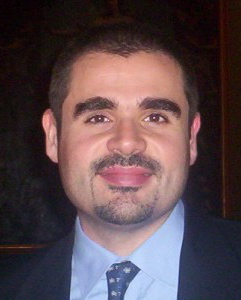
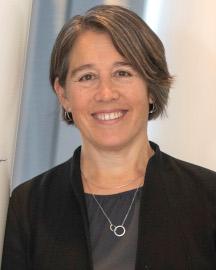
Dr. Marie-Christine Knippels is an Associate Professor at the Faculty of Science, Utrecht University , specializing in Science Education . Her work bridges biology education and educational innovation, focusing on fostering responsible citizenship and metacognitive skills through socioscientific inquiry-based learning (SSIBL) and systems thinking. As Director of Studies for the Bachelor program at the Freudenthal Institute , she leads curriculum development in science education and communication. Education: PhD in Genetics Education, postdoctoral research on moral reasoning in genomics dilemmas. Her research emphasizes integrating sustainability and ethical reasoning into science education, evidenced by recent publications on environmental citizenship, open schooling models, and systems thinking in biology classrooms. She explores gamification (e.g., escape rooms/boxes) to enhance collaborative and immersive learning. Key Publications (2020–2025) address systems thinking frameworks, socioscientific inquiry, and sustainability education. Her work appears in journals like Journal of Curriculum Studies , Frontiers in Education , and Sustainability , often co-authoring with colleagues such as van Joolingen , Gilissen , and Verhoeff . She contributes to teacher education as a member of the BKO/SKO committee and designs courses like Designing for Science Education and SmallSSIBL . Her lab/team collaborates via the Freudenthal Institute and international networks (e.g., ENEC Cost Action).
Dr. Sylvia Harmon-Jones is an Associate Lecturer at the School of Psychology, University of Wollongong (2025-present). Her research focuses on the interplay between social relationships and personality/temperament, particularly examining the effects of adverse experiences and stress through evolutionary psychology and attachment theory. She employs methodologies from social and personality psychology and contributes to cross-species research via behavioral neuroscience and animal models. Education Bachelor of Psychology (First Class Honours, The University Medal), UNSW Sydney (2014-2018) PhD in Psychology, UNSW Sydney (2019-2023) Research Trends : Recent publications investigate memory retention, trait anger, and maternal care impacts using human and animal models. Her work spans developmental psychology, behavioral neuroscience, and cognitive psychology, often collaborating with researchers like Richard Richardson and E. Harmon-Jones in journals such as Motivation Science and Developmental Psychobiology . Scientific Awards The Paxinos Neuroscience Prize for Best PhD Thesis in Neuroscience (2024) Best Student Oral Presentation at Biological Psychiatry Australia (2021) UNSW Postgraduate Council Student Award (2021) International Society for Developmental Psychobiology Travel Award (2019) Multiple awards for research presentations and academic excellence (2018-2019)
Dr. Alexander Johan Nederbragt ("Lex Nederbragt") is a Senior Lecturer at the University of Oslo's Faculty of Mathematics and Natural Sciences, affiliated with the Centre for Ecological and Evolutionary Synthesis (CEES) and former member of the Centre for Computational Inference in Evolutionary Life Science (CELS). He leads the "Computing in Science Education" initiative within the Bioscience bachelor's program, developing courses like BIOS1100 that integrate Python programming with biological modeling. His educational philosophy emphasizes reverse instructional design and constructive alignment, with a focus on student-active learning and AI-driven pedagogical innovation. Researchwise, Nederbragt specializes in Bioinformatics and Genomics , particularly Evolutionary genomics of fish (Atlantic cod, haddock, grayling) Graph-based reference genome methodologies Genomic repeat element analysis Horizontal gene transfer in diatoms Computational microbiome studies His work spans comparative genomics, genome assembly validation, and bioinformatics software development (NucDiff, NucBreak). Scientific contributions reveal expertise in High-throughput sequencing Genomic architecture Evolutionary adaptation Computational methods Publication trends from 2012-2023 His research frequently intersects with ecological and evolutionary questions, particularly in teleost fishes. Scientific Awards Merittert Utdanner (Excellent Teaching Practitioner), University of Oslo (2023) Olav Thon Foundation National Award for Excellence in Teaching (2025)
Kristoffer Sahlin is an Assistant Professor at Stockholm University's Department of Mathematics and a SciLifeLab Fellow at the National Center for Molecular Biosciences. He leads the Sahlin Group, which develops algorithms and statistical models for analyzing large biological datasets with a focus on DNA, RNA, and protein sequencing data. Dr. Sahlin obtained his PhD in Computer Science from KTH Royal Institute of Technology and conducted postdoctoral research at Pennsylvania State University and the University of Helsinki. Prior to his PhD, he earned bachelor's and master's degrees in mathematics and mathematical statistics from Stockholm University. His research focuses on developing scalable algorithms for high-throughput genomic and transcriptomic sequencing data to address sequence alignment, genome assembly, structural variation detection, and transcriptome analysis. His work bridges computer science, mathematics, and biology with strong emphasis on practical applications to biological and biomedical questions. Recent publications demonstrate expertise in strobemers for sequence similarity detection, Strobealign for flexible seed size read alignment, and methods for reference-free transcriptome analysis using long-read sequencing technologies. His research spans genomic mapping, transcriptome reconstruction, and nanopore sequencing analysis. SciLifeLab Fellow Dr. Sahlin mentors PhD students Alexander Petri and Ivan Tolstoganov, and has previously mentored Benjamin Maier (now a PhD student at EMBL-EBI Cambridge) and Sebastian Lindbom Gunnari. His group actively seeks motivated BSc and MSc students with programming skills for thesis projects in algorithms for Life Sciences and Bioinformatics. The Sahlin Group is part of the Computational Mathematics research group at Stockholm University, which works with mathematical modeling and method development for studying systems ranging from molecular to planetary levels.
Jette Kolding Kristensen is a Professor at Aalborg University's Faculty of Health Sciences and affiliated with the Department of Joint, Spine and Connective Tissue Diseases at Aalborg University Hospital. She balances clinical employment with university research, focusing on chronic disease identification, monitoring, and management , particularly Type-2 diabetes and thyroid diseases . Her work includes quality development , clinical guideline formulation , and registry research . Academic rank: Professor Key institutions: Aalborg University Hospital, Aalborg University Her teaching expertise spans pre- and postgraduate medical education , emphasizing the integration of theoretical learning with clinical residency and analyzing factors influencing specialty recruitment . She has supervised 25+ medical student master theses and contributed to educational reforms. Research trends highlight her leadership in diabetic retinopathy screening , medical education innovation , and cross-specialty ultrasound training . Recent projects like Tomorrow’s Doctor and ReMoTe examine clinical training dynamics and pandemic-driven healthcare adaptations. Notable collaborations include partnerships with the Danish Health Authority, Medicinrådet, and Dansk Selskab for Medicinsk Uddannelse. Her editorial role at Månedsskrift for Almen Praksis and over 1,000 teaching hours since 2011 underscore her commitment to academic and clinical mentorship.
Xiaojun Tian is an Associate Professor at Arizona State University's School of Biological and Health Systems Engineering. He leads the Tian Laboratory, which focuses on quantitative approaches to understanding biological systems through the integration of mathematical modeling and experimental techniques. His work bridges systems biology, synthetic biology, and biomedical engineering. Education: Ph.D. in Systems Biology from Nanjing University (2012) Postdoctoral Fellow at Virginia Tech (2012-2014) Postdoctoral Fellow at University of Pittsburgh (2014-2017) Research Interests: Dr. Tian's research spans multiple interdisciplinary areas at the intersection of biology, engineering, and mathematics. His laboratory employs quantitative experiments and mathematical modeling to investigate fundamental problems in systems and synthetic biology, with particular focus on gene circuits, nonlinear dynamics, and cellular decision-making processes. His work on epithelial-mesenchymal transition (EMT) has provided important insights into cancer metastasis and tissue development. The lab's approach combines theoretical frameworks with experimental validation to develop predictive models of biological behavior. Research Trends: Analysis of Dr. Tian's recent publications reveals a strong focus on resource competition in synthetic gene circuits, growth feedback mechanisms, and the development of robust control strategies for biological systems. His work increasingly integrates concepts from nonlinear dynamics, control theory, and systems biology to address challenges in synthetic biology engineering. Recent publications demonstrate a shift toward more complex multi-module circuit designs and the development of strategies to mitigate context-dependent circuit failures. Scientific Awards: NIH Maximizing Investigators' Research Award (MIRA) NSF Career Award Advising and Grants: Dr. Tian has successfully mentored graduate students including Diego Barra Avila (who successfully defended his Master's Thesis) and Hanah (who passed her comprehensive exam). His research is supported by multiple significant grants including an NIH grant titled "Multi-Scale Engineering of Heterogeneity in the Host-Aware Synthetic Gene Circuits" (2021-2026), an NSF grant on "Epigenetics Control by Noncoding RNA" (2019-2022), and an NSF CAREER award "Molecular and Cellular Mechanisms Underlying Circuit-Host Interactions" (2022-2027). Laboratory: The Tian Laboratory at ASU focuses on developing quantitative approaches to understand and engineer biological systems. The lab actively recruits talented and motivated graduate students interested in interdisciplinary research at the interface of biology, engineering, and mathematics. Current research directions include investigating circuit-host interactions, developing strategies to address resource competition in synthetic gene circuits, and understanding the dynamical mechanisms underlying cellular decision-making processes.
Bram Vervliet is a Professor at the Laboratory for Biological Psychology , Faculty of Psychology and Educational Sciences, KU Leuven. He serves as Programme Director for the POC Master Psychology (Theory and Research) and is affiliated with the Leuven Centre for Health Humanities and KU Leuven Brain Institute . His research bridges associative learning theory, clinical psychology, and translational neuroscience. Education : PhD in Psychology (KU Leuven, 2004) Positions : Assistant Professor at University of Amsterdam (2006–2010), Senior Postdoc at KU Leuven (2010–2015), Marie-Curie Fellow at Harvard Medical School (2015–2017) His research investigates the psychobiological processes underlying fear acquisition, generalization, extinction, and avoidance. Current projects focus on: Relief dynamics during threat omission Gut-brain axis in fear modulation Stress effects on avoidance learning Neural basis of relief in OCD and anxiety Computational modeling of prediction errors Recent publications highlight studies on dopamine receptor blockade in rodent avoidance, stress reactivity in humans, and epigenetic modulation of fear memories via gut metabolites. He received a Poster Prize Award at the 4th European Stress Conference (2025). Notable grants include the VENI grant (University of Amsterdam), Marie-Curie fellowship, and KU Leuven Special Research Fund (BOF) support. He supervises PhD students like Lu Leng (2024 dissertation on anhedonia and learned helplessness).
Anastasia Pavlovna Novikova serves as both an Associate Professor in the Department of Normal Physiology at the Medical Institute of Novgorod State University and as the Vice-Rector for External Relations and International Activities in the Rector's Office. With 18 years of scientific and pedagogical experience and a PhD degree, she maintains an active dual role in academic instruction and university administration. Dr. Novikova completed her medical education in General Medicine (Specialty 040100) at Novgorod State University, graduating in 2004 after beginning her studies in 1998. More recently, she has pursued further education in Human Resources Management (Specialty 38.04.03), with expected graduation in 2024. Her academic credentials reflect her commitment to both medical science and organizational leadership. Her research focuses on the intricate connections between the gut microbiome and brain function, neurotransmitter roles in emotional processing, and the physiological mechanisms of the blood-brain barrier. Dr. Novikova's work bridges basic physiological research with clinical applications, particularly in understanding how biological systems influence cognitive and emotional processes. Her multidisciplinary approach spans neuroscience, physiology, and medical education, with significant implications for developing new approaches to neurological and psychological conditions. Analysis of her recent publications reveals a cohesive research trajectory examining the gut-brain axis and neurophysiological mechanisms. Her work ranges from fundamental research on blood-brain barrier structures to applied studies on simulation technologies in medical education. This integration of theoretical understanding with practical applications demonstrates her commitment to advancing both scientific knowledge and educational methodologies in medical science. Dr. Novikova maintains an active research profile with 10 total publications recorded in the PUMA system, with several significant contributions published in 2023-2024 including studies on the microbiota-gut-brain axis, neurotransmitters in emotional formation, and blood-brain barrier functions. In addition to her research activities, Dr. Novikova plays a crucial administrative role as Vice-Rector for External Relations and International Activities, overseeing Novgorod State University's global partnerships and international initiatives. Her dual role exemplifies the integration of academic scholarship with institutional leadership, positioning her as a key figure in advancing both the research mission and international profile of the university. She can be reached at office 3403, telephone extension 97 42 76 ext. 1337, or via email at Anastasiya.Novikova@novsu.ru.
Pietro Cottone is an Associate Professor at Boston University School of Medicine and co-director of the Laboratory of Addictive Disorders. His research focuses on the neurobiological substrates of motivated behaviors, particularly feeding and addiction, aiming to identify biological bases and potential treatments for eating disorders and obesity. He co-directs a graduate course in neuropsychopharmacology since Fall 2010. Education: PhD in Neuroscience, University of Rome La Sapienza, Rome, Italy Dr. Cottone's work investigates stress-related disorders like anxiety and depression, utilizing environmental and genetic animal models with behavioral, biochemical, and molecular approaches. His research spans compulsive eating, food addiction, and alcohol use disorders, with a focus on pharmacological interventions and neural pathways. Recent publications highlight his contributions to understanding sigma receptors' role in addiction, neurobiological mechanisms of compulsive eating, and pharmacological agents like memantine and ketamine in treating addictive behaviors. Studies often integrate behavioral analysis with molecular and neurochemical techniques. His laboratory collaborates on interdisciplinary projects and trains graduate students in neuropsychopharmacology, emphasizing the interaction between behavior and central nervous system-acting drugs.
Peter Sterling is a Professor at the Perelman School of Medicine, University of Pennsylvania , specializing in Neuroscience. His work bridges neural circuits, retinal function, and allostasis theory. Education: BS in Biology (Cornell, 1961), MD (NYU School of Medicine, 1962), PhD in Neuroscience (Western Reserve, 1966) His research explores the functional architecture of the brain across scales, from synaptic vesicles to regional neuroanatomy. He pioneered the concept of allostasis —predictive physiological regulation—and integrates this into books like Principles of Neural Design (2015) and What is Health? Allostasis and the Evolution of Human Design (2020). Article trends highlight retinal neurobiology (2003-2009), allostasis theory (2012-2023), and interdisciplinary health analysis (2016-2023). His recent work links human design to societal issues like fertility decline and deaths of despair. Scientific Awards Proctor Medal (2012) His investigations continue in a Massachusetts garden and on a Panama farm , reflecting his commitment to understanding biological design in natural contexts.
Professor Angela Moles is a plant ecologist at the University of New South Wales (UNSW Sydney), where she holds the rank of Professor in the School of Biological, Earth and Environmental Sciences (BEES). She is Acting Director of “Inspiring Ecology Teaching” for the Ecological Society of Australia, Chair of the BEES Equity, Diversity and Inclusion committee, and serves on the NSW Threatened Species Scientific Committee, the NSW Biodiversity Conservation Advisory Panel, and the ARC College of Experts. Education Postgraduate Diploma in Higher Education (Learning & Teaching), Macquarie University, 2006 PhD in Ecology, Macquarie University, 2004 BSc(Hons) in Botany & Ecology, Victoria University of Wellington, 1997 Research Focus Professor Moles leads the Big Ecology Lab , an international and highly collaborative group that tackles large-scale questions in plant ecology and global change biology. Her team combines field experiments, synthesis of global datasets, glasshouse studies of rapid evolution, and analyses of herbarium and seed-bank specimens. Core themes include: How Australian plant communities are responding to rapid climate change The ecology and evolution of introduced species, including whether some are evolving into new ‘native’ species Global patterns in seed ecology, plant–animal interactions, and plant defence strategies Quantifying selective processes that generate worldwide variation in plant form and function Research Outputs & Trends With >170 peer-reviewed publications, her recent work (2022–2025) is dominated by studies on climate-driven shifts in flowering phenology, the evolution of invasiveness, global gradients in seed traits, and novel methodological advances—from non-destructive chlorophyll spectrometry to citizen-science training apps. These studies collectively inform both fundamental ecology and practical conservation under rapid global change. Awards & Honours Distinguished Fellow, International Biogeography Society (2022) Nancy Millis Medal for Women in Science, Australian Academy of Science (2021) Frank Fenner Prize for Life Scientist of the Year (2013) Australian Ecology Research Award, Ecological Society of Australia (2018) Edgeworth David Medal, Royal Society of NSW (2010) L’Oréal-UNESCO For Women in Science Fellowship (2008) Research Supervision & Funding Professor Moles has supervised 20+ PhD and >30 honours students to completion. Current PhD candidates include Karen Zeng, Giancarlo Chiarenza, Joe Atkinson, Frederick Dadzie, Inna Osmolovsky, Marcus Greenwood, and Iain Campbell. Her lab’s research is supported by the Australian Research Council (ARC), Hermon Slade Foundation, and industry partners. She actively seeks motivated graduate students interested in large-scale ecology, invasion biology, or climate-change impacts. Laboratory & Facilities The Big Ecology Lab is housed in the Biological Sciences Building (D26, 4th floor east) and the Samuels Building at UNSW. Facilities include controlled-environment glasshouses, field experimental sites across Australia and >75 global study locations, and access to Australia’s herbaria and seed banks. Weekly lab meetings and an inclusive, collaborative culture are hallmarks of the group.
Teresa M. Reyes is a Senior Research Associate at the University of Cincinnati College of Medicine, with affiliations at the Salk Institute of Biological Sciences and the University of Pennsylvania School of Medicine. She holds a PhD in Neuroscience from the University of Wisconsin–Madison and has over two decades of expertise in neuroimmunology, developmental neuroscience, and epigenetics. B.S., M.S., PhD in Neuroscience, University of Wisconsin–Madison Postdoctoral Fellowship, Salk Institute of Biological Sciences Her research focuses on how maternal nutrition, opioid exposure, and inflammation during pregnancy program offspring neurodevelopment, leading to sex-specific cognitive and behavioral deficits. She investigates mechanisms involving microglia, astrocytes, and epigenetic modifications in mouse models of childhood cancer, chemotherapy, and metabolic disorders. Key trends in her 15 most recent publications (2025–2021) include: microglial transcriptomic responses to perinatal opioid exposure; high-fat diet impacts on neuroinflammation and executive function; transcriptional profiling of astrocytes/microglia in cancer/chemotherapy models; and sex differences in neurodevelopmental disorders. Scientific Awards: NARSAD Young Investigator Award Grants & Collaborations: Multiple federal grants (NIH, NINDS, NIDDK) as PI Private funding from Burroughs Wellcome Fund and Rally Foundation
Professor Corrado Priami is a Full Professor of Computer Science at the University of Pisa and serves as the Vice-Rector for Knowledge Development. His career spans multiple institutions, including the University of Verona, University of Trento, and Stanford University. Full Professor of Computer Science, University of Pisa (2017–present) Visiting Professor, Stanford University (2016–2017) Full Professor, University of Trento (2001–2017) Associate Professor, University of Verona (2000–2001) His research interests focus on computational biology, machine learning, bioinformatics, and systems biology, with applications to health technology, personalized medicine, and vaccine development. Recent publications highlight advancements in digital vaccines, multi-omics integration, and holistic health databases. Scientific contributions include over 220 publications and €30 million in competitive research funding. He has founded institutions like COSBI and SPARK Pisa and served on advisory boards for EU programs, bioethics committees, and health technology firms. Medal from President Giorgio Napolitano for scientific achievements Coordinated 600+ research projects Supervised 100+ students
Julia Eberle is an Interim Professor at the Department of Educational Psychology and Educational Technology , Ruhr University Bochum, within the Faculty of Philosophy and Education. Her work spans educational psychology, technology-enhanced learning, and social network analysis. Educational Background: Dr. phil. in Educational Research (2013), LMU Munich MA in Educational Research, Psychology & Statistics (2009), LMU Munich Research focuses on social relatedness , collaboration in academia, socio-motivational learning, digital media integration, and social network analysis in educational contexts. Her publications emphasize MOOCs, communities of practice, and career development in medical/biological research. Recent projects include innovating social participation measurement , alleviating doctoral/postdoctoral career barriers , and online research logbook Quixam . She is active in the EARLI Center for Innovative Research and consults via email appointments.
Jacob Wainman serves as an Associate Professor in the Department of Chemistry and Biochemistry at the University of Minnesota Duluth within the Swenson College of Science and Engineering. He teaches Biochemistry, General Chemistry, and previously instructed General Physics, leveraging his interdisciplinary background to enhance science education. His educational journey includes: B.S. in Biology from the University of Minnesota Duluth B.S. in Biochemistry and Molecular Biology from the University of Minnesota Duluth M.S. in Chemistry from the University of Minnesota Duluth Ph.D. in Biological Chemistry with an Emphasis in Molecular and Cellular Biophysics from the University of North Carolina at Chapel Hill (2016) Dr. Wainman's research centers on evidence-based teaching practices in chemistry education, with dual focus on specifications-based grading systems and laboratory skill assessment through digital badging. His work investigates student engagement, retention mechanisms, and self-assessment calibration in general chemistry courses, emphasizing active learning and inclusive pedagogy for underrepresented groups. His 14 publications (2011-2023) reveal a distinct research evolution: early work in biochemistry/biophysics (DNA repair, protein dynamics) transitioned post-2016 to dedicated chemistry education research. Recent studies address grading innovations, lab technique mastery, and gender-inclusive active learning, reflecting a commitment to data-driven pedagogical improvements in STEM education. No scientific awards were mentioned in the provided text. Dr. Wainman actively mentors students through the Wainman Group, with co-authorship on recent publications indicating strong student involvement. While specific grant details are absent, his research on specifications-based grading and digital badging systems demonstrates applied educational scholarship directly impacting curriculum design. The Wainman Group currently operates two major projects: Specifications-Based Grading in General Chemistry II (examining competency-based assessment and knowledge retention) and Assessing General Chemistry Lab Skills (using video submissions and digital badging to evaluate pipetting, volumetric technique, and self-assessment accuracy). These initiatives collaborate with departmental colleagues to enhance student success metrics across chemistry programs.