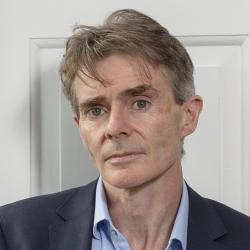
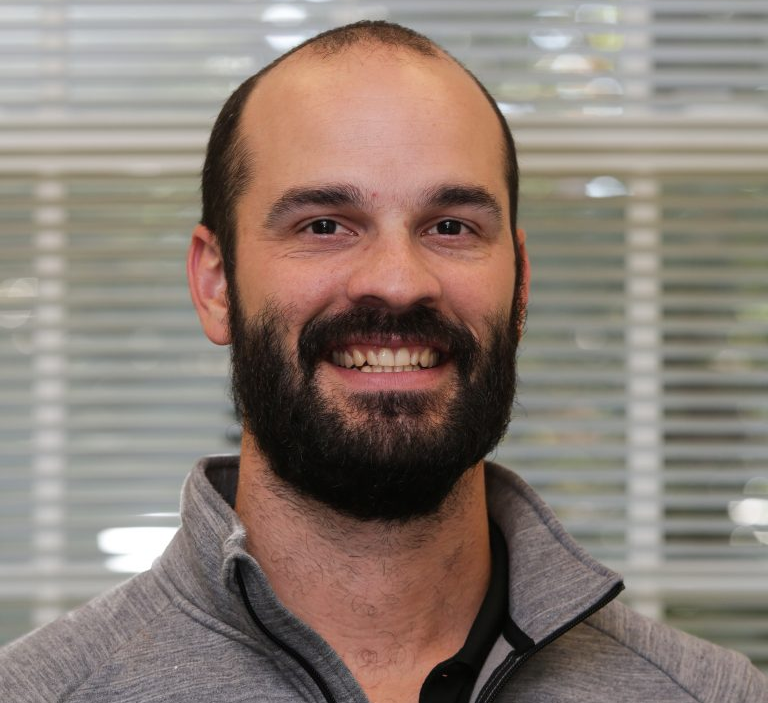
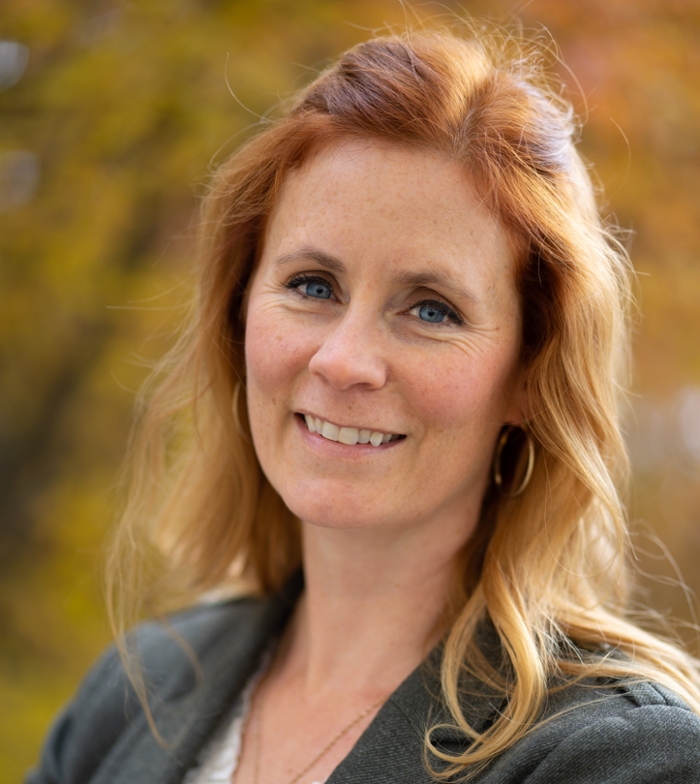
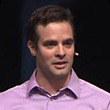
Dr. Efisio Manunta is an Associate Professor at the University of Toulouse , affiliated with the Cognition, Languages, and Ergonomics (CLLE) laboratory. His research bridges political psychology , health psychology , and social identity processes , focusing on topics like populism , radicalization , and pro-health behavior . He has co-authored high-impact studies in Personality and Social Psychology Bulletin , Political Psychology , and Nature Human Behaviour . Research Interests : Motivational processes in identity construction Impact of identity threat on political and health behaviors Psychometric scale development (e.g., POP-ThIS for populism) Cross-cultural studies on sociosexual exchanges (e.g., sugar relationships) Notable Collaborations include ERC Advanced Grant projects at the University of Limerick, visiting positions at the University of Sussex and Sapienza Università di Roma, and contributions to global datasets during the COVID-19 pandemic.
Professor Paul Fletcher is a Principal Investigator at the Institute of Metabolic Science, University of Cambridge, and holds the Bernard Wolfe Health Neuroscience Fund. He is affiliated with the Department of Psychiatry and collaborates with Professors Steve O’Rahilly, Sadaf Farooqi, Fiona Gribble, and Frank Reimann. His research bridges neuroscience and psychiatry to explore higher-level perceptual and learning processes shaping decision-making and behavior, particularly in relation to obesity and mental disorders. Academic Rank: Professor University: University of Cambridge School: Institute of Metabolic Science Department: Psychiatry Fletcher employs functional neuroimaging, behavioral studies, and pharmacological perturbations (e.g., dopamine agonists/antagonists) to investigate reward-related brain processes and their role in food choice, obesity, and psychiatric conditions like psychosis. His work emphasizes the integration of the brain with metabolic/endocrine signals and external environments. Key trends in his publications include predictive coding , delusions , neuroimaging , and virtual reality applications in mental health. Recent studies focus on anxiety , foraging behavior , schizophrenia , and health interventions . Scientific Awards Bernard Wolfe Health Neuroscience Fund Wellcome Trust Senior Clinical Fellow Fletcher’s research is funded by Wellcome and the Bernard Wolfe Fund, with collaborations spanning psychiatry, psychology, and clinical neuroscience. His work addresses mental health , obesity , and neurocognitive mechanisms of decision-making, supported by recent publications in top-tier journals.
Alexander J. Stewart is an Associate Professor of Informatics at Indiana University Bloomington and an Honorary Professor of Mathematics at the University of St Andrews. He holds a PhD in Mathematical Biology from University College London (2010), and earlier degrees in Physics (Imperial College London) and Mathematical Biology (University College London). His research focuses on mathematical and computational models of social learning in online ecosystems, addressing topics such as misinformation, polarization, and cooperative behavior through lenses of game theory and evolutionary dynamics. Key themes include cultural evolution's interaction with algorithms, social network structures' impact on collective decisions, and cognitive mechanisms shaping social interactions. His work has been published in high-impact journals like Nature , PNAS , and Science Advances , addressing topics ranging from information gerrymandering to the evolution of stereotyping. He leads projects funded by the John Templeton Foundation, exploring cultural evolution and online social contracts. Advising over 7 graduate students and postdocs, he has mentored researchers now in academic and industry roles globally. His teaching includes advanced courses on game theory and social media dynamics. Media contributions include analyses on polarization's societal impacts and the dangers of algorithmic misinformation. Current research initiatives include modeling behavioral motivations for cooperation and investigating eco-evolutionary trade-offs in pathogen competition. His labs focus on interdisciplinary approaches to understanding complex social and biological systems.
Christian Waugh serves as Professor of Psychology at Wake Forest University, based in Greene Hall 445 with contact email waughce@wfu.edu. He directs the Emotion and Motivation Lab (eMolab), as evidenced by his active research website https://emolab.psych.wfu.edu , and teaches courses within the Department of Psychology. His research centers on emotion regulation mechanisms, particularly cognitive reappraisal strategies, stress reactivity, and resilience across the lifespan. Key investigations examine how individuals maintain emotional states during stressors, the neural underpinnings of positive emotion's buffering effects, and age-related differences in recovery from adversity. His work integrates psychological, biological, and social perspectives to understand affective processing dynamics, with significant focus on temporal aspects of emotional experience and coping. Analysis of his 2023-2025 publications reveals dominant themes in reappraisal implementation phases, affective working memory, and pandemic-related stress adaptation. His methodological approach combines fMRI, physiological monitoring, ecological momentary assessment, and computational modeling to explore how positive emotions facilitate stress resilience. Notable patterns include the temporal anchoring of regulatory strategies and the differential impacts of distraction versus avoidance coping. Scientific awards: No awards were documented in the source material. Regarding academic advising and research funding, the source text provides no specific details about graduate students, grants, or sponsored projects. However, his active laboratory and extensive publication record suggest ongoing mentorship and research support activities typical of senior faculty. Waugh leads the Emotion and Motivation Lab (eMolab), which investigates neural and psychological mechanisms of emotion regulation through multiple experimental paradigms. Current research examines stressor reactivity in aging populations, virtual reality mood induction techniques, and computational models of resilience, with strong emphasis on translating findings to real-world coping applications.
Dr. Kimberly Schonert-Reichl is a Professor in the Department of Educational and Counselling Psychology, and Special Education within the Faculty of Education at the University of British Columbia. A world-renowned expert in social and emotional learning (SEL), her research focuses on fostering empathy, compassion, and resiliency in children through classroom-based interventions and interdisciplinary biological investigations. Her academic journey includes an MA in Educational Psychology from the University of Chicago, a Ph.D. from the University of Iowa, and postdoctoral training as an NIMH Fellow at the University of Chicago and Northwestern University Medical School. Prior to academia, she worked as a middle school teacher and at an alternative high school for at-risk adolescents. Dr. Schonert-Reichl's research spans SEL program evaluation (Roots of Empathy, MindUp), neurobiological mechanisms of learning, and population-level well-being assessment through the Middle Years Development Instrument (MDI). Recent work reveals growing emphasis on teacher adaptation in SEL implementation, trauma-informed approaches, and compassion training's neural correlates, with increasing international collaboration across 6+ countries. Her scientific contributions are recognized through: 2015 Joseph E. Zins Distinguished Scholar Award 2009 Paz Buttedahl Career Achievement Award 2007 UBC Killam Teaching Prize Fellowships with Mind and Life Institute and Botin Foundation 2004 Vancouver School Board Recognition Award She actively shapes policy as advisor to BC Ministry of Education, OECD Education 2030, CASEL Board Member, and Chair of Hawn Foundation's Scientific Research Advisory Board. Her public engagement includes 300+ presentations to educators and media appearances in The New York Times , CBC , and NPR . Leading the MDI project team, she coordinates cross-sector collaboration with researchers, policymakers, and educators across British Columbia, Australia, Germany, UK, and Croatia to transform child well-being measurement into actionable policy insights at population scale.
Mehdi Khamassi is a Research Director at the French National Center for Scientific Research (CNRS), assigned to the Institute of Intelligent Systems and Robotics (ISIR) at Sorbonne University in Paris, France. He holds an engineering background in computer science (specializing in AI and statistical modeling) from the National School of Computer Science for Industry and Business (2003), a Cogmaster in cognitive science from Pierre and Marie Curie University (2003), and a PhD in cognitive neuroscience from UPMC/Collège de France (2007). Recruited by CNRS in 2010, he co-organizes the Symposium of Biology of Decision-Making (SBDM) and co-directs the modeling major for the Cogmaster program. His research integrates computational modeling , neuroscience experiments , and robotic systems to study decision-making and learning mechanisms. Key interests include: Reinforcement learning in biological and artificial systems Role of social/non-social rewards in adaptive behavior Ethical implications of autonomous decision-making in AI Neuro-robotic models of hippocampal-prefrontal interactions Recent publications (2023-2025) demonstrate strong focus on reinforcement learning paradigms, AI alignment with human values, neurorobotics, and computational neuroscience. Work frequently bridges machine learning theory with empirical validation in biological systems or robotic platforms. He leads research within the ACIDE team at ISIR, exploring adaptive coordination of learning strategies in brains and robots. Current collaborations include NTUA (Greece), University of Oxford, and University of Trento.
Dr. Alison Oates is an Associate Professor at the University of Saskatchewan's College of Kinesiology, specializing in biomechanics and motor control. Her research focuses on neuromuscular adaptations, healthy aging, and managing chronic conditions through gait analysis and balance control. She holds a PhD from the University of Waterloo, with postdoctoral training at McGill University on locomotor rehabilitation post-stroke. Her academic background includes a B.Sc. in Kinesiology from Waterloo, followed by advanced studies in dynamic stability during gait termination in Parkinson's patients. She teaches advanced courses such as Motor Control of Neurological Conditions (KIN 422.3) and Sensorimotor Control of Posture & Locomotion (KIN 822.3). Dr. Oates' research explores biomechanical and neuromuscular aspects of balance and gait, particularly in neurologically impaired populations and older adults. Recent work includes studies on haptic feedback systems, sex-and-gender-based analysis in balance research, and fall prevention strategies. Her articles highlight innovative methods like IMU-based motion capture and clinical applications for spinal cord injury and stroke rehabilitation. While no formal academic awards are listed, her contributions to gait rehabilitation and biomechanical measurement techniques are widely recognized. She currently oversees research projects investigating the efficacy of haptic input on walking stability and neuromuscular adaptation mechanisms. Her work bridges clinical practice and biomechanical theory to improve rehabilitation outcomes for individuals with neurological disorders.
Stig Arve Sæther is a Professor of Sports Science at the Department of Sociology and Political Science, Norwegian University of Science and Technology (NTNU), Faculty of Social and Educational Sciences. His research focuses on talent development, elite sports, and sports psychology, with specific emphasis on transitions from junior to senior elite, stress, perfectionism, and coach-athlete relationships. He leads the research group Skill and Performance Development in Sports and School (SPDSS) and the NTNU Sports Network. Primary research areas: Talent development environments, dual careers, relative age effects, and athlete stress Ongoing projects: Female athlete development, Norwegian football club mergers, international youth football environments, senior transitions in school sports, and destructive leadership in sports Collaborations: Rosenborg Ball Club, Kristiansund Ball Club (NEAS Academy), Norwegian Handball Association, Norwegian Ice Hockey Association Editor-in-Chief: Scandinavian Journal of Sport and Exercise Psychology His recent research explores gender differences in talent environments (handball/ice hockey), parental impacts on biathlon transitions, and communication barriers around menstrual cycles in female football. With 60+ international journal articles and multiple books, his work bridges academic rigor and practical sports insights. Media presence spans 200+ TV/radio/podcast appearances (TV2 Sporten, NRK, GameChanger) and newspapers (Wall Street Journal, Aftenposten). Key students include Max Bergström (PhD) and 46+ master’s graduates. Awards not explicitly mentioned, but his editorial and research group leadership highlight institutional recognition.
Dag Olav Hessen is a Professor at the University of Oslo , leading the Center for Biogeochemistry in the Anthropocene (CBA) . The center integrates expertise from the Department of Life Sciences, Earth Sciences, and Chemistry to investigate climate-carbon-ecosystem interactions in northern latitudes. Research Focus: Climate change impacts on freshwater and marine ecosystems Key Areas: Ecological stoichiometry, genome size, pelagic food webs, permafrost thaw Methodology: Interdisciplinary approaches combining fieldwork, lab experiments, and modeling His recent publications address critical issues like greenhouse gas dynamics in thawing permafrost , tipping points in lake ecosystems , and global change effects on zooplankton communities . Collaborative work spans Arctic char vulnerability, DOM-contaminant interactions, and climate governance frameworks.
Łukasz Remisiewicz is a Lecturer at the Department of Sociological Theory and Social Research Methodology , Institute of Sociology , Faculty of Social Sciences , University of Gdańsk . He serves as the Editorial Secretary of the journal Miscellanea Anthropologica et Sociologica . His research spans multiple interdisciplinary domains , including sociology of science, philosophy of science, sociology of education, neurosociology, and sociology of examination. He explores the social contexts of academic assessment, cognitive development, and biological dimensions in sociological theory. His 15 most recent publications (2025-2017) focus on evaluative cultures, academic metrics, habilitation processes, family rituals, climate change discourse, disability marginalization, and biology-sociology interfaces. These works reflect his commitment to merging sociological theory with empirical and interdisciplinary analysis. Scientific Awards & Grants : Florian Znaniecki Award, 1st degree (2014) Honorable Mention, Polish Academy of Sciences (2016) Rector's Awards (1st, 2nd, 4th degrees, 2016/17–2024/25) Ministry of Science and Higher Education Scholarship (2017/18) Fulbright Junior Research Award (2018–2019) Mayor of Gdańsk & Gdańsk Scientific Society Award (2024) Florian Awards for 'Discovery of the Year' (2023) and 'Captain of Sociology' (2024) He is an active participant in international conferences, including ESA , Neurodidactics Symposium , and CHER Annual Conferences , presenting on topics ranging from emotional stratification to neurosociological models.
Malte Friese is a Full Professor of Social Psychology at Saarland University's Department of Psychology within the Faculty of Empirical Humanities and Economics. He holds multiple leadership roles including Speaker of the Research Training Group 'Flexibility and Balance as Characteristics of Adaptive Self-Regulation' (RTG 2988) and Coordinator of the Graduate Program in Psychology. Previously, he held academic positions at the University of Basel and visiting fellowships at the University of Toronto, University of Utrecht, and University of Queensland. Education: Habilitation in Psychology, University of Basel (2012) Ph.D. in Psychology, University of Basel (2008) M.Sc. in Psychology, University of Heidelberg (2003) B.Sc. in Psychology, University of Trier (1999) Friese's research examines psychological flexibility mechanisms in self-regulation, decision-making, and social behavior. His work integrates social psychology with cognitive science to investigate: 1) Cognitive and motivational underpinnings of self-control, 2) Implicit processes in judgment and behavior, 3) Mindfulness-based interventions, and 4) Cross-cultural determinants of moral judgment. His recent projects explore strategy flexibility in goal pursuit, meta-cognitive aspects of self-regulation, and societal influences on ethical decision-making. Analyses of recent publications (2023-2025) reveal strong emphasis on meta-analytic approaches to resolve theoretical debates (e.g., ego-depletion controversy), multinational collaborations examining cultural variations in psychological phenomena, and applied research on behavioral interventions. Methodologically, his work combines experimental paradigms, longitudinal designs, and psychometric scale development. Awards & Honors: Förderpreis Psychologie (2018) Teaching Excellence Awards (2013-2017) Jos Jaspars Early-Career Award (2011) Steven Karger Dissertation Prize (2008) He has supervised over 15 doctoral students and secured competitive grants from the German Research Foundation (DFG), Volkswagen Foundation, and Swiss National Science Foundation. Current projects investigate AI's impact on healthcare relationships and cognitive biases in physical activity adoption. Friese leads the Social Psychology Lab at Saarland University and serves on editorial boards for Motivation Science and Health Psychology Review.
Dr. Ann Kennedy is an Assistant Professor of Neuroscience at Northwestern University's Feinberg School of Medicine, where she leads the Kennedy Lab. Her research focuses on theoretical neuroscience, using mathematical modeling and computational approaches to understand how neural circuits produce adaptive behaviors. She investigates how the brain integrates sensory information with survival needs to drive behavior across multiple scales, from single neurons to social groups. Dr. Kennedy received her BS and BA in Biomedical Engineering from Johns Hopkins University in 2008, followed by a PhD in Neuroscience from Columbia University in 2014. She conducted postdoctoral research at the California Institute of Technology before establishing her independent laboratory at Northwestern in 2020. Her research interests center on understanding the computational principles of neural circuits, particularly in subcortical brain regions involved in survival behaviors. She develops theories for distributed behavior control by multiple neural populations, studies computation in heterogeneous neural populations, and constructs richer descriptions of animal behavior using pose estimation and machine learning tools. Her work blends dynamical systems, control theory, reinforcement learning, and machine learning to investigate neural dynamics across multiple scales and model organisms. Dr. Kennedy's recent publications reveal trends in understanding neural heterogeneity, early nervous system evolution, and the theoretical foundations of neuroscience. Her work spans from fundamental computational principles to applications in pain research and behavioral neuroscience, with increasing emphasis on translating theoretical insights to understand neurological conditions. Sloan Research Fellowship, Sloan Foundation (2023) Eppendorf and Science Prize in Neurobiology (2022) McKnight Scholars Award (2024) Pew Scholar in the Biomedical Sciences (2024) Thom Young Researcher Award (2025) Dr. Kennedy actively mentors postdoctoral researchers and collaborates with experimentalists both locally and internationally. Her lab has received significant grant support including the $75,000 Sloan Fellowship and the prestigious McKnight Scholars Award. She co-chairs the CAJAL summer school on quantitative approaches to behavior and serves as Associate Editor for Science Advances. The Kennedy Lab operates at the intersection of theory and experiment, developing community resources like the Mouse Action Recognition System (MARS) for behavioral analysis and contributing to major initiatives like the 2025 Multi-Agent Behavior Challenge on Kaggle. The Kennedy Lab maintains active collaborations with researchers across San Diego and beyond, focusing on theoretical approaches to behavior and neural circuit function. Current projects analyze data from multiple brain regions and organisms, including hypothalamus studies of social and defensive behavior, basal ganglia research on behavior-neural activity correlations, hippocampal studies of social bond formation, and whole-organism neural imaging in cnidarians. The lab values open science, clear communication, and community resource development.
Peter Brown is an Associate Professor in the School of Life Sciences at Anglia Ruskin University (ARU), Faculty of Science and Engineering. His research focuses on ladybird ecology, invasive species, and citizen science, with strong collaborations across the UK (especially the UK Centre for Ecology & Hydrology and University of Hull), Europe, and Chile. Education: PhD: The spread of the harlequin ladybird Harmonia axyridis (Coleoptera: Coccinellidae) in Europe and its effects on native ladybirds – Anglia Ruskin University (2010) BSc (Hons) Ecology and Conservation – Anglia Ruskin University (2004) Peter's research interests include ladybird ecology, the impacts of non-native species on native biodiversity, intraguild predation among arthropods using molecular tools, and the use of citizen science in ecological research, particularly through the UK Ladybird Survey and COST Action CA17122. He investigates the global spread and ecological effects of the harlequin ladybird (Harmonia axyridis) and evaluates the benefits and risks of exotic biological control agents. As director of the Citizen Science Research Group and member of the Applied Ecology Research Group, he emphasizes public engagement in science. His recent publications reveal a consistent focus on citizen science, invasive species monitoring, and conservation biology. Themes include volunteer motivations, digital tools for data collection, policy implications of alien species, and recovery strategies for native ladybirds. This body of work demonstrates a strong integration of field ecology, molecular techniques, and public participation. Scientific Awards and Memberships: Fellow, Royal Entomological Society Honorary Fellow, British Naturalists' Association Co-leader, UK Ladybird Survey Editorial board, Nature in Cambridgeshire Member, British Ecological Society Peter supervises postgraduate research in ladybird and insect ecology and welcomes PhD applications. He has secured collaborative research opportunities and leads projects involving citizen science data. He has also contributed to policy and management frameworks for invasive species in Europe. Peter leads the undergraduate module 'Invertebrate Biology' and postgraduate modules in conservation and biodiversity, including field-based learning. He directs the Citizen Science Research Group and is actively involved in public outreach, having appeared on BBC programs such as The One Show, Countryfile Diaries, and The Today Programme, enhancing public understanding of ecology and invasive species.
Cecilio Angulo Bahón is a full Professor at the Polytechnic University of Catalonia (UPC), affiliated with the Barcelona School of Industrial Engineering (ETSEIB) and the Department of Systems, Automatics and Industrial Informatics Engineering . He leads research in Artificial Intelligence and Robotics , with significant contributions to healthcare data analytics, digital twins, and human-robot collaboration. His research spans machine learning for medical data harmonization, generative adversarial networks in health informatics, and evolutionary algorithms for control systems. Recent publications focus on synthetic healthcare data generation, climate-resilient agriculture , and UMAP-based data analysis . His work bridges AI theory with practical applications in industrial and healthcare domains. Scientific awards include the Sant Jordi 2023 Digital Polytechnic Initiative Award . He has supervised doctoral candidates like Carlos Flores-Vázquez and N. Raya, with key collaborations at the IDEAI-UPC Intelligent Data Science and AI Research Group and the Institute of Robotics and Industrial Informatics (CSIC-UPC).
David Puts is a Professor of Anthropology at Pennsylvania State University, specializing in evolutionary approaches to human behavior. His research focuses on sexual selection, hormonal influences on behavior, and reproductive strategies. He holds a B.A. from Kenyon College (1995), M.A. (1998), and Ph.D. (2004) from the University of Pittsburgh. Puts’ work bridges anthropology, biology, and psychology, emphasizing topics like voice pitch as an evolutionary signal, pubertal timing effects, and the biological basis of gendered behavior. His lab (https://beel.la.psu.edu/) investigates human evolution and sexual selection mechanisms. Research interests include vocal communication, hormonal endocrinology, and the evolutionary origins of sexual dimorphism. His studies often address how traits like voice pitch or facial features signal health, dominance, or fertility. Recent work examines cross-cultural variations in social perception and the role of hormones in shaping sexual motivation. Puts frequently collaborates across disciplines, integrating data from primatology, endocrinology, and behavioral ecology. Publications highlight themes such as sexual orientation’s biological underpinnings, the relationship between vocal parameters and health, and the societal implications of evolutionary adaptations. His research has been featured in high-impact journals, emphasizing methodological rigor and interdisciplinary synthesis.