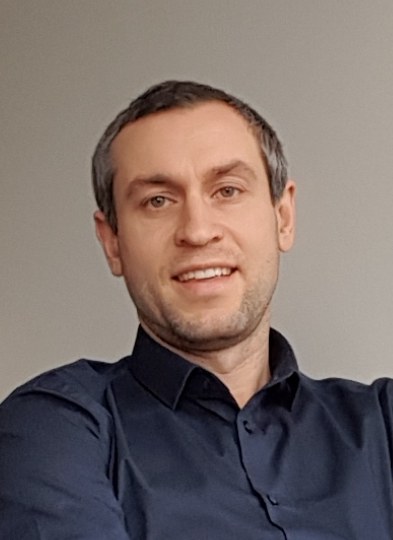
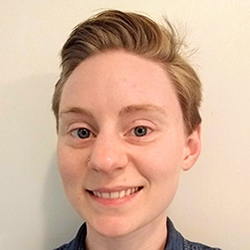
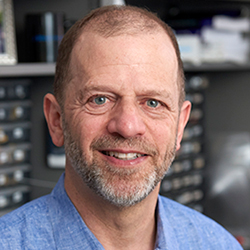
Jan Petrš is a Researcher at the Laboratory of Intelligent Systems within the Institute of Mechanical Engineering at École Polytechnique Fédérale de Lausanne (EPFL). His work focuses on advancing robotic systems through bio-inspired designs, particularly in the domain of compliant and lightweight structures. His research centers on soft robotics , tensegrity mechanisms , and pneumatic artificial muscles . He employs evolutionary algorithms to optimize joint designs for balance between flexibility and load-bearing capacity, enabling applications in crawling robots and adaptive grippers. A key innovation includes integrating artificial muscles directly into tensile networks to achieve efficient motion replication of biological systems. Petrš' 2025 publication explores the co-design of spine-like tensegrity joints using McKibben actuators and elastic cords, validated in functional robotic platforms. The work demonstrates significant improvements in locomotion speed (110 mm/s) and payload capacity compared to prior tensegrity systems.
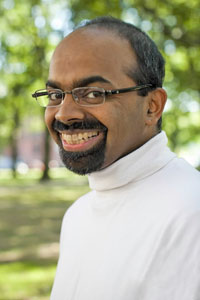
Satwik Rajaram is an Assistant Professor in the Lyda Hill Department of Bioinformatics at UT Southwestern Medical Center, with secondary appointments in the Department of Pathology and the Center for Alzheimer's and Neurodegenerative Diseases. He leads a multidisciplinary research group focused on applying machine learning to understand tissue organization in cancer and neurodegeneration. His research interests lie at the intersection of computational biology, machine learning, and pathology. He develops biology-guided deep learning methods to decode tissue morphology, aiming to transform histopathological images into predictive biomarkers. His lab investigates kidney cancer heterogeneity, neurodegenerative tauopathies, and treatment response in rectal cancer using neoadjuvant radiotherapy. The group emphasizes interpretable AI, experimental design, and scalable computational pipelines. The recent publications reflect a strong trend in applying deep learning and statistical modeling to high-throughput microscopy and genomic data, with a focus on cellular heterogeneity, tumor evolution, and disease stratification. His work bridges physics-inspired methods with biological discovery, particularly in oncology and neuroscience. Dr. Rajaram has mentored several graduate students and postdoctoral researchers, including Aleksandra Nielsen, Sriya Veerapaneni, and Paul Acosta. His lab collaborates across disciplines and has developed open-source software tools such as PhenoRipper and SimuCell. The Rajaram Lab operates in a dynamic, startup-like environment within a top-tier medical center, leveraging world-class computational resources like BioHPC and the Bioinformatics Core Facility. The team includes postdoctoral researchers, graduate students, data scientists, and computational biologists working on cutting-edge problems in computational pathology.
Gerhard Weiss is a Professor at the Department of Data Science and Knowledge Engineering (DKE) at Maastricht University in the Netherlands. With a research career spanning over three decades, he has made significant contributions to the fields of multiagent systems, artificial intelligence, and machine learning. His work bridges theoretical foundations with practical applications across diverse domains including healthcare, social networks, and negotiation systems. Professor Weiss's research interests center around autonomous systems, particularly those inspired by biological principles. He has extensively explored multiagent coordination, negotiation frameworks, and transfer learning techniques. His work often combines theoretical rigor with practical implementations, as evidenced by his involvement in projects like Swarmlab@Work for RoboCup competitions. More recently, his research has expanded into medical informatics, focusing on drug-drug interactions, adverse reaction prediction, and semantic enhancement of biomedical datasets. An analysis of his recent publications reveals a clear trajectory from fundamental multiagent systems research toward applied data science with significant impact in healthcare domains. While maintaining strong theoretical foundations in areas like reinforcement learning and entity resolution, Weiss has increasingly focused on solving real-world problems through interdisciplinary collaboration with medical researchers and data scientists. Throughout his career, Professor Weiss has maintained an active research program with numerous collaborators, most notably Karl Tuyls with whom he has co-authored over 30 publications. His work demonstrates a consistent pattern of bridging theoretical computer science with practical applications across various domains. Professor Weiss leads research in the Swarmlab at Maastricht University, focusing on swarm intelligence and multi-robot systems. His team develops innovative approaches to complex coordination problems, often drawing inspiration from biological systems and social dynamics.
Dr. G. Matthew Fricke is a Research Associate Professor in the Department of Computer Science at the University of New Mexico, affiliated with the Center for Advanced Research Computing (CARC) and Moses Biological Computation Lab. His research explores decentralized systems including supercomputing clusters, robot swarms, social insects, and immune responses, with additional focus on AI ethics and biosignatures. Education: BA in Anthropology (Archaeology), Appalachian State University BS in Mathematics, University of New Mexico MS in Artificial Intelligence, University of New Mexico PhD in Computer Science, University of New Mexico Research Interests: Dr. Fricke's work bridges robotics, computational biology, and earth sciences. Key areas include bio-inspired swarm algorithms for volcanic gas monitoring, immune system modeling for search optimization, machine learning applications in climate science, and complexity measures for biosignature detection. His interdisciplinary approach combines field robotics with theoretical frameworks from complex adaptive systems. Publications: Recent articles demonstrate strong trends in environmental robotics (volcanic drone swarms), causal inference in climate systems, and molecular complexity analysis. Works frequently integrate machine learning with empirical field data, spanning geoscience, immunology, and astrobiology. Student Advising: Mentored multiple PhD candidates including Jannatul Ferdous (immune system modeling), John Ericksen (aerial robotics), Jake Nichol (climate causality), Humayra Tasnim (information theory), and MS student Quincy Wofford (distributed systems). Projects & Labs: Leads robotics initiatives like VolCAN (volcanic CO2 mapping) and SIMReef (coral ecosystem modeling). Collaborates with NASA on swarm robotics challenges and supercomputing education through UNM's student cluster competition teams.
Dmitry Fedosov serves as Acting Director of the Theoretical Physics of Living Matter group (IAS-2) at Forschungszentrum Jülich's Institute for Advanced Simulation. His research integrates computational physics, biophysics, and machine learning to investigate active matter systems and cellular mechanics, with particular focus on blood flow dynamics and microswimmer behavior. Fedosov's work centers on theoretical modeling of biological systems at multiple scales. His group develops advanced simulation frameworks to study red blood cell mechanics in microcirculation, malaria parasite invasion mechanisms, and collective dynamics of active matter. Key methodologies include dissipative particle dynamics, mesoscopic membrane modeling, and machine learning-enhanced predictive algorithms. Research spans fundamental biophysics questions like cell deformability under shear flow and applied biomedical challenges including neuroacanthocytosis diagnostics and drug delivery optimization. Analysis of Fedosov's recent publications reveals dominant themes in active matter physics and blood cell mechanics. His work consistently bridges theoretical modeling with experimental validation, particularly in hemorheology and microfluidics. Major contributions include elucidating the mechanical basis of bacterial run-and-tumble motion, characterizing erythrocyte aggregation/disaggregation phenomena, and developing frameworks for synthetic cell modeling. The research demonstrates strong interdisciplinary connections between soft matter physics, computational biology, and clinical applications. As leader of the IAS-2 group, Fedosov directs a research team specializing in multiscale computational modeling of living matter. The group maintains strong collaborations with experimental biophysics laboratories and clinical researchers, particularly in hematology and infectious disease. Their work leverages Forschungszentrum Jülich's high-performance computing infrastructure to tackle complex biomechanical problems requiring massive computational resources.
Leslie Valiant serves as the T. Jefferson Coolidge Professor of Computer Science and Applied Mathematics at Harvard University's School of Engineering and Applied Sciences, where he has been faculty since 1982. Previously, he held positions at Carnegie Mellon University, Leeds University, and the University of Edinburgh. His academic journey began with education at King's College Cambridge, Imperial College London, and Warwick University, where he earned his PhD in computer science in 1974. Valiant's research spans theoretical computer science with primary focus areas including computational complexity theory, machine learning foundations, parallel computation systems, computational neuroscience, and evolutionary computation. His work bridges artificial and natural computational phenomena, addressing fundamental limitations in both engineered systems and biological processes. Key contributions include the development of the PAC (Probably Approximately Correct) learning model, holographic algorithms, robust logics for reconciling reasoning and learning, and theoretical frameworks for understanding cortical computation and evolvability. His publication record demonstrates sustained impact across decades, with recent work focusing on cortical computation primitives, multi-core algorithm design, and evolutionary dynamics with drifting targets. These publications reveal a consistent trajectory toward understanding computational principles in both artificial systems and biological cognition. Nevanlinna Prize (1986) Knuth Award (1997) EATCS Award (2008) A.M. Turing Award (2010) Fellow of the Royal Society Member of the National Academy of Sciences Valiant's research program integrates theoretical rigor with profound questions about natural computation, maintaining active engagement with both computer systems design and fundamental neuroscience questions. His work continues to influence multiple disciplines through formal frameworks that address computational limitations in learning, evolution, and neural processing.
Xin Tang is an Assistant Professor at the Michael Smith Laboratories and the Department of Computer Science in the Faculty of Science at the University of British Columbia. He leads the Tang Lab, which focuses on developing AI models to advance biological understanding at multiple scales and modalities. PhD in Engineering Sciences from Harvard University and the Broad Institute of MIT and Harvard Xin Tang's research spans computational cell biology, brain-computer interfaces, and in silico cellular digital twins. His work integrates explainable and interpretable AI with biological systems to address fundamental questions from molecular interactions to animal behaviors. Key areas include computational omics, multi-modality cell biology, spatio-temporal gene regulation, neuroengineering, and biological large language models. His lab develops autonomous AI approaches that serve as digital twins for biological systems, enabling in silico experiments that guide wet lab research. Analysis of Tang's recent publications reveals a strong focus on bridging AI and biology across multiple scales. His work spans from molecular and cellular levels (single-cell biology, multi-omics, spatial transcriptomics) to neural systems (brain-computer interfaces, neural activity tracking) and organ-level applications (cardiac interfaces). A consistent theme is the development of explainable and interpretable AI methods that provide mechanistic insights rather than just predictive power. His research has significant implications for understanding development, aging, and diseases like neurodegeneration. NSERC Discovery Grant (2025) Resource Allocation Competition of Digital Research Alliance of Canada (2025) Professor Tang actively supervises multiple graduate students, postdoctoral fellows, and undergraduate researchers across UBC's Computer Science, Bioinformatics, and Genome Science and Technology programs. His lab has received significant research funding including an NSERC Discovery Grant. He is committed to interdisciplinary collaboration and has established research partnerships with biologists, engineers, and clinicians to address complex biological questions related to neurodegenerative diseases, heart disease, and aging. The Tang Lab, located in the Michael Smith Laboratories at UBC, fosters a collaborative environment for researchers interested in AI for biology. The lab actively recruits dry-lab researchers with strong coding and machine learning backgrounds to work on projects spanning computational biology, neuro-inspired AI, explainable AI, biological LLMs, computational omics, and brain-computer interfaces. The lab has a remote work policy that allows flexible arrangements while maintaining strong collaborative ties.
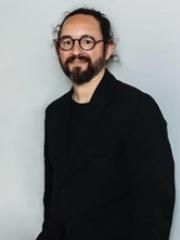
Prof. Dr.-Ing. Ivo Boblan holds a professorship at the Berlin University of Technology within the Department of Electrical Engineering . He leads the Compliant Robotics Lab (CoRoLab) and teaches modules in Cognitive Robotics , Pneumatic Robotics , Soft Robotics , and Bionics . His research focuses on biologically inspired robotics, human-robot interaction, and compliant actuator systems. Key research themes include: Development of bionic robotic systems like ZAR5 and BROMMI-TAK Integration of pneumatic muscles and fluidic actuators Biologically motivated control systems for compliant robotics Applications in rehabilitation devices and exoskeletons Human-robot interface design with variable stiffness Exploration of anthropomorphism and ethics in robotics His work emphasizes interdisciplinary collaboration across robotics, bionics, and human factors, with significant third-party funding exceeding €8.9 million. He actively contributes to international conferences and standardization efforts in bionic robotics.
Qi Guo is an Assistant Professor in the Elmore Family School of Electrical and Computer Engineering at Purdue University. His research focuses on computational imaging, computer vision, and applied optics, with an emphasis on developing next-generation visual sensors through the integration of optics, electronics, and signal processing. He leads a lab creating prototypes like Focal Split (a handheld depth camera inspired by spider vision) and MetaHDR (a metasurface-based HDR imaging system). Education: B.E. in Automation (Tsinghua University, 2015), M.S. and Ph.D. in Electrical Engineering (Harvard University, 2018 and 2021). His work bridges theory and practice, with recent breakthroughs in photon-limited depth estimation (Blurry-Edges) and robust boundary detection (CT-Bound). Research Interests: Computational Imaging Optical System Design Machine Learning for Vision 3D Sensing Metasurface Engineering Embedded Sensor Systems Notable Achievements: Best Paper Award (ECCV 2016) Best Demo Award (ICCP 2018) IEEE Technical Committee on Computational Imaging Editor of Open Journal of Signal Processing Lab Philosophy: Prioritizes 'maker mindset' for hands-on prototyping, requiring 10+ weekly hours from undergrad researchers. Offers SURF internships and collaborates on projects like satellite stereo imaging (Stellar dataset) and birefringent metasurface applications.
Lola England de Valpine Professor of Applied Mathematics, Organismic and Evolutionary Biology, and Physics at Harvard University. Faculty Dean of Mather House and Area Chair for Applied Mathematics. Affiliated with Harvard University Center for the Environment, Materials Research Science and Engineering Center, and Kavli Institute for Bionano Science & Technology. Research focuses on interdisciplinary applications of applied mathematics to biological, physical, and engineering systems. Education details not explicitly listed in text. Research interests include mechanics of soft materials, biomechanics, robotics, developmental biology, and statistical physics. His work bridges theoretical frameworks with experimental observations to explain phenomena ranging from snake locomotion to brain folding patterns. Recent publications emphasize control strategies in stochastic systems, robotics using modular particle chains, and morphogenesis in biological systems. Active collaborations span robotics design, synthetic biology, and environmental science. His Soft Math Lab explores the intersection of geometry, mechanics, and biology. Recipient of prestigious appointments including endowed professorships. Advising and grant activities not detailed here but reflect long-term engagement in interdisciplinary research. Lab work includes development of kirigami-based metamaterials and bio-inspired robotics.
Bingni Wen Brunton is a Professor of Biology and Richard & Joan Komen University Chair at the University of Washington , with adjunct roles in Applied Mathematics, Computer Science & Engineering, and affiliations at the eScience Institute and Institute of Neuroengineering. She holds a B.S. in Biology from Caltech (2006) and a Ph.D. in Neuroscience from Princeton (2012). Her research focuses on data-driven approaches to neuroscience , including neural decoding, sparse sensing, and dynamical systems modeling. She has pioneered tools like Anipose for 3D pose estimation and developed methods for analyzing high-dimensional neural data. Brunton is recognized for interdisciplinary work bridging biology, engineering, and computer science, supported by grants from NSF, NIH, DOD, and the Weill Neurohub. She mentors a diverse lab of postdocs and students in computational neuroscience and neuroengineering. Education : Ph.D. in Molecular Biology & Neuroscience, Princeton University, 2012 B.S. in Biology, California Institute of Technology (Caltech), 2006 Research Interests : Data-driven models of neural systems Sparse sensor placement for control Quantifying natural behaviors Neural-inspired machine learning Brain-computer interfaces Awards : Alfred P. Sloan Fellowship (2016) UW Innovation Award (2017) Air Force Young Investigator (2018) Weill Neurohub Investigator (2020) Lab & Mentorship : Advises over 10 students/postdocs across Biology, Neuroscience, and Engineering programs. Lab alumni hold faculty positions at Bryn Mawr College, University of Nevada Reno, and industry roles at Amazon/Meta. Collaborates widely on grants involving neuroengineering, sensor design, and computational methods. Labs & Teams : Leads the Brunton Lab at UW, part of a network including the eScience Institute and Neuroengineering programs.
Todd Zickler is the William and Ami Kuan Danoff Professor of Electrical Engineering and Computer Science at Harvard University's John A. Paulson School of Engineering and Applied Sciences (SEAS). His research focuses on modeling light-material interactions and developing computational techniques for visual data interpretation, with applications in autonomy, augmented reality, and computational imaging. He leads the Harvard Computer Vision Laboratory and is part of the Graphics, Vision, and Interaction Group. Education: B.Eng. (Honours Electrical Engineering), McGill University, 1996 Ph.D. (Electrical Engineering), Yale University, 2004 Research Interests: Computer Vision, Computer Graphics, Machine Learning Optical and Computational Imaging, Human Perception Applications in Robotics, AR, and Autonomous Systems Key Contributions: Developed novel depth sensors inspired by jumping spiders Advanced shape-from-texture and shading techniques Contributed to neural radiance fields (NeRF) and boundary detection algorithms Awards: NSF Career Award Alfred P. Sloan Research Fellowship Grants & Labs: Director of Harvard Computer Vision Lab Recipient of NSF AI Institute funding ($20M) for physics-driven AI research
Dr. Fred Fialho Leandro Alves Teixeira is a Senior Lecturer and Deputy Director (Engagement) at the University of Queensland's School of Architecture, Design and Planning. His research focuses on computational architecture, immersive environments, and bio-augmented spaces. He co-founded the UQ Visualisation Lab, specializing in extended realities and spatial computing. With over 50 publications, his work bridges biology, art, and architecture. He holds a PhD from Istanbul Technical University and is accredited by RIBA and Portuguese architectural bodies. Awards include Dean’s Fellowship (UC) and Media Arts and Technology Fellowships. His projects, such as RoboBlox and digital twin frameworks, emphasize innovation in design and fabrication. Education: PhD in Architecture (Istanbul Technical University, 2014), Architectural Association (AA), and RIBA accreditation. Research: Bio-inspired design, mixed reality, robotic fabrication, and urban sustainability. Key Projects: UQ Visualisation Lab, Perception of Space studies, and SHErobots initiative. His teaching emphasizes transdisciplinary approaches, as seen in co-authored works on global design education. Collaborations include Zaha Hadid Architects and interdisciplinary teams in robotics and art.
Emma Alexander is an Assistant Professor of Computer Science at Northwestern University's McCormick School of Engineering, with a courtesy appointment in Electrical and Computer Engineering. Her work bridges computational imaging, biological vision principles, and sustainable AI systems. She leads the Bio Inspired Vision (BIV) Lab, focusing on developing cameras and algorithms inspired by natural vision systems. Key research areas include bio-inspired color sensing, depth estimation, and physics-informed machine learning for scientific imaging. Education: PhD and MS in Computer Science from Harvard University, BS in Physics and Computer Science from Yale University. Research emphasizes reverse-engineering biological vision to advance imaging technologies. Notable projects include hyperspectral colorization, zebrafish optic flow analysis, and metalens-based depth sensors. Awards include Best Student Paper (ECCV 2016) and Best Demo (ICCP 2018). Her lab collaborates with astrophysicists through the SkAI Institute and engages in outreach through courses like Natural and Artificial Vision. Teaching includes graduate Computational Optics and an advanced undergraduate course on vision science. She mentors over 10 students annually, with undergraduates contributing to publications at CVPR and MNRAS.
Michael A. Peshkin is a Professor of Mechanical Engineering at the Murphy Department of Mechanical and Industrial Engineering , Murphy Institute , and holds the Allen K. and Johnnie Cordell Breed Senior Professor in Design title. He is affiliated with the Master of Science in Robotics Program and the Segal Design Institute as their Engineering Education Lead (2021-). His work spans robotics, haptics, and voting accessibility research. Education: Ph.D. Physics, Carnegie Mellon University (1987) M.S. Experimental Solid State Physics, Cornell University (1982) B.A. Physics, University of Chicago (1979) Research interests focus on surface haptics (e.g., electroadhesion-based tactile feedback), collaborative robots (cobots) , and bioinspired electrosense . He also advocates for democracy through voting accessibility initiatives , studying how long polling lines disproportionately affect minority voters. His innovations include the TPaD haptic surface and spin-offs like Tanvas (2010) for tactile interfaces and Mako Surgical Corp (1995) for robotic surgery tools. Publications reflect a strong emphasis on haptic technologies and robotic safety. Notable trends include advancing electroadhesive surfaces, optimizing texture rendering, and exploring human-robot interaction dynamics. His work on cobots has addressed both industrial applications and healthcare rehabilitation. Scientific Awards: ASEE Ralph Coats Roe National Educator Award (2017) Fellow, National Academy of Inventors (2014) Charles Deering McCormick Professor of Teaching Excellence (2011–2014) Teaching contributions include pioneering Electronics Design and Engineering Analysis 3 , emphasizing hands-on learning via portable labs. He advises on mechatronics projects and co-founded companies like Cobotics and Kinea Design . His research teams collaborate across disciplines, integrating robotics with biosystems and educational outreach.