Anamaria Crisan is an Assistant Professor at the University of Waterloo, affiliated with the Insight Lab. Her research focuses on interdisciplinary work at the intersection of Human-Computer Interaction (HCI), Data Visualization, and Applied AI/ML. She explores human-centered approaches to AI/ML systems, visualization design for decision-making, and healthcare data science applications. Dr. Crisan holds a PhD in Computer Science from the University of British Columbia (2019), an MSc in Bioinformatics (2010), and a BComp in Biomedical Computing from Queen’s University (2008). Her educational background bridges computer science, biology, and healthcare informatics. Her research interests include responsible AI/ML systems, interactive visualization for data-driven decisions, and leveraging visualization in healthcare to improve outcomes. She emphasizes transparency, trustworthiness, and human alignment in AI technologies. Her work spans diverse applications such as genomic epidemiology, dashboard design, and ethical AI evaluation. Notable contributions include studies on human-AI collaboration, visualization linters, and scalable dashboard census methodologies. She has published widely in top-tier venues like IEEE VIS and ACM CHI. Dr. Crisan’s lab (UW Insight Lab) focuses on human-centered approaches to automating data science and improving visualization practices in critical domains like healthcare and public health.
Dr. Jimeng Sun is a Health Innovation Professor at the Siebel School of Computing and Data Science and Carle Illinois College of Medicine at the University of Illinois Urbana-Champaign. Co-founder of Keiji AI , he leads groundbreaking research at the intersection of artificial intelligence and healthcare, actively deploying clinical AI systems and developing frameworks like PyHealth and Therapeutics Data Commons . His research spans four major areas: Clinical AI Systems : Developing interpretable models (e.g., RETAIN) for patient similarity, temporal event prediction, medication recommendation, and clinical outcome forecasting Drug Discovery : Creating molecular optimization frameworks, drug-target interaction models, and AI-driven platforms Clinical Trials : Pioneering patient-trial matching, outcome prediction, and optimization frameworks using deep learning and graph neural networks Biosignal Analysis : Advancing sleep staging, seizure classification, and automated EEG/Cardiac monitoring systems With over 500 top-tier publications (including in Nature , NEJM AI , and leading AI conferences) and an h-index of 99, his work has been recognized with the Top 100 AI Leaders in Drug Discovery and Advanced Healthcare award. He maintains active collaborations with institutions like Massachusetts General Hospital , Medidata Solutions , and OSF Healthcare . His recent publications reveal a strong focus on: Reinforcement learning applications in medical data analysis Large language model adaptation for clinical tasks Knowledge graph integration with AI systems Synthetic data generation for healthcare Multi-modal learning in clinical contexts Explainable AI for medical applications Dr. Sun's lab ( Sunlab ) emphasizes practical impact over theoretical work, actively collaborating with hospitals and healthtech companies. He welcomes contributions from clinicians, researchers, and industry partners through initiatives like his AI for Health webinar series .
Martin T. Wells is the Charles A. Alexander Professor of Statistical Sciences at Cornell University, with joint appointments in the Department of Statistical Science, Department of Biological Statistics and Computational Biology, Department of Social Statistics, and as Professor of Clinical Epidemiology and Health Services Research at Weill Medical School. He serves as Editor-in-Chief of the ASA-SIAM Book Series and Co-Editor of the Journal of Empirical Legal Studies. Cornell University, Ithaca, NY Weill Cornell Medical College Research Interests span applied and theoretical statistics, Bayesian methods, biostatistics, clinical epidemiology, and computational biology. His work bridges disciplines like finance, legal studies, and health services research. Article Trends highlight advancements in Bayesian modeling, quantum cognition machine learning, tensor analysis, and misclassification correction, with applications in genomics, finance, and public health. Fellow of the American Statistical Association Fellow of the Royal Statistical Society Contributions include developing statistical software (e.g., rTensor), methodological innovations in clinical trials, and empirical legal studies on civil rights and the death penalty.
Gail E. Kaiser is a Professor of Computer Science and the Director of the Programming Systems Laboratory (PSL) in the Computer Science Department at Columbia University. She has been with Columbia University since 1985, becoming a full Professor in 1998. Prof. Kaiser's research spans software engineering, program analysis, software testing, and software security, with recent focus on addressing challenges in AI/ML systems testing and security. Prof. Kaiser received her PhD in Computer Science from Carnegie Mellon University in 1985 and her ScB in Computer Science and Engineering from MIT in 1979. Her dissertation at CMU was titled "Semantics for Structure Editing Environments" under advisor Nico Habermann, and at MIT she completed "Automatic Extension of an Augmented Transition Network Grammar for Morse Code Conversations" under advisor Al Vezza. Prof. Kaiser's research interests primarily focus on software engineering following a systems building approach, with recent emphasis on static and dynamic program analysis techniques to improve software reliability and security. Since 2005, she has investigated testing "non-testable" programs, particularly in machine learning, data mining, and scientific computing applications where traditional testing oracles are insufficient. She has developed novel techniques and tools for detecting bugs and verifying repairs in complex systems. Concurrently, she has worked on collaboration environments for computational scientists, creating knowledge sharing and domain-aware environments to support scientific workflows. Prof. Kaiser's recent publications demonstrate a strong focus on the intersection of software engineering and artificial intelligence. Her work addresses critical challenges in testing AI systems, code understanding through deep learning, vulnerability detection, and educational tools for computational thinking. There's a clear evolution from traditional software engineering topics toward AI/ML applications, with particular emphasis on metamorphic testing for non-testable systems, code similarity analysis, and educational applications. Prof. Kaiser has received numerous prestigious awards throughout her career: Distinguished Journal Award (10 Years) from 18th IEEE International Conference on Software Testing, Verification and Validation (ICST), April 2025 Best Research Paper Award at 24th IEEE International Conference on Source Code Analysis & Manipulation (SCAM), October 2024 Distinguished Reviewer Awards for ASE 2024 and FSE 2024 ACM SIGSOFT Distinguished Paper Award for "CONCORD: Clone-aware Contrastive Learning for Source Code", July 2023 Best Student Paper Award at ICCE 2021 Multiple ACM SIGSOFT Distinguished Paper Awards dating back to 2014 Presidential Young Investigator in Software Engineering and Software Systems from NSF (1988-1993) Prof. Kaiser has chaired Columbia's doctoral program since 1997 and served on editorial boards including IEEE Internet Computing and as a founding associate editor of ACM Transactions on Software Engineering and Methodology. Her lab has been continuously funded by major agencies including NSF, NIH, DARPA, ONR, NASA, and numerous companies. Current grants include significant NSF funding for secure containers architecture, learning semantics of code for software assurance, and finding semantic security bugs. As Director of the Programming Systems Laboratory (PSL), Prof. Kaiser leads research in software systems, program analysis, and software testing. The lab has developed numerous tools and techniques for software reliability and security, with recent focus on challenges in AI/ML systems. Her work bridges theoretical foundations with practical applications, often resulting in deployable tools that address real-world software engineering challenges.
Alexandre Bouchard-Côté is a Professor of Statistics at the University of British Columbia (UBC), affiliated with the Department of Statistics within the Faculty of Science. His research focuses on computational statistics, Bayesian methods, and Monte Carlo techniques, with applications in evolutionary biology, cancer genomics, and computational linguistics. Education : PhD in Computer Science (with Designated Emphasis in Statistics) from UC Berkeley (2010), BSc in Mathematics and Computer Science from McGill University (2005). Affiliations : Director of the Blang probabilistic programming project and leader of the Bouncy Particle Sampler research group. Research Interests : Bouchard-Côté develops scalable Bayesian computational methods, including non-reversible Monte Carlo algorithms like the Bouncy Particle Sampler, and applies these to problems in cancer phylogenetics, evolutionary dynamics, and historical linguistics. His work emphasizes bridging theoretical foundations with practical tools for data science. Publications Trends : Recent work spans distributed sampling frameworks (e.g., Pigeons.jl), variational phylogenetic inference, and cancer clonal evolution modeling. His articles often address algorithmic scalability and interdisciplinary applications in biology and astronomy. Awards : CRM-SSC Prize in Statistics (2024) PIMS-UBC Mathematical Sciences Young Faculty Award (2018) Tweedie New Researcher Award (2016) Advising & Grants : Supervises graduate students (e.g., Son Luu, Nikola Surjanovic) and leads funded projects on distributed MCMC and cancer genomics. Collaborates with institutions like the Simons Foundation and the Canadian Statistical Sciences Institute (CANSSI). Labs/Teams : Core member of the UBC Statistical Machine Learning group, contributing to open-source tools like Blang and the Bouncy Particle Sampler implementation.
Dr. Mihai Pop is a Professor of Computer Science and Director of the University of Maryland Institute for Advanced Computer Studies (UMIACS). He holds appointments in the Department of Computer Science, UMIACS, and the Center for Bioinformatics and Computational Biology (CBCB). His research focuses on computational biology, metagenomics, and algorithm development for genomic data analysis. He received a Ph.D. in Computer Science from Johns Hopkins University (2000), followed by work at The Institute for Genomic Research (TIGR) developing genome assembly algorithms. Education: Ph.D., Computer Science, Johns Hopkins University, 2000. Research Interests: Bioinformatics, genomics, metagenomics, computational geometry, software testing. His lab develops tools for analyzing microbial communities and has pioneered methods for metagenomic assembly and analysis. Notable tools include the AMOS genome assembly toolkit. Recent Article Trends: Recent work emphasizes long-read sequencing, metagenomic profiling (e.g., TIPP3), and strain-level analysis (e.g., Strainy). He addresses challenges in scaling sequence-based searches and improving taxonomic resolution in large datasets. Awards: ACM Fellow (2019), ISCB Fellow (2022), UMD Excellence in Teaching Award (2015). Grants & Leadership: Co-leader of the Human Microbiome Project data analysis group. Active in diversity initiatives to promote inclusivity in computational fields. Labs/Teams: Pop Lab (pop-lab.org) focuses on computational methods for microbial genomics and metagenomics.
Ambuj K. Singh is a Distinguished Professor of Computer Science at the University of California, Santa Barbara (UCSB), with a part-time appointment in the Biomolecular Science and Engineering Program. He holds a PhD from the University of Texas at Austin (1989), an MS from Iowa State University (1984), and a BTech from the Indian Institute of Technology, Kharagpur (1982). His campus affiliations include the Center for Bio-Image Informatics, Information Network Academic Research Center, and IGERT on Network Science. PhD, University of Texas at Austin, 1989 M.S., Iowa State University, 1984 B.Tech., Indian Institute of Technology, Kharagpur, 1982 Research interests span network science, machine learning, and bioinformatics, with a focus on graph-based methodologies. His work addresses: Data-centric modeling of dynamic networks Representation learning and explainability in graph neural networks Network analysis in social systems and biological networks Applications in drug discovery and brain sciences Geometry-preserving distance metrics for data integrity Recent publications highlight advancements in counterfactual explanations, GNN benchmarking, molecular graph pretraining, and self-attention for event detection. Scientific contributions include: Founding Acelot, Inc., an in silico drug discovery company Editorial roles at IEEE Transactions on Knowledge & Data Engineering and BMC Journal of Clinical Bioinformatics NSF-IGERT (2013-2018), ARL-funded Information Networks Academic Research Center (2009-2014), and US Army MURI grants Advising has involved mentoring over 50 graduate/postdoctoral students, including 30+ PhD candidates. He leads a multidisciplinary research group at UCSB and collaborates with off-campus entities like Acelot, Inc.
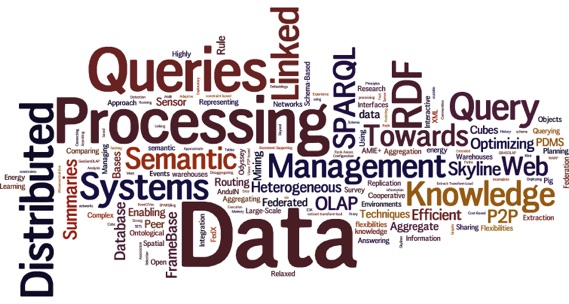
Katja Hose is a Full Professor of Data Management at TU Wien's DBAI research unit, heading the Data Management and Knowledge-Driven AI Lab. She previously held a Poul Due Jensen Foundation Professorship at Aalborg University. Her research focuses on data and knowledge engineering, including graph databases, knowledge graphs, querying, analytics, and machine learning, with interdisciplinary applications in bioscience, healthcare, and environmental assessment. Education: PhD in Computer Science (Ilmenau University of Technology, 2009), Postdoc at Max Planck Institute for Informatics (2009–2012). Academic roles include Program Co-Chair for ISWC 2024 and EDBT 2023, and editorial board membership at VLDBJ and TGDK. She leads projects like TARGET (health virtual twins) and ARMADA (data management). Research Interests: Knowledge Graphs, Semantic Web, Big Data, Machine Learning, Data Integration, and Provenance Systems. Key contributions include SHACL shape extraction, conversational data analytics, and environmental knowledge graphs. Awards include the 2025 Distinguished Meta-Reviewer Award and 2024 Manfred Paul Award. Advising and Grants: Supervised students including E. Pürmayr (Diploma Thesis 2025). Active in EU projects (TARGET, ARMADA) and grant coordination. Labs/Teams: DMKI Lab at TU Wien, collaborating with interdisciplinary teams in healthcare and environmental science.
Itsik Pe'er is a Full Professor and Vice-Chair in the Department of Computer Science at Columbia University's Fu Foundation School of Engineering & Applied Science, and holds a joint appointment as Professor of Systems Biology at the Vagelos College of Physicians and Surgeons. His research focuses on computational methods in human genetics, including genetic variation analysis, disease association studies, and algorithm development for genomic data. He leads the Itsik Pe'er Lab of Computational Genomics, which develops tools like Xplorigin, Germline, and SEACells to address challenges in genomics and medical research. His work spans machine learning applications in healthcare, microbiome analysis, and cancer genomics. Notable contributions include studies on hypertensive disorders in pregnancy, bias correction in predictive models, and the development of non-Euclidean learning libraries like Manify. Pe'er has advised students including Vladimir Vacic, Anat Kreimer, and Arthi Ramachandran, and collaborates on grants addressing genetic epidemiology and computational biology. His lab's location is in the Computer Science Building at Columbia's Morningside Campus.
Paul O'Toole is a Professor of Microbial Genomics and Principal Investigator at the APC Microbiome Ireland, University College Cork. His research focuses on the gut microbiome's role in health, aging, and disease, particularly in the context of diet and probiotics. He leads projects like the ELDERMET study on elderly nutrition and the NU-AGE project exploring Mediterranean diets' anti-aging effects. He holds a BA (Mod.) from Trinity College Dublin and a PhD from Lund University, with postdoctoral training in Canada and New Zealand. Key grants include studies on dairy-derived microbiota, probiotic strain improvement, and microbiome analysis in aging populations. He has published extensively on Lactobacillus genomics, gut-brain interactions, and microbiome-driven health outcomes. His work bridges fundamental microbiology with clinical applications, emphasizing translational research. Scientific highlights include discovering microbiome links to cognitive decline, demonstrating dietary modulation of gut microbes to combat obesity, and identifying keystone species in healthy aging. He advocates for sustainability in conservation and food systems, reflecting his interdisciplinary approach to global health challenges.
Kelly Arnold is an Associate Professor in the Department of Biomedical Engineering at the University of Michigan. Her research integrates systems engineering principles with immunology to investigate variability in immune responses across infection, vaccination, and injury, with a focus on computational modeling and clinical translation. Research Focus Systems-level immune response modeling Vaccination and antibody functionality Vaginal microbiome-host interactions Chronic lung disease progression Computational serology and proteomics Recent Work Her 2025 studies examine SARS-CoV-2 vaccination responses in cancer patients and computational frameworks for vaginal probiotics. Earlier works (2024-2007) span COPD progression, lupus fibrosis, HIV susceptibility, and tissue engineering for fertility preservation. Methodologies include proteomic profiling, network modeling, and microfluidic systems.
Sushmita Roy is a Professor at the University of Wisconsin–Madison, affiliated with the Department of Computer Sciences and the College of Letters and Science. Her research focuses on developing computational methods in statistical machine learning to understand gene regulatory networks in living cells, particularly under environmental, developmental, disease, and evolutionary contexts. She explores bulk and single-cell genomic data integration to study processes like cell fate specification, host-microbe interactions, and diseases such as cancer and neurodevelopmental disorders. Her work emphasizes three key areas: inference of genome-scale transcriptional networks, evolutionary analysis of regulatory networks, and 3D genome organization dynamics. Roy’s lab collaborates across disciplines, leveraging genomic data from plant and mammalian systems. She has contributed to methodologies for analyzing chromatin accessibility, single-cell profiling, and network-based models of pathogen systems. Her affiliations include Wisconsin Institutes for Discovery, and she is a leader in computational biology and systems genomics research.
Emmanuel J. Candès is the Barnum-Simons Chair in Mathematics and Statistics at Stanford University, with joint appointments in the Institute of Computational and Mathematical Engineering and as Professor of Statistics and Electrical Engineering (by courtesy). His research spans mathematical signal processing , high-dimensional statistics , and data science , focusing on compressive sensing, inverse problems, and applications to imaging sciences. 2021 IEEE Jack S. Kilby Signal Processing Medal 2020 Princess of Asturias Award for Technical and Scientific Research 2017 MacArthur Fellow His recent work on conformal prediction and uncertainty quantification has advanced machine learning reliability, particularly in high-dimensional settings. Publications include breakthroughs in medical imaging, gravitational wave detection, and AI validation frameworks. Key collaborations include Terence Tao (UCLA) and Justin Romberg (Georgia Tech) for IEEE Kilby Medal recognition. He serves as Co-chair of Stanford's Data Science Institute and previously as Statistics Department Chair (2016–2019).
Christopher M. Overall is a Full Professor at the University of British Columbia in the Faculty of Dentistry, Department of Oral Biological and Medical Sciences . He is also a Principal Scientist at the Centre for Blood Research and holds associate memberships in UBC's Biochemistry & Molecular Biology , Obstetrics and Gynecology , and Bioinformatics Graduate Program departments. As a Canada Research Chair Laureate , he pioneered the field of degradomics to study proteases in vivo. B.D.S., University of Adelaide Ph.D., University of Toronto Postdoctoral Fellowship, UBC (with Nobel Laureate Michael Smith) Dr. Overall’s research focuses on protease proteomics and systems biology , particularly degradomics to analyze protease substrates in diseases like COVID-19 and immunodeficiency . His work on matrix metalloproteinases has revealed new therapeutic strategies for inflammatory diseases and cancer . His 15 most recent articles (2015–2008) demonstrate expertise in TAILS proteomics , protein terminomics , and protease network analysis with applications in arthritis , antiviral immunity , and precision medicine . Scientific Awards 2022 Helmut Holzer Award 2018 Royal Society of Canada Fellow 2014 Tony Pawson Canadian Proteomics Award 2013 IADR Distinguished Scientist Award Dr. Overall has mentored 61 trainees , including 9 full professors with department chairs, and received the UBC John McNeill Mentorship Award (2023). He leads the HUPO Chromosome-centric Human Proteome Project and consults for Genentech and Novartis .
Dr. Dmytro Matsypura is an Associate Professor in the Discipline of Business Analytics at the University of Sydney Business School. He holds a BA (Hons) from Kyiv Polytechnic Institute (KPI), an MS (Hons) from KPI, and a PhD from the University of Massachusetts Amherst. His research focuses on optimization methodologies, network science, and their applications in finance, transportation, ecology, and graph theory. He is a recipient of multiple teaching awards, including the Wayne Lonergan Outstanding Teaching Award (Early Career) in 2010. Education: PhD in Management Science, University of Massachusetts Amherst (2006) MS (Hons) in Information Systems, Kyiv Polytechnic Institute (2000) BA (Hons) in Business Administration, Kyiv Polytechnic Institute (1998) Research Interests: Dr. Matsypura’s work spans operations research and management science, with a focus on mathematical optimization and network science. His methodological contributions include developing efficient optimization algorithms, while his applied research addresses real-world challenges in finance, engineering, and ecology. Notable applications include wildfire fuel management, portfolio margining, and credit card fraud detection via graph-based models. Awards and Recognition: Teaching Excellence Award (2008, 2013, 2018) Wayne Lonergan Outstanding Teaching Award (Early Career) (2010) Grants and Projects: Current projects include Bushfire Analytics: Optimization of Fuel Reduction (2023, ARC Discovery Project). His research frequently integrates interdisciplinary collaborations, such as applying graph theory to biomedical problems and cybersecurity. Labs/Teams: Active in the Sydney Environment Institute, contributing to projects at the intersection of analytics and sustainability. Collaborates with industry on fraud detection and supply chain optimization.