Dr. Kaveh Emami is a researcher at Newcastle University , specializing in proteomics, microbiology, and biotechnology. His work spans plant biotechnology, bacterial adhesion, and marine microbiology. Key research areas: Proteomics, Microbial Genetics, Plant Biochemistry, and Environmental Microbiology. Collaborated on studies involving rice mutants, barnacle adhesion, antibiotic discovery, and algal-bacterial interactions. His recent publications (2023–2009) focus on proteomic analysis, bacterial pathways, and applications in agricultural and marine biotechnology. No explicit scientific awards are documented in the provided data. Co-authored studies with Professor Angharad MR Gatehouse , Professor Tony Clare , and Professor Jeff Errington highlight his interdisciplinary collaborations.
Alberta N.A. Aryee, PhD is an Associate Professor in the Department of Human Ecology (Food Science & Biotechnology) at Delaware State University (DSU). She holds a PhD from McGill University and completed postdoctoral research at Agriculture and Agri-Food Canada. Her research focuses on the impact of natural products and bioactive compounds on nutrition, health, and metabolic diseases, with particular emphasis on food processing effects, functional food development, and biofortification strategies. Education: Postdoctoral Research: Agriculture and Agri-Food Canada PhD: McGill University (Dissertation: Enzyme Immobilization and Biodiesel Production) MSc: McGill University (Thesis: Lipase Purification) BSc (Hons): Kwame Nkrumah University of Science and Technology Research Interests: Food science, functional ingredients, nutraceuticals, fermentation science, lipid technology, and sustainable food systems. She explores how processing impacts food matrices, bioavailability of nutrients, and the application of nanotechnology and machine learning in food analysis. Recent Research Trends: Her work spans encapsulation of bioactives, plant-based food innovation, and leveraging AI for nutrient prediction. Studies include optimizing hempseed processing, analyzing fermented cassava chemistry, and designing smart food packaging. Awards: 2020 DSU Faculty Excellence in Research 2018 Hornet Award (Early College High School) Mini Grant for hands-on food science education Advising & Grants: Mentors students in food chemistry and product development. Collaborates on grants focused on value-added food products from agricultural byproducts. Leads experiential learning programs integrating global food challenges. Labs & Teams: Based in DSU’s Baker Annex, her lab focuses on lipid science and functional food formulation. Collaborates with industry partners on sustainable food technologies and nanodelivery systems.
Alicia L Carriquiry is a Distinguished Professor and President's Chair at Iowa State University, serving as Director of the Center for Statistics and Applications in Forensic Evidence (CSAFE). She holds a PhD in Statistics from Iowa State University (1989), an MS from the University of Illinois at Urbana-Champaign/ISU (1985/1986), and a BS from Universidad de la Republica in Uruguay (1981). Her research focuses on applying statistical methods to forensic science, nutrition epidemiology, and plant and animal breeding, with a particular emphasis on Bayesian frameworks. Recent research emphasizes forensic evidence analysis, including footwear impression algorithms, handwriting software development, and probabilistic evidence assessment tools. She also explores dietary intake patterns in populations across Latin America and Southeast Asia, addressing nutrient deficiencies and public health interventions. Her work bridges statistical rigor with practical applications in criminal justice, improving forensic methodologies through algorithmic innovation and interdisciplinary collaboration. As CSAFE Director, she leads initiatives to enhance statistical foundations in forensic disciplines, train practitioners, and develop open-source datasets. Notable contributions include database search methodologies, error rate analyses, and software tools like handwriter for handwriting analysis. Her research underscores the importance of probabilistic reasoning in legal contexts and addresses challenges in multi-camera source identification and nonlinear image distortion correction. Carriquiry’s leadership extends to editorial roles and professional service, advancing statistical standards in forensic science. She remains active in training programs and collaborative research projects, fostering reproducibility and relevance in scientific inquiry.
Dr. Massimo Iorizzo is a Professor in the Department of Horticultural Science at North Carolina State University, specializing in plant genetics and genomics. His research focuses on improving small fruit and vegetable crops through genetic approaches, with particular emphasis on phytochemical content and fruit quality traits. He holds a PhD and MS from the University of Naples 'Federico II' in Italy. His work integrates genomic tools, machine learning, and sensory science to enhance crop traits like texture, nutrient content, and bioactive compound accumulation. Recent projects include developing high-throughput phenotyping systems for cranberry and blueberry, mapping genes controlling carotenoid and anthocyanin pathways, and creating standardized ontologies for blueberry breeding. He collaborates on initiatives like VacciniumCAP and VacCAP to advance genetic resources for berry crops. Key contributions span improving flavor compounds in sweetpotato, understanding epigenetic stress responses, and optimizing protein-based delivery systems for plant nutrients. His research bridges basic genetics with applied breeding, aiming to create consumer- and grower-preferred varieties through interdisciplinary approaches.
Mywish Maredia is a fixed-term Professor of Development Economics at Michigan State University's Department of Agricultural, Food, and Resource Economics. She serves as Interim Co-Director of the Food Security Group and leads the Feed the Future Innovation Lab for Food Security Policy. Her research focuses on agricultural R&D impacts, technology adoption, seed systems, and nutrition policies in Africa, Asia, and Latin America. She holds a Ph.D. from Michigan State University and has over 20 years of experience with international organizations like USAID, CGIAR, and the World Bank. Education: Ph.D. (1993) and M.A./B.A. (1984-1986) in Economics from University of Bombay and Michigan State University Research Interests: Impact evaluation methodologies, agrifood system transformations, and policies promoting nutrition and poverty reduction. She has pioneered innovative approaches like DNA fingerprinting for crop variety tracking and ICT-based agro-advisory systems. Key Achievements: Over $94 million in grants secured, 40+ peer-reviewed publications, and recognition through awards like the Outstanding Dissertation Award (1994). Her work bridges academic rigor with practical policy advice, influencing agricultural strategies in over 30 countries. Scientific Awards: J-PAL Invited Researcher (2023), Ralph H. Smuckler Award (2021), Meritorious Achievement Award (2017) Mentoring: Currently advises 9 Ph.D. students and collaborates with researchers globally. Leads initiatives like the Myanmar Agriculture Policy Support Activity and Thailand Regional Agriculture Innovation Network. Labs/Teams: Director of the Food Security Policy Innovation Lab, co-leader of CGIAR's Policy Research Cluster, and affiliate of the MSU Center for Global Change and Earth Observations.
Manish N. Raizada is a Professor in the Department of Plant Agriculture at the University of Guelph's Ontario Agricultural College, serving as International Relations Officer. His research spans fundamental and applied studies in crop probiotics and sustainable agriculture for small-scale farmers. His research focuses on three core projects: (1) Plant Microbiome Inheritance, where his lab discovered seed-borne microbiomes and pollen microbiome selection; (2) Evolving Bacteria for Farmers, developing nodule-crushing techniques for legume inoculation; and (3) Empowering Small Scale Farmers through Sustainable Agriculture Kits (SAKs) impacting 272,000 people. His work integrates microbial ecology with practical farming solutions, emphasizing indigenous knowledge systems and democratization of agricultural technologies. Raizada's publications reveal strong trends in plant-microbe interactions (particularly maize and legumes), sustainable intensification for smallholders, and microbiome engineering for pathogen resistance. His work spans agricultural science, microbiology, and development studies with emphasis on real-world implementation in Nepal, Haiti, and Africa. He actively mentors graduate students and postdocs, with alumni securing faculty positions globally. His lab has developed practical resources including Farmpedia (an online encyclopedia for small-scale farmers in 108 languages) and SAKBooks (picture-based agricultural lessons). Raizada collaborates extensively with international organizations including UN FAO (where he's delivered keynote addresses), IFA, and CGIAR. His work has been featured in BBC World Service, CBC Radio, and Canadian Geographic, demonstrating significant policy and public impact.
Professor Johanita Kruger is a faculty member at the University of Applied Sciences Fulda, Germany, where she holds the position of Professor of Food Technology and Nutrition. Previously, she has held roles including Researcher at the University of Hohenheim and Lecturer at the University of Pretoria. Her research focuses on nutrient bioavailability, particularly inhibitors and enhancers of bioactive compounds, with an emphasis on polysorbate micelle absorption mechanisms, food-to-food fortification strategies, and mineral bioavailability in African green leafy vegetables. She collaborates internationally on projects funded by the German Research Foundation (DFG) and USAID, addressing issues such as micronutrient deficiencies and food processing innovations. Her educational background includes a PhD in Nutrition from the University of Pretoria, alongside extensive post-doctoral and research experience across multiple institutions. University of Applied Sciences Fulda, Germany (2023–present) University of Hohenheim, Stuttgart (2020–2023; 2016–2018) University of Pretoria, South Africa (2015–2015; 2011–2013) Her research interests span food biofunctionality, including the development of novel micellar formulations and the evaluation of food processing techniques to enhance nutrient bioavailability. Key projects include defining food-to-food fortification strategies and investigating iron/zinc bioavailability in traditional African diets. She has contributed to interdisciplinary collaborations, such as the USAID Feed the Future Innovation Lab for Food Processing. Publications highlight advancements in polysorbate micelle stability, polyphenol encapsulation, and the efficacy of tropical plant-based fortification. Her work bridges laboratory research and real-world applications, aiming to improve global food security and nutritional outcomes. Laboratory activities include the USAID-funded Food Processing Lab and collaborative projects with institutions in France and Slovenia. No scientific awards are explicitly noted in the provided text. Her advising and grants include DFG funding for micelle absorption studies and contributions to the Kenyan Flour Blending Initiative. Students and lab teams focus on topics like cereal biofortification and nutrient-micelle interactions.
Sandra Calkins is Assistant Professor of Social and Cultural Anthropology at the Free University of Berlin and a member of the LOST research network hosted at the University of Halle. Her work integrates science and technology studies with medical anthropology to interrogate how evidence about global health interventions is produced, circulated, and contested. Education PhD, Anthropology – Leipzig University (2014) M.A., Anthropology – Leipzig University (2008) Research Interests Drawing on pragmatism and STS, Calkins examines how material-semiotic assemblages shape social orderings and public health problem definitions. Her current project, "Better Bananas for Ugandans," investigates biofortification as a high-tech agricultural fix for micronutrient deficiencies. Through ethnographic fieldwork in Uganda and Australia, she traces how human bodies, banana plants, transgenes, and funding agencies are enrolled into experimental regimes that produce evidence of efficacy and safety. She is particularly concerned with: Infrastructures of evidence and their global politics Agenda-setting in public health nutrition Tensions between emerging biological paradigms (e.g., epigenetics) and established biomedical truths The affective and temporal dimensions of scientific work in post-colonial settings Publication Trends Calkins’s recent output (2019-2021) clusters around three thematic nodes: (1) ethnographies of laboratory and field science in Uganda, (2) critical analyses of evidence and valuation in global health, and (3) theoretical contributions to STS and medical anthropology. Collectively, these works advance a more-than-human anthropology that foregrounds plants, chemicals, and infrastructures as co-constitutive actors in technoscientific worlds. Scientific Awards No specific awards or fellowships are listed in the provided material. Research Funding & Teams Her research has been supported through the collaborative LOST program (Law, Organization, Science and Technology). She has conducted extensive ethnographic fieldwork since 2015 at the National Agricultural Research Laboratories in Kawanda, Uganda, working alongside plant breeders, molecular biologists, nutritionists, and local farming communities.
Mauricio Antunes is an Assistant Professor in the Department of Biological Sciences and a member of the BioDiscovery Institute at the University of North Texas (UNT), where he joined in 2018 after serving as a Research Assistant Professor at Colorado State University. His work pioneers plant synthetic biology to engineer plants with novel traits for environmental sensing and improved bioproduction. Education: B.S. in Agronomy from Universidade Federal de Viçosa, Brazil M.S. in Crop Sciences from Universidade Federal de Viçosa, Brazil Ph.D. in Plant Molecular Biology from Purdue University under Nick Carpita and Tom Hodges Dr. Antunes' research focuses on developing synthetic biology tools for plant engineering. Key areas include: Synthetic transcriptional/post-transcriptional control systems modulated by specific inputs Small RNAs as mobile signaling molecules in plants Complex genetic circuits for enhanced plant production Re-wiring metabolic pathways like phenylpropanoid biosynthesis His publication analysis (2016-2024) shows consistent innovation in plant synthetic biology, with recent emphasis on Boolean logic gates for environmental sensing, RNA signaling mechanisms, and metabolic pathway engineering. Key trends include the development of tunable promoters, microRNA mobility studies, and biosensors for plant metabolites. Scientific Awards: No scientific awards listed for Dr. Antunes Dr. Antunes actively mentors graduate students and secures research funding: Current Students: Jordan LaChance (PhD), Md Shoyeb (PhD), Jesseca Hemminger (PhD) Former Students: Stephanie Amack (MS), Charles Anderson (MS), Armin Tutnjic (MA) Current Grant: The Welch Foundation ($240,000, 2021-2024) for 'Establishing biochemical determinants of microRNA long-distance mobility in plants' The Antunes Lab, part of UNT's BioDiscovery Institute, comprises postdocs, graduate students, and undergraduates collaborating on plant synthetic biology projects. The team maintains strong interdisciplinary connections within UNT and with external partners like Colorado State University, focusing on translating synthetic biology tools into agricultural and biotechnological applications.
Per Erik Saris is a Professor at the Department of Microbiology, Faculty of Agriculture and Forestry, University of Helsinki. His research spans microbiology, food biotechnology, and functional food development. Research focuses on microbial applications in food systems including probiotic and postbiotic development, fermentation processes, bioactive compound production, and food safety innovations. Key areas include bacteriocin applications, microbial genomics, and sustainable food processing. Recent publications demonstrate advancements in functional foods, novel fermentation techniques, and microbiome interactions with human health. Research integrates microbiology with food science and biotechnology principles. Ongoing projects include Parkinson's microbiome interactions, cereal-based fermented foods for nutrition enhancement, and spray-drying stabilization techniques for probiotics.
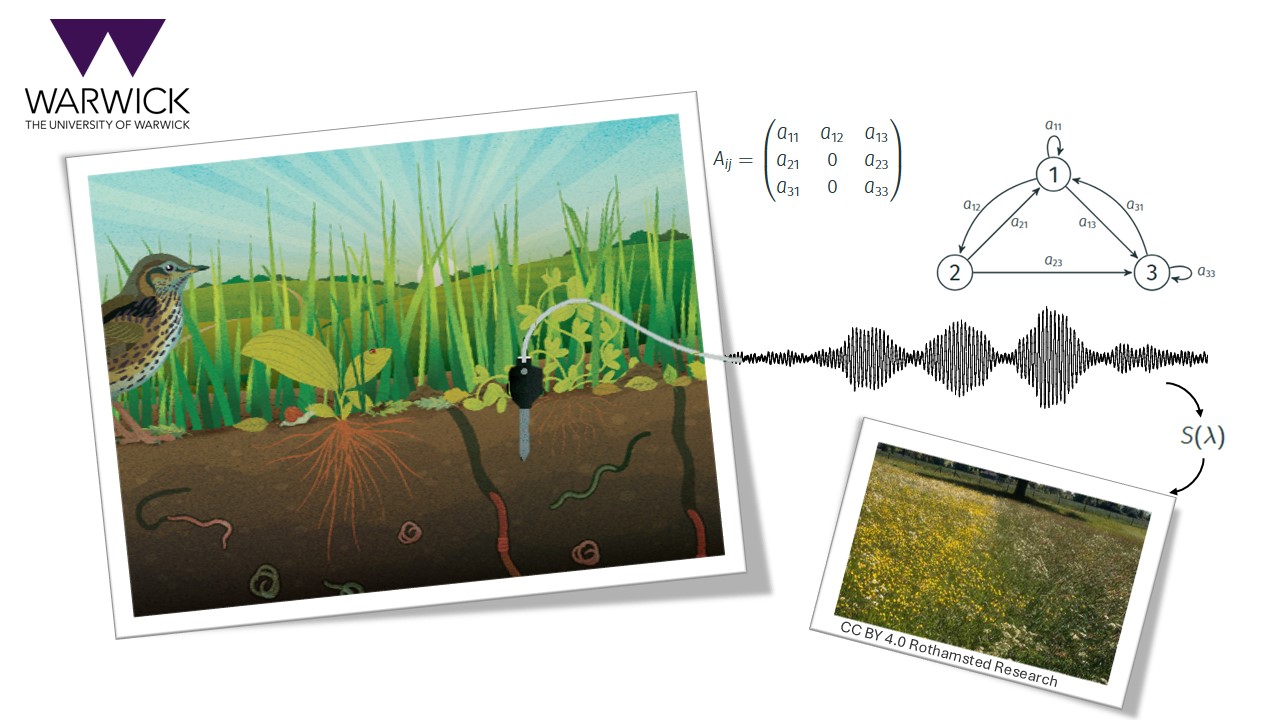
Kirsty Hassall is an Assistant Professor in Applied Statistics at the Department of Statistics, University of Warwick, having joined the department in 2024. She has previously worked for nearly 10 years as an applied statistician in the agri-environment sector, bringing extensive practical experience to her academic role. Dr. Hassall holds a PhD in "The temporal and spatial analysis of single cell gene expression" from the University of Warwick (2015). She is a Chartered Statistician with the Royal Statistical Society (2019) and has served as a committee member (2017-2021) and currently as Secretary (2021-present) of the British and Irish Region of the International Biometric Society (IBS-BIR). Her research focuses on developing robust hybrid models that combine empirical, mechanistic, and stochastic elements. With expertise spanning Bayesian networks, spatially coherent clustering techniques, and farm typology development, Dr. Hassall applies statistical methods to solve complex problems in agricultural and environmental science. Her work bridges traditional statistical consultancy (mixed models, multivariate statistics, experimental design) with methodological developments for real-world applications. Analysis of Dr. Hassall's recent publications reveals a strong interdisciplinary focus at the intersection of statistics, agriculture, and environmental science. Her work demonstrates consistent application of advanced statistical techniques to address pressing challenges in food security, sustainable agriculture, and environmental management. Key trends include the development of Bayesian Belief Networks for soil quality assessment, spatial modeling for crop production estimation, and statistical approaches to address gender dimensions in agricultural research. Chartered Statistician (Royal Statistical Society, 2019) Dr. Hassall is actively involved in research supervision and teaching, currently offering the ST344: Professional Data Science course. She has secured funding for PhD research, including a fully funded EPSRC scholarship project titled "Unravelling the sound underground: Detecting and estimating earthworm abundance using low-frequency vibrations." She also organizes the "Statistical Challenges in the Agri-Environmental Sector" workshop at the University of Warwick. Through her extensive publication record and active participation in professional societies, Dr. Hassall has established herself as a researcher who effectively bridges statistical methodology with practical applications in the agri-environmental sector. Her collaborative approach is evident in her numerous multi-institutional research projects across the UK, Africa, and Europe.
Professor Shyamal Chowdhury holds the Rajiv Gandhi Chair of South Asian Economics at the Arndt-Corden Department of Economics, part of the Crawford School of Public Policy at the Australian National University (ANU). He is also Director of the Australia South Asia Research Centre (ASARC). His research focuses on economic development, particularly seasonal migration, children's non-cognitive skills, microfinance, and technology adoption in South Asia and other developing regions. He has published in top journals like Econometrica and the Journal of Political Economy. Prior roles include positions at the World Bank and University of Sydney. Chowdhury is a Research Fellow at Germany’s IZA and Secretary of the Australasian Development Economics Association (ADEA). Education: BSc (Hons.) in Economics, Jahangirnagar University, Bangladesh MA in Economics, University of Kiel, Germany PhD in Agricultural Economics, University of Bonn, Germany Research Interests: His work interrogates how structural economic challenges in South Asia intersect with global development frameworks. Recent studies explore resilience of social programs during climate crises (2024), behavioral impacts of cash transfers (2023), and intergenerational preference dynamics (2022). He emphasizes policy-relevant findings for infrastructure, health access, and gender equity in rural contexts. Awards & Affiliations: Research Fellow, IZA Institute of Labor Economics Secretary, Australasian Development Economics Association (ADEA) Grants & Advising: Extensive experience with multilateral organizations including IFPRI and World Bank. Advises on South Asian economic policy frameworks. Active in guiding interdisciplinary teams across development economics clusters. Labs/Teams: Leads ASARC coordinating regional research initiatives on South Asian economic integration and development challenges.
Dr. Julian McClements is a Distinguished Professor in the Department of Food Science at the University of Massachusetts Amherst. He also holds adjunct/visiting roles at Zhejiang Gongshang University (China), Harvard University, and King Abdulaziz University (Saudi Arabia). His research focuses on food biopolymers, colloids, and delivery systems for nutrients/nutraceuticals, with over 1,200 peer-reviewed articles and 12 patents. He has secured $11.5M in grants and authored seminal books like *Future Foods* and *Food Emulsions*. Awards include the Nicolas Appert Award (IFT’s highest honor) and multiple fellowships. Education : Ph.D. in Food Science (1989), University of Leeds, UK. Postdoctoral training at UC Davis, University College Cork, and Leeds. Research Interests : Designing plant-based foods, food nanotechnology, encapsulation systems, and gastrointestinal fate of nutrients. His lab explores emulsion stability, hydrogel matrices, and sustainable food architectures. Achievements : Top-cited author in Agricultural Sciences (ISI) Over 1200 publications (H-index 162) Recipient of 12 patents Editorial roles at *Annual Reviews in Food Science and Technology* and other journals Advising & Grants : Advised numerous students (not listed) and secured grants from USDA, NSF, NASA, and industry partners. Research emphasizes healthful, sustainable food systems. Labs/Teams : Leads the Biopolymer and Colloids Research Group, organizing international conferences on food colloids and delivery systems.
Shuyang Zhen is an Assistant Professor in Controlled Environment Horticulture at Texas A&M University's Department of Horticultural Sciences. Her research examines environmental plant physiology and optimization of specialty crop production in controlled environments, focusing on photosynthesis, LED lighting, hydroponics, and crop selection for greenhouses/vertical farms. Education includes a PhD in Horticulture from University of Georgia (2017), MS from University of Maine, and BS from Huazhong Agricultural University. Prior to Texas A&M, she conducted postdoctoral research at Utah State University's Crop Physiology Laboratory (2017-2020). Research investigates light quality (far-red, UV-B, blue), temperature interactions, nutrient management, and novel technologies (quantum dot films) to enhance crop yield, nutritional quality, and stress resilience. Current projects explore photon capture efficiency, biomass allocation, and sustainable greenhouse production systems. Publications demonstrate consistent focus on light-environment interactions, with recent work examining synergistic effects of spectral composition and temperature on morphology, antioxidant dynamics in tomatoes, and quantum dot applications. Studies employ physiological, genomic, and technological approaches. No awards, students, or grant details are explicitly documented. Laboratory focus: Environmental plant physiology and optimization of specialty food/ornamental crop production systems.
E is a Personal Professor in Soil Biology and Operations Manager at Wageningen University & Research, Netherlands. He specializes in soil ecology, nutrient cycling, and sustainable agricultural practices. His research focuses on optimizing agrifood systems through soil management, cover crops, and organic amendments. He leads multiple interdisciplinary projects addressing climate-smart agriculture in sub-Saharan Africa and China. Key research areas include tropical soil fertility, micronutrient dynamics, and meta-analyses of agroecological systems. He actively supervises PhD candidates investigating soil health, biodiversity effects, and nutrient cycling in grasslands and crop rotations. Notable contributions include studies on boron fertilization in maize, nitrogen replacement values of organic waste, and cover crop mixtures reducing nitrogen leaching. Projects: 19 active/finished projects on soil functions, carbon sequestration, and agrifood system sustainability Supervision: Mentor to 17 PhD candidates since 2017 Collaborations: Extensive international networks in Africa, Asia, and Europe Prominent datasets include soil carbon-nitrogen dynamics in grasslands and micronutrient partitioning studies. His work bridges fundamental soil biology with applied agricultural solutions for global food security challenges.