Prof. Gabriele Schrag holds the Professorship of Microsensors and Actuators at the Technical University of Munich (TUM), within the TUM School of Computation, Information and Technology. Her research focuses on MEMS (Micro-Electro-Mechanical Systems), including microsensors, actuators, and their applications in acoustics, microfluidics, and bioengineering. She has pioneered work in virtual prototyping for system-level modeling to enhance device robustness and performance. Education: PhD (summa cum laude) from TUM on 'Modeling coupled effects in microsystems' Habilitation in sensor systems technology (2018) Acting head of the Chair of Technical Electrophysics (2018-2023) Research emphasizes acoustic MEMS transducers , electrohydrodynamic printing , and physics-based modeling . Notable projects include developing piezoelectric MEMS microphones with corrugated membranes and integrated micropump systems. Awards include the Bavarian Prize for Good Teaching (2021) and Eurosensors Fellow Award (2019). Her work bridges virtual prototyping with real-world applications , addressing challenges in miniaturization, energy efficiency, and sensor integration for medical and industrial systems.
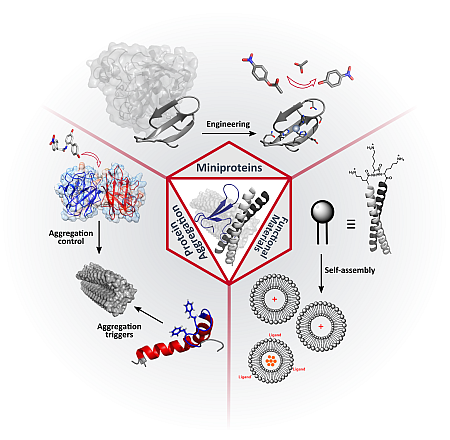
Jun.-Prof. Dr. Franziska Thomas is a Junior Professor at the Institute of Organic Chemistry, Heidelberg University, leading an active research group at the interface of organic chemistry, biochemistry, and biophysics. Her work centers on understanding protein folding mechanisms and their implications for biological function. Dr. Thomas established her independent research group at Georg-August-Universität Göttingen in June 2015 before moving to Heidelberg University in February 2020. She was offered her current tenure track position at Heidelberg on April 26, 2019. Her research program has two primary focuses: (1) designing peptide scaffolds with catalytic activity using de novo designed components that can be chemically synthesized and modified, and (2) studying protein aggregation mechanisms relevant to neurodegenerative diseases such as amyotrophic lateral sclerosis. She employs small, well-characterized self-assembling peptides to create novel materials and understand disease pathways. Analysis of her publication record reveals consistent advancement in peptide and protein engineering, with recent work emphasizing WW domains, β-sheet miniproteins, and innovative solid-phase synthesis techniques. Her research bridges fundamental protein science with applications in materials engineering and disease mechanism understanding. Her work has received significant funding including: The excellence cluster 3DMM2O for the project 'Design of Structured Adhesion Miniproteins for Tissue Engineering' The Deutsche Forschungsgemeinschaft for the research grant 'The WW-domain scaffold as a model system for the de novo design of miniaturized phosphate receptors, phosphatases and sulfatases' Dr. Thomas actively mentors a large research team including 11 PhD students and 2 Master's students, with numerous past students who have successfully completed their theses. She teaches courses including 'Chemische Biologie' and 'OC-Z6 Synthese und Retrosynthese' and participates in seminar series such as IMSEAM and 3DMM2O. The Thomas Lab maintains strong collaborative connections with multiple research groups including the Kivala, Kemerink, Blasco, Klein, Comba, and Gräter groups, reflecting an interdisciplinary approach to peptide and protein science.
Professor Brigitte Voit leads the Macromolecular Chemistry division at the Leibniz Institute for Polymer Research Dresden (IPF) and holds the chair for 'Organic Chemistry of Polymers' in the Faculty of Mathematics and Natural Sciences / Faculty of Chemistry and Food Chemistry at Technische Universität Dresden. She is actively involved in interdisciplinary collaborations with the Center for Advancing Electronics Dresden (cfaed), Centre for Regenerative Therapies Dresden (CRTD), and the Dresden International Graduate School for Biomedicine and Bioengineering (DIGS-BB) through the DRESDEN-concept initiative. Additionally, she serves as chairwoman of the Materialforschungsverbund Dresden (MFD). Academic Affiliation: Technische Universität Dresden Research Focus: Synthesis of multifunctional polymers, dendritic polymers, bioactive materials, responsive hydrogels, radical ring-opening polymerization Research Trends: Her recent publications highlight advancements in bioinspired polymer systems, including polymersome membranes for synthetic cells, light-driven enzymatic control, hierarchical biomimetic structures, and tunable hydrogels. These works reflect her expertise in integrating polymer chemistry with biomedicine and sustainable materials. Interdisciplinary Roles: Involvement in cfaed, CRTD, DIGS-BB, and DRESDEN-concept Leadership: Former Scientific Director at IPF (2002-2022), current department head Publications demonstrate her group's focus on responsive and bioactive polymer architectures, with applications in drug delivery, bioelectronics, and sustainable materials.
Bjoern Menze is a Professor and Rudolf Mößbauer Tenure Track Chair at the Technical University of Munich (TUM), leading the Image-based Biomedical Modeling Group within the Munich School of Bioengineering. His research focuses on medical image computing, tumor growth modeling, and computational physiology, with applications in clinical neuroimaging and personalized radiotherapy design. He holds a Ph.D. in Computer Science from Heidelberg University and has held positions at ETH Zurich, INRIA Sophia Antipolis, MIT, and Harvard Medical School. His academic journey includes a postdoc at MIT’s CSAIL and Harvard Medical School, followed by roles at ETH Zurich and INRIA. His work bridges biomedical imaging with machine learning, emphasizing model-driven analysis of physiological processes. He has been a visiting professor at Maastricht University and contributes to initiatives like the Center for Translational Cancer Research at TUM. Key research areas include tumor growth modeling, quantitative imaging biomarkers, and integrating mathematical models with clinical data. His awards include the MICCAI Young Scientist Award (2014), Leopoldina Fellowship (2009), and DFG Research Fellowship (2008). He advises on medical AI, leads interdisciplinary projects, and publishes extensively in top journals like Nature Neuroscience and IEEE Transactions on Medical Imaging. His lab’s work spans applications such as glioblastoma radiotherapy optimization, whole-body bone lesion detection, and neural connectivity imaging. Collaborations include institutions like Harvard, MIT, and ETH Zurich. He emphasizes translating computational methods into clinical practice for personalized healthcare solutions.
Prof. Florian Heigwer serves as Professor of Synthetic Biotechnology at Hochschule Worms, leading the Department of Synthetic Biotechnology. His expertise spans synthetic biology, genetic engineering, and bioprocess development. He oversees academic programs including the Synthetic Biotechnology B.Sc./M.Sc. track and contributes to interdisciplinary research initiatives like the Hermann Hoepke Institute and Biotechnology Academy RLP. Notable awards include the Fraund Prize and GdF Prize. His work integrates biotechnological innovation with industrial applications through projects such as the Biogenic workshop initiative. Academic Role: Full Professor Key Projects: Hermann Hoepke Institute, Biotechnology Academy RLP Affiliations: HAW.rlp Research Data Management (FDM@HAW.rlp) Prof. Heigwer actively promotes applied research in sustainable biotechnologies and education, overseeing study programs like Renewable Energy Management and Process Engineering. His contributions are recognized through industry partnerships and awards highlighting technical innovation.
Prof. Dr. Leonid Ionov is a leading academic at the Faculty of Engineering Science , University of Bayreuth, specializing in Biofabrication and 4D Printing . He has held professorial roles since 2017, with prior positions at the University of Georgia and TU Dresden. Research Priorities: Smart responsive polymers, 3D/4D bioprinting, self-healing electronics, and bioinspired surface engineering. Teaching: Offers advanced courses in 3D Printing of Polymers , Biofabrication , and Polymer Science . His work integrates stimuli-responsive materials with additive manufacturing to create bioinspired actuators, vascular scaffolds, and self-healing conductive systems. Recent articles focus on 4D-printed vascular junctions , multi-responsive cellulose composites , and dynamic bilayer morphing . Scientific Achievements Recipient of the 2022 North Bavaria Business Plan Competition award 2012 Georg Manecke Prize for biopolymer research Developed European patents for Li-S battery cathodes and microfluidic devices Trained over 20 PhD/postdoc alumni now at institutions like Iowa State University and Harvard Medical School . Leads a multidisciplinary lab with advanced equipment for polymer synthesis, electrospinning, and cell culture studies.
Prof. Dr. Franz Pfeiffer is a full professor at the Chair of Biomedical Physics within the Department of Physics at the Technical University of Munich (TUM) . He has served as director of the Munich School of BioEngineering since 2016. His research focuses on translating advanced X-ray physics concepts to biomedical imaging and clinical applications, particularly for early cancer and osteoporosis diagnostics. Research Interests: X-ray phase-contrast and dark-field imaging, synchrotron instrumentation, CT reconstruction algorithms, and medical imaging technology. Awards: Alfred Breit Prize (2017) ERC Advanced Grant (2016) Leibniz Prize (2011) National Latsis Prize (2010) ERC Starting Grant (2009) His work bridges fundamental X-ray physics with clinical translation, involving collaborations with radiologists, engineers, and medical researchers. Recent publications emphasize AI integration in CT, dark-field chest radiography, and spectral imaging applications.
Prof. Fabian Meder is an Associate Professor at the BioRobotics Institute of Scuola Superiore Sant'Anna in Pisa, Italy, leading the Lab for Surface Phenomena and Integrated Systems . He holds a PhD in Materials Science (2013) from the University of Bremen and has held positions at EMPA (Switzerland), University College Dublin (Ireland), and the Max Planck Institute (Germany). His research focuses on surface phenomena and their applications in energy harvesting, soft robotics, and biohybrid systems, particularly leveraging plant surfaces for sustainable technologies. Education: Bachelor's in Bio- and Nanotechnology (2008) – South Westphalia University of Applied Sciences PhD in Materials Science (2013) – University of Bremen Research Interests: Triboelectric charging and energy conversion on biological surfaces Plant-inspired biohybrid systems for autonomous energy generation Epicuticular electrification mechanisms and their ecological implications Soft robotics and sensor technologies integrated with natural systems Grants & Awards: ERC Consolidator Grant (2024) for the EpiC project on epicuticular electrification National Italian Habilitation (ASN) as Associate Professor in Physical Chemistry (2022) Labs & Teams: Leads the Lab for Surface Phenomena and Integrated Systems, collaborating on interdisciplinary projects in biohybrid robotics and energy harvesting.
Maria Paola Forte is a Doctoral Researcher at the Max Planck Institute for Intelligent Systems, working across the Haptic Intelligence and Perceiving Systems departments. She holds a BSc in Biomedical Engineering from the University of Genova and an MSc in Bioengineering from Politecnico di Milano. Her PhD research focuses on developing interdisciplinary assistive technologies, particularly for sign language capture, combining computer vision with sensor-based approaches. Her research interests center on creating technology for people with sensory or motor deficits, with applications in robotic surgery and human-computer interaction. Key areas include assistive device development, motion capture systems, and haptic feedback interfaces. Her work leverages expertise in biomedical engineering, machine learning, and real-time systems. Publications consistently demonstrate interdisciplinary work in surgical robotics and accessibility technology. Recent articles show a progression toward human-centered applications of computer vision, with emerging focus on wearable bioimpedance sensing and avatar reconstruction for sign language.
Tsung-Yi Ho is a Professor in the Department of Computer Science at National Tsing Hua University, Taiwan. He holds the Hans Fischer Fellowship at the Technical University of Munich's Institute for Advanced Study (TUM-IAS). His primary research focuses on design automation for microfluidic biochips and nanometer integrated circuits, emphasizing reliability, optimization, and interdisciplinary applications in bioengineering. Ho received his Ph.D. in Electrical Engineering from National Taiwan University in 2005. He has held positions at National Cheng Kung University and National Chiao Tung University before joining National Tsing Hua University. His work bridges algorithmic design with practical biochip fabrication, addressing challenges like contamination control, routing optimization, and fault tolerance in microfluidic systems. His research interests span design automation for emerging technologies, including paper-based biochips and 3D microfluidic architectures. He has pioneered methods for integrating hardware-software co-design principles into biochip development, enhancing both functionality and reliability. His contributions include novel routing algorithms, contamination mitigation techniques, and reliability-aware synthesis frameworks. Ho has authored over 100 publications, including influential papers in IEEE Transactions on CAD and ACM journals. He serves on the editorial boards of multiple top-tier journals and chairs professional chapters for ACM and IEEE. His awards include the Humboldt Research Fellowship, Dr. Wu Ta-You Memorial Award, and Best Paper Awards at VLSI Test Symposium and IEEE Transactions on CAD. His current projects involve optimizing control-fluidic co-design for paper-based biochips and developing AI-driven frameworks for microfluidic functionality prediction. He collaborates widely, leading cross-disciplinary initiatives at TUM-IAS and Taiwan's academic institutions.
Prof. Dr. Felix Jonas is an Assistant Professor of Biochemistry at the School of Science, Constructor University Bremen, Germany. He leads research on the biochemistry of gene regulation , focusing on molecular mechanisms governing transcription factor function and chromatin dynamics in Saccharomyces cerevisiae . His work integrates CRISPR-Cas9, Next-Generation Sequencing, and computational data analysis. Education: B.Sc. in Molecular Life Sciences (University of Luebeck), M.Sc. in Biology: Cell Biology (ETH Zurich), Ph.D. in Bioengineering (Imperial College London) Work Experience: Postdoc/Senior Postdoc at Weizmann Institute of Science (2017-22), Visiting Student at Weizmann Institute (2015-16), International Program Associate at RIKEN (2011) Teaching: General Biochemistry (CH-100-B), Introduction to Bioinformatics (JTMS-10), Current Topics in Life Sciences (CA-BCCB-801), Advanced Biochemistry II - Molecular Genetics (CO-403-A) His research explores transcription factor target search , histone dynamics , and chromatin structure-function relationships . Recent publications highlight discoveries in nucleosome replacement, protein disorder grammar, and histone acetylation impacts on replication. Articles emphasize interdisciplinary approaches to eukaryotic gene regulation and systems biology. Visit his lab’s PhD recruitment page or watch his Fragile Nucleosome Talk for deeper insights into his work.
David Baker is a Professor in the Department of Biochemistry at the University of Washington School of Medicine , an investigator with the Howard Hughes Medical Institute , and adjunct faculty in genome sciences, bioengineering, chemical engineering, computer science, and physics. His pioneering work in computational biology has earned him the 2024 Nobel Prize in Chemistry and numerous other accolades. Education: Bachelor of Arts in Biology, Harvard University (1984) Doctor of Philosophy in Biochemistry, University of California, Berkeley (1989) Postdoctoral training in Biophysics, University of California, San Francisco (1993) David's research focuses on ab initio protein structure prediction and design via tools like Rosetta , RoseTTAFold , and the citizen science game Foldit . His group has designed Top7 , the first artificial protein with a novel fold, and advanced AI applications in structural biology. The 15 most recent articles reflect trends in computational methods for protein modeling, AI integration , and crowdsourced science . These works span ab initio prediction , density-guided optimization , and gamified approaches to structure determination. Scientific Awards: Nobel Prize in Chemistry (2024) Breakthrough Prize in Life Sciences (2021) Wiley Prize (2022) BBVA Foundation Frontiers of Knowledge Award (2022) Overton Prize (2002) Feynman Prize in Nanotechnology (2004) David has advised PhD students like Richard Bonneau and mentored postdocs including Brian Kuhlman, Tanja Kortemme, and Jens Meiler. His Institute for Protein Design has received over $11 million from Open Philanthropy (2017) and $3 million (2021). He co-founded biotech companies such as Icosavax and Sana Biotechnology.
Jochen A. Müller is a Senior Scientist at the Helmholtz Centre for Environmental Research - UFZ in Leipzig, Germany, within the Department of Molecular Environmental Biotechnology . His research focuses on microbial transformations of organic pollutants, particularly using molecular tools to quantify biocatalysts and analyze microbial roles in contaminated systems. He previously held academic positions at Morgan State University and conducted postdoctoral research at Stanford University and the University of Maryland. Education: Diploma in Microbiology (1996), University of Konstanz Ph.D. in Microbiology (2000), University of Konstanz His research interests span environmental biotechnology, microbial ecology, and genomics, with emphasis on anaerobic degradation of chlorinated ethenes, aromatic compounds, and sulfur-metabolizing microbes. His publications (2012–2023) explore antibiotic resistance gene dynamics, toluene degradation pathways, constructed wetland systems, and innovative single-cell genomics techniques like scMAR-Seq. Professional service includes editorial board membership for Applied and Environmental Microbiology and Saline Systems since 2009. He has contributed to funded projects such as Genomics of Beggiatoa alba (NSF, JGI/DOE) and participated in interdisciplinary collaborations across environmental engineering, biotechnology, and bioeconomy. For contact , he is affiliated with the UFZ in Leipzig. Detailed institutional affiliations and further information can be found in the full description below.
Matthias Meier is a Full Professor at the Institute of Biochemistry, University of Leipzig, and Principal Investigator at Helmholtz Pioneer Campus, Helmholtz Zentrum München. His research focuses on advancing microfluidic organ-on-chip technology for single-cell and whole-organ disease modeling. Education: PhD in Biophysics (University of Basel, 2006) Research Interests: Dr. Meier's work bridges bioengineering and metabolic disorders, using organ-on-chip platforms to study stem cell differentiation, pancreatic/adipose tissue interactions, and dynamic microenvironmental signals. His lab integrates microfluidics with hiPSC-derived organoids for obesity and diabetes research. Publication Trends: Recent studies emphasize organ-on-chip systems, single-cell analysis , and stem cell engineering , with applications in cardiovascular disease modeling, spatial transcriptomics, and bioelectronic monitoring. Scientific Awards: Feodor-Lynen Postdoctoral Fellowship (2008) Emmy-Noether Fellowship (2012-2018) ERC Consolidator Grant (2017) Advising & Grants: He has led independent research groups with major grants, focusing on energy imbalance mechanisms and patient-specific organoid models for metabolic disease therapies. Labs & Teams: The Matthias Meier Lab develops microfluidic platforms to control chemical, architectural, and mechanical cues for hiPSC differentiation, emphasizing spatial protein profiling and organoid assembly.
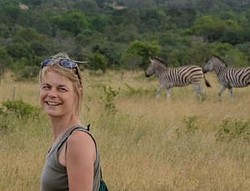
Anna Treydte is an Associate Professor in Nature and Environmental Management with a focus on Sustainable Development at Stockholm University's Department of Physical Geography. She also holds Adjunct Professor positions at the University of Hohenheim (Ecology of Tropical Agricultural Systems) and the Nelson Mandela African Institution of Science and Technology (Department of Life Sciences and Bioengineering). Her work spans multiple continents, addressing biodiversity conservation and human-wildlife coexistence across temperate climates (Germany, Sweden, Italy), desert environments (Mongolia, Saudi Arabia), savanna systems (eastern and southern Africa), mountain regions (Andes), and tropical forests (China, Vietnam, Thailand, Tanzania). Dr. Treydte's research centers on biodiversity and conservation challenges in human-impacted, changing environments. She investigates how climate change and human activities alter structural, species, and functional biodiversity in natural and agro-ecological systems. Her work examines plant-animal interactions, animal population management, human-wildlife coexistence, and livestock impacts on rangelands. She specifically studies shifts in nutrient cycling, carbon stocks, and species diversity in landscapes under varying human land use pressure, including corridors, buffer zones, protected lands, and cultivated areas facing climate-induced weather extremes. She integrates socio-ecological aspects into her research, emphasizing that sustainable human-wildlife coexistence requires local stakeholder involvement in resource use decision-making. Analysis of her recent publications reveals a strong focus on landscape ecology, rangeland management, and human-wildlife conflict across diverse ecosystems. Her work combines field observations, GPS tracking of wildlife and livestock, socio-ecological surveys, and advanced spatial modeling techniques. Key thematic areas include pastoral mobility patterns, invasive species management, pollination networks in rangelands, and the impacts of land use change on wildlife habitat suitability. Her research consistently addresses the intersection of ecological processes and human livelihoods in changing environments. Dr. Treydte actively supervises numerous PhD, MSc, and BSc students across multiple institutions, with current projects investigating human-wildlife coexistence in Sweden and Tanzania, rangeland restoration techniques, and invasive plant species management. She leads several major research projects including 'Human-Wildlife Coexistence: Reaching a sustainable human-wildlife coexistence by understanding patterns, predicting conflict hotspots and improving communication' and 'Rangeland Ecology: Adapting to change – co-management scenarios of local pastoralists and protected area management to maintain cultural and biological diversity in the Dzungarian Gobi, Mongolia.' Her laboratory, 'NG| Landscape Ecology,' focuses on how landscape patterns, climate, and land use influence ecological processes, biodiversity, and ecosystems. The group employs interdisciplinary approaches that bridge natural and social sciences to address contemporary environmental challenges in a changing world.