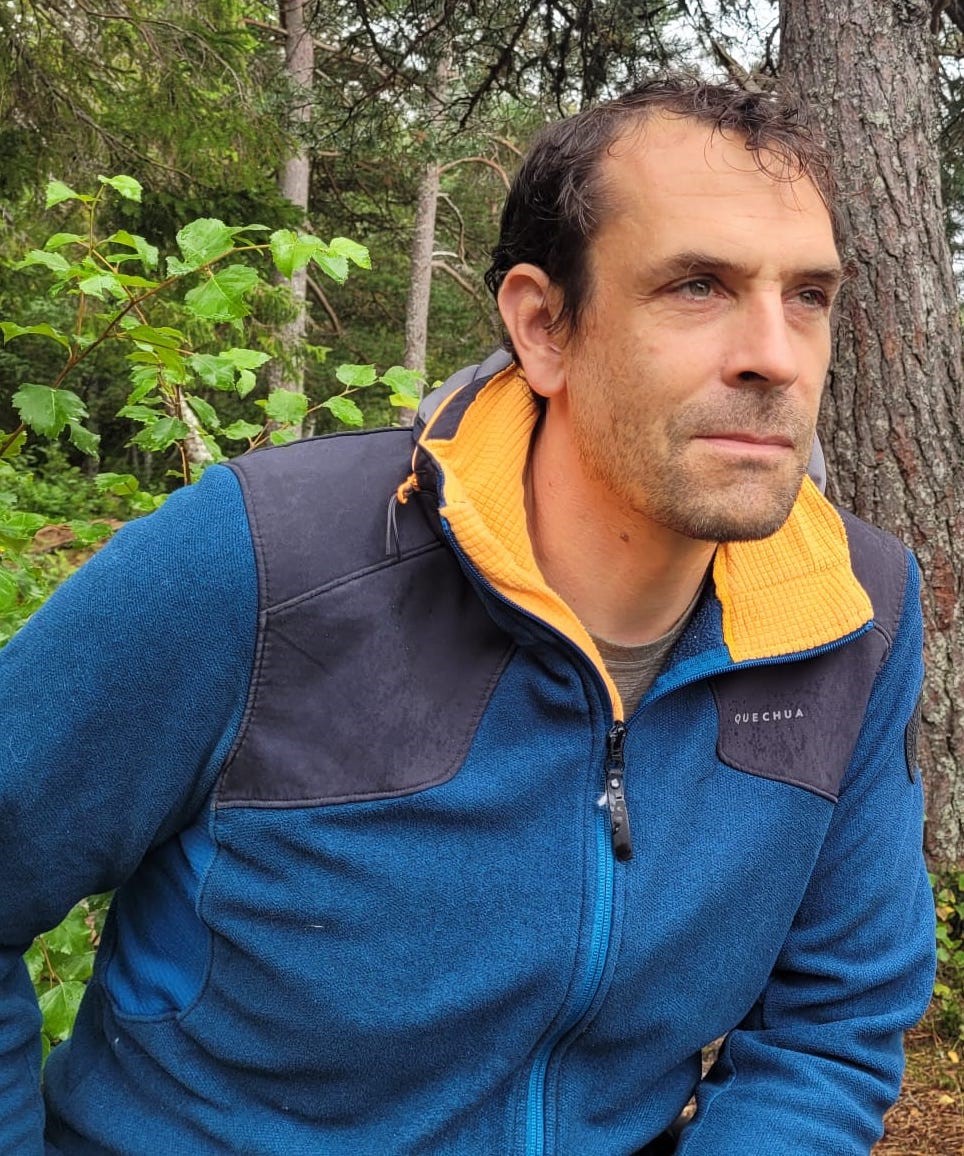
Pedro Alves Martins is a postdoctoral researcher at the Department of Biotechnology and Biomedicine, Technical University of Denmark (DTU), specializing in lignin biotechnology and enzyme engineering. His work focuses on enhancing cellulose hydrolysis and lignin extraction through glucuronoyl esterases and other ligninolytic enzymes. Research Interests His research bridges biocatalysis and biorefining , targeting sustainable conversion of lignocellulosic biomass into valuable compounds. Key areas include: Enzymatic mechanisms for lignin-carbohydrate complex deconstruction Optimization of cellulose hydrolysis efficiency Valorization of agricultural byproducts like brewer’s spent grain Structural analysis of enzyme-substrate interactions Publication Trends Recent work emphasizes biotechnological applications of fungal esterases, with a focus on synergistic enzyme systems and their industrial potential. Publications span 2023–2025 , highlighting collaborations with experts in bioprocessing and computational modeling. Collaborations Collaborators include Prof. Jan W. Agger (DTU), Dr. Camila L. Bourmaud (DTU), and Prof. Jeremy S. Luterbacher (EPFL), reflecting interdisciplinary efforts in enzyme technology and biomass deconstruction.
Nathan Enoch Lewis is a Professor at the Department of Biotechnology and Biomedicine, Technical University of Denmark (DTU). His research focuses on protein production systems and biotechnological applications, with affiliations to the Protein Production Facility. The work spans multiple disciplines including metabolic engineering, immunology, and glycobiology. Metabolic Pathway Analysis Antibody Production Optimization Genome Editing Applications AI in Biomedical Research The 6 recent publications highlight advancements in protein engineering, immunological mechanisms, and AI-driven biotechnology. Key scientific themes include: Protein-Protein Interaction Viral Entry Mechanisms Glycocalyx Modulation Explainable AI Models Genome Editing for Cell Metabolism
Emre Ozdemir serves as Head of Computational Design and Analytics at the Novo Nordisk Foundation Center for Biosustainability, Technical University of Denmark (DTU). His work spans computational biology, metabolic engineering, and strain design within the College of Engineering. His research focuses on microbial systems engineering for sustainable bioproduction, with expertise in Metabolic pathway optimization Machine learning applications in strain design Heterologous protein expression systems NADPH/redox balance mechanisms His recent publications demonstrate strong trends in applying computational methods to solve metabolic engineering challenges across diverse microbial hosts including Escherichia coli, Komagataella phaffii, and Streptomyces albidoflavus, with particular emphasis on redox balancing, stress tolerance, and transcriptional regulation. Dr. Ozdemir actively supervises PhD students and contributes to UN Sustainable Development Goals through sustainable bioproduction research. His leadership in the Computational Design and Analytics group drives data-driven strain engineering approaches within DTU's Integrated Fermentation Platform and Strain Design Teams.
Adele Pioppi is a Postdoctoral Researcher in the Department of Biotechnology and Biomedicine at DTU Bioengineering, Technical University of Denmark. Her research focuses on plant-microbe interactions with emphasis on sustainable agricultural applications. She maintains an active research profile with recent publications in high-impact journals and contributes to UN Sustainable Development Goals related to sustainable agriculture and life on land. Her research expertise spans multiple interconnected domains: Microbiome engineering for plant growth promotion Host genetic regulation of rhizosphere communities Bacillus species ecology in natural and agricultural systems Synthetic microbial community development Probiotic applications in aquaculture and agriculture Analysis of her publication record reveals a strong trajectory in developing microbiome-based solutions for sustainable food production. Her work bridges fundamental microbial ecology with practical applications in agriculture, demonstrating particular expertise in Bacillus species and their interactions with plant and animal hosts. Recent publications show increasing leadership in establishing methodological standards for synthetic community research. Dr. Pioppi completed her PhD in Plant Microbiome Ecology (2022-2025) under main supervisor Ákos T. Kovács, with examiners Rasmus D. Jonge and Simona Radutoiu. Her doctoral work established foundations for understanding microbial community dynamics in agricultural contexts. Current research continues this trajectory with expanded focus on cross-kingdom microbiome applications.
Ahmad Zeidan is a PhD holder in Bioengineering/Systems Biology and serves as the Chief Technology Officer (CTO) at the Department of Biotechnology and Biomedicine, Section for Synthetic Biology, at the Technical University of Denmark (DTU). His work spans biohydrogen production, thermophilic fermentation, and microbial interactions in biotechnological systems. Research Interests: Biohydrogen production, thermophilic fermentation, synthetic biology, systems biology, microbial interactions, bioreactor design, dairy biotechnology. Recent publications highlight his expansion into food microbiology, focusing on microbial interactions in cheese flavor formation, genome-scale metabolic modeling, and phage dynamics during dairy fermentation. His earlier work emphasized hydrogen production efficiency and metabolic pathways in extremophiles like Caldicellulosiruptor species. Zeidan has contributed to 16 publications, including journal articles, book chapters, and a PhD thesis. His research aligns with UN Sustainable Development Goals (SDGs), particularly in renewable energy and sustainable industrial practices.
Xiaotian Mao is a Research Assistant in the Department of Food Science at the University of Copenhagen, specializing in Food Microbiology, Gut Health, and Fermentation research. Their work primarily focuses on gut microbiome interactions, bacteriophage therapy, and metabolic health applications. Research interests span gut microbiome analysis, bacteriophage applications in therapeutic contexts, fecal microbiota transplants, and metabolic syndrome interventions. Their work bridges food science with clinical applications, particularly in understanding how microbial communities affect human health conditions ranging from neonatal intestinal disorders to obesity-related metabolic issues. Recent publications demonstrate a strong trend toward virome-focused research, with significant contributions to understanding how bacteriophages and viral components of the gut microbiome can be harnessed for therapeutic purposes. Their work spans methodological development (bacteriophage purification techniques), clinical applications (necrotizing enterocolitis treatment), and metabolic health interventions. Xiaotian Mao actively collaborates with researchers across multiple institutions, with publications appearing in high-impact journals including Nature Communications, Gut Microbes, and Microbiome. Their research has received attention from news outlets and social media platforms, indicating significant scientific impact.
Sylvester Holt is a Tenure Track Assistant Professor in the Department of Food Science, Design and Consumer Behavior at the University of Copenhagen's Faculty of Science. His research focuses on flavor chemistry and sensory science, with particular expertise in yeast molecular biology and sustainable food development. Education: PhD in Biochemistry and Biotechnology from Katholieke Universiteit Leuven (2017) M.Sc. in Biochemistry from University of Copenhagen (2009) Research Interests: Holt's research centers on two main pillars: Flavor Generation and Flavor Perception . In flavor generation, he designs strategies to optimize flavor formation in sustainable foods and applies flavor chemistry to guide product innovation. His work includes hop flavor extraction for nonalcoholic beer, fermentation optimization for plant-based foods, and development of plant and hybrid cheeses. In flavor perception, he explores model systems with human sensory receptors, connecting molecular reception to sensory perception. His current MucusOR project develops a yeast-based model of the human olfactory epithelium. Research Trends: Holt's recent publications demonstrate a strong focus on the molecular mechanisms of flavor compounds, particularly in yeast systems. His work bridges fundamental molecular biology with practical applications in sustainable food development. There's a clear progression from basic research on yeast genetics and aroma compounds to applied projects addressing current food industry challenges like plant-based alternatives and non-alcoholic beverages. Scientific Recognition: Editor of Frontiers in Microbiology since May 2019 Significant research impact with multiple highly cited publications, including one with 212 citations Advising and Funding: Holt supervises a research team consisting of one PhD student and four postdocs. He has secured multiple research grants including a 170,000 EUR grant from Fondation de France (2018), a 30,000 EUR grant from Cancerpôle Provence Alpes Côte d'Azur (2019), and the EPIC-XS European access grant (2019). His current research is supported by several major projects including DFF, AgriFoodTure, Plantefonden, and EU Horizon funding. Laboratory and Facilities: Holt manages the PTR-MS aroma chemistry platform at the University of Copenhagen, which supports his research on flavor compounds. His laboratory work integrates molecular biology, biochemistry, and sensory science approaches to tackle challenges in sustainable food development.
Birgitte Regenberg is a Professor in the Department of Biology at the University of Copenhagen, specifically working within the Ecology and Evolution research area. She leads the Regenberg Group, which focuses on genetic mechanisms for cell-cell variation in eukaryotic cells and their impact on diseases and chromosome evolution. Her laboratory is located at Universitetsparken 15, 2100 København Ø. Professor Regenberg's research has gained significant international attention, particularly for her discovery that circular DNA is not merely a biological curiosity but an abundant carrier of genetic information. Her work demonstrates that DNA circles are produced from all parts of the genome across various eukaryotic species and cell types, including yeast, birds, and human somatic and germline cells. She has shown that these circular DNA molecules contain genes or gene fragments that can be expressed, solving a longstanding question in genetics about the fate of deleted DNA. Her group has developed advanced purification methods, bioinformatics tools, and targeted DNA circularization technologies in yeast and human genotypes, establishing a crucial research model for studying circular DNA's role in disease and evolution. Her current research focuses on four main areas: circular DNA in disease (particularly cancers and neurodegenerative disorders), the factors causing DNA circularization in humans and yeast, measuring the effects of circular DNA on aging using mouse and yeast models, and investigating circular DNA's impact on evolution across yeast and mammals. Beyond circular DNA, her work extends to yeast as a model for biofilm formation, genetic and epigenetic variation, and transitions between uni- and multicellular phenotypes. She has made significant contributions to understanding yeast as a model for social evolution in unicellular eukaryotes, demonstrating the selective advantage of cell differentiation in yeast biofilm colonies and the role of the FLO11 gene in social interactions between yeast cells. Professor Regenberg's research group employs a range of advanced techniques, including hypersensitive purification of circular DNA, next-generation short-read and long-read sequencing, microscopy for visualizing circular DNA, and extensive strain collections and methods in yeast and human genetics. Her work bridges molecular biology, genetics, and evolutionary biology, with significant implications for understanding disease mechanisms and evolutionary processes.
Prof. Sebastien Nicolas Gros is a Full Professor and Head of the Department of Cybernetics at NTNU (Norway). He holds a PhD from EPFL (2007) and has held positions at Strathclyde University, KU Leuven, and Chalmers University of Technology. His research focuses on Model Predictive Control (MPC), Reinforcement Learning, Stochastic Optimal Control, and their applications in energy systems, autonomous systems, and bioengineering. Education: PhD in Control Systems, EPFL, Switzerland (2007) Postdoc at KU Leuven (2011-2013) Associate Professor at Chalmers University (2013-2017) Research Interests: Safe Reinforcement Learning, Data-Driven MPC, Energy Management in Buildings, Wave Energy Conversion, Artificial Pancreas Systems. His work is applied to industries like Equinor, DNV, and CorPower Ocean. Collaborations: Co-supervises PhD projects on Multi-Rotor Wind Turbine Control and Artificial Pancreas Industry partnerships with Volvo, SINTEF, and Pixii Labs: ITK Smart House, Hydroponics Units, Wave Energy Testbeds Grants & Projects: MAIDOM project for smart home energy management AWEbox framework for Airborne Wind Energy National and industrial grants for control systems research
Marco Maschietti is an Associate Professor in the Department of Chemistry and Life Sciences at Aalborg University, Faculty of Engineering and Science, Esbjerg, Denmark. His research focuses on sustainable chemical processes with applications in biorefineries and the oil & gas industry. He leads multiple research projects and actively collaborates with industry partners. Research Interests: Reduction of environmental impact in chemical processes Supercritical fluid applications (e.g., supercritical CO₂) Hydrothermal liquefaction and oxidation H₂S scavenging and management in oil & gas production Phase equilibrium and process modeling Separation processes and emulsion behavior His recent publications and projects reflect a strong trend in green chemistry, environmental technology, and industrial sustainability, particularly in offshore operations. The research integrates experimental work with computational modeling to optimize chemical processes. Scientific Awards: The Terje Østvold Memory Award - Best Paper 2024 Advising and Grants: Marco Maschietti leads multiple externally funded research projects, including INNO-H2S (EUDP), Zero H2S - DEMO (Danish Offshore Technology Center), and CarbonAdapt (Innovation Fund Denmark). He is involved in PhD supervision and has mentored early-career researchers. His research is supported by collaborations with OKEA ASA, SLB, and other industrial partners. Labs and Teams: He is part of the Chemical and Bioengineering research group at AAU Esbjerg, working closely with researchers such as S. Kucheryavskiy, R. Wimmer, N.K. Nielsen, and F.J. Aschmoneit. The team focuses on experimental and computational studies of chemical processes with environmental applications.
Peter Stephensen Lübeck is an Associate Professor in the Department of Chemistry and Bioscience at Aalborg University, Faculty of Engineering and Science. His work bridges biotechnology, food science, and sustainable resource utilization, with a strong focus on biorefinery systems and fungal-based solutions for future food and environmental challenges. Research Interests: Biorefinery Concepts: Utilizing membrane filtration and bioprocessing to extract high-value proteins from green biomass such as clover grass and lucerne. Fungal Cell Factories: Engineering fungi like Aspergillus niger and Trichoderma reesei for sustainable production of food ingredients, biochemicals, and bioactive compounds. Molecular Biology: Applying CRISPR-Cas9 and genomic tools for strain improvement and metabolic pathway optimization. Sustainable Food Systems: Developing climate-friendly food technologies through precision fermentation and upcycling of organic side-streams. Recent Research Trends: His recent publications (2020–2025) reflect a strong shift toward sustainable food innovation, particularly in extracting functional proteins from underutilized green biomass using membrane technology. He is also deeply involved in fungal biotechnology for alternative protein production, emphasizing circular economy principles. Projects like Græs4Food, SvampeMad, and UPCYFUN highlight his interdisciplinary approach integrating food science, environmental engineering, and industrial biotechnology. Scientific Contributions: Active participant in 12 major research projects, including ongoing initiatives funded through 2029. Contributor to 78 research outputs, including journal articles, posters, patents, and datasets. Public engagement through 9 media appearances discussing green transition, food innovation, and climate impact. Advising and Grants: Peter Stephensen Lübeck participates in PhD supervision and collaborates extensively across academic and industrial partners. He is involved in multiple large-scale, externally funded projects focused on sustainable food production and biorefining, such as HfBFood and BioFerment, indicating strong grant acquisition and collaborative leadership. While specific student names are not listed, his involvement in PhD supervision confirms mentoring activities. Laboratories and Research Teams: He works within the Bioresources and Process Engineering research group at Aalborg University, collaborating closely with Professor Mette Lübeck. His work spans interdisciplinary teams involving food scientists, engineers, molecular biologists, and industrial partners, particularly in projects related to fungal fermentation, protein recovery, and green biotechnology.
Lea Holritz is a postdoctoral researcher at the Department of Biotechnology and Biomedicine , Technical University of Denmark (DTU), affiliated with the DTU Bioengineering faculty and the DTU Microbes Initiative. Her work focuses on advancing human milk analysis, particularly for donor milk safety and infant nutrition. Education : PhD in Biotechnology (2021–2024), supervised by Prof. Winnie Svendsen and Dr. Maria Dimaki. Her research addresses challenges in pathogen detection and macronutrient analysis in donor human milk, contributing to global efforts in maternal-child health and food safety. She has developed patented methods for milk sample preparation and diagnostics. The PureMilk project (2021–2024) underpins her publications, emphasizing Holder pasteurization , toxin secretion in pathogens, and nutrient profiling . Her work aligns with UN Sustainable Development Goals related to health and well-being. Labs/Teams : DTU Microbes Initiative, Nano Bio Integrated Systems group.
Dr. José Luis Martinez Ruiz is an Associate Professor at the Department of Biotechnology and Biomedicine , Technical University of Denmark (DTU), specializing in synthetic biology and yeast biotechnology. He leads fermentation research within the DTU Fermentation Platform and DTU Microbes Initiative, focusing on microbial strain engineering for sustainable chemical production. Research Interests : Metabolic engineering of non-conventional yeasts (Saccharomyces cerevisiae, Yarrowia lipolytica, Debaryomyces hansenii), bioreactor optimization, transcriptomic analysis of stress responses, and lipid production from waste substrates. His recent publications highlight breakthroughs in terpenoid synthesis, Taxol precursor optimization, and agro-industrial waste valorization. He supervises multiple PhD projects addressing bioprocess intensification and yeast physiology in scale-down reactors. Supervisory Roles include mentoring students on topics like: Physiological characterization of yeast strains in non-sterile fermentations Multi-omics analysis of fermentation upscaling impacts Adaptive evolution of salt-tolerant yeast platforms
Alexandros Pasadakis-Kavounis is a Postdoc researcher at the Department of Energy Conversion and Storage, Technical University of Denmark (DTU), specializing in electrochemical materials for energy storage applications. His research focuses on advancing redox flow battery technologies, with particular expertise in: Material engineering for advanced redox flow batteries Anthraquinone-based flow battery negolytes Biosynthesized quinone compounds for sustainable energy storage Polymer membrane development for vanadium redox flow batteries Coordination chemistry approaches to bipolar energy storage materials Dr. Pasadakis-Kavounis completed his PhD at DTU in 2023 with a dissertation titled "Materials Engineering for Advanced Redox Flow Batteries," which investigated reactor and membrane engineering solutions for next-generation energy storage systems. His research fingerprint shows strong activity in redox flow batteries (100%), flow battery material science (55%), anthraquinone material science (32%), and biosynthesized compounds (31%). His recent publications demonstrate a research trajectory focused on improving capacity, stability, and efficiency of flow battery systems through innovative materials design. The work spans from fundamental molecular design of energy storage materials to practical membrane engineering solutions. His research contributes significantly to UN Sustainable Development Goals related to affordable and clean energy (SDG 7), with collaborations spanning multiple countries as indicated by his research network map.
Than Linh Quyen is a Research Fellow at the Department of Biotechnology and Biomedicine, Technical University of Denmark. Her work focuses on developing innovative point-of-care diagnostic systems using loop-mediated isothermal amplification (LAMP) and microfluidic technologies. Department: Biotechnology and Biomedicine Institution: Technical University of Denmark Her research spans molecular diagnostics, infectious diseases, and biomedical engineering, with applications in detecting pathogens like Salmonella, SARS-CoV-2, and Campylobacter. Recent publications highlight advancements in LAMP-based biosensors, contamination elimination, and commercialization of diagnostic devices. The 15 most recent articles reflect consistent contributions to isothermal amplification techniques, food safety, and rapid clinical testing. Key themes include microfluidics, pathogen detection, and point-of-care system optimization. She has collaborated extensively on projects such as the development of an integrated lab-on-a-chip system for molecular diagnostics. No specific scientific awards are mentioned in the provided data.