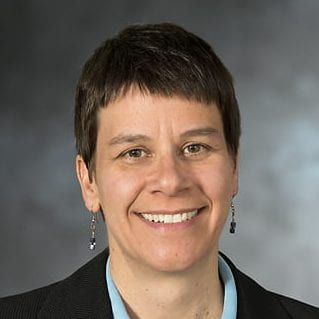
Anna Nikolaidou is a Senior Lecturer in Architecture and Design at the Faculty of Environment and Technology (FET), University of the West of England (UWE Bristol). She holds a DPhil from UWE Bristol and an MArch from University College London's Bartlett School of Architecture. As a Senior Fellow of the Higher Education Academy (SFHEA), she specializes in interdisciplinary research at the intersection of architecture, biomaterials, and biotechnology. Her work focuses on biohybrid material systems using microbial communities for responsive, regenerative, and computing capabilities in architectural and wearable applications. Anna has taught as a Visiting Professor at IE University (Spain) and conducted research at the University of Applied Arts Vienna and BOKU University Vienna. She leads the BSc (Hons) Architecture programme and is part of UWE’s Unconventional Computing Laboratory. Her research themes include biomaterials, biosensing, sustainable design, and smart wearables, with a focus on fungal and bacterial composites for environmental sensing and adaptive systems. Anna’s industry experience includes roles at firms like Foster + Partners and KCA International, blending design practice with academic innovation. Her lab explores living materials such as kombucha-based biofilms and fungal networks for applications in responsive building systems, smart wearables, and bioelectric circuits. She actively collaborates across disciplines, including nanoscience and biomedical engineering.
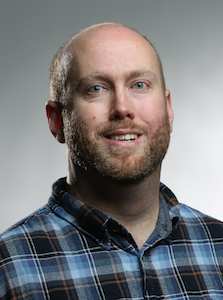
Mark White is the Richard D. Wood Bicentennial Associate Professor of Commerce at the University of Virginia’s McIntire School of Commerce. He holds a visiting professorship in environmental economics at the Technische Universität Dresden. His research focuses on sustainable business practices, corporate finance, and environmental economics, with notable projects on algae-based bioenergy, the UVA Bay Game simulation, and global environmental policy. He teaches in programs including the ICE and McIntire Business Institute, emphasizing international exposure through study-abroad trips to over 30 countries. Professor White’s work bridges financial management and sustainability, addressing topics like biofuel economics, carbon storage, and ecosystem valuation. His collaborative research includes modeling biodiesel production from microalgae and analyzing environmental implications of timber harvests in Russia. He is committed to transformative education, designing curricula that integrate sustainability into living-learning communities aboard Semester at Sea programs. Academically, his publications span environmental finance, life cycle assessments of bioenergy systems, and the economic valuation of natural resources. He actively contributes to university governance through the Faculty Senate and sustainability committees. His Fulbright scholarship underscores his global academic engagement. His research trends reflect a focus on quantifying environmental impacts through economic frameworks, with recent work exploring post-pandemic corporate resilience and financial sustainability. Earlier projects highlight interdisciplinary approaches to energy systems, waste management, and climate change adaptation. Awards: Fulbright Scholar Labs/Initiatives: UVA Bay Game, Algae Bioenergy Research, Semester at Sea Education Programs Grants/Advising: Leads collaborative projects on biofuel economics and environmental policy; advises initiatives integrating sustainability into business education
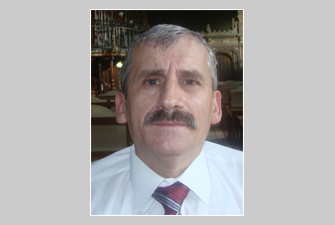
Dr. Sam England is a Postdoctoral Researcher at the Museum of Natural History, Leibniz Institute for Evolution and Biodiversity Research in Berlin, Germany. Holding a PhD in Biological Sciences from the University of Bristol and an MPhys in Physics from the University of Exeter/University of Wollongong, England bridges physics and biology through innovative research on electroreception and atmospheric electricity interactions with living systems. England's research focuses on sensory ecology and bioelectromagnetism , investigating how electrical phenomena influence insect behavior, pollination, and predator-prey dynamics. Key areas include electrostatic pollination mechanisms, tick attachment via static electricity, and atmospheric electrical effects on insect swarms. This work reveals fundamental connections between physical forces and biological processes across diverse taxa including butterflies, moths, ticks, and bees. Analysis of England's 2020-2024 publications shows a consistent trajectory in electroecology , with increasing focus on sensory convergence in mimetic systems and atmospheric-biological interfaces. The research demonstrates how electrical cues serve as critical yet overlooked communication channels in nature, spanning scales from individual sensory mechanisms to ecosystem-level atmospheric interactions. As a postdoctoral researcher currently investigating spider sensory ecology, England contributes to interdisciplinary projects at the intersection of biophysics and evolutionary biology. The collaborative nature of the work—evident in multi-institutional publications with Daniel Robert and other international researchers—highlights integration across atmospheric science, entomology, and sensory biology.
Dr.-Ing. Abdul Razzaq Farooqi is a researcher at the University of Rostock , Faculty of Computer Science and Electrical Engineering, Institute of General Electrical Engineering. His work integrates computational electromagnetics with biomedical engineering to advance cartilage tissue engineering through electroactive hydrogels and electrical stimulation. Research Interests: Numerical simulation of electromagnetic fields Modeling and simulation of electroactive hydrogels for cartilage tissue engineering Computational bio-electromagnetics Across his recent publications (2019–2025), Farooqi has concentrated on electroactive hydrogels , electrical stimulation strategies , and computational biomechanics to enhance cartilage regeneration. Complementing this biomedical thrust, he has also contributed to electromagnetic focusing and chiral metamaterials in earlier works (2012). Scientific Awards: No awards explicitly mentioned in the provided text. Advising & Funding: No student names or specific grants are listed in the supplied material. Laboratories & Teams: Farooqi is affiliated with the Institute of General Electrical Engineering at the University of Rostock, where he conducts his computational and experimental investigations.
Miguel Martín Matillas is a Professor at the Department of Physical Education and Sports within the Faculty of Sports Sciences at the University of Granada. He coordinates the Healthy Living Habits Promotion under the Rector's Delegation for Health and Relations with the Health System, focusing on integrating physical activity into broader health strategies. His research spans physical fitness assessment , telerehabilitation for post-hip fracture recovery, bone health in overweight children , and psychosocial factors in adolescent obesity . Key projects include the ActiveHip+ , ActiveBrains , and EVASYON Study , emphasizing exercise interventions, digital health tools, and family dynamics in health outcomes. Recent publications highlight his work on mHealth systems , bone mineral density , caregiver burden , and adolescent cardiometabolic risk . His methodologies combine randomized controlled trials, longitudinal analyses, and qualitative studies to evaluate physical and psychological impacts of interventions. He teaches courses with office hours in Building H Office 1.9, available Tuesday and Thursday from 8:00 - 11:00 throughout both semesters. His affiliation with the University of Granada spans over a decade, with contact numbers listed as 958246655 and 958247908.
Dr. Patrick SM Dunlop is a Senior Lecturer within the School of Engineering and Head of the Doctoral College at Ulster University. He is also a member of the Engineering Research Institute and serves as Chairman of the Northern Ireland Antimicrobial Resistance Network. His professional affiliations include being a Chartered Biologist, a Fellow of the Higher Education Academy, and a chartered member of the Society of Biology. Dr. Dunlop's research focuses on three main areas: The design and application of nanomaterials for disinfection of air, water/wastewater The production of self-cleaning and self-disinfecting medical devices/surfaces The development of biological sensing technology, including rapid identification of organisms associated with antimicrobial resistance His recent publications demonstrate a strong emphasis on sustainable technologies, water treatment, and antimicrobial solutions. Dr. Dunlop's work spans chemical engineering, environmental science, and biomedical applications, with a particular focus on photocatalytic processes and nanomaterial development. His research has significant implications for addressing global challenges in water security, antimicrobial resistance, and sustainable energy production. Dr. Dunlop has secured substantial research funding from diverse sources including EU FP & Horizon programmes, US-Ireland R&D Partnership, US EPA, Royal Society, British Council, NATO, and Invest NI. His collaborative research extends to numerous leading universities and research institutes worldwide, with extensive industrial collaboration developing practical products and services. As Head of the Doctoral College, Dr. Dunlop provides strategic leadership for all postgraduate research activities across Ulster University, overseeing PhD programs and research training across all disciplines.
Elizabeth Lorenzo, PhD, RN, serves as an Assistant Professor in the School of Nursing at the University of Texas Medical Branch (UTMB) at Galveston, where she is affiliated with the Graduate Studies PhD Program. Her research focuses on women's health disparities, particularly among Hispanic and Filipino populations, with emphasis on menopause, physical activity, and cardiometabolic health across the lifespan. Her educational background includes a PhD in Nursing and Healthcare Innovation from Arizona State University and a BSN from the University of Michigan-Flint. She holds prestigious fellowships including the ORBIT Fellow (Cohort 3, 2025) and The Menopause Society Research Mentorship Program (2024-2026). Dr. Lorenzo's research program centers on health disparities in minority women , employing the socioecological model to examine physical activity, telomere biology, and nutritional interventions. Her work bridges clinical nursing with community-based participatory research, particularly through the Sustainability via Active Garden Education (SAGE) initiative targeting childhood obesity. She investigates race-specific variations in cardiometabolic risk and develops culturally tailored interventions for Hispanic women during menopausal transition. Analysis of her recent publications reveals a strong trajectory in systematic reviews addressing menopause education, physical activity interventions for Hispanic women, and telomere-length relationships with health outcomes. Her work increasingly incorporates mixed-methods approaches examining both biological mechanisms and socioecological barriers, with significant focus on community-engaged solutions for health disparities. Her scientific recognition includes: Beverly and F.A. (Andy) Odom Endowment for Nursing Research Award (2024) Class of 1963 Faculty Recruitment, Retention and Research Award (2022) Jonas Scholar Nurse Leader Cohort (2016-2018) Society of Behavioral Medicine Meritious Student Abstract Award (2016) As an active mentor, Dr. Lorenzo serves as a TMS Mentee in the Research Mentorship Program (2024-2026). Her substantial grant funding includes an NIH R01 from NIA (2024-2029) for physical activity interventions in midlife Hispanic women, DFPS program evaluation, and UTMB Pepper Center Scholar funding. She has secured competitive awards from SNRS and the Jeane B. Kempner Fellowship supporting telomere-length research in cardiovascular health. Dr. Lorenzo actively contributes to the UTMB Center for Interdisciplinary Research in Women's Health and leads the SAGE initiative, which implements garden-based education in early care centers to improve preschool children's locomotor skills and nutrition through parent engagement and environmental modification.
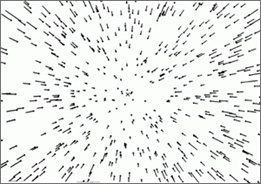
J. Vernon Odom, Ph.D., FARVO is Professor of Ophthalmology at West Virginia University School of Medicine with joint appointments in the Department of Neuroscience and the Rockefeller Neuroscience Institute. He heads the West Virginia Lions Visual Function Laboratory and has established himself as a leading researcher in visual function assessment using electrophysiology and psychophysics in both normal and abnormal vision conditions. Dr. Odom received his Ph.D. from the University of North Carolina at Greensboro. His postgraduate training included studies at Case Western Reserve University's Psychology Department, the University of California at Berkeley's School of Optometry, and the University of Florida's Ophthalmology Department. Dr. Odom's research focuses on higher order visual perception in older patients with low vision, with particular emphasis on optic flow as a means of controlling locomotion and navigation in patients with reduced visual abilities. His laboratory actively investigates strategies to assess quality of life in patients with reduced vision and develops non-invasive methods to assess traumatic brain injury, systemic diseases and toxic exposures. His work bridges clinical ophthalmology with neuroscience to address real-world vision challenges affecting mobility and independence. Analysis of Dr. Odom's publication record reveals a strong focus on visual electrophysiology, particularly visual evoked potentials (VEPs), with applications spanning from basic retinal physiology to clinical standards development. His work increasingly addresses the challenges faced by older adults with visual impairments, including mobility issues and social implications of vision loss. The International Society for Clinical Electrophysiology of Vision has adopted his standards for clinical visual evoked potentials, demonstrating the field-wide impact of his research. Dr. Odom has received numerous prestigious awards throughout his career: 1989: Visiting Fellow, The Netherlands Ophthalmic Research Institute 1996: Foreign Interuniversity Francqui Chair in Biomedical Sciences 1996: Visiting Scientist Award from Région Nord-Pas de Calais and INSERM 2010: Gold Fellow, Association for Research in Vision and Ophthalmology 2011: Board of Directors, Smith-Kettlewell Eye Research Institute 2012: Selection Committee, Pisart Award Dr. Odom's research has been supported by multiple grants from the National Institutes of Health, Department of Defense, National Science Foundation, Center for Medicare and Medicaid Services, and Social Security Administration. His NIH-funded projects include 'Normal and Abnormal Development of Binocularity' (1981-1985) and 'Higher Order Visual Perception: Effects of Low Vision in Elderly Patients' (2003-2008). He has served as Co-Investigator on projects related to functional brain imaging of human amblyopia and has mentored numerous students through his laboratory work. Dr. Odom heads the West Virginia Lions Visual Function Laboratory, where his team employs electrophysiology (electroretinography and visually evoked potentials), psychophysics, and questionnaire-based assessments to evaluate visual function in clinical populations. Current research focuses on understanding how visual impairment affects mobility and activities of daily living, with particular attention to the role of optic flow information in navigation. His laboratory work has important implications for developing more effective rehabilitation strategies for patients with low vision.
Carrie Earthman is a Professor in the Department of Health Behavior & Nutrition Sciences at the University of Delaware's College of Health Sciences. Her research focuses on body composition analysis, energy metabolism, and nutrition assessment in acute and chronic illness contexts. She earned a PhD from the University of Arizona in 1999 and leads the Body Composition and Metabolism (BCM) Lab as principal investigator, while co-directing the Energy Balance and Nutrition Lab (EBNL) . Her scholarly work emphasizes clinical applications of bioelectrical impedance analysis (BIA), dual-energy X-ray absorptiometry (DXA), and ultrasound for body composition measurement in critical care, pediatrics, and post-transplant settings. Recent publications address methodological standards in BIA, malnutrition diagnosis in ICU patients, and pediatric body composition challenges. Key research trends include: (1) validation of body composition technologies against gold standards; (2) malnutrition epidemiology across care settings; (3) muscle mass assessment in critically ill populations; (4) pediatric nutritional diagnostics; and (5) functional status tools for hospitalized adults. Affiliations: Principal Investigator, Body Composition and Metabolism Lab Co-Lab Director, Energy Balance and Nutrition Lab
Dr. Adam Miller is an Associate Professor of Biology and Neuroscience at the University of Oregon, leading research on neural circuit development, function, and regeneration using zebrafish models and single-cell RNA sequencing approaches. The Miller Lab investigates fundamental mechanisms of synapse formation and function, with applications for understanding neurodevelopmental disorders. Current projects explore gap junction biology, electrical synapse assembly, and bioelectric coordination in developing neural systems.
Dr. Caomhan Logue is a Senior Lecturer in Dietetics at the School of Biomedical Sciences, Ulster University, Coleraine campus. He holds a PhD in Human Nutrition (2016), BSc (Hons) Dietetics (2012), and BA (Hons) Irish History and Politics (2001). His career transition from civil service to dietetics led to clinical work and academic roles, including Course Director for the BSc Dietetics program since 2018. He is a Fellow of the Higher Education Academy and actively involved in teaching, research, and professional organizations. Education includes: BSc (Hons) Dietetics (1st Class Honours), Ulster University (2012) PhD in Human Nutrition, Ulster University (2016) BA (Hons) Irish History and Politics, Ulster University (2001) Research focuses on obesity, metabolic disorders, low-calorie sweeteners, health inequalities, and technology-enhanced interventions. Notable achievements include developing biomarker approaches for sweetener exposure and contributing to FENS press release guidelines. Awards include the Complete Nutrition Student of the Year award (2012). Professional roles include committee memberships in the British Dietetic Association, Nutrition Society, and Athena Swan initiatives. He co-chairs the Bogside and Brandywell Health Forum and participates in research ethics and student wellbeing committees.
Matthew Salomon is an Assistant Professor of Clinical Cancer Biology and Director of the Master's in Translational Biomedical Informatics at the University of Southern California. His research focuses on cancer biology, immunology, and metabolic dysfunction, with a particular emphasis on liver diseases, epigenetic regulation, and translational biomedical informatics. He investigates mechanisms underlying metabolic disorders such as steatotic liver disease and metabolic dysfunction-associated steatohepatitis (MASH), leveraging cellular models and genomic approaches. His work also explores tumor microenvironments, immune responses in chronic infections (e.g., HCV), and therapeutic resistance in cancers like triple-negative breast cancer. Salomon directs a program training students in applying computational and systems biology methods to clinical problems. Key research areas include chromatin regulation in aggressive tumors, fibroblast subpopulation dynamics in eosinophilic esophagitis, and neutrophil-driven inflammation in SARS-CoV-2 pathogenesis. He has contributed to developing predictive biomarkers for immunotherapy responses and gene expression classifiers for cancer subtyping. His interdisciplinary approach bridges basic science and clinical translation, addressing challenges in precision medicine and disease progression modeling.
Chidiebere Ofoegbu is a research forest and environmental scientist at the Institute for Collective Place Leadership (Teesside University). His work bridges socioecological systems, ecosystem services, biodiversity management, and policy development. PhD in Forest and Climate Science (University of Pretoria, 2017) MSc in Forestry (Stellenbosch University, 2010) BSc in Forestry and Environmental Science (Michael Okpara University of Agriculture, 2004) Research focuses on landscapes (forest/agricultural), natural resource sustainability , and ecosystem service economics , with particular emphasis on climate change mitigation, policy design, and transdisciplinary solutions. Recent projects include: ForestPaths : Co-designing forest-based policy pathways for climate action (2023–2025) MultiForest : Multifunctionality in European forests (2019–2022) Landscape Decisions : Framework for UK land asset management (2018–2023) His publications address climate information communication , bioelectricity production , and UK agricultural peatlands , with a thematic focus on evidence-based policy, net zero transition, and socioecological resilience.
Prof. David Valeriu is a Professor at the Department of Electric Engineering, Technical University of Iasi. His research focuses on electromagnetic compatibility, biomedical instrumentation, and environmental monitoring of electromagnetic fields. He leads projects investigating the health effects of electromagnetic fields on humans, including effects on bioelectric signals and induced currents in the body. His work also involves developing advanced measurement systems and materials for electromagnetic shielding. Key research areas include: Electromagnetic field measurements in hospitals, power substations, and residential areas Biomedical signal processing (ECG, PPG, brain activity) Development of low-cost embedded platforms for medical applications Electromagnetic interference mitigation in medical devices and imaging systems His recent studies address: Long-term magnetic field surveys in laboratories and hospitals Exposure assessment of mobile phone and power line emissions Omni-directional shielding materials for high-frequency radiation Integration of biosignal monitoring systems with ambient assisted living Prof. Valeriu has contributed to over 50 peer-reviewed publications, with a focus on electromagnetic field characterization and biomedical engineering applications. His work frequently explores the intersection between environmental safety and medical technology.
Prof. Dr. Özlem Coşkun is a full-time faculty member at Süleyman Demirel University's Department of Electrical and Electronics Engineering within the Faculty of Engineering and Natural Sciences. She holds a PhD in Physics and has extensive academic qualifications including degrees from the same university. Education: Bachelor's in Electronics and Communications Engineering (2002) Master's in Electronics and Communications Engineering (2005) Doctorate in Physics (2009) Research Focus: Her work centers on bioelectromagnetics, electromagnetic effects on biological tissues, medical electronics, and antenna design. Key research areas include: Electromagnetic exposure safety assessments Biotelemetry and implantable device design Antenna systems for wireless communication Health monitoring technologies Recent Article Trends: Recent publications emphasize: Electromagnetic field effects on biological systems (testicular tissue, blood cells) Advanced antenna designs (MIMO, patch, implantable) Arduino-based biomedical instrumentation Health monitoring systems for elderly care Grants & Labs: While specific grants aren't listed, her work suggests involvement in: Biomedical engineering research facilities Electromagnetic field measurement labs Collaborations with clinical institutions