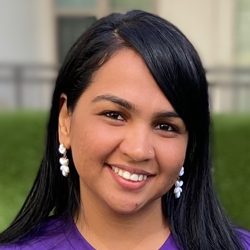
Laura Cook is an Assistant Professor in the Department of Biological Sciences at Binghamton University. Her research focuses on understanding how Gram-positive bacterial pathogens, particularly streptococci, colonize host mucosal surfaces like the vaginal tract and nasopharynx. She employs molecular, cell culture, and animal models to investigate bacterial genetic programs, interactions with host microbiota, and pathogenesis mechanisms. Education: Postdoctoral training at the University of Illinois at Chicago (UIC), followed by a PhD and a combined BS/BA from the University of Minnesota. Research Interests: Microbiology, microbial-host interactions, bacterial genetics, biofilm formation, heme utilization, and pathogen colonization dynamics. Her lab explores how bacterial species—both commensal and pathogenic—interact within host environments to influence disease outcomes, with applications to vaccine development and infection prevention. Publications highlight her work on streptococcal colonization mechanisms, heme transport proteins (e.g., HupZ), and the role of bacterial signaling systems (e.g., SaeRS) in pathogenesis. Recent studies emphasize vaginal and nasal tract colonization, biofilm formation, and the impact of host signals on bacterial behavior. Labs/Teams: The Cook Lab at Binghamton University investigates host-microbe interactions using interdisciplinary approaches, bridging molecular biology, microbiology, and infectious disease research.
Jennifer Thibodeau, M.D., M.S.C.S., is a Professor in the Division of Cardiology at UT Southwestern Medical Center , where she serves as Medical Director of the Heart Failure Program and ECMO . Her clinical and research focus spans heart failure , left ventricular assist devices (LVADs) , and cardiac transplantation . Board-certified in cardiovascular disease and advanced heart failure/transplant cardiology , she joined the faculty in 2011 and mentors medical students, residents, and fellows in heart-failure rotations. Education: M.D. from University of Maryland School of Medicine, Chief Residency at University of Maryland Medical Center, Fellowships in cardiology and advanced heart failure/transplant cardiology at UT Southwestern M.S.C.S. from UT Southwestern B.S. in biochemistry from Georgetown University Research Interests: Encompasses clinical investigations in heart failure , LVADs , and cardiac transplantation , with a focus on symptom characterization (e.g., bendopnea) , cardiopulmonary diagnostics , and telehealth applications . Her work includes developing machine learning tools for post-transplant renal outcomes and analyzing discordance in patient-physician prognosis perceptions . Scientific Awards: 2012 finalist, American Heart Association’s Samuel A. Levine Young Clinical Investigator Award 2015 recipient, Journal of the American College of Cardiology: Heart Failure Young Author Achievement Award 2015–2017 Texas Rising Star 2018 Super Doctor, Texas Monthly Professional Affiliations: Member of the American College of Cardiology , American Heart Association , International Society of Heart and Lung Transplantation , and Heart Failure Society of America .
Kurt Kornbluth is an Adjunct Assistant Professor in the Department of Biological and Agricultural Engineering at the University of California, Davis, College of Engineering. He holds key leadership roles as the Director of the Program for International Energy Technology (PIET), Associate Director at the Blum Center for Developing Economies, and Sustainable Campus, Sustainable Cities Champion. His work bridges engineering, sustainability, and international development. His research focuses on the development and application of energy-efficient technologies, particularly in developing regions. Key areas include renewable energy systems, biomass and hydrogen-based power generation, microgrids, and solar drying. He emphasizes the integration of technical innovation with social and economic factors to ensure sustainable and equitable energy access. The recent publications highlight a strong trend in modeling and optimizing energy systems for sustainability, with a focus on biomass, geothermal, and solar technologies. His work spans transportation electrification, demand response, and off-grid solutions, often applied in real-world contexts such as California, Zambia, and the Galapagos Islands. The research consistently addresses technical feasibility, economic analysis, and environmental impact. He has received notable recognition, including the Best Paper Award from the Society of Automotive Engineers. His scientific contributions reflect a commitment to practical, impactful engineering solutions. Kornbluth actively leads research initiatives through PIET and the Blum Center, fostering interdisciplinary collaboration. While specific student names are not listed, his frequent co-authorship with students and researchers suggests an advisory role. His projects often involve partnerships with international organizations and government bodies, enhancing their real-world applicability. He is affiliated with the Biological and Agricultural Engineering department and contributes to graduate education as a PIET Graduate Faculty member. His labs and research teams focus on sustainable energy system design, with projects ranging from electric buses to solar lighting for off-grid communities.
Frédéric Barrière is an Associate Professor (since 2002) with Habilitation (2009) at the University of Rennes 1, specializing in electrochemistry and bioelectrochemical systems. He leads research on enzymatic and microbial fuel cells at the Institut des Sciences Chimiques de Rennes, having supervised 6 PhD students and 5 post-doctoral researchers in this field. He is actively involved in academic governance, including as a founding board member of the International Society for Microbial Electrochemical Society (ISMET) and on the editorial board of Electrochemistry Communications . His research focuses on molecular electrochemistry, theoretical modeling of electrochemical systems, and applications in renewable energy, particularly microbial fuel cells. With over 80 peer-reviewed articles, reviews, and book chapters (H-index 28), his work bridges fundamental electrochemistry and bioelectric applications. He has delivered invited lectures at international conferences and is a member of the Bioelectrochemical Society. Barrière’s research has been supported by prestigious funders including the European Union (FP7-ENERGY-2008-FET, Marie Curie IF), the French National Research Agency (ANR), and regional and international bodies like ADEME and New Zealand’s MBIE. His contributions have earned him the Young Investigator Award from the French Chemical Society in 2011.
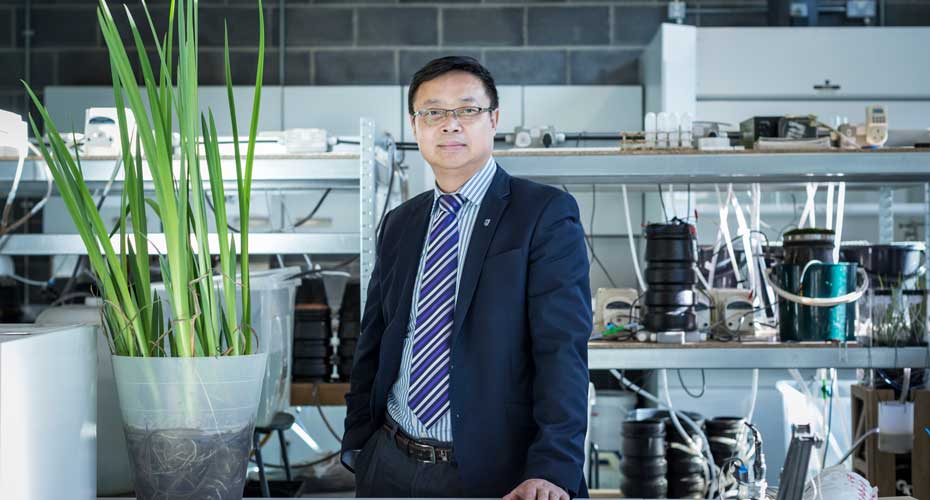
Professor Wenshan Guo is a distinguished academic at the University of Technology Sydney (UTS), serving as Professor in the School of Civil and Environmental Engineering. She is a core member of the Centre for Technology in Water and Wastewater at UTS, a leading research center in alternative water sources. With an extensive publication record including over 450 journal articles, 54 book chapters, and 6 books, Professor Guo has established herself as a world leader in innovative wastewater treatment technologies and sustainable water management. Professor Guo's educational background includes: PhD in Environmental Engineering from University of Technology Sydney (2005) BE (Hons 1) from Kunming University of Science and Technology, China (1997) Professor Guo's research focuses on cutting-edge water and wastewater engineering solutions, with particular expertise in membrane technologies, advanced biological wastewater treatment, physico-chemical separation technologies, solid waste management, and environmental assessment. Her current work explores green technologies for resource and energy recovery, waste-to-energy conversion, the water-waste-energy nexus, and climate change mitigation strategies. Her research has led to several patented technologies including GemFloc for enhancing biological water treatment, combined bio-sorbent for heavy metal removal, and novel osmosis membrane bioreactor systems. Professor Guo's extensive publication portfolio reveals strong trends in sustainable water treatment technologies, with particular emphasis on biochar applications, membrane bioreactor systems, and innovative approaches to wastewater treatment. Her recent work shows increasing focus on the integration of renewable energy with water treatment processes, antibiotic removal from wastewater, and the development of circular economy approaches to water resource management. The interdisciplinary nature of her research connects environmental engineering with materials science, microbiology, and sustainable energy systems. Professor Guo has received numerous prestigious awards recognizing her exceptional contributions to environmental science and engineering: 2022 Highly Cited Researcher in Biology/Biochemistry and Environment/Ecology (Clarivate Analytics) Winner of Excellence in Women in Research Award, Scopus Researcher of the Year Award 2022 Lifetime Achiever in Environmental Sciences and Top 40 Research Superstars in Australia (The Australian, 2020-2021) Professional Engineer of the Year 2021, Sydney Winner (Engineers Australia) Multiple Highly Cited Researcher awards (2019-2022) Outstanding Scientist Award of the Year 2019-2020 (International Bioprocessing Association) Professor Guo has successfully secured and led numerous significant research grants, including ARC Discovery Projects, ARC Linkage Projects, and National Centre of Excellence in Desalination funding. She has served as chief investigator and international partner investigator for projects totaling millions of dollars in research funding. Professor Guo is available for Masters Research or PhD student supervision and has likely mentored numerous graduate students throughout her career, though specific student names are not provided in the source material. As a core member of the Centre for Technology in Water and Wastewater at UTS, Professor Guo contributes to one of Australia's leading water research teams. Her work intersects with multiple research groups focusing on membrane technologies, advanced environmental bioprocesses, and sustainable water management solutions. She collaborates extensively with researchers both within UTS and internationally, particularly in China and Korea, reflecting the global significance of her work in addressing water security challenges.
Peter van Oostrum is a Privatdozent (Priv.Doz.Dr.) at the Institute of Colloid and Biointerface Science , Department of Biotechnology and Food Science, University of Natural Resources and Life Sciences Vienna (BOKU). His research integrates advanced optical techniques and biophysical modeling to study colloidal systems. Projects : Led key initiatives like AI-supported Holographic Environmental Water Monitoring (2025–2029) and Self-folding particle chains (2015–2020), funded by Austrian Science Fund, City of Vienna, and European Commission. Research Focus : Self-assembly of colloids, holographic microscopy, microfluidics, and force-modulated multivalent binding in bacterial systems. His work bridges nanotechnology, biophysics, and environmental monitoring. Publications : 32 peer-reviewed works, emphasizing colloidal interactions, inverse patchy particles, and holographic cytometry applications. Community Services : Active reviewer for journals like Physical Review Letters , Chemistry of Materials , and Soft Matter . Theses Supervised : Guided Bernhard Pichler’s diploma thesis on polymer-functionalized nanopores (2020).
Dexuan Xie is Professor in Mathematical Sciences at the University of Wisconsin-Milwaukee with adjunct appointment in Biomedical Engineering at the Medical College of Wisconsin. His research integrates numerical analysis, computational mathematics, and mathematical biology, specializing in partial differential equation solvers for biological systems. Educational background includes a PhD in Applied Mathematics from the University of Houston (1995), and MS/BS from Hunan University. Research develops computational frameworks for biological problems including ion channel modeling, biomolecular electrostatics, and nonlocal dielectric continuum models. Funded projects include NSF grants ($1.2M) and Simons Foundation Award ($42,000) supporting algorithm development for biological simulations. As founder of the High Performance Scientific Computing Laboratory, Xie creates efficient solvers for Poisson-Boltzmann and Poisson-Nernst-Planck equations. Applications span voltage-dependent anion channels and electrodiffusion processes. Editorial service includes Communications in Nonlinear Science journal. Organizes the Midwest Numerical Analysis Day conference series. Teaching covers advanced computational methods and numerical PDEs.
Dr. Ang Li is an Assistant Professor of Research in the Department of Kinesiology at the University of Texas at Arlington. His research focuses on understanding the mechanisms underlying the superior resistance of extraocular muscles (EOMs) against amyotrophic lateral sclerosis (ALS), leveraging expertise in histology, imaging, electrophysiology, and bioinformatics. He holds a PhD in Pathobiology from the University of Southern California, where he studied skin stem cell signaling using chicken feather models, leading to publications in Nature Communications and Cell . His academic journey includes collaborations with prominent institutions like the California Institute of Technology (Caltech), focusing on neural crest cell migration and chondrocyte precursor dynamics. Awards include the Wenhui Chen Fellowship and CIRM Fellowship. Current work investigates EOM satellite cell transcriptomics and their role in ALS resistance, with recent findings published in eLife (2024). Research interests span ALS pathogenesis, stem cell biology, and advanced imaging techniques. His studies integrate molecular signaling, cellular self-renewal, and neuromuscular junction preservation. Collaborations emphasize translational applications of discoveries in muscle biology to develop novel ALS therapies. Education: PhD in Pathobiology, University of Southern California (2014) Key Collaborations: Prof. Cheng-Ming Chuong (USC), Prof. Marianne Bronner (Caltech), Prof. Jingsong Zhou (UT Arlington) Awards: Wenhui Chen Fellowship, CIRM Fellowship, Doerr Stem Cell Challenge Grant
Richard S Smith is an Assistant Professor in the Department of Pharmacology at Northwestern University's Feinberg School of Medicine, with secondary appointments in Pediatrics. His research integrates neurobiology, genetics, and translational medicine to investigate prenatal brain development and ion channel diseases. Education: PhD: Cotutelle Sorbonne University & University of Maryland (2015) Postdoctoral Fellow: Harvard Medical School / Boston Children's Hospital / Howard Hughes Medical Institute (2021) Faculty Instructor: Harvard Medical School-Dept of Pediatrics (2022) Dr. Smith's research focuses on prenatal channelopathies —developmental ion channel diseases originating during gestation. His lab investigates bioelectricity in brain development using innovative models including gyrencephalic ferrets (to study cortical folding unattainable in lissencephalic mice) and human iPSC-derived neuronal systems. Key projects examine ion channel diseases affecting brain development, bioelectricity in human cortical evolution, and high-throughput screening platforms for neuronal disease modeling. His work demonstrates how ion channels like ATP1A3, SCN3A, and GRIN variants regulate cortical formation and contribute to malformations. Analysis of his publication record reveals strong emphasis on translational neurogenetics , with recent work connecting rare genetic variants to brain malformations (JAMA Neurology 2023) and developing gene therapy approaches for potassium channel disorders (BioRxiv 2024). His research bridges molecular mechanisms with clinical neurology, particularly in pediatric channelopathies and neurodevelopmental disorders. Research Leadership: Director of Smith Lab (www.rsmithlab.com) Member of Center for Autism and Neurodevelopment Member of Center for Genetic Medicine Member of Northwestern University Clinical and Translational Sciences Institute (NUCATS) Member of Stephen M. Stahl Center for Psychiatric Neuroscience Dr. Smith employs cutting-edge approaches including single-cell technologies, ferret models of gyrification, and iPSC-based drug screening. His lab trains scientists in both advanced research techniques and addressing systemic challenges in scientific communities. While no formal awards are listed in available materials, his work has been published in high-impact journals including Nature, Neuron, and JAMA Neurology.
Dr. Marissa Wechsler, a first-generation Hispanic biomedical engineer, returned to her alma mater The University of Texas at San Antonio (UTSA) in 2021 as an Assistant Professor in the Margie and Bill Klesse College of Engineering and Integrated Design. As UTSA's first biomedical engineering undergraduate student (class of 2015), she now leads a 12-member research team in her biomaterials and cell engineering lab while teaching advanced courses like BME 4443: Stem Cell Engineering. Academic Journey: UTSA BME program pioneer (2015) → NSF Graduate Research Fellowship → Ph.D. from UT Austin Leadership Roles: Founding faculty member of UTSA Sigma Xi chapter (2023), SWE faculty advisor, ESTEEMED mentor Research Focus: Specializes in biomaterials engineering with emphasis on: Stimuli-responsive hydrogels for drug delivery and tissue regeneration Stem cell engineering through controlled microenvironments Biosensing platforms using nanoparticle-hydrogel hybrids Regenerative medicine applications for vascular diseases Recent publications demonstrate expertise in RNA-based vaccine delivery systems , nanoparticle engineering , and mitochondrial dysfunction analysis in peripheral artery disease. Her work combines material science innovation with clinical translation potential. Award Highlights: 2023: Sigma Xi Grant-in-Aid of Research 2021: National Science Foundation Graduate Research Fellowship (during studies) Mentorship Impact: As a former participant in federal research programs (RISE, MARC), she now mentors through: Leading 12-member research team (undergraduate to postdoctoral) Sigma Xi leadership (President-elect) Faculty advisor for Society of Women Engineers ESTEEMED program mentor
Professor Yaqian Zhao is a distinguished academic at University College Dublin's School of Civil Engineering, where he directs the Water and Effluent Laboratory. His innovative research integrates wastewater treatment with urban aesthetics, developing constructed wetlands that function as both environmental infrastructure and public recreational spaces. With over two decades of experience since joining UCD in 2004, he has established himself as a global leader in sustainable water treatment technologies. Dr. Zhao's research interests focus on creating environmentally integrated wastewater solutions. His pioneering work centers on using aluminum-rich 'cake' material from drinking water treatment as substrate for constructed wetlands, which simultaneously purify water and support biodiversity. He has expanded this research to develop wetlands that generate electricity through microbial activity, creating multifunctional systems that transform traditional wastewater infrastructure into community assets. His vision aims to make water treatment facilities aesthetically pleasing parks rather than isolated industrial sites. His publication record reveals a strong trajectory toward integrated water-energy solutions, with early work establishing the fundamentals of alum sludge-based wetlands and more recent research exploring the water-energy nexus through microbial fuel cells. The publications demonstrate consistent innovation in making wastewater treatment more sustainable, efficient, and community-oriented, with applications ranging from domestic wastewater to agricultural runoff. Fellow of the International Water Association Professor Zhao has hosted two major international conferences in Ireland and presented his work globally, including on Chinese CCTV. His research has practical applications across multiple sites, with more than 20 operational systems testing constructed wetland capacity, including installations at the UCD Lyons Research Farm. His current work focuses on integrating wetland systems directly into wastewater treatment tanks to create aesthetically pleasing, functional infrastructure that serves both environmental and community needs while generating small-scale electricity. Professor Zhao directs the Water and Effluent Laboratory at UCD, where his team develops technologies that transform wastewater treatment from purely functional infrastructure into community assets. His lab's current focus includes scaling up microbial fuel cell technology to generate practical electricity from wetland activity and implementing full-scale demonstrations of their integrated treatment systems.
Luciana Peixoto is a Portuguese environmental biotechnologist with a PhD in Chemical and Biological Engineering (2012) from University of Minho (UMinho). She has led research in bioelectrochemical systems and resource recovery from wastewater, particularly urine, while contributing to science communication initiatives. Her work spans biological engineering, environmental management, and innovative teaching methodologies. Current Communities & Events Manager at BioData.pt Former Assistant Researcher at UMinho Center for Biological Engineering Special Issue Editor at International Journal of Environmental Research and Public Health (2021) Research Interests include: Microbial Fuel Cells (MFCs) for energy production and environmental monitoring Bioelectrochemical systems (BESs) coupled with redox flow batteries Resource recovery from urine and agro-industrial waste Environmental biotechnology education and outreach Innovative teaching with gamification and digital tools Key article trends reveal focus on: Electrochemical systems for wastewater treatment Microbial energy recovery from unconventional substrates Environmental monitoring with compact biosensors Science communication and education innovation Valorization of biological waste streams Electroactive biofilm characterization Scientific Awards & Recognition: Pedagogical Merit Diploma (UMinho, 2021) Special Issue Editor for International Journal of Environmental Research and Public Health (2021) Teaching & Supervision includes: Coordinated the "Communicating Science in Bioengineering" teaching project (2020-2021) Supervised 6 undergraduate students, 33 MSc students in company contexts, and 7 MSc students in laboratory contexts Co-supervised two PhD students in bioelectrochemical systems Active involvement with iDEA Center for teaching innovation Leadership & Outreach demonstrates: Organized 36 events in the last 5 years including the International Symposium on Evidence-Based Teaching in Biomolecular Classrooms Lead dissemination activities at UMinho's Department of Biological Engineering (2019-2023) Contributed to Arqus Alliance proposal as WP5 co-leader
Luca Giaccone is an Associate Professor in the Department of Energy (DENERG) at Politecnico di Torino, where he is also a member of the Academic Senate and the Committee for Teaching Coordination. He is affiliated with the College of Electrical and Energy Engineering and leads the CADEMA Research Group. His academic work focuses on computational electromagnetics and human exposure to electromagnetic fields. Research Interests: Bioelectricity and human exposure to low-frequency electric and magnetic fields Computational electromagnetics and numerical dosimetry Simulation engineering, modeling, and optimal design using MATLAB and Python Electromagnetic compatibility (EMC) and safety of medical devices Wireless power transfer (WPT) systems, especially in automotive applications Recent Research Trends: His recent publications center on data-driven modeling of electric motors, surrogate modeling for fast exposure assessment, and the electromagnetic safety of medical implants near WPT systems. He frequently employs learning-based human models and investigates uncertainties in dosimetry, especially under pulsed or multi-frequency exposures. Scientific Awards and Recognition: Mentoring Polito Project (M2P), awarded by Politecnico di Torino on February 16, 2023 Advising and Grants: He supervises PhD student Junlong Liu in Electrical, Electronics, and Communications Engineering. He leads or participates in multiple funded research projects, including WPT-SAFE (2025–2027, national PRIN), SAFECHARGE (2024–2026, international), and various corporate consulting projects on electromagnetic exposure from welding devices, photovoltaic systems, and industrial cabins. He has served as Scientific Manager on over ten consulting and research contracts since 2015. Labs and Teams: He is a key member of the CADEMA Research Group (DENERG), focusing on computational electromagnetics and electromagnetic safety applications in energy, medicine, and the environment.
Nivedita Arora is the Allen K. and Johnnie Cordell Breed Junior Professor of Design and Assistant Professor in the Departments of Electrical and Computer Engineering and Computer Science at Northwestern University's McCormick School of Engineering. She directs the VAK Sustainable Computing Lab, focusing on sustainable computational materials, energy harvesting, and ubiquitous computing systems. Her research integrates computer science, materials science, and environmental engineering to create eco-friendly technologies for climate change mitigation, smart infrastructure, and wildlife monitoring. Education: PhD (Computer Science, Georgia Tech), MS (Human-Computer Interaction, Georgia Tech), BS (Information Technology, Netaji Subhas Institute). Research Interests: Sustainable Computational Materials, Biodegradable IoT, Energy-Aware Quantum Computing, and Privacy in Smart Devices. Her lab emphasizes a sustainability-first approach across material production, system operation, and end-of-life disposal. Awards: ACM Dissertation Award (2023), Gaetano Borriello Award (2021), Fast Company Design Honoree (2021), and multiple best paper awards at ACM conferences. Grants & Mentoring: Secured over $1M in grants as PI, including funding for quantum sustainability and biodegradable sensors. Advised 15+ graduate/undergraduate researchers across materials science, electrical engineering, and computer science. Labs/Teams: VAK Sustainable Computing Lab (transdisciplinary team focused on eco-friendly computing innovations).
Arthur Prindle is an Assistant Professor in the Department of Chemical and Biological Engineering and the Department of Biochemistry and Molecular Genetics at Northwestern University’s McCormick School of Engineering. He holds a courtesy appointment in Biomedical Engineering. His research focuses on understanding how microbial communities exhibit collective behaviors through molecular and cellular interactions, employing synthetic biology, quantitative microscopy, and microfluidics. The Prindle Lab develops synthetic biology tools to address biomedical challenges, particularly in microbiome engineering. Education: Ph.D., Bioengineering, University of California, San Diego (2021) B.S., Chemical Engineering, California Institute of Technology (2015) Research Highlights: Recent work includes engineering probiotics for gastrointestinal disease detection, elucidating biofilm pH regulation, and modeling potassium signaling in microbial communities. His studies bridge molecular mechanisms with large-scale community behaviors, emphasizing translational applications in biomedicine. Labs/Teams: Prindle Lab at McCormick School of Engineering.