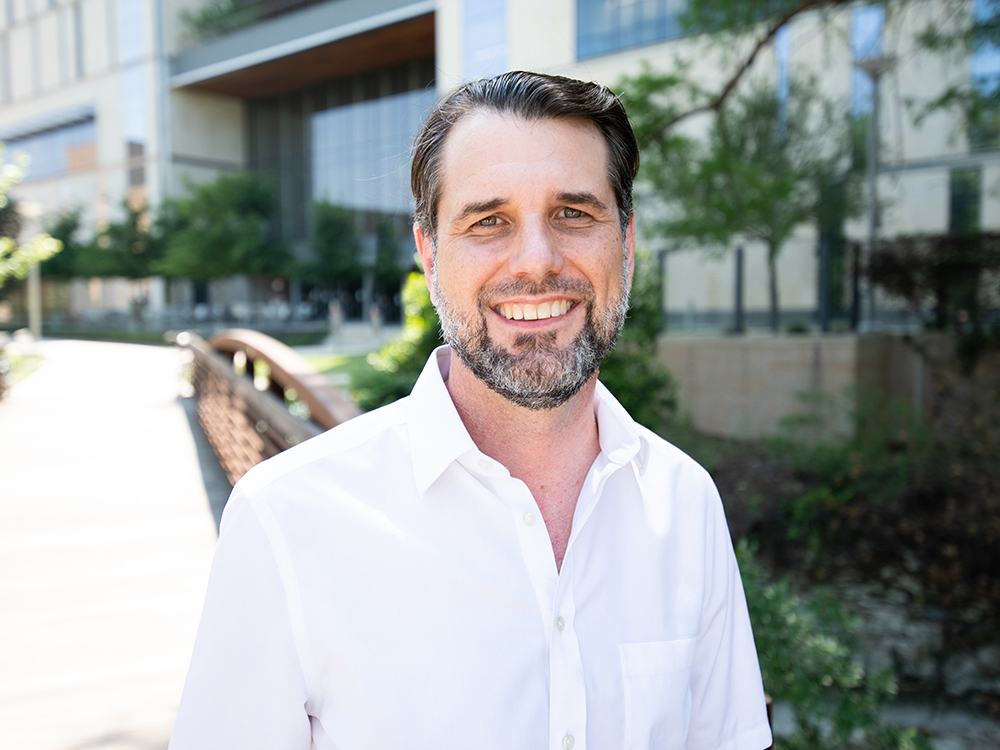
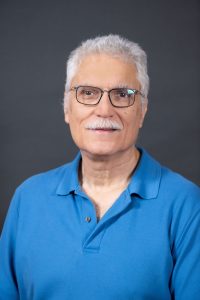
Javier LLorca is a Professor in Materials Science at the Technical University of Madrid and Scientific Director of IMDEA Materials Institute since 2017. His work spans computational materials science, metallurgy, and biomedical composites. Research Interests Multiscale modeling of metallic alloys Slip transfer and fracture mechanics Machine learning for materials discovery Bioabsorbable Mg/PLA composites Publications Trends His recent articles (2023-2025) focus on: Grain boundary interactions in Ti and Mg alloys Mechanical behavior of high-entropy alloys First-principles analysis of precipitation Machine learning applications in twin nucleation Bioabsorbable composite degradation modeling
Prof. Dr. Dirk Kuckling is a leading academic at the University of Paderborn , holding the Professorship for Organic and Macromolecular Chemistry within the Department of Chemistry, Faculty of Science. His research focuses on the synthesis and application of stimuli-responsive polymers , with applications in drug delivery systems , sensors , actuators , and microfluidic organic synthesis . He leads a dynamic research group utilizing advanced techniques such as ESI/MALDI-TOF mass spectrometry , surface plasmon resonance , and microwave reactors . Research Focus: Smart polymers reacting to pH, light, or redox stimuli; biocompatible hydrogels for tissue engineering; nanostructured materials via block copolymers; microfluidic reactors for catalyst immobilization. Key Publications: Over 100 works in Macromolecules , ACS Applied Materials & Interfaces , and Polymers , including recent studies on light-degradable polycarbonates and supramolecular hydrogel sensors. Patents: European and US patents for photocleavable drug carriers and microfluidic hydrogel sensors . Teaching: Delivers courses in Organic Chemistry and Macromolecular Chemistry , including laboratory work and seminars. Collaborations: Works with Prof. Tiemann on porous surface structures and international teams on polymer characterization.
George Knopf serves as a Full Professor in the Department of Mechanical and Materials Engineering within the Faculty of Engineering at the University of Western Ontario, London, Canada. He also directs the Engineering in Medicine collaborative specialization and is a Western Space Investigator with research domains in Advancing Space Technology and Earth Observation for Societal Impact. Dr. Knopf's research spans bioelectronics, biosensors, laser materials processing, flexible optical sheets, imaging technology, and engineering design. His work focuses on developing degradable carbon-based printed electronic sensors and microdevices for IoT applications, with notable past contributions including patented technologies for unconstrained surface geometry measurement (USA patent 6,542,249) and bio-electronic imaging arrays (USA Patent No. 7,573,024). His research interests have expanded into space health, rural healthcare, planetary processes, and big data analytics. His recent publications demonstrate strong trends in flexible electronics, biodegradable sensors, and bio-integrated devices, with significant emphasis on graphene-cellulose composites, bacteriorhodopsin-based transducers, and elastomeric optical systems. The research shows consistent progression from fundamental materials science toward practical IoT and space applications, with increasing focus on disposable and environmentally responsive sensor systems. Dr. Knopf has trained over 60 highly qualified personnel (HQP) including post-doctoral fellows, doctoral candidates, masters students, and undergraduate research assistants from diverse countries including Brazil, India, Israel, Libya, Mexico, Nigeria, Tunisia and USA. He has served as a technical reviewer for numerous academic journals, conferences, and granting agencies globally. He co-authored the books Biofunctionalized Photoelectric Transducers for Sensing and Actuation (SPIE Press 2017), Light Driven Micromachines (CRC Press 2018), and co-edited Smart Biosensor Technology (CRC Press 2019), establishing himself as a leading authority in bioelectronic sensing and actuation systems.
Clara Mattu is an Associate Professor at the Department of Mechanical and Aerospace Engineering (DIMEAS) within Politecnico di Torino , actively contributing to the College of Biomedical Engineering and the PolitoBIOMed Lab . With expertise in Cancer Nanomedicine and Targeted Drug Delivery , her research focuses on creating in vitro cancer models and advanced implant technologies through biofabrication techniques . Specializes in polymer-based nanosystems and biomimetic scaffolds Member of BIOINSIDE LAB and multiple EU/H2020 funded projects Recipient of 2016 Marie Curie International Global Fellowship and 2011 Working Capital PNI Her 15 recent publications (2019-2025) demonstrate leadership in 3D bioprinting , green nanomedicine , and clinical translation through advanced hydrogel systems and targeted nanoparticle designs . Collaborative work with PhD students spans cardiac regeneration , pancreatic cancer models , and eco-biomedical technologies . Current projects include the HYDROHEAL initiative for bone healing hydrogels and the 3DPathoSkin platform for precision dermatology.
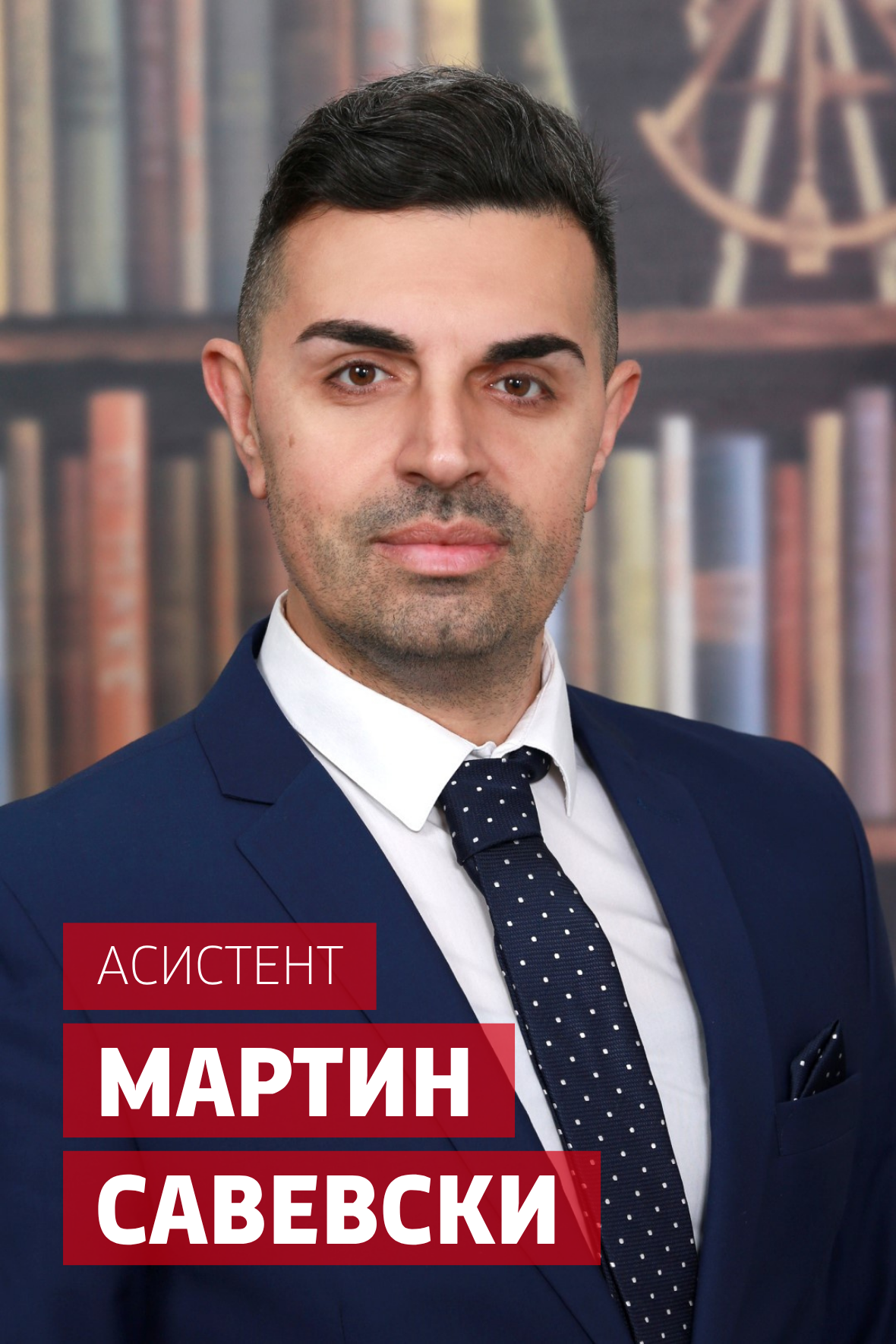
Martin Savevski serves as Associate Professor at International Slavic University's Faculty of Technical Sciences and Informatics, teaching across campuses in Sveti Nikole and Bitola. His academic appointments focus on safety engineering disciplines within technical systems. His educational background includes: Graduate Engineer in Fire Safety (2015-2018) from International Slavic University Master of Science in Security Engineering (2013-2015) from International Slavic University Computer Science degree (2005-2008) from University of St. Kliment Ohridski, Technical Faculty Professor Savevski's research centers on occupational safety engineering with emphasis on technical risk management. His work spans mechanical safety systems, workplace ergonomics, and environmental protection measures. Key investigation areas include industrial ventilation design, radioactive waste handling, and technical diagnostics for safety enhancement. His publications demonstrate consistent focus on practical engineering solutions for workplace hazards. His scholarly output shows strong concentration in occupational safety engineering with recurring themes in risk assessment methodologies, technical system reliability, and environmental protection. Publications increasingly integrate engineering solutions with regulatory compliance frameworks, particularly evident in his recent work on waste management systems and energy safety protocols. Professor Savevski has served as IT Administrator since 2011 while teaching subjects including Technical Mechanics, Thermal Plants, Workplace Safety Assessment, and Safety Engineering. His instructional focus emphasizes practical application of safety principles in technological systems.
Associate Professor David Callaghan of the School of Civil Engineering at the University of Queensland specializes in coastal engineering , hydraulic modeling , and climate change impact assessments . He serves as an active member of the Australian Hydraulic Modelling Association and observer of the Queensland Water Panel , with over 50 technical publications including a book section. His research spans physical-biological interactions in coastal ecosystems , extreme event analysis , and sediment dynamics . Recent work focuses on coral reef resilience under climate change, seagrass-based coastal protection , and machine learning applications for coral rubble instability prediction. Despite extensive publication records ( 88 journal articles , 15+ datasets ), no specific scientific awards are documented in available texts. His consultancy roles with private/government agencies emphasize practical extreme coastal weather response strategies. Key research trends include Probabilistic storm erosion and beach recession models Coral reef wave dynamics and sediment stability under sea level rise Integration of Bayesian belief networks for non-expert communication Lagoon dynamics and inlet morphodynamics analysis
Filip Ciesielczyk is a Professor at Poznań University of Technology, where he serves as Vice-Dean for Science (2020-2028) and holds multiple leadership positions including Chairman of the Senate Budget and Finance Committee. He is affiliated with the Faculty of Chemical Technology, specifically the Institute of Chemical Technology and Engineering. His academic journey includes: 2003: Master of Science in Engineering (Environmental Protection) 2007: PhD in Chemical Sciences at Poznań University of Technology 2017: Habilitated Doctor (doktor habilitowany) in Chemical Sciences 2020: Awarded the position of University Professor Professor Ciesielczyk's research focuses on inorganic chemical technology , particularly the design and characterization of functional oxide materials and their applications. His work spans surface chemistry, development of adsorbents and catalysts, polymer fillers, and environmental remediation technologies. He has pioneered methods for surface modification of oxide materials and designed novel systems for removing pollutants through adsorption and photocatalysis. His recent publications (2023-2025) demonstrate a strong focus on environmental applications of hybrid materials, particularly in wastewater treatment, heavy metal removal, and organic pollutant degradation. There's a clear trend toward biocatalytic systems combining enzymes with functional oxide supports, as well as innovative approaches to material synthesis including mechanochemical methods. His work bridges fundamental materials science with practical environmental engineering solutions. Professor Ciesielczyk has received recognition through his editorial roles, including: Section Editor for Physicochemical Problems of Mineral Processing (Thomson Reuters JCR indexed, IF=1.5) Guest Editor for Materials (IF=3.4) special issue on "Multifunctional Oxide-Based Materials" As an academic advisor, he has supervised doctoral dissertations including Ewelina Weidner's work on inorganic oxide matrices (2023) and Przemysław Bartczak's research on sorption capabilities of natural materials (2017). His research is supported through multiple collaborations with institutions including Kent State University, ŁUKASIEWICZ Research Network, Rzeszów University of Technology, and AGH University of Science and Technology in Kraków. Professor Ciesielczyk leads a research group focused on functional oxide materials, with ongoing projects examining vanadium recovery systems, biocatalytic membrane technologies, and novel hybrid fillers for polymer composites. His team maintains strong international connections and regularly participates in major conferences on materials science and chemical engineering.
Dorit Aviv serves as Assistant Professor of Architecture at the University of Pennsylvania's Stuart Weitzman School of Design with a secondary appointment in the Material Science and Engineering graduate group. She directs the cross-disciplinary Thermal Architecture Lab focused on decarbonizing the built environment through thermodynamic innovations in architectural materials and forms. Her educational credentials include a PhD in architectural technology (energy and computation track) and M.Arch with urban policy certificate from Princeton University, complemented by a B.Arch from The Cooper Union. Prior academic appointments include teaching roles at Cooper Union, Pratt Institute, and Princeton University. Aviv's research integrates environmental performance with human health outcomes, specializing in radiant cooling systems, evaporative technologies, and bio-based materials to address urban heat islands. Her work bridges architectural design with material science to develop carbon-neutral cooling solutions that enhance energy efficiency while maintaining thermal comfort in extreme climates. Key focus areas include membrane-assisted radiant cooling, hydrogel applications for desert climates, and blockchain-integrated energy monitoring systems. Analysis of her recent publications reveals a dominant trajectory toward decarbonization through passive cooling strategies, with strong emphasis on urban heat island mitigation, carbon-sequestering materials, and human-centered thermal comfort metrics. The research portfolio demonstrates systematic progression from fundamental radiant heat transfer studies toward scalable urban interventions. Aviv's scientific recognition includes: Holcim Award for Sustainable Design and Construction (2021) for desert climate cooling prototype Holcim Foundation Acknowledgement Prize for Hydroculus project Her research program is supported by substantial federal funding including U.S. Department of Energy, National Science Foundation, and National Park Service grants, alongside industry partnerships with Microsoft, Ripple, and Armstrong World Industries. Current initiatives include the Penn4C mobile urban cooling station for North Philadelphia and Ramboll Foundation-funded research on membrane-assisted radiant cooling. The Thermal Architecture Lab operates as a nexus for interdisciplinary collaboration between architecture, engineering, and environmental science, actively developing prototypes like the evaporative cooling roof chimney and carbon-absorbing concrete systems while maintaining strong industry and community partnerships for real-world implementation.
Edith Hammer is a Senior Lecturer at Lund University , affiliated with the Centre for Environmental and Climate Science (CEC), Microbial Ecology, Functional Ecology, and the NanoLund: Centre for Nanoscience. Her research focuses on soil ecology, mycorrhizal symbiosis, and carbon cycling, contributing to UN SDGs related to climate action and life on land. 2015 UN SDG Expertise: Climate Change Mitigation Soil Carbon Storage Biodiversity Conservation Research Themes Microscale soil structure and its impact on nutrient cycling Mycorrhizal fungal roles in carbon sequestration Fungal interactions with plastic pollutants Nanoscale biogeochemical processes Microbial community dynamics in soil pore spaces Key Awards Venture Cup IDEA (2022) Swedish King’s 50th Anniversary Foundation Award (2012) Advising & Grants Supervisor for Ph.D. project: Dying - how and where? Microbial necromass quality (Swedish Research Council, 2024-2028) Principal Investigator for Windows to the Underground (FORMAS, 2025-2028) Labs & Collaborations Active in LU Profile Area: Nature-based Future Solutions, LTH Profile Area: Nanoscience and Semiconductor Technology, and the BECC: Biodiversity and Ecosystem Services in a Changing Climate. Collaborates internationally on fungal ecology and climate change projects.
Andres Tovar is an Associate Professor of Mechanical and Motorsports Engineering at Purdue University since July 2024. Previously, he held roles at Indiana University-Purdue University Indianapolis (IUPUI), the University of Notre Dame, and the National University of Colombia. His research focuses on topology optimization, Bayesian optimization, additive manufacturing, compostable plastics, and crashworthiness. He leads the Engineering Design Research Laboratory and has received multiple awards, including the SADCO Our Talent Award and Indiana University Trustees Teaching Awards. His work integrates advanced materials science, computational methods, and sustainable engineering practices. Education: PhD in Aerospace and Mechanical Engineering (University of Notre Dame, 2005), MS in Mechanical Engineering (Notre Dame, 2004), MS in Industrial Automation (National University of Colombia, 2000), and BS in Mechanical Engineering (National University of Colombia, 1995). Research Interests: Topology Optimization for Multibody Systems Bayesian Optimization in Material Science Crashworthiness of Automotive Structures Development of Compostable Plastics Advanced Manufacturing Techniques Awards: Over 10 prestigious recognitions, including multiple teaching awards and innovation prizes in engineering education and sustainable materials. Notable achievements include winning the DOE/ARPA-E LITECAR Challenge and the SAE Ralph R. Teetor Educational Award. Lab/Teams: Director of the Engineering Design Research Laboratory, focusing on interdisciplinary projects in materials design, structural optimization, and sustainable engineering solutions.
Robert J. Moon is an Adjunct Associate Professor of Materials Engineering at Purdue University and an Adjunct Professor at Georgia Institute of Technology's School of Materials Science and Engineering. He also serves as a Materials Research Engineer at the US Forest Service's Forest Products Laboratory (GS-14 level since 2011). His education includes a B.S. in Metallurgical Engineering from the University of Wisconsin-Madison (1994), and both an M.S. (1996) and Ph.D. (2000) in Materials Engineering from Purdue University. Dr. Moon's research focuses on cellulose nanomaterials and composites, emphasizing sustainable, biodegradable materials. Key areas include cellulose nanocrystals (CNCs) and nanofibrillated cellulose (NFC) applications in composites, cementitious systems, and lightweight structural materials. His work addresses processing-structure-property relationships, hierarchical material design, and industrial scalability. His articles highlight advancements in CNC dispersion techniques, composite mechanical performance, and cellulose-based additives for construction and energy applications. Collaborations span academia and industry, with a focus on transitioning lab-scale innovations to industrial applications. Dr. Moon's career includes postdoctoral research at the University of New South Wales (2000–2005) and Kyoto Institute of Technology (2002–2003), underscoring his global research network. He leads projects in nanomaterial metrology, functionalized coatings for composites, and eco-friendly material systems.
Thomas Truskett is a Professor and Dick Rothwell Endowed Chair in Chemical Engineering at The University of Texas at Austin, with a secondary appointment in Physics. He leads the Truskett Research Group, focusing on interfaces, complex fluids, and colloidal systems. His work bridges statistical mechanics, soft matter physics, and nanotechnology, with applications in biomedical imaging and materials science. Truskett holds a B.S. from UT Austin (1996), M.A. and Ph.D. from Princeton (1998, 2001), and has held academic roles since 2002. His honors include AAAS and APS Fellowships, the O’Donnell Engineering Award, and NIH/NRSA grants. Research Interests: Self-assembly of nanoparticles, confined liquids, protein solutions, and plasmonic materials. Key Contributions: Developing models for colloidal gels, nanoparticle assembly, and high-concentration antibody viscosity reduction. Grants & Funding: Extensive NIH, NSF, and industry support for projects on biodegradable polymersomes and plasmonic metamaterials. His group has advised over 40 PhD students and postdocs, many now in academia and industry. Notable alumni include Professors at Texas A&M and University of Washington, and R&D leaders at Bristol-Myers Squibb and Dow.
William Eisenstadt is a Professor in the Department of Electrical and Computer Engineering at the University of Florida. His research encompasses electronics, IoT applications for agriculture and public health, RF/microwave circuit design, and semiconductor testing. He holds a Ph.D., M.S., and B.S. in Electrical Engineering from Stanford University. Dr. Eisenstadt's research focuses on integrating IoT technologies with agricultural pest control, developing advanced testing methodologies for semiconductor devices, and designing RF/microwave systems. His work bridges hardware innovation with real-world applications in health, safety, and environmental monitoring. Recent publications demonstrate strong emphasis on semiconductor testing (BGA sockets, LDO regulators), 3D IC signal integrity, smart IoT devices for mosquito control, and biomedical ICs for drug delivery. Trends indicate cross-disciplinary convergence of microelectronics with biomedical and agricultural applications.
Dr. Qin Wang is a Professor in the Department of Food Science and Human Nutrition at the University of Maryland, College of Agriculture and Natural Resources. His expertise spans Food Nanotechnology, Food Polymers Biophysics, and Food Chemistry. Dr. Wang holds a Ph.D. in Food Science/Food Engineering from the University of Illinois at Urbana-Champaign, an M.S. in Environmental Chemistry from Nanjing University, and a B.S. in Environmental Chemistry from Nanjing University. His research focuses on three core areas: 1) Design of nano-scale delivery systems for drug and bioactives in regenerative medicine, 2) Nanotechnology applications in food science to study component interactions, and 3) Development of nano-sensors for food safety. He teaches courses such as NFSC112 (Food Science and Technology), NFSC422 (Food Product Development), and NFSC633 (Food Polymer Science). Dr. Wang’s work emphasizes sustainable solutions like chitin-based substrates for vertical farming and antimicrobial packaging using food proteins. His innovations include cyclodextrin-modified green tea extracts and AI-driven food analytics systems. Recent studies explore microgreens' phytonutrient profiles under different lighting conditions and quantum dot applications for contamination detection. His research portfolio includes over 100 peer-reviewed articles spanning 2015–2025, covering topics like nanocomposite packaging, chlorine demand in produce washing, and electrochemical immunoanalysis. Collaborative projects involve material science, microbiology, and computer science disciplines.
Peer Fischer is a Professor of Experimental Physics (Molecular Systems Engineering) at Heidelberg University and heads the independent Micro Nano and Molecular Systems Lab at the Max Planck Institute for Medical Research in Heidelberg. He is also a Global Faculty member at Yonsei University’s IBS Center for NanoMedicine. His academic journey includes a BSc from Imperial College London and a PhD from the University of Cambridge, followed by postdoctoral and faculty roles at institutions like Harvard University and the University of Stuttgart. Research Interests: Fischer’s work spans nanofabrication, micro/nano-robotics, active matter, and the interaction of fields (optical, electric, magnetic, acoustic) with matter at small scales. Key focus areas include 3D assembly, ultrasound-enabled biomedical applications, and molecular systems engineering. Awards & Recognition: He has received an ERC Grant (2011), World Technology Award (2016), ERC Advanced Grant (2018), and is a Royal Society of Chemistry Fellow. His lab is part of the 3D Matter Made to Order cluster of excellence and the Max Planck-EPFL Nanoscience Center. Advising & Labs: Fischer supervises a dynamic team of PhD and master’s students, including Ida Saskia Bochert, Rahul Goyal, and others. His lab develops cutting-edge tools like acoustic holograms and magnetic microcarriers for nanomedicine and biophysics. Collaborative projects include ultrasonic neuromodulation and tissue engineering.