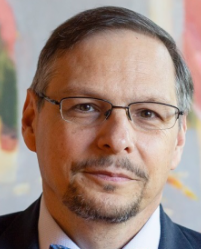
Anna Salvati is an Associate Professor specializing in nanomedicine and drug delivery systems. Her research focuses on nanoparticle-cell interactions, biomolecular corona formation, and the physicochemical properties governing nanomaterial behavior in biological environments. Key research themes include cellular uptake mechanisms, toxicity of nanomaterials, and nanoparticle targeting strategies. Recent publications highlight her work on nanoparticle stability, membrane interactions, and environmental impacts of microplastics. Her studies integrate multiomics approaches, advanced imaging, and interlaboratory validation to address challenges in nanomedicine design and safety testing. Current projects explore the role of high-density lipoproteins in nanoparticle functionality and the modulation of drug release kinetics through material engineering.
Orlando Rojas is a Professor at the University of British Columbia (UBC), holding joint appointments in the Departments of Chemical and Biological Engineering, Chemistry, and Wood Science. He leads the Biobased Colloids and Materials (BiCMat) research group and directs the Bioproducts Institute . His research focuses on sustainable development through renewable materials, including nanopolysaccharides, bacterial nanocellulose, lignins, and multiphase systems. Rojas has advised over 50 PhD students and 40+ MS students, with a h-index of 90 (Google Scholar). Key Roles/Positions : Canada Excellence Research Chair in Renewable Materials Adjunct Professor at NC State University (USA) and Dalian Polytechnic University (China) Director of FinnCERES Flagship (Finland) Research Interests : Development of bio-based materials for energy, healthcare, and environmental applications. Key areas include nanocellulose functionalization, lignin valorization, and bioinspired materials. His work integrates colloidal science, multiphase systems, and sustainable manufacturing. Grants & Awards : ERC Advanced Grant and Horizon H2020 funding 2013 ACS Fellow, 2015 Tappi Nanotechnology Award First Latin-American recipient of the Anselme Payen Award (ACS) Labs & Collaborations : Active partnerships with Aalto University (Finland) and institutions globally. Leads the BiCMat group spanning UBC and FinnCERES, focusing on bio-based materials and sustainable technologies.
Wan Shou is an Assistant Professor in the Department of Mechanical Engineering at the University of Arkansas. His research focuses on multiscale manufacturing, advanced materials, and functional devices, with applications in wearables, robotics, and sustainable technologies. Ph.D., Mechanical Engineering, Missouri University of Science and Technology M.S., Mechanical Engineering, University of Louisiana at Lafayette B.E., Textile Engineering, Tianjin Polytechnic University, China Dr. Shou’s research spans laser-based manufacturing , nanomanufacturing , machine learning-assisted processes , and bioresorbable electronics . He explores 3D printing of polymer and metal composites, energy materials , and functional textiles for wearable sensors and environmental applications. Recent publications highlight his work in additive manufacturing , computational design of composites, and self-powered sensing systems . His team integrates machine learning with materials discovery to optimize performance. Editor’s pick of Science Magazine US Patent 11,752,700: Data-driven material formulation US Patent 11,993,850: Laser-assisted nanoparticle printing Dr. Shou’s patents and publications reflect a commitment to innovative manufacturing and environmentally conscious design . His work bridges materials science , robotics , and smart systems , advancing energy and water technologies.
Raed Ahmed Mahmood Al-Juboori serves as an Assistant Professor in the Department of Built Environment at Aalto University's School of Engineering, specializing in advanced water and wastewater treatment technologies through the Water and Environmental Engineering research group. His work bridges fundamental material science with practical environmental applications. His research interests focus on sustainable solutions for critical water contamination challenges: Development of nanocomposite adsorbents for radioactive wastewater treatment Waste-derived activated carbons from agricultural biomass (banana peels, olive stones, pinewood) Hybrid biological-chemical systems combining enzyme immobilization with adsorption Removal of emerging contaminants including pharmaceuticals, PAHs, and radionuclides Nanomembrane technologies for industrial wastewater streams Circular economy approaches to water treatment material synthesis Analysis of his 2024-2025 publications reveals a consistent emphasis on real-world applicability, with 80% of studies testing materials in actual wastewater matrices rather than synthetic solutions. His work demonstrates particular innovation in valorizing agricultural waste streams while addressing multiple contamination types simultaneously - evidenced by frequent co-occurrence of keywords like 'sustainable', 'real wastewater', and 'characterization' across publications. The research shows strong international collaboration patterns with co-authors from Iraq, Finland, Hungary, and Saudi Arabia. Dr. Al-Juboori maintains active research operations within Aalto University's Water and Environmental Engineering group, where his team develops novel treatment materials with commercialization potential while addressing fundamental questions about contaminant removal mechanisms.
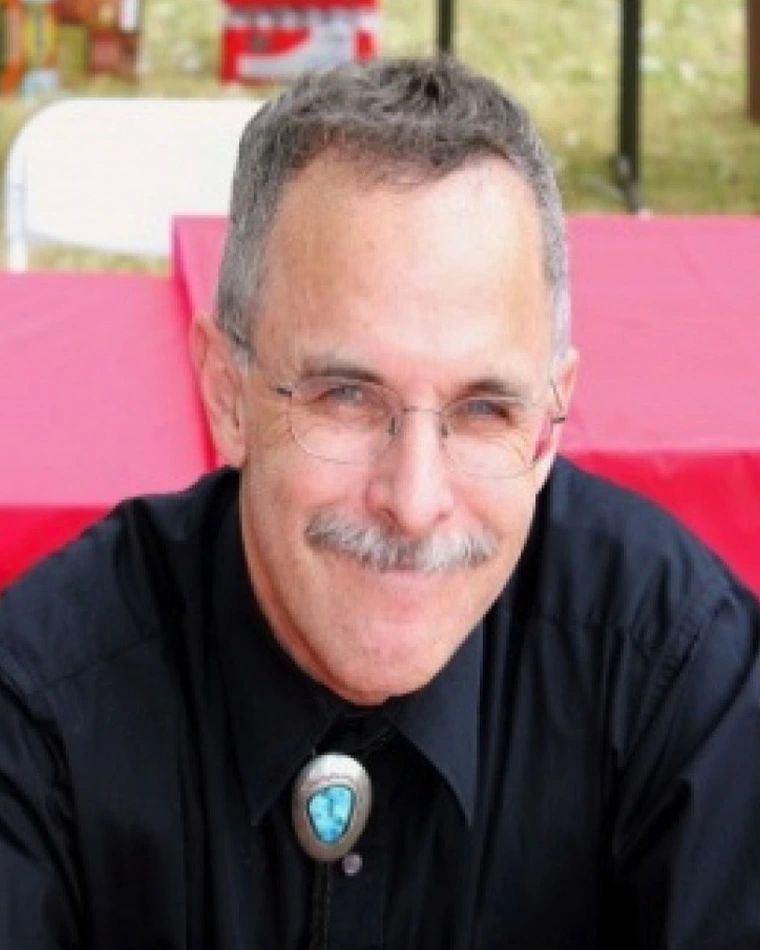
Douglas A. Loy is a full Professor at the University of Arizona with joint appointments in the Department of Materials Science and Engineering and the Department of Chemistry and Biochemistry, and additional affiliations with the BIO5 Institute and the School of Mining and Mineral Resources. A fifth-generation Arizonan, he earned his BS in Chemistry from the University of Arizona (1983), MS in Chemistry from Northern Arizona University (1986), and PhD in Organic Chemistry from the University of California, Irvine (1991). Before returning to academia he spent 14 years at Sandia National Laboratories and then led the Polymer and Nanomaterials Synthesis Team at Los Alamos National Laboratory. Research Interests Sol-gel & polysilsesquioxane chemistry: fundamental studies and unconventional routes to hybrid organic-inorganic materials. Tetrazine polymer chemistry: synthesis, click modification, and application in antioxidant foams and UV-stable sunscreens. 3-D printing of glasses & ceramics: additive manufacturing of micro-optics, multi-refractive-index glass objects, and transparent devices using silica and silsesquioxane resins. Energy & biomaterials: new materials for energy storage, polymer-ceramic bone scaffolds, and smart packaging films. Across more than 70 recent publications (2012-2025), the dominant themes are advanced additive manufacturing of specialty glasses and ceramics, design of photochemically stable sunscreen systems, and development of multifunctional polymer-ceramic composites for biomedical and energy applications. The work integrates molecular-level organic synthesis with macro-scale materials processing, enabling applications ranging from holographic micro-optics to lunar in-situ resource utilization. Scientific Awards & Recognition While specific honors are not listed in the provided text, Loy is described as a “distinguished member of technical staff” at Sandia National Laboratories, indicating prior recognition for his research achievements. Funding & Collaborative Teams At the University of Arizona his group pursues federally and industrially funded projects spanning NSF, DOE, and NASA programs, particularly in advanced manufacturing and energy materials. He collaborates closely with the BIO5 Institute for biomedical applications and with the School of Mining and Mineral Resources for resource-based materials research. No explicit student lists are included in the text. Laboratory & Facilities Loy’s laboratories are located in Mines and Metallurgy 338B at the University of Arizona, equipped for sol-gel synthesis, polymer processing, and state-of-the-art 3-D printing instrumentation including multi-photon lithography systems for micro-optics fabrication.
Sam Parkinson is a Research Fellow at Aston University's College of Engineering and Physical Sciences. He holds a PhD in Polymer Chemistry from the University of Leeds (2016–2020). His research focuses on advanced polymer materials, particularly in the areas of self-assembly, nanoparticle synthesis, and continuous flow processes. Key contributions include developing methods for 2D platelet formation via accelerated seed mechanisms and enhancing scalability of crystallization-driven self-assembly using flow reactors. Research interests span polymer synthesis, nanomaterials, and their applications in fields like biomaterials and agriculture. Recent work emphasizes tunable nanoparticle behavior and chemosensor design for biofluid analysis. Parkinson collaborates internationally and actively supervises PhD students in these areas. Publications highlight innovations in polymerization-induced self-assembly, flow chemistry, and material characterization. No scientific awards are explicitly listed, but his work has been cited in high-impact journals like Nature Synthesis and Macromolecules .
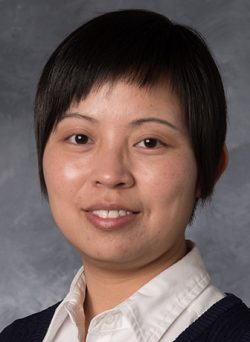
Susie Dai is a Professor in the Department of Chemical and Biomedical Engineering at the University of Missouri, with a laboratory located at the Bond Life Sciences Center. Her research bridges chemistry, biology, and engineering to address critical environmental and sustainability challenges. Education: PhD in Chemistry from Duke University; Certificate in Biomedical Engineering from Duke University; Certificate in Regulatory Science from Texas A&M University; BS in Chemistry from Fudan University Dr. Dai specializes in biological and material engineering, carbon waste conversion, contaminant remediation, and synthetic biology. She is developing RAPIMER, a lignin-based fungal scaffold for PFAS removal, and pioneering electro-microbial systems to convert CO2 into bioplastics and biofuels. Her work focuses on scalable, sustainable solutions for environmental pollutants and carbon utilization. Recent research trends include creating biomimetic materials for sustainable packaging, optimizing lignocellulosic biorefineries, and designing lignin-derived photocatalysts. She leads projects funded by Tito's Handmade Vodka's philanthropic arm for PFAS remediation and collaborates with the NSF Engineering Research Center CURB at Washington University in St. Louis. At Mizzou, Dai integrates engineering and life sciences, leveraging both Mizzou Engineering and Bond Life Sciences Center's resources. Her interdisciplinary approach combines electrochemistry, microbial engineering, and social impact analysis to advance circular bioeconomy solutions.
Wiebe M. de Vos is a Full Professor at the MESA+ Institute, University of Twente, where he leads research in advanced membrane technologies. His work bridges fundamental polymer chemistry and practical applications in water treatment and sustainability. Full Professor, MESA+ Institute, University of Twente His research focuses on membrane science, particularly polyelectrolyte multilayer systems, nanofiltration, and sustainable material design. He investigates how surface chemistry, phase separation, and polymer interactions influence membrane performance in complex aqueous environments. His work addresses critical challenges such as nanoplastics removal, salinity management, and micropollutant degradation. The recent publications highlight a strong trend in developing next-generation membranes with enhanced stability, selectivity, and environmental compatibility. His team explores pH-responsive systems, biocatalytic membranes, and scalable fabrication methods, contributing significantly to both academic knowledge and industrial applications in water purification. No scientific awards were mentioned in the provided text. Dr. de Vos has supervised 22 academic works, indicating active mentorship of Master’s and PhD students. While specific grants are not detailed, his extensive research output and dataset publications suggest sustained funding and collaborative projects. His research integrates experimental design, material characterization, and process engineering. His work is conducted within the MESA+ Institute, a leading nanotechnology research center, fostering interdisciplinary collaboration in materials science and engineering.
Abdon Pena-Francesch is an Assistant Professor in the Department of Materials Science and Engineering at the University of Michigan. He is also affiliated with the Macromolecular Science and Engineering Program, Chemical Engineering, and the Michigan Robotics Institute. His interdisciplinary research integrates biomaterials science, polymer chemistry, soft matter physics, and nanotechnology to develop programmable soft materials for applications in healthcare, robotics, and environmental science. Education: Ph.D. in Engineering Science and Mechanics, The Pennsylvania State University, 2017 M.Sc. in Chemical Engineering, Institut Químic de Sarrià (Barcelona, Spain), 2013 B.Sc. in Mechanical Engineering, Institut Químic de Sarrià (Barcelona, Spain), 2011 Research Interests: His work focuses on bioinspired materials , soft robotics , self-healing polymers , and biodegradable microrobots . By engineering molecular and nanoscale structures, his lab designs materials with programmable properties for soft robotic systems and biomedical devices. The group emphasizes both fundamental science and translational applications, including tissue repair, actuation, and environmental sensing. Awards and Honors: Humboldt Research Fellowship for Postdoctoral Researchers (2018–2020) Alumni Association Dissertation Award, Penn State University (2017) Rustum and Della Roy Innovation in Materials Research Award (2016) Materials Research Society Graduate Student Award (2016) First Prize, Penn State ESM Graduate Research Symposium (2015) AGAUR MOBINT Fellowship, Government of Catalunya (2012) Labs and Affiliations: He leads the Bioinspired Materials Lab , an interdisciplinary group within the University of Michigan’s Materials Science & Engineering Department. The lab collaborates with the Macromolecular Science & Engineering Program, Chemical Engineering, and the Michigan Robotics Institute.
Dr. Miaoqiang Lyu is a Research Fellow at the School of Chemical Engineering , The University of Queensland . His work focuses on lead-free perovskites , flexible energy storage , and optoelectronic devices . Research Interests : Designing low-toxicity and stable semiconducting lead-free perovskites for solar energy conversion Developing flexible energy storage devices for Internet-of-Things (IoT) sensors Advancing zinc batteries and aqueous electrolyte systems Photocatalytic hydrogen production and CO2 reduction Recent Article Trends : Focus on 2D/3D heterostructures, interstitial metal doping, and solvent-engineered interfaces Applications in indoor photovoltaics, artificial synaptic functions, and wearable electronics Lead-free perovskites for resistive memory and energy storage Scientific Awards : ARC DECRA Fellow Advance Queensland Industry Research Fellow CRC for Polymers grant Supervision & Funding : Principal advisor for two PhD projects on lead-free perovskites and flexible batteries Current grants: Enabling low-toxicity perovskites for indoor photovoltaics (2026-2030), Printable zinc ion batteries (2025-2026) Labs & Collaborations : Affiliated with the Nanomaterials Centre at UQ Collaborations with Professor Lianzhou Wang , Professor Ian Gentle , and Associate Professor Ruth Knibbe
Kristofer Gunnar Paso serves as a Professor in the Department of Chemical Engineering within the Faculty of Natural Sciences at the Norwegian University of Science and Technology (NTNU), where he conducts research at the Ugelstad Laboratory. His work integrates fundamental rheological principles with practical applications in petroleum engineering and sustainable materials development, addressing critical industry challenges through experimental and theoretical approaches. Professor Paso's research spans rheology, polymer technology, enhanced oil recovery, wax deposition mechanics, and nanocellulose applications. His investigations focus on the behavior of complex fluids—including waxy crude oils, biopolymer composites, and nanocellulose suspensions—with emphasis on improving oil transportation efficiency, developing sustainable materials, and understanding interfacial phenomena. Key contributions include modeling wax deposition mechanisms, optimizing pour point depressants, and pioneering nanocellulose applications for enhanced oil recovery under extreme conditions. Analysis of his 2018-2025 publications reveals a strategic evolution from petroleum-focused rheology toward sustainable material solutions. While maintaining strong contributions to flow assurance (40% of recent work), his research increasingly incorporates biocomposites and recycled materials (25% growth since 2020), reflecting industry shifts toward decarbonization. His collaborative approach spans petroleum engineering, food science, and environmental technology, evidenced by publications in Energy & Fuels , Polymers , and Current Opinion in Food Science . No scientific awards were documented in the source material. Professor Paso maintains active collaborations across NTNU and international institutions, though specific advising relationships and grant details remain unreported. His laboratory operations center on the Ugelstad Laboratory's advanced rheological testing facilities, which support investigations into material behavior under reservoir conditions and industrial processing environments.
Boxin Zhao is a Professor and University of Waterloo Endowed Chair in Nanotechnology in the Department of Chemical Engineering at the University of Waterloo. His research spans surface science, bionanomaterials, and biomimetic adhesion, with a focus on advanced polymers, hydrogels, and smart materials for biomedical and industrial applications. He leads the Surface Science and Bio-nanomaterials Laboratory Group, which develops innovative materials such as self-cleaning surfaces and antimicrobial coatings. Education: Doctorate in Chemical Engineering, McMaster University (2004); Master's from Chinese Academy of Sciences (1999); Bachelor's in Mineral Engineering from Central South University (1996). He has held prestigious fellowships, including the NSERC Postdoctoral Fellowship and IMMS Research Fellow at UC Santa Barbara and Los Alamos Lab. Research Interests: Biomimetic adhesion, soft robotics, polymer composites, and advanced manufacturing. Notable contributions include gecko-inspired adhesives, self-healing hydrogels, and conductive polymers for electronics. Recent work focuses on 3D-printed medical hydrogels, soft robotic devices, and microplastic degradation. His lab collaborates with industries like Proctor & Gamble and 3M, addressing real-world challenges in materials science and biomedical engineering. Awards: 1996 IET Scholarship, 2005 NSERC Postdoctoral Fellowship, 2007 IMMS Research Fellow. Teaching: CHE 313 (Heat/Mass Transfer), CHE 612 (Interfacial Phenomena). Lab Facilities: Advanced equipment for nanomaterial synthesis, surface characterization, and soft robotics prototyping.
Ronald G. Larson serves as the George Granger Brown Professor of Chemical Engineering and A. H. White Distinguished University Professor at the University of Michigan's College of Engineering, with additional appointments in Mechanical Engineering and Macromolecular Science & Engineering. His research leadership spans multiple departments within the Chemical Engineering Division, where he directs the Larson Lab focused on fundamental and applied soft matter physics. His research program investigates complex fluids through computational and theoretical frameworks, emphasizing polymer physics, rheology, and molecular simulations. Key thrusts include polymer melt processing, biomembrane dynamics, colloidal systems, and polyelectrolyte coacervation. The group employs advanced techniques like Brownian dynamics, coarse-grained modeling, and multiscale simulation to address challenges ranging from industrial polymer processing to biomedical applications. Recent publications (2023-2025) reveal strong momentum in rheological modeling of complex fluids, with particular emphasis on self-healing materials, wax deposition in pipelines, and crystallization mechanisms. The work bridges fundamental molecular insights with industrial applications, demonstrating consistent high-impact output across polymer science, soft matter physics, and chemical engineering domains. The Larson Lab operates as a collaborative hub within the Chemical Engineering Department, leveraging computational resources to advance understanding of fluid mechanics and material properties. Current projects integrate machine learning with traditional modeling approaches, reflecting the group's commitment to methodological innovation while maintaining strong connections to experimental validation and real-world engineering problems.
Adam Caparco is the DiPietro Assistant Professor of Chemical Engineering at Northeastern University, with a 25% joint appointment in the Department of Chemistry and Chemical Biology. He leads the Caparco Research Group, focusing on agricultural and environmental biotechnology, enzyme immobilization, and protein assemblies. His work integrates plant virology, nanotechnology, and molecular engineering to address sustainability challenges in agriculture and environmental remediation. He is a member of the Institute for Plant-Human Interface and holds affiliations with Northeastern’s College of Engineering and School of Arts and Sciences. Education: B.S. in Chemical and Biomolecular Engineering from UCLA (2015), Ph.D. from Georgia Tech (2020) under Julie Champion and Andreas Bommarius, followed by a USDA NIFA Postdoctoral Fellowship at UC San Diego under Nicole Steinmetz. His research spans plant immunoengineering, biomanufacturing in plants, and protein-based nanomaterials for bioremediation. Research Interests Plant excretion pathways for pathogen defense and environmental remediation Design of immobilized enzymes for green chemical synthesis Plant virus nanoparticles for nucleic acid delivery and immunity modulation Multifunctional protein engineering for sustainable agriculture Recent articles highlight advancements in plant virus-based delivery systems, enzyme immobilization strategies, and nano-enabled precision agriculture. Awards include the USDA NIFA Postdoctoral Fellowship. Caparco advises graduate and undergraduate researchers, including Julia Hilgemberg Merlin (PhD ChE), Olha Bereziuk (PhD CCB), and Paul Carter (PhD ChE). He collaborates widely and seeks to expand interdisciplinary research in plant biotechnology. Labs/Teams: Caparco Research Group (EXP 420 lab, EXP 530B office) and the Institute for Plant-Human Interface.
Kim Joo-yeon is an Associate Professor at the Department of Clothing and Textiles , Seoul National University , within the College of Human Ecology . She holds a Ph.D. in Fiber and Polymer Science from North Carolina State University, with prior Master's and Bachelor's degrees in Clothing and Textiles from Seoul National University. Research Interests focus on Textile Engineering , Nanotechnology , and Environmental Materials , particularly photocatalytic fabrics, biodegradable filters, and sustainable textile processing. Her work integrates Photocatalytic degradation of pollutants Nanoparticle functionalization Smart filtration systems Waste-to-resource strategies Publications (2022–2024) highlight innovations in Photocatalytic fabric design Bacterial adhesion control Multi-jet electrospinning MOF-based gas filters with a focus on environmental and healthcare applications. She teaches undergraduate courses in Clothing Material Evaluation and Experimental Studies , and graduate courses in Textile and Polymer Chemistry and Filter Materials . Kim leads the Textile Materials Lab , part of the multidisciplinary W.E.A.R. Lab ( Wearable Ergonomics + Anthropometrics Research ), addressing real-world challenges through textile innovation.