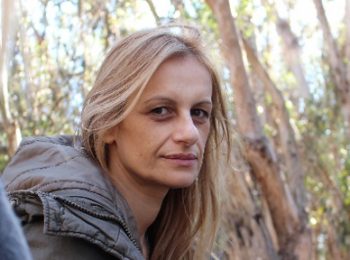
Milica Balaban is an Associate Professor at the Faculty of Natural Sciences and Mathematics , University of Banja Luka, serving as Head of the Chemistry Department since 2014. She holds a Ph.D. in Polymer Chemistry from the University of Belgrade (2013) and has dedicated her career to polymer synthesis, structural characterization, and environmental chemistry. Focus on thermoplastic elastomers, self-healing polymers, and green chemistry principles Active in international collaborations (EIT RawMaterials, Erasmus+) Coordinator for education innovation projects and STEM outreach Her research spans polymer additives, food packaging safety, mechanochemistry, and sustainable materials. She has secured grants for projects like MechSusInd and RM@Schools-4 , and serves as an ad-hoc reviewer for journals including Journal of the Serbian Chemical Society . Awards include Matsumae International Foundation and Erasmus+ Key Action 1 grants.
Nazan Avcıoğlu Kalebak is a Professor at Gaziantep University's Faculty of Fine Arts, specializing in the Department of Textile and Fashion Design. Her academic journey includes a B.S. in Mechanical Engineering (Gaziantep University, 2000), an M.S. in Textile Engineering (Gaziantep University, 2014), and a Ph.D. in Textile Engineering (Çukurova University, 2010). She has held positions as Assistant Professor (2013–2019) and Associate Professor (2019–present) at the same institution. Her research explores sustainable textiles, functional materials (e.g., flame-retardant nonwovens), cultural heritage in fashion (e.g., Ottoman kaftans, Kutnu fabric), and cross-cultural design influences. She integrates art movements like Surrealism and Punk into wearable design, emphasizing eco-innovation and traditional craftsmanship. Kalebak's publications focus on themes such as medical textiles (antibacterial masks), sustainable dyeing (coffee grounds, plant-based dyes), and cultural semiotics in film costumes (e.g., Audrey Hepburn, Cruella). Her work frequently addresses industrial applications in automotive and healthcare sectors. Awards & Honors: Gaziantep University Award: Sound Absorbing Polyester Recycled Nonwovens (2015) Six TÜBİTAK Publication Incentive Awards (2011–2012) for friction/abrasion studies in nonwovens Advising & Projects: She mentors graduate students in sustainable fashion and textile innovation. Key projects include: Antibacterial surgical masks using natural dyes (TÜBİTAK-funded). Revival of traditional Kutnu fabric in contemporary design. Patents for flame-retardant BCF yarns and friction-testing devices. She leads research groups exploring heritage textiles and sustainable materials, with collaborations across Turkey's textile industry.
Dr. C.F. (Rene) van Nostrum is an Associate Professor at the Department of Pharmaceutics, Faculty of Science, Utrecht University , where he has worked since 1999. His academic career spans roles in teaching physical chemistry to pharmacy students and leading groundbreaking research in advanced drug delivery systems. Active researcher in nanomedicine and biodegradable polymers Co-supervisor for 33 PhD graduates Recipient of prestigious grants and awards Education: PhD in Physical Organic Chemistry (1990-1995), University of Nijmegen MSc in Chemistry (1984-1990), University of Nijmegen Research Focus: Van Nostrum’s work centers on drug delivery systems , with emphasis on nanostructured carriers like polymer micelles, hydrogels, and nanoparticles. His innovations include thermosensitive micelles for targeted release and protein-imprinted nanoparticles as artificial antibodies. The research bridges materials chemistry and biomedical applications, contributing to sustainable development goals in health and well-being. Scientific Achievements: Thomson Reuters Highly Cited Researcher (2014) EJPS Best Paper Award (2004) Theme editor for Advanced Drug Delivery Reviews and International Journal of Pharmaceutics Grants and Leadership: He secured over €1.6 million in grants, including an NWO-CW VIDI grant (€908k) and Utrecht University High Potentials grant (€563k). His projects focus on biodegradable polymers and protein imprinting technologies.
Davide Dionisi is a Professor at the University of Aberdeen's School of Engineering, with expertise in biochemical engineering, wastewater treatment, and sustainable chemical processes. His career spans academic roles from Lecturer to Personal Chair (2021–present), alongside industry experience at Syngenta (2007–2012) and academic positions in Italy. PhD in Industrial Chemical Processes (2001, Sapienza University) MSc in Chemical Engineering (1997, Sapienza University) Research focuses on applying chemical engineering principles to sustainable processes, particularly biological systems using open mixed microbial cultures for waste valorization, bioenergy production, and carbon capture. His work has received over 3,500 citations (h-index: 30). Recent publications highlight innovations in microwave-assisted carbon capture, anaerobic fermentation of organic waste, and kinetic modeling of biodegradation processes. Grants from BBSRC, NERC, UK Government, and Horizon Europe reflect his leadership in circular economy and renewable energy projects. Scientific Awards: Fellow of the Institution of Chemical Engineers (FIChemE) As coordinator of the MSc Renewable Energy Engineering program and Chemical Engineering Lab (2014–2019), he has supervised over 50 projects and 7 PhD graduates. His editorial role at Processes and extensive peer-review activity underscore his academic influence.
Natalie Stingelin is a Professor at the Georgia Institute of Technology, holding the chair of the School of Materials Science and Engineering since 2022. She is also affiliated with the University of Bordeaux (since 2017) and Imperial College London (since 2009). Her work spans organic electronic materials, bioelectronics, and hybrid systems, focusing on microstructure-property relationships and advanced processing techniques. PhD in Materials Science from ETH Zurich (2001), awarded ETH Medal Her research explores organic photovoltaics, thin film transistors, and inorganic-organic frameworks. She develops models linking charge transport to polymer disorder and investigates materials for sustainable energy and flexible electronics. Her recent publications highlight innovations in polymer characterization, photovoltaic efficiency, and light-matter coupling. Stingelin serves as Editor-in-Chief for the Journal of Materials Chemistry C and Materials Advances . She has secured major grants including ERC Starting and Proof-of-Concept Grants, and led the Marie Curie INFORM network. Fellow of the Materials Research Society (2019) Fellow of the Royal Society of Chemistry (2012) National Academy of Inventors Fellow (2021) Rosenhain Medal (2014) Suffrage Science Award (2021) Her contributions to polymer science, optoelectronics, and sustainable materials are recognized globally, including participation in the World Economic Forum (2016) and editorial leadership roles.
Dr. Rong Yin is an Assistant Professor at the Wilson College of Textiles, North Carolina State University , specializing in Smart Textiles , Flexible Robotics , and Sustainable Spinning Technology . His research focuses on Wearable Electronics , Soft Actuators , and Hemp Fiber Processing for sustainable applications. Youth Editorial Board Member, Advanced Fiber Materials Guest Editor, Actuators and Frontiers in Chemistry Subcommittee Member, ASTM D37.07 Hemp Fiber Testing Standards Research Highlights: Developing Wearable Human-Machine Interaction Systems using embroidery-based sensors Innovating Sustainable Hemp Fiber Processing techniques for textile-grade materials Creating Soft Actuators using bioinspired designs and phase transition mechanisms Establishing Performance Modeling for textile manufacturing processes Scientific Awards: NSF Career Award Goodnight Early Career Innovators Award Barbara S. Stowe Faculty Award Key Collaborations: Consultant for multiple companies, reviewer for over 40 international journals.
Hao Wang serves as a Courtesy Research Associate Professor in the Department of Mathematics within the College of Arts and Sciences at the University of Oregon. His interdisciplinary appointment bridges mathematical methodologies with sustainable engineering applications, particularly in energy and materials systems. Dr. Wang's research focuses on advanced biomass conversion technologies, with expertise in hydrothermal liquefaction, catalytic hydrodeoxygenation, and lignin valorization for biofuels and bioproducts. His work addresses critical challenges in sustainable recycling of lithium-ion batteries, corrosion in biomass processing reactors, and development of bio-lubricants from renewable feedstocks. This research integrates life cycle assessment and economic analysis to evaluate environmental impacts and commercial viability of emerging technologies. Analysis of his 2023-2025 publications reveals a consistent emphasis on optimizing thermochemical processes for biomass conversion, particularly hydrothermal liquefaction and catalytic upgrading of bio-oils. His work demonstrates strong interdisciplinary collaboration between mathematical modeling and chemical engineering, targeting sustainable solutions for energy storage, waste valorization, and green manufacturing. Scientific awards and honors are not documented in available sources. Information regarding student advising, research grants, and laboratory infrastructure is absent from current documentation, though his publication record suggests active collaboration with engineering research teams.
Dae-Wook Kang is an Assistant Professor in the Department of Civil and Environmental Engineering at the University of Toledo, where he has been teaching and conducting research since January 2019. His academic journey includes a Ph.D. in Civil and Environmental Engineering from the University of Wisconsin-Madison (2009), a Master's degree from Seoul National University (2002), and a Bachelor's degree in Civil Engineering with a focus on Urban Engineering from Seoul National University (1998). Dr. Kang's professional experience includes positions as Associate Research Scientist and Assistant Research Scientist at the Biodesign Swette Center for Environmental Biotechnology at Arizona State University (2014-2018), and Postdoctoral Research Associate at the same institution (2009-2014). His academic career began with research assistant positions at the University of Wisconsin-Madison and Seoul National University. Dr. Kang's research focuses on employing multi-omics technologies and bioinformatics to advance understanding of the role of microbiota in environmental engineering systems, nature, and human health. His work spans several critical areas including gut microbiome research related to autism spectrum disorders, wastewater treatment, harmful algal blooms, and microbial ecology. His publications in high-impact journals like Cell, Microbiome, and mSystems demonstrate significant contributions to understanding the connections between gut microbiota and autism, developing microbiota transfer therapy approaches, and monitoring pathogens in wastewater systems. His research group, the Environmental Microbiome Lab, currently includes several PhD and MS students working on projects related to wastewater surveillance of SARS-CoV-2, harmful algal blooms in Lake Erie and the Maumee River, and microbial competition dynamics. Dr. Kang has mentored numerous graduate and undergraduate students who have gone on to work at organizations including Arcadis Inc., NTH Consultants, Ltd., and Turner Co. President's Award for Excellence in Creative and Scholarly Activity, University of Toledo (2021, 2022) Kang et al. (2017 Microbiome) paper selected as a must-read article for the Springer Nature Change the World initiative Abstract featured and live-interviewed at 114th General meeting of American Society for Microbiology (2014) Rotary International, Academic-Year Ambassadorial Scholarship (2002) As an educator, Dr. Kang teaches courses including Microbiome and multi-Omics, Water Supply and Treatment, and Wastewater Engineering. He has supervised numerous independent study and graduate research projects. His lab, the Environmental Microbiome Lab, is located in Nitschke Hall at the University of Toledo and focuses on applying cutting-edge genomic technologies to environmental and health-related challenges.
Dr. Ahmed Mohamed Ahmed Nasr serves as a Professor in the Construction Engineering Department at the Faculty of Engineering, Tanta University. His academic career spans over 15 years with consistent contributions to geotechnical engineering research and education. His research focuses on critical geotechnical challenges including: Soil stabilization techniques for problematic soils Foundation behavior under complex loading conditions Reinforcement mechanisms for sand and contaminated soils Pile-soil interaction in challenging environments Sustainable use of waste materials in construction Analysis of his 15 most recent publications (2009-2015) reveals a systematic research trajectory centered on experimental validation and theoretical modeling of geotechnical systems. His work demonstrates particular expertise in soil-structure interaction problems involving slopes, sheet pile walls, and various foundation types under lateral, uplift, and oblique loads. A significant portion addresses environmental challenges like oil-contaminated soils and innovative stabilization methods using cement kiln dust and natural fibers.
Dr. Nevena Vukić serves as a Professor at the Department of Physics and Materials within the Faculty of Technical Sciences, University of Kragujevac. Her academic career spans institutions including the Faculty of Technology in Novi Sad (2012-2020) and her current position at the Čačak campus since 2020. She holds a PhD in Materials Engineering from the University of Novi Sad with a perfect 10.00 average grade. Her research focuses on sustainable materials science, particularly biodegradable packaging, polymer nanocomposites, and green chemistry applications. Analysis of her 15 most recent publications reveals consistent emphasis on cellulose-based films, polylactide modifications, and nanotechnology-enhanced materials. Key trends include valorization of waste streams (PET glycolysis), edible packaging development, and educational applications of materials science. Scientific recognition includes: Best female scientist award at University of Kragujevac (2023) Author/co-author of 150+ conference papers and journal articles Textbook author and book chapter contributor Technical solution patent holder She mentors diploma and master's theses at vocational studies programs while serving on doctoral dissertation committees. Her international collaborations include research stays at Demokritos National Research Center (Athens) and Institute of Materials Research (Košice), along with participation in COST and FP7 projects.
Carla Pires is a Researcher at the Portuguese Institute for the Sea and Atmosphere (IPMA) , focusing on marine biotechnology and sustainable food systems . Her work bridges fish processing by-products , bioactive compounds , and seaweed extracts , with affiliations to institutions like the University of Aveiro and collaborative networks across Portugal , France , and Spain . Research Themes Development of antioxidant-rich protein hydrolysates from fish discards Design of biodegradable edible films using marine proteins and essential oils Valorization of seaweed and macroalgae for bioactive applications Optimization of enzymatic and subcritical extraction methods Investigation into sodium reduction strategies in seafood products Publication Trends Her recent articles (2025–2021) emphasize marine-derived bioactives , seasonal variation in fish waste , and innovative food preservation . Key methodologies include ultrafiltration , subcritical water extraction , and gastrointestinal digestion modeling . Collaborations span institutions like University of Aveiro , GEPEA CNRS , and University of Nantes .
Carol Miles is a Professor and Horticulture Extension Specialist at Washington State University (WSU), where she also serves as Director of the WSU Mount Vernon Northwestern Washington Research and Extension Center. Her work focuses on vegetable crop production and sustainable agricultural practices in the Pacific Northwest region, with particular emphasis on developing environmentally friendly alternatives to conventional farming methods. Dr. Miles earned her Ph.D. and M.S. in Vegetable Crops from Cornell University and her B.S. in Bio-Agricultural Sciences from Colorado State University. Her educational background provided a strong foundation for her career in horticultural research and extension, which has spanned multiple institutions and international experiences including work with Helen Keller International and the Peace Corps in Cameroon. Dr. Miles specializes in high-value vegetable crops including edamame, wasabi, pea shoots, icebox watermelon, sweetpotatoes, melons, niche-market dry beans, grafted watermelon, bulb fennel, and hard cider production. She is internationally recognized for her pioneering research on soil-biodegradable plastic mulch , investigating sustainable alternatives to traditional polyethylene mulch in agricultural systems. Her work addresses critical environmental concerns related to plastic waste in farming while maintaining crop productivity and economic viability for growers. Her recent publications demonstrate a strong interdisciplinary focus spanning sustainable agriculture, environmental science, horticulture, and crop physiology. The research portfolio shows consistent attention to practical solutions for growers facing environmental and economic challenges, with particular emphasis on plastic mulch alternatives, specialty crop production systems, and grafting techniques for improved crop performance. Dr. Miles has received numerous prestigious awards for her extension work and research contributions: ASHS Fellow (2024) ASHS Extension Materials Award for "Establishing a Cider Apple Orchard for Mechanized Management" (2020) National Extension Association of Family and Consumer Sciences Western Region Communications Educational Curriculum Package 3rd Place Award for "Pulse on Health" (2019) Multiple ASHS Extension Materials Awards (2018) USDA NIFA Partnership Innovative Projects and Programs Team Award (2013) Washington State University College of Agriculture Interdisciplinary Team Award (2012) USDA/CSREES Western SARE Professional Development Program recognition (2008) As Director of the Mount Vernon NWREC, Dr. Miles leads significant research initiatives funded by USDA Specialty Crop Research Initiative projects and other sources. Her extension programming reaches growers across multiple states through field days, webinars, and professional development trainings that have educated thousands of agricultural professionals about sustainable practices. She has developed comprehensive training materials on soil-biodegradable plastic mulch that have been accessed by stakeholders in 78 countries. Dr. Miles oversees the Vegetable Research and Extension program at the Mount Vernon NWREC, which includes research on screening new crops, testing soil-biodegradable mulch, and vegetable grafting techniques. Her team includes research technicians, assistants, and communications specialists who collaborate on projects addressing the needs of Pacific Northwest growers through on-farm demonstrations and direct engagement with agricultural producers.
Vassilis Kontogiorgos is an Associate Professor in the Department of Food, Nutrition and Health (Food Chemistry) at the University of British Columbia's Faculty of Land and Food Systems. His research focuses on the physical chemistry of food macromolecules, particularly polysaccharide-based colloidal systems. Post Graduate Certificate in Higher Education Practice (2009), University of Huddersfield, UK PhD in Food Science (2007), University of Guelph, Canada MSc in Food Science (2004), Aristotle University of Thessaloniki, Greece BSc (Hons) in Food Science (2001), Aristotle University of Thessaloniki, Greece His work explores polysaccharide isolation, characterization, and interfacial arrangement to stabilize dispersions, with applications in food-body interactions and responsive colloidal systems for targeted bioactive delivery. Research spans food chemistry, polymer physics, and nutritional science. Recent publications emphasize pectin chemistry , hydrocolloid functionality , plant protein behavior , and bioactive delivery systems . Themes include food processing optimization, sustainable packaging, and structural characterization of polysaccharides. Contact: vkontogi@mail.ubc.ca
Associate Professor Brendan Burns is a leading microbial ecologist and astrobiologist at the University of New South Wales (UNSW), where he has served since 2005. Currently Associate Professor at the School of Biotech & Biomolecular Science, he specializes in unraveling the evolutionary and ecological significance of early Earth microbial ecosystems, particularly microbial mats and stromatolites in Shark Bay, Western Australia. His interdisciplinary research bridges prokaryotic and eukaryotic biology, focusing on Asgard archaea as evolutionary "missing links" and microbial dark matter dynamics. Key affiliations: UNSW School of Biotech & Biomolecular Science Collaborations: Australian Centre of Astrobiology, NASA, Department of Parks and Wildlife, Malgana Rangers His research combines biogeochemical fieldwork, functional genomics, and next-generation sequencing to study extremophile systems. This work has critical implications for understanding Earth's origins of life and guiding extraterrestrial biosignature detection. His team addresses United Nations SDGs 13 (Climate Action), 14 (Life Below Water), and 15 (Life on Land) through climate stressor analysis on microbial communities. Recent publications highlight advances in metagenomic analysis of blue holes, viral communities in stromatolites, and bio-optical properties of microbial mats. His 2022 work on eukaryogenesis challenges traditional domain boundaries through Asgard archaea studies. Scientific Recognition: Eureka Prize for Interdisciplinary Research (2005) Tall Poppy Award (2005) Japan Society for the Promotion of Science Fellowship (2004) Kanagawa Museum Award (2003) Young Scientist Awards (1997-2000) He actively promotes Indigenous knowledge integration through partnerships with Traditional Owners in Shark Bay and serves as Honours Coordinator for BABS Research Program. The Burns Lab website provides further details about their cutting-edge research on planetary microbial systems.
Frédéric CAZAUX is a Lecturer affiliated with the Materials and Transformations Unit (CNRS UMR 8207) at the University of Lille, working within the Polymer Systems Engineering research team. His academic role includes teaching macromolecular chemistry and physical chemistry at the École Nationale Supérieure de Chimie de Lille (ENSCL), where he serves as a 3P tutor and member of the CAC50 educational team. His research focuses on advanced polymer systems with biomedical and functional applications. Key areas include: Development of active textiles for medical and technical use Design of functionalized polymer biomaterials including hydrogels, nanofibers, and coatings Engineering of self-assembled controllable polymers for targeted drug delivery and tissue engineering Nanotechnology approaches like electrospinning for antimicrobial and anticoagulant materials His recent publications (2019-2025) demonstrate a strong focus on sustainable biomaterials, with recurring themes in: Drug delivery systems for diabetic/wound care Antimicrobial surgical implants and textiles Green synthesis of biobased polymers Nanocomposite functionalization techniques This work consistently bridges polymer science, nanotechnology, and clinical applications.