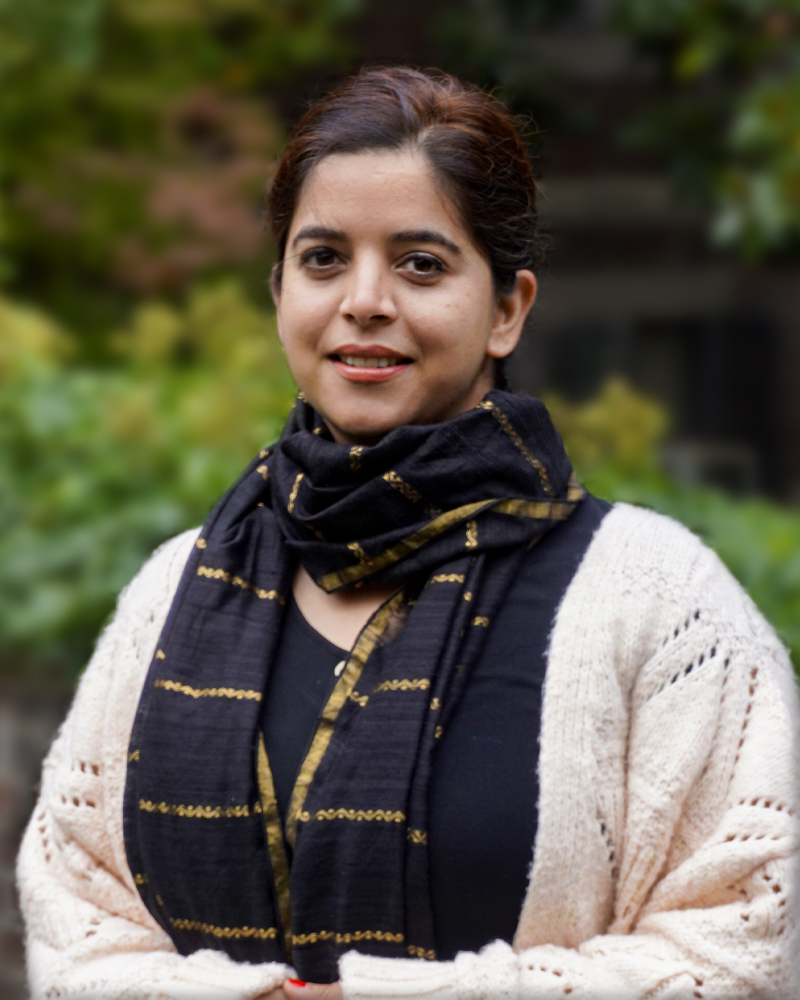
Nathalie Vroegindeweij-de Wagenaar MSc is a Researcher and Teacher at Utrecht University , affiliated with the Faculty of Science , Department of Biology , and the Biodynamics and Biocomplexity group. Her work focuses on Genome Biology and Epigenetics .
Marilyn Ball is a tenured researcher at the Research School of Biology, Australian National University, leading the Ball Group - Ecophysiology of salinity and freezing tolerance. Active since 1990, she studies plant adaptations to environmental stresses across mangroves, temperate evergreen sclerophylls, and Antarctic vegetation. A member of the Australian Antarctic Research Advisory Committee, she serves on editorial boards of Ecosystems , Global Change Biology , Oecologia , and Plant, Cell & Environment . PhD in Environmental Biology from ANU (1982) Postdoctoral positions at UC Berkeley (1981-1984) and ANU North Australia Research Unit (1985-1988) Her research focuses on evolutionary trade-offs between stress tolerance and hydraulic/photosynthetic coordination in leaves. Key areas include climate change impacts on carbon gain, mangrove drought responses, Antarctic moss physiology, and plant morphology constraints. Current projects explore temperature extremes in mangroves and Antarctic moss thermal tolerance. Recent publications highlight mangrove biocomplexity, nitrogen fertilization effects in saline environments, and freeze avoidance mechanisms in mosses. Trends span plant-water relations, salinity interactions, and climate warming's influence on photosynthetic capacity. Scientific Awards: Chancellor's Award for Distinguished Contribution to the University (2015) Peter Baume Award (2015) Joint College Award for Excellence in Education (2009) Fellow of the Australian Academy of Science (2009) Lifetime Honorary Member, Ecological Society of America (2007) Hirota Naora Award (2023) RSB Outstanding Thesis Prize (2022) Ball has supervised multiple ARC Discovery Grants (2008-2013) addressing temperature extremes, salinity tolerance, and Antarctic moss carbon dynamics. Her lab includes Postdoctoral Fellow Jie Liang, Research Officer Ziqi Meng, Honorary Professor John Finnigan, and visiting researchers from Antarctic vegetation studies.
Rhiju Das is a Professor of Biochemistry at Stanford University School of Medicine. He is also a member of Bio-X and the Wu Tsai Neurosciences Institute at Stanford. His research focuses on computational modeling and design of RNA molecules, with applications in biology and medicine. Dr. Das received his education from prestigious institutions: Ph.D. in Physics from Stanford University (2005) M.Res. in Biocomplexity from University College London (2000) M.Phil. in Physics (Radio Astronomy) from Cambridge University (1999) A.B. in Physics from Harvard University (1998) Dr. Das's research interests center on predicting and designing how biopolymer sequences define and regulate structure and function, with a focus on medically important RNA and RNA/protein complexes. His lab develops algorithms to predict RNA structures and energetics at high resolution, with increasing emphasis on ribosomes and viruses. They test these ideas through community-wide blind trials and by solving molecule structures using chemical mapping, NMR, crystallography, and cryo-EM data. A notable achievement includes top models in the majority of RNA-Puzzles blind structure prediction challenges. Complementing computational research, Dr. Das's lab develops biochemical methods to model unknown non-coding RNA structures, focusing on RNA structure and conformational changes in processes like splicing and mRNA transport in brain cells and viruses. They also design new RNA molecules for basic science, diagnostics, therapeutics, and vaccines through the Eterna platform, which engages citizen scientists in solving RNA design problems. Their work has produced the first algorithm for automated 3D RNA design, RNA calculators for point-of-care diagnostics, and RNA sensors for molecular computing. Dr. Das's recent publications show a strong focus on RNA structure determination using cryo-EM, RNA design through community science (Eterna), and RNA structure prediction challenges. His work spans structural biology, computational biology, and molecular engineering, with applications in virology, diagnostics, and therapeutics. Notable 2025 publications include studies of naturally ornate RNA complexes and complex water networks around RNA, while 2024 work featured RNA-Puzzles Round V, OpenASO for antisense oligonucleotide design, and Ribonanza for deep learning of RNA structure. Dr. Das has received numerous scientific awards: Gold Medal, Top US score, 2nd place worldwide, International Physics Olympiad (1995) British Marshall Scholar (1998-2000) Jane Coffin Childs Foundation Fellowship (2006-2008) Career Award at the Scientific Interface, Burroughs-Wellcome Foundation (2008-2015) Keck Medical Research Grant award (2012) OpenEye Outstanding Junior Faculty Award (2015) Discovery Innovation Award, Stanford University School of Medicine (2016) Stanford Medicine Endowed Faculty Scholar (2020-2023) Howard Hughes Medical Institute Investigator Dr. Das advises several doctoral students including Hamish Blair, Rachael Kretsch, and Georgia Tully, and serves as a co-advisor for Christian Choe. He also mentors postdoctoral scholars Alissa Hummer and Jigyasa Verma. His research is funded by multiple sources including the Howard Hughes Medical Institute, Burroughs-Wellcome Foundation, W.M. Keck Foundation, and other major grants supporting his innovative work in RNA biology and computational design. Dr. Das leads the Das Lab at Stanford, which is centered around the Eterna platform - an open science initiative that crowdsources RNA design problems to over 250,000 players of an online video game. The platform provides scoring feedback based on actual wet-lab experiments, enabling citizen scientists to contribute to RNA research. His lab also participates in major community efforts like RNA-Puzzles and CASP for RNA structure prediction assessment, and has made significant contributions to understanding RNA structure in coronaviruses, ribosomes, and other biologically important systems.
Eberhard Bodenschatz is a Professor of Physics at Georg-August University Göttingen and a Director/Scientific Member at the Max Planck Institute for Dynamics and Self-Organization (MPIDS). He has held leadership roles including Managing Director of MPIDS (2017–2020, 2011–2013) and Co-Director of the Max Planck University of Twente Centre on Complex Fluid Dynamics (2017–2022). His research focuses on fluid physics (turbulence, cloud microphysics), biophysics (cardiac electrophysiology, aerosol transmission), and synthetic biology (artificial cells, axonemes). Education: Diplom in Theoretical Physics (1985), PhD (1989), both from University of Bayreuth. Awards: Alfred P. Sloan Fellow (1993), Fellow of APS (2003), Stanley Corrsin Award (2014), Leopoldina Membership (2020). Leadership: Chair of Max Planck Central Software Panel, Member of Göttingen Research Council, and advisor to Kavli Institute for Theoretical Physics. Research interests span turbulence dynamics, biophysical systems (e.g., heart arrhythmias, cilia mechanics), and aerosol transmission mechanisms. Notable contributions include airborne cloud physics measurements via the Max Planck CloudKite platform and studies on sonogenetic control of cardiac rhythms. Publications highlight interdisciplinary work: turbulence dissipation in clouds, aerosol risk modeling, and synthetic axoneme design. He has organized major conferences on astrophysical turbulence and fluid dynamics of life systems.
Prof. Anna Akhmanova is a leading cell biologist at Utrecht University's Faculty of Science, holding the position of Professor of Cell Biology and Academic Director of the Biodynamics and Biocomplexity program. Her research focuses on cytoskeletal organization, particularly microtubule dynamics, and their roles in cell polarity, development, and diseases like neurodegeneration. She employs advanced microscopy, genetic tools, and mathematical modeling to study these processes. Key achievements include the NWO Spinoza Prize (2018) and ERC Synergy Grant (2013). Education: PhD from Radboud University Nijmegen (1997), postdoctoral work at Erasmus Medical Center, and head of her own lab since 2001. Research Interests: Microtubule biology, cellular architecture coordination, and cytoskeletal mechanisms in health and disease. Awards: NWO Spinoza Prize (2018), ERC Synergy Grant (2013), VICI (2007), and VIDI (2001). Teaching: Leads courses in Cell Biology and Molecular & Cellular Life Sciences. Her lab combines live-cell imaging, mass spectrometry, and mouse models to investigate microtubule-driven processes. Collaborations with mathematicians enable automated analysis and modeling of cytoskeletal dynamics.
Simon A. Levin is the James S. McDonnell Distinguished University Professor in Ecology and Evolutionary Biology at Princeton University and Director of the Center for BioComplexity within the High Meadows Environmental Institute. His research integrates theoretical biology, ecology, and evolutionary processes with socio-economic systems, focusing on biodiversity, disease dynamics, and collective behavior. He holds appointments in Princeton’s Department of Ecology and Evolutionary Biology and leads interdisciplinary initiatives in environmental complexity. Research Interests Structure and functioning of ecosystems Ecological and socioeconomic system interactions Evolutionary dynamics and cooperation Theoretical foundations of spatial ecology Climate change impacts and policy Selected Awards and Recognition Heineken Prize for Environmental Sciences Kyoto Prize in Basic Sciences National Medal of Science BBVA Frontiers of Knowledge Award Lab and Collaborations Levin’s lab explores collective behavior in biological systems and socio-ecological challenges. Recent work includes modeling epidemic dynamics, critical transitions in ecosystems, and the role of prosocial behavior in heterogeneous societies. Collaborations span ecology, mathematics, and social science, emphasizing interdisciplinary solutions to global environmental issues.
Geoffrey C. Fox is a Professor in the Biocomplexity Institute & Initiative and Computer Science Department at the University of Virginia. He holds a Ph.D. in Theoretical Physics from Cambridge University (1967), where he was Senior Wrangler. His career includes roles at Caltech, Syracuse University, Florida State University, and Indiana University, with postdoctoral research at Princeton’s Institute for Advanced Study and CERN. With an h-index of 85 and over 41,000 citations, he is a Fellow of the ACM and APS. His research focuses on AI for science, high-performance computing, deep learning surrogates, and earthquake nowcasting via machine learning. **Education**: Ph.D. in Theoretical Physics (Cambridge University, 1967). **Research Interests**: Network Systems Science High-Performance Computing and Clouds AI for Science Deep Learning Data Analytics & Simulation Surrogates Data Engineering-Science Interface **Awards**: ACM-IEEE CS Ken Kennedy Award (2019) HPDC Achievement Award (2019) ACM Fellow (2011) APS Fellow (1990) **Advising & Grants**: Supervised 75 Ph.D. students. Active in NSF-funded CyberTraining initiatives and collaborative projects like CINES. Leads efforts in MLCommons/MLPerf for AI benchmarking in science. **Labs/Teams**: Co-founder of MLCommons Science Working Group. Collaborates with Twister2, Cloudmesh, and FURY visualization frameworks.
Daniel J. Rosenkrantz is a Distinguished Professor at UVA's Biocomplexity Institute and Initiative with courtesy appointment in Computer Science. A Columbia Ph.D. graduate and ACM Fellow, his foundational contributions span algorithms, database systems, and dynamical systems. Previously, he spent 28 years at SUNY Albany as Leading Professor and chaired the Computer Science department. Research interests include algorithm design, database architectures, complexity theory, and discrete dynamical systems. Recent publications explore Bayesian networks, multi-agent systems, epidemic forecasting, and fixed-point computation in networked systems. Work consistently addresses computational complexity, system behaviors in constrained networks, and algorithmic solutions for dynamical problems. Awards: ACM Fellow (1995), SIGMOD Contributions Award (2001), JACM Editor-in-Chief (1986-1991), SUNY Albany Excellence in Research Award (1991) Industry experience includes roles at GE Global Research and Phoenix Data Systems as Principal Computer Scientist.
Andy Dobson is a Professor of Ecology and Evolutionary Biology at Princeton University, affiliated with the High Meadows Environmental Institute (HMEI) as part of its Grand Challenges Program. His work bridges ecology, epidemiology, and conservation, focusing on infectious diseases in natural and human-impacted ecosystems. He investigates how pathogens affect endangered species and ecosystems in regions like the Serengeti, California, Malaysia, and Bangladesh. His research integrates field studies with mathematical modeling to address biodiversity loss, disease transmission dynamics, and the impacts of climate and land-use changes. He collaborates extensively with international teams and institutions, including the Serengeti BioComplexity Project. Key themes include wildlife disease control (e.g., rabies in Tanzania), conservation economics, and policy-relevant solutions to biodiversity threats. Research interests emphasize population ecology of infectious diseases, conservation biology, and the interplay between environmental changes and human health. His work is funded by NIH, NSF, and NOAA, addressing topics like Chagas disease epidemiology, zoonotic spillover events, and the ecological consequences of land management. He advocates for integrated approaches to pandemic prevention and sustainable conservation strategies, highlighting the need for economic incentives and policy coherence in environmental and health sectors. Notable collaborations include studies on Yellowstone wolves, tropical dry forests, and lemur population viability in Madagascar. His contributions to theoretical ecology and applied conservation have shaped global discussions on biodiversity preservation and planetary health.
Ramanan Laxminarayan is a Senior Research Scholar at the Princeton School of Public and International Affairs and a Summer Lecturer in the Princeton Institute for International and Regional Studies. His primary affiliation is with the High Meadows Environmental Institute. He is part of the HMEI Associated Faculty and holds roles within the Center for BioComplexity and the Grand Challenges Program. His research integrates epidemiological models of infectious diseases and drug resistance with economic analysis of public health problems, with a focus on antibiotic resistance. This work bridges public health, environmental science, and policy, emphasizing interdisciplinary approaches to global health challenges. While no specific articles or awards are listed here, his contributions likely center on the intersections of health economics, environmental policy, and infectious disease dynamics. His affiliations suggest active engagement in collaborative research initiatives through Princeton's environmental and international studies programs.
Harman Jaggi is a Postdoctoral Research Fellow at Princeton University's Department of Ecology and Evolutionary Biology, affiliated with the High Meadows Environmental Institute (HMEI) and Center for BioComplexity. She completed her PhD in Biology at Stanford University in 2024 under Shripad Tuljapurkar's supervision. Her educational background includes: Postdoctoral Research Affiliate, Princeton University (2024-present) PhD in Biology, Stanford University (2019-2024) MS in Mathematics, Shiv Nadar University, India (2017-2019) BS, St. Stephens College, Delhi University, India (2012-2015) Jaggi investigates socio-ecological impacts of global change using mathematical, computational, and field-based approaches. Her work focuses on population responses to environmental/anthropogenic disturbances, climate change adaptation, migration patterns, and life-history dynamics within fragmented habitats. She specializes in biodiversity conservation frameworks that integrate ecological modeling with socio-economic factors, particularly in vulnerable montane ecosystems like the Indian Trans Himalaya where she studies crop vulnerability and wildlife conservation. She has received significant recognition including: Samuel Karlin Prize in Mathematical Biology (2024) Bing-Ehrlich Fellowship in Environmental Science and Conservation (2023-2024) King Center on Global Development Graduate Student Research Funding (2022-2023) Sustainability Accelerator award from Stanford Doerr School of Sustainability Her research is supported by major grants focused on climate resilience in agricultural systems, particularly examining indigenous versus cash crops in the Trans Himalaya. At Princeton, she works under Simon Levin and Jonathon Levine, building on her Stanford work with the Tuljapurkar Lab and Nature Conservation Foundation collaborations on snow leopard ecology and socio-ecological frameworks for smallholder farmers.
Alain Pumir is a Professor and Research Director at the French National Centre for Scientific Research (CNRS), affiliated with the École Normale Supérieure de Lyon (ENS Lyon) since 2008. He holds an external scientific membership at the Max Planck Institute for Dynamics and Self-Organization (MPIDS) in Göttingen, recognized for his long-term collaboration with the institute's Fluid Physics, Pattern Formation, and Biocomplexity department under Prof. Eberhard Bodenschatz. His research focuses on fluid dynamics, turbulence, and self-organization phenomena, including studies on turbulent shear flows, extreme events in turbulence, and biophysical systems such as ice growth in mixed-phase clouds. He received the Humboldt Research Award and has conducted extended research stays at MPIDS since 2013. Key collaborations involve exploring the interplay between large-scale instabilities and small-scale intermittency in stratified flows, as well as the dynamics of non-spherical particles in turbulent environments. His work bridges theoretical approaches with experimental validations, emphasizing the role of pressure dynamics and inertial effects in fluid systems. Awards: Humboldt Research Award (2013), External Scientific Member of MPIDS (2018) Key Themes: Turbulence universality, fluid-structure interactions, climate-relevant cloud physics
Diane Williams is an Associate Professor (Teaching Stream) and Associate Director of Undergraduate Studies at the University of Waterloo. Her research focuses on cellular and molecular mechanisms of inner ear function, age-related hearing loss prevention, neuroprotection strategies, and systems approaches to health and disease. She holds a BS in Electrical Engineering and Computer Science from MIT, a PhD in Speech and Hearing Bioscience from Harvard-MIT, and a postdoctoral fellowship in Auditory Neuroscience at Oregon Health & Science University. Her teaching expertise includes biological determinants of health, aging processes, cancer biology, and innovative pedagogical methods such as problem-based learning and blended education strategies. She actively engages students through active learning techniques and scientific communication training. Her research spans neurobiology, sensory physiology, and auditory mechanisms, with recent work examining hair bundle structures and mechanotransduction pathways. No scientific awards are explicitly listed in the provided text. She has advised no formally listed students but contributes to curriculum development and undergraduate program leadership. Lab and team affiliations are not explicitly detailed in the available information.
Prof. Dr. Eberhard Bodenschatz is a Professor of Physics at the University of Göttingen and Director of the Max Planck Institute for Dynamics and Self-Organization (MPI-ds). He holds adjunct professorships at Cornell University in both Physics and Mechanical and Aerospace Engineering. His research focuses on the physics of dynamics and self-organization in biological, environmental, and fluid systems, including synthetic biology, medical physics, turbulence, and atmospheric processes. He has held academic positions at Cornell University since 1992, advancing from Assistant to Full Professor, and has led the MPI-ds since 2003. Education: 1985: Diploma in Physics (minor: Polymer Chemistry), University of Bayreuth 1989: Doctoral Thesis in Theoretical Physics, University of Bayreuth Research Interests: Bottom-Up Synthetic Biology: Engineering bio-synthetic cilia and directed transport networks in biological systems. Medical Physics: Investigating heart mechanics, muscle contraction, and soft tissue dynamics. Turbulence: Studying fully developed turbulent flows in fluids and their statistical properties. Atmospheric Physics: Modeling respiratory aerosols and their role in disease transmission. Publications: Recent work spans interdisciplinary topics such as curvotaxis in cells, cardiac pressure-volume models, and aerosol-driven disease spread. His research bridges fundamental physics with applications in medicine and environmental science. Affiliations: Bodenschatz is affiliated with the GGNB programs in Physics of Biological and Complex Systems, Theoretical and Computational Neuroscience, Genome Science, and Molecular Medicine. He has led the CPTS as Chair (2014–2017) and contributed to the MPI Senate.
André Dhondt serves as Professor in both the Ecology and Evolutionary Biology department and the Cornell Laboratory of Orinthology within Cornell University's College of Agriculture and Life Sciences. He additionally holds an administrative position as House Dean in Campus Life. Dr. Dhondt's research spans ecological population dynamics with particular focus on avian epidemiology. His landmark work began in 1994 when he initiated studies on Mycoplasma gallisepticum conjunctivitis in House Finches, establishing the citizen-science based House Finch Disease Survey. This research program secured consecutive NIH/NSF funding (2000-2005 and 2005-2010) and has produced 45 publications documenting the epidemic's continental spread and ecological impacts. His scholarly trajectory demonstrates remarkable continuity from early studies of Great Tits' territorial behavior at Gent State University through applied fieldwork with the UN Food and Agriculture Organization in Madagascar and Somalia (focusing on conservation and pest management), to his 20-year professorship at Antwerp University before joining Cornell. Academia Europaea Member (2009) Deutsche Ornithologen-Gesellschaft Faculty Fellow (2006) American Ornithologists Union Faculty Fellow (1990) British Ecological Society Member (1980) Dr. Dhondt directs the Bird Populations Unit at the Cornell Lab of Ornithology where his integrative approach combines field epidemiology with citizen science methodologies. His career exemplifies how opportunistic research on emerging ecological phenomena can yield decades of productive scholarship with continental conservation implications.