- Chemical Ecology
- Space Biology
- Quorum Sensing
- +۵ مورد دیگر
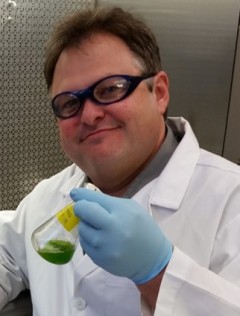
Andrew George Palmer serves as Associate Professor and Associate Department Head & Program Chair in the Department of Ocean Engineering and Marine Sciences at Florida Institute of Technology's College of Engineering and Science. He holds affiliate appointments in Biomedical Engineering and Chemistry, directing the interdisciplinary Palmer Lab focused on chemical ecology and space biology. His research addresses critical challenges in extraterrestrial agriculture and environmental sustainability through biological solutions. Palmer's expertise spans Chemical Ecology , Space Biology , and Quorum Sensing , with emphasis on plant-microbe interactions in extreme environments. Key projects include developing perchlorate removal systems for Martian regolith (PEANUTS), studying nitrogen fixation in Anabaena for space agriculture, and investigating quorum sensing mechanisms in Chlamydomonas reinhardtii. His work bridges terrestrial food security challenges with off-world habitat requirements, particularly for lunar and Martian settlements. Recent publications (2020-2025) reveal a dominant focus on Biological In Situ Resource Utilization (BISRU) , with 70% addressing regolith-based agriculture challenges. His research integrates microbial ecology, plant physiology, and planetary science to develop sustainable life-support systems, featuring recurring themes of perchlorate detoxification, nitrogen cycling in simulants, and microbial community characterization for space farming applications. Dr. Palmer actively mentors graduate students including PhD candidates David Handy, Kirstin Curshaw, and Steven Elsaid, with undergraduates regularly presenting award-winning research at conferences like the Florida Academy of Sciences. His lab secured the Provost's Seed Grant for the TASR project (Temperature and Atmospheric Simulator for Regolith) investigating early Martian habitability. Current collaborations include International Space Station plant microbiome studies and field work in Chile's Atacama Desert as a Martian analog. The Palmer Lab, housed in Florida Tech's Olin Life Sciences building, maintains active projects across six research domains: Quorum Sensing in algae, Kin Recognition in plants, Atacama Desert fungal studies, Biochar applications, Carnivorous Plants research, and regolith-based agriculture systems. Recent lab developments include installation of a cryo-SEM and expanded student cohorts working on projects like PEANUTS and TASR, with members presenting at ASPB and ASGSR conferences.