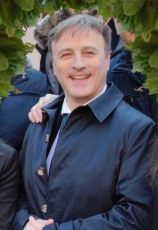
Giancarlo Fabrizi is a Full Professor at the Department of Chemistry and Pharmacy Technology , Sapienza University of Rome. His academic activities include teaching Organic Chemistry I and II to Pharmaceutical Chemistry students (CTF course) and leading multiple research laboratories focused on synthetic chemistry and sustainable processes. Organic Chemistry I (2nd year, Pharmaceutical Chemistry) Organic Chemistry II (3rd year, Pharmaceutical Chemistry) His research spans: Synthesis of heterocyclic compounds with biological interest Valorization of industrial by-products through green chemistry Hydrogenation reactions Advanced NMR spectroscopy applications Hedgehog pathway inhibitors development Biocatalytic systems using immobilized enzymes Research trends from recent publications: Gold/Palladium-catalyzed synthesis of bioactive heterocycles Chemical characterization of natural products Structure-activity relationship studies Green approaches in pharmaceutical synthesis Development of antifungal/antimicrobial agents Biological evaluation of quinazoline derivatives He leads two specialized laboratories: Hydrogenation Laboratory (CU019, P03) Advance 400 NMR Spectrometer facility
Arianna Granese is a Researcher in Medicinal Chemistry at the University of Rome "Sapienza" , Faculty of Pharmacy, Department of Pharmaceutical Chemistry and Technology (SSD: CHIM/08). She holds a "Faculty Council" role (2023-2026) and has extensive teaching experience in Pharmaceutical Chemistry, Toxicological Chemistry, and Drug Analysis for undergraduate and postgraduate programs since 2009. Research Interests : Synthesis of selective MAO inhibitors (A/B isoforms) Helicobacter pylori, Candida, and Toxoplasma targeting agents Epigenetic HAT inhibitors for cancer and neurodegenerative diseases Carbon suboxide reaction mechanisms for bioactive molecules Development of dual-acting DCH-CORMs for tendon inflammation Collaborations with National Institute of Health and CNR Recent Publications (2018-2025) focus on enzyme inhibition, antimicrobial agents, and dual-pharmacology approaches. Notably, she contributed to Antioxidants , Molecules , and Journal of Enzyme Inhibition and Medicinal Chemistry . Editorial Activity : Guest editor for "Separations" (2023) special issue on natural product isolation and chemical fingerprint assessment. Scientific Network : Collaborated with Prof. Ferruccio Bolasco and Dr. Federica Carradori Published 42 peer-reviewed articles with 31 in high-impact journals Presented at 19 international conferences (2003-2009)
Dr. Rino Ragno is a Full Professor at the Department of Chemistry and Pharmaceutical Technology , Sapienza University of Rome. His academic career spans decades of innovation in drug design , computational chemistry , and machine learning applications for chemical-biological systems. He teaches courses like Pharmaceutical and Toxicological Chemistry I and Computational Medicinal Chemistry , accessible via elearning.uniroma1.it. Research focuses on small molecule design , natural product analysis , and predictive modeling Developed the 3D-QSAR PORTAL for molecular modeling and drug discovery Active in essential oil characterization for antimicrobial, anticancer, and anti-inflammatory applications Recent publications emphasize machine learning classification models for essential oil activity prediction, anti-Bcl-2 cancer therapies , and AI-driven drug discovery . His lab employs multidisciplinary approaches combining experimental data with computational analysis to identify bioactive compounds and optimize drug candidates. The 3D-QSAR PORTAL, a free non-profit web platform, enables conformational analysis , molecular docking , and 3D-QSAR modeling accessible across electronic devices. Current projects include essential oil-based biocides for cultural heritage conservation and nanoemulsion formulations for drug delivery systems.
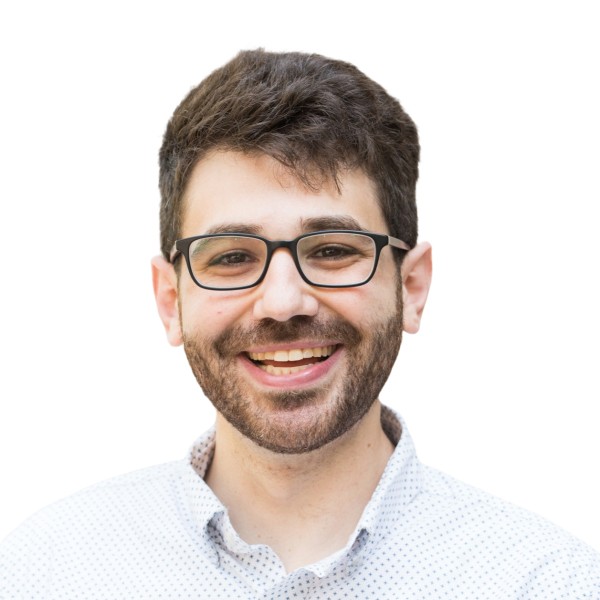
Pratik Yadav is an Assistant Research Professor in the Department of Chemistry and Biochemistry at the University of Notre Dame, located in Notre Dame, Indiana, USA. He is based at 305C McCourtney Hall - West, where he conducts research at the intersection of organic chemistry, biochemistry, and medicinal chemistry, focusing on innovative synthetic methodologies and drug discovery. Education: Ph.D. in Organic Chemistry, University of Delhi (2016) M.Sc. in Organic Chemistry, University of Delhi (2010) B.Sc. in Chemistry, Hansraj College (2008) His research interests span organic synthesis , medicinal chemistry , and biochemistry , with a particular emphasis on developing boron-based pharmacophores and retinoid derivatives for therapeutic applications. He has made significant contributions to late-stage borylation strategies and dearomative functionalization techniques, enabling the rapid assembly of complex bioactive molecules. His recent publications highlight a consistent focus on quinoline-based scaffolds , boron-containing retinoids , and kinase inhibitors , reflecting a deep commitment to advancing synthetic methodologies for drug discovery. These works demonstrate his expertise in cross-coupling reactions , molecular docking studies , and structure-activity relationship (SAR) analysis . Laboratory and Research Group: He is affiliated with the University of Notre Dame's research ecosystem, contributing to interdisciplinary projects in chemical biology and therapeutic development. His lab focuses on target-oriented synthesis and mechanistic studies to enable translational research in medicine.
Mark Levin serves as Assistant Professor in the Department of Chemistry within the University of Chicago's Physical Sciences Division, where his research centers on innovative chemical reaction discovery and molecular editing methodologies since joining the faculty in 2019. His work spans Chemical Synthesis, Organic and Inorganic Chemistry, Catalysis, and Reaction Mechanism, with particular emphasis on developing techniques for single-atom precision in molecular skeleton modification. The Levin Group aims to transform molecular design from a static process into dynamic 'live-editing' capabilities, enabling efficient construction of complex molecules for therapeutic applications. Recent publications reveal a consistent trajectory toward molecular editing breakthroughs, including nitrogen-atom removal techniques and placeholder-based synthesis methods that accelerate drug discovery pipelines by allowing chemists to modify molecular frameworks without complete reconstruction. Levin's scientific recognition includes: Packard Fellowship in Science and Engineering (2021) providing $875,000 research support Cancer Research Foundation Young Investigator Award (2020) Sloan Research Fellowship (2022) Supported by major grants including the Packard Fellowship, his research program trains next-generation chemists in reaction development while building practical toolkits for molecular optimization. Though specific advising roles aren't detailed, his group actively contributes to chemical methodology advancement. Operating from Searle Chemical Laboratory, the Levin Group maintains a research environment focused on mechanistic studies and reaction discovery, with current projects centered on skeletal editing techniques that challenge traditional synthetic paradigms.
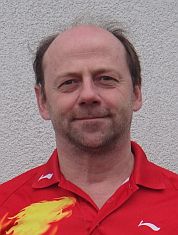
Prof. Dr. Pierre Koch is a full Professor at the University of Regensburg, holding the Chair of Pharmaceutical/Medicinal Chemistry II within the Faculty of Chemistry and Pharmacy. His academic career spans prestigious institutions including the University of Tübingen (PhD under Prof. Stefan Laufer), University of California, Los Angeles (postdoc with Prof. Michael E. Jung), and University of Bonn (postdoc with Prof. Christa E. Müller). He served as Assistant Professor at Tübingen's Pharmaceutical Institute from 2013-2020 and completed his habilitation in 2018. Education: University of Tübingen (Chemistry), PhD in Medicinal Chemistry (2009) Key Research Areas: Small molecule kinase inhibitors for CNS disorders, semi-synthesis of bioactive natural products (e.g., brasilicardin A), development of biological test assays Major Awards: Neuroallianz Publication Price (2014), Nachwuchspreis der DPhG-Stiftung (2018), GDCh/DPhG Innovation Award (2021), Phoenix-Pharmazie Wissenschaftspreis (2022) Recent Publications: Focus on JNK3/p38α inhibitors, HDAC6 modulators, neurodegenerative disease targets, and light-controlled drug reactivity
Professor Jean-Louis Reymond is a distinguished academic at the University of Bern, currently serving as Dean of the Faculty of Science since 2024. He leads the Reymond Research Group within the Department of Chemistry, Biochemistry and Pharmaceutical Sciences. Previously, he served as Director of the Department of Chemistry and Biochemistry from 2015-2017. His educational background includes diploma studies in Chemistry and Biochemistry at ETH Zürich (1981-1985), a Ph.D. in Natural Products Synthesis at the University of Lausanne (1986-1989), and post-doctoral research on Catalytic Antibodies at Scripps Research Institute (1990-1991). He joined the University of Bern as a Professor in 1997 after serving as Assistant Professor at Scripps Research Institute (1992-1997). Reymond's research centers on The Chemical Space Project, which explores the vast universe of possible chemical compounds with potential medical applications. His work spans three interconnected areas: Peptide Chemistry (design of bioactive peptides including dendrimers and polycyclic structures), Cheminformatics (development of the GDB chemical universe database), and Medicinal Chemistry (computer-aided design of small molecule modulators). His research has significant implications for addressing antimicrobial resistance through novel peptide-based therapeutics. Analysis of his recent publications reveals a strong focus on navigating and exploiting chemical space for drug discovery, particularly in antimicrobial applications. His work combines computational methods with synthetic chemistry to identify novel scaffolds and optimize bioactive compounds. The 2024-2025 publications demonstrate continued innovation in peptide design, chemical space visualization, and applications in drug delivery systems. ERC Advanced Grant (2020) for project SPACE4AMPS (€2.5 million over 5 years) Professor Reymond actively mentors numerous graduate students and leads a vibrant research group that collaborates across disciplines. His research is supported by significant grants including the ERC Advanced Grant and participation in the NCCR TransCure initiative. The Reymond Research Group maintains strong connections with other research units at the University of Bern and international collaborators. The research group operates state-of-the-art facilities for peptide synthesis, cheminformatics analysis, and biological testing. They have developed specialized tools including the GDB chemical space database (www.gdb.unibe.ch) and collaborate with the NCCR TransCure consortium on transporter and ion channel research. Their work on antimicrobial peptides positions them at the forefront of addressing the global antimicrobial resistance crisis.
Malek Nechab is a Lecturer at Aix-Marseille University , affiliated with the Organic Radical Chemistry and Specialty Polymers (CROPS) team. His research focuses on radical chemistry with applications in photopolymerization, chirality, and anti-cancer biological activities. He teaches courses in organic chemistry, general chemistry, and radical chemistry. Research Axes: New polymer synthesis methodologies, bioactive molecule design, polymerization initiators Contact: malek.nechab@univ-amu.fr Research Interests span radical chemistry for photopolymerization systems, chiral catalyst development, and bioactive molecule synthesis targeting anti-cancer applications. His work bridges organic synthesis with materials science to create innovative polymerization strategies. Article Trends highlight expertise in photoinitiator design for LED/sunlight polymerization, push-pull dye engineering, and chiral radical reaction mechanisms. Recent publications emphasize sustainable methodologies and biomedical applications.
Allan Watson is a Professor of Homogeneous Catalysis at the School of Chemistry, University of St Andrews, and Deputy Head of School. His research focuses on mechanism-driven catalysis, spanning transition metals (Pd, Cu, Ni) and organocatalysis, targeting C−C/C−X bond formation in bioactive molecules. Current projects include applications in medicinal chemistry, chemical biology, and agrochemistry. Education: MSci (2004) and PhD (2008) from University of Strathclyde; postdoctoral work at Princeton (Lindemann Trust) and GlaxoSmithKline. His research interests center on homogeneous catalysis, with emphasis on chemoselectivity, bioconjugation, and sustainable synthesis. Recent work explores photocatalytic E→Z isomerization, asymmetric protonation, and boron-based reagents for pharmaceutical and agrochemical applications. Articles highlight innovations in CuAAC platforms, organoboron chemistry, and sustainable solvents for cross-coupling. Scientific Awards: Lindemann Trust Postdoctoral Fellowship The Leverhulme Trust Fellowship UK Research and Innovation Programme Grant (£1.77M) Allan supervises 8 graduate students and contributes to teaching courses in synthetic methodology, organic chemistry labs, and tutorials. Projects like 'Boron: Beyond the Reagent' and 'Biochemical Boron Tagging' underscore his leadership in funded research, with collaborations spanning sustainable solvents (Cyrene), EPR spectroscopy, and SDG-aligned chemistry.
Vivek Kumar is an Associate Professor in the Department of Biomedical Engineering at the New Jersey Institute of Technology (NJIT), where he leads research at the intersection of biomolecular engineering, materials science, and synthetic peptide chemistry. His work focuses on developing self-assembling peptide hydrogels for therapeutic applications including drug delivery, tissue regeneration, and disease treatment. His educational foundation includes: B.S. in Biomedical Engineering from Northwestern University (2006) Ph.D. in Bioengineering from Georgia Institute of Technology (2011) Post-doctoral fellowship in Surgery at BIDMC and Wyss Institute, Harvard Medical School (2012) NIH-NRSA Post-doctoral fellowship in Supramolecular Chemistry at Rice University (2016) Dr. Kumar's research specializes in creating tunable peptide-based biomaterials that modulate biological processes like angiogenesis and inflammation. His laboratory develops hierarchically assembled scaffolds for applications ranging from dental pulp regeneration to antiviral therapies and ocular disease treatment. This work bridges fundamental science with translational impact, evidenced by over 50 publications, 70 conference abstracts, and numerous patents. Analysis of his recent publications reveals a strong emphasis on peptide hydrogel platforms for spatiotemporal drug delivery, with significant contributions in ocular therapeutics, cardiovascular repair, and pandemic response. His work demonstrates consistent innovation in tailoring nano-architectured materials for specific biological challenges, particularly in translating bench discoveries to preclinical applications. His scientific recognition includes: American Heart Association Pre-doctoral Fellowship NIDCR NRSA F32 Post-doctoral Fellowship Dr. Kumar maintains robust funding from NIH (NEI R15, NIDCR R01), NSF (STTR, SBIR, I-Corps), New Jersey Health Foundation, and Rutgers TechAdvance. He mentors 5 current PhD students, 1 post-doc, and over 15 undergraduates through NJIT's URI program. As founder and Chairman of biotech startups NangioTx, Inc. and SAPHTx, Inc., he actively translates technologies toward clinical trials. His laboratory operates as an integrated translational hub with equipment for peptide synthesis, biomaterial characterization, and in vivo testing across multiple animal models. Through the Center for Science, Medicine, and Engineering Outreach (CSMEO), he extends impact to high school STEM education across half a dozen schools.
Carla Silva is a Senior Researcher at the Department of Biological Engineering, University of Minho, Portugal, with a distinguished career spanning over two decades in biotechnology, enzymology, and biomaterials science. She holds a PhD in Textile Engineering from the same institution and has progressed through academic ranks from Researcher to Senior Researcher. University of Minho, Department of Biological Engineering (2015-present): Senior Researcher 3B's Research Group (2013-2015): Auxiliary Researcher University of Minho, Biological Engineering (2013): Researcher University of Minho, Textile Engineering (2001-2012): Researcher Dr. Silva's educational background includes a Graduation (1995-2000), Master's (2001-2003), and PhD (2003-2008) all in Textile Engineering from the University of Minho, where she graduated with top honors and received three prestigious awards. Her research focuses on enzymatic processes for biomaterial development, particularly in the areas of biocatalysis, polymer science, and sustainable material design. She has made significant contributions to enzymatic modification of synthetic fibers, glycan-based biomaterials for tissue engineering, and deep eutectic solvents for green chemistry applications. Her work bridges textile engineering with biomedical applications, creating innovative solutions for wound healing, drug delivery, and sustainable cosmetics. Analysis of her recent publications reveals a strong trend toward sustainable biomaterials development, with emphasis on enzymatic processes, deep eutectic solvents, and biomedical applications. Her work increasingly integrates computational approaches with experimental validation, particularly in molecular modeling of new materials. Vicent Hynes Prize University of Minho Honor Prize Rotary Club Guimarães Prize Dr. Silva has supervised two PhD students and four master's theses, serving as senior corresponding author for multiple publications from these students. She has secured significant research funding, including the Odorant Binding Proteins project (2018-2023) and the Novas Terapias Inaláveis project (2023-2024). Her research has resulted in two international patents and one Portuguese patent application, demonstrating strong translational impact. She leads the Center for Biological Engineering research group focused on enzymatic processes and biomaterials development, collaborating extensively with European academic and industry partners.
Dr. Przemysław Zaręba is a Research and Teaching Assistant Professor at the Department of Chemical Technology and Environmental Analytics within the Faculty of Chemical Engineering and Technology at Tadeusz Kościuszko Cracow University of Technology. He holds a Doctor of Engineering degree (2023) and Master of Science in Engineering (2017), both from the same institution, specializing in Chemical Engineering and Light Organic Technology respectively. His research interests span cancer pharmacotherapy, central nervous system diseases, bioactive compound design, molecular modeling, and specifically focus on 5-HT receptor ligands and the PI3K/AKT/mTOR pathway for treating prostate cancer, glioblastoma, and other oncological conditions. Dr. Zaręba has developed expertise in designing dual-target inhibitors that simultaneously address multiple signaling pathways involved in cancer progression. Analysis of his recent publications reveals a strong focus on innovative therapeutic approaches targeting serotonin receptors (particularly 5-HT5A, 5-HT6, and 5-HT7) in various cancers, with emphasis on prostate cancer, glioblastoma, and triple-negative breast cancer. His work combines molecular modeling, organic synthesis using green chemistry principles, and comprehensive biological evaluation to develop novel therapeutic agents. Winner of the National Centre for Research and Development's LIDER program (14th edition, 2023) Recipient of the FNP Start scholarship (2023) Principal investigator for Proof of Concept grant (FNP, FENG perspective) Dr. Zaręba leads multiple significant research projects with substantial funding, including the LIDER14/0035/2023 project on 5-HT5A receptor ligands for castration-resistant prostate cancer (2024-2027), and collaborates with institutions like Nicolaus Copernicus University in Toruń on NCN Opus projects. His team includes researchers with complementary expertise in organic synthesis, pharmacological testing, and molecular modeling, creating a multidisciplinary approach to drug discovery.
Dieter Baurecht is an Associate Professor at the Institute of Physical Chemistry , University of Vienna. His research focuses on Advanced FTIR Spectroscopy , with expertise in Time-Resolved FTIR , Modulation Spectroscopy , and Raman Microscopy . He investigates thin layers, multilayer assemblies, and biological interfaces using specialized Nanostructure Research Equipment . Academic Roles : Associate Professor (since 2005), Deputy Head of Nanostructure Research, IT Officer at Physical Chemistry Institute Teaching : Courses in Physical Chemistry , Quantum Theory , Mathematics for Chemists , and Spectroscopic Lab Work Research Focus Dr. Baurecht’s work bridges Spectroscopy , Biophysics , and Biosensor Development . He leads projects like Mathematical Models for BioFETs (FWF P20871-N13) and ASEA Uninet (2009-2023). His methods include: Quantitative FTIR-ATR for surface layers Raman microscopy for polymer and bacterial analysis Step-Scan and Rapid-Scan FTIR instrumentation Collaborations His research spans institutions such as: University of Vienna Nano Research Austrian Institute of Technology BOKU Vienna (Biologically Inspired Materials) University of Vienna Drug Delivery Platform International partners in Thailand (Ubon Ratchathani, Chiang Mai) Instrumentation BRUKER IFS-66 FTIR with Step-Scan BRUKER Tensor-37 FTIR Shared equipment at Vienna Nano Research Center
Vincent Noireaux is a Professor at the School of Physics and Astronomy at the University of Minnesota, Twin Cities. His research bridges biological physics and synthetic biology to develop cell-free transcription-translation systems and synthetic cell platforms . Current projects funded by the National Science Foundation and Department of Energy Collaborates with institutions in Israel, Romania, and Washington Expertise: Synthetic biology , cell-free systems , genetic circuits Research Focus : Develops quantitative models for in vitro gene expression and constructs synthetic cells using self-assembling systems . Key areas include biophysics , bioengineering , and biomanufacturing . Email: noireaux@umn.edu
Dr. Michael Ramm is a Researcher at the Leibniz Institute for Natural Product Research and Infection Biology (Hans Knöll Institute) in Jena, Germany, where he contributes to research coordination and natural products chemistry. With a publication record spanning from 1994 to 2024, his career demonstrates sustained engagement in microbial biochemistry and analytical methodology development within this Leibniz Association-affiliated research institute. His research centers on the structural analysis and biosynthesis of biologically active natural compounds, particularly microbial carbohydrates and signaling molecules. Key focus areas include: Nucleotide-activated sugars and rare sugar synthesis (D-rhamnose) Exopolysaccharide and lipopolysaccharide characterization Quorum-sensing molecule interactions in host-pathogen systems Fungal toxin biosynthesis pathways His work integrates advanced analytical techniques including HPLC-MS-NMR hyphenation to solve complex structural problems in natural product chemistry. Analysis of his publication timeline reveals methodological innovation as a consistent theme, with significant contributions to chromatographic purification techniques and structural elucidation protocols. His research shows strong interdisciplinary connections between microbiology, biochemistry, and analytical chemistry, particularly in the context of microbial pathogenesis and natural product discovery. The collaborative nature of his work is evident in international co-authorships spanning multiple decades. Dr. Ramm's current role in research coordination at Leibniz-HKI positions him within a vibrant ecosystem of infection biology research. The institute's infrastructure—including the Jena Microbial Resource Collection and metabolomics platforms—supports his work on microbial natural products, though specific lab leadership details aren't documented. His recent 2024 review publication confirms ongoing scholarly contribution to the field of historical natural substances research.