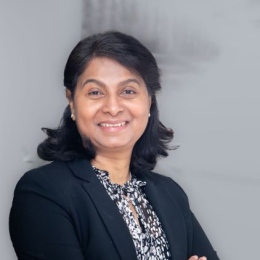
Thamani Freedom Gondo is affiliated with the Lund University Centre for Analysis and Synthesis , focusing on Food Science and Bioactive Compounds . Their work emphasizes analytical techniques for plant-based and marine food resources, particularly using supercritical fluid extraction . Key affiliations: Lund University, FORMAS-funded projects Research themes: Bioactive compound analysis, polyphenol characterization, sustainable food processing Recent publications highlight advancements in phlorotannin analysis from brown seaweeds and Lactiplantibacillus plantarum applications in non-dairy fermentation. Their 2023 work on ternary solvent systems demonstrated high selectivity in seaweed extraction.
Mehdi Abdollahi is an Associate Professor at Chalmers University of Technology's Department of Food and Nutrition Science. His research focuses on alternative proteins, food biotechnology, and plant-based hybrid foods, with emphasis on sustainable utilization of food side streams, legumes, cereals, and microalgae as future protein sources. Develops pH-shift technology and ultrasound-assisted methods for protein extraction Specializes in hybrid food engineering via fermentation and biorefinery Works on 3D food printing and high-moisture extrusion for food analogs Researches collagen and biobased food packaging materials His work includes >100 peer-reviewed publications, 4 book chapters, and 3 patents. Current projects involve collaborations with Arla Foods, Lantmännen, and Nordic Seafarm, addressing sustainable seafood systems and plant-protein hybridization. 2024 Bertebos Prize recipient 2025: Recognized among Sweden's Top 101 Sustainability Figures Mentors 7 PhD students and 3 postdocs while collaborating with European institutions like Kristianstad University and Ankara University. His group explores biorefinery strategies, hybrid food functionality, and innovative packaging solutions.
Aji Mathew is a Professor at the Department of Materials and Environmental Chemistry, Stockholm University. He holds a PhD in polymer chemistry from Mahatma Gandhi University (2001) and conducted postdoctoral research at CERMAV (Grenoble, France) and NTNU (Trondheim, Norway). His academic career includes roles as an assistant professor (2007–2011) and associate professor (2011–2015) at Luleå University of Technology before becoming an associate professor (2015) and subsequently a professor (2017) at Stockholm University. His research focuses on bio-based nanocomposites and sustainable materials, particularly nanocellulose and its applications in environmental remediation, advanced materials, and circular economy solutions. His group, the Aji Mathew Group , specializes in designing bio-based materials for diverse applications, including water treatment, 3D printing, and biomedical uses. Key projects involve upcycling textile waste, developing eco-friendly composites, and creating functional hydrogels. His work bridges fundamental polymer chemistry with practical sustainability challenges. Publications highlight innovations like nanocellulose-based foams, zeolitic frameworks for water purification, and bio-based coatings. While no awards are explicitly mentioned, his extensive peer-reviewed contributions reflect significant scholarly impact. His research emphasizes scalability and real-world applicability, addressing global environmental and material science challenges.
Professor Ingrid Undeland leads the Marine research group at the Division of Food and Nutrition Science, Department of Life Sciences at Chalmers University of Technology. She is a distinguished researcher with expertise spanning marine food science, lipid chemistry, and blue biorefining, having established herself as a leading figure in sustainable seafood research and marine biotechnology. Her educational background includes food science studies from Linnaeus University and a PhD in bioscience from Chalmers University of Technology and SIK (now RISE). Between 1999-2002, she was a post-doctoral fellow at University of Massachusetts Marine Station, which significantly shaped her research trajectory in marine food science. Professor Undeland's research focuses on pioneering next-generation seafood through innovative value chains from seaweed, small pelagic fish, fish side streams, mussels, and microalgae. Her specialized expertise lies in marine lipids and proteins, particularly their stabilization, isolation from complex sources, and nutritional properties including digestibility. She has extensive experience with antioxidant strategies using plant-derived side streams or extracts and fundamental studies of fish hemoglobins as pro-oxidants. Her work also encompasses innovative technologies for biomass fractionation and nutrient recycling to build blue biorefineries, along with in vitro digestion models and general seafood analytics. Beyond marine research, she explores filamentous fungi as sustainable alternative food protein sources. The trends in her recent publications reveal a strong emphasis on valorizing marine resources through advanced processing techniques. Her work increasingly focuses on sustainable extraction methods for seaweed proteins, particularly Ulva fenestrata, and developing antioxidant strategies using berry side streams to stabilize fish proteins. There's a growing interest in understanding the nutritional properties and digestibility of alternative marine proteins, along with environmental assessments of processing technologies. Her research consistently bridges fundamental science with practical applications for creating sustainable seafood value chains. Swedish representative in Nordic Lipidforum, WEFTA, and EuCheMS Editorial board member of Journal of the Aquatic Food Product Technology Member of the National Committee for Nutrition and Food Science at the Royal Swedish Academy of Sciences Co-founder of the startup company AquaFood H-index of 47 according to Google Scholar Professor Undeland has an extensive record of academic mentorship, having supervised or currently supervising 23 PhD students, 14 postdoctoral researchers, and examining over 25 MSc students. Her research is supported by numerous grants, including the WaSeaBi Project which focuses on valorizing seafood side-streams through holistic value chain design. She collaborates with various industry partners and academic institutions across Europe. Her laboratory includes technicians Dr. Karin Larsson and Dr. Rikard Fristedt, and she leads a dynamic research team working on multiple projects related to marine biorefining and sustainable seafood development. Her research group operates within well-equipped facilities at Chalmers University, with specialized laboratories for marine food analysis, protein extraction, lipid oxidation studies, and in vitro digestion modeling. The team also maintains cultivation systems for seaweed and filamentous fungi, enabling integrated research from raw material production to final product development.
Anders Backlund is Professor of Pharmacognosy at Uppsala University's Department of Pharmaceutical Biosciences, with dual institutional roles including Garden Director at Uppsala Linnaean Gardens. His work bridges pharmaceutical sciences and botanical heritage through the university's historic gardens. His research centers on pharmacognosy and natural products chemistry, with pioneering development of the ChemGPS-NP platform for chemical space navigation. This computational tool maps biological activity in chemical property space, enabling prediction of pharmacological effects and mechanisms of action. His work spans plant metabolomics, evolutionary chemography, and drug discovery from natural sources including marine organisms, fungi, and medicinal plants. Recent publications (2019-2023) demonstrate strong continuity in applying ChemGPS-NP to diverse problems: predicting membrane permeability of Alpinia galanga constituents (2022), evaluating Ononis isoflavonoids for CNS targeting (2022), and decoding multi-functional bioactivities in Maca (2021). His work increasingly integrates computational prediction with experimental validation across anti-inflammatory, anti-allergic, and antimicrobial domains. As Garden Director of Uppsala Linnaean Gardens, he maintains institutional connections to botanical heritage while advancing modern pharmacognosy. His dual roles exemplify the integration of historical plant knowledge with contemporary drug discovery methodologies.
Verena Siewers is a Research Professor at the Department of Biology and Biological Engineering, Chalmers University of Technology. Her work focuses on synthetic biology and metabolic engineering of yeast cell factories for producing biofuels, pharmaceuticals, nutraceuticals, and bioplastics, with particular emphasis on developing biosensor tools for pathway optimization. Key research themes: yeast-based biosensors, lipid metabolism engineering, CRISPRi/a applications, and dynamic gene regulation Notable projects include: Development of acetic acid tolerance mechanisms Optimization of fatty acid ethyl esters production Engineering phosphoketolase pathways for acetyl-CoA overproduction Her recent articles reveal trends in: CRISPR-mediated pathway engineering Stress response transcriptional profiling Heterologous plant gene expression in yeast Promoter and transcription factor engineering Funding sources: VINNOVA Novo Nordisk Foundation Carl Tryggers Stiftelse EU Horizon grants Swedish Research Council (VR) Formas
Magnus Carlquist is a Professor at the Division of Biotechnology and Applied Microbiology , Lund University, and a member of the LTH Profile Area: Food and Bio . His research focuses on biocatalysis, yeast engineering, and synthetic biology applications for sustainable biochemical production. Key Affiliations : Lund University, LTH (Faculty of Engineering), LU Microbial Flow Cytometry Labs. His work addresses UN Sustainable Development Goals like SDG 12 (Responsible Consumption and Production) and SDG 13 (Climate Action) , emphasizing bioprocess optimization and microbial engineering for bioactive compounds. Recent projects include yeast peroxisome engineering (Swedish Research Council) and sustainable alkylamine production (FORMAS). Notable research trends include CRISPR-Cas9 for reductive amination, heterologous protein expression in yeast, and flow cytometry for dynamic bioprocess control. His team investigates stress tolerance in yeast and compartmentalization strategies for capsaicinoid biosynthesis. He organizes interdisciplinary conferences on synthetic biology governance and mentors PhD students. Infrastructure managed: LU Microbial Flow Cytometry Labs.
Charlotta Turner is a Professor at the Centre for Analysis and Synthesis , Lund University , and serves as Vice Dean of the Faculty of Science . Her research focuses on analytical chemistry for sustainable development , particularly the use of green solvents such as supercritical carbon dioxide and subcritical water in extraction and separation methods. UN Sustainable Development Goals (SDGs) contributor Manager of High Pressure Fluid Facility and Mass Spectrometry Infrastructure Principal Investigator (PI) for projects like Miljövänlig superkritisk process för växtoljor and Quantitative fingerprinting of chemical contaminants in pollinating insects Her work addresses sustainable extraction of valuable substances from food, forest, agricultural, and marine industries . Recent publications highlight advancements in phlorotannin characterization , berry bioactives , and lignin molecular weight analysis . She has supervised 12 research projects and leads teams in KILU/CAS infrastructure . Turner has received multiple awards, including the Svante Arrhenius Award (2017) and Herbert Dutton Award (2015) .
Patrick Adlercreutz is a Professor at the Division of Biotechnology and Applied Microbiology, Faculty of Engineering (LTH), Lund University. He is a member of the LTH Profile Area: Food and Bio, focusing on enzyme technology applications in food systems. Research areas: Tailoring lipids, prebiotic ingredients, carbohydrate-based surfactants, oat processing Active in UN Sustainable Development Goals: Industrial Biotechnology, Biocatalysis, Food Security Current projects: Novel self-assembling lipids, rancidity control in oat processing His recent work explores enzymatic reactions in organic media and sustainable food formulation. Collaborations span interdisciplinary teams in Sweden and international institutions. Projects include Stabila liposomer för formulering av bioaktiva substanser (Gyllenstiernska Krapperupsstiftelsen, 2024-2025) and Novel self-assembling lipids for dietary fat formulation (Swedish Research Council, 2023-2027).
Dr. Marie Alminger is a Senior Researcher at Chalmers University of Technology , specializing in Food and Nutrition Science . Her work focuses on bioactive compounds in foods, sustainable processing techniques, and valorization of agricultural and marine by-products. Circular utilization of banana pulp, fish co-products, and berry residues Innovative pH-shift processing with antioxidant-rich materials International projects targeting food safety in East Africa Research trends emphasize in vitro digestion models , lipid oxidation control , and cross-processing methods integrating marine and agricultural streams. Publications span Food Chemistry , Molecular Nutrition & Food Research , and Journal of Agricultural and Food Chemistry , reflecting multidisciplinary approaches to food functionality and sustainability.
Kevin Smith is an Associate Professor at KTH Royal Institute of Technology, affiliated with the Division of Computational Science and Technology. His research focuses on applying machine learning and computer vision to biomedical problems, particularly in healthcare and medical imaging. Previously, he worked at ETH Zürich and EPFL. His work bridges AI, biology, and medicine, addressing challenges like disease diagnosis, risk prediction, and treatment optimization. Research Interests: Smith’s research spans computer vision, machine learning, and their applications in healthcare. Key areas include medical image analysis, AI-driven diagnostic tools, and privacy-preserving medical data processing. He explores topics such as tumor detection in ovarian ultrasound, breast cancer risk modeling, and MRI privacy through autoencoders. Publications & Trends: Recent work emphasizes AI-human collaboration frameworks, privacy in medical imaging, and domain adaptation for high-content data. His articles highlight advancements in transformer models for medical tasks and multicenter AI validation in breast imaging. Teaching & Roles: Smith teaches courses like Foundations of Machine Learning (DD1420) and oversees the Applied Programming and Computer Science program. He mentors MSc students in topics like medical image segmentation and risk prediction. Affiliations: He is part of the Science for Life Laboratory and contributes to KTH’s collaborative research ecosystem, including the VAI-B platform for AI validation in breast imaging.
Rikard Landberg is a Professor at Chalmers University of Technology's Department of Food Science, specializing in Food and Health research. His work focuses on the effects of food components on health outcomes, particularly plant-based diets, cardiometabolic risk factors, and biomarkers development. His group uses nutritional metabolomics (MS and NMR techniques) to identify biomarkers for dietary exposure and disease risk. Collaborations span international teams in statistics, epidemiology, and medicine. Key research themes include appetite regulation, hormone metabolism, and gut microbiota interactions. Landberg leads projects analyzing dietary patterns, metabolic responses, and translational studies linking food science to clinical outcomes. Research Interests: Plant-based diets and cardiometabolic health Metabolomics-based biomarker discovery Wholegrain and fiber impacts on obesity/diabetes Food component bioavailability Personalized nutrition strategies Recent Work Trends: 2025 publications emphasize mechanistic studies of dietary fibers (SCFAs, alkylresorcinols), randomized controlled trials on probiotics and Mediterranean diets, and population studies linking meat/plant metabolites to cardiovascular risks. His work bridges basic science with public health applications, often using multi-omics approaches. Grants & Collaborations: Active in EU-funded projects like LongITools and CRCbiome, involving multi-institutional teams across Europe. His lab collaborates with clinical groups on ADHD dietary interventions and cancer biomarker studies.
Bengt-Gunnar Jonsson is a Professor in the Department of Biology at Mid Sweden University's School of Natural Science, Design and Sustainable Development. With over 25 years of research experience, he specializes in boreal forest ecology, deadwood dynamics, and biodiversity conservation. His work focuses on wood-inhabiting fungi , lichen communities , and forest fragmentation effects , particularly in northern Sweden's high conservation value forests . Jonsson has been pivotal in developing green infrastructure models and climate-adaptive forestry strategies . Key research themes: forest conservation, fungal ecology, climate change mitigation, deadwood management Research tools: presence-absence sampling, Bayesian modeling, long-term ecological monitoring Policy contributions: EU Biodiversity Strategy evaluations, IPBES initiatives His recent publications (2025-2020) demonstrate sustained expertise in forest carbon dynamics , saproxylic community analysis , and landscape-scale conservation . Jonsson frequently collaborates with international researchers on temperate and boreal forest biodiversity , with notable work on functional ecology and ecosystem service trade-offs . Current projects include 'Climate - collaborative learning initiative' and 'Functional green infrastructure in boreal forests' . Scientific contributions span multiple systematic reviews in environmental management, including Forest Ecology and Management and Environmental Research Letters . He has co-authored Cambridge University Press 's Biodiversity in Dead Wood and contributed to IPBES policy frameworks. Jonsson's research integrates empirical forest monitoring with theoretical ecological modeling , particularly in wood decomposition processes and fungal community dynamics .
Hasil Aman serves as a Research Fellow in the Department of Medicinal Chemistry; Drug Design and Discovery at Uppsala University, focusing on pharmaceutical innovation through chemical synthesis and computational modeling. His work addresses critical challenges in therapeutic development. Research spans core areas of modern drug development: Medicinal Chemistry: Molecular design and optimization of bioactive compounds Drug Design: Structure-based and ligand-based computational approaches Drug Discovery: Target identification to lead compound validation Pharmaceutical Sciences: Translational research bridging chemistry and biology
Henrik Pavia is a Professor at the University of Gothenburg's Department of Marine Sciences, specializing in Marine Chemical Ecology. His research explores chemical interactions in marine organisms, focusing on bioactive compounds, aquaculture applications, and ecological dynamics. Co-ordinator for CeMaCE (Centre for Marine Chemical Ecology) Deputy Head of Department Key research areas include: Chemical defense mechanisms in marine algae Protein extraction from seaweeds Seaweed-based aquaculture innovations Antifouling compound development Marine microbiome interactions Recent publications highlight collaborations on seaweed cultivation optimization, waste valorization in aquaculture, and environmental impacts of biomass management. He contributes to advancing sustainable marine resource utilization through interdisciplinary approaches combining chemistry, ecology, and aquaculture. As Deputy Head of Department, he plays an active role in institutional leadership while maintaining a strong research profile in marine chemical ecology and its practical applications.