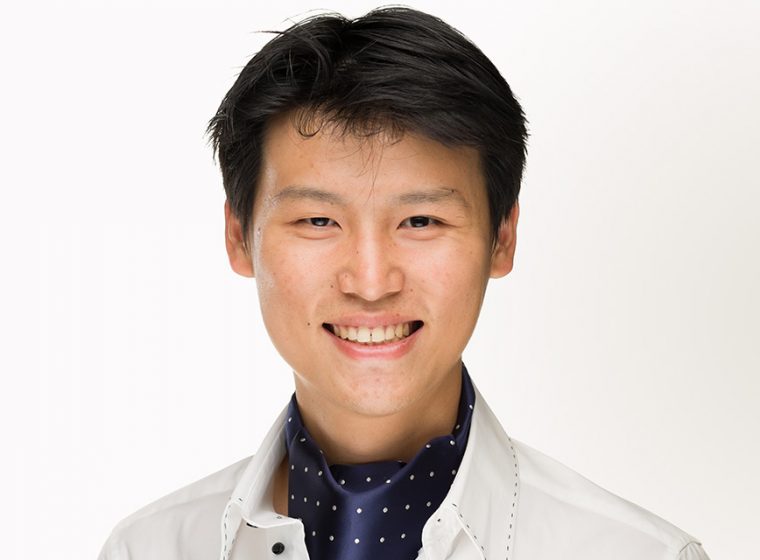
Timothy E. Long is a Professor at Arizona State University (ASU), holding joint appointments in the School of Molecular Sciences and the School for Engineering of Matter, Transport, and Energy . He serves as Director of the Biodesign Center for Sustainable Macromolecular Materials and Manufacturing . Long earned a B.S. in Chemistry from St. Bonaventure University (1983) and a Ph.D. in Chemistry from Virginia Tech (1987). His research focuses on sustainable polymer design, additive manufacturing (3D printing), and green chemistry principles. Key interests include developing degradable polymers, functional materials for advanced technologies, and integrating 3D printing with polymerization processes. He emphasizes circular economy principles, aiming to reduce environmental impact through recyclable and biodegradable materials. Long’s publications span over 200 peer-reviewed articles, with recent work addressing photopolymerization of latexes, non-isocyanate polyurethanes, and electroresponsive hydrogels. His group collaborates across disciplines, including chemical engineering, materials science, and biochemistry, promoting diversity in thought and innovation. He leads initiatives in ASU’s Biodesign Institute and teaches advanced courses in polymer science and sustainable materials. His research group actively engages in conferences and industry partnerships to translate fundamental research into practical applications.
Brenda Parker serves as Associate Professor in the Department of Biochemical Engineering within University College London's Faculty of Engineering Sciences. She co-founded the Bio-Integrated Design Lab (Bio-ID) with Professor Marcos Cruz from the Bartlett School of Architecture, establishing an internationally recognized research platform exhibited at Centre Pompidou, London Design Festival, and Venice Biennale. Her academic journey began with an MEng in Biochemical Engineering from UCL, including specialization in microbial ecology at Caltech, followed by PhD research on non-natural amino acid synthesis via BBSRC CASE studentship with Dowpharma. Her research focuses on sustainable bioprocess design and bio-integrated architecture, addressing industrial biotechnology scalability through algal biotechnology, bioremediation systems, and circular biomaterials. The Bio-ID Lab's work spans microbiome-inspired green infrastructure, robotic fabrication of biohybrid materials, and sustainable sound absorption solutions – exemplified by the INDUS algal bioremediation project winning the Water Futures Design Challenge and Beazley Designs of the Year shortlist. Current teaching includes leadership of UCL's second-year Design and Professional Skills course and directorship of the radical interdisciplinary MSc in Bio-Integrated Design. Key Awards: Churchill Travelling Fellowship (2014) Public Engagement Award from Society for General Microbiology (2011) Royal Academy of Engineering Leadership Award Professor Parker actively mentors through her MSc program while leading research collaborations with Shell (Algal Biotechnology Consortium), Cambridge Water, and EU-funded projects including Energetic Algae and Innovation in Crops. Her Bio-ID Lab maintains strong industry partnerships through Phytofutures Ltd commercialization efforts. The lab's multidisciplinary approach integrates biochemical engineering with architectural design, creating novel platforms for urban ecosystem health and sustainable material innovation through living systems.
Mirela Alistar is an Assistant Professor at the ATLAS Institute and the Department of Computer Science at the University of Colorado Boulder. She leads the Living Matter Lab , focusing on cyber-physical systems based on biochips to revolutionize healthcare diagnostics. Her interdisciplinary work bridges computer science, engineering, biotechnology, and bioart. Education : PhD in Embedded Systems Engineering (2010-2014, Technical University of Denmark), Postdoc in Human-Computer Interaction (2015-2018, Hasso Plattner Institute). Her research advances digital microfluidics and fault-tolerant biochips , enabling at-home diagnostic tools like OpenDrop . She also explores bioart through installations such as Semina Aeternitatis and Perfume Distillation Machine . She co-founded >top , a Berlin-based art & science project space, and advises startups digi.bio and bold.health . Her UIST'16 Honorable Mention Award highlights her innovative contributions. The Living Matter Lab under her leadership investigates interactive biodesign , combining technical precision with creative exploration of living systems.
Dr. Mustafa Demir serves as an Associate Research Scientist at Arizona State University's Biodesign Center for Applied Structural Discovery and Faculty Associate in the Ira A. Fulton Schools of Engineering. His interdisciplinary work integrates cognitive science and engineering to optimize human-AI collaborative systems across healthcare, transportation, and defense domains through human-centered design principles. Education: Ph.D. in Simulation, Modeling, and Applied Cognitive Science, Arizona State University (2017) Dr. Demir's research centers on human-machine teaming dynamics, employing advanced statistical and nonlinear dynamical systems modeling. His expertise includes quantum cognitive approaches to decision-making, team cognition analysis, and machine learning applications for real-time physiological monitoring. Current projects focus on AI-powered stress management tools, curiosity-driven STEM education systems, and human-autonomy coordination in driving and command environments using eye-tracking and biometric sensing. Analysis of his 2023-2025 publications reveals methodological innovation in dynamical systems analysis (DSA Toolbox) and quantum probability modeling applied to trust calibration in autonomous vehicles, educational technology, and digital health interventions. His work consistently bridges theoretical modeling with real-world implementation in complex sociotechnical systems. Dr. Demir mentors students in cognitive engineering and applied data science while leading multi-institutional research initiatives funded by NSF, AFRL, and DARPA. His grant portfolio supports experimental work across simulated and operational environments including remotely piloted aircraft systems and urban search-and-rescue scenarios. He contributes to the Biodesign Center for Applied Structural Discovery and HLA-Inception research group, developing computational models of team interaction and adaptive AI systems for healthcare and education applications.
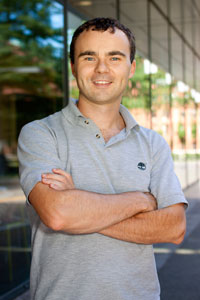
George Stephanopoulos is a Professor at Arizona State University (ASU) with joint appointments in the School of Molecular Sciences and the School for Engineering of Matter, Transport and Energy. He also holds the Arthur D. Little Post-Tenure Professorship in Chemical Engineering at the Massachusetts Institute of Technology (MIT). His research focuses on process systems engineering, including process synthesis, optimization, control, and systems approaches to manufacturing, transportation networks, and nanotechnology. Stephanopoulos has authored/co-authored seven books and over 210 papers. He is a Fellow of multiple prestigious institutions, including the American Academy of Arts and Sciences and the American Institute of Chemical Engineers. Education : Diploma in Chemical Engineering, National Technical University of Athens (1970) M.E., McMaster University (1971) Ph.D., University of Florida (1974) Awards : National Academy of Engineering (1999), Foreign Member of Russian Academy of Technological Sciences (1991), Ragazzini Award (2009), Honorary Doctorate from McMaster University (2002), among others. Professional Experience : Professor at MIT since 1984 (Arthur D. Little Chair) Chief Technology Officer and Managing Executive Officer at Mitsubishi Chemical Corporation (2000–2002) Adjunct roles at ASU and the Biodesign Center for Molecular Design and Biomimetics Teaching : Courses include introductory research techniques and honors directed studies in chemistry and biochemistry.
Franca Trubiano is an Associate Professor of Architecture and Graduate Group Chair of the PhD Program in Architecture at the University of Pennsylvania's Weitzman School of Design. She is also a Registered Architect with l'Ordre des Architectes du Québec and co-director of Penn's Mellon-funded Humanities + Urbanism + Design (H+U+D) Initiative. Her work bridges academic research with practical applications in architectural design, building technology, and ethical considerations in the construction industry. Dr. Trubiano received her PhD in Architecture from the University of Pennsylvania in 2005, following M.Arch and B.Arch degrees from McGill University. Prior to her appointment at Penn, she served as Assistant Professor at the Georgia Institute of Technology (2004-2009) and as the McMahan Visiting Associate Professor at Clemson University (2003-2004). Her research focuses on the intersection of architecture, ethics, and environmental responsibility. Dr. Trubiano investigates how building practices impact human health, labor conditions, and environmental sustainability. Her work examines the role of fossil fuels in building materials, forced labor in construction supply chains, and the ethical responsibilities of architects in addressing these critical issues. She approaches these topics through both theoretical frameworks and practical design solutions, emphasizing the need for architects to 'think through building' as a fundamental aspect of architectural practice. Dr. Trubiano's publications reveal a consistent trajectory toward addressing pressing social and environmental challenges through architectural research and practice. Her recent work has increasingly focused on material health, ethical building practices, and the connections between fossil fuel dependence and architectural design. She has made significant contributions to understanding how building materials affect human health and how architectural education and practice can address labor exploitation in the building industry. Her edited volumes often highlight underrepresented voices, particularly women in architecture, and explore innovative approaches to sustainable design. G. Holmes Perkins Award for Distinguished Teaching (2014) Sejong Outstanding Scholarly Book Award for 'Design and Construction of High-Performance Homes' (2015) Outstanding Interdisciplinary Activity Award at Georgia Tech (2008) Outstanding Teacher Award from College of Architecture at Georgia Tech (2007) ARCC Best Conference Paper Award (2005) ACSA/COTE Top Ten Student Award for student work from her studio (2015) COTE Award for student work from her studio (2009) As Graduate Group Chair of the PhD Program in Architecture, Dr. Trubiano mentors doctoral students researching diverse aspects of architectural theory, history, and technology. Her research is supported by significant grants including funding from the Mellon Foundation for the Humanities + Urbanism + Design Initiative, the Kleinman Center for Energy Policy for research on 'Fossil Fuels, the Building Industry, and Human Health,' and Penn's Perry World House for research on 'Migration, the Building Industry and Forced Labor.' She was also a Principal Investigator for the Consortium for Building Energy Innovation (CBEI), a Department of Energy-funded project that developed Advanced Energy Integrated Design Roadmaps for the architecture, engineering, and construction industry. Dr. Trubiano leads the 'Building at Risk' research project and policy initiative, which addresses human and environmental risks associated with architectural design and construction. This initiative convenes architects, engineers, builders, clients, and policymakers to address issues including material toxicity, forced labor, urban migration, building failures, and governance failures in the building industry. Through this work, she seeks to influence policy changes that address the impact of fossil fuels, climate change, and labor practices on human health and social justice.
Rider W. Foley is an Associate Professor in the Science, Technology & Society program at the University of Virginia's Department of Engineering and Society. He directs the Policy Internship Program and leads the '4C Project' on Cultivating Cultures of Ethical STEM education, collaborating with institutions like Notre Dame and Arizona State University. His research focuses on societal-technology intersections, including ethical STEM education, innovation governance, sustainability challenges, and urban techno-politics. Foley holds a Ph.D. in Sustainability from Arizona State University, a Master's in Environmental Management from Harvard, and a B.S. in Environmental Science from the University of New Hampshire. Prior to academia, he worked in environmental consulting and emergency response for Triumvirate Environmental Inc. His work spans themes like responsible innovation, wicked problems, and policy interventions for equitable technological development. Education: Ph.D. in Sustainability, Arizona State University M.S. in Environmental Management, Harvard University B.S. in Environmental Science, University of New Hampshire His research interests emphasize 'wicked problems' requiring interdisciplinary solutions, such as nanotechnology governance, smart city equity, and energy infrastructure ethics. He co-leads the 'Nano and the City' thematic cluster at Arizona State's Center for Nanotechnology in Society and collaborates with the Sustainability Science Education program at the Biodesign Institute. Recent projects include evaluating innovation ecosystems for wearable medical devices and analyzing the Atlantic Coast Pipeline's societal impacts through public values theory. Foley's academic contributions bridge theory and practice, with a focus on pedagogy (e.g., concept mapping for learning outcomes) and participatory methods (e.g., community-governed network commons). He explores how education and policy can align technological advancements with societal needs, particularly in marginalized communities. His work on anticipatory governance frameworks aims to preempt ethical challenges in emerging technologies like geoengineering and synthetic biology. His advising and grants include collaborations on the '4C Project' and 'Nano and the City,' leveraging partnerships between academia, industry, and policymakers. Current efforts involve refining methodologies for assessing student learning in engineering ethics and advancing frameworks for sustainable innovation in arid regions. Foley is affiliated with the Center for Nanotechnology in Society and contributes to initiatives like the Secure Affordable Sustainable Edge Clouds (SASEC) for smart cities.
Dr. Kuan Yee Han is a Research Fellow at Tembusu College and Assistant Dean of Students in the Office of Student Affairs at the National University of Singapore (NUS). He holds a B.Eng (Hons) in Mechanical Engineering and a Ph.D. in Biomedical Engineering from NUS. His academic journey includes leadership roles in the NUS Students’ Union and work at Voyage Medical, Inc. in Silicon Valley, shaping his focus on medtech engineering. His research explores cardiovascular hemodynamics, medical device design, and renal disease solutions, with projects at the Singapore-Stanford Biodesign Program. Dr. Han’s teaching emphasizes negotiation, ageing, and experiential learning. He co-facilitates negotiation workshops and is a certified LEGO® SERIOUS PLAY® facilitator, promoting innovative educational methods. His pedagogical approach integrates authentic learning and hands-on activities to enhance student engagement. **Awards:** AY18/19 Residential Colleges Teaching Excellence Award AY17/18 Residential Colleges Teaching Commendation Certificate **Advising & Grants:** Dr. Han mentors student coaches and oversees out-of-classroom learning initiatives. His current role in the Office of Student Affairs involves strategic student welfare and academic support programs. **Labs/Teams:** He contributed to the Singapore-Stanford Biodesign Program, focusing on medical device development for end-stage renal disease patients.
Anca Delgado is an Associate Professor of Environmental Engineering at Arizona State University, affiliated with the School of Sustainable Engineering and the Built Environment and the Biodesign Swette Center for Environmental Biotechnology. She also participates in the ASU Water Institute. Ph.D., Microbiology, Arizona State University, 2013 B.S., Microbiology, Arizona State University, 2008 Her research focuses on leveraging natural and synthetic microbiomes to address environmental challenges, particularly in bioremediation , microbial chain elongation , bioweathering/biomining , and environmental analytical chemistry . Projects include contaminant transformation, soil/water quality improvement, and bioproducts from waste. Recent publications highlight interdisciplinary work in soil microbiology, bioreactor engineering, and environmental contaminant management. Key trends include integrating chemical oxidation with microbial processes, optimizing bioremediation technologies, and advancing analytical methods for environmental monitoring. Faculty Fellowship Program in Israel, JNF-USA, 2022 Serving University Needs (SUN) Award, ASU, 2021 Special Congressional Recognition, AZ, 2019 Quentin Mees Research Award, AZ Water Association, 2019 Outstanding Faculty Mentor Award, ASU, 2018 Delgado advises Ph.D. and M.S. students in Biological Design, Civil Engineering, and Environmental Engineering programs. Her lab collaborates with institutions like the Biodesign Swette Center and researchers such as Rosa Krajmalnik-Brown.
Ena Naito is an interdisciplinary design researcher affiliated with Aalto Studios at Aalto University's School of Arts, Design and Architecture. Her work bridges biology, design, and co-learning, focusing on sustainability competencies in makerspaces and bio-based material innovation. MA in Contemporary Design with CHEMARTS, Aalto University BFA in Fine Art, University of Oxford, UK Research interests include: Biodesign Biomaterials Sustainability education Infrastructural design Alternative socio-cultural knowledge systems for environmental sustainability Her recent publications analyze biodesign integration in fabrication settings, emphasizing collaborative methodologies and bio-based material exploration. Key themes span educational infrastructure, digital fabrication, and art-science intersections. Scientific recognition: Outstanding Science Award at Biodesign Challenge DipWrap team award at Biodesign Challenge
Gyungju Chyon is a Senior Lecturer in the Department of Design at Monash University, specializing in the interplay between designed objects, environments, and human experiences through material experimentation. Her work emphasizes natural phenomena and sustainable material innovations, blending art, design, and science. She co-founded Little Wonder, collaborating with global brands like Rosenthal and Interface, and her installations have been exhibited worldwide. Education: PhD in Design (RMIT University), MFA in Interior Architecture (Aalto University), BFA in Industrial Design (Hongik University). She previously taught at Parsons School of Design and held leadership roles in Melbourne's design community, including with Craft Victoria and Melbourne Movement. Research focuses on material agency, sensorial experiences, and eco-conscious design, with recent projects exploring mycelium-based materials and biodynamic systems. Awards include the 2023 Designers Australia Award and a Dezeen Award Longlist for Phenomenal Fungi. Active in public engagement, she participated in panels like Circular Matters (2023) and contributed to media features on mycelium design trends. Current projects include Mycoustics (2022), a research initiative exploring sound and material interactions.
Dr. Scott Sayres is an Associate Professor at Arizona State University (ASU), affiliated with the School of Molecular Sciences and the Biodesign Center for Applied Structural Discovery. His research focuses on the interaction of light and matter, particularly using ultrashort laser pulses to study electron dynamics in chemical reactions. He earned a Ph.D. in Chemistry from Pennsylvania State University (2010) and a B.S. in Mathematics and Chemistry from Shippensburg University (2004). His work combines electron, ion, and photon detection methods to explore fundamental processes in clusters and molecules under strong-field excitation. Key research areas include ultrafast pump-probe spectroscopy, strong-field ionization, and the photodynamics of metal oxide clusters. His lab investigates phenomena like Coulomb explosion, Rydberg excitons, and proton transfer in formic acid clusters. The Sayres Lab hosts a research website at sayreslab.asu.edu . Teaching responsibilities include courses like Physical Chemistry I (CHM 345), Research Techniques (CHM 392/BCH 392), and Honors Thesis supervision. While no formal student advisees are listed, his research group actively explores experimental and theoretical aspects of cluster dynamics. Notable publications span 2010–2025, with recent work on copper oxide clusters, pseudocarbynes, and formic acid dynamics. His research bridges physics and chemistry, emphasizing ultrafast phenomena at the nanoscale.
Brenda Hogue is a Professor in the School of Life Sciences and the Biodesign Center for Applied Structural Discovery at Arizona State University. Her research focuses on coronavirus assembly, viroporin function, and structural biology using advanced techniques like cryo-electron microscopy and X-ray free electron lasers (XFELs). She collaborates across disciplines to develop therapeutic targets and vaccines. Education: Postdoctoral Fellowship, UCLA School of Medicine (NIH NRSA, 1987–1989) PhD, University of Tennessee, Knoxville MEd, Duke University Research Interests: Coronavirus assembly mechanisms at intracellular membranes Role of viroporins in inflammation and viral release XFEL-based structural studies of viruses and proteins Her work bridges virology, structural biology, and engineering, with applications in antiviral drug design. Articles: Focus on structural analysis of viruses using XFELs, protein localization, and vaccine component development. Awards: 2014 ASU Devils’ Advocates Apple Polishing Faculty Recognition 2013 ASU Commission on the Status of Women Award 2013 Excellence in Diversity Nominee Grants/Advising: Leads NIH- and NSF-funded projects on viral structure, collaborates with engineers, and mentors students in virology and structural biology. Labs/Teams: Active in the Biodesign Center and XFEL facilities at SLAC and European XFEL.
Navish Wadhwa is an Assistant Professor in the Department of Physics at Arizona State University (ASU). He holds affiliations with the Biodesign Center for Mechanisms of Evolution and the Center for Biological Physics. His research focuses on the biophysical mechanisms underlying bacterial behavior, particularly how physical forces influence microbial systems. Wadhwa completed a postdoctoral fellowship at Harvard University and earned his Ph.D. in Physics from the Technical University of Denmark. Education: Postdoc, Harvard University Ph.D. Physics, Technical University of Denmark Research Interests: The Wadhwa lab investigates forces in biological systems, including bacterial motility, mechano-sensing, and flagellar motor dynamics. Techniques include biophysical experiments and theoretical modeling. Recent Trends in Articles: Recent work explores propulsion mechanisms in bacteria, fluid dynamics of microbial movement, and structural biology of flagellar components. Key themes include mechano-adaptation in nanomachines and imaging innovations for high-resolution analysis. Awards/Grants: Research supported by NIH, Arizona Biomedical Research Centre, and the Biological Integration Institute. Advising & Labs: Advises graduate students like Farhad Javi and Shajeda Begum. Lab activities include studies on bacterial surface migration and nanomotor dynamics.
Conor J Walsh is the Paul A. Maeder Professor of Engineering and Applied Sciences at Harvard University's John A. Paulson School of Engineering and Applied Sciences (SEAS). He is also an Associate Faculty Member at the Wyss Institute for Biologically Inspired Engineering. His research focuses on soft wearable robotics, biomechanics, and their applications in healthcare and rehabilitation. Walsh leads the Walsh Biodesign Lab, which develops innovative wearable devices for individuals with mobility impairments, including stroke survivors and Parkinson’s patients. His work emphasizes translating engineering solutions into clinical practice through collaborations with clinicians and industry partners. Key research areas include soft robotic exosuits, wearable sensors, and assistive technologies for neuromuscular disorders. His lab has pioneered devices like ankle and back exosuits that improve walking speed and reduce energy expenditure. Notable projects include a soft robotic apparel to alleviate freezing of gait in Parkinson’s patients and a propulsion neuroprosthesis for post-stroke gait training. Walsh's interdisciplinary approach integrates biomechanics, machine learning, and materials science to address complex mobility challenges. Walsh’s lab is located at 150 Western Ave, Allston, MA, with affiliations spanning SEAS, Wyss Institute, and affiliated medical centers. His educational contributions include courses in materials science, robotics, and bioengineering. Despite no explicitly listed awards, his impactful research has been highlighted in prominent news outlets for innovations like the Harvard Move Lab’s wearable exosuits for stroke survivors. Advising and grants are not detailed in the provided text, but his lab’s extensive publications indicate active research funding. The Walsh Biodesign Lab collaborates with industry partners to commercialize technologies, such as the Move Lab’s exosuit for industrial workers. Future work focuses on personalized rehabilitation systems and AI-driven adaptive assistance for neurological disorders.