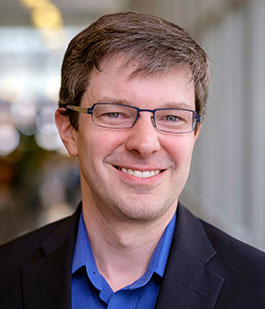
Michael McAlpine is a Professor in the Mechanical Engineering department at the University of Minnesota . He also holds affiliations with the Biomedical Engineering and Electrical and Computer Engineering departments. His research focuses on 3D printing functional materials & devices , Nanoscale inks , Biomedical devices , Bioelectronics , and Flexible Microsystems . Research Interests : 3D Printing, Biomedical Engineering, Nanotechnology, Flexible Electronics, Microfluidics Labs : ME 361/363 Contact : mcalpine@umn.edu , (612) 626-3303, ME 117 Recent Research Trends include 3D Printed Biomedical Devices , Flexible Electronics , and Bioprinting Applications . His work spans from Spinal Organoid Formation to Programmable Drug Release Capsules . Scientific Award : Circulation Research 2020 Best Manuscript Award
Vikram Iyer is an Assistant Professor at the Paul G. Allen School of Computer Science and Engineering and holds an Adjunct Appointment in Mechanical Engineering at the University of Washington. He co-directs the CS for Environment Initiative , focusing on interdisciplinary solutions that bridge computing, biology, and physical systems for environmental sustainability. Education : Ph.D. in Electrical & Computer Engineering (University of Washington), B.S. in Electrical Engineering and Computer Sciences (UC Berkeley) Research Interests revolve around bio-inspired wireless systems , environmentally sustainable electronics , and miniaturized autonomous robotics . His work includes: Biodegradable circuit boards Battery-free wireless sensors Insect-scale vision systems Wind-dispersed environmental monitors AI tools for sustainable design Article Trends highlight contributions to green hardware , energy-autonomous robotics , and environmental sensing networks , often integrating machine learning with physical world interaction . Awards include: NSF CAREER Award SIGMOBILE Dissertation Award Marconi Society Paul Baran Young Scholar Best Paper Awards (SIGCOMM 2016, Sensys 2018) Google/Amazon Research Awards Students advised include Kyle Johnson (NSF Fellow), Vicente Arroyos (GEM Fellow), and Qiuyue Xue (co-advised with Shwetak Patel). His lab collaborates with the Networks & Mobile Systems Lab and Urban Innovation Initiative .
Sean Wilson is a Researcher at the Georgia Institute of Technology , affiliated with the College of Engineering and the School of Electrical and Computer Engineering . He serves as the Collaborative Autonomy Branch Chief at the Georgia Tech Research Institute (GTRI) and Director of the Robotarium Lab (https://www.robotarium.gatech.edu/), which provides free remote access to robotic hardware for algorithm testing. Educational Background: B.A. in Physics and Mathematics from State University of New York at Geneseo (2012) M.S. and Ph.D. in Mechanical Engineering from Arizona State University (2017) Dr. Wilson's research focuses on remotely-accessible robotic hardware , collaborative autonomy , and control of multi-agent and swarm robotic systems . His recent publications emphasize distributed control, swarm robotics, and bio-inspired robotic behaviors. The Robotarium Lab he directs enables global access to robotics testbeds for control research. Research Themes (2014-2023): Remote-access robotics (5), swarm coordination (7), bio-inspired algorithms (3), barrier functions (2), multi-robot systems (9), and control theory (4). Sean operates from the Robotarium Lab (Office Location: CCRF B11-3133D) as part of Georgia Tech's Institute for Robotics and Intelligent Machines (IRI) core faculty. His work bridges robotics infrastructure development with theoretical control research.
Professor Matt Garratt is a faculty member at the University of New South Wales (UNSW Canberra), School of Engineering and IT, serving as AI theme lead for the Defence Trailblazer Universities initiative with over $200 million in funding. His primary research focuses on sensing, guidance, and control for autonomous systems within robotics and unmanned aerial vehicles. Garratt's research spans robotics, swarm intelligence, and autonomous systems with emphasis on bio-inspired navigation techniques and adaptive flight control. His work addresses critical challenges including terrain following using vision systems, landing UAVs on moving platforms, and developing self-organizing swarms. He integrates artificial intelligence, computer vision, and machine learning to advance unmanned systems capabilities in complex environments. Analysis of his recent publications reveals strong trends in bio-inspired UAV navigation (particularly honeybee behavior modeling) and swarm robotics applications. His work increasingly incorporates deep learning for perception tasks while addressing real-world challenges like gas plume detection and adversarial robustness in 3D vision systems. The research demonstrates consistent progression toward practical implementation of autonomous systems in dynamic environments. Professor Garratt has secured over $7.7 million in external research funding as Chief Investigator on 33 grants. He actively mentors graduate students with scholarships available for Masters and PhD research in robotics and AI, focusing on: UAV path planning and adaptive control systems Swarm robotics collective motion optimization Bio-inspired autonomous navigation techniques Computer vision for robotic perception He co-founded the UNSW Canberra AIR (AI and Robotics) Group (AIR Lab), which drives research in trusted autonomy, swarm intelligence, and AI integration for defense applications. The lab develops practical solutions for autonomous systems operating in complex, real-world environments while maintaining ethical AI frameworks.
Affiliations and Roles Professor Wang holds dual appointments as Professor of Physics and Mechanical and Aerospace Engineering at Cornell University. She is affiliated with the Sibley School of Mechanical and Aerospace Engineering and the College of Arts and Sciences. Education B.S. in Physics, Fudan University, Shanghai, China (1989) Ph.D. in Physics, University of Chicago (1996) NSF-NATO Postdoctoral Fellow, Theoretical Physics, Oxford University (1997) Visiting Member, Courant Institute of Mathematical Sciences, NYU (1997-1999) Research Her research focuses on the physics of living organisms, particularly insect flight dynamics , biophysics , and computational modeling . Key projects include: Dragonfly righting reflex mechanisms Neuro-mechanical control in fruit flies Unsteady aerodynamics and fluid-structure interactions Awards and Honors Simons Fellowship in Theoretical Physics (2020) Radcliffe Fellowship (2007) Cornell Provost's Award for Distinguished Scholarship (2005) David and Lucile Packard Fellowship (2002) Labs and Collaborations Her work integrates experimental and computational approaches, often conducted in collaboration with institutions like the Janelia Research Campus (HHMI) and the Joint Texas Experimental Tokamak (J-TEXT).
Jinho Kim is an Assistant Professor in the Department of Biomedical Engineering at Stevens Institute of Technology. He holds positions at the Charles V. Schaefer, Jr. School of Engineering and Science. His research focuses on advanced medical technologies including image-guided drug delivery systems, tissue-engineered lungs, and microfluidic diagnostic devices. He has led grants from the NSF and NIH, and his work bridges bioengineering with clinical applications. Education: PhD (2013) in Mechanical Engineering from Columbia University; MS and BS (2009, 2007) in Mechanical Engineering from Temple University. He has held roles as a Postdoctoral Research Scientist (2013–2017) and Associate Research Scientist (2017–2018) at Columbia University’s Department of Biomedical Engineering. Research Interests: Kim’s lab develops ex vivo lung regeneration platforms, minimally invasive cell replacement therapies, and smart medical devices for disease diagnosis. Recent innovations include lung-mimetic hydrofoam sealants and sound-guided pulmonary leak detection systems. Awards: NSF CAREER Award (2022) American Thoracic Society Innovation Award (2019) Columbia Translational Fellows Award (2016) Grants & Entrepreneurship: $1.2M+ in NSF/NIH funding. Participated in NSF I-Corps (2023) and secured patents for lung tissue engineering and imaging technologies. His team includes collaborations with medical device startups XYLYX BIO and Strategic Pacing Systems. Labs & Teams: Leads the Bioengineering Innovations Lab at Stevens, affiliated with the Center for Health Innovation. Active in training students through courses like BME 750 (Lab-on-a-Chip Technology) and BME 520 (Cardiopulmonary Mechanics).
William Stewart is an Assistant Professor in the Department of Mechanical Engineering at Stony Brook University. He joined the university in 2022 and leads the Soft Flyers Group laboratory. His research focuses on multimodal robotics, particularly in developing robots that integrate principles from soft robotics, biology, and science fiction to enhance capabilities in challenging environments. He holds a Ph.D. in Aerospace Engineering from North Carolina State University (2018) and has postdoctoral experience at École Polytechnique Fédérale de Lausanne (2018–2022). Prof. Stewart's work emphasizes practical modeling, rigorous experimentation, and full vehicle validation. His research interests include eclectic robot design, energy-efficient perching mechanisms, bio-inspired systems, and resilient multi-modal drones. He actively reviews for journals such as Bioinspiration and Biomimetics, Robotics and Automation Letters, and Springer Nature Applied Sciences. His educational background includes degrees from North Carolina State University: a B.S. (2012), M.S. (2014), and Ph.D. (2018), all in Aerospace Engineering. His professional experience combines academic leadership with advanced robotics research, contributing to innovations in aerial, ground, and underwater robotics.
Kevin T. Turner is the John Henry Towne Department Chair and Professor of Mechanical Engineering and Applied Mechanics at the University of Pennsylvania's School of Engineering and Applied Science, with a secondary affiliation in Materials Science and Engineering. He leads the Turner Research Group, which investigates mechanics, materials, and manufacturing challenges, specializing in micro/nano-systems, adhesion, fracture mechanics, and advanced manufacturing. His research focuses on three primary thrusts: Materials with programmable mechanical properties (e.g., electroadhesives for robotics) Fracture and adhesion in structured/heterogeneous materials Printed and flexible sensors (including biodegradable cellulose-based variants) Key projects include tunable adhesion surfaces, architected materials for damage tolerance, and additive manufacturing stress control. Turner's recent publications (2022-2023) demonstrate a strong emphasis on adhesion mechanics, robotics applications, and nanomaterial design. Trends include bio-inspired structures, machine learning optimization, and interdisciplinary approaches bridging mechanics with biomedicine and agriculture. Computational methods like physics-informed neural networks are increasingly utilized for material property analysis. He directs an active research laboratory developing novel sensor technologies and materials systems, collaborating widely across engineering and applied science disciplines.
J. Sean Humbert is a Professor at the University of Colorado Boulder, holding a courtesy appointment in the College of Engineering and Applied Science (AES). He serves as Director of the Robotics Program and Faculty Director for the Aerospace and Defense Western Colorado University Partnership Program. His research focuses on bio-inspired robotics, autonomous systems, and advanced control methodologies. Key research areas include flight dynamics, bio-inspired perception, micro-robotics, and soft robotics. He leads the Robotics and Systems Design group, affiliated with the Hypersonic Vehicles IRT. His work integrates bio-mimetic principles with engineering challenges, emphasizing robust control in unstructured environments. Recent publications span topics like soft robotic actuators, distributed sensing, and neural dynamics in robotics. His lab develops cutting-edge technologies for subterranean exploration, UAV navigation, and bio-inspired sensor systems. Collaborations include industry partnerships and interdisciplinary projects at the intersection of robotics, biology, and control theory. Awards and recognitions are not explicitly mentioned in the provided texts. Sean Humbert’s lab is located at ECES 1B14, with an office in ECES 146. His academic contributions bridge theory and application, addressing real-world challenges in autonomous systems and robotics innovation.
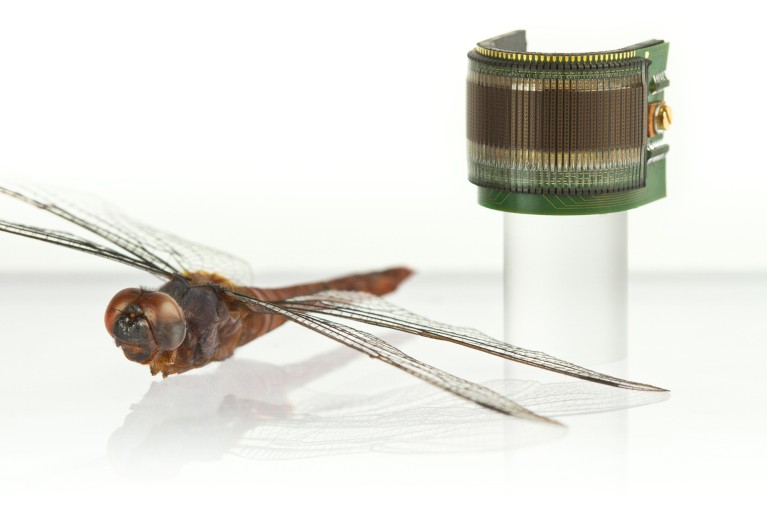
Professor Song Young-min is joining the Department of Electrical Engineering at Korea Advanced Institute of Science and Technology (KAIST) as a Professor, with his appointment beginning July 1, 2025. His research focuses on developing innovative bio-inspired optical systems for robotics, with particular expertise in biomimetic cameras and neuromorphic vision systems. Professor Song's research interests span flexible optoelectronic devices and nanophotonics, with specific applications in biomimetic cameras for intelligent robots , optoneuromorphic devices and systems , nanophotonics-based reflective displays , and infrared-controlled radiative cooling devices . His work bridges electrical engineering, materials science, and biological inspiration to create energy-efficient vision systems that reduce computational demands. His recent publications demonstrate significant advancements in bio-inspired vision technology, particularly in feline-inspired vertical pupil systems that improve object tracking stability and cuttlefish-inspired W-shaped pupil designs for uneven lighting conditions. These innovations show how hardware improvements can substantially reduce energy consumption in robotic vision systems. Professor Song has established significant research collaborations with institutions including MIT (working with Frédo Durand on the Artificial Compound Eyes with Artificial Intelligence project), EPFL, and Northwestern University. His work has been published in high-impact journals including Nature, Science Robotics, and Science Advances. His laboratory focuses on developing next-generation vision systems that integrate biological inspiration with cutting-edge optical engineering, with applications ranging from surveillance robots to autonomous vehicles. Current projects include improving wide-angle imaging capabilities and developing more efficient optic flow processing systems for drone navigation.
Calogero Maria Oddo is an Associate Professor at Sant’Anna School of Advanced Studies, affiliated with the BioRobotics Institute and Department of Excellence in Robotics and Artificial Intelligence. He leads the Neuro-Robotic Touch Laboratory, coordinating a team of 25+ researchers. His work bridges neuroscience and engineering, focusing on tactile sensing, neuroprosthetics, and biomedical robotics. He holds a national qualification as Full Professor of Bioengineering and serves in academic governance roles, including Vice-Coordinator of the BioRobotics PhD program and President of the University Committee for Equal Opportunities. His research has been featured in top journals like Nature Machine Intelligence and recognized by prestigious awards such as the Feltrinelli Prize under 40 (2023). Education BSc in Electronic Engineering (University of Pisa, 2005, 1st in cohort) MSc in Electronic Engineering (University of Pisa, 2007, Excellence Track) PhD in Innovative Technologies (Sant’Anna School of Advanced Studies, 2011) Graduate of Sant’Anna Honours College (2008, 2006) Research Interests His lab develops tactile sensors inspired by human neurophysiology, with applications in bionic prostheses, robotic surgery, and healthcare. Key areas include neuromorphic engineering, mechanotransduction, and sensory feedback systems. Collaborations span institutions like the National Research Council, University of Pisa, and international partners such as École Normale Supérieure. Grants & Awards Coordinator of €10M+ in research funding from EU, Italian ministries, and private foundations Contributions to technology transfer via RoboIT and the ARTES 4.0 Competence Center Labs & Teams Leads the Neuro-Robotic Touch Lab and collaborates with the N2Lab (National Research Council), focusing on clinical translation of tactile technologies.
Paschalis Gkoupidenis is an Associate Professor at North Carolina State University (NC State), holding a joint appointment in the Department of Electrical and Computer Engineering and the Department of Physics. He is a pioneer in organic neuromorphic electronics, focusing on emulating and interfacing biological systems with advanced electronic devices. His work bridges materials science, neuroscience, and robotics, aiming to develop energy-efficient bioelectronic interfaces and distributed intelligent circuits. Education: BSc in Physics (University of Ioannina, 2005), MSc in Microelectronics (University of Athens, 2007), and PhD in Materials Science (National Centre of Scientific Research, Demokritos, 2014). Postdoctoral research included work at the Department of Bioelectronics (EMSE, France) and the Max Planck Institute for Polymer Research (Germany), where he led a group in molecular electronics. Research interests span neuromorphic computing, biohybrid robotics, and organic materials for adaptive systems. His group develops devices emulating neural processes, enabling applications in sensors, soft robotics, and biocomputing. Notable contributions include organic artificial neurons and bio-inspired learning algorithms featured in Nature Communications and Science Advances . Awards and recognition include frequent media coverage (Scientific American, Max Planck Society Newsroom) and invited talks at MRS and SPIE conferences. He co-leads NC State’s Organic and Carbon Electronics Cluster (ORaCEL) and participates in the Chancellor’s Faculty Excellence Program. Grants and collaborations focus on interdisciplinary projects merging electronics with biology. His lab’s innovations include bio-inspired multimodal learning systems and energy-efficient bioelectronic circuits on biodegradable substrates.
Dr T. Thang Vo-Doan is a Lecturer at the University of Queensland in the School of Mechanical & Mining Engineering . He directs the UQ Biorobotics Lab and serves as an affiliate of both the Future Autonomous Systems and Technologies and the Queensland Brain Institute . PhD in Mechanical Engineering, Nanyang Technological University (2016) M.Eng. in Manufacturing Engineering, Ho Chi Minh City University of Technology (2010) B.Eng. in Mechanical Engineering, Ho Chi Minh City University of Technology (2008) His research focuses on biohybrid robotics , integrating biological systems with technology through cyborg insects , bio-inspired robotics , and fast lock-on tracking systems. He explores insect biomechanics and brain imaging in untethered insects , developing platforms for search-and-rescue missions and environmental monitoring. Recent work trends include: 2025: On-demand climbing control for cyborg beetles 2024: High-resolution insect tracking and soft textile muscles 2023: Intelligent insect–computer hybrid robots 2022: Autonomous navigation and robotic leg design 2018: Ultralightweight living robots Scientific honors: Human Frontier Science Program Cross-disciplinary Fellowship (2019-2022) He supervises projects on: Insect-machine hybrid robots Insect-inspired robotics Fast lock-on tracking Insect locomotion biomechanics Current grants include: NHMRC IDEAS Grant (2025-2028): Infrared and AI for Ross River virus surveillance Queensland Corrective Services Grant (2024-2027): Wastewater drug misuse analysis
Silvia Tolu is an Associate Professor at the Technical University of Denmark's Department of Electrical and Photonics Engineering, specializing in Neurorobotics. She leads the NeuroRobotics Technology Lab (NRT-LAB), focusing on bio-mimetic control architectures for compliant robotic systems. Her research integrates neuroscience, computer science, and biology to develop solutions for assistive robotics and neurodegenerative disease diagnosis. Her research interests span: Neuro-robotics and neuromorphic engineering Bio-inspired control systems and adaptive motor control Machine learning for robotic applications Human-robot compliant interaction Cerebellar control models Publications primarily focus on neurorobotics, bio-inspired control, and human-robot interaction, with recent advances in learning-based control systems for soft robots and aerial manipulation. Awards include the AEG Elektrofonden Research Grant and funding for human-robot interaction safety research. Current projects include LOCOPD (Lundbeck Foundation), AEROTRAIN (EU Marie Curie ITN), and compliant human-robot interaction systems. She supervises multiple PhD students in neurorobotics and maintains international collaborations across Europe and Asia. Laboratory resources include advanced robotic platforms for musculoskeletal and soft robot control.
Liam Palmer is a Research Professor of Chemistry at Northwestern University and serves as the Director of Research at the Center for Regenerative Nanomedicine. His academic journey began with a PhD in Chemistry from The Scripps Research Institute in 2005. Research Interests : Controlling materials through molecular design Directional intermolecular interactions (peptide hydrogen bonds, π-π stacking) Nano-to-macroscopic scale material engineering Biological and bio-inspired applications Self-assembly of soft materials Organic and hybrid material systems Scientific Contributions : Leading work in supramolecular polymerization pathways Innovations in light-driven actuation systems Developing bioactive nanofiber matrices Exploring ferroelectric properties in hybrid materials Advancing single-cell encapsulation technologies Investigating molecular dynamics in self-assembling systems