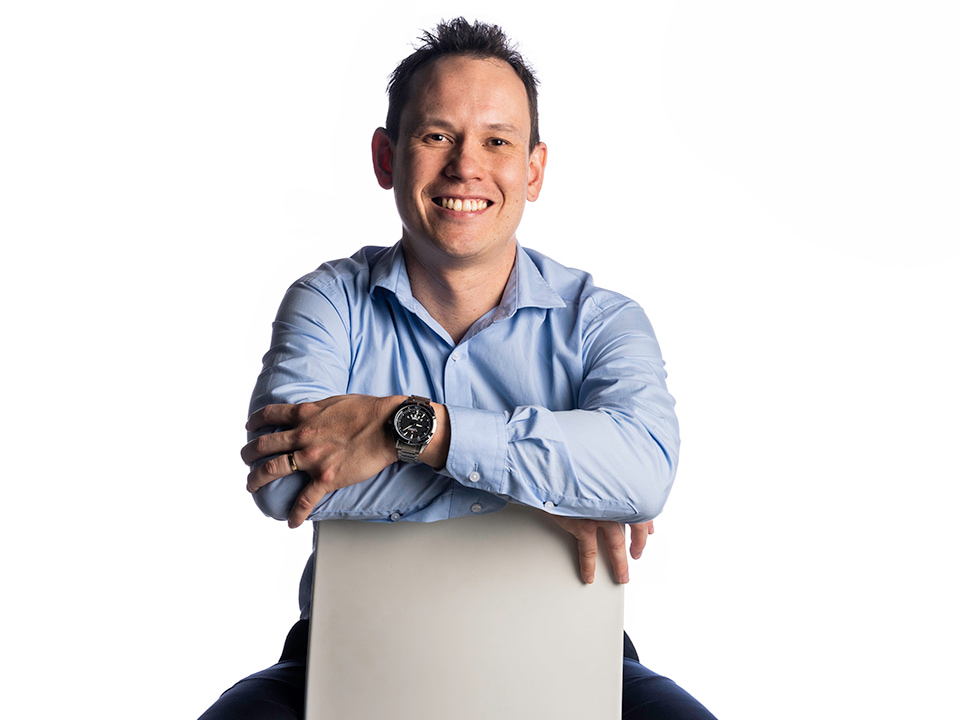
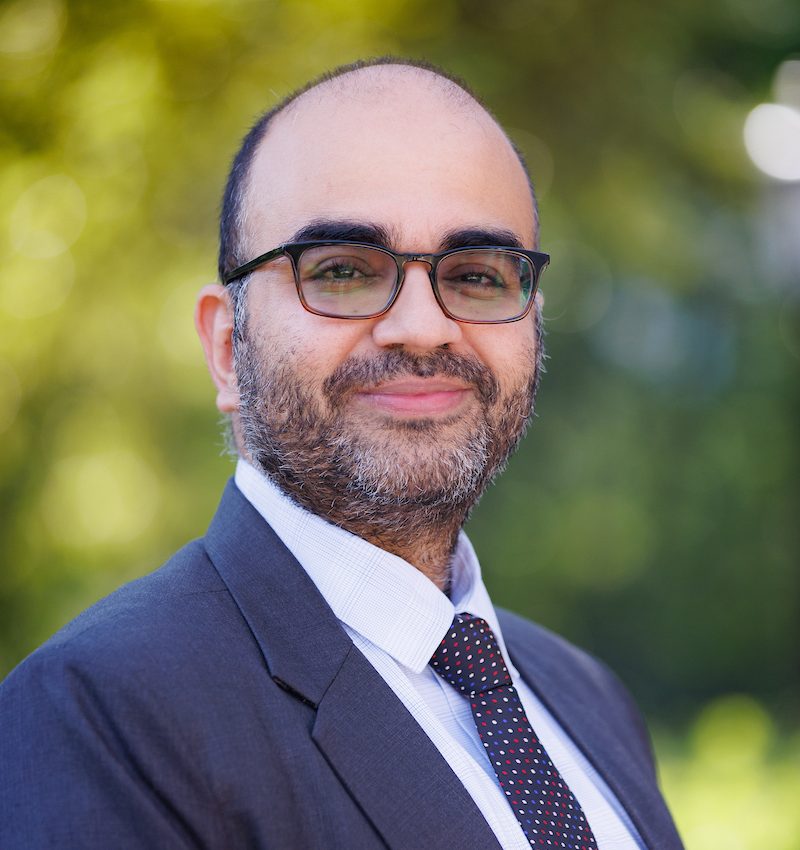
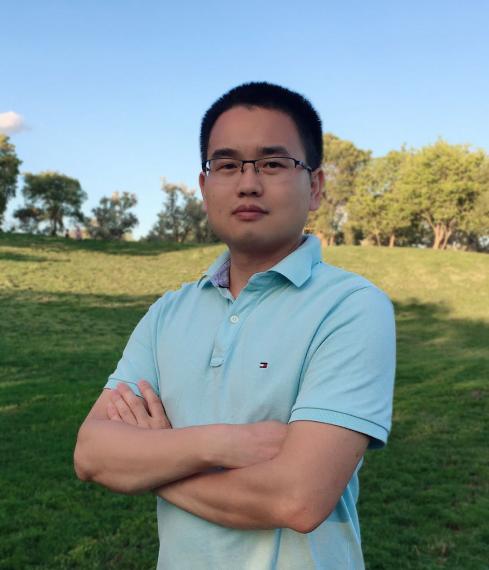
Joseph A. Campbell is an Assistant Professor in the Department of Computer Science at Purdue University, leading the Collaborative AI for Machines and People (CAMP) Lab. He holds a Ph.D., M.S., and B.S. in Computer Science and Computer Engineering from Arizona State University. Before academia, he worked as a software engineer for five years. Prior to Purdue, he was a Postdoctoral Fellow at Carnegie Mellon University's Robotics Institute. His research focuses on explainable machine learning and robotics, particularly how agents use explanations for self-improvement and decision-making. Key areas include theory of mind in multi-agent systems, lifelong learning, and interpretable transfer learning. His work bridges robotics and AI, with applications in human-robot interaction and prosthetic control. Notable publications include advancements in reinforcement learning with language models, multi-agent collaboration frameworks, and methods for enhancing state estimation in robots. His research has been presented at top conferences like NeurIPS, EMNLP, and CoRL. Dr. Campbell maintains an active GitHub profile (joe-campbell) with repositories such as Interaction Primitives for robotics applications. His lab, CAMP, explores AI systems that collaborate effectively with humans and other machines.
Leonardo Chamorro is a Professor in the Department of Mechanical Science and Engineering at the University of Illinois at Urbana-Champaign (UIUC), with affiliations in Earth Science and Environmental Change, Aerospace Engineering, and Civil and Environmental Engineering. His research focuses on fluid dynamics, renewable energy systems, and turbulence modeling. He holds a Ph.D. in Civil Engineering from the University of Minnesota (2010) and has held academic positions at UIUC since 2013, advancing to Full Professor in 2024. Chamorro's work spans experimental and theoretical investigations of wind and hydrokinetic energy, geophysical flows, and particle dynamics. His research group, the Renewable Energy & Turbulent Environment Group (RE-TE-G), explores topics like tidal flow multifractality, vortex dynamics, and bio-inspired robotics. Key achievements include Nature and Lab on a Chip cover articles, and contributions to turbulence modeling for tidal energy systems. He has received awards such as the Best Paper Award in Energies (2018) and recognition for pandemic-related research (2021). His editorial roles include associate editorships at journals like Journal of Renewable and Sustainable Energy and Frontiers in Energy Research . Chamorro has supervised numerous graduate students and postdocs, contributing to over 150 peer-reviewed publications since 2009.
Professor Michael Milford is a robotics and computer vision expert at Queensland University of Technology (QUT), serving as Joint Director of QUT's Centre for Robotics. His research bridges robotics, neuroscience, and computer vision, focusing on biologically inspired navigation systems for autonomous vehicles and drones. He has pioneered projects like SeqSLAM and RatSLAM, emphasizing the synergy between biological intelligence and robotic systems. Research Interests: Milford explores navigation algorithms inspired by animal behavior, energy-efficient neural networks, and autonomous systems. His work aims to create robots capable of operating in dynamic environments through interdisciplinary collaboration with institutions like MIT, Harvard, and NASA's Jet Propulsion Laboratory. Awards & Recognition: Awarded the 2019 Batterham Medal and a $2.7M Australian Laureate Fellowship for his project on GPS-independent positioning systems. His work has produced highly cited papers in robotics and computer vision, including breakthroughs in visual SLAM and place recognition under varying conditions. Teaching & Collaboration: Milford mentors students in robotics and AI, launching initiatives like the STEM Storybook to inspire youth. He collaborates globally, emphasizing cross-disciplinary research to bridge gaps between fundamental and applied sciences. Labs & Projects: Leads QUT's Centre for Robotics, advancing technologies for autonomous systems. His projects explore neuromorphic computing, SLAM systems, and bio-inspired navigation, with applications in defense, transport, and environmental monitoring.
Dr James Herbert-Read is an Associate Professor and Whitten Lecturer in Marine Biology at the Department of Zoology, University of Cambridge. He serves as Deputy Head of Department (Postgraduate Education) and leads the Marine Behavioural Ecology Group. His research focuses on understanding how animals, particularly marine organisms, collect and process information from their environments to make behavioral decisions, with emphasis on social interactions, adaptation mechanisms, and ecological constraints. His group employs theoretical frameworks, controlled experiments, and quantitative field studies to investigate behavioral diversity in marine species. Key themes include collective behavior, predator-prey dynamics, camouflage strategies, and the impacts of environmental stressors on animal decision-making. Recent publications highlight work on lionfish vocalization mechanisms, cuttlefish camouflage, citizen science applications in marine research, and behavioral responses to visual and acoustic noise. Scientific awards and affiliations include: Whitten Lecturer in Marine Biology Associate Professor, University of Cambridge He has supervised research projects on topics such as: Social attraction in invasive fish species Evolution of coordinated movement Neurophysiological basis for leadership in shoals Maternal effects on offspring exploration
Jim Torresen is a Professor at the Norwegian University of Science and Technology (NTNU), specializing in Computer Science, Artificial Intelligence, and Robotics. He earned his M.Sc. and Dr.ing. (Ph.D.) in computer architecture and design from NTNU in 1991 and 1996 respectively, followed by industry experience in hardware design before transitioning to academia in 1999. Research Interests: His work spans Machine Learning, Evolvable Hardware, and Ethical AI, with notable contributions to music technology, facial expression recognition, and healthcare monitoring systems. He actively explores interdisciplinary applications of AI in creative domains and clinical environments. Publications & Editorial Roles: Torresen has published extensively in journals like Frontiers in Artificial Intelligence and Genetic Programming and Evolvable Machines . He serves as a Topic Editor for Frontiers in Explainable AI and has editorial roles in robotics and biomedical AI domains.
Professor Bing Chu is an academic at the University of Southampton, actively contributing to research in control systems, robotics, and machine learning. They are a member of the Vision, Learning and Control Centre for Internet of Things and Pervasive Systems and the Centre for Robotics, focusing on interdisciplinary approaches that combine control theory with data-driven methodologies. Current research interests include: Iterative learning control Human-robot interaction Wind farm power optimization Robot behavior modeling Control system architectures Collaborative learning systems Recent publications highlight trends in data-driven control systems, human-robot interaction datasets, and optimization techniques for both continuous-time systems and wind energy applications. Professor Chu supervises multiple PhD students across robotics and electronic engineering, including Balint Gucsi, Haonan Shen, and Aleksander Wolski, while leading projects funded by Zhengzhou University and the Royal Society.
Shih-Chii Liu holds the rank of Privatdozent (Associate Professor) in the Department of Information Technology and Electrical Engineering at ETH Zürich. He is affiliated with the Institute of Neuroinformatics , a joint institute between the University of Zurich and ETH Zurich. His research focuses on neuromorphic engineering, bio-inspired neural hardware, and edge computing systems, emphasizing energy-efficient algorithms and sensor technologies. Key research areas include neuromorphic sensors for real-time data processing, sparsity-aware neural networks, and adaptive computing architectures for edge devices. His work spans applications such as speech enhancement, wearable health monitoring, and bio-inspired keyword spotting systems. He leads the Sensors Research Group, which develops neuromorphic systems integrating novel sensors, spiking neural networks, and low-power hardware accelerators. Recent projects include the DeltaKWS low-power keyword spotting IC, EFLOP computational cost metrics for spiking networks, and NeuroBench benchmarking frameworks for neuromorphic systems. His contributions emphasize bridging biological neural principles with practical engineering solutions for IoT and embedded systems. Liu teaches courses such as Neuromorphic Engineering I and collaborates on cross-disciplinary projects involving neuroprosthetics, smart wearables, and multimodal sensor fusion. His work is characterized by hardware-software co-design approaches to tackle challenges in real-time, low-latency, and energy-constrained computing environments.
Guy Hoffman is Associate Professor and Associate Director of Undergraduate Affairs at Cornell University's Sibley School of Mechanical and Aerospace Engineering. He holds faculty appointments in Aerospace Engineering, Computer Science, Information Science, and Mechanical Engineering. Hoffman earned his Ph.D. in Human-Robot Interaction from MIT and M.Sc. in Computer Science from Tel Aviv University. His research explores computational, design, and social aspects of Human-Robot Interaction (HRI), with focus areas including: Embodied cognition for social robots Anticipation and timing in HRI Nonverbal behavior in human-robot collaboration Robotics for performing arts Non-anthropomorphic robot design Publications demonstrate interdisciplinary work spanning social robotics, adaptive interfaces, inclusive design, and AI education. Recent articles explore shadow-based interaction privacy, emotional conveyance through shape-changing interfaces, and cultural aspects of robot morphology. Major recognitions include: Andrew P. Sage Best Transactions Paper Award (IEEE, 2020) Dennis G. Shepherd Teaching Award (Cornell, 2019) Best Paper Award, IEEE/ACM HRI Conference (2015) His research group develops robotic platforms like Blossom and investigates human-robot collaboration in workspaces, inclusive play for children with mixed abilities, and open-source educational tools for AI literacy.
Declan Nolan is a Senior Lecturer in the School of Mechanical and Aerospace Engineering at Queen's University Belfast. He holds a PhD (2013) on 'Defining Simulation Intent,' focusing on automating simulation workflows. Before academia, he worked at Michelin, Williams F1 (as a Stress Engineer), and B/E Aerospace (Senior Structural Engineer), specializing in composite structures and structural integrity. He currently serves as Postgraduate Research Director (since 2022) and is a member of the EPSRC Early Career Forum in Manufacturing and the Circular Economy, and UKACM board member. His research spans design-to-simulation automation, bio-inspired design, and structural impact analysis. Key projects include PROTEUS (reimagining engineering design), COLIBRI (composite research), and Biohaviour (biological development analogies). He teaches Mechanics of Materials and Computer-Aided Engineering courses. Education: PhD in Mechanical and Aerospace Engineering (2013) Affiliations: Chartered Engineer, IMechE Member Grants/Projects: 4 active research grants, including EPSRC-funded initiatives Research outputs include 45+ publications, with recent focus on propulsion system integration, parametric nacelle modeling, and CAD-based machine learning. He has received two Best Paper Awards (2019) for manufacturing research contributions.
Dr. Todd D. Murphey is a Professor of Mechanical Engineering at Northwestern University's Robert R. McCormick School of Engineering and Applied Science. He serves as Director of Transformative Research and Director of the Master of Science in Robotics Program at Northwestern, leading initiatives in computational dynamics, control systems, and robotics. His work bridges engineering, neuroscience, and biomedical applications, with a focus on developing systems that interact effectively with humans and their environments. Dr. Murphey received his Ph.D. in Control and Dynamical Systems from the California Institute of Technology in 2002, with a thesis titled "Control of Multiple Model Systems." Prior to that, he earned a B.S. in Mathematics, summa cum laude, from the University of Arizona in 1997. Dr. Murphey's research centers on computational methods in dynamics and control, with applications spanning neuroscience, health science, robotics, and automation. His work in the Interactive & Emergent Autonomy Lab focuses on computational models of embedded control, biomechanical simulation, dynamic exploration, and hybrid control. The group develops mathematical approaches that lead to orders of magnitude improvement in computational efficiency for real-time implementation. Key application areas include assistive exoskeleton control, stabilization of energy networks, bio-inspired active sensing, entertainment robots, robotic exploration, and software-enabled stroke rehabilitation. Analysis of Dr. Murphey's recent publications reveals a strong emphasis on human-swarm interaction, algorithmic matter, and control of cyber-physical systems in uncertain environments. His work increasingly integrates information theory with physical systems, exploring how both autonomous and biological systems interact with environments to learn and improve behaviors. Recent trends show growing applications in rehabilitation technology, with particular focus on human-machine interaction in biomedical devices and embodied intelligence. Dr. Murphey has received numerous honors and awards for his contributions to robotics and engineering: Named Director of Transformative Research at Northwestern University (2025) Appointed IEEE Robotics and Automation Society Vice President of Publication Activities (2022) Co-recipient of Best Paper Award for IEEE Transactions on Robotics (2020) Appointed to Air Force Scientific Advisory Board (2019) Recipient of ABB Best Student Paper Award for CPL-SLAM research (2019) Cole-Higgins Award from Northwestern Engineering (2015) Dr. Murphey has supervised numerous graduate students including Taosha Fan, Giorgos Mamakoukas, and Ian Abraham, with research spanning robotic exploration using electrosense and mechanical contact, human-in-the-loop control, and shared control for rehabilitation devices. His lab has secured significant funding from the National Science Foundation, DARPA, and industry partners including Siemens and Ekso Bionics, supporting research in algorithmic matter, emergent behavior, and human-swarm collaboration. The Interactive & Emergent Autonomy Lab, led by Dr. Murphey, investigates how both autonomous systems and biological systems interact with their environments to learn and improve behaviors. Current projects include active learning and data-driven control, active perception in human-swarm collaboration, algorithmic matter and emergent computation, control for nonlinear and hybrid systems, cyber physical systems in uncertain environments, harmonious navigation in human crowds, information maximizing clinical diagnostics, reactive learning in underwater exploration, robot-assisted rehabilitation, and software-enabled biomedical devices. The lab collaborates with researchers across Northwestern and institutions including Georgia Tech, MIT, and industry partners.
Vishesh Vikas is an Associate Professor in the Department of Mechanical Engineering at the University of Alabama, College of Engineering. He is based in the South Engineering Research Center (SERC) and leads the Agile Robotics Laboratory (ARL@UA), which focuses on bio-inspired, soft, and tensegrity robotics, as well as inertial sensing and estimation. Education: PhD, Mechanical Engineering, University of Florida, 2011 MS, Mechanical Engineering, 2008 B.Tech., IIT Guwahati, 2005 His research spans autonomous systems, wearable technologies, biomedical devices, guidance and control, intelligent systems, space robotics, and engineering education . The lab’s work integrates mechanical design, sensing, and advanced control to create agile, adaptive robotic systems for unstructured environments. The recent publications highlight a strong trend in soft and tensegrity robotics , with focus on gait synthesis, locomotion planning, shape and joint estimation, and dexterous manipulation. These works combine modeling, data-driven control, and sensor fusion, often using accelerometers, IMUs, and vision for real-time feedback. The research is published in top robotics venues such as IEEE TRO, RA-L, and ASME journals. Scientific Awards: No awards explicitly mentioned in the text. Vishesh Vikas actively advises graduate students, including PhD and Master’s candidates, and has successfully guided several to thesis and dissertation completion. His lab is affiliated with multiple research centers including the Alabama Center for the Advancement of AI, Center for Advanced Manufacturing, and Center for Advanced Public Safety. He is involved in outreach and education, including mechatronics workshops and seminar hosting. Current projects include exosuits for spine support and robotic systems for mobility in extreme environments. Laboratory and Team: The Agile Robotics Lab (ARL@UA) fosters interdisciplinary research in nature-inspired robotics, combining principles from biology, mechanics, and control. The team has hosted eminent scholars and is featured in university and college news for its innovative work on wearable robotics and soft manipulators.
Dr. Sheng Yang is an Assistant Professor in the School of Engineering at the University of Guelph. He leads the Design Innovation and Intelligent Manufacturing (DIIM) lab, focusing on advancing additive manufacturing, generative design, and smart manufacturing technologies. His research integrates IoT, big data analytics, and bio-inspired design to address challenges in aerospace, green energy, and healthcare. Key areas include computational design for additive manufacturing, data-driven mass customization, and digital twin-based optimization. Education: Ph.D. in Mechanical Engineering from McGill University (2019), followed by a Postdoctoral Fellowship at McGill (2019–2020). Joined University of Guelph in 2020. Research interests span energy efficiency, complex system optimization, and personalized healthcare products. Recent work emphasizes digital twin synchronization in robotics, machine learning for quality prediction, and sustainable additive manufacturing processes. Notable awards include the 2019 Association of Commonwealth Universities Blue Charter Fellowship and 2018 ASME Best Paper Award. His lab actively seeks partnerships in personalized healthcare, product design, and smart manufacturing. Grants and collaborations focus on advancing manufacturing technologies and sustainability. No formal advisees listed, but active in graduate training through lab projects. The DIIM lab explores cutting-edge solutions for industrial and societal challenges through interdisciplinary approaches.
Vivek Boominathan is an Assistant Research Professor in the Department of Electrical and Computer Engineering at Rice University. He is affiliated with the GLEE lab (Geometry, Light, & Imaging lab). His research focuses on computational imaging, combining computer vision, machine learning, applied optics, and nanofabrication to develop innovative imaging systems for applications such as robotics, medical sensing, and virtual/augmented reality. He has contributed to projects like PhlatCam (a lensless camera) and NeuWS (neural wavefront shaping). His work bridges optics, algorithms, and materials science to overcome traditional limitations in imaging systems. Boominathan's research interests include lensless imaging, optical meta-devices, turbulence mitigation, and bio-inspired imaging systems. He has developed systems like Foveated thermal imaging prototypes and real-time lensless microscopes. His lab emphasizes interdisciplinary approaches, integrating hardware design with machine learning. Key projects include: NeuWS: Neural wavefront shaping for imaging through scattering media CoIR: Compressive implicit radar for sensing applications FlatCam and PhlatCam: Ultra-thin lensless imaging devices Bioluminescence imaging in marine species His work has been published in top venues like Science Advances, Optica, and IEEE TPAMI. He collaborates with institutions like NASA JPL and industry partners on applied imaging solutions. Current research trends emphasize sensor-algorithm co-design and high-speed imaging systems for AR/VR applications. Boominathan holds a PhD in Electrical Engineering and has extensive postdoctoral experience in computational imaging. He advises projects in the GLEE lab and mentors students in hardware-software co-design for imaging systems. His lab focuses on translating theoretical innovations into practical devices with commercial potential.
Professor Jing Meng is a leading academic at University College London's Bartlett School of Sustainable Construction, holding the position since 2023 after progressing from Lecturer (2019-2021) to Associate Professor (2021-2023). She concurrently serves as a fellow at the Cambridge Centre for Environment, Energy and Natural Resource Governance and maintains active editorial roles as Executive Editor of the Journal of Cleaner Production and Associate Editor for Journal of Geophysical Research: Atmospheres. Her research spans three interconnected domains: Energy Transitions and Technology Innovation (examining cost forecasts and structural emission declines in China), Climate Change Policies (analyzing South-South trade effects and multinational enterprise emissions), and Emission-Health-Socioeconomics Nexus (assessing air pollution impacts and integrated co-mitigation strategies). This interdisciplinary approach is reflected in her publication record across Nature family journals and PNAS. Analysis of her recent publications reveals a consistent focus on global carbon accounting methodologies, with increasing attention to subnational (city-level) analyses, health co-benefits of climate policies, and technological innovation pathways for hard-to-abate sectors. Her work frequently employs multi-regional input-output modeling to trace emissions through complex supply chains. AGU Global Environmental Change Early Career Award (2023) MIT Technology Review Innovators Under 35 Asia Pacific (2022) Clarivate Highly Cited Researcher (2020-2024) Nature Communications Top 50 Earth Sciences Article (2018) MDPI Emerging Sustainability Leader Award (2020) Environmental Research Letters Best Early Career Article (2017) Professor Meng has secured substantial funding from diverse sources including NERC, the British Council, Quadrature Climate Foundation, The Royal Society, and UCL internal grants. She leads an interdisciplinary research group focused on technology innovation and climate policy, with particular emphasis on China's role in global emissions systems. Her work directly supports Sustainable Development Goal 13 (Climate Action) through actionable policy insights.
Prof. Sander Bohte is a part-time full professor of Computational Neuroscience at the University of Amsterdam (Swammerdam Institute of Life Sciences) and an honorary full professor of Bio-inspired Neural Networks at the University of Groningen. He serves as a Scientific Staff Member and Group Leader in the Machine Learning department at CWI, Amsterdam. His work bridges computational neuroscience and machine learning with a focus on continuous-time information processing. Key research interests include: Spiking Neural Networks with predictive coding and multi-compartment models Biologically Plausible Learning in recurrent and deep architectures Working Memory modeling via reinforcement learning Neuromorphic Computing for real-time systems and GPU acceleration His recent publications highlight trends in neural adaptation , predictive coding , and SNN hardware-software co-design . Awards include the Veni Innovational Research Grant (2004) and ERCIM grant (2013) . He actively supervises MSc theses and leads grants like the NWO KIC project 'Selfhealing Neuromorphic Systems' (2024).