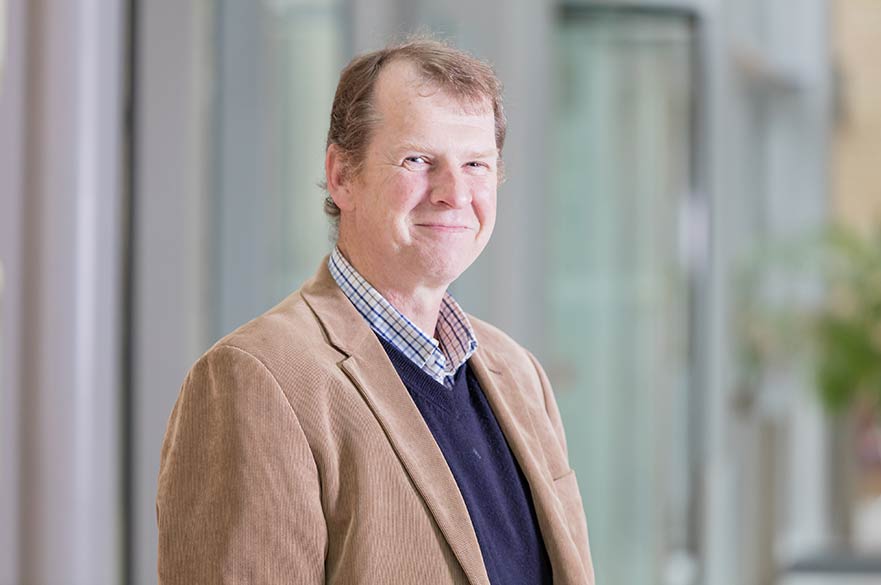
Professor Robert Hewson leads the Multidisciplinary Design Optimization research group at Imperial College London's Department of Aeronautics. His work develops computational methods for designing optimized structures across multiple scales. Hewson's research integrates topology optimization, additive manufacturing constraints, and multiphysics modeling to create novel metamaterials and aerospace components. Recent work focuses on multiscale lattice structures with tailored mechanical, thermal, and dynamic properties for aerospace applications. His publications demonstrate expertise in computational mechanics, tribology modeling, and design automation. Hewson collaborates with aerospace industry partners to translate optimization methods into practical engineering solutions.
Mirko Kovac is Professor at Imperial College London's Faculty of Engineering and heads the Laboratory of Sustainability Robotics at Empa and EPFL. His research focuses on aerial robotics for distributed sensing and autonomous manufacturing in natural environments, with expertise in robot design and multi-modal mobility. His research interests include bio-inspired aerial systems, robot-assisted construction, environmental monitoring, and multi-modal locomotion. Key innovations include aerial additive manufacturing systems and amphibious robots for ecological assessment. Research publications demonstrate strong focus on robotics applications in construction, environmental monitoring, and advanced manufacturing. Recent work explores aerial-aquatic systems, soft robotics, and sustainable material deposition techniques. Awards include multiple best paper recognitions for contributions to robotics and aerial systems. Leads the Aerial Robotics Laboratory and collaborates internationally with institutions including Harvard, EPFL, and ETH Zurich. Current projects focus on biodegradable robotics and swarm manufacturing systems.
Soumarup Bhattacharyya is a Researcher in Fluid Mechanics at the University of Edinburgh's School of Engineering. His role focuses on experimental and computational fluid dynamics, particularly investigating flow dynamics around rotating and oscillating objects, bio-inspired designs, and granular/shock phenomena. He is affiliated with the Alrick Building, A124. Research interests include aerodynamics of rotating systems, drag reduction mechanisms, turbulence modulation, and multiphase flow interactions. Key themes span dandelion-inspired flyers, tapered cylinder dynamics, and flow control over delta wings. His work bridges fundamental fluid mechanics with engineering applications. Recent studies explore secondary bubble entrapment, wall effects on cylinder wakes, and 3D vortex shedding patterns. Experimental techniques and flow visualization are central to his methodologies. No scientific awards have been listed. Advising and grant details are not provided in the available text. His research contributes to advancing fluid mechanics understanding for aerospace and environmental engineering contexts.
Lihong Lao is an Assistant Professor in the Department of Mechanical and Aerospace Engineering at Syracuse University, affiliated with the College of Engineering & Computer Science. He leads the Environmental Control Materials (ECM) Lab and is associated with the Syracuse Center of Excellence in Environmental and Energy Systems (SyracuseCoE) and the BioInspired Institute. His work bridges materials science, engineering, and sustainability, focusing on biomimetic approaches to create smart materials for thermal and moisture management in both human-centric systems and built environments. Education: Ph.D., Cornell University B.S. and M.S., Zhejiang University Research Interests: Lao’s expertise spans polymers, fibers, and textiles ; soft and smart materials ; bio-inspired design ; and innovative manufacturing techniques . His lab integrates disciplines like chemistry, electrical engineering, and architecture to address global challenges such as energy efficiency, environmental sustainability, and human health through interdisciplinary innovation. Key projects include developing 'skin-like' fabrics for moisture management and smart materials responsive to environmental stimuli. Awards: He has received the AATCC Foundation Student Research Grant, was a finalist in the Woolmark Performance Challenge, earned Six Sigma Green Belt certification as a Project Leader at Dow Chemical, and holds the Chu Kochen President Scholarship from Zhejiang University. Grants & Funding: Highlighted grants include his work on biomimetic systems and advanced materials development. The ECM Lab collaborates across departments and leverages IoT, machine learning, and artificial intelligence to optimize material performance and reduce energy consumption. Labs/Teams: Director of the ECM Lab, which emphasizes interdisciplinary research to create sustainable solutions for human and environmental thermoregulation. Affiliated with SyracuseCoE and the BioInspired Institute for environmental and energy systems innovation.
Shan Zhong is a Professor in the School of Mechanical, Aerospace and Civil Engineering at The University of Manchester. She holds a BEng and MEng from Tsinghua University and a PhD from the University of Cambridge. As the Head of the Aerodynamics Research Group, her work focuses on experimental fluid mechanics, flow control, and biofluid dynamics. Her research spans aerodynamics, turbulence, and low-Reynolds-number propulsion, aiming to enhance aerodynamic efficiency in turbomachinery and transportation systems. Supported by grants from EPSRC, Royal Society, and industry partners like Airbus and BAE Systems, her contributions include over 140 publications and the supervision of 23 PhD students. Research interests include boundary layer transition, flow separation control, fluid mixing enhancement, and bio-inspired surface patterns. Prof. Zhong is a Fellow of the Royal Aeronautical Society and leads the Laser Processing Research Centre. Her work aligns with UN Sustainable Development Goals related to clean energy and industrial innovation. Education: BEng/MEng (Tsinghua University), PhD (University of Cambridge) Affiliations: Aerodynamics Research Group, Laser Processing Research Centre Grants: EPSRC, Royal Society, Leverhulme Trust, Airbus, BAE Systems Her research employs advanced techniques like PIV and synthetic jet actuators to study complex fluid phenomena. Current projects explore flow control strategies for reducing drag and improving propulsion efficiency in aerospace and land-based systems.
Dr. Xiangyuan Carl Cui is a Research Fellow in Computational Methods at the Australian Centre for Microscopy and Microanalysis and the School of Aerospace, Mechanical and Mechatronic Engineering at the University of Sydney. He holds a PhD from the University of Salford (UK). His research focuses on computational simulations of advanced materials using density functional theory (DFT) and molecular dynamics, particularly in understanding atomic-scale phenomena in materials such as perovskites, alloys, and nanomaterials. His work bridges microscopy data with computational modeling to optimize material properties for applications in energy, electronics, and structural engineering. Key research interests include grain boundary engineering in metals, defect control in perovskite solar cells, and the development of novel functional materials through computational design. Cui has contributed to high-impact studies on titanium alloys, shear thickening fluids, and additive manufacturing processes. His publications (2025–2010) span topics such as perovskite solar cell stability, nanomaterial magnetism, and alloy microstructure optimization. He collaborates extensively with experimentalists to validate computational findings, emphasizing interdisciplinary approaches in materials science.
James Arthur is an Assistant Professor of Mechanical Engineering at Bucknell University. His research specializes in experimental fluid dynamics, particularly transport phenomena in porous media, particle image velocimetry (PIV), and atmospheric dispersion modeling. He develops advanced instrumentation for fluid flow characterization and wind tunnel systems for atmospheric turbulence simulation. Dr. Arthur's work encompasses drag reduction techniques for ground vehicles, bio-inspired flow control inspired by barn owl feathers, and tsunami mitigation strategies. Recent publications establish unified models for porous media flows and optimize micropillar biosensor performance through geometric and flow factor analysis. He teaches thermodynamics, mechanical engineering labs, and senior design courses while maintaining an active experimental research program in fluid-structure interactions and sustainable engineering solutions.
Dr. Kheng Cher Yeo is a Senior Lecturer in Information Technology at the Faculty of Science and Technology. His research focuses on interdisciplinary areas including cybersecurity, networking, image processing, control systems, and machine learning. He explores innovative solutions for IoT security frameworks, healthcare technology, and privacy-preserving systems. His work integrates machine learning with healthcare diagnostics, cybersecurity forensics, and smart city accessibility. Key research interests include: IoT Security & SDN Integration Medical Imaging & AI-Driven Diagnostics Privacy in Healthcare Systems Malware Analysis & Forensic Techniques Bio-inspired Authentication Systems Recent publications highlight advancements in: Automated respiratory disease diagnosis via lung ultrasound Cybersecurity frameworks for IoT and DDoS mitigation Privacy-by-design healthcare record management Smart city accessibility through crowdsourcing His research demonstrates a strong focus on practical applications of AI and cybersecurity in healthcare, smart infrastructure, and data protection. No scientific awards are noted in the provided texts.
Rupert C Soar is an Associate Professor in Sustainable Technologies at the School of Architecture Design and the Built Environment, Nottingham Trent University. He previously held roles including Director of Freeform Construction Ltd & the Termes Trust (2008-2010) and part-time Lecturer at the University of Greenwich (2001-2008). His research focuses on biomimetic construction, additive manufacturing, and digital fabrication, with collaborations spanning institutions like Harvard University and the Namibian National Museum. Education: BSc Hons. in Production and Operations Management (1990-1993), University of Nottingham – 1993 PERA Award recipient MSc in Manufacturing Systems (1994-1995), University of Nottingham PhD in Additive Manufacturing (1995-1998), University of Nottingham Research Highlights: Swarm Intelligence in Living Buildings: Collaborative project with Harvard and India’s Tata National Centre Freeform Construction: Mega-scale additive manufacturing for construction funded by IMRC (£1.25M) Biomimetic studies on termite mound ventilation (£421K EPSRC grant) Awards: 1993 PERA Award for research excellence (BSc) Advising & Grants: Supervised 6 PhD students across topics like acoustic absorption and smart metal structures Total research funding exceeds £3M from EPSRC, IMCRC, and industry partners Labs & Teams: Core member of the Rapid Manufacturing Consortium and Freeform Construction Group, leading interdisciplinary projects in smart materials and bio-inspired design.
Piotr Łuczak is a Researcher at the Institute of Applied Computer Science, Faculty of Electrical, Electronic, Computer and Control Engineering, Lodz University of Technology. His work bridges computer engineering, machine learning, and biomedical applications. Research spans VLSI systems for radar-based health monitoring, thermal imaging for industrial control, hyperdimensional computing frameworks, and neuromorphic approaches. Recent publications demonstrate strong interdisciplinary focus on hardware-efficient AI implementations. Article analysis shows consistent evolution in: (1) Radar-based biomedical sensing with novel signal processing; (2) Thermal imaging for industrial automation; (3) Hybrid AI models combining neural networks with symbolic methods; (4) Neuromorphic computing for edge devices; (5) Optimization techniques for efficient neural architectures; (6) Human-machine interaction systems.
Dr. Dipankar Ghosh is an Associate Professor in the Mechanical & Aerospace Engineering Department at Old Dominion University (ODU), affiliated with the Batten College of Engineering & Technology. He joined ODU in 2014 after postdoctoral roles at Caltech and the University of Florida. His research focuses on freeze-casting (ice-templating) to design hierarchical ceramics and composites for structural and functional applications, emphasizing tools for materials synthesis and characterization. Key interests include particle manipulation in suspensions, Li-ion battery materials, and high-strain rate behavior of ceramics. Education: Ph.D. in Mechanical Engineering, University of Florida (2009) M.S. in Materials Science & Engineering, IIT Kharagpur (2004) B.S. in Chemical Technology/Ceramic Engineering, University of Calcutta (2002) Research Highlights: Advanced ice-templating techniques to create bio-inspired ceramics, anisometric particle integration, and mechanical property optimization under dynamic loads. His group emphasizes interdisciplinary approaches and student mentorship, including K-12 outreach. Awards: 2010: Best Ph.D. Dissertation Award, University of Florida 2009: Outstanding International Student Award, University of Florida Advising & Grants: Mentors graduate students and collaborates on projects funded by agencies like NSF. His lab, the Laboratory of Advanced Manufacturing of Materials, focuses on translating research into industrial applications. Labs/Teams: Active in ODU's advanced materials research initiatives, emphasizing cross-disciplinary collaboration.
Jonas Kuckling is a postdoctoral researcher at the Department of Computer and Information Science, University of Konstanz, and a fellow at the Zukunftskolleg. His research focuses on artificial life and swarm robotics, particularly open-endedness in embodied collectives, integrating disciplines including biology, chemistry, physics, computer science, philosophy, and art. Dr. Kuckling obtained his doctoral degree in April 2023 from the Artificial Intelligence research laboratory (IRIDIA) at the Université Libre de Bruxelles, Belgium. His doctoral work established foundations for his current investigations into emergent collective behaviors in robotic systems. His primary research interests center on artificial life and swarm robotics, with emphasis on open-ended evolution in embodied collectives. He explores how interdisciplinary approaches can generate autonomous systems capable of continuous novelty without external direction, bridging computational models with biological principles of self-organization and adaptation. This work addresses fundamental challenges in scalability, robustness, and emergent complexity in multi-robot systems. Analysis of his recent publications reveals a concentrated focus on automatic modular design of robot swarm control software, particularly through behavior trees and optimization techniques like simulated annealing. His work progresses from theoretical frameworks (e.g., manifestos on off-line design) to practical implementations (AutoMoDe tools), with increasing integration of learning, communication, and edge computing in large-scale swarm deployments. No scientific awards are documented in available sources. Dr. Kuckling currently leads an interdisciplinary research project at the Zukunftskolleg, collaborating with experts in complex systems, artificial life, AI, and robotics to advance open-endedness in embodied collectives. No information is available regarding student advising or specific grant funding beyond his fellowship appointment.
Mengqi Shen is a Postdoctoral Research Scientist at the Data Science Institute, Columbia University. She collaborates with Professor Yading Yuan and clinicians Dr. Dawn Hershman and Dr. Meghna Trivedi to advance data science applications in cancer treatment and patient care. Her research focuses on explainable machine learning, healthcare monitoring systems, and leveraging large public health datasets. Education: Ph.D. in Industrial and Systems Engineering (Virginia Tech, 2024) Bachelor’s and Master’s in Engineering Mechanics (Dalian University of Technology, direct-entry top student) Research Interests: Data-driven decision-making in healthcare Machine learning for clinical workflows Public health surveillance systems Bio-inspired robotics (prior work) Collaborations: Active partnerships with Tumor Board clinicians to integrate machine learning into cancer treatment reviews. Her work emphasizes translational research bridging data science and clinical practice.
Mohammadmahdi Faraji is a Research Fellow at the International Iberian Nanotechnology Laboratory (INL), where he joined the Integrated Micro and Nanotechnologies Group in April 2021. His work focuses on designing and developing digital electronic systems for MEMS controllers, including precise temperature controllers, gas sensor setups using pyroelectric crystals, and customized drivers for inkjet print heads. Dr. Faraji received his PhD in Digital Systems from Sharif University of Technology, Tehran, Iran in 2020. His doctoral research proposed a distributed sound source localization system using acoustic sensor nodes and a fuzzy fusion algorithm for real-time outdoor applications. He also holds an MSc in Electrical Engineering from Amirkabir University of Technology (2013), where he designed a distributed acoustic source localizer based on wireless sensor networks. His research spans several key areas: MEMS and sensor systems design Digital signal processing and embedded systems FPGA implementation for real-time control Distributed sensor networks for acoustic localization Flexible printed electronics and nanomaterials for sensors Recent publications (2015-2022) demonstrate a progression from acoustic source localization using spiking neural networks to advanced materials for force sensing and printed electronics. His work bridges electrical engineering, materials science, and computational neuroscience. No scientific awards or fellowships are mentioned in the provided text. Dr. Faraji is a member of the Piteira Research Group at INL, contributing to projects in the Integrated Micro and Nanotechnologies Group. His current research involves developing MEMS controllers and sensor systems for diverse applications.
Miguel Salichs Sánchez-Caballero is a Full Professor at the University Carlos III of Madrid , where he serves as Director of the Master's Degree in Robotics and Automation. He is affiliated with the Robotics Lab research group within the Pedro Juan de Lastanosa Institute of Technology Development and Innovation . Department of Systems Engineering and Automation Specializes in Robotics, Human-Robot Interaction, and Biologically Inspired Systems Principal investigator on multiple robotic projects, including MENIR and Robots sociales para estimulación física, cognitiva y afectiva de mayores Supervised numerous theses on social robotics and human-robot interaction Holds a patent for a Robot para la inspección de palas de aerogeneradores His research focuses on social robotics , particularly for elderly assistance and cognitive stimulation. Key areas include biologically inspired decision-making systems , emotion recognition , human-robot emotional bonding , and adaptive behavior modeling . He works extensively with the MINI and Maggie social robots. Recent publications demonstrate strong trends in neuroendocrine-inspired robot behavior , biologically driven attention architectures , and advanced decision-making systems for social robots. The work often combines machine learning with biological modeling to create more natural human-robot interactions. As Director of the Master's program in Robotics and Automation, he plays a key role in shaping graduate education in these fields. His research has received funding from multiple European Commission and Spanish government agencies including the State Research Agency (AEI) and Ministry of Science and Innovation.