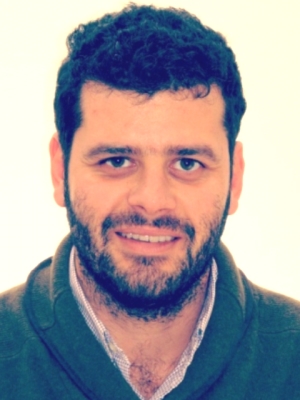
Dr. Paride Azzari is a researcher in the Sustainable Food Processing group at ETH Zurich , focusing on interdisciplinary approaches at the intersection of food science, biophysics, and soft matter physics. His work emphasizes scalable and sustainable bioprocessing techniques, particularly for microalgae and plant-based proteins. Key Research Areas : Pulsed electric field processing, liquid-liquid crystalline phase separation, and viscoelastic material behavior. Methodologies : Multiphysics simulations, experimental rheology, and open-source software development (e.g., Extrudion for tensile testing analysis). Recent publications highlight his contributions to optimizing biocompound extraction, understanding amyloid fibril organization, and advancing environmental bioremediation using agricultural waste. Notably, his work bridges fundamental soft matter research with industrial food processing applications.
Romain Claret is a Doctoral Assistant at the Institute of Information Management within the Faculty of Economics at the University of Neuchâtel, Switzerland. He is completing his PhD in Computer Science with 85% progress, focusing on evolving neural networks that mimic human collective intelligence. His research bridges computer science, neuroscience, and cognitive science to develop next-generation artificial intelligence systems. His research interests include: Evolving Neural Networks Neuromodulated Neural Networks Sparse Neural Networks Collective Computational Intelligence Knowledge representation and World models Neuroscience-inspired Artificial Life Claret's research focuses on developing AI systems that evolve rather than being explicitly engineered. His work on GEENNS (Compositional Intelligence Through Evolution) demonstrates how neural networks can be taught to think in components rather than patterns, leading to more adaptable and interpretable AI. His systematic optimization approach has achieved 29% MNIST accuracy with ES-HyperNEAT, surpassing previous benchmarks through exploration of 3+ billion configurations. His publications highlight advancements in hyperparameter optimization for evolutionary algorithms and their transferability across tasks. This research has implications for autonomous systems, personalized healthcare, and adaptive robotics where traditional AI approaches struggle with novel situations. His work proves that evolutionary approaches can yield transferable solutions between different problem domains. Claret has received training in human subjects research, entrepreneurship, and academic writing. He is also the founder of Artificialkind, a startup focused on evolving intelligence, and serves as a Visiting Researcher at University College Dublin since September 2023. As an educator, he has served as a Guest Lecturer at the University of Geneva and mentors students in computational thinking and evolutionary AI approaches. His teaching philosophy emphasizes that 'intelligence emerges, isn't programmed' and that 'adaptability > benchmark scores' in complex, changing environments.
Sabine Hauert is Associate Professor (Reader) of Swarm Engineering at the University of Bristol, UK, affiliated with the Faculty of Engineering and the Department of Engineering Mathematics. She leads the Hauert Lab, focusing on swarm systems across scales—from nanorobots in cancer therapy to environmental and logistics robots. She is also based at the Bristol Robotics Laboratory and the Life Sciences Building. Education: PhD in Computer Science, EPFL, Switzerland (2006–2011) MSc in Computer Science, EPFL, Switzerland (2005–2006) Exchange Student in Computer Science, Carnegie Mellon University, USA (2004–2005) BSc in Computer Science, EPFL, Switzerland (2001–2004) Her research centers on swarm engineering, leveraging bio-inspired algorithms, machine learning, and distributed control to design intelligent collective systems. She explores applications in nanomedicine, environmental robotics, and public-facing AI. Her work integrates computational modeling, experimental validation (e.g., tissue-on-a-chip), and real-world deployment of robotic swarms. Sabine is a prominent science communicator and thought leader in robotics and AI. As co-founder and President of Robohub.org and executive trustee of AIhub.org, she bridges research and public discourse. Her insights have been featured in Nature, Science, BBC, CNN, The Guardian, The Economist, and TEDx. She has delivered over 40 invited talks, including three TEDx appearances, and contributed to policy discussions at the Royal Society and European Parliament. Scientific Awards and Recognitions: Society for Experimental Biology President’s Medal (2016) Lindau Nobel Laureate Meeting Selectee (2013) European Podcast Award – Swiss Non-Profit Category (2012) Human Frontiers in Science Program Cross-Disciplinary Fellowship (2011–2014) Botsker Award for Bio-inspired Flying Robots (2011) Best Video Award in Artificial Intelligence (2008) Robocup US Open Champion (2005) Sabine has supervised 6 postdoctoral researchers, 14 PhD students (3 completed), and over 50 undergraduate/MSc projects. She has taught more than 2,000 students in robotics, bio-inspired AI, engineering mathematics, and programming. She has secured major grants including EPSRC TAS, Innovate UK Future Flight, HFSP Project Award, H2020 EVONANO, and multiple EPSRC PhD studentships. She serves on influential committees such as the Royal Society Data Policy Committee, BEIS Robotics Growth Partnership, and IEEE RAS Industrial Advisory Board. She actively organizes major robotics events, including roles as Publicity Chair for IEEE ICRA 2022 and co-chair for IEEE IROS 2019. Her leadership in conference organization and program committees (GECCO, ICRA, IROS, AAAI) underscores her standing in the global robotics community.
Charbel Toumieh is a Research Fellow at the École Polytechnique Fédérale de Lausanne (EPFL), based in the Intelligent Systems Laboratory (LIS) under the School of Engineering (STI). His research focuses on advanced robotics, particularly in aerial systems, motion planning, and autonomous systems. He holds a postdoctoral position and contributes to projects involving multi-agent coordination, high-speed navigation, and energy-efficient drone designs. Key research areas include teleoperation of aerial swarms, adaptive morphing for avian-inspired drones, and decentralized multi-agent planning. His work addresses challenges in cluttered environments, dynamic obstacle avoidance, and real-time trajectory optimization. The LIS lab, part of the Institute of Microengineering (IGM), emphasizes innovative solutions in intelligent systems and robotics. Recent publications highlight advancements in motion planning algorithms, safe corridor generation using voxel grids, and GPU-accelerated exploration techniques. His research bridges theoretical control systems with practical applications in autonomous robotics, aiming to enhance efficiency and resilience in robotic systems.
Benhui Dai is a Doctoral Assistant at the Computational Robot Design & Fabrication Lab within the Create Lab (CREATE-LAB), part of the School of Engineering at École Polytechnique Fédérale de Lausanne (EPFL) , Switzerland. He is also enrolled in the Doctoral Program in Robotics, Control, and Intelligent Systems at EPFL. Education Bachelor's Degree in Mechanical Engineering Master's Degree in Biosystems Engineering, Zhejiang University (ZJU), China Research Interests : Soft robotics and materials development, e-skins (tactile and biosensors), bio-inspired and humanoid robots, food robotics, agricultural robotics, and human-robot-environment interactions. His work integrates mechanics, bioengineering, materials science, optics, and artistic approaches to robotics design. Scientific Awards Best Poster Award, IEEE RoboSoft 2025 Labs & Teams : Affiliated with the CREATE Lab at EPFL, focusing on computational methods for robot design and fabrication.
Iris Groen is an Assistant Professor (tenured) and MacGillavry Fellow at the Video & Image Sense Lab, Informatics Institute, University of Amsterdam (UvA). She is also affiliated with the Department of Brain and Cognition at the UvA's Psychology Research Institute. Education: PhD (2014) and MSc (2009) from the University of Amsterdam MSc thesis completed at the MRC Cognition and Brain Sciences Unit (CBU) under supervision of Morgan Barense Her research focuses on understanding vision in the human brain using multimodal neuroimaging techniques (EEG, fMRI, ECoG) and computational models, particularly deep neural networks. The team investigates neural representations in visual cortex regions and aims to improve AI by leveraging bio-inspired computations from human perception. Scientific Awards: MacGillavry Fellowship (Faculty of Science, UvA) NWO Rubicon Fellowship (2014-2017) She has received funding from the Netherlands Institute for Scientific Research (NWO), interdisciplinary PhD programme grants from UvA's Data Science Center, and the ELLIS unit Amsterdam. Prior positions included postdoctoral roles at New York University (BRAIN Initiative project, 2017-2020) and the National Institutes of Mental Health (2014-2017).
Giovanni Iacca is an Associate Professor at the Department of Information Engineering and Computer Science (DISI) of the University of Trento, Italy, where he leads the Distributed Intelligence and Optimization Lab (DIOL). He serves as Coordinator of the Master's Degree in Computer Science and Deputy Director of the Information Engineering and Computer Science Doctoral School. Dr. Iacca has over 15 years of industrial experience in mechatronics and optimization applied to engineering, logistics, and scheduling. Dr. Iacca received his PhD in 2011 from the University of Jyväskylä, Finland, and his MSc in 2006 from the Technical University of Bari, Italy. His academic career includes: 2021-present: Associate Professor, University of Trento 2018-2021: Tenure-track Assistant Professor, University of Trento 2017-2018: Postdoc, RWTH Aachen University, Germany 2013-2016: Postdoc, EPFL and University of Lausanne, Switzerland 2012-2016: Postdoc, INCAS³, The Netherlands Dr. Iacca's research bridges fundamental and applied aspects of artificial intelligence with particular emphasis on evolutionary computation and explainable AI. His work spans machine learning, optimization techniques, distributed systems, and their practical implementations. Recent research directions include federated learning, interpretable reinforcement learning, neural architecture search, and optimization for resource-constrained environments. He teaches courses on Computer Architectures, Introduction to Machine Learning, Bio-Inspired Artificial Intelligence, Optimization Techniques, and AI in Medicine. His publication record demonstrates a strong trend toward developing transparent and efficient AI systems. Recent papers focus on making complex AI models more interpretable while maintaining performance across diverse domains from healthcare to supply chain management. His work on evolutionary approaches to explainable AI has gained significant recognition in the computational intelligence community. Scientific Awards and Editorial Roles EvoApplications Best Paper Award (2017) UKCI AWARENESS Best Paper Award (2012) IEEE CIS Outstanding Student-Paper Award (2011) IEEE Senior Member (2023) Associate Editor, Evolutionary Intelligence (2024) Editorial Board Member, Memetic Computing (2024) Associate Editor, IEEE Transactions on Evolutionary Computation (2023) Dr. Iacca has successfully supervised multiple PhD students including Andrea Ferigo, Hyunho Mo, and Leonardo Lucio Custode. His research is supported by various grants and collaborations with industry partners like MyAv. He serves as chair for PPSN 2026 and has organized workshops including the Workshop on Awareness and Consciousness in Artificial Intelligence (ACAI). As leader of the Distributed Intelligence and Optimization Lab (DIOL), Dr. Iacca oversees a research team working at the intersection of evolutionary computation, machine learning, and distributed systems. The lab focuses on developing novel algorithms that balance computational efficiency with interpretability, with applications spanning from embedded systems to large-scale distributed computing environments. Current projects include interpretable reinforcement learning, federated neuroevolution, and optimization for edge computing.
Sofia Martín Caba is a Researcher affiliated with the University of Fribourg, holding roles in the Department of Informatics and the NCCR - Bio-Inspired Materials. She serves as a Public Outreach Activities Coordinator and a Coordination Officer at the Smart Living Lab UniFR. Her work bridges informatics, materials science, and interdisciplinary innovation, with a focus on public engagement in technology. Education details are not explicitly provided in the text, but her roles suggest advanced training in computer science or materials engineering. Research interests include bio-inspired materials, smart living technologies, and computational modeling. She coordinates outreach initiatives to promote STEM engagement and is part of the Smart Living Lab, emphasizing applied research in living spaces. No scientific awards or grants are mentioned. She is based at PER 18 bu. B423, University of Fribourg, with contact details available via email or phone (+41 26 300 9171).
Vannel Fabien is a Full Professor at the Haute école du paysage, d'ingénierie et d'architecture de Genève (HEPIA), part of the HES-SO University of Applied Sciences and Arts. He is affiliated with the Technical and IT School and the Department of Computer Science and Communication Systems. His research focuses on embedded systems, IoT, FPGA-based architectures, neuromorphic computing, and quantum communication technologies. Education: PhD in Bio-inspired Computing (2007), École Polytechnique Fédérale de Lausanne (EPFL), supervised by Daniel Mange Research Interests: Development of self-organizing neuromorphic hardware architectures (SOMA project) High-performance FPGA-based platforms for IoT security and random number generation Cellular computing inspired by biological systems 3D Network-on-Chip (NoC) architectures and dynamic resource allocation Quantum key distribution (QKD) systems for secure communication His work combines hardware design with bio-inspired algorithms, aiming to create adaptive, energy-efficient computing systems. Recent projects include SCALPsim (a 3D NoC modeling tool) and FPGA-based validation platforms for TRNGs. Grants & Projects: Principal investigator for SOMA (2018-2021, SNSF-funded CHF 461,238) Co-applicant for iNUIT-2014 ArchSensor (2014-2015, HES-SO-funded CHF 220,000) Contributor to heterogeneous computing platforms (AcceleRation, 2013-2014) Labs & Teams: Lead researcher in the SOMA team at HES-SO, collaborating with institutions like Université de Nice and INRIA.
Moreno Colombo is a postdoctoral researcher and doctoral assistant at the Department of Computer Science, University of Fribourg, affiliated with the Human-IST Institute. He holds a PhD in Phenotropic Interaction and is actively engaged in research and teaching within the Faculty of Mathematics, Natural Sciences and Medicine. His work bridges human-centered computing, smart cities, and sustainable technology design. His research interests focus on making human-technology interaction more natural and personalized. Key areas include Human-Computer Interaction (HCI), Human-Building Interaction, Smart Cities, Sustainability, Green Mobility, and the application of machine learning and fuzzy logic in perceptual computing. He specializes in Computing with Words and Phenotropic Interaction, aiming to reduce protocol dependency in interfaces. His recent publications (2020–2024) demonstrate a consistent focus on human-centered smart environments, including lighting systems, urban perception mapping, citizen engagement in smart cities, and semantic modeling for natural language understanding. These works reflect interdisciplinary collaboration and a strong commitment to user experience and environmental sustainability. PhD in Phenotropic Interaction, University of Fribourg He has supervised numerous Bachelor’s and Master’s theses on topics such as mobility visualization, smart city applications, and human-building interfaces. While no scientific awards are listed, his active publication record and involvement in international conferences indicate strong recognition in the research community. Moreno Colombo leads and contributes to projects involving crowdsourcing, machine learning, and fuzzy systems, often in collaboration with researchers across disciplines. His labs and research teams include the Human-IST Institute and collaborations within the Energy Informatics and Engineering departments.
Auke Ijspeert is a Full Professor at École Polytechnique Fédérale de Lausanne (EPFL), leading the Biorobotics Laboratory (BioRob). He earned a B.Sc./M.Sc. in physics from EPFL (1995) and a Ph.D. in artificial intelligence from the University of Edinburgh (1999). After postdoctoral work at IDSIA, EPFL, and the University of Southern California (USC), he returned to EPFL as an SNF assistant professor, becoming associate professor in 2009 and full professor in 2016. He holds primary affiliation with EPFL's Institute of Bioengineering and secondary affiliation with the Institute of Mechanical Engineering. 1995: B.Sc./M.Sc. in Physics, EPFL 1999: Ph.D. in Artificial Intelligence, University of Edinburgh 2002: SNF Assistant Professor, EPFL 2009: Associate Professor, EPFL 2016: Full Professor, EPFL His research explores the intersection between robotics, computational neuroscience, nonlinear dynamical systems, and machine learning. He develops robotic models to study animal locomotion principles and creates bio-inspired adaptive controllers. His work extends to assistive technologies like exoskeletons and smart furniture for mobility assistance. Notable publications include Science 2007 and 2014, and Nature 2019 with Nyakatura et al. He has received numerous awards, including: 2020: IEEE Fellow 2006: SNSF Professorship 1997: Marie Curie Scholarship 2024: IEEE ICRA Most Influential Paper Award 2019: CLAWAR Best Paper Prize 2018: SAB Best Conference Paper Award 2014: IEEE RO-MAN Best Paper Award 2007: IEEE Humanoids Best Paper Award 2002: ICRA Overall Best Paper Award Professor Ijspeert teaches courses in autonomous robotics, computational motor control, and legged robots at EPFL. He supervises numerous PhD students and contributes to editorial boards of leading journals in robotics and neuroscience. His laboratory investigates locomotion principles through robotic models and simulations, bridging biological understanding with technological innovation.
PD Dr. Alexandros Emboras is a senior scientist and lecturer at ETH Zurich's Department of Information Technology and Electrical Engineering, leading the center for Single Atom Electronics and Photonics funded by Werner Siemens Stiftung. His research focuses on memristive devices, neuromorphic engineering, and nanoscale photonics. He holds a PhD from CEA-LETI Grenoble (2012) and postdoctoral experience at Hebrew University (2013). Education: PhD in Electrical Engineering, CEA-LETI Grenoble (2012) Postdoctoral Research, Hebrew University of Jerusalem (2013) His research explores atomic-scale memristors, plasmonic devices, and their applications in neuromorphic computing and high-speed communications. Key contributions include photonic-electronic hybrid systems, resistive switching mechanisms in complex oxides, and energy-efficient neuromorphic architectures. Recent work emphasizes memristive photon sources and bio-inspired electronic systems leveraging oxide dynamics. Publications span advanced topics like gate-enabled memristive switches, inkjet-printed phase change memories, and in-situ reinforcement learning with analog memristors. His work bridges nanotechnology and practical applications in computing and communication systems. Labs/Teams: Coordinates the Werner Siemens Stiftung-funded center for Single Atom Electronics and Photonics at ETH Zurich.
Vijay Kumar is the Nemirovsky Family Dean of Penn Engineering with professorial appointments in Mechanical Engineering and Applied Mechanics, Computer and Information Science, and Electrical and Systems Engineering at the University of Pennsylvania. He leads research on autonomous ground/aerial robots and bio-inspired swarm algorithms at the GRASP Laboratory, where he previously served as director (1998–2004). His work spans robotics, cyberphysical systems, and AI applications in disaster response and construction. Education: B.Tech from Indian Institute of Technology Kanpur, Ph.D. from Ohio State University (1987) Research focuses on robot swarms , autonomous navigation , and bio-inspired collective behaviors . Recent publications explore connectivity optimization, semantic SLAM, and stochastic traffic modeling using robot swarms and neural networks. Applications include GPS-denied environments and decentralized edge AI infrastructure. Scientific Awards: IEEE/ASME Fellow, NAE/APS/AAAS member Entrepreneurship: Co-founded Exyn Technologies, advisor to Treeswift, board member of WeRobotics and O2Micro Labs/teams include the GRASP Laboratory and collaborations with industry partners like Rivian and Amazon. Grant activities involve AI for medicine, intelligent assistive robotics, and digital twin infrastructure.
Eduardo Sanchez is an Honorary Professor at the École Polytechnique Fédérale de Lausanne (EPFL), affiliated with the School of Computer and Communication Sciences (IC) and the IC-DEC department. He holds the email address eduardo.sanchez@epfl.ch . His research spans bio-inspired computing, materials science, and robotics, with a focus on evolvable hardware systems and advanced manufacturing processes. Key contributions include work on electrical resistance sintering, neural network modeling, and robotic cooperation frameworks. His interdisciplinary research integrates material science with computational approaches, emphasizing applications in powder metallurgy, neural network design, and autonomous systems. Notable projects include the PERPLEXUS framework for complex system simulation and studies on bio-inspired hardware platforms. Recent work explores decision-making models for recommendation systems and material characterization techniques for amorphous alloys. Publications highlight advancements in evolvable hardware, including dynamically reconfigurable FPGA platforms and methodologies for modeling large-scale neural networks. His contributions to robotics include heterogeneous robot cooperation strategies and embedded system optimization. Current activities maintain a focus on bridging biological inspiration with engineering solutions in both materials and computational domains.
Charlotte Frenkel is a Tenure-Track Assistant Professor in the Microelectronics Department at Delft University of Technology (TU Delft), where she leads research in neuromorphic engineering and low-power AI hardware. Her work bridges the gap between biological intelligence and artificial neural networks, focusing on energy-efficient computing at the edge. Dr. Frenkel's research spans digital and mixed-signal IC design, computer architecture, learning algorithms, and neuroscience. She directs the Cognitive Sensor Nodes and Systems (CogSys) lab, which develops neuromorphic processors like ODIN, MorphIC, SPOON, and ReckOn that demonstrate competitive advantages over conventional neural network accelerators. Her publications reveal a strong focus on spiking neural networks, event-based processing, and on-chip learning. Key trends include developing hardware that leverages sparsity for energy efficiency, creating bio-inspired learning algorithms that solve weight transport and update locking problems, and establishing frameworks for benchmarking neuromorphic systems through initiatives like NeuroBench. Scientific Awards: IBM Innovation Award 2021 Nokia Bell Labs Scientific Award 2021 IEEE ISCAS 2020 Best Paper Award NEUROTECH/NICE Best Early Researcher Presentation 2021 AiNed Fellowship Grant Dr. Frenkel is actively expanding her research group through PhD and postdoc positions. She serves as Associate Editor for IEEE Transactions on Biomedical Circuits and Systems and Frontiers in Neuroscience, and has held numerous leadership roles in conference organization including Program Chair for tinyML Research Symposium 2024 and Neuro-Inspired Computational Elements conference 2023-2024. Her service includes extensive reviewing activities for top IEEE journals and conferences in her field.