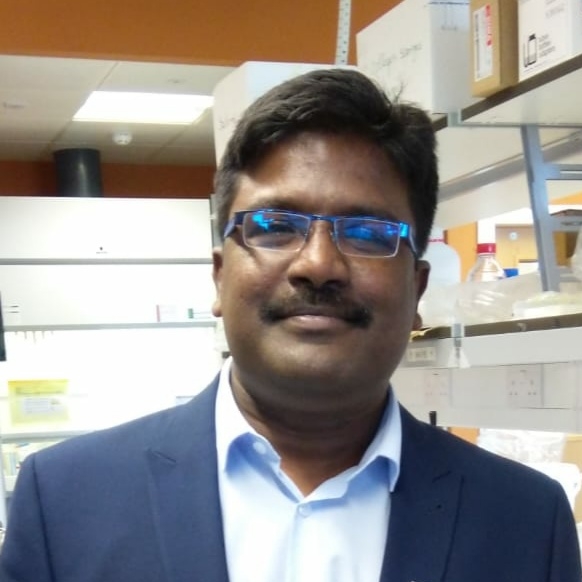
Dr. Rajendra Kurapati is an Assistant Professor at the School of Chemistry , Indian Institute of Science Education and Research Thiruvananthapuram (IISER TVM) . His research focuses on biodegradable 2D materials for biomedical applications, addressing nanomaterial biopersistence issues through enzymatic degradation studies. He leads the Biomaterials Lab and collaborates with institutions across France, Ireland, Portugal, and the UK. Born in Andhra Pradesh, India B.Sc. & M.Sc. in Chemistry (Acharya Nagarjuna University, University of Hyderabad) Ph.D. in Materials Engineering (Indian Institute of Science, 2014) Postdoc: CNRS Strasbourg (2014-2017), CÚRAM Galway (2018-2020) His research explores 2D material-biopolymer hybrids for drug/gene delivery , nanotheranostics , and antimicrobial coatings . Key article trends include: Graphene/MoS2 biodegradation by human enzymes Antibacterial coatings for medical implants Microplastics' environmental impact Lipid nanoparticles for mRNA vaccines ZnO quantum dots for bioimaging Polymer multilayer drug delivery systems Major scientific awards : DBT Ramalingaswami Fellowship (INR 40 lakhs over 5 years) SERB Start-up Grant (32 lakhs over 2 years) SERB Special Grant (45 lakhs over 3 years) DBT Mission Innovation Grant (18 lakhs over 6 months) His academic contributions span 15+ high-impact publications in journals like Advanced Materials , Nanoscale , and Chemical Communications , covering topics from graphene biodegradation to antimicrobial coatings and bioimaging . 10+ alumni students have graduated from his lab, with placements at institutions including University of Strasbourg and Dublin City University.
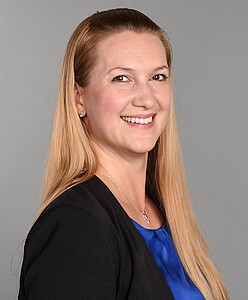
Prof. Dr. habil. Katrin Giller leads the Department of Molecular Nutrition Science (140a) at the University of Hohenheim, Garbenstraße 30, Bio Building I, Room 151, Stuttgart. Her research focuses on livestock nutrition, with specific interests in methane mitigation, antioxidant mechanisms, and metabolic syndrome in agricultural animals. Department: Molecular Nutrition Science (140a) Contact: katrin.giller@uni-hohenheim.de Office Hours: By appointment Her work spans nutritional biochemistry , ruminal fermentation , and sustainable livestock systems , often examining interactions between dietary compounds (e.g., spirulina, polyphenols, n-3 fatty acids) and animal physiology. Recent studies investigate antioxidant gene expression , transgenerational metabolic impacts , and feed efficiency . Current advisees include B.Sc. Viola Gauly, Fernando Giugno, Jana Kornherr, Mira Kühn, Daniel Obermüller, and Helen Pötzsch. The department's website details research projects, teaching events, and publications.
Jan Knippers is a Professor and Institute Director at the University of Stuttgart's Faculty of Architecture and Urban Planning , leading the Institute of Building Structures and Structural Design (ITKE) . He co-founded Knippers Helbig Advanced Engineering and established Jan Knippers Ingenieure in 2018 to focus on innovative fiber composite and timber structures. Key roles: Deputy Executive Director of Cluster of Excellence IntCDC , former Vice-Rector for Research (2019-2021), and Dean of Faculty of Architecture (2021-2023) Technical focus: Hybrid FRP-Timber systems, computational design, and biomimetic principles His projects include the 2024 Hybrid Flax Pavilion , Urbach Tower (2024), and BUGA Fiber Pavilion (2019). He contributes to European standardization committees and serves as 2024 Leverhulme Visiting Professor at University College London.
Professor Asterios Bakolas is affiliated with the Department of Materials Science and Engineering at the School of Chemical Engineering, National Technical University of Athens (NTUA). His research focuses on materials science, cultural heritage conservation, and sustainable construction technologies. Key areas include the development of compatible restoration mortars for historic structures, analysis of traditional building materials, and application of non-destructive testing (NDT) techniques for heritage assessment. He has contributed to projects involving Hagia Sophia, the Parthenon, and Cretan architectural heritage. Research interests span materials characterization, composite materials, and environmental impact assessment of construction materials. Notable work includes studies on polychromy in ancient art, weathering phenomena in historic buildings, and integration of AI for material property prediction. His interdisciplinary approach combines chemistry, civil engineering, and digital humanities to address challenges in conservation and sustainable building practices. No scientific awards are explicitly listed, but his extensive publications reflect recognition in academic circles. Advising and grants are not detailed here, though his involvement in restoration projects implies active collaboration with funding bodies. He is part of the School’s research groups focused on materials science and heritage preservation.
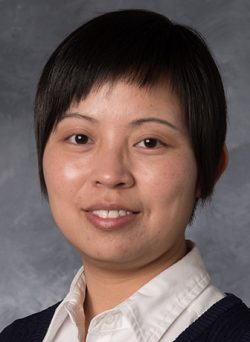
Susie Dai is a Professor in the Department of Chemical and Biomedical Engineering at the University of Missouri, with a laboratory located at the Bond Life Sciences Center. Her research bridges chemistry, biology, and engineering to address critical environmental and sustainability challenges. Education: PhD in Chemistry from Duke University; Certificate in Biomedical Engineering from Duke University; Certificate in Regulatory Science from Texas A&M University; BS in Chemistry from Fudan University Dr. Dai specializes in biological and material engineering, carbon waste conversion, contaminant remediation, and synthetic biology. She is developing RAPIMER, a lignin-based fungal scaffold for PFAS removal, and pioneering electro-microbial systems to convert CO2 into bioplastics and biofuels. Her work focuses on scalable, sustainable solutions for environmental pollutants and carbon utilization. Recent research trends include creating biomimetic materials for sustainable packaging, optimizing lignocellulosic biorefineries, and designing lignin-derived photocatalysts. She leads projects funded by Tito's Handmade Vodka's philanthropic arm for PFAS remediation and collaborates with the NSF Engineering Research Center CURB at Washington University in St. Louis. At Mizzou, Dai integrates engineering and life sciences, leveraging both Mizzou Engineering and Bond Life Sciences Center's resources. Her interdisciplinary approach combines electrochemistry, microbial engineering, and social impact analysis to advance circular bioeconomy solutions.
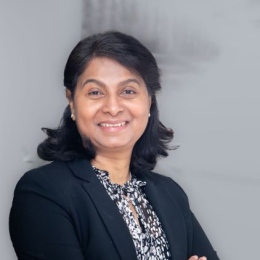
Aji Mathew is a Professor at the Department of Materials and Environmental Chemistry, Stockholm University. He holds a PhD in polymer chemistry from Mahatma Gandhi University (2001) and conducted postdoctoral research at CERMAV (Grenoble, France) and NTNU (Trondheim, Norway). His academic career includes roles as an assistant professor (2007–2011) and associate professor (2011–2015) at Luleå University of Technology before becoming an associate professor (2015) and subsequently a professor (2017) at Stockholm University. His research focuses on bio-based nanocomposites and sustainable materials, particularly nanocellulose and its applications in environmental remediation, advanced materials, and circular economy solutions. His group, the Aji Mathew Group , specializes in designing bio-based materials for diverse applications, including water treatment, 3D printing, and biomedical uses. Key projects involve upcycling textile waste, developing eco-friendly composites, and creating functional hydrogels. His work bridges fundamental polymer chemistry with practical sustainability challenges. Publications highlight innovations like nanocellulose-based foams, zeolitic frameworks for water purification, and bio-based coatings. While no awards are explicitly mentioned, his extensive peer-reviewed contributions reflect significant scholarly impact. His research emphasizes scalability and real-world applicability, addressing global environmental and material science challenges.
Lara A. Estroff is a Full Professor and the current Chair of the Department of Materials Science and Engineering at Cornell University's College of Engineering. She has been a faculty member since 2005 and served as Director of Graduate Studies from 2015 to 2019. Her academic leadership and research excellence position her at the forefront of bio-inspired materials and biomineralization research. Her educational background includes a B.A. in Chemistry from Swarthmore College (1997) and a Ph.D. in Chemistry from Yale University (2003), followed by an NIH-funded postdoctoral fellowship at Harvard University in the lab of Prof. George M. Whitesides. Dr. Estroff's research centers on the fundamental mechanisms of crystal growth, biomineralization, and pathological mineralization. She investigates how organisms control mineral formation and applies these principles to engineer synthetic materials with complex structures and functionalities. Her work spans biomaterials, tissue engineering, and energy materials—particularly hybrid organic-inorganic perovskites for photovoltaics. She employs advanced characterization techniques and has pioneered in situ methods to monitor crystallization dynamics. Her recent publications reveal a strong trend toward interdisciplinary research, integrating materials science with cancer biology, immunology, and machine learning. The articles emphasize bio-inspired synthesis, mineral-tissue interactions, and the development of functional crystalline materials for medical and energy applications. Faculty Early CAREER Award, National Science Foundation (2009) Fiona Ip Li '78 and Donald Li '75 Excellence in Teaching Award, Cornell College of Engineering (2007) Marilyn Emmons Williams Award, Cornell Undergraduate Research Board (2009) Keynote Speaker, Gordon Research Seminar on Biomineralization (2012) Lawrence Berkeley National Lab Affiliate (2013) Dr. Estroff leads a major DOE-funded project titled “Formulation Engineering of Energy Materials via Multiscale Learning Spirals,” a $3 million, three-year initiative using machine learning to optimize perovskite synthesis for solar cells. She has advised numerous graduate students and postdoctoral researchers, and her lab is known for fostering collaborative, cross-disciplinary research. She has also contributed to educational initiatives at Cornell, particularly in undergraduate research and materials education. Her research group operates at the intersection of chemistry, engineering, and biology, focusing on high-resolution characterization of biominerals, in situ crystal growth studies, and the design of in vitro models for cell-mineral interactions. The lab actively collaborates with institutions including Lawrence Livermore National Laboratory, National Renewable Energy Laboratory, and Johns Hopkins University.
Suyi Li is an Associate Professor in the Department of Mechanical Engineering at Virginia Tech's College of Engineering, where he leads the Dynamic and Architected Robot and structurE (DARE) Lab. Previously, he served as an Assistant Professor at Clemson University from 2016-2022 after completing postdoctoral research at the University of Michigan. Ph.D. in Mechanical Engineering, University of Michigan, Ann Arbor (2014) M.Sc. in Mechanical Engineering, Pennsylvania State University (2008) B.S. Summa Cum Laude in Mechanical Engineering, University of Michigan, Ann Arbor (2006) Dr. Li's research focuses on pioneering new paradigms of intelligent robots and functional structures by exploiting the interplay between geometry, mechanics, actuation, and computation. His work spans origami-inspired morphing structures, physically computing materials that perform machine learning tasks without traditional electronics, and soft/reconfigurable robots that can move like animals or grow like plants. His innovative approach combines mechanical engineering principles with computational thinking to create systems with 'mechano-intelligence'. Analysis of Dr. Li's recent publications reveals a strong trajectory toward embodied intelligence and mechanical computing, where physical structures themselves perform computational tasks. His work increasingly integrates origami/kirigami principles with advanced materials to create systems that can sense, process information, and actuate without conventional electronics. The research shows progression from fundamental mechanics of adaptive structures to sophisticated applications in robotics and computing. Dean's Awards of Excellence – Faculty Fellow, Virginia Tech (2024) C.D. Mote Jr Early Career Award, ASME Design Engineering Division (2022) Gary Anderson Early Achievement Award, ASME Aerospace Division (2021) Junior Researcher of the Year Award, College of Engineering, Clemson University (2020) CECAS Dean's Faculty Fellow, Clemson University (2018) CAREER Award, National Science Foundation (2018) ASME Freudenstein Young Investigator Award Dr. Li has secured nearly two million dollars in research funding, including the prestigious NSF CAREER award and an NSF EFRI project to build mechano-bio hybrid reservoir computers. He advises multiple Ph.D. and Master's students in the DARE Lab, with recent successes including Vishrut Deshpande's Ph.D. defense. His research has generated close to 80 journal and conference papers, demonstrating significant impact in the fields of adaptive structures and materials systems. Dr. Li also serves on editorial boards for several prominent journals including Journal of Intelligent Material Systems and Structures and Philosophical Transactions of the Royal Society A. The DARE Lab at Virginia Tech comprises a multidisciplinary team of researchers working on origami-inspired meta-structures, physically computing materials, and soft robotics. Current projects include developing electronics-free crawling robots with mechanical central pattern generators, creating kirigami-based wearable medical devices, and engineering metamaterials with programmable mechanical properties. The lab actively collaborates with institutions across the country and has received recognition for its innovative approaches to combining mechanical design with computational capabilities.
Ferran Garcia-Pichel is a Regents Professor and Center Director at Arizona State University’s School of Life Sciences, affiliated with the Biodesign Center for Fundamental & Applied Microbiomics, Center for Biodiversity Outcomes, Water Institute, and Global Drylands Center. He holds a PhD in Microbiology from the University of Oregon (1999) and has been a faculty member at ASU since 1999. His research focuses on microbial adaptations in arid environments, including biogeochemical cycling, soil crust formation, and sustainable land restoration. Key interests include cyanobacterial sunscreen compounds (scytonemin), carbonate dissolution mechanisms, and hydrogen production. Teaching responsibilities include advanced microbiology, microbial ecology, and geomicrobiology courses such as MBB 495 Undergraduate Research and BIO 493 Honors Thesis. Awards span from the 2021 Regents Professor distinction to the 2023 Sperry Award for restoration science. His lab explores interdisciplinary approaches to study microbial communities in desert soils, marine intertidals, and atmospheric dust, with applications in climate resilience and biomedicine. Research highlights include biocrust restoration strategies, microbial nitrogen fixation networks, and the role of GABA/Glu signaling in spatial organization. Collaborations address global challenges like fugitive dust mitigation and carbon sequestration. The lab is based at the Biodesign Building B on ASU’s Tempe campus.
Julien Warnan is a researcher at the Catalysis Research Center (CRC) of the Technical University of Munich (TUM). He leads a multidisciplinary research group focusing on renewable energy, particularly artificial photosynthesis and photocatalytic systems for fuel production. His work emphasizes molecular dyes, catalysts, polymers, and hybrid materials to transform CO2 and water into value-added chemicals. He holds the title of Researcher and is actively involved in academic leadership, including co-editing special issues and organizing international conferences like the ECAT conference. His research has been recognized with awards such as the TUM Chemistry Supervisory Award 2021. Recent activities include visiting scientist roles at Imperial College London and collaborations with groups at TUM and other institutions. Research interests encompass MOF-based photocatalysis, biohybrid systems, and sustainable energy conversion. Key achievements include pioneering studies on metal-organic frameworks for CO2 reduction and solar fuel production. His team has published extensively in high-impact journals like Angewandte Chemie and Advanced Materials , with a focus on functional hybrid materials and electrochemical systems. PhD supervision: Nadine Schmaus, Philip Stanley, Johanna Eichhorn, and others Notable collaborations: Shustova Lab, Rieger Group, Fischer Group Labs: Catalysis Research Center (CRC)
Professor Phil Purnell is a Professor of Materials and Structures at the School of Civil Engineering, University of Leeds. His expertise spans materials science, infrastructure systems, circular economy, and interdisciplinary research. He leads projects addressing decarbonization, waste-to-resource systems, and sustainable construction materials. His roles include Deputy Head of School and advisor to UKRI, DEFRA, and the UK Government’s Circular Economy Taskforce. He holds visiting positions at the Royal College of Art and University of Cambridge. Education: PhD, BEng (Civil), and teaching qualifications (PCPCE, ACTLHE). His research focuses on circular economy applications in textiles, offshore wind, and foundational industries. Notable projects include the Textiles Circularity Centre, Yorkshire Circular Economy Living Lab, and Complex Value Optimisation for Resource Recovery (C-VORR). He advocates for systemic approaches to sustainability, integrating economic, technical, and environmental values. Research outputs emphasize decarbonization pathways, material lifecycle assessments, and robotics in infrastructure management. Collaborations with industry and policy bodies drive practical solutions for resource efficiency. His work bridges engineering, economics, and environmental science to address global challenges like waste management and climate change.
Rhett C. Smith is a Professor of Chemistry at Clemson University, leading a research group dedicated to sustainable materials innovation since 2006. His work focuses on transforming industrial waste streams into high-performance composites through green chemistry approaches. His academic background includes: B.S. in Chemistry from the University of Toledo Ph.D. in Chemistry from Case Western Reserve University NIH Postdoctoral Fellowship at MIT Professor Smith's research pioneers waste valorization using elemental sulfur and biomass derivatives. Key areas include: Upcycling mixed plastic and food waste into structural materials Developing sulfur-based polymers for sustainable construction Creating circular economy solutions for agricultural byproducts His group's work bridges fundamental chemistry with commercial applications in South Carolina's industrial sector. Recent publications reveal a strong trend toward atom-economical processes using waste sulfur and biomass. The research emphasizes scalable technologies for plastic recycling and sustainable cement alternatives, with increasing focus on food waste upcycling and flame-retardant composites. Major recognitions include: National Merit Scholar and NIH Postdoctoral Fellowship Two-time InnoVision Award Finalist (2024 Sustainability category) Fats and Proteins Research Foundation Innovate Award Fred Bisplingoff Research Innovation Award Professor Smith has mentored over a dozen Ph.D. students to successful careers in national labs and industry. His group secured seven major grants in Spring 2024 from NSF, USDA, and industry partners to advance sustainable materials for structural applications. Current projects focus on upcycling post-consumer waste streams and developing carbon-negative building materials. The Smith Research Group operates as a collaborative hub within Clemson's chemistry department, recently expanding to include four faculty co-leaders (Tennyson, Ashlyn Smith, and Sauceda). The team maintains strong industry partnerships while promoting academic accessibility through open educational resources.
Akio Kodaira is affiliated with the Institute of Science Tokyo as a researcher. His work focuses on soft robotics, mechatronics, and advanced actuator design using materials like IPMC (Ionic Polymer-Metal Composites) and flexible fuel cells. Primary institution: Institute of Science Tokyo Research Interests Kodaira's research spans the development of soft robots, thin-film actuators, and bio-inspired mechanical systems. Key areas include IPMC fabrication techniques, energy-efficient actuators using Au/Pt electrodes, and 3D crafts using paper/fabric materials. Publication Trends Recent publications emphasize soft robotics, material hybridization (e.g., paper/fabric-assisted IPMC), and flexible fuel cell applications. His collaborations with researchers like Koichi Suzumori and Hiroyuki Nabae highlight interdisciplinary efforts in mechatronics and mechanical engineering. Collaborations Frequent co-authors include Koichi Suzumori (Professor, Institute of Science Tokyo), Kinji Asaka , and Hiroyuki Nabae . Projects involve thin-film robotics, McKibben muscles, and simulator-based navigation software.
Julian Jauk is a Researcher at the Institute for Architecture and Media, TU Graz. His work focuses on innovative material systems, digital fabrication, and sustainable architectural design. He explores the integration of clay composites, mycelium-based materials, and knitted structures with advanced manufacturing techniques like 3D printing. Key research themes include lightweight ceramic structures, biocomposite materials, and computational design methodologies. His research emphasizes material-driven innovation, structural optimization, and environmental sustainability. Notable projects include MyCera (clay-mycelium composites) and ClayKnit (3D-printed clay-knitted hybrids). He also investigates mixed reality tools for architectural sketching and kinetic architectural prototypes. Publications from 2021–2024 highlight trends in bio-based materials, additive manufacturing, and material-property analysis. His work bridges traditional craftsmanship with cutting-edge digital fabrication, aiming to redefine sustainable building practices.
Kim Joo-yeon is an Associate Professor at the Department of Clothing and Textiles , Seoul National University , within the College of Human Ecology . She holds a Ph.D. in Fiber and Polymer Science from North Carolina State University, with prior Master's and Bachelor's degrees in Clothing and Textiles from Seoul National University. Research Interests focus on Textile Engineering , Nanotechnology , and Environmental Materials , particularly photocatalytic fabrics, biodegradable filters, and sustainable textile processing. Her work integrates Photocatalytic degradation of pollutants Nanoparticle functionalization Smart filtration systems Waste-to-resource strategies Publications (2022–2024) highlight innovations in Photocatalytic fabric design Bacterial adhesion control Multi-jet electrospinning MOF-based gas filters with a focus on environmental and healthcare applications. She teaches undergraduate courses in Clothing Material Evaluation and Experimental Studies , and graduate courses in Textile and Polymer Chemistry and Filter Materials . Kim leads the Textile Materials Lab , part of the multidisciplinary W.E.A.R. Lab ( Wearable Ergonomics + Anthropometrics Research ), addressing real-world challenges through textile innovation.