Davide Castagnetti is a Full Professor at the University of Modena and Reggio Emilia, affiliated with the Department of Engineering Sciences and Methods. His academic roles include teaching courses in Mechatronics Engineering, such as Assisted Mechanical Design, Product Design and Development, and Mechatronic Systems Design. His research focuses on metamaterials, energy harvesting, piezoelectric materials, and structural analysis. Teaching: Mechatronics Engineering courses emphasizing design optimization, finite element methods, and safety engineering. Research: Specializes in auxetic metamaterials for biomedical applications, electromagnetic energy harvesters, and additive manufacturing. His work includes patents on vertebral prostheses and auxetic meta-biomaterials. Publications: Over 30 peer-reviewed articles since 2013, covering topics like piezoelectric sensors, rotating metamaterials, and bonded joints analysis. His contributions include developing innovative 3D-printed end-effectors for robotics, soft piezoelectric elastomers, and bio-inspired vertebral implants. He collaborates with industries on structural health monitoring and adhesive joint analysis.
Dr. Jingxin Wang is the Department Head and Reuben B. Robertson Professor in the Department of Forest Biomaterials at North Carolina State University. He previously held positions at West Virginia University, including Benedum Distinguished Scholar and Director of WVU Sustainable Biomaterials & Bioenergy. With over 20 years of teaching experience, he focuses on biomass harvesting logistics, computing applications in natural resources, and sustainable biomaterials. Education: Bachelor's/Master's in Forest/Mechanical Engineering (Northeast Forestry University, China) M.S. in Computer Science (West Virginia University) Ph.D. in Forest Resource Management (University of Georgia) His research emphasizes sustainable biomaterials, biomass energy, and decarbonized bioeconomies. He leads major USDA and USDOE-funded projects, including the Mid-Atlantic Sustainable Biomass Consortium (MASBio) and studies on forest logging residue utilization. He serves on editorial boards for four journals and is active in six professional societies. Recent publications explore lignin applications, forest carbon dynamics, and bioenergy systems. He has authored over 200 papers and 12 books/chapters, with a focus on integrating computational models and life cycle assessments. Grants & Leadership: PI: $10M USDA NIFA MASBio Consortium PI: $1M USDA NIFA logging residue logistics project Co-PI: $1M DOE nanotechnology CO2 conversion project
Giacinta Parish is Professor in the Department of Electrical, Electronic and Computer Engineering at the University of Western Australia's School of Engineering. She serves as Director of the UWA Defence & Security Institute and is a Board Director for Australian Remote Operations for Space and Earth (AROSE). Her work bridges academic research with practical applications in defence, security, and space technologies. PhD in Electrical Engineering, University of California Santa Barbara (2001) Master of Engineering Science in Electrical and Electronic Engineering, University of Western Australia (1997) Bachelor of Engineering in Electronic Engineering, University of Western Australia (1995) Bachelor of Science in Chemistry, University of Western Australia (1995) Professor Parish's research focuses on advanced semiconductor materials and device technologies, with particular expertise in III-V nitride materials and porous silicon. Her work spans the development of chemical, bio- and infrared sensors for environmental monitoring, industrial applications, and defence purposes. She investigates semiconductor device physics, sensor array development, and micro-electronics for practical sensing solutions. Her multidisciplinary background combines electronic engineering, materials science, and chemistry to create innovative sensor technologies. Her recent publications demonstrate a consistent focus on porous silicon and gallium nitride-based sensor technologies. The research shows progression from fundamental material properties to practical device applications, with increasing emphasis on thermal sensing, chemical detection, and integration with micro-electromechanical systems (MEMS). The work often combines experimental fabrication with theoretical modeling to optimize sensor performance. Science & Technology Excellence in Leadership Award, Defence Science and Technology Group (2024) Women in Technology WA '20 in 20' award (2018) Senior Member, Institute of Electrical & Electronic Engineers (IEEE) Finalist, Scopus Young Investigator Awards (2011) Fulbright Scholar (1996) Professor Parish has supervised numerous research students and leads multiple funded projects, including 'A Sensor for Diagnostics and Closed-Loop Drug Delivery in the Inner Ear' (NHMRC, 2024-2026) and 'DFAT SE Asia Maritime Exchange' (2022-2023). Her research has attracted significant funding from organizations including the Australian Research Council and the Department of Foreign Affairs and Trade. As Director of the UWA Defence & Security Institute, Professor Parish leads a multidisciplinary team working at the intersection of academic research and defence applications. She also contributes to the International Space Centre's Advisory Board, connecting her expertise in sensor technologies with space applications through AROSE.
Matthew Unthank is a Professor of Chemistry at Northumbria University, specializing in polymer, coatings, and composites research. He holds roles in the Applied Sciences Department and leads initiatives like the Synthesis and Polymer Innovation (SPIN) centre to advance sustainable materials. His career spans academic and industrial roles, including positions at AkzoNobel and GlaxoSmithKline. Research focuses on functional polymers for thermoset coatings and composites, with emphasis on sustainability. Key projects include developing pH-responsive coatings, recyclable thermosets, and biocomposites for carbon capture. He has secured grants from UKRI, EPSRC, DSTL, and OfWAT, collaborating with over 100 companies and NGOs through the EPSRC-TransFire Hub. Notable achievements include EPSRC Researcher in Residence Fellow status and membership in the EPSRC Early Career Forum (ECF) in Manufacturing Research. His work aligns with UN Sustainable Development Goals, particularly addressing environmental sustainability through material innovation. Professional activities include co-leading the bulk chemical sector in the £5M TransFire Hub and supervising research projects. He actively engages in industrial partnerships for scale-up and commercialization of polymer technologies.
Hedieh Torabifard is an Assistant Professor of Chemistry and Biochemistry at the University of Texas at Dallas (UT Dallas), affiliated with the School of Natural Sciences and Mathematics. Her research focuses on applying computational and theoretical methods to study complex biological systems, particularly membrane transport proteins and bio-based ionic liquids. She directs the Torabifard Lab, which explores protein design, drug delivery systems, and sustainable materials. Education: Ph.D. in Chemistry, Wayne State University (2017) Postdoctoral Fellow, University of Michigan (2020) M.Sc. in Chemistry, Sharif University of Technology (2011) B.Sc. in Chemistry, Shahid Beheshti University (2008) Research interests include: Computational modeling of membrane transport proteins (e.g., fluoride channels, nucleosomes) Design of bio-based ionic liquids for green chemistry applications Molecular dynamics simulations of drug delivery systems (e.g., polymeric micelles) Publications span computational biophysics, materials science, and protein engineering. Her work bridges theory and experiment, with applications in drug delivery and sustainable materials. The lab collaborates on projects involving protein design, ion transport mechanisms, and epigenetic regulation.
Valérie GAUCHER is a Professor at the University of Lille, affiliated with the Faculty of Science and Technology, Department of Physics. She is a key member of the Materials and Transformations Unit (UMET, CNRS UMR 8207) and leads the Polymer Systems Engineering (ISP) research team. Her work is centered on the fundamental and applied aspects of polymer materials, particularly focusing on structure-property relationships in semi-crystalline and amorphous systems. Her research interests are deeply rooted in polymer physics and materials engineering, with a focus on the structural evolution and mechanical behavior of polymers. Key areas include the crystalline phase transformations in semi-crystalline polymers, plastic deformation mechanisms in amorphous polymers, and the influence of macromolecular orientation on properties. A significant portion of her work is dedicated to bio-based and sustainable materials, such as thermoplastic starch, polylactic acid (PLA), and their composites, often with flame-retardant properties. Her research aims to understand how processing and composition affect the final performance of polymer materials for applications in packaging, biomedicine, and sustainable technologies. An analysis of her 15 most recent publications reveals a consistent focus on advanced polymer characterization, particularly using techniques like calorimetry, scattering, and microscopy. Her work frequently explores the effects of composition, molecular weight, and processing (such as biaxial stretching) on the mechanical and thermal properties of sustainable and high-performance polymers. There is a strong emphasis on creating materials with enhanced barrier, flame-retardant, or mechanical properties through innovative composite design and nanostructuring. Valérie GAUCHER is a dedicated academic advisor, having supervised or co-directed numerous PhD theses. Her former students have pursued diverse careers in academia and industry, including post-doctoral positions and roles as R&D engineers. While no specific scientific awards are mentioned in the provided text, her extensive publication record in high-impact journals and her leadership role in a CNRS unit are strong indicators of her scientific recognition. She is actively involved in collaborative research, often working with other senior researchers within UMET, such as Sophie DUQUESNE, Fabienne SAMYN, and Grégory STOCLET. Her research is conducted within the well-equipped Polymer Systems Engineering team, which has access to advanced experimental platforms for polymer synthesis, processing, and characterization, including X-ray scattering, electron microscopy, and thermal analysis instruments. This infrastructure supports her team's work on developing and analyzing next-generation polymer materials.
Patrice Woisel is a Professor at the Centrale Lille Institute, affiliated with the Materials and Transformations Unit (UMET, CNRS UMR 8207) at the University of Lille. He leads research in polymer systems engineering, focusing on intelligent supramolecular polymers, stimuli-responsive materials, and the functionalization of titanium-based biomaterials. His work bridges fundamental chemistry with biomedical and environmental applications. His research interests include smart hydrogels , self-immolative polymers , pillararene-based systems , and dopamine-inspired surface functionalization . He investigates molecular design, supramolecular interactions, and stimuli-responsive behavior for applications in drug delivery, recyclable materials, and biomedical coatings. His work emphasizes sustainable and high-performance polymer systems. His recent publications (2022–2025) reveal a strong trend in stimuli-responsive polymer networks , supramolecular cross-linking , and biomedical material design . Key themes include thermoresponsive behavior, dual-stimuli hydrogels, VOC capture, and polymer dispersity effects on pharmaceutical formulations. His work appears in journals like Macromolecules , ACS Applied Materials & Interfaces , and Small . Scientific Awards: No awards explicitly mentioned in the provided text. Advising and Grants: He has supervised over 15 PhD students, many focusing on smart polymers and hydrogels. His research is supported by institutional and collaborative funding, including ANR, ERC, and Interreg projects, though specific grants are not detailed. He frequently collaborates with researchers such as Joël Lyskawa, Jonathan Potier, and Kedafi Belkhir. Labs and Teams: He is a key member of the Polymer Systems Engineering team within UMET, utilizing advanced facilities like electron microscopy, high-pressure platforms, and polymer characterization labs. His work involves close collaboration with the Chevreul Institute and interdisciplinary teams across materials, chemistry, and biomedical engineering.
Fernando Octávio de Queirós Dourado is a researcher and guest assistant professor at the Department of Biological Engineering, School of Engineering, University of Minho, Portugal. He is affiliated with the Centre of Biological Engineering (CEB) and has been actively involved in research on bacterial nanocellulose and its applications since earning his PhD in 2003. His research interests span a wide range of areas, including: Bacterial nanocellulose production and optimization Biomaterials for biomedical applications (e.g., wound dressings, retinal implants) Food packaging and active materials Textile and leather alternatives Life cycle assessment and sustainability Toxicology and dietetic properties of novel foods His recent publications highlight a strong focus on developing sustainable, high-performance materials from bacterial nanocellulose, with applications in food, medicine, and environmental technology. Trends include functionalization with antimicrobial agents, composite development with biopolymers, and comprehensive environmental and safety assessments. He has contributed to significant research projects such as BUILD, KACELLE, and InPaCTus, focusing on industrial applications of bacterial cellulose and bio-based composites. He has supervised several Master’s students and has co-authored numerous book chapters and scientific articles. His work bridges fundamental research with industrial applicability, emphasizing sustainability and innovation in biotechnology.
Lars Järnström is a Professor at Karlstad University, specializing in Paper Coating Technology. His research focuses on sustainable materials, barrier coatings, and polymer formulations for packaging applications. Key areas include bio-based coatings, enzymatic oxygen-scavenging systems, and thermosensitive materials. He has contributed to advancing flexible packaging solutions through studies on starch, lignin, and polyvinyl alcohol blends. His work integrates material science with industrial applications, addressing challenges like moisture resistance, oxygen permeability, and eco-friendly packaging. Collaborations involve optimizing coating processes and evaluating performance metrics such as barrier properties and mechanical durability. Recent projects emphasize pilot trials for lignin-based coatings and numerical modeling of coating technologies. Publications span topics like clay-filled coatings, thermal effects on polymer interactions, and enzyme-embedded systems. His research bridges fundamental material behavior and practical industrial solutions, with a focus on sustainable alternatives to conventional packaging materials.
Professor Magnus Lestelius is affiliated with Karlstad University's Department of Engineering and Chemical Sciences, specializing in graphic technology and materials research. He leads research in surface treatment for forest industry products, barrier coatings, and printing technologies. He coordinates VIPP (industrial research college) and contributes to Treesearch's Packaging Materials course. His work spans academic teaching, industry collaboration (e.g., Stora Enso Research), and research groups like Pro2BE and Paper Surface Centre. Education: MSc (1991) and PhD (1996) in Physics/Applied Physics from Linköping University. Extensive industry research experience (1997–2001) followed by academic roles since 2001. Research focuses on molecular interactions in printing, ink transfer, and functional printing performance using spectroscopy, microscopy, and modeling. Active in vocational training and industrial associations (Sweflex, TPP). Research interests emphasize sustainable materials, oxygen barrier coatings, and bio-based packaging. Over 130 publications cover topics like 3D printing biomaterials, polymer barrier properties, and flexographic printing optimization. Awards: none listed. Advising: contributes to PhD supervision training but no listed advisees. Labs: Pro2BE and Paper Surface Centre are key collaborative hubs.
Ali Mohammadi is an Associate Professor at Karlstad University specializing in Environmental and Energy Systems Research. His work focuses on environmental sustainability in bioeconomy systems, using methodologies like Life Cycle Assessment (LCA), Absolute Environmental Sustainability Assessment (AESA), and Techno-Economic Analysis (TEA) to evaluate biomass utilization. He holds a PhD from the University of New England (Australia) and conducted postdoctoral research at Karlstad University (KaU). Research Interests: Environmental sustainability of bio-based systems Bioenergy production and circular economy pathways Socioeconomic impacts of bioeconomy innovations Life Cycle Assessment (LCA) method development Valorization of forest residues and municipal solid waste Lead Projects: WoodVALOR Consortium (€3.5M, 2022–2025) WoodPro Consortium (€900k, 2021–2022) Miscanthus-based biofuel pellets project (SEK114k, 2020–2021) Teaching: Courses include Sustainability Assessment Methods, Life Cycle Assessment, and Biorefinery Project Development.
Dr. Mohammad Boshir Ahmed is a Future Making Fellow at the Institute for Sustainability, Energy and Resources (ISER) and the Department of Chemical Engineering at The University of Adelaide . His research focuses on developing sustainable technologies using natural polymers and carbon-based materials for applications in agriculture, energy, health, and environmental remediation. He is particularly interested in biodegradable hydrogel materials and carbon fiber composites. Dr. Ahmed's work emphasizes innovative techniques such as plant bioelectronics to monitor plant behavior in Earth and space environments, alongside developing methods for plant disease detection, pesticide delivery, and environmental monitoring. His recent publications highlight advancements in materials science, environmental engineering, and sustainable technology. Key Research Themes: Biodegradable hydrogel design using natural polymers Carbon fiber composites for industrial and environmental applications Photocatalytic wastewater treatment using TiO₂ and ZnO nanomaterials Adsorption technologies for heavy metal and dye removal Dr. Ahmed is eligible to supervise Masters and PhD students in Chemical Engineering and Sustainability. His lab focuses on translating fundamental research into practical solutions for global challenges in energy, health, and environmental sustainability.
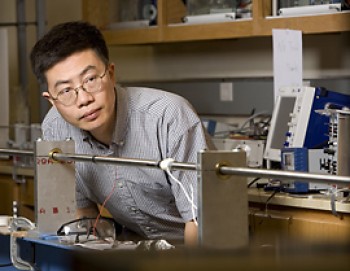
Dr. Hongbing Lu is the Louis A. Beecherl, Jr. Chair Professor and Associate Head for Undergraduate Studies in Mechanical Engineering at the Erik Jonsson School of Engineering and Computer Science, University of Texas at Dallas. He holds a PhD in Aeronautics from Caltech (1997), an M.S. in Engineering Mechanics from Tsinghua University (1988), and a B.S. in Solid Mechanics from Huazhong University of Science and Technology (1986). His research focuses on experimental mechanics, nanomechanics, mechanics of time-dependent materials, and the mechanical behavior of nanomaterials. Notable projects include studies on aerogel materials, additive manufacturing, and composite materials. He leads the MAML Lab and has secured over $10M in grants, including a DOE grant for nuclear reactor efficiency research and a $720K award from the University of Colorado. Lu has received prestigious awards such as the NSF Career Award (2000) and the Regents Distinguished Research Award (2008). His work spans interdisciplinary collaborations, including landmine blast studies and bio-inspired materials development. His recent publications emphasize advanced materials characterization and innovative manufacturing techniques.
Dr. Ioana Andreea Brezestean is a Scientific Researcher III (R2 rank) at the National Institute for Research and Development in Isotopic and Molecular Technologies (Cluj-Napoca, Romania). She holds a PhD in Physics (2022) and Master's degrees in Medical Physics (2013, 2015) from Babeș-Bolyai University . Her work focuses on nanomaterial synthesis , SERS substrate development , and environmental/health monitoring through advanced spectroscopic techniques. Current projects include NanedisSERS (bioinspired 3D nanoplatforms for neurodegenerative disease diagnostics) and AL-DIBI SERS (Alzheimer's biomarker detection using gold nanourchins). Her expertise spans nanoparticle fabrication (silver/gold), microfluidic sensor design , and multi-modal characterization (Raman, FT-Raman, SERS, TERS, microscopy). She contributes to eco-friendly nanocomposite development in projects like ECONANO4AUTO (bio-PA materials with chicken feather derivatives). Key collaborations include SINTEF AS (Norway), University of Medicine and Pharmacy 'Iuliu Hațieganu' , and NANOM MEMS SRL . Her methodology integrates DFT calculations , quantum chemistry modeling , and statistical pattern recognition for pathogen resistance analysis.
Su Taylor is Professor of Structural Engineering and Dean of Research for the Faculty of Engineering and Physical Sciences at Queen's University Belfast. She leads the Intelligent Infrastructure Group in the School of Natural and Built Environment, with over twenty years of research and teaching experience in sustainable built environments. Her work focuses on developing intelligent sensing technologies and advanced materials for infrastructure resilience. Research Interests: Professor Taylor specializes in fiber optic sensors for structural monitoring, low-energy materials, advanced composites in construction, and sustainable infrastructure development. Her interdisciplinary approach combines computer vision, machine learning, and structural analysis to advance intelligent infrastructure systems for enhanced durability and environmental sustainability. Publication Trends: Recent research (2024-2025) demonstrates a focus on innovative monitoring techniques including drone-based assessment and drive-by vehicle methods, advanced materials like vegetal concretes and basalt fiber composites, and data-driven approaches for infrastructure management. Her work consistently bridges materials science, structural engineering, and emerging sensing technologies. Awards and Recognition: Aftab Mufti Medal for Best Journal Paper (2017) Fellow of Institution of Engineers Ireland (2019) Fellow of Institution of Engineers of Ireland (2018) Executive Committee Member of ISHMII (2016) Executive Committee Member of IIFC (2017) Research Leadership: Professor Taylor currently supervises 8 PhD students and 4 research staff, with a successful track record of PhD completions. She secured significant funding from EPSRC, InnovateUK, EU FP7, and transnational programs including the USA-Ireland tripartite agreement. As Director of spin-out company Sengenia Ltd, she facilitates industry-academia knowledge transfer. Laboratories and Teams: Leads the Intelligent Infrastructure Group pioneering research in structural health monitoring and sustainable materials. The group collaborates internationally on projects including the Prosperity Partnership for near-zero energy public transport and ReCarbCrete carbon-neutral construction materials.