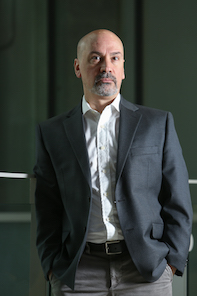
Barrie Dams is a Researcher at the University of Bath's Department of Mechanical Engineering, affiliated with the Centre for Integrated Materials, Processes & Structures (IMPS). His work focuses on sustainable construction materials and heritage conservation. He holds a PhD in Aerial Additive Manufacturing and an MEng in Civil Engineering from the University of Bath. Education: PhD in Civil Engineering, University of Bath (2016–2019) MEng (Hons) Civil Engineering, University of Bath (2011–2016) Research Interests: Bio-based construction materials, additive manufacturing with drones, fibrous plaster conservation, and circular economy principles. His projects include the People-Led Net Zero initiative (UKRI-funded) and the Leverhulme Trust project on historic fibrous plaster ceilings. Recent Research Trends: Barrie’s work emphasizes sustainable building materials, lifecycle assessment of bio-based systems, and heritage material preservation. His articles explore thermal performance of bio-walls, failure mechanisms in historic ceilings, and drone-based 3D printing materials. Grants & Collaborations: Involved in EPSRC-funded aerial additive manufacturing and Interreg Circular Bio-based Construction projects. Collaborations include Historic England and fibrous plaster industry partners. Labs/Teams: Part of the IMPS research group and the People-Led Net Zero project team.
Dr. Zahid Hossain is a Professor of Civil Engineering and Director of Graduate Programs in Engineering at Arkansas State University (A-State). He specializes in Transportation Engineering, Sustainable Materials, and Geotechnical Engineering. His research focuses on innovative pavement materials, environmental sustainability, and advanced material characterization techniques. Dr. Hossain holds a Ph.D. from The University of Oklahoma and has been recognized with the Fellow of ASCE and President's Gold Medal from Khulna University. Education: Ph.D., Civil Engineering, University of Oklahoma (Norman, OK) M.S., Computer Science, University of Oklahoma M.S., Civil Engineering, University of Oklahoma B.Sc., Civil Engineering, Khulna University of Engineering and Technology (Bangladesh) Research Interests: Dr. Hossain’s work emphasizes sustainable infrastructure, including asphalt modification with recycled materials, soil stabilization, and lean construction methodologies. His recent studies involve nanotechnology applications in materials science, moisture resistance of binders, and seismic site analysis in Arkansas. He employs advanced techniques like FTIR spectroscopy and AFM for material characterization. Scientific Awards & Affiliations: Fellow, ASCE Green Belt Certification (Lean/Six Sigma) Member, American Concrete Institute and National Dean List Advising & Research: Dr. Hossain leads interdisciplinary teams at the Center for Efficient and Sustainable Use of Resources (CESUR), focusing on green technologies and pavement durability. His grants include projects on warm mix asphalt feasibility and corrosion mitigation in metal culverts. Labs & Teams: Active in CESUR, he collaborates on projects involving rice husk ash utilization, soil stabilization, and pavement performance evaluation.
Affiliations and Roles Professor Wang holds dual appointments as Professor of Physics and Mechanical and Aerospace Engineering at Cornell University. She is affiliated with the Sibley School of Mechanical and Aerospace Engineering and the College of Arts and Sciences. Education B.S. in Physics, Fudan University, Shanghai, China (1989) Ph.D. in Physics, University of Chicago (1996) NSF-NATO Postdoctoral Fellow, Theoretical Physics, Oxford University (1997) Visiting Member, Courant Institute of Mathematical Sciences, NYU (1997-1999) Research Her research focuses on the physics of living organisms, particularly insect flight dynamics , biophysics , and computational modeling . Key projects include: Dragonfly righting reflex mechanisms Neuro-mechanical control in fruit flies Unsteady aerodynamics and fluid-structure interactions Awards and Honors Simons Fellowship in Theoretical Physics (2020) Radcliffe Fellowship (2007) Cornell Provost's Award for Distinguished Scholarship (2005) David and Lucile Packard Fellowship (2002) Labs and Collaborations Her work integrates experimental and computational approaches, often conducted in collaboration with institutions like the Janelia Research Campus (HHMI) and the Joint Texas Experimental Tokamak (J-TEXT).
Simon Lockrey is a Professor of Industrial Design at RMIT University's School of Design, specializing in sustainability, design innovation, and food waste reduction. He leads the EFW CRC's REDUCE Program, aiming to halve Australia's food waste by 2030 through industry partnerships. His research spans life cycle assessment (LCA), co-design, and packaging solutions, with global collaborations in 15+ countries. Key roles include Secretary of the International Sustainable Development Research Society (ISDRS) and former Executive Director of Glowpear. Education: PhD in Management (RMIT University, 2018) BE (Product Design, Swinburne University, 2004) Research Interests: Focuses on sustainable design strategies, food systems sustainability, and policy-driven environmental impact reduction. His work bridges academia, industry, and policy, addressing global challenges like food waste and flammable cladding risks. Media & Impact: Featured in ABC, The Guardian, and The New York Post for food waste research, reaching 90M+ people. Key projects include national date labeling reforms and fridge behavior studies, generating significant media engagement. Awards: 2024 Food Waste Action Collaboration Award 2023 Good Design Award (Circular Economy Strategy) Multiple Red Dot/Australian Design Awards for product innovation Grants: Secured over $330M in funding for EFW CRC projects, including $121M CRC and $210M Food Agility CRC bids. Projects include meat supply chain waste mapping and consumer fridge behavior studies. Leadership: Leads interdisciplinary teams across 50+ industry partners, mentoring PhD students and convening international conferences on sustainability and design.
Luyang Zhao is an incoming tenure-track Assistant Professor in the Department of Electrical and Computer Engineering at Clemson University (starting August 2025). He earned his PhD in Computer Science and double undergraduate degrees in Computer Science and Mathematics from Dartmouth College and the University of Minnesota respectively. Academic Affiliation : Clemson University (Assistant Professor) Education : PhD in Computer Science (Dartmouth College), BS in Computer Science & Mathematics (University of Minnesota) His research focuses on Robotics , particularly soft robotics, modular systems, and bio-inspired designs. Key areas include: Large Language Models for robotic design automation Modular tensegrity systems for self-assembling structures Swarm coordination strategies Multi-environment adaptability (land/aquatic/aerial) Simulation tool integration for design optimization Recent publications highlight his work on SoftSnap modular platforms, LLM-driven swarm intelligence, and bioinspired dolphin robots. He received the Neukom Outstanding Graduate Research Prize for his contributions. Industry Experience : Research internships at Amazon Robotics and TuSimple Mentorship : Advised 6+ graduate/undergraduate researchers Open-Source Contributions : Developed SoftSnap platform for rapid prototyping Academic Service : Workshop co-organization (IROS 2023), peer reviewing (RA-L, ICRA, IROS, RoboSoft, BioRob)
Laia Mogas-Soldevila serves as Assistant Professor of Graduate Architecture and Director of DumoLab Research at the University of Pennsylvania's Stuart Weitzman School of Design, pioneering radically sustainable material practices that bridge science, engineering, and the arts for architectural and product design innovation. Her academic credentials include: Interdisciplinary doctorate in biomaterials science, biomedical engineering, and advanced design from Tufts University School of Engineering Two master’s degrees from the Massachusetts Institute of Technology School of Architecture Licensed architect with Fine Arts minor from Polytechnic University of Catalonia and École Nationale Supérieure de Beaux-Arts Dr. Mogas-Soldevila's research reimagines matter as a fundamental design driver through biomaterials and bio-based fabrication , emphasizing environmental justice and circular economy principles. Her work partners with scientists to develop unprecedented material capabilities, spanning from molecular-scale biopolymer engineering to full-scale architectural applications that address climate challenges. Analysis of her 15 most recent publications (2020-2025) reveals dominant themes in carbon-sequestering living materials, agricultural waste valorization, and adaptive biological skins. These works consistently bridge architecture, material science, and environmental engineering, with increasing focus on participatory design and urban farming applications as seen in her 2024 Portable Bioremediation Technologies project. Her scientific recognition includes: Johnson&Johnson Foundation Woman in STEM2D Scholar Award Research funding encompasses Penn's Research Foundation Grant, Environmental Innovation Grant, Sachs Art Innovation Grant, and Global Engagement Fund, supporting her interdisciplinary exploration of sustainable material systems. Her pedagogy cultivates novel theory and applied methods for biomaterial implementation across design disciplines. As DumoLab Research Director, she leads cross-disciplinary collaborations developing material-driven computational workflows for digital fabrication, with recent projects exhibited at MoMA, Milan/London Design Weeks, and ACADIA conferences, translating laboratory innovations into tangible environmental solutions.
Prof. Dr. Seden Acun Özgünler is a faculty member at the Faculty of Architecture, Istanbul Technical University , where she has served as Professor since 2021. Her research spans material science in architecture, focusing on durability, maintenance, and sustainable building technologies . She has supervised numerous theses and led projects on natural binders, thermal insulation, and historical preservation . Education: PhD in Building Science (Dr), Istanbul Technical University. Academic Roles: Department Head (2023), Associate Professor (2013-2021), Research Assistant (1999-2003). Research Trends include: Material Innovation: Mycelium-based composites, natural hydraulic binders, and geopolymer concrete. Sustainability: LCIA models, waste material utilization, and energy-efficient designs. Historical Preservation: Volcanic tuff conservation, grouting methods for masonry repair, and adaptive reuse of structures. Scientific Awards: 2nd Young Türkiye Summit Academy Award (2017) for Mimar Sinan Cultural Wealth Preservation. Publication-based Academic Performance Awards (2022, 2025) from Istanbul Technical University. Key Projects involve biocomposite materials, natural cement reproduction, and chromic glass applications in facades. Her work bridges traditional building techniques with modern sustainability through experimental and computational approaches.
Rupert Wimmer is a Professor at the Institute of Wood Technology and Renewable Resources of the University of Natural Resources and Life Sciences, Vienna. He serves as an Editorial Board Member for journals like Frontiers in Chemistry and Wood and Fiber Science , and has been a Review Editor for ISRN Forestry (2009–2018). His work bridges wood science , renewable materials , and dendrochronology , with a focus on 3D-printed bio-composites , triboelectric wood processing , and climate reconstruction . His research spans Biocomposites: Innovations in lignin-based materials , wood-plastic composites , and fully recyclable wall systems . Wood Technology: Studies on surface activation , mechanical properties , and dust reduction during machining. Dendrochronology: Climate history analysis via tree rings and wood chemistry . The most recent articles explore circular economy in construction, electrostatic wood treatment , and drought proxies , reflecting his interdisciplinary approach. Awards include Rudolf Sallinger S&B Innovation Award nominations (2018, 2019) German Study Prize for Wood Materials Research (2010) Fellow of the International Academy of Wood Science (2005) He has supervised over 74 theses, including Roman Myna (2025) on innovative dust reduction and Raphaela Hellmayr (2024) on wood-based circular bioeconomy . Grants from EU , FFG , and Fonds zur Förderung der wissenschaftlichen Forschung fund his work. Collaborations span institutions in Australia, Germany, and the Czech Republic.
Pablo D. Zavattieri is the Jerry M. and Lynda T. Engelhardt Professor in Civil Engineering at the Lyles School of Civil Engineering, College of Engineering, Purdue University. His research focuses on solid mechanics applied to the multiscale modeling of advanced and innovative engineering materials, with emphasis on bridging between atomistics to continuum-based models and combining computational tools with experimental validation. Education: B.S./M.S., Instituto Balseiro, Argentina, 1995 Ph.D., Purdue University, 2000 Professor Zavattieri's research spans solid mechanics applied to multiscale analysis and design of advanced architectured materials, interfaces, and complex structures. His work lies at the intersection of Solid Mechanics and Materials Engineering, focusing on developing novel materials with exceptional properties inspired by natural systems. His contributions include micromechanical models for polycrystalline materials, new fracture models for thin-walled structures, and pioneering work on biomimetic materials using 3D printing technology. Current projects investigate the multiscale modeling of heterogeneous and hierarchical materials, micro and nanomechanics of biological materials, bioinspired materials, architectured materials, micropatterned interfaces, and smart materials. His publication record demonstrates a strong focus on understanding natural materials like chiton radular teeth, nacre, and mantis shrimp structures, translating these biological designs into engineered solutions. His recent work spans biological materials characterization, phase-transforming cellular materials, cellulose nanocrystal composites, and 3D printing of cementitious materials, consistently combining computational modeling with experimental validation across multiple length scales. Scientific Awards and Recognitions: NSF CAREER award (2013) Roy E. & Myrna G. Wansik Research Award (2013) Purdue University Faculty Scholar (2015-2020) Kavli Frontier of Science Fellow of the National Academy of Science (2015) National Academy of Engineering US Frontier of Engineering Symposium attendee (2014) Engineering Fracture Mechanics Journal Most Cited Articles award (2005-2009 period) Second Most Cited Journal of the Mechanics and Physics of Solids Article (2007-2012) Cover page of Cellulose journal (2013) Cover page of Advanced Functional Materials journal (2014) Professor Zavattieri has mentored numerous graduate students who have received prestigious awards including William and Mary Goetz Graduate Scholarships, William L. Dolch Graduate Scholarships, Purdue Doctoral Fellowships, and SURF Research Symposium awards. His research has been supported by NSF, AFOSR, INDOT/JTRP, Forest Product Laboratory, General Motors, Velcro, and the Purdue Research Foundation. Notable projects include a $7.5M DoD/MURI award for 'Convergent Evolution to Engineering: Multiscale Structures and Mechanics in Damage Tolerant Functional Bio-Composite and Biomimetic Materials' and multiple NSF grants focusing on biomimetic materials and 3D printing of civil infrastructure. He directs the Multi-Scale Mechanics and Materials by Design Lab at Purdue University, which maintains a strong collaborative network with institutions including UC Riverside (David Kisailus' group), UC San Diego, Northwestern University, and UC Berkeley. The lab has produced significant research on biological materials like chiton radular teeth, mantis shrimp structures, and nacre, translating these natural designs into engineered solutions for applications in infrastructure, lightweight structural materials, and energy absorption systems.
Thomas Schnabel is a Research Group Leader and Senior Researcher in Design and Green Engineering at Salzburg University of Applied Sciences, where he heads the Green Materials and Processing research group and leads the Salzburg Center for Smart Materials 2.0 initiative. His work bridges academic research with practical industrial applications in sustainable materials science. His research focuses on: Valorization of wood byproducts, particularly tree bark extracts for multiple applications Development of natural fiber insulation materials from recycled wood residues Life cycle assessment of sustainable material production processes Application of bioactive compounds from bark for biomedical uses Green chemistry approaches to material processing and purification Dr. Schnabel's publication record shows a cohesive research trajectory focused on extracting maximum value from wood processing byproducts. His recent articles demonstrate increasing sophistication in characterizing bark extracts and developing practical applications across construction, biomedical fields, and sustainable manufacturing. The research directly contributes to UN Sustainable Development Goals related to responsible consumption, climate action, and industry innovation. He leads multiple significant research initiatives including: NETTLE: Cross-border cooperation for alpine plant bioactive compounds (2024-2026) DRWO4.0: Danube Region Wood Industry Transformation toward Industry 4.0 (2024-2025) SCSM 2.0: Salzburg Center for Smart Materials 2.0 (2023-2026) User-centered teaching materials development in forestry and bioeconomy (2023-2026) His collaborative network spans the Danube region and beyond, reflecting the international significance of his work in advancing sustainable materials science and engineering practices.
Prof. Dr.-Ing. Katharina Schmitz serves as Institute Director and Vice Dean at the Institute for Fluid Power Drives and Systems, RWTH Aachen University. Her leadership within the Production Technology Cluster and extensive contributions to fluid power engineering establish her as a leading authority in mechanical engineering research and education. Her research spans fluid power systems, hydraulic component design, tribology, and physics-informed machine learning applications. She pioneers sustainable propulsion solutions through bio-hybrid fuels research while addressing fundamental challenges in polymer material behavior under hydraulic stresses. Current work focuses on carbon-neutral heavy-duty transportation, physics-based neural networks for lubrication modeling, and advanced control systems for electro-hydraulic actuators. Analysis of her 15 most recent publications reveals a dominant trend toward integrating physics-based modeling with deep learning to solve complex engineering problems. Her team consistently develops novel frameworks for cavitation prediction, flow rate determination, and material compatibility assessment - significantly advancing fluid power system reliability, efficiency, and digitalization. Scientific recognition includes: GfT Förderpreis 2023 for experimental and simulative investigation of partially hydrostatic relieved contacts in variable speed axial piston machines As head of the Institute for Fluid Power Drives and Systems, she leads cutting-edge research in sustainable fluid power technologies. The institute maintains strong industry partnerships while driving innovation in hydraulic component design, digital twins for condition monitoring, and next-generation propulsion systems through its position within RWTH Aachen's Production Technology Cluster.
Dr. Amar Khennane serves as a Senior Lecturer at the University of New South Wales (UNSW) Canberra campus within the School of Engineering and Information Technology. His academic career spans multiple institutions including previous appointments as Maitre de Conferences in Tizi-Ouzou, Algeria, Research Associate in Newcastle, Australia, and Lecturer/Senior Lecturer at the University of Southern Queensland (USQ). His research interests focus on sustainable construction materials, particularly bio-cementitious materials, composite materials, timber engineering, reinforced concrete, and hybrid structures. Dr. Khennane has published extensively in these fields with 47 peer-reviewed journal papers, 33 conference papers, 6 other publications, and 2 books including the widely recognized "Introduction to Finite Element Analysis Using MATLAB (R) and Abaqus" (2013). His recent work emphasizes recycling timber waste into geopolymer cement composites, sustainable wood-geopolymer masonry units, and fire response of timber structures. His scholarly output shows a clear trend toward sustainable construction materials and advanced structural analysis techniques, with significant contributions in finite element modeling, seismic performance evaluation, and fire resistance of composite structures. The majority of his recent publications (2020-2024) focus on developing sustainable building materials using recycled components and analyzing structural behavior under various loading conditions. Dr. Khennane actively contributes to engineering education through teaching courses in Structural Analysis, Finite Element Method, Reinforced Concrete, and Stress/Strain Analysis. His educational background includes authoring textbooks that bridge theoretical concepts with practical computational tools like MATLAB and Abaqus.
Sandra Simaria de Oliveira Lucas is an Associate Professor in the Department of the Built Environment at Eindhoven University of Technology (TU/e). Her research focuses on autonomous manufacturing of construction materials, leveraging machine learning and data science to develop sustainable and functional materials. She leads two NWO-funded projects on smart, sustainable 3D-printed concrete and previously held a senior lecturer position at the University of Greenwich. Education: BEng in Ceramic and Glass Engineering from University of Aveiro MSc in Environmental Management and Materials PhD in Civil Engineering (2011, University of Aveiro) Marie Curie Postdoctoral Researcher at Fraunhofer Institute UMSICHT (Germany) Visiting Researcher at EPSI ParisTech (France) and TU/e Research Interests: Sandra explores machine learning applications in material discovery, sustainable construction materials, and additive manufacturing. Her work emphasizes materials with adaptive properties and environmental impact mitigation. Recent projects include 3D-printed concrete waste valorization and bio-based materials education frameworks. Key Achievements: Marie Curie Postdoctoral Fellowship Principal Investigator (PI) for multiple Innovate UK and NWO projects Grants & Advising: Currently leads two NWO projects. Prior roles include PI for industry-academia collaborations via Innovate UK. Advises on structural design and materials education through TU/e assignments like the 'Bouwkundewinkel' practicals. Labs & Teams: Core member of the Concrete Structures research group at TU/e, focusing on 3D printing and material functionality.
Malgorzata Zboinska is an Associate Professor at Chalmers University of Technology within the Department of Architecture and Civil Engineering . She is a licensed architect and member of the Swedish Association of Architects and National Chamber of Architects of Poland . Hybrid architecture-technology-art research Focus on bio-based materials , digital fabrication , and creative robotics Development Leader of Chalmers' Robotic Fabrication Laboratory Editorial board member of TAD | Technology, Architecture + Design journal Research Themes bridge architecture , digital technology , and art , with expertise in: Sustainable and circular architectural practices 3D printing and robotic construction Material bioinnovation and upcycling Interactive and kinetic architectural solutions Her publications demonstrate strong output in digital fabrication , bio-material applications , and environmental architecture , with international exhibitions at Tempe Center for the Arts (USA) , Dutch Design Week (NL) , and Färgfabriken (Sweden) .
Rossana Bellopede is an Associate Professor at the Politecnico di Torino, affiliated with the Department of Environmental, Land and Infrastructure Engineering (DIATI) . She leads the Raw Materials (DIATI) laboratory and contributes to projects like CITERIA (critical raw material recovery) and SHOWCAVE (tourist cave impact mitigation). Her roles include coordinating PhD programs in Civil and Environmental Engineering and teaching courses on Circular Economy , Natural Stone Characterization , and Occupational Safety . Research focuses on solid waste recovery (tunnel muck, mining tailings) natural stone durability (weathering, bowing phenomena) microplastic pollution (karst systems, groundwater, caves) asbestos testing (industrial safety) Recent publications examine textile wastewater microfibers (2025), microplastic transport in karst environments (2025), and critical raw material recovery techniques (2025). Her work aligns with SDG 12 (Responsible Consumption) and SDG 11 (Sustainable Cities). Scientific participations include Advisor for ANIM (National Mining Engineers Association) Organizing committee of Heritage Stones Workshop (2021) Research network PROMETIA (2018-2025) She manages commercial projects like CE marking for Piasentina Stone , develops FAST4C circular textiles protocols (2024-2028), and supervises PhD candidates studying microplastic pollution in karst systems stone durability mechanisms sustainable construction materials