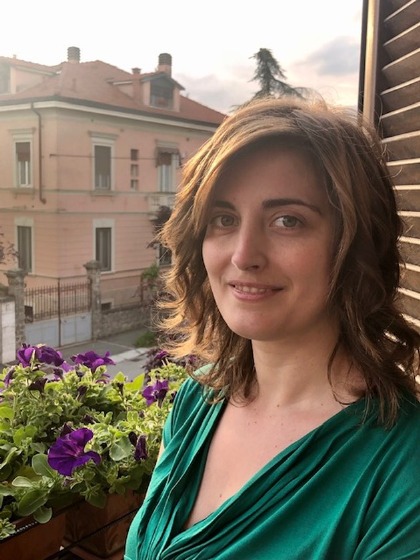
George Priniotakis is a Professor in the Department of Industrial Production Systems at the University of West Attica. He specializes in innovative textile technologies for multifunctional clothing, with a focus on medical and military applications, wearable sensors, and sustainable materials. His work bridges engineering, ergonomics, and environmental stewardship. University of Leeds – M.Sc. in Fiber Science and Technology (1992) University of Ghent – PhD in Conductive Textile Materials His research interests include: Smart systems using conductive textiles Risk management via wearable sensors Recyclable yarn development Innovative educational tools for engineering Professor Priniotakis has led numerous research projects as a scientific director and coordinator, participated in over 100 international conferences, and maintains an H-index of 12. He serves as President of the Organizing Committee for the biennial AITAE conference.
Sambriddhi Mainali serves as the Undergraduate Programs Director and Assistant Teaching Professor in the Department of Computer Science at the University of Missouri-St. Louis within the College of Arts and Sciences. Holding a Ph.D. in Computer Science from the University of Memphis (2021), she bridges computational theory with biological applications through her research and teaching. Education: Ph.D. in Computer Science, University of Memphis, 2021 Dr. Mainali's research program focuses on computational biology and bioinformatics, employing advanced machine learning, information theory, and molecular computing techniques to solve genomic challenges. Her work spans pathogenicity prediction, genomic sequence analysis, phenotype forecasting, and environmental DNA profiling, with particular emphasis on dimensionality reduction methods and species identification systems. This interdisciplinary approach integrates computer science fundamentals with biological data to advance precision medicine and biodiversity conservation. Analysis of her 14 publications from 2017-2022 reveals consistent innovation in genomic data science, with recent work emphasizing deep learning for DNA structure analysis (2022), information-theoretic dimensionality reduction (2021), and universal genomic positioning systems (2017-2020). Her research trajectory demonstrates increasing sophistication in applying computational frameworks to complex biological questions, particularly in translating genomic sequences into phenotypic predictions and environmental assessments. As Undergraduate Programs Director, she oversees curriculum development and student mentorship in computer science, maintaining office hours Tuesdays and Wednesdays 1:30-3:30 PM in ESH 313 with Zoom availability. Her contact details include email smbtk@umsl.edu and phone (314) 516-5239.
Chujun Zong is a Research Fellow at the Chair of Energy Efficient and Sustainable Design and Building, Technical University of Munich (TUM), since 2022. Her work integrates dynamic life cycle assessment, multi-objective optimization, and building simulation to address uncertainty in sustainable building design and urban development. Education Background: Bachelor of Architecture, Technical University of Munich (2014-2019) Exchange Semester, Architecture, École polytechnique fédérale de Lausanne (2016-2017) Master of Resource Efficient and Sustainable Building, Technical University of Munich (2019-2022) Research Focus: Zong specializes in dynamic life cycle analysis of buildings, stochastic optimization under uncertainty, and machine learning applications for occupant behavior modeling. Her work bridges temporal variations in building performance with holistic evaluation frameworks spanning material-level carbon footprints to urban district sustainability metrics. Current projects emphasize system dynamics modeling for insulation materials and multi-stage decision-making in façade design. Publication Trends: Her 11 publications (2022-2024) reveal a cohesive trajectory toward integrating stochastic optimization with building simulation. Key themes include life cycle carbon footprint modeling for materials, non-intrusive occupant behavior prediction, and urban-scale sustainability metrics. The research consistently addresses methodological gaps in handling uncertainty during early design phases through robust computational frameworks. Academic Engagement: As part of Prof. Lang's chair, Zong assists in teaching courses on sustainable architecture and scientific methodology. The chair drives major initiatives like CircularFTmehrRAUM (circular economy) and Klimalyse (climate analysis), positioning her within TUM's ecosystem for climate-resilient urban development through projects spanning building materials to neighborhood-scale green infrastructure.
Dr. Debby Gawlitta serves as an Associate Professor specializing in maxillofacial tissue regeneration with primary focus on bone regeneration within the Strategic Program of Regenerative Medicine & Stem Cells. She leads the Maxillofacial Bone Regeneration research group, dedicated to developing bio-inspired regenerative strategies that recapitulate natural bone development and healing processes through stem cells, biomaterials, and bioengineering technologies. Her research program centers on endochondral bone regeneration via cartilage intermediates, investigating allogeneic cell therapies for clinical translation. Key projects explore immune system interactions, devitalization effects, and vascularization strategies to create off-the-shelf bone regeneration solutions. This work bridges fundamental biological mechanisms with practical clinical applications to overcome limitations in current bone grafting procedures. Recent publications demonstrate multidisciplinary integration of tissue engineering, immunology, and biomaterials science, with emphasis on translational outcomes including bioceramic grafts, immune-modulated bone healing, and vascularized scaffold development validated in large animal models. Dr. Gawlitta has secured significant competitive research funding: TKI/HealthHolland grant 'Wishing Table' (2024, co-applicant, €800,000) ZonMW Open competition grant ‘NutriBone’ (2024, lead applicant, €790,000) RegMed XB/Strategic Vascular Alliance Valorisation Voucher (2023, €25,000) NWO-TTW Open Technology Program 'XLbone' (2022) As research group leader, she mentors students and collaborators in regenerative medicine while maintaining strong industry and clinical partnerships to accelerate therapeutic development. Her team operates advanced laboratories for biomaterials synthesis, cell culture, and preclinical testing with particular expertise in immune-compatible bone constructs and vascularized tissue engineering.
Michael te Vrugt is an Assistant Professor in the Institute of Physics at Johannes Gutenberg University Mainz . He holds dual PhDs in Physics (2022) and Philosophy (2023) from the University of Münster, Germany, and has held postdoctoral positions at DAMTP, University of Cambridge, and the Institute of Theoretical Physics, University of Münster. Current Role: Assistant Professor in Physics (since Sep. 2024) Postdoctoral Experience: University of Cambridge (2023-), University of Münster (2022-2023) Research Focus: Active matter, nonequilibrium statistical mechanics, dynamical density functional theory, Mori-Zwanzig formalism, and quantum-classical analogies His research bridges theoretical physics, statistical mechanics, and interdisciplinary applications, including epidemic modeling and DNA-based computing. Recent work explores active matter systems, biaxial liquid crystals , and reservoir computing frameworks. He has contributed to the SFB1551 Collaborative Research Center. Scientific Awards: No awards explicitly mentioned. Advising and Grants: No student names or grant listings provided, but active involvement in SFB1551 and interdisciplinary projects is evident. Labs & Teams: Principal Investigator at Johannes Gutenberg University Mainz, collaborating on projects like SFB1551.
Charbel Toumieh is a Research Fellow at the École Polytechnique Fédérale de Lausanne (EPFL), based in the Intelligent Systems Laboratory (LIS) under the School of Engineering (STI). His research focuses on advanced robotics, particularly in aerial systems, motion planning, and autonomous systems. He holds a postdoctoral position and contributes to projects involving multi-agent coordination, high-speed navigation, and energy-efficient drone designs. Key research areas include teleoperation of aerial swarms, adaptive morphing for avian-inspired drones, and decentralized multi-agent planning. His work addresses challenges in cluttered environments, dynamic obstacle avoidance, and real-time trajectory optimization. The LIS lab, part of the Institute of Microengineering (IGM), emphasizes innovative solutions in intelligent systems and robotics. Recent publications highlight advancements in motion planning algorithms, safe corridor generation using voxel grids, and GPU-accelerated exploration techniques. His research bridges theoretical control systems with practical applications in autonomous robotics, aiming to enhance efficiency and resilience in robotic systems.
Matthew Taylor is an Associate Professor of Computing Science at the University of Alberta's Faculty of Science. He directs the Intelligent Robot Learning Lab (irll.ca) and holds a Canada CIFAR AI Chair at Amii, the Alberta Machine Intelligence Institute. His research spans reinforcement learning, multi-agent systems, robotics, and human-AI interaction, with emphasis on translating academic AI into industry applications. Dr. Taylor earned his PhD in 2008 and has held roles across academia and industry. His work focuses on human-in-the-loop AI systems, reward design, and multi-agent coordination. Notable contributions include frameworks for automated warehouse layout generation, decentralized energy resource coordination, and bio-inspired prosthetic control systems. Awards include his Amii fellowship and CIFAR chair. His lab develops real-world applications in areas like flight training augmentation, smart home systems, and robotics education. Current projects emphasize robustness in noisy environments and transfer learning across domains. Key Research Areas: Reinforcement Learning, Human-AI Collaboration, Multi-Agent Systems Lab: Intelligent Robot Learning Lab Affiliations: Amii (Alberta Machine Intelligence Institute)
Dr. Lukasz Laniewski-Wollk serves as an Honorary Fellow at the School of Mechanical and Mining Engineering, The University of Queensland, where he conducts advanced research in computational fluid dynamics and optimization methodologies. His work bridges theoretical development with practical applications in energy systems and resource extraction. His primary research domains encompass: Computational Fluid Dynamics Lattice Boltzmann Methods Aerodynamic Optimization Multiphase Flow Fracture Mechanics Particle Transport Analysis of his 2020-2025 publications reveals a concentrated effort on developing high-fidelity computational frameworks for complex fluid phenomena, particularly in multiphase systems and fractured media. His methodologies demonstrate strong interdisciplinary integration between fluid mechanics, materials science, and petroleum engineering, with significant contributions to lattice Boltzmann variants for non-Newtonian fluids and fracture permeability quantification. Collaborative patterns indicate sustained partnerships with UQ's computational mechanics group and international energy research consortia.
Antinisca Di Marco is an Associate Professor in the Department of Applied Clinical Science and Biotechnology at the University of L'Aquila, Italy. She has held this position since October 2017, having previously served as an Assistant Professor in the Department of Computer Science from 2008 to September 2017. Her research spans Software Engineering with specific focus on extra-functional properties and adaptation mechanisms. Key research areas include: Software modeling and performance analysis Performance antipatterns and model-based reconfiguration Context-aware systems and non-functional analysis Bio-inspired paradigms for self-adaptive systems Bioinformatics (since 2013) Dr. Di Marco's recent publications demonstrate a strong interdisciplinary approach, bridging software engineering with healthcare applications, particularly in mobile health systems for cancer treatment monitoring and symptom management. Her work also addresses fundamental challenges in context-aware mobile systems, performance optimization, and wireless sensor networks. She has received significant recognition including: Best Paper Award at FASE 2010 for performance modeling of context-aware mobile systems Best Poster Award at ECSA 2010 for bio-inspired self-adaptive paradigms Dr. Di Marco has advised multiple PhD students and has been actively involved in numerous research projects including iCARE (ERC Proof of Concept), VISION ERC, and CONNECT FET. She serves as Director of the University of L'Aquila Node of the InfoLife CINI Laboratory, focusing on Bioinformatics and Systems Biology research.
Mohammad Fotouhi is a Lecturer in Materials and Structures at the James Watt School of Engineering, University of Glasgow, where he joined in September 2019. Prior to his current position, he served as a lecturer at the University of the West of England and led the Hybrid Composites developments in the HiPerDuCT programme (EP/I02946X/1, £6.41m) as a postdoctoral researcher at the University of Bristol. Dr. Fotouhi earned his honored MSc (September 2011) and PhD (December 2015) in mechanical engineering with a focus on manufacturing and production. Both his graduate theses centered on acoustic emission-based damage monitoring of composites and were recognized for their quality in a university-wide assessment. His research expertise spans composites design, manufacturing, and structural integrity. Dr. Fotouhi's current work focuses on generative design, lightweight and smart bio-inspired composites, 4D printed self-morphing structures, and multi-functional materials. He has pioneered innovations in high-performance composite T-joints, pseudo-ductile and notch-insensitive composites, and novel damage detection methodologies. His work bridges fundamental materials science with practical engineering applications, particularly in structural health monitoring systems that can autonomously detect and report damage in composite structures. Analysis of Dr. Fotouhi's recent publications reveals a strong emphasis on structural health monitoring technologies for composite materials. His work integrates multiple approaches including mechanochromic materials that change color when damaged, bio-inspired sensor technologies, acoustic emission monitoring, and machine learning algorithms for damage detection. A significant portion of his research focuses on 'barely visible impact damage' - a critical challenge in composite structures where damage may not be apparent to the naked eye but significantly compromises structural integrity. His work consistently demonstrates the application of advanced manufacturing techniques to create smarter, more reliable composite structures. Member of editorial board: Journal of Composites Science Member of editorial board: Composite Materials: Science publishing group Member of editorial board: SVOA Materials Science & Technology Member of editorial board: Journal of Engineering and Technology Guest editor: Polymers Session chair at international conferences (ICCS and ECCM) Dr. Fotouhi has secured over £450,000 in competitive research funding as Principal Investigator for his innovative work in composite materials. His research program involves collaborations with multiple institutions and industry partners, particularly in the development of next-generation composite monitoring systems. Before entering academia, he gained three years of industrial R&D experience in reverse engineering, manufacturing, CAD/CAM, and material analysis, which informs his practical approach to research problems. His laboratory work focuses on developing and testing novel composite structures with integrated sensing capabilities, particularly using thin-ply hybrid composites and mechanochromic materials. His team works at the intersection of materials science, structural engineering, and sensor technology to create composite systems that can not only withstand operational stresses but also report their own health status in real time.
Martin Nisser is an Assistant Professor at the University of Washington in the Department of Aeronautics and Astronautics . He leads the Programmable Matter Lab , focusing on computational fabrication and assembly platforms for in-space and end-user applications. His educational background includes a PhD in Computer Science (2024) and an MS in Computer Science (2019) from MIT, an MSc in Robotics, Systems & Control from ETH Zurich (2015), and a BEng in Mechanical Engineering with Renewable Energy from the University of Edinburgh (2013). Research Interests Computational fabrication Self-assembly systems In-space manufacturing Programmable materials Modular robotics Scientific Awards Seth J. Teller Award (2023) Collier Medal (2023) Sweden-America Fellowship (2021) Thomas G. Stockham & Bernard Gold Fellowship (2022) IMechE Best Student Award (2013) Outreach & Teaching Co-founder of Brave Behind Bars prison education program Teaching Assistant at MIT SuperUROP and Engineering Interactive Technologies Mentored over 20 students in robotics and fabrication projects
Professor Jennifer Franck is a faculty member in the Department of Mechanical Engineering at the University of Wisconsin-Madison, with additional affiliations in the Nuclear Engineering & Engineering Physics program. Her research focuses on computational fluid dynamics (CFD), unsteady fluid mechanics, and engineering applications in renewable energy systems such as wind, tidal energy, and propulsion. She holds a PhD from the California Institute of Technology (2009) and undergraduate degrees from the University of Virginia (BS, 2003) and Caltech (MS, 2004). Recipient of prestigious awards including the NSF CAREER Award (2023) and multiple ONR Summer Faculty Research Fellowships. Explores bio-inspired designs (e.g., seal whisker geometry) to enhance fluid-structure interaction and reduce vortex-induced vibrations. Advances cross-flow turbine and oscillating foil technologies for energy harvesting through CFD simulations and experimental validation. Research interests emphasize: Unsteady flow dynamics and turbulence modeling Optimization of renewable energy systems (tidal/wind turbines) Bio-inspired flow control strategies Recent publications highlight CFD-driven innovations in turbine blade design, vortex wake classification via machine learning, and high-efficiency propulsion systems. Grants include multi-disciplinary collaborations on bio-inspired geometries and fluid-structure interaction analysis. Labs/Teams: Active in fluid dynamics experimental facilities and computational modeling groups within the UW-Madison College of Engineering.
Gian Carlo Cardarilli is a researcher specializing in digital hardware design and machine learning acceleration. His work focuses on FPGA implementations, Residue Number System (RNS) architectures, and reconfigurable computing for applications in wireless communication, edge AI, and fault-tolerant systems. Key collaborations with institutions like IEEE and ACM through publications. Active in translating theoretical algorithms into practical hardware solutions for real-time systems. Research interests include: Optimizing deep learning models for heterogeneous platforms. Developing radiation-hardened memory systems. Creating energy-efficient signal processing architectures. Advancing reconfigurable functional units for embedded processors. His article analyses span fields like Quantum Cellular Automata , Variable Fractional Delay Filters , and RNS-Based Position Estimation , reflecting a trend toward adaptive, low-power, and domain-specific hardware.
Erika Covi is an Assistant Professor at the University of Groningen, affiliated with the Faculty of Science and Engineering and the Bio-inspired Circuits & Systems group within the Zernike Institute for Advanced Materials. Her research focuses on neuromorphic engineering, leveraging emerging materials like ferroelectric and memristive devices to design bio-inspired circuits and systems. Key areas include ferroelectric tunnel junctions (FTJs), spiking neurons, and neuromorphic edge computing. She collaborates on compact modeling for efficient circuit simulations and explores applications in energy-efficient neural networks. Her work integrates interdisciplinary approaches from materials science, electrical engineering, and computational neuroscience. Research interests span device physics of ferroelectric materials, analog neuromorphic hardware, and neuromorphic computing architectures. She has contributed to studies on coincidence detection in spiking neurons using ferroelectric polarization and tunable synaptic working memory with memristive devices. Current projects emphasize bridging device-level innovations with system-level neuromorphic applications, aiming to advance bio-inspired computing technologies.
Jason Quinlan is a Lecturer in the Department of Computer Science at University College Cork (UCC), Ireland. He holds a PhD in Computer Science and has extensive experience in teaching undergraduate modules such as Introduction to Programming (CS1117), Problem-Solving (CS1022), and Team Software Project (CS3305). His current role includes coordinating the CSIT SOLAS support hub for first-year students. Previously, he served as a Senior Post-Doc Researcher focusing on Intelligent Video Delivery at the Edge for 5G networks with the SFI iVID Project and CONNECT institute. Research interests span Natural Language Processing , Video Streaming Optimization , Software Defined Networking , and 5G Infrastructure . He led the development of frameworks like D-LiTE (DASH performance evaluation) and GoDASH (Go-based HAS framework). His work emphasizes QoE/QoS metrics, adaptive streaming algorithms, and network simulation tools. Key achievements include publishing over 30 peer-reviewed articles (e.g., on DASH streaming, 5G dataset analysis), securing €21,744 in research grants, and supervising 2 PhD, 15 Master’s, and numerous undergraduate students. Collaborations span institutions like UC Riverside (USA) and Université Clermont Auvergne (France). He actively contributes to conferences like ACM Multimedia Systems and IEEE LANMAN. Teaching and outreach activities include the MISL Summer of Code initiative mentoring over 60 students since 2018, and completing certifications in Project Management (PRINCE2, Scrum) and Higher Education Teaching. He has reviewed for top journals including Multimedia Systems Journal and IEEE Transactions on Multimedia, and serves on program committees for ACM MM and NetSoft conferences.