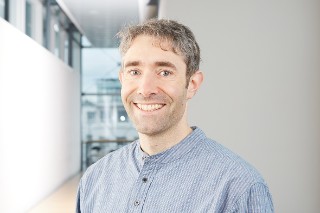
Dr. Benedikt Bläsi is Science Manager for Optics for Photovoltaics at Fraunhofer ISE's Photovoltaics Division. His research focuses on optical concepts for solar cells including light trapping structures, nanoimprint lithography, and color engineering for building-integrated PV. Key innovations include the MorphoColor® concept inspired by butterfly wings for colored PV modules, hyperuniform disordered structures for light management, and roller-nanoimprinted textures. Recent work advances III-V/Si multi-junction cells achieving 36.1% efficiency and computational methods for optical modeling. He holds editorial roles at Optics Express and leads projects on terawatt-scale photovoltaics, collaborating globally on optical technology roadmaps for sustainable energy scaling.
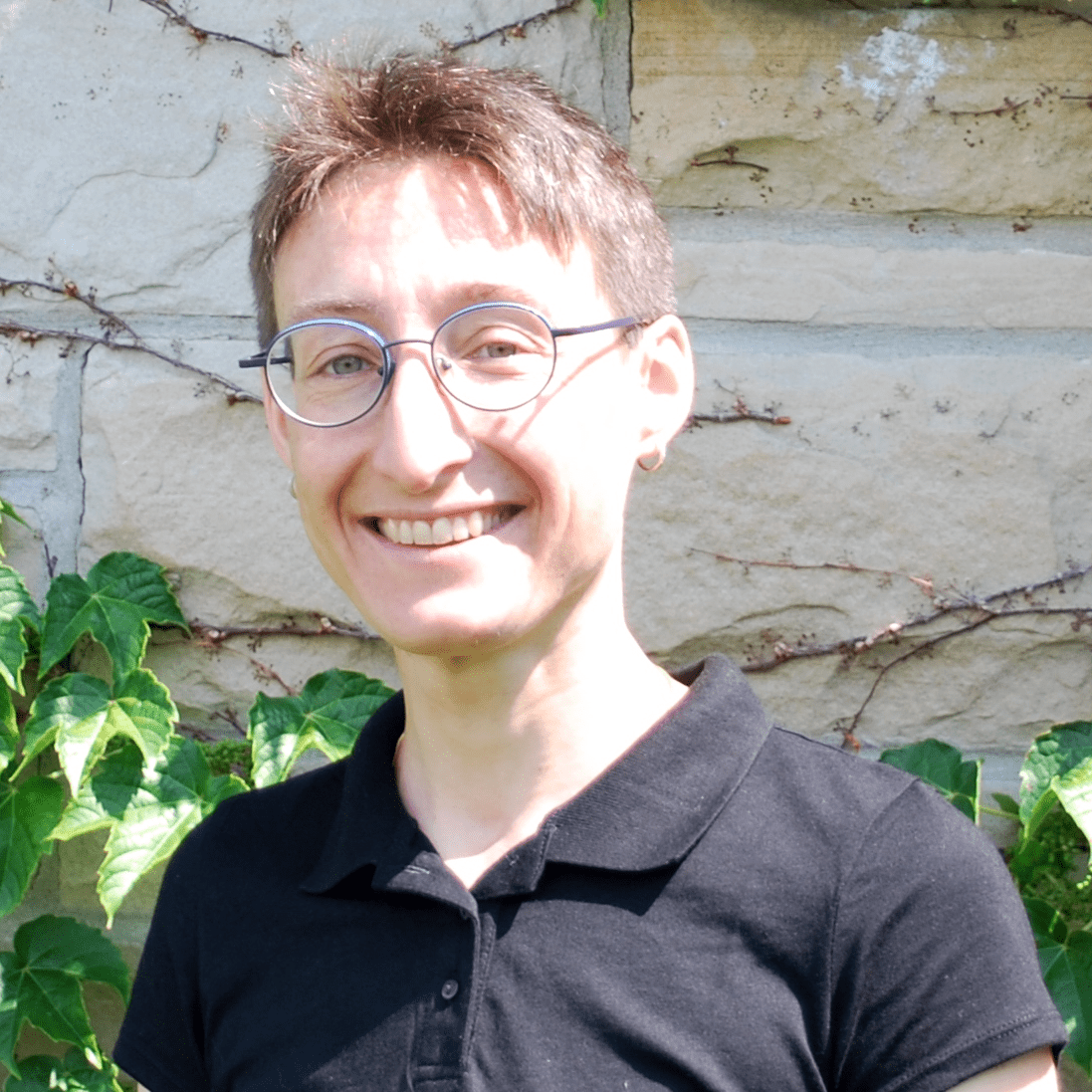
Pooneh Maghoul is a Full Professor in the Department of Civil, Geological and Mining Engineering at Polytechnique Montréal. She founded and directs the Sustainable Infrastructure and Geoengineering Laboratory (SIGLab), and is a member of Astrolith (Lunar Research Unit) and the Geotechnical Research Group (GRG). With over 14 years of academic and industrial experience in Canada and France, she chairs the Education Committee of the Canadian Geotechnical Society (CGS) and serves on its Board of Directors, as well as the Canadian Permafrost Association (CPA). Ph.D. (2007–2010), M.Sc. (2006–2007) - École des Ponts ParisTech Postdoc (2010–2012) - Université Laval B.Sc. (2002–2006) - University of Tehran Her research focuses on poromechanics of complex porous media and subsurface systems under multi-hazard conditions, including climate change , earthquakes , and lunar environments . Key areas include permafrost stability , bio-inspired drilling , non-destructive testing , and lunar subsurface exploration . Recent publications highlight her work on ultrasonic characterization of frozen soils , climate-resilient Arctic infrastructure , and AI-driven permafrost thaw prediction . She has pioneered waterless drilling technology adaptable for lunar regolith exploration and developed geothermal energy solutions for cold regions. 2023 : Canada's Outstanding Young Geotechnical Engineer 2022 : Canadian Geotechnical Society Recognition Multiple : Best Paper Awards in International Journals She has supervised 2 Ph.D. and Master’s students, including Cui, S. (2023) and Afsharipour, M. (2023). Her work bridges earthquake engineering , computational mechanics , and space geotechnics , with recent grants from the Canada Foundation for Innovation and Fonds de recherche du Québec.
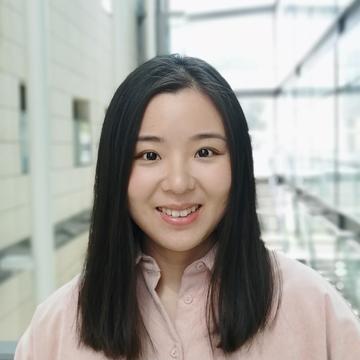
Dr. Chloé Arson is a Professor in the Department of Earth and Atmospheric Sciences at Cornell University and an adjunct faculty member at Georgia Tech’s School of Civil and Environmental Engineering. She holds a Ph.D. in geomechanics from École Nationale des Ponts et Chaussées (2009) and has held academic roles at Texas A&M (2009–2012) and Georgia Tech (2012–2023) before joining Cornell in 2023. Research: Her work focuses on damage and healing in rock mechanics, AI-driven subsurface exploration, and bio-inspired geotechnical systems. Key areas include computational modeling of porous media, geothermal energy systems, and climate change mitigation through poromechanics. Her lab develops tools like the Burrowing Robot with Integrated Sensor System (BRISS) and investigates slime mold network dynamics for infrastructure adaptation. Teaching: Teaches mechanics-focused courses at Cornell and Georgia Tech, including 'Modern Structures,' 'Theoretical Geomechanics,' and 'Finite Element Method for Porous Media.' Awards: 2023 Susan G. and Christopher D. Pappas Professorship 2021 NSF BRITE Award 2016 NSF CAREER Award Service: Editorial roles in Scientific Reports and Open Geomechanics , leadership in ASCE committees, and director of the CEE Gateways to France program fostering Franco-American collaborations. Labs/Teams: Leads the Arson Lab at Cornell, focusing on computational geomechanics, AI integration, and bio-inspired engineering solutions.
Dr. Aysu Kuru is a Lecturer in Architecture and Construction at the University of Sydney, serving as Pillar Lead for Buildings and Climate Change at the Net Zero Institute. She holds a PhD in Built Environment, an MSc in Sustainable Building Engineering, and a BA in Architecture. Her research focuses on sustainable and regenerative architecture, building performance assessment for energy and climate impacts, and low-carbon construction technologies. Education: PhD in Built Environment MSc in Sustainable Building Engineering BA in Architecture Research interests include: Sustainable and regenerative design Bio-inspired architecture Climate impact mitigation Net zero carbon strategies Recent publications emphasize climate risk assessment, circular economy frameworks, and policy pathways for net zero carbon buildings. She advises research students on topics such as building envelope resilience and agri-facades. Notable grants include projects on biodiversity lifecycle impact assessment and timber active envelopes. She is affiliated with the Sydney Environment Institute and collaborates on industry partnerships through the Net Zero Institute.
Yujia Qing is an Associate Professor of Organic Chemistry at the University of Oxford, affiliated with Lady Margaret Hall. Her research explores single-molecule chemistry, particularly polymer behavior under nanopore confinement, and engineering protein nanoreactors for vectorial catalysis. BSc in Chemistry, University of Sheffield (2012) MSc in Pharmacology, University of Oxford (2014) DPhil in Chemical Biology, University of Oxford (completed under Prof. Hagan Bayley) Her work leverages engineered protein nanopores as nanoreactors to monitor bond-making and breaking events in real time, enabling innovations like mobile molecules for biopolymer movement and sequence analysis. This bridges single-molecule chemistry , nanopore technology , and synthetic biology . Recent publications highlight advancements in bioorthogonal chemistry , post-translational modification detection , and nanopore-based sensing . Key themes include real-time reaction monitoring , directional molecular control , and enzyme-free analytical methods . Scientific Awards : Reaxys PhD Prize (2019) Dream Chemistry Award (2019) Glasstone Research Fellowship in Science (2020) She has held postdoctoral and fellowship roles at the University of Oxford, contributing to chemical biology and nanopore applications .
Nader Engheta is the H. Nedwill Ramsey Professor at the University of Pennsylvania, holding primary appointment in the School of Engineering and Applied Science's Department of Electrical & Systems Engineering. He also holds secondary appointments in Physics and Astronomy, Bioengineering, and Materials Science and Engineering. His research spans metamaterials, photonics, and electrodynamics, with a focus on 4D optics and wave-matter interactions. Education: BS (highest rank) in Electrical Engineering from University of Tehran, MS/PhD in Electrical Engineering & Physics from Caltech. He has held postdoc and industry roles before joining Penn in 1990. Research interests include temporal metamaterials, epsilon-near-zero (ENZ) materials, nano-optics, and bio-inspired imaging. His group develops wave-based computing architectures and metastructures for equation-solving systems. Awards: Over 30+ honors including Isaac Newton Medal (2020), Max Born Award (2020), Vannevar Bush Fellowship (2015), and three honorary doctorates (Finland, Germany, Ukraine). Fellow of IEEE, OSA, APS, SPIE, and AAAS. Labs/Teams: Engheta Group at Penn's Moore/Levine buildings, collaborating globally. Current projects include programmable photonic circuits, inverse-designed metamaterials, and 4D optical systems. His work merges theoretical physics with engineering applications in nanotechnology and quantum optics.
Dr. Ralf Bauer is a Senior Lecturer in the Department of Electronic & Electrical Engineering at the University of Strathclyde, with a focus on miniaturized biomedical imaging systems integrating MEMS and micro-optics. He holds a PhD in MEMS-enabled laser systems (2013) from the University of Strathclyde and a Master of Engineering from the University of Erlangen-Nuremberg (2010). His research spans MEMS micromirror applications in biomedical imaging, optical MEMS, and trace gas sensors. Education: PhD in MEMS-enabled laser systems, University of Strathclyde (2013) Master of Engineering, University of Erlangen-Nuremberg (2010) Key Research Areas: Miniaturized 3D biomedical imaging systems Optical MEMS and bio-inspired sensors MEMS-based solid-state lasers and quantum optics His work emphasizes cost-effective imaging solutions and sensor technologies, including 3D-printed optical components and photoacoustic gas detection systems. Bauer’s contributions have led to awards such as the Best Poster Price at Photonex Glasgow 2019 and the Best Student Paper Award at IEEE Optical MEMS 2019. He is actively involved in academic activities, including project leadership (e.g., BBSRC-funded 3D-printed microscopy projects) and editorial roles. His research aligns with the UN Sustainable Development Goal of advancing affordable and clean energy through innovative sensor technologies.
Dr. Jiaming Ma is a post-doctoral researcher at RMIT University's Centre for Innovative Structures and Materials (CISM), working on the ARC Laureate Fellowship project. His research focuses on material and structural innovations for sustainable civil engineering, including rammed earth, metamaterials, and topology optimization. He holds a Researcher academic rank and is affiliated with the School of Engineering's Department of School of Engineering. Dr. Ma has received notable awards such as the 2022 Hangai Prize and Best Paper Award. He has led roles in organizing academic symposia and professional associations, including the Chinese Association of Professionals and Scholars in Australia. His work emphasizes sustainable construction and digital fabrication methods. Research Interests: Rammed earth, Sustainable building materials, Topology optimisation, Digital Construction, Computational morphogenesis, Shell structures. These areas address environmental sustainability and advanced structural solutions. Key achievements include pioneering bio-binder stabilization for rammed earth and developing deployable tubular structures. His articles span structural optimization, metamaterials, and sustainable design, reflecting interdisciplinary contributions to civil engineering and materials science. Awards include the Hangai Prize for shell structure innovation, DNA Paris Design Award, and leadership in academic conferences. He supervises research projects on metamaterials and rammed earth construction. Professional contributions include roles as President of the Chinese Association of Professionals in Australia and organizing the IASS Annual Symposium 2023. His work bridges academic research with industry applications, particularly in eco-friendly construction practices.
Dr. Valentina Di Santo is an Assistant Professor of Marine Animal Physiology at the Scripps Institution of Oceanography, UC San Diego. Her research integrates biomechanics, physiology, and robotics to study fish locomotion under climate change. She holds a B.Sc. in Natural Sciences from Università di Firenze, an M.Sc. in Biology from the University of West Florida, and a Ph.D. in Biology (Marine Program) from Boston University. Her lab focuses on understanding how environmental stressors like warming, acidification, and hypoxia affect fish performance, while also developing bio-inspired robotics. Key collaborators include engineers and computer scientists for robotic platforms like the cyborg-skate and tuna-bot. Current funding comes from the Human Frontier Science Program and UC San Diego. Her research themes include climate change impacts on fish physiology, biomechanics of swimming and walking behaviors, and paleo-inspired robotics. Notable achievements include quantifying skeletal morphology changes in forage fish over centuries via museum collections and developing a robotic model based on fossil data. Recent publications explore hovering energetics, shark locomotion, and the effects of cyanobacterial blooms on fish behavior. Education: B.Sc. Natural Sciences, Università di Firenze (Italy) M.Sc. Biology, University of West Florida Ph.D. Biology (Marine Program), Boston University Lab members include postdocs Dr. Fidji Berio and Dr. Francesco Masnadi, lab technician Camille Morerod, and numerous graduate and undergraduate students. Awards include the 2025 Scialog Fellowship in Neurobiology and Changing Ecosystems. The lab emphasizes equity, collaboration, and innovative approaches to marine science.
Amanda Holt is an Associate Research Scientist in Alison Sweeney’s lab at Yale University’s Department of Physics. She holds a B.A. in Physics and Music from Bard College and a Ph.D. in Physics from the University of California, Santa Cruz. Her research focuses on biophysics and optical systems in marine organisms, particularly studying light interactions with biological structures in squids, giant clams, and deep-sea creatures. She employs experimental and computational methods such as Monte Carlo modeling, micro-probe radiometry, and finite-difference time-domain simulations to analyze optical phenomena in natural systems. Key research contributions include modeling light reflectance in squid eyes, optimizing photon transport in giant clams, and designing bio-inspired light-guiding systems. Holt’s work bridges marine biology, optics, and materials science, with applications in renewable energy and biomimetic engineering. She has published extensively on topics like symbiotic solar flux optimization, midwater camouflage mechanisms, and photonic structures in marine animals. Her awards include the GAANN Fellowship (2005-2007) and Excellence at Equal Cost Scholarship (1997-2001). Beyond academia, Holt champions science education through her role as lead coordinator for Brook Knoll Elementary’s science fair, emphasizing inclusivity for underrepresented students. She regularly engages with K-12 classrooms as a guest speaker, integrating her research to inspire future scientists. Holt collaborates closely with multidisciplinary teams, advancing understanding of biological optical systems while addressing broader societal needs like sustainable energy solutions. Her current projects focus on refining Monte Carlo models for cellular light scattering and developing experimental techniques to quantify optical properties in marine tissues.
Daigo Shishika is an Assistant Professor in the Department of Mechanical Engineering at George Mason University's College of Engineering. His research focuses on autonomy, dynamics, controls, and robotics, particularly in multi-agent systems and cooperative control of robot teams in adversarial environments. PhD, Aerospace Engineering, University of Maryland, College Park Master of Science, Aerospace Engineering, University of Maryland, College Park Bachelor of Science, Aerospace Engineering, University of Tokyo Dr. Shishika's research interests lie at the intersection of robotics and game theory, with a strong emphasis on multi-robot systems , cooperative control , and adversarial engagement . He explores bio-inspired swarming behaviors—such as those observed in mosquitoes—to design scalable and robust distributed algorithms. His work also investigates deception through motion , dynamic resource allocation , and perimeter defense games , aiming to enable robot teams to operate effectively under uncertainty and limited sensing. The recent publications reflect a strong trend in applying game-theoretic models to multi-robot coordination, especially in security and defense contexts. Themes include dynamic games, adversarial resource allocation, perimeter defense, and distributed decision-making on graphs. These works combine control theory, artificial intelligence, and robotics to solve real-world challenges in autonomous teaming. Scientific recognition includes: Nominated for Best Paper in Cognitive Robotics at IROS 2023 Dr. Shishika advises several PhD students including Vi Rostobaya, Goutam Das, James Berneburg, Manshi Limbu, and Sara Oughourli. His research is supported by funding from DCIST and involves collaborative projects with institutions such as Georgia Tech, University of Pennsylvania, and UC Santa Barbara. He actively recruits motivated students for research in robotics, control, and game theory. He leads the Collaborative Robotics, Autonomy, and Dynamics Lab at George Mason University, where his team develops autonomous blimps and quadrotors for competitive and research purposes, including participation in the DTR autonomous blimp competition. The lab emphasizes both theoretical advances and practical implementations in robotics.
Dr. Esther Mondragón is a Senior Lecturer in the Department of Computer Science at City St George's, University of London, within the School of Science and Technology. She is a member of CitAI (the Artificial Intelligence Research Centre at City) and directs the virtual Centre for Computational and Animal Learning Research. Her academic leadership includes serving as Chair of the School of Science and Technology Research Degrees Committee and former Director of the MSc in Artificial Intelligence. PhD Psychology, University of the Basque Country, Spain MSc Psychology, University of the Basque Country, Spain BSc Psychology, University of the Basque Country, Spain Dr. Mondragón is a computational cognitive neuroscientist whose research lies at the intersection of artificial intelligence and cognitive neuroscience. Her primary focus is on bio-inspired AI, particularly reinforcement learning models of cognition grounded in associative learning principles. She develops computational frameworks that bridge natural and artificial cognition, including influential models like the Double Error Dynamic Asymptote (DDA) and the Rescorla-Wagner Drift-Diffusion Model (RWDDM). Her work extends to deep learning integration, Hebbian learning, representational learning, and episodic memory in AI. She has also contributed to understanding perceptual learning, rule acquisition in animals, and timing mechanisms in conditioning. The 15 most recent publications reflect a strong trend in computational modeling of learning, with increasing integration of deep learning and neuro-inspired architectures. Her work spans theoretical cognitive science, applied AI, and software development for simulation. Key themes include associative mechanisms in representation, temporal modeling, and biologically plausible neural networks. She frequently collaborates with researchers like Eduardo Alonso and others across disciplines. Member, Spanish Society for Comparative Psychology (SEPC) Member, Cognitive Science Society International Affiliate, Pavlovian Society Member, Division 6: Society for Behavioral Neuroscience and Comparative Psychology, American Psychological Association (APA) Senior member, The Society for the Study of Artificial Intelligence and the Simulation of Behaviour (AISB) Dr. Mondragón actively supervises PhD students including Corina Cătărău-Cotuțau, Alexander Dean, and Mpagi Kironde. She has supervised several to completion, such as Esther Mulwa, André Luzardo, and Niklas Kokkola. She has secured significant research funding as PI/Co-PI on projects like 'INDUSTRIAL PhD SCHOLARSHIP, BOSCH AASS' (£140,000, Innovate UK), 'DEEPSYNC: AUTOMATED VFX FOR VIDEO DUBBING' (£143,000, Innovate UK), and 'FREE ENERGY PRINCIPLE FOR ADAPTIVE COGNITIVE ARCHITECTURES' (£98,000, DSTL). She also serves as a reviewer for the US National Science Foundation, BBSRC, NCN Poland, and numerous high-impact journals. She directs the virtual Centre for Computational and Animal Learning Research, which fosters interdisciplinary collaboration among cognitive scientists, neuroscientists, biologists, mathematicians, and computer scientists. She also leads the Knowledge Graphs Interest Group at The Alan Turing Institute.
Stefano Discetti is a Full Professor in the Department of Aerospace Engineering at Universidad Carlos III de Madrid, leading the Aerospace Engineering Research Group. His work bridges experimental fluid dynamics, machine learning, and flow control. Key research themes include turbulence characterization, heat transfer enhancement, and advanced measurement techniques like PIV/PTV. He has developed data-driven methods for flow estimation, sensor placement optimization, and physics-informed neural networks. Research Trends from his publications show a focus on: Machine learning for turbulent flow reconstruction (GANs, CNNs, KNN) Non-intrusive sensing from wall measurements Manifold learning and reduced-order modeling Heat transfer control via plasma actuators and passive structures Time-resolved diagnostics using hybrid experimental/numerical approaches Projects include principal roles in EU and national grants like NEXTFLOW (2021-2026) and EXCALIBUR (2023-2026), with industry collaborations at Airbus and TU Delft.
Gunnar Tufte is a Professor and Deputy Head of Research at the Department of Computer Technology and Informatics, NTNU. He leads the Computer Architecture Lab and advises PhD programs in Computer Science and Informatics within the Faculty of Information Technology and Electrical Engineering. His primary research focuses on unconventional computing, including artificial spin ice systems, self-organizing nanomaterials, and bio-inspired architectures. Research Interests include: Unconventional Machines: Architecture, Design, and Computation Spin-based Computing and Energy Efficient Systems Evolution-in-Materio and Nanoscale Computation Reservoir Computing and Dynamical Systems Nano-Magnetic Orchestration and Self-Organization Key Projects: SpinENGINE (EU Horizon 2020 FET-Open): Developing parallel computing platforms using nanomagnet ensembles. SPrINTER (Norwegian Research Council): Low-power spin-based computing technology. flatspin: Open-source simulator for artificial spin ice systems (GPLv3). Grants and Collaborations: Horizon 2020 FET-Open funding for SpinENGINE. NFR funding for SPrINTER project. Lab/Team: Maintains the Computer Architecture Lab and collaborates on interdisciplinary projects with researchers in nanotechnology, AI, and biology.
Morteza Hosseini is an Assistant Professor at the Department of Architecture, Design and Media Technology within Aalborg University's Technical Faculty of IT and Design. His work focuses on biomimetic architectural systems, sustainable energy solutions, and daylight performance optimization. He leads the Lighting Design Lab and is Principal Investigator (PI) of the EUDP 2023 project on low-carbon integrated lighting. Research interests include adaptive kinetic façades inspired by biological systems, energy-efficient building design, and environmental impact assessment of lighting technologies. He has contributed to over 20 peer-reviewed articles, with recent work exploring solar radiation modeling, vertical greenery effects, and IoT in smart buildings. Edited journals: Journal of Daylighting , Architectural Engineering and Design Management Guest lectured at Technical University of Denmark (2024) Led workshops on parametric design and solar energy integration His work bridges computational design with environmental sustainability, emphasizing real-world applications in building systems. Current projects aim to reduce carbon footprints while maintaining occupant comfort through innovative façade technologies.