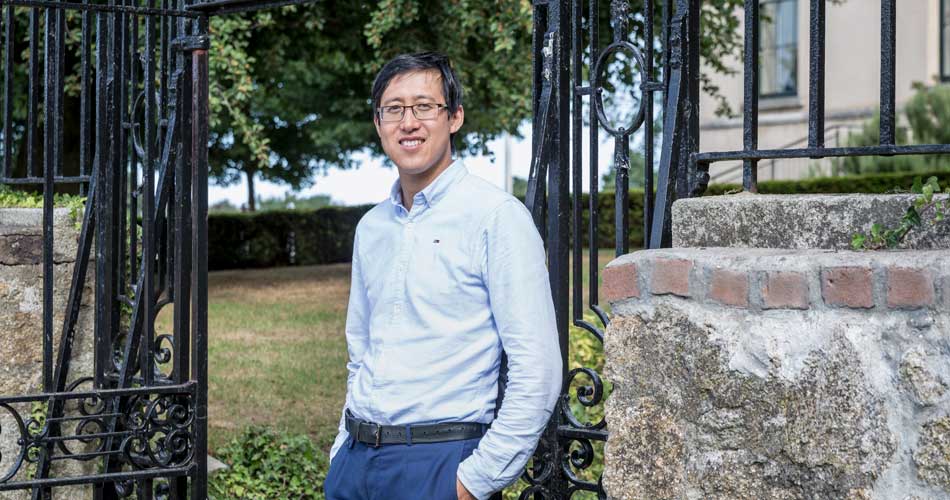
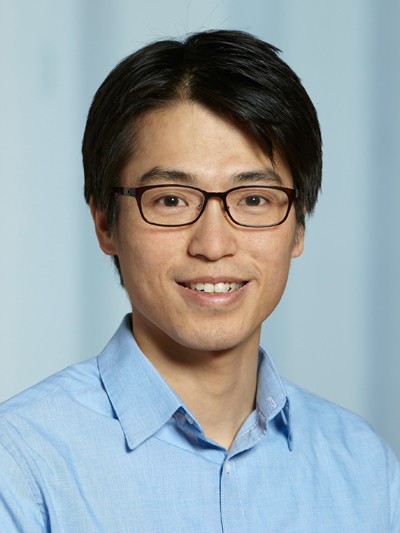
Dr. Nan Zhang is a research leader at the UCD School of Mechanical and Materials Engineering , focusing on precision manufacturing technologies for micro/nano-scale devices. His work bridges lab-scale prototyping and industrial mass production, with applications in medical devices, microfluidics, and functional surfaces. Research Keywords : Precision Manufacturing, Microfluidics, Nanotechnology, Materials Science, Medical Devices, Advanced Manufacturing Research Trends : Recent publications highlight advancements in digital light processing (DLP) 3D printing, machine learning-optimized microfabrication, liquid metal antenna technologies, and scalable nanocomposite mold development. His work emphasizes industrial feasibility, biocompatibility, and surface engineering. Scientific Awards : Smurfit Kappa Newman Fellowship Award ERC Grants (contextual institutional affiliation) Labs & Collaborations : Based at the UCD Engineering and Materials Science Centre, Dr. Zhang’s research involves partnerships with industry and academic networks, focusing on precision tooling, microfluidic scale-up, and novel material applications (e.g., bulk metallic glasses, bio-plastics).
Dr. ir. Dirk T.S. Rijkers is an Associate Professor at Utrecht University in the Department of Chemical Biology & Drug Discovery, Faculty of Science. He has been working at Utrecht University since 1997, progressing from post-doctoral researcher to his current position as Associate Professor since 2022. His educational background includes: 1985–1990: Chemical Engineering at Eindhoven University of Technology, with a major in bioorganic chemistry 1990–1994: PhD in bioorganic chemistry at Catholic University of Nijmegen Rijkers' research focuses on peptide chemistry, with his central theme summarized as 'Peptides: synthetic challenges, tools, materials and therapeutics.' His work is highly synthesis-driven with strong emphasis on biologically relevant applications. He has documented his research in 117 original papers and 118 proceedings/abstracts, with an h-index of 43 and over 6,000 citations. His work has led to 3 patents and he has presented his research in 19 invited lectures. Analysis of his recent publications shows a consistent focus on peptide synthesis methodologies, particularly ring-closing metathesis and click chemistry approaches. His work spans antimicrobial peptides (especially nisin analogs), vancomycin mimetics, amyloid research, and peptide-based materials. The research demonstrates strong interdisciplinary connections between organic chemistry, biochemistry, and pharmaceutical sciences, with applications in antibiotic development and biomaterials. His scientific awards and grants include: NWO-CW TOP Grant 700.51.302 (2002) Netherlands Proteomics Center grant (2004) Journal of Peptide Science Travel Award Gdansk 2006 ETH Research Council scholarship (2008) NWO-CW ECHO Grant 700.57.014 (2008) NWO-CW Investment Grant 700.59.105 (2010) Rijkers has supervised 12 PhD students and 5 post-doctoral researchers throughout his career. He has served on numerous grant review panels including NWO-CW TOP-ECHO committees and STW-VENI committees. His extensive peer review activities include journals such as Advanced Materials, Angewandte Chemie, Bioconjugate Chemistry, and Journal of the American Chemical Society. He maintains strong collaborative networks across Utrecht University departments and with international institutions including ETH Zürich, University of Melbourne, and University of Oxford. His laboratory focuses on developing novel peptide synthesis methodologies and applying them to biologically relevant problems, particularly in antimicrobial development and protein-protein interaction modulation.
Prof. Eric Kennedy is a Professor in Chemical Engineering at the University of Newcastle's School of Engineering, part of the College of Engineering, Science and Environment. He leads research in mineral carbonation, catalytic processes, and environmental chemistry through the Centre for Energy. Collaborating closely with Prof. Bogdan Dlugogorski, he co-supervises 20 research students and has pioneered projects on dioxin analysis, CO2 sequestration, and PFAS remediation. His work includes groundbreaking studies on combustion byproducts and catalytic conversion of methane. He chairs international conferences on accelerated carbonation and has secured ARC funding for PFAS solutions. Kennedy's research emphasizes sustainability, industrial applications, and environmental safety. Research interests focus on catalytic processes for CO2 capture, mineral carbonation efficiency, and toxic compound degradation. Notable projects include converting halon stockpiles, analyzing biomass combustion pollutants, and optimizing zeolite-catalyzed reactions. His articles highlight advancements in hydrodeoxygenation, dioxin formation mechanisms, and mineral activation techniques. Kennedy's expertise spans chemical engineering, environmental chemistry, and industrial catalysis, driving innovations in sustainable energy and pollution control. Funding highlights include ARC grants for PFAS remediation and carbonation research. His lab facilities include state-of-the-art equipment for dioxin analysis and mineral processing. Collaborations with industry partners like BHP Billiton and NIER ensure practical applications of his research. Kennedy's contributions bridge academic excellence with real-world environmental challenges, positioning him as a leader in energy and environmental engineering.
Prof. Taekwang Jang is an Associate Professor at the Department of Information Technology and Electrical Engineering, ETH Zürich. He leads the Energy Efficient Circuits and IoT Systems Group, focusing on analog and mixed-signal circuits for energy-constrained applications such as wireless sensor nodes and biomedical electronics. His research includes sensor interfaces, energy harvesters, power converters, and communication systems. He holds 15 patents and has authored over 80 peer-reviewed publications. Key awards include the 2024 IEEE Solid-State Circuits Society New Frontier Award and the SNSF Starting Grant. Educations: B.S. and M.S. in Electrical Engineering, KAIST (2006, 2008) Ph.D. in Electrical Engineering, University of Michigan (2017) Affiliations: Chair of IEEE Solid-State Circuits Society, Switzerland Chapter Associate Editor for Journal of Solid-State Circuits (JSSC) Research Interests: His work spans energy-efficient integrated circuits, biomedical interfaces, and IoT systems. Notable contributions include low-power keyword spotting ICs, ultra-low-noise amplifiers, and neural stimulation systems. He emphasizes practical applications in healthcare and wearable devices. Awards: 2024 IEEE Solid-State Circuits Society Distinguished Lecturer 2022 IEEE ISSCC Jan Van Vessem Award 2009 IEEE CAS Guillemin-Cauer Best Paper Award Advising & Grants: Supervises a team of researchers and has secured grants including the SNSF Starting Grant. His lab collaborates with institutions like the Competence Center for Rehabilitation Engineering and Science. Labs & Teams: Leads the Energy-Efficient Circuits and Intelligent Systems group at ETH Zurich, focusing on interdisciplinary projects at the intersection of circuits, systems, and biomedical engineering.
Dr. Sungyong Jung is a Research Professor in the Electrical Engineering Department at The University of Texas at Arlington. He leads the Integrated Sensing Circuits and Systems (ISCS) Laboratory, focusing on advancing integrated circuit (IC) design and embedded systems for applications in bio/chemical sensing, radar systems, and opto-electronics. His teaching responsibilities include courses like Digital VLSI Design, Analog Integrated Circuit Design, and Dissertation Research supervision. Research interests emphasize practical transitions from academic research to real-world applications through high-quality circuit design education and cutting-edge projects. The ISCS Lab collaborates globally to innovate in wireless systems, sensor networks, and embedded system solutions. Contact information includes the lab's Engineering Laboratory Building address and his email jung@uta.edu.
Tiffany Abitbol is a Tenure Track Assistant Professor in the Department of Materials Science and Engineering at the École Polytechnique Fédérale de Lausanne (EPFL), affiliated with the Sustainable Materials Laboratory (SML) and the SMX Teaching Unit. Her research focuses on sustainable materials, particularly nanocellulose and mycelium-based composites, addressing challenges in environmental engineering and industrial waste utilization. She holds teaching responsibilities in Materials Science and Engineering, guiding PhD students in advanced materials research. Her academic journey and education details are not explicitly provided, but her professional roles emphasize cutting-edge materials innovation. Abitbol’s work spans interdisciplinary fields including biodegradable materials, optical and mechanical material properties, and renewable energy applications like perovskite solar cells. She actively contributes to courses such as 'Sustainability and Materials' and 'Engineered Living Materials,' integrating practical and theoretical insights. Research interests include leveraging fungal adaptations for material design, developing eco-friendly packaging solutions, and advancing optoelectronic devices using sustainable substrates. Her laboratory, SML, is a hub for exploring novel material synthesis techniques and applications in energy, environment, and technology. While no specific grants or awards are listed, her prolific publication record highlights contributions to nanocellulose processing, lignin integration, and biocomposite development. Abitbol supervises seven PhD students, fostering their research in areas like mycelium composites, nanocellulose films, and sustainable manufacturing. Her work emphasizes translating academic findings into real-world solutions for environmental sustainability and industrial innovation.
Nicole Grobert is Professor of Nanomaterials in the Department of Materials at the University of Oxford, holding this position since 2010. She also serves as an Ordinary Fellow at Corpus Christi College, Oxford (since 2012) and as Visiting Professor at the Bio-Nano Electronics Research Centre, Toyo University, Japan (since 2007). Her research focuses on the design and manufacturing of specialty nanomaterials, with significant breakthroughs in controlled production techniques that have led to multiple proof-of-concept projects. Her research spans several key areas: Hierarchical nanostructures and their assembly Nanoparticle synthesis and characterization Carbon nanotubes and 2D materials development Composite materials with enhanced properties Thermal management applications of nanomaterials Energy applications of advanced materials Professor Grobert's publication record demonstrates strong translational research, with recent work emphasizing industrial applications through her Royal Society Industry Fellowship at Williams Advanced Engineering. Her articles show consistent focus on scalable manufacturing techniques, thermal management solutions, and energy applications, reflecting her successful bridging of fundamental science and practical implementation. Her scientific achievements have been recognized with numerous prestigious awards: Chief Scientific Advisor to the European Commission (2018) Fellow of the Royal Society of Chemistry and Institute of Materials, Minerals and Mining (2018) Young Scientist at the World Economic Forum (2013) ERC Starting Grant and multiple Proof of Concept Grants International Carbon Pergamon Prize for her doctoral thesis Professor Grobert maintains significant involvement in science policy, serving on high-level advisory committees including the World Economic Forum Future Technology Pioneers Programme Committee, No 10 Round Table on Advanced Materials, Ministerial Nanotechnology Committee, and various Royal Society panels. She has spoken twice at the House of Lords Science and Technology Select Committee and served as Vice-President of the British Carbon Group.
Professor Tiago Moreira is a leading scholar in the Department of Sociology at Durham University, with fellowships at the Wolfson Research Institute for Health and Wellbeing and the Institute for Medical Humanities. His work bridges science and technology studies with social and cultural gerontology. Professor of Sociology Fellow of Wolfson Research Institute Fellow of Institute for Medical Humanities Research focuses on: Intersections of aging, technology, and society Knowledge organization in health care Priority setting in health innovation Social studies of medicine Recent publications explore engineered living materials, AI in aging, biological age metrics, and post-COVID frailty dynamics. Collaborations span Physics, Medical Humanities, and Environmental Sciences. Scientific roles include: Plenary speaker at BSA Medical Sociology Conference (2014) Research Professorship at Copenhagen University (2013) Editorial board memberships (Science, Technology and Human Values, Journal of Aging Studies) ESRC Inclusive Ageing Programme panel (2021) Supervises postgraduate researchers in: Jiaxi Li Katie Smith Luany Promenzio Shuman Xie Trayten Zhang Coleads SMART Soils Laboratory initiative and founded the Health and Social Theory Research Cluster, advancing responsible innovation frameworks in biotechnology and aging studies.
Timothy Anderson is a Professor at Charles Sturt University's College of Engineering, specializing in solar energy, heat transfer, and renewable energy systems. His research spans mechanical engineering and sustainable development, with a focus on solar desalination, photovoltaics, and natural convection in agricultural structures. External Honorary Research Associate at Victoria University of Wellington since 2023 Associate Editor for the Australian Journal of Multi-Disciplinary Engineering (2022) Research Interests Anderson's work addresses critical aspects of solar energy systems, including photovoltaics , natural convection , and diffuse solar irradiance modeling . His recent studies emphasize decentralized solar desalination , GIS-based solar potential assessment , and geometry-driven thermal optimization for greenhouses in Nepal. Collaborations span energy policy analysis and agrivoltaic system development. Publications Trends Over the past five years, Anderson has published extensively on solar energy applications (32%), natural convection (25%), and renewable energy policy (19%). His work integrates multi-parameter modeling with field-specific engineering , targeting sustainability challenges in both developed and emerging economies. Professional Contributions Chair of Royal Society Te Aparangi (2021–present) Chair of Professional Engineers Australia (2004–present) Contributor to ISO 9488 Solar Energy Vocabulary (2024)
Dr. Kaushik Venkiteshwaran is an Assistant Professor in the Department of Civil, Coastal, and Environmental Engineering at the University of South Alabama . His work focuses on sustainable water and wastewater treatment, nutrient recovery, and microbial ecology in engineered systems. Ph.D. in Civil Engineering, Marquette University M.S. in Civil Engineering, Clarkson University B.Tech. in Biotechnology, ICFAI University His research emphasizes biological process development, bio-adsorbent design, microbial community modeling, and advanced oxidation for contaminant removal. Recent publications highlight innovations in phosphate-binding proteins and microplastics remediation. Key trends in his 15 most recent articles (2025–2022) span nutrient recovery , microplastics removal , bio-energy production , fermentation optimization , and socio-technical wastewater systems . Technologies include protein-based phosphate adsorption, algal biogas upgrading, and microfluidic microbial analysis. He teaches foundational courses in environmental engineering and wastewater treatment design. A provisional patent (US20210147259A1) covers phosphate recovery using selective proteins.
David Peter Cormode is a full Professor in the Department of Radiology at the Perelman School of Medicine, University of Pennsylvania. He is affiliated with multiple translational research centers including the Center for Translational Targeted Therapeutics and Nanomedicine, Institute for Translational Medicine and Therapeutics, and the Penn Institute for Immunology. His research focuses on nanoparticle-based contrast agents for CT, MRI, and molecular imaging , with applications in cardiovascular disease and cancer diagnostics . Key innovations include developing gold, bismuth, and cerium oxide nanoparticles with fluorescence, antioxidant, and therapeutic properties . Recent publications highlight advances in biofilm infection treatment (2024), photon-counting CT (2023), and renally excretable contrast agents (2022). His work bridges chemistry, radiology, and biomedical engineering through collaborations with the Penn Bioengineering and Pharmacology Graduate Groups.
Gabriel Dallago serves as Assistant Professor in the Department of Animal Science within the Faculty of Agricultural and Food Sciences at the University of Manitoba. His research integrates advanced data analytics with livestock production systems to enhance animal welfare and farm decision-making processes. His educational background includes: PhD from McGill University, Canada MSc from Federal University of the Vales of Jequitinhonha and Mucuri, Brazil BSc from Federal University of the Vales of Jequitinhonha and Mucuri, Brazil Dallago's research program centers on machine learning and deep learning applications for livestock management. Key initiatives include developing predictive models for animal bio-responses, integrating multimodal data streams to analyze complex farm systems, and optimizing dairy cow longevity through data-driven interventions. His work bridges computational science with practical agricultural challenges, focusing on tangible improvements in production efficiency and animal well-being. Precision monitoring of dairy cow behavior and welfare Early-life management impacts on herd productivity Computer vision applications for livestock assessment Economic modeling of livestock production systems Analysis of his 15 most recent publications (2022-2025) reveals strong thematic concentration in dairy science (47%), swine production (20%), and animal nutrition (20%), with consistent application of computational methods. Notable trends include increasing use of machine learning for welfare assessment (evident in 60% of recent works), growing emphasis on economic sustainability metrics, and innovative sensor integration for real-time livestock monitoring. Dallago teaches ANSC 7500 (Methodology in Agricultural and Food Sciences) and AGRI 4100 (Current Issues in Agricultural Systems), though specific advising relationships and grant details remain unreported in available materials. His research appears to operate through interdisciplinary collaborations leveraging computational tools and on-farm data collection systems, though dedicated laboratory descriptions are absent from current documentation.
Dr Luke Kelleher is an Associate Professor in Environmental Policy at University College Dublin (UCD), working within the UCD School of Architecture, Planning and Environmental Policy. He is a member of the UCD Environmental Policy Group, a research-intensive faculty group central to national and international debates and policy action in environmental policy. Kelleher also serves as a Principal Investigator in the UCD Earth Institute and is a member of both BiOrbic, the National Bioeconomy Research Centre funded by Science Foundation Ireland, and the UCD Centre for Irish Towns. Dr Kelleher holds a BA and PhD from Queen's University Belfast, an MSc from the University of Ulster, and a UCD Professional Certificate in Creativity and Innovation for Education. Prior to joining UCD, he was a lead researcher at the University of Hertfordshire in its high-impact transport evaluation group. Before his academic career, he gained nearly 10 years of experience in the public service, including roles in local government, the Land Registers of Northern Ireland, Northern Ireland Water Service, and the global consulting firm RPS Group. Dr Kelleher's research focuses on two main areas: transport policy and environmental performance, and bioeconomy policy. His work applies strong theoretical and methodological expertise in spatial analysis, policy analysis and evaluation, stated preference techniques, and demand-side policy instruments. His research has been published in prestigious journals such as Energy Policy, Atmospheric Environment, Environment and Planning B, and Transport Research Part A, and presented at leading conferences including the World Conference on Transport Research and Transportation Research Board Annual Meeting. Analysis of Dr Kelleher's recent publications reveals a strong focus on the bioeconomy and its policy coherence, transport poverty, and just transition frameworks. His work often employs spatial analysis methodologies to address environmental policy challenges, with a particular emphasis on creating practical tools for policymakers. There's a clear trajectory showing increasing focus on the bioeconomy in his more recent work, while maintaining strong connections to transport policy and environmental justice issues. Dr Kelleher has secured research funding from multiple prestigious sources including the Economic and Social Research Council (ESRC), Northern Ireland Department of Education (DENI), Arts and Humanities Research Council (AHRC), and Science Foundation Ireland (SFI). Current projects include "Enable-BIO Project" funded by the Environmental Protection Agency, "Aerodynamic Design and CFD Analysis of Drag Reducing Appendable Devices for Large Ground Vehicles" funded by Science Foundation Ireland, and "Just Transition for Agriculture in the Circular Bioeconomy" (JusTACE) also funded by the Environmental Protection Agency. Dr Kelleher actively supervises PhD students and contributes to multiple educational programs including the BSc (City Planning & Environmental Policy), MRUP, MSc (Environmental Policy), the Graduate Diploma Bioeconomy with Business, and the BSc in Transport City Planning and Environmental Policy at Chang'an University. His teaching philosophy emphasizes active participation, critical analysis, and the development of informed judgment. Dr Kelleher maintains strong connections with policy makers at multiple levels, having provided expert advice to the European Commission, UK Department of Transport, Department of Education (DENI), Department of Agriculture, Food and Marine (DAFM), Department of Environment, Climate and Communications (DECC), and various city councils. He has been particularly active in the Heritage Council led Collaborative Town Centre Health Check Programme since 2016.
Dr. Stephanie Lansing is a Professor in the Department of Environmental Science & Technology at the University of Maryland's College of Agriculture and Natural Resources. She directs the Bioenergy and Biotechnology Lab, focusing on renewable energy systems, waste treatment, and the Food-Energy-Water Nexus. Her work spans ecological engineering, antimicrobial resistance mitigation, and sustainable bioplastic production from organic waste. College of Agriculture and Natural Resources Environmental Science & Technology Bioenergy and Biotechnology Lab Her research integrates anaerobic digestion , microbial fuel cells , and nutrient recovery to address global sustainability challenges. Recent projects examine bioplastic formation from food waste and AMR dynamics in manure systems , with fieldwork in the US, Africa, and Latin America. She co-developed the NourishNet platform combining real-time surplus food distribution ( FoodLoops ) with spoilage detection ( Quantum Nose ). Active grants exceed $6 million, including two major DOE awards for biofuel and bioplastic production from food waste. Her lab collaborates with institutions like Virginia Tech, Idaho National Laboratory, and international partners. Current team members include PhD candidates Maureen Nabulime and Adanyro Atilago, MS student Rafian Aziz, and undergrad researchers exploring waste-to-energy systems.
Andreas Lemmer serves as a Privatdozent (equivalent to Associate Professor) at the University of Hohenheim, where he holds a scientific staff position at the State Institute for Agricultural Engineering and Bioenergy. He actively teaches core courses including Fundamentals of Agricultural Engineering, Process Technology of Biogas Production and Utilization, and Project Design of Plants for Renewable Resources for the upcoming Winter Semester 2025/26. His research centers on advancing bioenergy systems through biogas optimization and renewable fuel production. Key focus areas include enhancing methane yield from challenging feedstocks like horse manure using mechanical pretreatment, developing machine learning models for anaerobic digestion stability prediction, and creating resource-efficient bio-LNG production chains. His work bridges agricultural engineering, environmental technology, and sustainable resource management with strong practical implementation in full-scale biogas facilities. Lemmer's recent publications demonstrate a clear trajectory toward industrial-scale bioenergy solutions, particularly in integrating agricultural residues into circular economy models and optimizing process economics for grassland biomass utilization. His work consistently addresses real-world implementation challenges in biogas technology and renewable fuel production chains. He leads significant research initiatives including the Hohenheimer Biogasforum 2023 and industrial research projects on bio-LNG/CNG production chains for bus operations using manure and organic residues. Current projects focus on resource-efficient bio-LNG production processes developed in collaboration with the State Institute for Agricultural Engineering and Bioenergy and the Field of Agricultural Engineering in the Tropics and Subtropics.