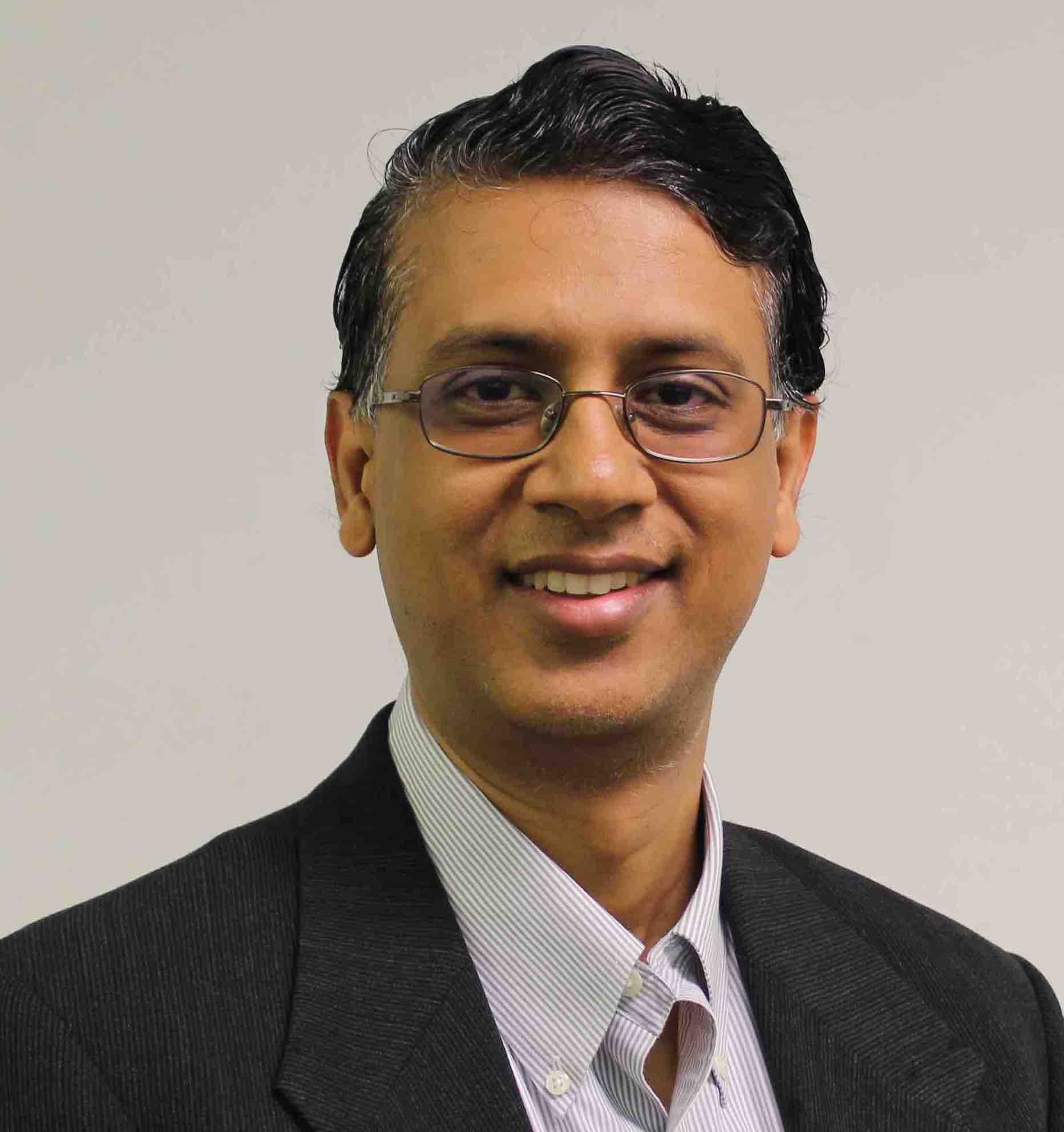
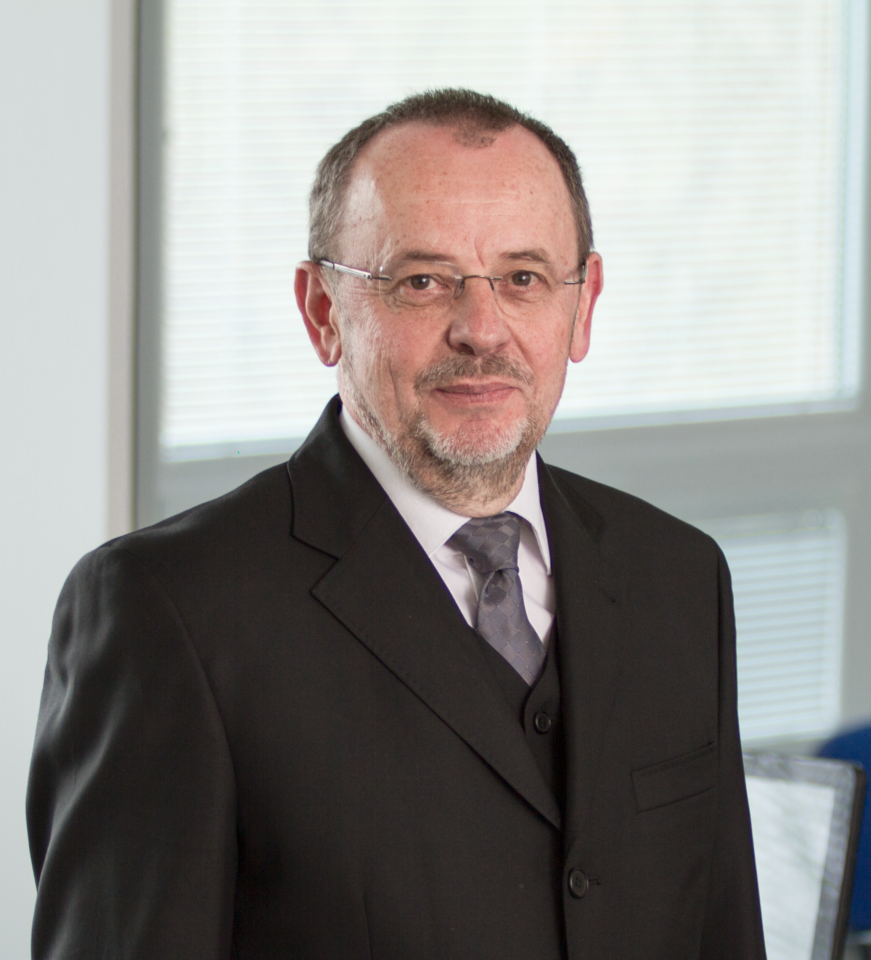
Robert B. Ellis is an Associate Professor of Applied Mathematics at Illinois Institute of Technology (IIT), serving as Program Director for the Bachelor of Science in Data Science. His academic journey includes a Ph.D. in Mathematics from the University of California, San Diego. Ellis specializes in combinatorics, graph theory, adaptive coding theory, and probabilistic methods, with notable contributions to random geometric graphs and liar games. He has held roles like Project NExT Fellow and received awards such as the 2023 Michael J. Graff Award for Innovation in Teaching and IIT IPRO Outstanding Faculty Award. Education: Ph.D. in Mathematics, University of California, San Diego Research Interests: Focuses on asymptotic analysis of codes, liar games' connections to packing/covering problems, random geometric graphs in wireless networks, probabilistic methods, and algorithm design. His work bridges theoretical mathematics with applications in data science and network systems. Publications & Grants: Over 20 peer-reviewed articles in journals like Journal of Combinatorics and Algorithmica . Secured grants from NSA Young Investigator and AFRL programs. Advised graduate students on topics like graph partitioning and group testing matrices. Awards: 2023 Michael J. Graff Award for Innovation in Teaching IIT IPRO Outstanding Faculty Award (2009) Project NExT Fellow (2005-2006) Teaching: Courses include Calculus II, Discrete Mathematics, and Applied Algebra. Emphasizes innovative pedagogy through Menger Day talks and IPRO interdisciplinary projects.
Dr. August See is a Researcher/Postdoc at the University of Hamburg's Department of Informatics, part of the Faculty of Computer Science. His primary role is within the Computer Networks research group, focusing on bot detection, protocol analysis, and automated binary analysis. He is based in Office F-616 and can be reached via email at see@informatik.uni-hamburg.de or by phone at +49 40 42883 2329. His research interests include detecting and mitigating illegitimate bot activities through methods like keystroke dynamics analysis, mouse behavior monitoring, and homomorphic encryption. He has contributed to developing polymorphic protocols to counter bot influence and improving secure memory handling in web applications. Recent work emphasizes accelerating reverse engineering processes through novel 'point-of-interest beacon' techniques. Dr. See has published nine peer-reviewed articles between 2021-2024, with a focus on cybersecurity, network security, and data privacy. His collaborations include Prof. Mathias Fischer and researchers like Tatjana Wingarz and Kevin Röbert. While no specific awards are listed, his work demonstrates impactful contributions to automated threat detection and protocol security. He advises students on thesis topics involving cryptography, reverse engineering, and machine learning applications in security. His research integrates both theoretical protocol design and practical implementations in networked systems.
Dr. Eugene Vasiliev is an STFC Ernest Rutherford Fellow at the School of Mathematics and Physics, University of Surrey, UK. He specializes in galactic and stellar dynamics, focusing on supermassive black holes, Milky Way modeling, and the use of Gaia astrometric data. He develops advanced computational tools such as AGAMA, Forstand, and SMILE for dynamical modeling and action-based analysis. His research spans: Dynamical modeling of galaxies using the Schwarzschild method Action-based modeling of the Milky Way and dark matter halos Interactions between the Milky Way and the Large Magellanic Cloud Tidal disruption events and black hole feeding rates Structure and evolution of globular clusters and nuclear star clusters His recent publications (2022–2024) show a strong focus on refining Milky Way models using Gaia data, exploring phase-space substructures from past mergers, and improving black hole mass measurements in nearby galaxies. He frequently collaborates with leading researchers like James Binney, Vasily Belokurov, and Monica Valluri. His work is instrumental in advancing our understanding of galactic formation and evolution in the era of large-scale surveys. He has developed key software tools widely used in the astrophysics community. STFC Ernest Rutherford Fellowship Dr. Vasiliev actively mentors and collaborates on projects involving dynamical modeling, data analysis, and software development. He has delivered numerous talks and outreach lectures on black holes, galactic dynamics, and Gaia science. He leads research efforts that integrate observational data with theoretical modeling to probe the structure and history of the Milky Way.
Christophe Hauser is the Speers Family Assistant Professor of Computer Science at Dartmouth College and a member of the Meeting New Challenges of Cybersecurity Cluster. His research focuses on software security, particularly in developing models to analyze cyber attacks and defenses across software and hardware boundaries. He previously served as a Research Lead and founded the Binary Analysis and Systems Security (BASS) group at the University of Southern California’s Information Sciences Institute (USC-ISI) and was a postdoctoral researcher at the University of California, Santa Barbara’s Seclab. Hauser holds a joint PhD from CentraleSupélec in France and Queensland University of Technology in Australia, combining expertise in computer science and cybersecurity. His research interests include software security, program analysis, formal methods, machine learning applications in vulnerability discovery, and privacy-preserving systems. He specializes in binary code and firmware analysis, reverse engineering, and intrusion detection systems. Hauser’s recent work emphasizes automated fuzzing techniques, static and dynamic analysis of binary executables, and privacy-preserving solutions. His projects often bridge theoretical foundations with practical applications, such as improving vulnerability detection through neuro-symbolic methods and enhancing system security against DoS attacks. He has led initiatives such as the BASS group and contributed to the angr binary analysis platform. His work has resulted in impactful datasets like BinPool and tools like BinHunter for vulnerability localization.
Prof. Johannes Bauer is a Professor of Computer Science at Cooperative State University Mannheim (DHBW Mannheim) since 2022. He holds a Ph.D. in Computer Science from Friedrich-Alexander-Universität Erlangen-Nürnberg (2016), focusing on cost-effective security measures for embedded systems. His research spans applied cryptography, vulnerability assessment, side-channel analysis, and hardware security modules (HSMs). Professional Experience: 2022–Present: Professor at DHBW Mannheim 2018–2021: Principal Designated Engineer for cybersecurity standards at Underwriters Laboratories 2016–2018: Product Security Officer at Robert Bosch Smart Home GmbH Research Interests: Embedded systems security Physical-layer attacks and covert channels Cold-boot attacks and memory forensics Hardware-software co-design for security Smart grid cybersecurity Publications Highlight: His 2016 Ph.D. thesis introduced novel methods for timing side-channel detection and anti-EMI feature abuse. Recent work includes analyzing demand response capabilities in smart grids (2019). Labs/Teams: Active in cybersecurity research groups, contributing to standards like ETSI EN 303 645 and UL MCV 1376. Collaborates with industry partners on embedded system hardening.
Rajeev Barua is a Professor of Electrical and Computer Engineering at the University of Maryland, College Park, affiliated with the Institute for Systems Research (ISR) and the Computer Science Department. He holds a Ph.D. from MIT in Electrical Engineering & Computer Science (2000) and a B.Tech. from the Indian Institute of Technology Delhi (1992). His research focuses on compilers, cybersecurity, and parallel computing, with notable contributions to binary rewriting, automatic parallelization, and memory management for embedded systems. He has secured $6.95M in research grants and holds five patents. Barua founded SecondWrite Inc., commercializing cybersecurity software based on his research. He has received awards such as the NSF CAREER Award (2002) and the UMD George Corcoran Teaching Excellence Award (2003). Affiliations: Electrical & Computer Engineering Department, ISR, Computer Science Department Education: Ph.D., MIT (2000); S.M., MIT (1994); B.Tech., IIT Delhi (1992) Research Themes: Binary Rewriting, Cybersecurity, Parallel Programming, Embedded Systems, Compiler Optimization Key Projects: SecondWrite Inc., Raw Architecture chip development (IBM), ICE programming model for parallel computing Grants & Patents: $6.95M in grants, $2.4M in startup funding, five issued patents Teaching: Courses include ENEE 446 (Compilers), ENEE 350H (Embedded Systems), and advanced graduate topics. His work on binary rewriting addresses security and performance optimization, while his parallel computing research advances declarative programming models like ICE. Recent publications emphasize malware detection and efficient multiprogramming on multicore systems. Awards: NSF CAREER Award (2002) UMD George Corcoran Teaching Excellence Award (2003) UMD Jimmy Lin Innovation Award (2014) President of India Gold Medal (1992) Finalist, Inventor of the Year (2005) Labs & Teams: Leads research groups in compiler optimization and cybersecurity at UMD, collaborating with industry partners like IBM and Tilera. SecondWrite’s cybersecurity software has commercial applications in malware mitigation.
Prof Richard Nelson is a Professor of Astronomy and Mathematics at Queen Mary University of London, affiliated with the School of Physical and Chemical Sciences and the Centre for Fundamental Physics. His research focuses on the theory of planet formation, particularly the interaction between planets/planetesimals and protoplanetary discs. He teaches modules like SPA7023 (Stellar Structure and Evolution) and SPA4101 (Our Universe). His work combines hydrodynamic simulations, N-body modeling, and disc-planet interaction studies to understand planetary system architectures. Research interests include planet migration mechanisms, circumbinary planet dynamics, and the statistical reproduction of exoplanet observations. Key projects involve the BEBOP collaboration and the PLATO mission. He has supervised PhD students Sanson Poon (Super-Earths dynamics) and George Turpin (circumbinary discs). Notable grants include £1.6M from STFC (2023-2027) and £195K from the Leverhulme Trust (2019-2023). His team explores topics like dust dynamics, thermal disc structures, and radial velocity methods for circumbinary planets. Publications span over 20 years, addressing topics like protoplanetary disc turbulence, planet migration in inviscid discs, and observational constraints from ALMA. His work bridges computational modeling with observational data to advance understanding of planetary system formation and evolution.
Dr. Yang Hu is an Assistant Professor of Electrical Engineering at the Erik Jonsson School of Engineering and Computer Science, University of Texas at Dallas. His research focuses on autonomous systems, cybersecurity, and cloud computing, with a particular emphasis on rethinking autonomous driving infrastructure through multi-system networking. He has received an NSF CAREER Award for a project aiming to redesign autonomous driving systems using advanced computing and communication technologies, benefiting AR/VR and industrial IoT applications. Dr. Hu’s work bridges semantic gaps in virtual machine introspection and explores dynamic binary instrumentation frameworks like PEMU. His publications span cybersecurity, embedded systems, and graph processing optimizations. The NSF-funded project ($508,339) highlights his leadership in transforming autonomous systems through networked multi-object architectures. His research achievements include contributions to guest OS fingerprinting in cloud environments and efficient graph processing algorithms. Collaborations involve hypervisor-layer automation tools like HyperShell and hybrid techniques for semantic gap reduction.
Prof. Ing. Peter Farkaš, DrSc is a distinguished academic at the Institute of Applied Informatics within the Faculty of Informatics at Pan-European University . He also teaches at the Faculty of Electrical Engineering and Information Technology (FEI STU) and has held visiting positions at the Faculty of Computer and Information Systems and Mathematics at Kingston University, UK. His career spans academia and industry, including roles at Tesla VRÚSE, Australian Telecommunications Research Centre, Siemens, and Sandbridge Technologies. Research Focus : Communication Theory, Coding Theory, and applications in information transfer, storage, and wireless systems. Key Contributions : Development of novel error-correcting codes (e.g., 5G LDPC codes, Reed-Solomon extensions), CRC polynomial design for E-DCH protocol, and multidimensional complementary codes. Publication Trends : Recent works emphasize coding theory advancements for 5G/LTE networks, multidimensional orthogonal codes for interference mitigation, and interdisciplinary applications of AI in democracy. His research bridges theoretical innovation with practical implementation in telecommunications. Scientific Awards : 2003: SIEMENS VIP recognition 2004: Werner von Siemens Excellence Award (with PhD student Matúš Turcsány) Advising & Grants : Supervised PhD students including Matúš Turcsány and collaborated with industry experts. Led EC-funded projects (NEXWAY, CRUISE, WINNER Phase II) and managed grants from VEGA, APVV, British Council, Royal Society, and DAAD. Labs & Collaborations : Active in the Institute of Applied Informatics at Pan-European University and contributed to projects with international institutions like Kingston University and SIEMENS PSE Slovakia.
Jannik Hartung is a researcher at the Institute for Application Security under the Carl-Friedrich Gauss Faculty at Technical University of Braunschweig. He joined the university in December 2020 as a PhD candidate, contributing to low-level system security, binary exploitation, and code analysis research. Research focus on low-level system security , binary exploitation , and code analysis . Active participant in Capture The Flag (CTF) competitions , having qualified for the DEFCON CTF finals. He serves as a teaching assistant for courses like Seclab , Hacklab , and Seminar since 2021. His work includes supervising theses on topics such as Exploring and Fuzzing the Starlink User Terminal Firmware (2025) and Evaluation of Fuzzing Techniques for Automotive ECUs (2024). Contact details: Room IZ 246, email jannik.hartung@tu-braunschweig.de , phone 0531/391-2273.
Işıl Dillig is an Associate Professor in the Department of Computer Science at the University of Texas at Austin, leading the UToPiA research group. She focuses on programming languages, with emphasis on static analysis, verification, and synthesis to enhance software reliability and security. Education: BS, MS, PhD in Computer Science from Stanford University Her research addresses critical challenges in: Program analysis for security and correctness Automated program synthesis for complex tasks Verification of concurrent and database-driven systems Recent publications span neurosymbolic synthesis, database integration, and smart contract optimization. Trends include hybrid AI-formal methods approaches and domain-specific language design. Scientific recognition includes: Sloan Fellowship NSF CAREER award She actively contributes to academic leadership as committee member, program chair, and keynote speaker in top conferences like PLDI, OOPSLA, and POPL.
Jiaqing Bi is a postdoctoral researcher at the Max Planck Institute for Astronomy (MPIA) in Heidelberg, Germany, focusing on planet formation in circumstellar disks . He earned his Ph.D. in 2023 from the University of Victoria, Canada, under Dr. Ruobing Dong, and held postdoctoral positions at ASIAA (Taipei) and the University of Toronto. Current Affiliation: Max Planck Institute for Astronomy Department: Planet and Star Formation Previous Positions: ASIAA, University of Toronto His research integrates theoretical modeling (using 3D grid-based hydrodynamic codes like FARGO3D and self-developed GPU tools) with observational analysis of submillimeter data from ALMA, aiming to understand dust dynamics and grain evolution in protoplanetary disks. Key contributions include studies on planet-disk interactions, gap formation, and circumtriple disk structures. Scientific trends in his work include planet formation mechanisms , dust ring morphology , and multi-star system dynamics , combining simulations and interferometry. He actively develops computational tools like cuDust , a CUDA-based code for dust dynamics, and collaborates on projects involving disk evolution and planetary migration. For more details, visit his personal homepage at www.jiaqing.bi .
Katerina Chatziioannou is an Assistant Professor of Physics at the California Institute of Technology and a William H. Hurt Scholar. She holds a faculty position in the Division of Physics, Mathematics and Astronomy, specifically within the Physics department, and is actively involved in multiple major gravitational wave collaborations including the LIGO Scientific Collaboration, LIGO Laboratory, LISA Consortium, NANOGrav Collaboration, Simulating Extreme Spacetimes Collaboration, and Simons Collaboration on Extreme Electrodynamics of Compact Sources. Dr. Chatziioannou's research revolves around General Relativity and using Gravitational Waves to study the Universe. Her work spans theoretical and observational aspects of gravitational wave astronomy, with particular focus on black hole physics, neutron star physics, and data analysis techniques. She develops methods to extract physical information from gravitational wave signals, studies the properties of compact objects, and investigates fundamental physics through gravitational wave observations. Her research bridges theoretical physics, computational methods, and observational astronomy, with applications to current and future gravitational wave detectors including LIGO, Virgo, and the planned LISA mission. Analysis of her recent publications reveals significant contributions across multiple frontiers of gravitational wave science. Her work addresses critical challenges in parameter estimation for binary black hole systems, neutron star equation of state constraints, glitch mitigation techniques, and waveform modeling. She has made important contributions to both ground-based (LIGO/Virgo) and space-based (LISA) gravitational wave astronomy, as well as pulsar timing array science through her work with NANOGrav. Her research demonstrates a strong interdisciplinary approach connecting nuclear physics, general relativity, and observational astronomy. Dr. Chatziioannou has received recognition as a William H. Hurt Scholar, highlighting her contributions to physics research. This prestigious award underscores her standing in the field of gravitational wave astrophysics and theoretical physics. She leads a vibrant research group at Caltech comprising graduate students, postdoctoral researchers, and staff scientists. Her current research group includes graduate students Sophie Hourihane (2020-present), Isaac Legred (2020-present), Simona Miller (2021-present), and Taylor Knapp (2023-present), along with numerous postdoctoral scholars including Patrick Meyers, Aaron Johnson, Javier Roulet, Eliot Finch, Lucy Thomas, Marco Crisostomi, Lisa Drummond, and Sophie Bini. She also mentors undergraduate researchers through programs like the LIGO SURF program, having supervised multiple summer research fellows over the years. Dr. Chatziioannou teaches several advanced physics courses at Caltech including Physics 106a (Topics in Classical Physics), Physics 129b (Mathematical Methods of Physics, Complex Analysis and Differential Equations), and Physics 236a (General Relativity I), contributing significantly to the education of future physicists and astronomers. Her teaching responsibilities span both undergraduate and graduate levels, reflecting her expertise in theoretical physics and gravitational wave science.
Terry Edward Acree is a Professor of Food Science at Cornell University's College of Agriculture and Life Sciences (CALS). His research focuses on understanding how chemical stimuli are translated into sensory perceptions, particularly odor and taste. He developed the CharmAnalysis gas chromatography-olfactometry (GCO) bio-assay and the Sniff Olfactometer (SO) to study odorant mixtures and their temporal effects on perception. Education: PhD in Food Science (Cornell, 1968), MS (Cornell, 1965), BA (UC Berkeley, 1963), AAS (Contra Costa Junior College, 1961) Research interests include odor image formation, genetic diversity's impact on perception, and the application of sensory science to improve food quality and consumer choice. His work bridges neuroscience, chemistry, and culinary arts to enhance flavor understanding. Awards: Honorary Member of the Society of Flavor Chemists (2010). Teaching: Courses include Principles of Food Science (FDSC 6010) and Graduate Internship in Food Science (FDSC 6960) , emphasizing chemical-sensory connections through experiential learning. Outreach: Provides tools for food producers and consumers to manipulate flavor chemistry and improve product quality.
Associate Professor Mark Utting is affiliated with the University of Queensland (UQ), specifically within the School of Electrical Engineering and Computer Science. He holds the rank of Associate Professor and focuses on software verification, model-based testing, and programming language design. His academic journey includes roles at multiple Queensland universities, Waikato University (NZ), and the University of Franche-Comte (France). He earned his PhD from UNSW on object-oriented language semantics. Utting has authored over 80 publications and the book 'Practical Model-Based Testing: A Tools Approach.' His current research emphasizes verifying compilers, blockchain smart contracts, ARM64 binaries, and AI-generated code. Key projects include the Algorand Centre for Sustainability Informatics and the BASIL project on secure information-flow logics. His research spans formal methods, theorem proving, and software engineering. Utting leads supervision in areas like compiler verification and smart contract analysis, with active involvement in grants such as the 'Directed and Incremental Analysis for DevSecOps' project. Utting collaborates on interdisciplinary projects, including energy grid simulations and cybersecurity strategies. His work bridges academia and industry, with past experience in genomics and manufacturing software development.