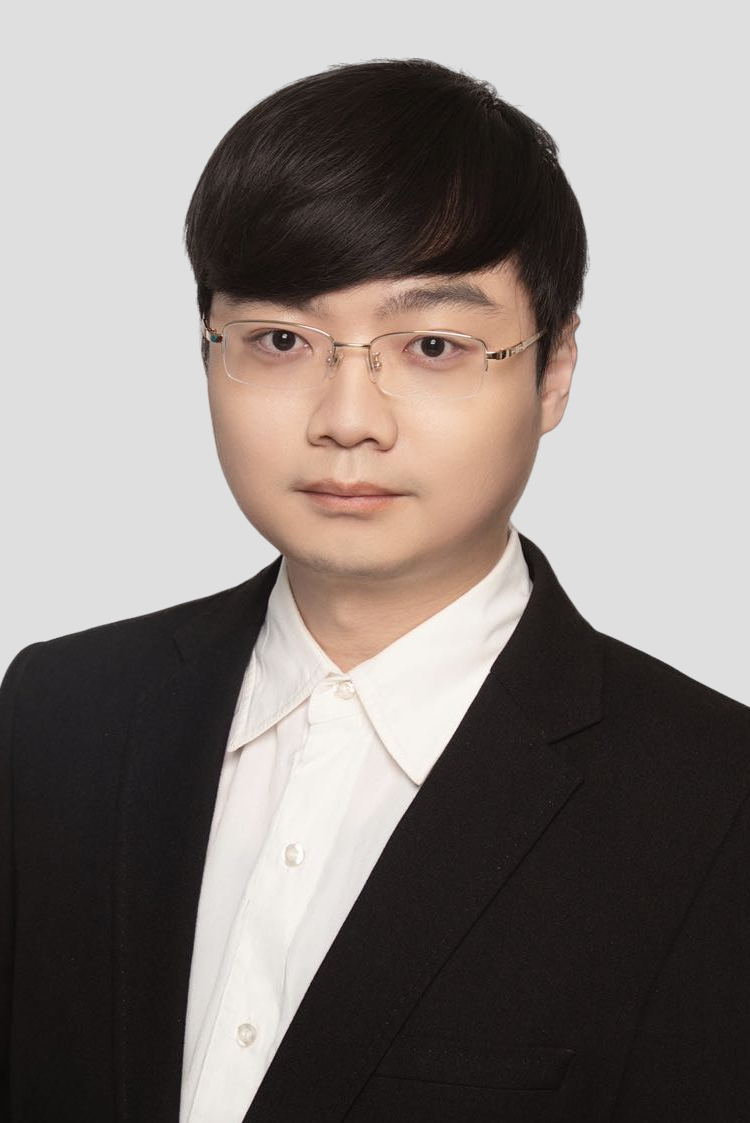
Justin Hollander is a Professor of Urban and Environmental Policy & Planning at Tufts University, affiliated with the Graduate School of Arts and Sciences. He earned a PhD from Rutgers University, an MRP from UMass Amherst, and a BA from Tufts. His research focuses on urban redevelopment, cognitive urbanism, and the intersection of technology with planning. Dr. Hollander has authored 11 books and over 70 journal articles, with grants from organizations like the U.S. Department of State and the Lincoln Institute of Land Policy. He serves as Editor-in-Chief of the Journal of Planning Education and Research and hosts the Cognitive Urbanism podcast. Research interests include cognitive responses to urban environments, biometric tools in design, and policy responses to urban shrinkage. Notable publications address military dimensions of urban planning, AI-driven public art analysis, and Mars colonization. Awards include the 2025 William R. and June Dale Prize. He teaches courses on urban studies, real estate development, and thesis guidance. Professional activities include conference presentations and media contributions to outlets like NPR and The New York Times. As director of the Urban Attitudes Lab, he explores biometric and digital tools for urban analysis. Ongoing work includes studies on climate hazards in Addis Ababa, bot-driven online planning discourse, and post-pandemic urban futures.
Gregory J. Carbone is a Professor in the Department of Geography at the University of South Carolina. His research investigates climate variability and change impacts on water resources and agriculture, with emphasis on drought monitoring systems and climate scenario development. He earned his Ph.D. from the University of Wisconsin-Madison (1990), M.A. from University of Kansas (1984), and B.A. from Clark University (1982). His research develops tools for drought assessment in data-scarce regions and examines how spatial scale affects climate impact assessments. Research focuses on drought monitoring techniques, climate extremes, and the application of climate information in water resource management. Recent work explores uncertainty in precipitation indices, agricultural sensitivity to drought, and regional climate projections. He co-developed the Carolinas Dynamic Drought Index tool used by water managers. His publications demonstrate consistent innovation in drought monitoring methodologies, with recent advancements in spatial visualization of climate impacts and statistical downscaling techniques. Research integrates geospatial analysis, remote sensing, and statistical modeling. Teaching excellence recognized through multiple awards: Michael J. Mungo Distinguished Professor of the Year (2025) Mortar Board Excellence in Teaching Award (2012) Mungo Undergraduate Teaching Award (2005) He has supervised 6 MS students and served on 50+ thesis committees. Major grants include $3.75 million from NOAA for the Carolinas Integrated Sciences & Assessments program. Professional service includes editorial roles for Physical Geography and leadership in the American Association of Geographers.
Dr. Alexander Mantzaris is an Associate Professor in the Department of Statistics & Data Science at the University of Central Florida, College of Sciences. His research bridges physics and sociology through Social Physics frameworks, focusing on statistical mechanics and thermodynamic analogies to model social phenomena. Current research explores criticality points in social systems Developing computational tools for NLP and big data Former work on Graph Convolutional Networks in social analysis Specializes in entropy-based modeling of polarization and segregation His publications emphasize interdisciplinary approaches combining network science, computational modeling, and sociological dynamics. Recent articles address thermodynamic formulations of political cycles, energy states in Schelling models, and memory-efficient data processing algorithms. Dr. Mantzaris teaches graduate courses in big data analytics and statistical learning theory. He maintains active research in computational social science with applications to political dynamics, media influence, and complex systems analysis.
Justin Thaler is an Associate Professor in the Department of Computer Science at Georgetown University, researching algorithms and computational complexity with focus on probabilistic proof systems, verifiable computation, and streaming algorithms. Education: PhD Computer Science, Harvard University BS Computer Science and Mathematics, Yale University Research Interests: Develops protocols for verifying computations (including zero-knowledge proofs), analyzes the power of low-degree polynomials, and designs efficient streaming/sketching algorithms for large datasets. Publications: Research advances theoretical foundations of proof systems, with recent work on SNARKs, lookup arguments, and Fiat-Shamir security. Authored the monograph 'Proofs, Arguments, and Zero-Knowledge'. Advising & Labs: Advises PhD students in theoretical computer science. Contributes to open-source projects including DataSketches library of streaming algorithms. Currently on leave at a16z crypto research.
Roozbeh Razavi-Far is an Assistant Professor at the Faculty of Computer Science and the Canadian Institute for Cybersecurity at the University of New Brunswick. His research focuses on machine learning, big data analytics, and cybersecurity of cyber-physical systems and IoT devices. He has authored/co-authored over 150 publications and is listed by Stanford as among the top 2% of most cited researchers (2022). His work spans federated learning, transfer learning, quantum machine learning, and dependable AI systems. He serves as an Associate Editor for Neurocomputing, Machine Learning with Applications, and IEEE Transactions on Industrial Cyber-Physical Systems, among others. As an IEEE Senior Member, he chairs IEEE Computational Intelligence and Systems, Man, and Cybernetics Societies. Previously, he directed the Learning System and Cybernetics Group at the University of Windsor (2016–2022). His research interests emphasize security in non-stationary environments, adversarial machine learning defenses, and real-time analytics for smart grids. Awards include NSERC-DG, NSERC-ECR, and USRG grants. He has mentored students who received NSERC Alexander G. Bell, MITACS, and Ontario Graduate Scholarships. His recent publications highlight advancements in privacy-preserving split learning, blockchain-based federated learning security, and graph-based malware detection. He also explores quantum computing applications in AI and cybersecurity frameworks for cyber-physical systems.
Erik Scheme is an Associate Professor in the Department of Electrical and Computer Engineering at the University of New Brunswick (UNB), and serves as Associate Director of the Institute of Biomedical Engineering (IBME). He holds a PhD and is a Professional Engineer (PEng). His roles include advising the Dr. J. Herbert Smith Centre for Technology Management and Entrepreneurship, emphasizing innovation in biomedical technologies and healthcare systems. His research focuses on advanced human-machine interaction through biomedical engineering, with a strong emphasis on myoelectric prosthetics, wearable sensors, and machine learning applications. Key areas include improving neuroprosthetic control via incremental learning, gait analysis using underfoot pressure sensors, and developing robust EMG-based gesture recognition systems. His work bridges clinical needs with technological innovation, addressing challenges in rehabilitation, activity monitoring, and user-centric design. Recent publications highlight advancements in adaptive control systems, sensor fusion, and ethical data practices in healthcare. His contributions span both theoretical frameworks (e.g., self-supervised learning models) and applied technologies (e.g., gold-plated 3D-printed electrodes). Dr. Scheme collaborates across disciplines, integrating robotics, signal processing, and clinical validation to create impactful solutions. His lab, affiliated with IBME, actively explores emerging areas like exhaled breath analysis for disease detection and federated learning in healthcare data analytics.
Yang Cheng is an Associate Professor at the Department of Materials and Production, Aalborg University, Denmark. He holds a PhD in Mechanical Engineering from the same institution (2011), focusing on manufacturing strategy and network dynamics. His research spans supply chain management, sustainability, and global operations, with a focus on integrating technology and environmental policies into manufacturing systems. He leads or participates in high-impact projects like MAASive (2024–2026) and the Sino-Danish Center Research Project (2011–present), addressing resilience in value networks and global operations innovation. Research Interests: Supply Chain Management & Integration Sustainability & Green Technologies Manufacturing Strategy & Networks Technology Policy & Digitalization Global Operations & Cross-Border Collaboration Recent Work Trends: Prof. Cheng's 2025 articles emphasize blockchain in sustainable supply chains, green technology investments under carbon policies, and digitalization's ethical implications. His 2024 research explores smart factories, EU battery regulations, and robotization in manufacturing. These studies blend quantitative models with case-based analysis to address real-world challenges. Awards: 2024 Emerald Literati Awards – Outstanding Reviewer Advising & Grants: As PI for multiple Global Operations Management PhD programs (2019–2025), he guides research on digital transformation and university-industry collaboration. His projects receive funding from Danish and international grants, focusing on innovation and resilience in manufacturing networks. Labs/Teams: Collaborates with the Center for Industrial Production at Aalborg University and engages in international partnerships through the Sino-Danish Center. Active editorial roles include Production Planning & Control and Journal of Manufacturing Technology Management .
Monica Pratesi is a Full Professor of Statistics at the Department of Economics and Management of the University of Pisa. She currently serves on leave as Director of the Department for Statistical Production at ISTAT, coordinating 937 researchers and managers. Her expertise spans small area estimation, poverty measurement, survey methodology, and official statistics. She leads the Tuscan Universities Research Centre “Camilo Dagum” and has held two Jean Monnet Chairs focusing on poverty and living conditions in the EU. She has coordinated major EU projects like INGRID-2 and MAKSWELL, advancing methodologies for inclusive growth and sustainable development. Her research integrates big data and citizen-generated data into statistical frameworks. Awards include presidencies of the Italian Statistical Society and the International Association of Survey Statisticians. Education & Roles: Full Professor of Statistics (SECS-S/01) at University of Pisa since 2012 Director, Department for Statistical Production at ISTAT (until 2024) President, Italian Statistical Society (2016-2020) President-elect, International Association of Survey Statisticians (2022-2023) Research Focus: Advanced statistical methods for poverty monitoring, small area estimation, survey design, and leveraging big data for policy impact. Key areas include multidimensional poverty, educational poverty, and sustainable development indicators. Her work emphasizes real-time data integration and policy relevance. Grants & Projects: Principal Investigator for INGRID-2 (EU H2020, 2017-2021) Principal Investigator for MAKSWELL (EU H2020, 2017-2020) Coordinator of SAMPLE (FP7) and INGRID (FP7) Labs & Teams: Active in the Societal Transitions group and contributes to the European Master in Official Statistics program. Her research center, REMARC, focuses on policy-driven statistical innovation.
Professor Kirk R. Pruhs is a full Professor in the Department of Computer Science at the University of Pittsburgh's School of Computing and Information. He holds editorial roles at journals such as the Journal of Scheduling and ACM Transactions on Algorithms. His research focuses on algorithmic problems in green computing, scheduling, online optimization, and resource management. Pruhs has advised numerous PhD students and has a strong publication record in top venues like SODA, STOC, and FOCS. His work often addresses energy-efficient algorithms and computational resource management. Notable contributions include studies on stochastic scheduling, energy-efficient routing, and competitive analysis of online algorithms. Education: BS in Mathematics and Computer Science from Iowa State University (1984), PhD in Computer Science from University of Wisconsin-Madison (1989). Research Interests: Algorithmic challenges in green computing, fair allocation mechanisms, scheduling under uncertainty, and online optimization techniques. He explores how computational methods can improve energy efficiency and resource allocation in distributed systems. Recent articles focus on robust scheduling strategies, stochastic systems, and algorithmic approaches to network design and resource optimization. His work bridges theoretical computer science with practical applications in sustainable computing. Students: Includes Jonathan Beaver (2006), Mohamed Aly (2008), Christine Chung (2009), Daniel Cole (2013), Neal Barcelo (2015), Michael Nugent (2015), and Alireza Samadian Zakaria (2021). Labs/Teams: Engaged in algorithm design and analysis within the Department of Computer Science, contributing to initiatives in computational sustainability and high-performance computing.
Li Yang is an Assistant Professor in the Department of Information Technology , part of the Faculty of Business and Information Technology at Ontario Tech University. His research focuses on applying AI and machine learning to cybersecurity, particularly in intrusion detection and anomaly detection for 5G/6G networks and IoT systems. He holds a PhD in Electrical and Computer Engineering from Western University (2022), and has held roles such as Vice Chair of IEEE Computer Society, London Section (2022–2023). Education: PhD in Electrical and Computer Engineering, Western University (2022) Master of Science, University of Guelph (2018) Bachelor of Engineering, Wuhan University of Science and Technology (2016) Research Interests: His work spans cybersecurity, machine learning, deep learning, AutoML, model optimization, network automation, IoT security, intrusion detection, and adversarial machine learning. He develops frameworks for concept drift adaptation and online learning to enhance cybersecurity measures, with a focus on trustworthy AI and defense strategies against adversarial attacks. Awards: Graduate Student Award for Excellence in Research (2022) Graduate Symposium Award for Best Presentation (2022) Mitacs Accelerate Fellowship (2021) OC2 Lab Industrial Research Excellence Award (2020) Ranked in Stanford/Elsevier's Top 2% Scientists (2024) Grants & Involvement: Li Yang has contributed to conferences like IEEE GlobeCom and IEEE CCECE, and authored patents such as 'Convenient primary-secondary barrels' (2009). His work has garnered thousands of citations and GitHub stars, emphasizing practical applications of AI in cybersecurity.
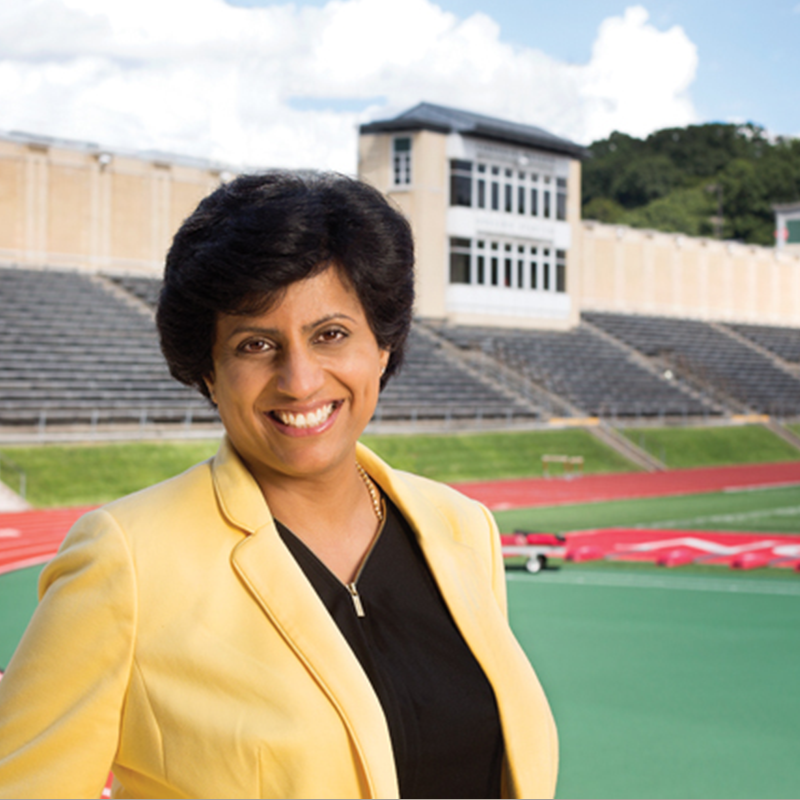
Priya Narasimhan is a Professor of Electrical & Computer Engineering at Carnegie Mellon University (CMU), affiliated with the College of Engineering. Her research focuses on dependable distributed systems, fault-tolerance, embedded systems, mobile systems, and sports technology. She leads the Intel Science and Technology Center in Embedded Computing (ISTC-EC) and founded YinzCam, a CMU spin-off providing mobile live streaming to sports venues. She holds multiple awards, including the Sloan Fellowship and NSF CAREER Award. Education: Ph.D. and M.S. in Electrical & Computer Engineering from UC Santa Barbara. Notable roles include former CTO of Eternal Systems, Director of Intel Labs Pittsburgh, and Director of CMU's CyLab Mobility Research Center. Research spans failure diagnosis in distributed systems, live upgrades, mobile cloud computing, football technology, assistive tech for the blind (Trinetra), and civic tech (iBurgh). Over 30+ students advised across Ph.D., M.S., and undergraduate programs. Active in entrepreneurship, teaching (courses like 18-349 Embedded Systems), and industry collaborations.
Dr. Ian Hesketh is an Associate Professor of History at the University of Queensland within the School of Historical and Philosophical Inquiry . With over 50 publications including books and journal articles, his work focuses on intersections between history, science, and religion in 19th-century Britain. Education: Bachelor of Arts, Okanagan University College Masters (Coursework), York University Doctor of Philosophy, York University His research explores Darwinian Revolution narratives, Victorian physics through figures like John Tyndall, and Big History epistemology. Recent work examines how scientific concepts permeate cultural consciousness through media like The Conversation and academic monographs. Key publications include the 2023 book A History of Big History and 2022 edited collection Imagining the Darwinian Revolution . His 2025 article in British Journal for the History of Science analyzes character assessment in Victorian botany through John Scott's experiments. Scientific Awards: Australian Research Council Future Fellowship As HDR Coordinator , he supervises projects like John Tyndall: Science and the State and has served as advisor for works on evolutionary ethics and medical history. Current research receives funding from international collaborations including the University of Birmingham's science-religion project.
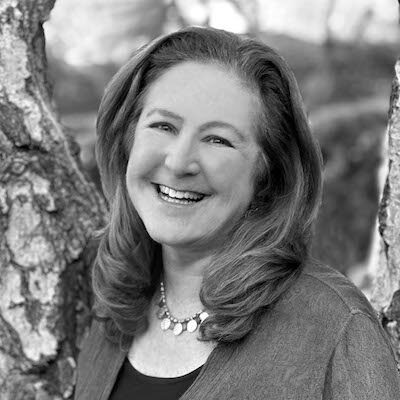
Gail Brager is a Distinguished Professor of Architecture at the University of California, Berkeley, serving as Director of the Center for Environmental Design Research (CEDR) and Associate Director of the Center for the Built Environment (CBE), a research collaboration with over 40 industry partners. She holds a 50% appointment as Associate Dean of the Graduate Division and is an affiliate faculty member of the Energy and Resources Group. Her educational background includes a PhD and MS in Mechanical Engineering from UC Berkeley and a BS from UC Santa Barbara. Professor Brager's research focuses on thermal comfort in naturally ventilated and mixed-mode buildings, sustainable design, and the assessment of energy and indoor environmental quality. She pioneered adaptive thermal comfort models that revolutionized building standards by accounting for occupant behavior and climate adaptation, bridging engineering precision with architectural aesthetics to create human-centered sustainable spaces. Her publication record reveals a consistent trajectory from foundational adaptive comfort theory to contemporary occupant-centric environmental control systems, with increasing emphasis on big-data field studies like the ASHRAE Global Thermal Comfort Database II and practical applications in green-certified workplaces. Presidential Young Investigator Award (NSF) Progressive Architecture Research Award AIA Education Honors Honorable Mention Places/EDRA award for Place-based research ASHRAE Fellow ASHRAE Publications Award As a dedicated educator and research leader, she has mentored generations of architects and engineers while securing industry-funded projects that translate thermal comfort research into real-world building performance standards through CEDR and CBE. Her leadership in CEDR and CBE fosters interdisciplinary teams spanning academia and industry, driving innovations in sustainable building design through post-occupancy evaluations, occupant behavior studies, and climate-responsive ventilation strategies that directly inform green building certifications worldwide.
Professor Stuart Phinn is a distinguished academic at the University of Queensland, serving as Professor in the School of the Environment and Centre Director of the Remote Sensing Research Centre (Earth Observation Research Centre). He also maintains affiliations with the Centre for Marine Science. With a career spanning over two decades, Professor Phinn has established himself as a leading expert in earth observation and environmental monitoring, with over 559 publications including 295 journal articles. His educational background includes a Bachelor (Honours) of Science (Advanced) from The University of Queensland and a Doctor of Philosophy from San Diego State University. Professor Phinn's leadership extends to founding directorships of Australia's national earth observation coordination body (www.eoa.org.au) and collaborative research infrastructure (www.tern.org.au), as well as a world-leading research-to-operational program supporting government environmental monitoring (www.jrsrp.org.au). He also leads the Earth Observation for Government Network. Professor Phinn's research focuses on monitoring environmental change using earth observation and field data. His work primarily involves using images collected from satellites and aircraft, combined with field measurements, to map and monitor Earth's environments and how they change over time. This research is conducted in collaboration with environmental scientists, government agencies, NGOs, and private companies. A growing aspect of his work focuses on national coordination of earth observation activities and the collection, publishing, and sharing of ecosystem data. His work provides solutions to support sustainable development and resource use for governments, industries, and communities. His recent publications demonstrate a consistent focus on applying earth observation technologies to solve environmental challenges across multiple domains. The 15 most recent articles reveal strong themes in coral reef mapping and monitoring, land cover change detection, fire resilience analysis, and advanced remote sensing techniques including multi-sensor fusion and machine learning applications. His work spans terrestrial, coastal, and marine environments, with significant contributions to understanding environmental change in Australia and internationally, particularly in Indonesia. Professor Phinn has secured substantial research funding from diverse sources including government agencies (Queensland Government, Great Barrier Reef Marine Park Authority), industry partners (SmartSat CRC, Blue Economy CRC), and international organizations (Google Inc, Vulcan Inc). Current projects include evaluating impacts of threats to endangered reptiles, automating tree-scale vegetation structure monitoring, and continuing the Joint Remote Sensing Research Program. As an academic supervisor, Professor Phinn has mentored numerous PhD and Master's students, with current supervision spanning topics from forest disturbance analysis to kelp forest mapping and fire resilience of mine site rehabilitation. His extensive supervision history demonstrates his commitment to training the next generation of earth observation scientists. The Earth Observation Research Centre he directs fosters a collaborative research environment focused on transforming satellite and airborne images with field survey data into meaningful environmental information for decision-making.
Samuel Kou is the Chair of the Department of Statistics and a Professor of Biostatistics at Harvard University. He holds dual affiliations with the Harvard T.H. Chan School of Public Health and the Department of Statistics, Faculty of Arts and Sciences. With a Ph.D. in Statistics from Stanford University (2001), he has held academic positions at Harvard since 2001, advancing from Assistant Professor (2001–2005) to John L. Loeb Associate Professor (2005–2008), and ultimately Professor (2008–present). His research focuses on stochastic inference in biophysics, Bayesian modeling, nonparametric methods, and Monte Carlo techniques, with applications in single-molecule biophysics, financial modeling, and big data analytics. Notable contributions include the development of the equi-energy sampler and foundational work on stochastic networks in nanoscale biophysics. Publications span high-impact journals like the Journal of the American Statistical Association and Biometrika, with a consistent emphasis on bridging statistical theory and real-world applications in biology and finance. His work often integrates computational methods to address complex systems at the molecular and macroeconomic scales. Administratively, he oversees the Department of Statistics and collaborates across interdisciplinary initiatives. His educational background includes a B.S. in Computational Mathematics from Peking University (1997) and an M.S. in Statistics from Stanford (2000).