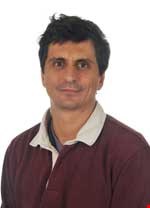
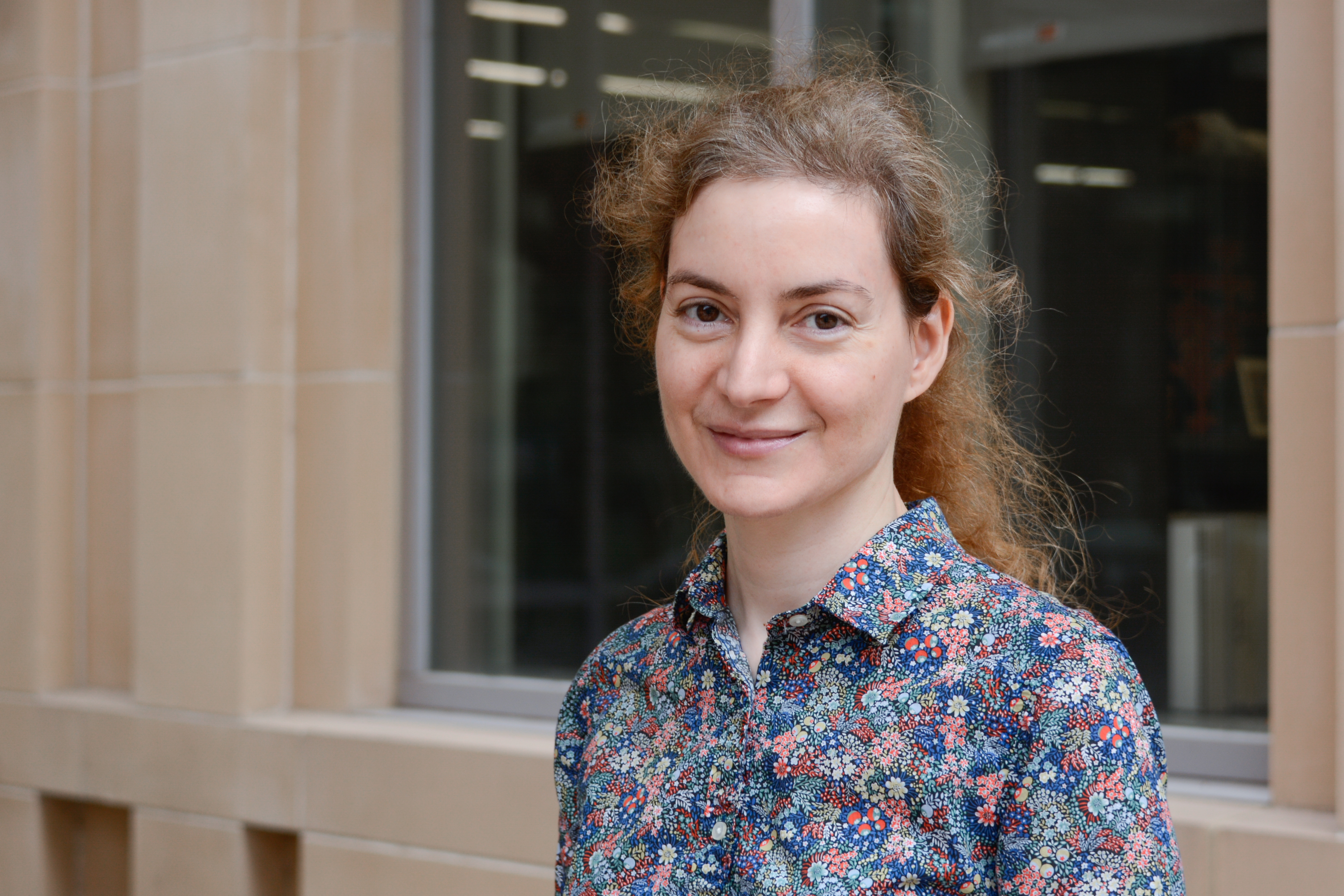
Dr. Ali Reza Alaei is a Senior Lecturer in Information Technology and Computer Science at Southern Cross University's Faculty of Science and Engineering. He has extensive research experience in document image analysis, biometrics, and big data sentiment analysis, with over 50 publications in international journals and conferences. His research focuses on Handwritten/printed document image analysis and recognition Human visual system modelling for document image quality assessment Data mining applications in community opinion analysis for tourism and environmental issues Dr. Alaei has supervised numerous master's students and served as co-supervisor for PhD scholars, while also holding research fellow positions at Griffith School of ICT, Griffith Institute for Tourism, and University of Tours, France.
Dr. Karolina Taczanowska is a Polish-Austrian academic at BOKU Vienna, specializing in sustainable tourism and human spatial behavior in recreational landscapes. As Senior Scientist at the Institute for Landscape Development, Recreation and Conservation Planning since 2020 (and Research Associate 2006-2020), her work bridges digital transformation with nature-based recreation through advanced GIS and spatial analysis. 2023: Habilitated in Landscape Planning with 'Human Behaviour in Recreational Landscapes' 2009: PhD from BOKU Vienna 2006: Bertha von Suttner scholarship for postdoctoral research Research focuses on sustainable tourism , smart recreation systems , and human-plant interactions , using cutting-edge methods like GNSS tracking, big data analysis, and participatory GIS. Her 2024 work on wild food foraging in cities and 2023 BOKU Sustainability Award highlight contributions to urban-nature relationships. Key publication themes include recreational behavior during pandemic , digital mobility analysis , and forest recreation monitoring . Active in international conferences (Ethnobotany 2025, EGU 2017) and reviewer for 12+ journals including Landscape and Urban Planning and Urban Forestry & Urban Greening . Scientific recognitions: 4 poster awards (2006-2012) and 2023 top sustainability education award. Supervised 8 master's theses on topics from mobile data analysis to pandemic impacts on green space usage.
Dr. Daniel Possler is a research assistant at the Department of Journalism and Communication Research at Leibniz University Hannover . He previously held a research assistant position at the Department of Media and Business Communication at Julius-Maximilians-Universität Würzburg (2022-2024). His work focuses on media psychology , entertainment research , and the use and effects of digital media , particularly video games and social media. He also explores environmental communication and computational methods in social research. PhD (2020): "Fascinating Entertainment: The Elicitation and Entertaining Quality of the Emotion Awe in Media Reception Using Video Games as a Case Example" Research Interests include player-avatar relationships, emotional responses to media (especially awe), pro-environmental messaging through documentaries, and computational approaches to analyzing communication data. His recent publications examine dual-process entertainment models, eudaimonic gaming motives, and automated content analysis tools. Professional Activities involve: Young Members’ Representative of the Media Psychology Division (DGPs, since 2023) Co-organiser of the DGPuK 2022 conference Member of the editorial board of Media Psychology (since 2022) Lecturer for the Media Entrepreneurship program (since 2013) Membership in ICA, ECREA, DGPuK, and DGPs
Shadi Khalifa is an Adjunct Assistant Professor with expertise in Big Data Analytics , Distributed Machine Learning , and Wireless Communication . His work bridges Cloud Computing and Data Mining with practical applications in MapReduce , Analytics-as-a-Service , and LTE Systems . Research Trends : Analysis of Shadi Khalifa’s publications reveals a focus on distributed computing and big data optimization . Key themes include inter-cell interference coordination in wireless networks, smart big data frameworks , and cloud-based analytics . His work emphasizes scalability, efficiency, and integration of machine learning with infrastructure.
Arturo Azcorra is a Full Professor at the University Carlos III of Madrid in the Telematics Engineering Department and serves as Director of the IMDEA Networks Institute . His career spans academic leadership and research in network architectures, communication protocols, and wireless technologies. Full Professor at Universidad Carlos III de Madrid (since 1998) Director of IMDEA Networks Institute (since 2006) Senior Member of IEEE Communications Society Research Interests: His work focuses on network architectures, communication protocols, wireless and mobile networks, peer-to-peer systems, and energy-efficient networking. Current projects include 5G network slicing, microsleep techniques for WiFi, and collaborative file distribution systems. Publications Trends: Recent articles address 5G network optimization, energy-efficient protocols, ad traffic filtering systems, and multicast video delivery mechanisms. His research combines theoretical modeling with practical implementations in real-world network environments. Scientific Awards: IEEE Communications Society Senior Member President of the Association for Telematics Academic Leadership: He has held significant administrative roles including Deputy Vice-Provost and Department Director at UC3M. Currently supervises the NETCOM Research Group and collaborates with IMDEA Networks .
Nan Sun is a Lecturer at the School of Systems & Computing , University of New South Wales, Canberra , conducting interdisciplinary research at the intersection of cybersecurity and artificial intelligence. Her work focuses on data-driven cybersecurity incident prediction, cybersecurity awareness education systems, and AI applications for threat intelligence. PhD in Information Technology (Deakin University) Former Research Fellow at Deakin University's Centre for Cyber Security Research and Innovation Her research spans cybersecurity (60%), machine learning (25%), and software engineering (15%). Recent publications analyze adversarial machine learning, tropical cyclone forecasting with deep learning, and ethical AI frameworks for cyberbullying mitigation. She leads grants including the UNSW Recruitment Research Proposal Grant and CSIRO Data61 funding. Current teaching includes Big Data and Decision Analytics for Security and Digital Forensics . She offers PhD scholarships to students with high academic achievement.
Heather Hornbeak is an active Associate Professor of Web Design in the Art Department at Charleston Southern University (CSU), where she teaches Web Design, UX/UI, and Photography. She joined CSU in 2024 after previously serving as Professor of Interactive Media at Asbury University (2016-2024) and teaching photography at Union University during graduate studies. Her career uniquely bridges academia and industry, with designs featured globally in Apple stores and major trade shows like CES and MacWorld. Education: M.F.A. in Graphic Design & Photography, Azusa Pacific University (2016) B.A. in Graphic Design, Union University (2004) Animation Design Training, School of Visual Arts (2022) Production Design Training, Asbury University (2017) Her research focuses on user-centered digital design, particularly Web Design and UX/UI methodologies. She investigates practical applications of Data Visualization in education and corporate settings, alongside sustainable design innovations demonstrated through her tiny home project and van conversion. Her work consistently connects technical design skills with real-world user behavior and ethical digital communication practices. Recent publications (2016-2024) reveal three key trends: (1) UX/UI design for corporate and educational contexts, (2) data visualization as a communication tool, and (3) design's role in lifestyle innovation. She emphasizes the intersection of technology, user behavior, and physical space optimization, with growing attention to social media's impact on community events. Heather Hornbeak has not received any listed scientific awards or fellowships in the provided text. While no formal graduate students are documented, she mentors through teaching and industry leadership. She trained employees in her AV & Home Automation business and taught photography at Union University. Grant history isn't mentioned, but her corporate work included major accounts for Target, Walmart, and Best Buy, reflecting applied research funding through industry partnerships. She co-owns a studio and AV & Home Automation business with her husband, personally training employee teams. At CSU, she collaborates with the Art Department but no dedicated research lab is specified. Her Creo Art Guild membership and AIGA judging role indicate professional team engagement.
Robert L. Carraway is a Professor at the University of Virginia's Darden School of Business, where he has been a faculty member since 1984. He currently serves as the Quantitative Analysis (QA) area head and previously held the position of Senior Associate Dean for MBA Programs from 2006-2011. Carraway teaches Data Analytics and Decision Sciences courses in Darden's MBA program, including First Year Decision Analysis, Managerial Quantitative Analysis, Optimization Models, and Darden Business Projects: Venturing. His global executive education work spans Europe, Asia, and Latin America. Education: B.S., East Carolina University M.B.A., East Carolina University Ph.D., Purdue University Carraway's research spans multiple areas of quantitative business analysis. His original work focused on Optimization, but he has expanded his focus to the broader role of analytics in decision making. He examines the relationship between intuition and rational analysis, exploring how these approaches complement one another in business contexts. His work investigates how analytical methods enhance innovation processes, making them more effective and efficient. A significant portion of his recent research addresses 'Big Data' applications in business. He has authored articles such as 'Big Data, Small Bets' and 'Meeting the Big Data Challenge: DON'T Be Objective,' which explore practical approaches to leveraging large datasets for competitive advantage. His work emphasizes combining analytical rigor with business judgment rather than relying solely on data-driven approaches. Carraway's publication record demonstrates a consistent focus on quantitative methods for business decision-making. His earlier work centered on optimization models and mathematical programming, while more recent publications address analytics, probability distributions, and risk analysis. A notable trend is his exploration of how decision-makers integrate quantitative analysis with intuitive judgment in complex, uncertain environments. Award Recognition: Multiple teaching honors at Darden School of Business Carraway has significantly influenced business education through his case method teaching, with numerous cases used in Darden classrooms worldwide. His global executive education work extends his impact to practicing managers across continents. While specific doctoral students aren't listed, his long tenure suggests substantial mentoring experience. As QA area head, he oversees faculty specializing in quantitative business analysis and collaborates with colleagues like Sam Bodily, Phillip Pfeifer, and Sherwood Frey on research teams focused on decision sciences.
Anthony C. Robinson is Professor of Geography and the E. Willard and Ruby S. Miller Professor at The Pennsylvania State University. He serves as Director of Online Geospatial Education Programs through the John A. Dutton e-Education Institute and Director of the GeoGraphics Lab within the Department of Geography in the College of Earth and Mineral Sciences. Robinson also holds leadership positions as Vice Chair of the International Cartographic Association Commission on Geovisualization and Chair of the AAG Cartography & Mapping Specialty Group. Dr. Robinson earned his B.S. in Applied Geography from East Carolina University (2002), followed by his M.S. (2005) and Ph.D. (2008) in Geography from Penn State. His academic career at Penn State has progressed from Research Assistant (2003-2008) to his current position as full Professor (2024-present), with previous appointments as Assistant Professor (2015-2019) and Associate Professor (2019-2024). Robinson's research focuses on designing and evaluating geovisualization tools to improve geographic information utility and usability across multiple domains including epidemiology, crisis management, national security, and higher education. His key contributions include characterizing how users assemble analytical results, studying visualization tools through eye-tracking methodologies, and exploring map symbol standardization for emergency management. Recent innovative work examines viral cartography in social media, techniques for visualizing the 'presence of absence' in big spatial data, and geographic dimensions of learner engagement in educational analytics. His publication record demonstrates a consistent trajectory toward increasingly complex geospatial challenges, with early work focused on foundational geovisual analytics methods evolving into current research addressing big data cartography, social media geovisualization, and educational applications of geographic information science. Robinson's scholarly output bridges theoretical cartographic principles with practical applications across diverse domains, particularly emphasizing user-centered design approaches. E. Willard and Ruby S. Miller Professor in Geography Past President of the North American Cartographic Information Society (NACIS) Co-Chair of the International Cartographic Association Commission on Visual Analytics Co-Director of GeoGraphics Lab Director of Online Geospatial Education Programs since 2014 As an advisor, Robinson has mentored doctoral students including Tim Prestby (recent PhD graduate) and currently supervises PhD candidate Lily Houtman. He actively seeks graduate students interested in cartography and geovisualization, user-centered design and evaluation, and health and ecological informatics. His research has been supported through institutional positions at Penn State including leadership of online geospatial education programs serving thousands of students globally. Robinson directs the GeoGraphics Lab, which serves as an incubator for innovative geospatial projects including community mapping initiatives and geospatial storytelling devices focused on community resilience and climate action. The lab recently hosted its inaugural Community Mapping Day at Penn State, engaging students, faculty, and community members in mapping pollinator pathways. Through the John A. Dutton e-Education Institute, he leads Penn State's GIS Certificate, Master of GIS, and Master of Spatial Data Science programs, which have educated thousands of professionals worldwide.
Abel Alves serves as Professor of History at Ball State University within the Department of History, College of Sciences and Humanities. His academic office is located in Burkhardt Building, Room 216, where he conducts research and teaching focused on Colonial Latin America and Early Modern Europe. Alves maintains an active scholarly profile with recent publications reflecting his interdisciplinary approach to historical analysis. Alves' research centers on ethological approaches to history and animal studies, examining human-animal interactions within imperial contexts. His work challenges conventional historical narratives by positioning non-human actors as central to understanding colonial power structures and environmental change. This perspective reveals how animal agency shaped societal development across the Atlantic World, particularly in Spanish imperial territories. His scholarship demonstrates a clear evolution from early ethological analyses of Mexican colonial formation toward contemporary engagements with the Anthropocene. Recent publications increasingly address decolonial frameworks and environmental justice, connecting historical animal studies to current ecological crises. This trajectory reflects growing scholarly recognition of non-human influences in historical processes. Alves' distinguished contributions have earned significant recognition: First recipient of the Miriam Chrisman Award from the Society for Reformation Research Ball State University's Hurley Goodall Distinguished Faculty Award (1997) Lawhead Award for teaching excellence in the University Core Curriculum (2000) His 2016 invitation to present at University College London's international symposium 'Animals in Visual Hispanism' confirms ongoing scholarly impact. While specific grant funding and student mentorship details aren't documented in available materials, his continuous publication record since the 1990s indicates sustained research productivity. Alves' work remains firmly situated within historical methodology while actively engaging interdisciplinary conversations about human-animal relationships.
Ulaş Akküçük is a faculty member at Boğaziçi University with the academic rank of Associate Professor . His teaching areas include Linear Programming, Probability and Statistics, Multivariate Analysis, Marketing Research, and Production and Operations Management . His research focuses on Multidimensional Scaling (MDS), Nonlinear Optimization, Clustering, Network Models Applied to Marketing, and Green Supply Chain Management .
Dr. Timothy Cribbin is a Senior Lecturer in the Department of Computer Science within the College of Engineering, Design and Physical Sciences at Brunel University London. He has been with the university since 2001, initially joining as a lecturer and advancing to his current position. His academic home is firmly rooted in the intersection of information science, human-computer interaction, and data analytics. His educational background includes: PGCert Learning and Teaching in Higher Education, Brunel University (2007) PhD Information Science, Brunel University (2005) for research exploring spatial-semantic interfaces for exploratory document search MSc Industrial Psychology, University of Hull (1996), where he was awarded the Tom Hoyes Memorial Prize BSc (Hons) Psychology, University of Portsmouth (1994) Dr. Cribbin's research focuses on information visualization, interactive search interfaces, and text analytics, with particular expertise in processing and modeling large text collections to uncover meaningful insights. His work spans the design and evaluation of algorithms, interaction models, and end-user tools that support search, navigation, exploration, and sense-making within connected information spaces like scholarly publications and social media platforms. Early in his career, he pioneered work on interactive visualization using distance-similarity and spatial-semantic metaphors, making key contributions through the application of geodesic distance and second-order similarity transformations. More recently, his research has centered on citation-enhanced information retrieval and social media analytics, including the development of the Chorus Twitter analytics project. His scholarly output reveals a consistent trajectory from foundational work in information visualization to increasingly applied research in social media analytics and text mining. Throughout his career, Dr. Cribbin has maintained a strong focus on human-centered approaches to information processing, with particular attention to how users interact with and make sense of complex information spaces. His recent work demonstrates growing interest in psychological aspects of information processing, author classification, and the analysis of linguistic patterns in online radicalization. Dr. Cribbin has received notable recognition including: Tom Hoyes Memorial Prize for his MSc in Industrial Psychology Fellowship of the Higher Education Academy (FHEA) He has secured research funding for projects including "Predicting online radicalisation" and "Facilitating social media research in social sciences." Dr. Cribbin serves as a Deputy Senior Tutor (Academic Misconduct) and provides supervisory duties for final year undergraduate and Masters dissertation projects. He regularly acts as a reviewer for conferences and journals in information science, social media analytics, and information visualization. Dr. Cribbin is a key contributor to the User Centred Design research group and is the founder and lead programmer of the Chorus Twitter analytics project. His work bridges theoretical research with practical applications, particularly in the areas of social media analytics and text mining.
Dr. Stasha Lauria is a Lecturer in the Department of Computer Science within the College of Engineering, Design and Physical Sciences at Brunel University London. With over 15 years of experience in intelligent robotics, she specializes in human-machine interactions, neural networks, and pattern recognition, leading the Brunel Robotics Laboratory for cognitive mobile robot experiments. Education: Laurea, University of Studies “Federico II” of Napoli, Italy Ph.D. in Cybernetics, University of Reading, UK Research Focus: Her work centers on modeling mobile robots through natural language interactions, converting human speech into robot actions, and AI-driven signal processing. Current projects investigate social media's impact on human-robot dialogue management and robotics as educational tools, with strong emphasis on neural networks and big data applications in vision systems. Publication Trends: Recent publications (2022-2009) reveal consistent innovation in computer vision (object detection, segmentation) and human-robot interaction, increasingly integrating deep learning for manufacturing and vision tasks. Educational robotics remains a parallel thread, with quantitative evaluations of programming pedagogy. Research Grants: A human-centred internet of things platform for the sustainable mine of the future (European Commission, May 2020 - April 2024) Intelligent data-driven pipeline for certified metal parts manufacturing (European Commission, October 2018 - March 2023) Big Data Learning-based QoS Analysis for Cloud-services (Royal Society, March 2016 - February 2018) Laboratory & Collaboration: Founder of the Brunel Robotics Laboratory, she collaborates extensively with Dr. Theodora Koulouri, Prof. Xiaohui Liu, and Dr. Stephen Swift on human-robot interaction, as evidenced by co-author networks spanning neural networks, dialogue systems, and multi-agent architectures.
Shirley Cohen serves as an Assistant Professor of Instruction in the Department of Computer Science within the College of Natural Sciences at The University of Texas at Austin. She maintains an active concurrent position as Solutions Architect Manager at Google, demonstrating strong industry-academia connections. Dr. Cohen holds an M.S. in Computer Science from the University of Pennsylvania (2007) and an M.B.A. in Information Technology from Dalhousie University (2004). Her academic journey reflects a blend of technical expertise and business acumen. Her research and teaching interests center on practical database systems and data engineering, with particular focus on SQL, data warehousing, ETL processes, and cloud-based data solutions. She has developed and taught multiple courses including CS 327E (Elements of Databases), CS 329E (Elements of Data Integration), and CS 378 (Foundations of Data Warehousing) across numerous semesters from 2016 through projected 2025 offerings. Her pedagogical approach emphasizes hands-on learning with modern cloud technologies, particularly Google Cloud Platform services including BigQuery, Firestore, and Dataflow. She integrates contemporary tools like dbt, Lucidchart, and various NoSQL databases into her curriculum. Dr. Cohen's courses consistently incorporate active learning techniques, with students working in pairs on substantial projects that build comprehensive data pipelines from raw data ingestion through to visualization and analysis.
Stefan Seipel is a Professor at the University of Gävle's Faculty of Engineering and Sustainable Development, Department of Industrial Development, IT and Land Management, Computer Science division. He leads research in geospatial visualization and digital image processing with human-centered focus. Key collaborations with Lantmäteriet , KTH , and Ghent University 's Cartography & GIS group Research initiatives include Smart Build Environment projects and Urban 3D Visualization for smart city planning Research Focus: Interactive 3D visualizations for real estate formation Visual anomaly detection in digital maps Algorithm development for urban environment modeling Solar energy potential assessment using geospatial data Technical Contributions: Developed methods for 3D property visualization, augmented reality applications in facility management, and precision tools for thermographic building diagnostics. His work integrates geospatial analysis with cognitive modeling for decision support systems.