معرفی
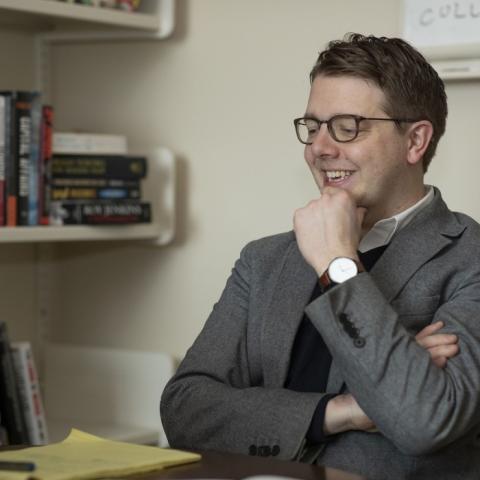
Abel Alves serves as Professor of History at Ball State University within the Department of History, College of Sciences and Humanities. His academic office is located in Burkhardt Building, Room 216, where he conducts research and teaching focused on Colonial Latin America and Early Modern Europe. Alves maintains an active scholarly profile with recent publications reflecting his interdisciplinary approach to historical analysis.
Alves' research centers on ethological approaches to history and animal studies, examining human-animal interactions within imperial contexts. His work challenges conventional historical narratives by positioning non-human actors as central to understanding colonial power structures and environmental change. This perspective reveals how animal agency shaped societal development across the Atlantic World, particularly in Spanish imperial territories.
His scholarship demonstrates a clear evolution from early ethological analyses of Mexican colonial formation toward contemporary engagements with the Anthropocene. Recent publications increasingly address decolonial frameworks and environmental justice, connecting historical animal studies to current ecological crises. This trajectory reflects growing scholarly recognition of non-human influences in historical processes.
Alves' distinguished contributions have earned significant recognition:
- First recipient of the Miriam Chrisman Award from the Society for Reformation Research
- Ball State University's Hurley Goodall Distinguished Faculty Award (1997)
- Lawhead Award for teaching excellence in the University Core Curriculum (2000)
His 2016 invitation to present at University College London's international symposium 'Animals in Visual Hispanism' confirms ongoing scholarly impact. While specific grant funding and student mentorship details aren't documented in available materials, his continuous publication record since the 1990s indicates sustained research productivity. Alves' work remains firmly situated within historical methodology while actively engaging interdisciplinary conversations about human-animal relationships.