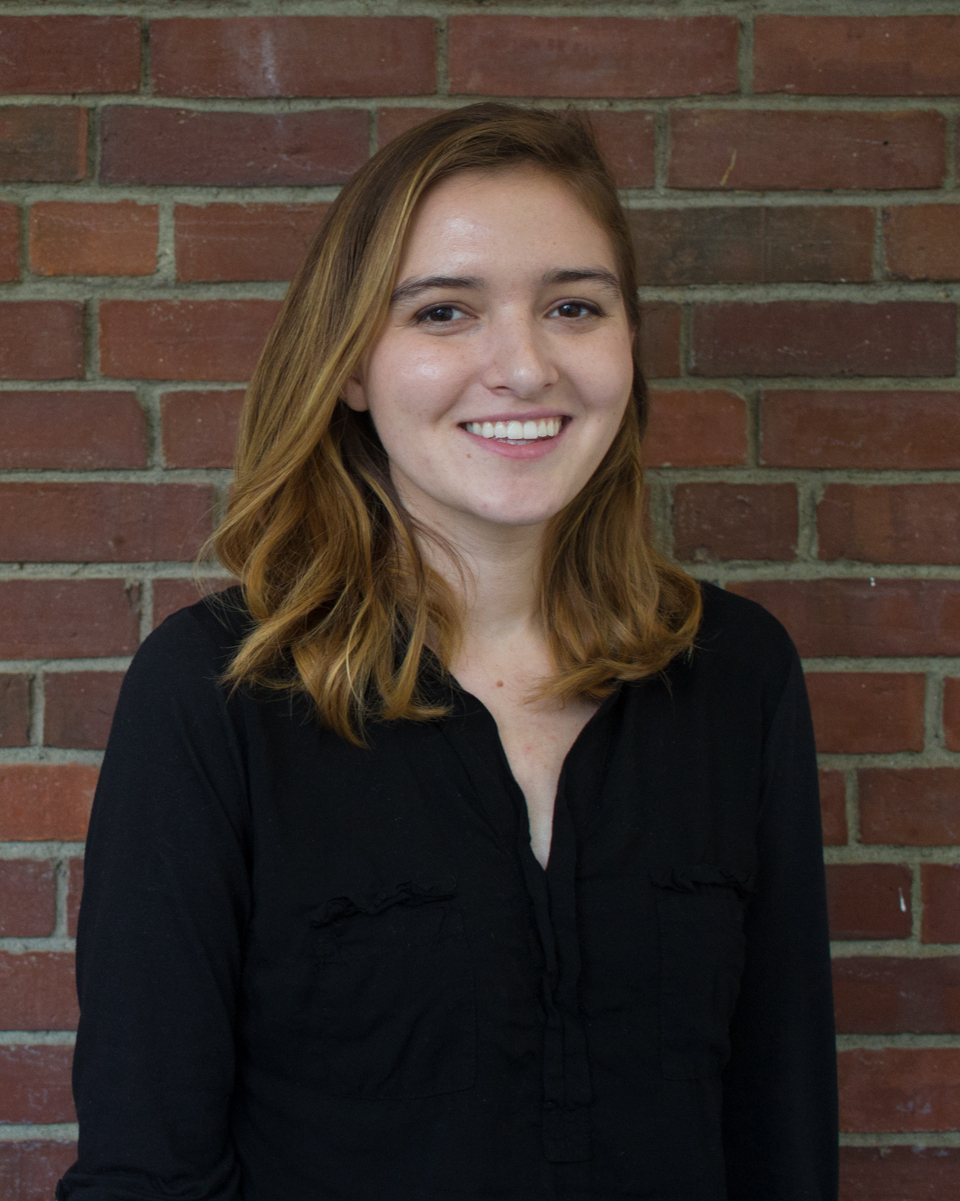
Susan M. Hoffman is an Associate Professor in the Department of Biology at Miami University, affiliated with the Miami Ecological Big Data Initiative. Her research focuses on the evolutionary genetics of mammals, particularly the relationship between genetic diversity and population viability. She investigates how climate change drives range expansions and replacements among small mammal species in the Great Lakes region, with a focus on deer mice and white-footed mice. Her work integrates genetic, morphological, and ecological data to understand demographic and evolutionary processes such as inbreeding and habitat specificity. Hoffman collaborates on projects tracking Lyme disease spread via small mammal populations and has published extensively on topics like behavioral syndromes in Peromyscus species, postglacial colonization patterns, and invasive species dynamics. She teaches courses in Genetics, Mammalogy, and Advanced Molecular Biology. Her lab’s research spans evolutionary genetics, conservation biology, and climate change impacts, emphasizing the integration of fieldwork and genomic analyses to address ecological and conservation challenges.
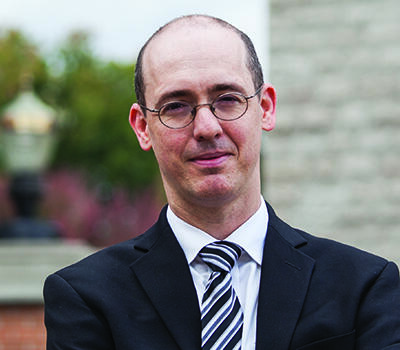
Bruno J. Strasser is a Full Professor in the Biology Section at the University of Geneva and an Affiliate Professor at Yale University. His academic career spans multiple prestigious institutions across Europe and North America, with expertise in the history of science, medicine, and society. Professor Strasser received his PhD from the University of Geneva and University of Paris 7 in 2002. His academic journey includes positions as Assistant Professor at Yale University, Visiting Professor at the University of Manchester and University of Barcelona, Visiting Fellow at Princeton University, and Senior Lecturer at the University of Lausanne. He also held research fellowships at the Max Planck Institut für Wissenschaftsgeschichte in Berlin and Ecole Normale Supérieure in Paris. Strasser's research focuses on the historical intersections of science, medicine, and society. His work explores how scientific knowledge is produced, disseminated, and interacts with broader social contexts. He has made significant contributions to understanding the history of public participation in science, international scientific cooperation during the Cold War, the interactions between experimental science and clinical medicine, and the transformations of the pharmaceutical industry. His research also examines the development of scientific instrumentation and the role of collective memory in shaping scientific practices. Analysis of Strasser's recent publications reveals a strong focus on citizen science, public participation in scientific research, and the historical evolution of scientific practices. His work spans disciplines including history of science, history of medicine, sociology of science, and science and technology studies. Key themes include the relationship between expertise and democracy, the transformation of scientific data practices, and the historical development of scientific instruments and methodologies. Strasser has received notable recognition for his scholarly work: Henry-E. Sigerist prize 2006 for his book "La fabrique d'une nouvelle science: La biologie moléculaire à l'âge atomique, 1945-1964" As an academic mentor, Strasser oversees a research group that includes Véronique Stenger, Yuhann Guffroy, Eloïse Richard, Lucas Muller (affiliate), David Roberston (affiliate), Kostas Kampourakis, Séverine Perron, Annabelle Wilson, and Olivier Sutter. His research has been supported by various academic institutions and scholarly grants that have enabled his extensive historical investigations across multiple continents. He has collaborated with numerous international scholars, particularly in Europe and North America, to advance the field of history of science. Professor Strasser co-founded and developed the Bioscope, an outreach laboratory in 2014, demonstrating his commitment to public engagement with science history. His research group maintains active collaborations across institutions, with several affiliate members extending the reach of his scholarly network.
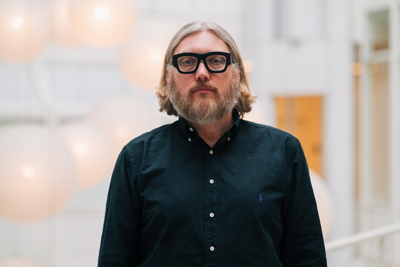
Anders Olof Larsson is a Professor at the School of Communication, Leadership and Marketing at Kristiania University College in Oslo, Norway. Originally from Sweden, he specializes in digital political communication, with particular expertise in social media platforms' role in political processes, journalism, and election campaigns. His research takes a strongly comparative approach across countries, platforms, and time periods. Professor Larsson's research interests focus on political communication in digital environments, with particular attention to how political actors use social media platforms for campaigning and public engagement. His work examines cross-national differences in digital political communication, platform-specific affordances, and longitudinal changes in how political actors utilize emerging technologies. He has conducted extensive research on Facebook, Twitter, Instagram, and newer platforms like TikTok, with special attention to comparative Scandinavian contexts. His recent publications reveal a strong focus on comparative digital political communication across multiple dimensions - comparing different countries' approaches, analyzing various social media platforms' unique characteristics, and examining longitudinal changes in digital campaigning. His work spans theoretical, methodological, and empirical contributions to understanding how digital technologies reshape political communication globally. Professor Larsson actively supervises research and has sought both master's level research assistants and PhD candidates for projects including the 'Scandinavian Political Communication During the Pandemic' initiative. He has organized academic events including the 'Comparative Digital Political Communication' preconference for the International Communication Association. His research is conducted through several collaborative projects including the DigiWorld project and CamforS (Campaigning for Strasbourg), which conducts cross-national comparisons of campaign mobilization in social media. These projects adopt comparative approaches to studying political communication across different contexts and platforms.
Stephen Ramsey, an Associate Professor at Oregon State University, holds dual appointments in the School of Electrical Engineering and Computer Science (College of Engineering) and the Department of Biomedical Sciences (Carlson College of Veterinary Medicine). With a PhD in Physics from the University of Maryland, his postdoctoral training in computational genomics at the University of Washington, and professional experience at the Institute for Systems Biology and Center for Infectious Disease Research, Ramsey bridges computational methods with biomedical applications. Education : Ph.D., Physics, University of Maryland; M.S., Physics, University of Maryland; Sc.B., Mathematical Physics, Brown University Ramsey specializes in computational systems biology , focusing on bioinformatics , biomedical knowledge graphs , and precision medicine . His research integrates machine learning , gene regulatory network modeling , and multi-omics data analysis to address challenges in rare disease diagnostics , drug monitoring , and inflammatory disease mechanisms . Current work includes AI-driven biomedical translation and electrochemical biosensor development for non-invasive diagnostics . Recent publications highlight knowledge graph applications in translational biomedicine , causal network inference in clinical-environmental data integration , and cross-species cancer transcriptomics . His team develops tools like RTX-KG2 and PloverDB to standardize biomedical data sharing and semantic reasoning . Scientific Awards : 2019 Zoetis Award (Carlson College of Veterinary Medicine) 2016 NSF CAREER Award 2016 PhRMA New Investigator Award 2010 NIH K25 Mentored Quantitative Research Award Ramsey advises in computational biology courses (CS 446/546) and contributes to biomedical AI through projects like mediKanren for rare disease diagnostics . His NSF-funded research explores gene expression noise and regulatory network dynamics , while NIH and PhRMA grants support his translational medicine initiatives. He leads the Ramsey Laboratory , which develops graph-based reasoning tools for biomedical data translation and multi-omics integration . The lab's work spans comparative oncology models, electrochemical biosensors , and knowledge graph infrastructure for clinical decision support .
Jörg Menche holds a full Professor position (Univ.-Prof.) at the University of Vienna, with dual appointments in the Faculty of Mathematics, Department of Mathematics, and Max Perutz Labs, Department of Structural and Computational Biology. His work bridges mathematical modeling and biomedical research through network-based approaches to complex disease mechanisms. Primary research interests include Network Biology, Computational Systems Medicine, and Immunometabolism, with specific focus on proteomic signatures in neuropathic pain, metabolic reprogramming in obesity, and autoimmunity networks. He develops innovative computational tools like VRNetzer for virtual reality network analysis and BioProfiling.jl for high-content imaging data integration, targeting intersections between metabolism, immunity, and environmental exposures. Recent publications (2019-2024) reveal a dominant trend in multi-omics network medicine, particularly in autoimmunity (AutoCore framework), cardiometabolic diseases, and rare genetic disorders. His work demonstrates exceptional translational impact, with multiple papers highlighted by news outlets and patents (e.g., 3 patents referencing 2021 research). While the text indicates involvement in one project (2016) and 13 activities, grant specifics and student mentoring details remain undisclosed. His collaborative network spans immunology, neuroscience, and toxicology, evidenced by co-authorships with clinical and computational teams. Menche operates within Max Perutz Labs, a premier molecular biology research center in Vienna. His team integrates computational biologists, cell biologists, and clinicians to develop network cartography methods for disease module identification, with strong emphasis on virtual reality interfaces and multi-omics validation.
Philipp Mayr-Schlegel is a Professor at the University of Göttingen’s Institute of Computer Science, leading the team 'Information & Data Retrieval' at GESIS - Leibniz-Institute for the Social Sciences. His research focuses on interactive information retrieval systems, scholarly recommendation mechanisms, and the integration of bibliometric methods with digital library technologies. University of Göttingen - Institute of Computer Science GESIS - Leibniz-Institute for the Social Sciences His work spans information retrieval , digital libraries , and applied informetrics , with particular emphasis on: Interactive search systems Non-textual ranking algorithms Scholarly document processing Knowledge representation Semantic search technologies User behavior analysis Recent research outputs (2025) include studies on LLMs for scholarly search, bibliometric reproducibility tools, scientific uncertainty annotation, and preprint adoption disparities. He has published extensively in Scientometrics , International Journal on Digital Libraries , and top conference proceedings like ACL and ECIR . As organizer of the International Workshop on Bibliometric-enhanced Information Retrieval (BIR) and Scholarly Document Processing (SDP) series, he has shaped academic discourse through editorial roles at ISSI , JCDL , and SocInfo conferences. His projects have attracted significant national and European funding.
Paul Robertson is a Senior Lecturer in the Department of Classics, Humanities and Italian Studies at the University of New Hampshire. He holds a Ph.D. from Brown University and a B.A. from Reed College, with expertise spanning ancient Mediterranean religion, philosophy, and the cognitive science of religion. His academic work bridges classical studies, religious theory, and cognitive science. Robertson's research interests include Ancient/Medieval Philosophy, Classical Studies, Cognitive Sciences, Comparative Religion, Early Christianity, Late Antiquity studies, and the Theory of religion. He particularly focuses on the origins of big ideas in western thought, tracing the diverse influences on modern understandings of morality, justice, virtue, health and spirituality. His work in the cognitive science of religion investigates how the human brain's biological evolution shapes religious beliefs and practices across cultures. His publications reveal a consistent focus on quantitative approaches to religious studies, ancient textual analysis, and the intersection of cognitive science with historical religious phenomena. Recent work has explored mind-based models of religion, statistical analysis of Paul's letters, and the cognitive underpinnings of religious imagery like shadows in the New Testament. Course Development Grant in Global Religion, "Religion and Cognition" (awarded by University of Notre Dame & Templeton Foundation, 2019) Cognitive and Neurological Approaches to the Study of Religious Beliefs (awarded by UNH College of Liberal Arts, 2018) New Hampshire Humanities Collaborative (NHHC) (awarded by Mellon Foundation, 2025-2027) Robertson teaches a diverse range of courses including Classical Mythology, Introduction to Humanities, Greek & Roman Religion, and specialized seminars on ancient views of the good life. His teaching spans from 2017 to 2025, demonstrating ongoing active engagement in undergraduate education across multiple disciplines within the humanities.
Dr. Sylvia Niehuis is a Professor in the Department of Human Development and Family Sciences at Texas Tech University’s College of Human Sciences. She also directs the SMITTEN Lab ( Studying Maturation, Interpersonal Transitions, Theory, and Emotions in Newlyweds ), where she and her team investigate romantic relationship development across dating and marital contexts. Education and Training: While specific degree details are not provided, the title “Ph.D.” and her appointment as Professor indicate completion of doctoral training in Human Development, Family Studies, or a closely related field. Research Interests: Dr. Niehuis’s program of research centers on how romantic relationships evolve within ecological systems—family, peers, culture, and even climate change. She examines idealization and disillusionment , the transition from dating to cohabitation and marriage , and relationship dissolution . Methodologically, she integrates surveys, daily diaries, interviews, experiments, physiological assays, language analysis, and functional magnetic resonance imaging (fMRI). Publication Trends: Her most recent work (2019–2024) demonstrates a consistent focus on disillusionment processes across multiple contexts—premarital pregnancy, dating-app use, neuroimaging correlates, and cross-cultural validation of measures. A growing emphasis on big-data and machine-learning approaches is evident, culminating in a 2020 PNAS paper leveraging 43 longitudinal couples studies. Scientific Awards: Berscheid-Hatfield Award for Distinguished Mid-Career Achievement, International Association for Relationship Research IARR Article Award (Runner-Up, 2019–2020) Top Four Paper Award, Interpersonal Communication Division, Western States Communication Association Integrated Scholar Recognition, Office of the Provost, Texas Tech University Nancy J. Bell Graduate Faculty Excellence in Mentoring Award Outstanding Faculty Mentor Award, Center for Active Learning and Undergraduate Engagement, TTU Teaching Award, International Association for Relationship Research Elected Membership, Teaching Academy, TTU President’s Excellence in Teaching Award, TTU Advising, Mentorship, and Funding: Dr. Niehuis has mentored numerous graduate and undergraduate researchers, many of whom appear as co-authors on her publications. Although she is currently not accepting new graduate students , the SMITTEN lab continues to foster collaboration among faculty, graduate, and undergraduate researchers through weekly meetings and shared projects. Laboratory and Team: The SMITTEN lab— Studying Maturation, Interpersonal Transitions, Theory, and Emotions in Newlyweds —maintains an active longitudinal project following predominantly Hispanic newlywed couples in the Lubbock area. The lab’s infrastructure supports survey, interview, and fMRI data collection, and it encourages community participation via hs.smitten@ttu.edu.
Julie E. Cumming serves as Professor in the Department of Music at McGill University's Schulich School of Music, currently on sabbatical for the 2024-2025 academic year. Her distinguished career at McGill began in 1992 following seven years at Wellesley College, with significant leadership roles including Interim Dean (2016-2017) and Associate Dean of Research and Administration (2011-2016). BA in Music and Medieval Studies, Barnard College, Columbia University (1980) MA in Musicology, University of California, Berkeley (1982) PhD in Musicology and Medieval Studies, University of California, Berkeley (1987) A leading scholar in Medieval and Renaissance musicology, Professor Cumming's research encompasses polyphonic analysis, historical improvisation, music notation (1100-1600), and digital humanities applications. Her groundbreaking work includes re-examining madrigal origins through empirical evidence and mapping 16th-century musical transmission across cultures. She pioneered computational musicology through the ELVIS project, creating the first large-scale data-driven analysis of musical style. Her recent publications demonstrate an innovative fusion of traditional musicological methods with cognitive science and big data approaches, particularly in analyzing compositional processes and musical cognition in Renaissance contexts. Current projects focus on distributed cognition in early modern performance practices and developing international metadata standards for musical sources through the LinkedMusic initiative. Professor Cumming has received multiple prestigious teaching awards: Schulich School of Music Full-Time Teaching Award (2007) McGill’s David Thomson Award for Excellence in Graduate Teaching and Supervision (2015) Northeastern Association of Graduate Schools Teaching Award, doctoral level (2017) She has supervised over 20 PhD dissertations on diverse topics including Renaissance counterpoint treatises, music and plague, and espionage in Elizabethan England, with former students now holding faculty positions at University of Toronto, University of Aberdeen, and Brandeis University. Her research funding includes: Principal Investigator: Digging into Data Challenge Grant "ELVIS" (2012-2014) Co-investigator: SSHRC Major Collaborative Research Initiative "Making Publics" (2005-2010) Co-leader: SSHRC Partnership Grant "SIMSSA" (2014-2023) Co-investigator: SSHRC Partnership Grant "LinkedMusic" Professor Cumming co-founded and leads the SIMSSA research team, an international consortium developing open-source tools for music score analysis and source linking, while directing the ELVIS project's continued development of vertical interval succession databases for Renaissance music analysis.
Preethika Sainam is an Assistant Professor at Thunderbird School of Global Management, Arizona State University, specializing in quantitative marketing and data analytics. She previously served as an Assistant Professor at Indiana University's Kelley School of Business. Her research focuses on strategic pricing, big data applications, and marketing analytics, published in top journals like Marketing Science and Journal of Marketing Research . She holds a PhD in Quantitative Marketing from the University of North Carolina-Chapel Hill, an MBA from the University of Texas at Dallas, and a BS from Purdue University as a Dean's Scholar. Education: PhD (UNC-Chapel Hill), MBA (UT-Dallas), BS (Purdue) Research Interests: Marketing Analytics, Pricing Models, Big Data, and International Marketing Dr. Sainam teaches courses such as Global Marketing Strategy, Data Analytics, and Big Data in the Global Economy. She actively contributes to professional associations like the American Marketing Association and serves as an ad hoc reviewer for multiple journals. As a founding member of Women in Marketing Strategy (WiMS), she advocates for gender inclusivity in academia. Her work bridges theoretical frameworks with practical applications, emphasizing data-driven decision-making in global business contexts.
Eleonora Rosati is a Professor of Intellectual Property Law at the Department of Law, Stockholm University. She co-directs the LLM in European Intellectual Property Law and teaches modules including Copyright and Transborder Litigation and Fashion and Intellectual Property Law . Her research focuses on EU copyright harmonization, online intermediary liability, AI-related challenges, and fashion industry IP. Education: PhD in EU Copyright Law (European University Institute, 2012) LLM (University of Cambridge, 2009) Laurea Specialistica in Giurisprudenza (University of Florence, 2008) Laurea in Scienze Giuridiche (University of Florence, 2006) Her recent publications analyze AI training data licensing , DSM Directive implementation , and metaverse IP enforcement . She has contributed to policy debates at the European Parliament , WIPO , and EUIPO . Notable awards include the 2022 Adepi Award and recognition as an Influential Woman in IP (2020, 2025) and one of the 50 Most Influential People in IP (2018). She serves as Of Counsel at Bird & Bird and co-edits the Journal of Intellectual Property Law & Practice . As a permanent member of The IPKat team since 2012 and author of over 1,000 posts, she shapes global IP discourse. Her work spans online intermediary responsibilities , text and data mining , and international jurisdiction in digital copyright cases. She has advised on Belgian additional remuneration rights and Italian Supreme Court decisions regarding store layout design protection.
Keith Vanderlinde is an Associate Professor at the David A. Dunlap Department of Astronomy & Astrophysics and the Dunlap Institute at the University of Toronto. His research focuses on cosmology and long-wavelength instrumentation, particularly large-scale structure studies and the expansion history of the universe. He leads projects like CHIME/FRB, CHORD, and HIRAX, developing radio telescopes to detect fast radio bursts (FRBs) and map cosmic evolution. Education: PhD in Physics (University of Chicago, 2008); BS in Physics with EE (MIT, 2002). Awards include CIfAR Junior Fellow (2011-2012) and McGill Trottier Fellow (2009-2011). Research interests span cosmological instrumentation, dark energy probes, and transient astronomy. Key projects include the CHIME radio telescope (studying 21cm emission and FRBs), the CHORD observatory, and international collaborations like HIRAX in South Africa. His work emphasizes instrument design, data analysis pipelines like kotekan, and multi-messenger astronomy. Lab involvement includes the Algonquin Radio Observatory and contributions to SPT-3G. Active in graduate/undergraduate training, mentoring students in cosmology and radio instrumentation.
Andrew Caplin is a Silver Professor of Economics at New York University, leading the Sloan Foundation Program on Cognitive Economics. He holds a Ph.D. from Yale University (1983) and a B.A. from Cambridge University (1978), both in Economics. His research focuses on cognitive economics, exploring decision-making processes, AI-human collaboration, and their implications for policy and business. Caplin's groundbreaking work includes authoring An Introduction to Cognitive Economics: The Science of Mistakes , which establishes cognitive economics as an interdisciplinary field analyzing decision errors and their societal impacts. His research spans topics such as economic fluctuations, housing market design, and the cognitive economy’s labor market transformation. Caplin’s recent studies emphasize clear communication protocols to reduce decision-making errors, evidenced by his work in Mexican labor courts where indexed case files halved successful appeals. He also pioneers equity-sharing mortgages through Genrae, aiming to revolutionize housing finance. His Copenhagen Life Panel study tracks career trajectories and earnings resilience in the cognitive economy, while his Accelerator for Cognitive Economics initiative promotes interdisciplinary research and education. Caplin’s work bridges academia and practice, influencing policy through frameworks like clarity-by-design for legal and financial disclosures. His research collaborations include studies on subjective earnings risk, worker productivity, and the role of AI in shaping career adaptability. He advocates for educational reforms to teach decision-making skills, emphasizing calibration and proper scoring rules. Caplin’s contributions span theoretical advancements, empirical studies, and practical applications, positioning him as a leader in redefining economics in an AI-driven world.
Dr. Jun Wu is an Assistant Professor in the School of Molecular Sciences and School of Earth and Space Exploration at Arizona State University (ASU). His research focuses on mineralogy, crystallography, and high-pressure geoscience using transmission electron microscopy (TEM). He developed the HPTEM (high-pressure TEM) technique, enabling in-situ analysis of Earth's interior under extreme conditions. Dr. Wu collaborates on the Keck Foundation-funded project exploring Earth’s water origins and investigates nano-material synthesis and deep earthquakes. He holds a Ph.D. in Mineralogy from Johns Hopkins University and postdoctoral training under Prof. Peter Buseck at ASU. Education : Ph.D., Mineralogy, Johns Hopkins University. Research Interests : Dr. Wu’s work bridges geoscience and materials science through advanced TEM applications. His HPTEM technique uses carbon nanostructures to simulate Earth’s high-pressure environments, advancing understanding of planetary formation and deep Earth processes. He also explores nanomaterials synthesis and unresolved geological phenomena like deep earthquakes. Grants : Active funding from the Keck Foundation for origins-of-water research. Collaborative projects integrate experimental and computational approaches in Earth sciences. Labs/Teams : Engaged in cross-disciplinary teams at ASU’s School of Molecular Sciences and Earth and Space Exploration, leveraging cutting-edge microscopy facilities for high-pressure experiments.
Dr. V. Ashley Villar is an Assistant Professor of Astronomy at Harvard University, specializing in using machine learning and data-driven methods to study stellar explosions, mergers, and transient phenomena. She holds a PhD in Astronomy & Astrophysics from Harvard (2020) and a BS in Physics from MIT (2014). Her research focuses on supernova light curves, circumstellar interactions, and binary progenitor systems. She previously held positions at Columbia University as a Simons Junior Fellow and at Penn State as the inaugural Mercedes Richards Career Development Professor. Her work leverages large-scale surveys like LSST and JWST to analyze transients, develop classification tools (e.g., SPLASH, Superphot+), and model explosion mechanisms. Awards include NSF and Ford Foundation fellowships. She collaborates on projects such as the Young Supernova Experiment (YSE) and contributes to multimessenger astronomy efforts linking gravitational waves to electromagnetic counterparts. Key Projects: YSE Data Release 1 (1,975 supernova classifications), extrabol bolometric light curve estimator, SBI++ inference framework Grants: NSF, Simons Foundation, LIGO collaborations Labs/Teams: Harvard CfA Transient Research Group, LIGO HET Response Collaboration Her recent work includes analyzing GRB 221009A's supernova emission, kilonova light-curve interpolation, and binary merger signatures in double-peaked supernovae. She actively develops machine learning tools for transient classification and anomaly detection in big astronomical datasets.