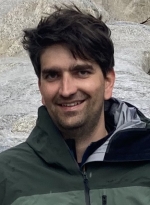
Charles M. Bachmann is a Professor at the Chester F. Carlson Center for Imaging Science , part of the College of Science at Rochester Institute of Technology (RIT) . He also holds the Frederick and Anna B. Wiedman Chair and serves as the CIS Graduate Program Coordinator since 2016. His research focuses on hyperspectral remote sensing of coastal and desert environments, with expertise in BRDF and radiative transfer modeling, goniometer development, and manifold/graph algorithms for multi-sensor imagery analysis. Recent work emphasizes UAS-based soil moisture and carbon mapping for climate studies. Education : AB in Physics (Princeton, 1984), Sc.M. (1986) and Ph.D. (1990) in Physics (Brown University). Scientific Awards : U.S. Patents for hyperspectral remote sensing methods. Teaching : Radiometry, Radiative Transfer, Mathematical Methods of Imaging Science, and graduate thesis/research courses. Students : Mentored research on soil moisture, coastal biomass, and UAS applications.
Alexander Damm is a Professor and head of the Remote Sensing of Water Systems (RSWS) group, holding a joint appointment between the Department of Geography at the University of Zurich (UZH) and the Swiss Federal Institute of Aquatic Science and Technology (Eawag). His research integrates advanced Earth observation technologies with environmental science to study water systems under changing climatic and anthropogenic pressures. University: University of Zurich Institutional Affiliation: Swiss Federal Institute of Aquatic Science and Technology (Eawag) Department: Department of Geography Alexander Damm obtained his MSc and PhD in remote sensing from Humboldt-University Berlin. Since 2008, he has been contributing to UZH’s leadership in imaging spectroscopy and Earth observation science. MSc, Remote Sensing, Humboldt-University Berlin PhD, Remote Sensing, Humboldt-University Berlin His research focuses on the fundamentals of remote sensing as applied to terrestrial and aquatic ecosystems, particularly in studying water dynamics and environmental change impacts. He specializes in sun-induced chlorophyll fluorescence (SIF), imaging spectroscopy, and the development of methods to monitor ecosystem productivity, drought responses, and biogeochemical cycles. His work bridges physics, ecology, and environmental engineering to improve understanding of plant-water relations and ecosystem resilience. The recent publications highlight a strong trend in using airborne and satellite-based spectroscopy to assess vegetation health, water stress, forest dynamics, and atmospheric constituents. Key themes include SIF retrieval, drought monitoring, canopy structure modeling, and air quality estimation. These works span applications from croplands and forests to tundra and inland waters, reflecting a broad interdisciplinary approach grounded in quantitative remote sensing. Alexander Damm is involved in several high-profile research initiatives, including: ESA’s FLuorescence EXplorer (FLEX) mission SNSF projects: FLUO4ECO, Spatial-sustainable-finance, DeltAs MeteoSwiss: UrbanNature EU Horizon: NextGenCarbon He leads the RSWS group, which develops and applies cutting-edge remote sensing methodologies for water system monitoring. The team collaborates across disciplines and institutions, focusing on integrating field measurements, airborne campaigns, and satellite data for environmental assessment. Damm’s leadership in projects like FLEX and HyPlant underscores his role in advancing spectroscopic remote sensing for global ecosystem monitoring.
Jeppe Revall Frisvad is an Associate Professor in the Department of Applied Mathematics and Computer Science at the Technical University of Denmark (DTU), within the Visual Computing group. His work bridges computer graphics, material science, and applied optics, focusing on realistic rendering and material appearance modeling. Ph.D. in Computer Graphics, DTU Informatics (2008) M.Sc. in Engineering (Applied Mathematics), DTU (2004) Education in University Teaching, LearningLab DTU (2008–2009) His research centers on computing material appearance from physical and chemical properties, developing faster and more accurate physically based rendering methods. Key areas include light scattering, bidirectional reflectance distribution functions (BRDF), anisotropy, and translucency modeling. Applications span computer games, movies, digital prototyping, architectural visualization, and training simulators. His recent publications (2024–2025) reflect a strong trend in digitizing material appearance, especially for 3D printing and food science, using spectrophotometry and optical validation. The work combines computer graphics with interdisciplinary applications in food structure and biological imaging, emphasizing measurement, modeling, and simulation. Scientific Awards: Research travel prize from AEG Elektronfonden (2006) IGDA scholarship for GDCE 2005 DTU Ph.D. scholarship (2004) He actively supervises Ph.D. students and leads multiple research projects, including those on organ-on-chip imaging, cheese quality analysis, and optical modeling of teeth. He collaborates across disciplines and institutions, with external research stays at UC San Diego and the University of Otago. He is involved in projects integrating AI with 3D imaging and material digitization. Jeppe is a key member of the Visual Computing research environment at DTU, contributing to both fundamental rendering algorithms and practical applications in industry and science.
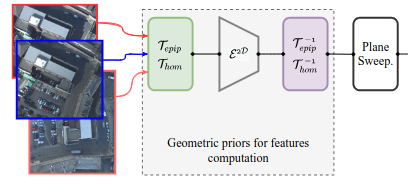
Ewelina Rupnik is a prominent researcher in photogrammetry and remote sensing, currently holding a researcher position at the Laboratory on Geographic Information Science (LaSTIG) at the French National Institute of Geographic and Forest Information (IGN) since 2017. She also serves as an associate researcher at the Paris Institute of Earth Physics (IPGP). Rupnik has established herself as a leading expert in historical imagery processing, neural radiance fields, and bundle adjustment techniques. Her educational background includes a PhD in photogrammetry from the Vienna University of Technology (2015), an MSc in Engineering in Photogrammetry from AGH University of Science and Technology, Poland (2005-2010), and an Erasmus exchange at the Technische Universitaet Muenchen, Germany (2009/2010). She recently completed her Habilitation from Université Gustave Eiffel in June 2025. Rupnik's research focuses on advancing photogrammetric techniques for processing historical imagery, developing novel neural radiance field approaches for satellite imagery, and improving bundle adjustment methodologies. Her work bridges traditional photogrammetry with modern deep learning techniques, particularly in the context of sparse satellite views and historical multi-epoch imagery. She has made significant contributions to the open-source MicMac photogrammetry software project. Her recent publications demonstrate a strong trend toward integrating deep learning with traditional photogrammetric methods, with a particular emphasis on satellite and historical imagery analysis. The research spans from fundamental algorithm development (like SparseSat-NeRF and Pointless Global Bundle Adjustment) to practical applications in earth sciences (landslide, earthquake, and glacier volume mapping). 2022 EuroSDR PhD Award for Corona satellite imagery processing Best Paper Award for BRDF-NeRF research Outstanding Reviewer at CVPR 2025 Rupnik actively contributes to the academic community through editorial and leadership roles, including serving as Editor-in-Chief of the French Journal for Photogrammetry and Remote Sensing (2021-2025), Advisory Board Member of the International Journal of Photogrammetry and Remote Sensing (2024-present), and Co-chair of the ISPRS Working Group on Image Orientation and Sensor Fusion (2022-2026). She regularly teaches at Université Paris Cité & ENSG (~30 hours/year since 2015) and has conducted numerous workshops worldwide on photogrammetry with historical images and MicMac software.
Craig Coburn serves as Full Professor in the Department of Geography and Environment at the University of Lethbridge, where he has advanced from Assistant Professor (2002) to Associate Professor (2009) and Full Professor (2019). With over 20 years of remote sensing expertise, his work centers on fundamental physics of optical remote sensing, particularly surface bidirectional reflectance properties and low-cost instrument development for agricultural and environmental applications. His academic foundation includes: B.Sc. (Honours) in Geography from University of Saskatchewan (1994) M.Sc. in Geography from University of Alberta (1996) Ph.D. in Geography/Remote Sensing from Simon Fraser University (2002) Dr. Coburn's research spans remote sensing physics , instrumentation , and image processing , with pioneering work in bidirectional reflectance distribution function (BRDF) characterization. He has designed world-leading goniometers for surface reflectance measurement and developed affordable camera systems for UAVs, aircraft, and high-altitude balloons. His focus on low-cost remote sensing solutions enables global calibration of satellite instruments while advancing agricultural monitoring and ecological studies, particularly in riparian zones. Current efforts explore novel image processing techniques for complex spatial-spectral data structures. Recent publications (2022-2025) reveal expanding applications in forest disturbance mapping, satellite calibration validation, air quality monitoring, and post-fire ecosystem recovery. Key trends include multi-sensor time-series analysis for environmental change detection, vicarious calibration using Railroad Valley test sites, and global particulate matter characterization – demonstrating his transition from foundational physics to operational environmental solutions. No scientific awards were explicitly documented in the source materials. Dr. Coburn has secured significant research funding including: Riparian Cottonwood Forests Study (Alberta Ingenuity Centre, $250,000/3yrs) examining environmental dynamics with Derek Peddle and Stewart Rood Cattle Wintering Sites Monitoring (Prairie Farm Rehabilitation Administration, $45,000/3yrs) as Principal Investigator Rocky Mountain Watershed Analysis (Alberta Ingenuity Centre, $318,000/3yrs) with Derek Peddle and Matthew Letts Previous work included Mountain Pine Beetle detection (2005) and National Land Information System ground truthing (2006). His laboratory specializes in BRDF instrumentation, maintaining advanced goniometer systems for surface reflectance measurement and developing UAV-deployable sensors for agricultural and ecological applications. As Past President of the Western Canadian Association of Geographers and Associate Editor of the Journal of Applied Remote Sensing, he actively shapes the remote sensing community while leading the NSERC CREATE AMETHYST training program.
Lt Col Todd V. Small is an Assistant Professor of Applied Physics at the Air Force Institute of Technology (AFIT), Wright-Patterson Air Force Base, OH. He holds a PhD in Applied Physics (2021) from AFIT, an MS in Aero/Astro Engineering (2010) from MIT, and a BS in Astronautical Engineering (2008) from the United States Air Force Academy. PhD: Applied Physics, Air Force Institute of Technology, Wright-Patterson AFB, OH, 2021 MS: Aero/Astro Engineering, Massachusetts Institute of Technology, Cambridge, MA, 2010 BS: Astronautical Engineering, United States Air Force Academy, Colorado Springs, CO, 2008 His research focuses on optical engineering and materials science, particularly in bidirectional reflectance distribution function (BRDF) measurement systems. He has developed data-driven algorithms for BRDF classification, modeled solar cell reflectance, and enhanced CASI® measurement systems for out-of-plane scatter analysis. His work intersects with remote sensing, photovoltaic materials, and optical instrumentation. Recent publications highlight advancements in BRDF uncertainty quantification, scatter coordinate mapping, and CCD-based optical measurement systems. These studies contribute to improved material surface analysis and multispectral imaging technologies. Meritorious Service Medal, 2018 Joint Service Commendation Medal, 2018 Air Force Commendation Medal, 2016 Air Medal (7 Oak Leaf Clusters, 2015) Dr. Small collaborates on optical engineering projects and contributes to military-university research partnerships. He has presented at SPIE conferences on reflectance, scattering, and diffraction from surfaces. His work supports applications in aerospace materials characterization and remote sensing.
Are Strandlie is a Professor at the Physics Institute of the University of Oslo . His research focuses on high energy physics data analysis, particle tracking algorithms, and material science applications in additive manufacturing. Previously, he held roles at CERN and Gjøvik University College. Education: cand. scient., Theoretical Physics, University of Oslo (1995) dr. scient., Experimental Particle Physics, University of Oslo (2000) Research Interests: His work spans advanced track reconstruction methods, particle mass determination, and computational material science. Recent projects include durability analysis of composite materials and optical properties in 3D printing. His research is published in journals like Journal of High Energy Physics and Materials & Design . Grants & Labs: Collaborates with teams like the ATLAS experiment at CERN. Active in material jetting and intermetallic compound studies. No specific grants mentioned in the text.
Jonas Unger is a Professor at Linköping University's Department of Engineering and Natural Sciences (ITN) and Media and Information Technology (MIT). As a research leader in computer graphics and image processing, he contributes to advanced visualization techniques, GPU computing, and AI applications in healthcare and climate adaptation. Specializes in BRDF modeling, spectral light field imaging, and augmented intelligence Active in AI4Climateadaptation and Wallenberg Autonomous Systems Program (WASP) Recipient of the 2023 Chester Carlson Research Prize Develops AI methods for medical imaging (SCAPIS dataset) and autonomous systems His recent work focuses on deep learning for material acquisition, real-time rendering optimizations, and visual analytics pipelines for disaster response systems. Current projects include multi-agent reinforcement learning for air traffic control and GPU-accelerated signal processing techniques. Scientific awards include: Chester Carlson Research Prize (2023) He collaborates with Visual Sweden's Augmented Intelligence platform, co-leads major visualization conferences, and contributes to Horizon 2020 Marie Skłodowska-Curie funded research. Contact: jonas.unger@liu.se
Privatdozent (Senior Lecturer) Alexander Wilkie is affiliated with the Faculty of Informatics at the Technische Universität Wien , specifically the Institute of Computer Graphics and Algorithms. His research focuses on photorealistic rendering, color science, and optical phenomena. Photorealistic Image Synthesis Bidirectional Reflectance Distribution Function (BRDF) Chromatic Adaptation Spectral Rendering Fluorescence Modeling His work explores layered materials, atmospheric effects, and gemstone simulations, with significant contributions to physically based rendering algorithms. Students under his supervision include Andreas Weidlich and Harald Grasberger. Wilkie has collaborated on projects funded by the Austrian Science Fund (FWF) from 2005–2007.
Michael Shepard is a Professor of Geosciences at Bloomsburg University , specializing in remote sensing , planetary photometry , and asteroid studies . He teaches courses like Applied Geophysics (EGGS 480) , The Planets (EGGS 106) , and Quantitative Methods (EGGS 150) , emphasizing hands-on geophysical instrumentation training. Department: Physical and Environmental Sciences Research Lab: B.U.G. (Bloomfield University Goniometer) Laboratory Key Instruments: 12-channel seismograph, Worden gravimeter, GSS ground-penetrating radar His research focuses on lunar and martian regolith characterization using photometric goniometers. The BUG Lab, funded by NASA's Planetary Geology and Geophysics Program, investigates bidirectional reflectance distribution functions (BRDF) of celestial materials. Notable projects include calibration target development for Mars Exploration Rovers and diviner mission data validation through Apollo soil studies. Recent publications analyze light scattering behavior in planetary surfaces, with applications to asteroid (16) Psyche and Kleopatra photometry . Collaborations span institutions like Cornell University , UCLA , and JPL . The BUG Lab's data contributes to planetary mission calibration and surface property inference .
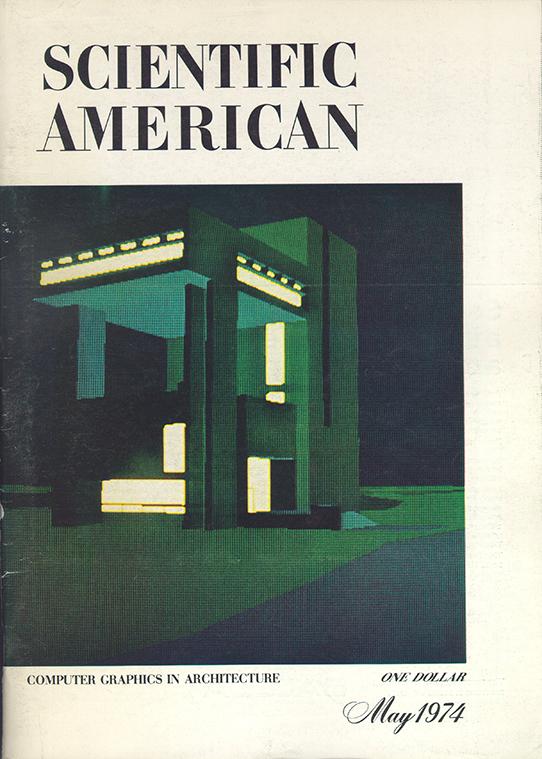
Donald Greenberg is the Jacob Gould Schurman Professor of Computer Graphics at Cornell University, affiliated with the College of Architecture, Art, and Planning (AAP) and the Department of Architecture. He holds joint teaching responsibilities across Computer Science, Art, and the Business School, reflecting his interdisciplinary impact. His office is located in Rhodes Hall and Sibley Hall at Cornell. Greenberg earned his B.C.E. from Cornell in 1958 and his Ph.D. in 1968, with additional studies at Columbia University. His academic journey has been deeply rooted at Cornell, where he has taught and researched since 1966. His research interests center on computer graphics, with a focus on real-time realistic image generation, color science, and computer-aided architectural design. He pioneered the concept of physically accurate and perceptually indistinguishable digital imagery, laying the foundation for modern rendering and digital twin technologies. His current work includes the development of 'digital twins' for architectural design, enabling real-time simulation of energy use, sunlight, and weather impacts. The selected publications reflect a career-long trajectory from foundational work in computer graphics in architecture to advanced frameworks for realistic image synthesis. These works span disciplines including computer science, architecture, and visualization, emphasizing physically based modeling, interdisciplinary applications, and educational innovation. Scientific Awards: Fellow, American Association for the Advancement of Science (2002) ACSA Creative Research Award in Architecture (1997) Member, National Academy of Engineering (1991) National Computer Graphics Association Academic Award (1989) ACM SIGGRAPH Steven A. Coons Award (1987) Greenberg has advised numerous graduate students, including Rob Cook (Pixar, Oscar winner) and Michael Cohen (Microsoft Research, Facebook), many of whom have achieved significant recognition. He emphasizes student-led research, with nearly 90% of his published papers featuring students as first authors. He leads the multidisciplinary Program of Computer Graphics and collaborates across departments and colleges. His current course, 'Design in the Age of Digital Twins,' exemplifies his ongoing commitment to innovation in education and research. He founded and directs the Program of Computer Graphics at Cornell, a hub for interdisciplinary research involving architecture, computer science, and the arts. The program has nurtured generations of leaders in graphics and visualization, including Kavita Bala, now dean of the Cornell Bowers College of Computing and Information Science.
Gaël Obein is a Senior Lecturer (HDR) and Associate Professor at Conservatoire National des Arts et Métiers (CNAM) in Paris, France. He serves as Director of LNE-CNAM, the national metrology laboratory for radiometry, photometry, temperature, and length, and leads the 'Radiometrics/Photonics' team. His academic career spans roles at CNAM, Paris VI, NIST (USA), and MNHN, with a PhD in 'Physical Systems and Metrology' (2003) and HDR since 2019. President of French Lighting Association (AFE) Secretary of CIE Division 2 Coordinator of four European research projects (2013–2027) Expert in BRDF, BSSRDF, and BTDF metrology His research focuses on optical metrology for material appearance, including: High-angular-resolution goniospectrophotometry (0.015°) µBRDF measurements for 50µm surfaces Specular gloss perception studies Development of primary standards for BRDF/BSSRDF/BTDF Light polarization and speckle effects Scientific Leadership includes: Secretary of CIE Division 2 Director of CIE TC2-85 and JTC17 Coordination of EURAMET-PR-K6 key comparisons Participation in 4 CIE technical committees Publications (2023–2024) cover bidirectional reflectance distribution functions, gloss metrology, spectral irradiance traceability, and material appearance modeling. Projects include 'xDReflect', 'BiRD', 'BxDiff', and 'xDDiff', addressing multidimensional optical diffusion and appearance measurement standards.
Tim Carlsen serves as a Researcher at the Section for Meteorology and Oceanography within the Department of Geosciences at the University of Oslo's Faculty of Mathematics and Natural Sciences. Appointed to this position in 2021 following a postdoctoral fellowship at the same institution (2019-2021), he contributes to Norway's leading polar climate research infrastructure while maintaining international collaborations across European Arctic projects. His academic trajectory includes doctoral research at Leipzig University (2014-2018), where he developed expertise in cryospheric remote sensing and cloud microphysics. This foundation supports his current work bridging observational data with climate modeling frameworks. Carlsen's research centers on mixed-phase cloud dynamics in polar regions, with particular emphasis on ice nucleation processes and cloud-phase transitions. His investigations into snow surface reflectivity examine bidirectional reflectance distribution functions under varying illumination and surface conditions. Utilizing multi-platform remote sensing (satellite, airborne, ground-based lidar/radar), he addresses critical gaps in understanding Arctic Amplification mechanisms. Current projects integrate field campaigns like NASCENT with global climate model evaluation. Analysis of his 15 most recent publications (2017-2025) reveals three dominant research thrusts: (1) Arctic cloud-phase representation in CMIP6 models, (2) ice nucleating particle impacts on high-latitude precipitation, and (3) snow grain size retrieval methods for cryospheric albedo modeling. His work consistently employs multi-sensor validation approaches, with growing emphasis on aircraft icing prediction and drifting snow-cloud interactions. Carlsen actively contributes to major research initiatives including the ERC Consolidator Grant 'STate-dEPendent Cloud feedbacks' (STEEPEGE), ERC Start-up grant 'Mixed-phase clouds and climate' (MC2), and the BRACE-MY capacity-building project. His involvement in IceSAFARI demonstrates applied research for aviation safety, while the ACT-Pilot project connects his cloud physics expertise to Arctic sustainability transitions. As part of Oslo's Meteorology and Oceanography section, he collaborates with international teams on field experiments across Svalbard and Antarctica. His current work focuses on improving cloud microphysics parameterizations in Earth system models through targeted observational constraints, with emerging interest in drone-based icing condition monitoring.
Robin Aschan is a Postdoctoral Researcher at Aalto University, affiliated with the Department of Electrical Engineering and Automation and the Metrology Research Institute. Their work centers on precision optical measurement techniques for reflectance and transmittance characterization. Research interests include: Optical Metrology Bidirectional Reflectance Distribution Function (BRDF) Bidirectional Transmittance Distribution Function (BTDF) Radiative Transfer Modeling Spectral Reflectance and Transmittance Measurements Near Infrared Spectroscopy Recent publications (2024-2025) demonstrate expertise in BTDF/BRDF measurement protocols, SI-traceable validation methods, and multilateral facility comparisons. Research spans visible to near-infrared spectra with applications in aerospace, remote sensing, and climate monitoring systems. No scientific awards were mentioned in the provided information. Active grants include: SRT i-10 xDDiff (2024-2027): Multidimensional optical diffusion for appearance measurement PaRaMetriC (2022-2025): Metrological framework for passive radiative cooling MetEOC-4 (2020-2023): SI-traceable climate observing systems BxDiff (2019-2022): New quantities for appearance measurement No student advising roles were documented. Collaborative work occurs through the Metrology Research Institute with international partners across European metrology networks.