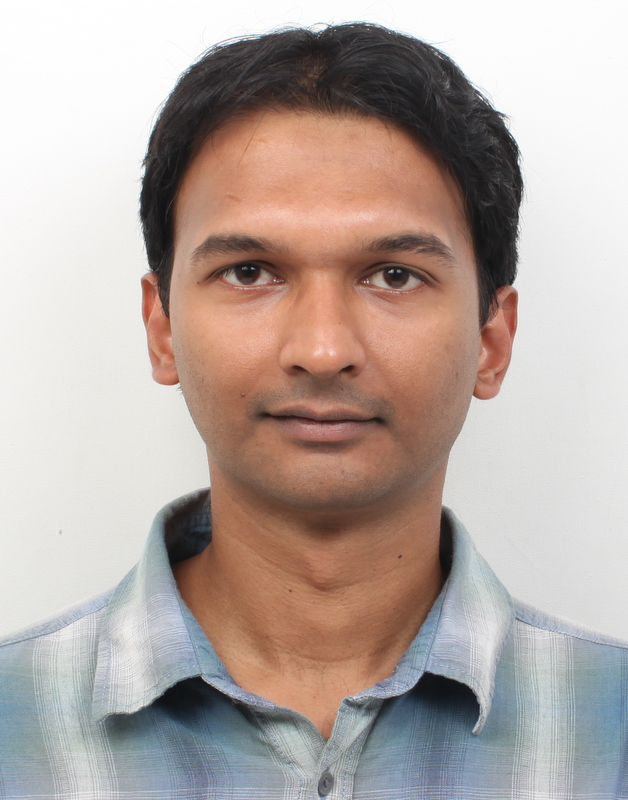
Shivaram Kalyanakrishnan is an Associate Professor at the Department of Computer Science and Engineering , Indian Institute of Technology Bombay , specialising in Artificial Intelligence and Machine Learning . His research spans sequential decision making , multiagent learning , multi-armed bandits , and humanoid robotics , with applications in robot soccer , computer games , and online advertising . He teaches advanced courses like CS 747: Foundations of Intelligent and Learning Agents and CS 748: Advances in Intelligent and Learning Agents , focusing on end-to-end system design and theoretical analysis. His scientific awards include the Best Student Paper Award at RoboCup International Symposium 2006 and nomination for Best Student Paper Award at AAMAS 2007 . His work on reinforcement learning and policy iteration has been published in leading venues such as IJCAI , ICML , and COLT , with recent contributions to railway scheduling and bandit algorithms. While no explicit list of advisees is provided, his research projects and publications suggest mentorship of students in collaborative efforts. Contact : shivaram@cse.iitb.ac.in .
Kamalika Chaudhuri is a Professor in the Department of Computer Science and Engineering at the University of California, San Diego (UCSD), and also serves as a Director and Research Scientist with the FAIR team at Meta AI. Her research focuses on the foundations of trustworthy machine learning, including robust machine learning, learning with privacy, and out-of-distribution generalization. Dr. Chaudhuri has earned her PhD from UC Berkeley in 2007 with a dissertation on "Learning Mixtures of Distributions." Her academic journey has led her to become a leading researcher in machine learning theory with a particular emphasis on privacy and robustness. Her research interests span machine learning foundations with a strong focus on trustworthy AI . She investigates problems at the intersection of differential privacy , adversarial robustness , and out-of-distribution generalization . Her work addresses critical challenges in developing machine learning systems that maintain privacy while preserving utility, resist adversarial attacks, and generalize effectively beyond training data distributions. She has pioneered approaches in privacy-preserving machine learning, robust learning theory, and methods for detecting and mitigating data memorization in models. An analysis of her recent publications (2024-2025) reveals a strong focus on the intersection of privacy, security, and machine learning. Her work spans differential privacy mechanisms, membership inference attacks, memorization detection, and fairness certification. She has been particularly active in developing methods for privacy-preserving foundation models, with several papers on differentially private computer vision and language models. Her research demonstrates a consistent thread of addressing fundamental challenges in trustworthy AI while developing practical solutions that balance privacy, accuracy, and utility. Best Award at the ICLR 2024 Workshop on Privacy Regulation and Protection in Machine Learning Distinguished Paper Award at IEEE Conference on Secure and Trustworthy Machine Learning (SaTML), 2024 Dr. Chaudhuri has advised numerous PhD students who have gone on to prominent positions at Google, DeepMind, Microsoft Research, and other leading AI institutions. Her group maintains an active research blog with guest posts from UCSD researchers. She has served in significant leadership roles including General Chair for ICML 2022 and Program Co-Chair for both ICML 2019 and AISTATS 2019, where she pioneered initiatives to improve reproducibility in machine learning research. Her research group at UCSD focuses on trustworthy machine learning, with current projects spanning privacy-preserving AI, robustness against adversarial attacks, and methods for ensuring reliable out-of-distribution generalization. The group collaborates closely with the FAIR team at Meta AI, where Dr. Chaudhuri serves as a Research Scientist.
Henrik Sandberg is a Professor at the Division of Decision and Control Systems , KTH Royal Institute of Technology , Stockholm, Sweden. He holds the title of Deputy Head of Division and is affiliated with the School of Electrical Engineering and Computer Science . Education: MSc in Engineering Physics (1999) PhD in Automatic Control (2004) from Lund University Postdoctoral position at Caltech (pre-2007) Research Interests: Focus on cyber-physical systems security , power systems , model reduction , and fundamental limitations of control systems . Key sub-areas include attack detection , networked control , privacy-preserving estimation , and resilient control architectures . Publications: Over 150 papers across IEEE Transactions and Automatica , covering topics like stealthy attacks , distributed control , LQG optimization , and thermodynamic costs in filtering . Recent work includes LWE-based encrypted control and Bayesian deception mechanisms . Scientific Awards: Best Student Paper Award Finalist at IEEE CASE 2014; Best Student-Paper Award at IEEE CDC 2004. Grants & Projects: Leads the DYNACON project (WASP Cybersec cluster) and collaborates on CERCES (critical infrastructure resilience). Serves as examiner for multiple advanced courses in cybersecurity and control systems. Contact: Email: hsan@kth.se Phone: +46 (0)8 790 7294 Room: A:607, Malvinas Väg 10, Stockholm
Helen Xu is an Assistant Professor at Georgia Tech's School of Computational Science and Engineering (College of Computing). She holds a Ph.D. from MIT (2022) under Charles E. Leiserson and was a Grace Hopper Postdoctoral Fellow at Lawrence Berkeley National Lab (2022). Her research focuses on parallel algorithms, cache-efficient data structures, and high-performance computing. Xu has interned at Microsoft Research, NVIDIA Research, and Sandia National Laboratories, and her work has been supported by prestigious fellowships including the National Physical Sciences Consortium and Chateaubriand awards. **Education**: Ph.D., Computer Science, MIT, 2022 Postdoctoral Research, Lawrence Berkeley National Lab (2022) **Research Interests**: Parallel and cache-friendly algorithms Dynamic graph and data structure optimization Algorithm performance engineering Sparse matrix/tensor operations **Awards**: Grace Hopper Postdoctoral Scholar (2022), Best Artifact Award (PPoPP 2024), National Physical Sciences Consortium Fellowship, Chateaubriand Fellowship. **Advising & Teaching**: Advises PhD/M.S. students in parallel computing and high-performance systems. Teaches courses like CSE 6220 (Introduction to HPC) and CSE 6230 (HPC Tools). Supervised MIT M.Eng. projects on BP-Trees and parallel prefix sums. **Labs/Teams**: Active in Georgia Tech's High-Performance Computing community, collaborating with researchers like Aydın Buluç and Prashant Pandey on graph containers and dynamic data structures.
Immanuel Trummer is a Professor of Computer Science at Cornell University, specializing in database systems, query optimization, and applications of large language models (LLMs) and quantum computing. He leads research projects such as DB-BERT, UDO, and SkinnerDB, focusing on automated database tuning, adaptive query processing, and leveraging LLMs for code synthesis and system optimization. His research interests span quantum computing for database optimization, cost-efficient LLM utilization, and voice-based data exploration. Key contributions include developing systems like CEDAR for claim verification, CodexDB for LLM-driven code generation, and ThalamusDB for multimodal data querying. Trummer has received prestigious awards, including the NSF CAREER Award (2023-2028) and the Best Demonstration Award at BDA 2020. His work has been funded by NSF, Google, Huawei, and others, supporting projects like quantum-index selection and misinformation detection. He advises graduate students in database systems and teaches advanced courses such as CS 6320 (Advanced Database Systems) and CS 7390 (Seminar in Database Systems). His research lab hosts open-source tools like JoinGym and maintains extensive collaborations in industry and academia.
Christian Coester is an Associate Professor of Computer Science at the University of Oxford and a Tutorial Fellow at St Anne's College. His research focuses on theoretical computer science, particularly in the design and analysis of algorithms for problems involving uncertainty and incomplete information. His primary research areas include: Online algorithms, with groundbreaking work on the k-server problem (including refuting the randomized k-server conjecture, which earned the STOC 2023 Best Paper Award) Learning-augmented algorithms (algorithms with predictions) that leverage machine learning predictions while maintaining robustness guarantees Fundamental problems such as the k-taxi problem, metrical task systems, and online shortest paths Coester's theoretical work aims to develop algorithms with provable performance guarantees, particularly focusing on competitive ratios that measure worst-case performance against optimal offline solutions. His research often addresses problems that are 'simple to state and hard to solve,' leading to techniques with broad applicability across theoretical computer science. His publications span top venues including STOC, FOCS, SODA, and ICML, showing consistent contributions to both classical online algorithms and the emerging field of learning-augmented algorithms. The publications reveal a strong focus on metric spaces, competitive analysis, and the integration of prediction models into traditional algorithmic frameworks. Coester has received significant recognition including the STOC 2023 Best Paper Award and a substantial ERC Starting Grant (EUR 1.5M) for 'Challenges in Competitive Online Optimisation' (2025-2029). He actively supervises PhD students and welcomes inquiries from mathematically skilled candidates interested in theoretical computer science.
Stefano Grivet-Talocia is a Full Professor at the Department of Electronics and Telecommunications at the Polytechnic University of Turin, where he also serves as Director of the Doctoral School and President of the Doctoral School Council. He is a member of the Interdepartmental Center SmartData@PoliTO - Big Data and Data Science Laboratory, the University Committee for Research, Technology Transfer and Services to the Territory, and the Commission for the Promotion of Library, Archive and Museum Heritage. His academic career spans over two decades at Politecnico di Torino, where he has established himself as a leading researcher in electromagnetic modeling and signal integrity. Grivet-Talocia earned his Laurea degree (summa cum laude) in Electronic Engineering in 1994 and his Ph.D. in Electronic and Communication Engineering in 1998, both from the Polytechnic University of Turin. Between 1994 and 1996, he conducted research at NASA/Goddard Space Flight Center in Greenbelt, Maryland. His educational background laid the foundation for his expertise in electromagnetic modeling, wavelet analysis, and signal processing. His research focuses on behavioral modeling, electromagnetic compatibility, macromodeling, model order reduction, numerical modeling, passivity, power integrity, signal integrity, transmission lines, and wavelets . Grivet-Talocia is particularly renowned for his work on passive macromodeling of interconnect structures, development of the TOPLine technique for transmission line simulation, and pioneering contributions to passivity enforcement algorithms. He has co-authored the first book entirely dedicated to Macromodeling (2016) and developed innovative approaches to waveform relaxation and wavelet-based signal processing. His recent publications (2024-2025) demonstrate continued leadership in model order reduction, with significant contributions to data-driven modeling of linear and nonlinear systems, power integrity analysis, and electromagnetic compatibility. His work spans both theoretical advances in numerical methods and practical applications in circuit design, with strong industry relevance particularly for semiconductor and electronic design automation companies. IEEE Fellow (2018-present) Three Intel SRS Grants (2022-2024) Three IBM SUR Grant Awards (2007-2009) Best Associate Editor Award - IEEE Transactions on Components, Packaging and Manufacturing Technology (2020) Multiple Best Conference Paper Awards (2006-2020) URSI Young Scientist Awards (1999) Ranked among the "top 2% worldwide researchers" (Stanford) since 2019 Grivet-Talocia actively supervises doctoral students including Michele Cusano, Sara Paknezhad Panahi, Antonio Carlucci, and Kun Zhao. He has secured numerous research grants from competitive national calls (PRIN) and commercial contracts with industry partners including Intel, IBM, Nokia, Hitachi, Infineon, and Cadence. His technology transfer activities include co-founding the spin-off IdemWorks (2007-2016), which was acquired by CST in 2016. He also developed the autoCircuits web service for automated circuit problem generation, widely used in electrical engineering education. He leads the EMC Group (Electromagnetic Compatibility) at DET and has been instrumental in establishing the Compact Dynamical Modeling research area. His work has practical applications in high-speed electronics design, with algorithms embedded in commercial tools like IBM PowerSPICE. Grivet-Talocia maintains strong industry connections through his research projects and serves as Associate Editor for IEEE Transactions on Components, Packaging and Manufacturing Technology.
Matteo Brunelli is Associate Professor of “Mathematical Methods of Economics and Actuarial and Financial Sciences” at the University of Trento , Department of Industrial Engineering, and Adjunct Professor (docent) at Lappeenranta University of Technology , Finland. He is nationally habilitated as Full Professor in Italy and has held long-term visiting positions at Berkeley, Turku, Auckland, JAIST and Binghamton. Education: Ph.D. (Doctor of Science) in Information Technologies, Åbo Akademi University, Finland, 2011 – graded Eximia cum laude approbatur M.Sc. in Economics, University of Trento, 2007 – grade 110/110 cum laude B.Sc. in Economics, University of Trento, 2005 Research focus: Brunelli’s work sits at the intersection of multi-criteria decision analysis , operations research and computational optimisation . He develops axiomatic foundations and algorithms for pairwise comparison matrices , consistency indices , the best-worst method and fuzzy preference relations , and applies them to energy planning, sustainable inventory, maintenance scheduling, 3-D printer selection, and blockchain governance. His 2023-2025 articles reveal intensified interest in uncertainty modelling (Dempster-Shafer theory), bi-objective optimisation of inventory and maintenance, and group decision protocols that integrate probabilistic or active-learning components, demonstrating both methodological depth and practical relevance. Scientific awards & grants: Academy of Finland Postdoctoral Researcher grant (€254 670, 2014-2017) Claudio Dematté Research Grant (€19 000, 2008) Teacher of the Year Award, Aalto University (2013 – both Spring & Autumn semesters) Bernard Roy Award 2021 for outstanding contribution to Multiple Criteria Decision Aiding (under-40 category) Supervision & funding: While specific doctoral students are not listed, Brunelli currently supervises graduate theses at Trento and has continuously held competitive national grants. His Academy of Finland project “Consistency of valued preference relations for decision analytics methods” financed three years of full-time research and international collaboration. Editorial & community roles: He serves on the editorial boards of International Journal of General Systems and Mathematical and Computational Applications , and acts as area editor for Journal of Multi-Criteria Decision Analysis , positioning him among the key gatekeepers of the MCDA community.
Daniel Dadush is a part-time Professor at Utrecht University and a senior researcher at Centrum Wiskunde & Informatica (CWI) , where he leads the Networks & Optimization group. His research spans lattice algorithms, integer programming, convex optimization, and discrepancy theory, with a focus on theoretical and algorithmic advancements. PhD in Algorithms, Combinatorics, and Optimization (ACO) from Georgia Tech (2012) Simons Postdoctoral Fellow at Courant Institute, NYU (2012-2014) His work bridges discrete and continuous optimization, exemplified by breakthroughs like Strongly Polynomial Algorithms for Linear Programming (STOC 2024) and Interior Point Methods Are Not Worse Than Simplex (FOCS 2022). Recent publications emphasize randomized algorithms, integrality gaps, and high-dimensional geometry. Scientific Awards : ERC Starting Grant (2019-2024) NWO Veni Grant (2015-2018) Van Dantzig Prize (2020) A.W. Tucker Prize for Best Thesis (2015) INFORMS Optimization Society Student Paper Prize (2011) He mentors PhD students and postdocs, including Ben Bals , Samarth Tiwari , and Sophie Huiberts , and co-organizes major conferences like ISMP 2027 and Dutch Day on Optimization . His teaching includes courses on Interior Point Methods and Learning-Augmented Algorithms.
Dr Elisabeth Huynh is a Senior Research Fellow at the Australian National University's Centre of Epidemiology for Policy and Practice. She specializes in health economics, focusing on understanding health-related preferences, choice behavior, and economic evaluations in public policy and medical interventions. Education: PhD in Economics (Econometrics) and B.Com from the University of Sydney. Affiliations: Research Affiliate at the University of Sydney (2021-2026). Research Interests: Her work spans health economics, applied econometrics, and public policy, with specific contributions to discrete choice experiments, best-worst scaling, health workforce dynamics, healthy aging, nutrition interventions, and quality-of-life valuation. She investigates decision-making patterns in health care, including patient preferences, end-of-life care, and health service provider behavior. Publications: Her recent articles focus on pediatric quality-of-life metrics, pandemic preparedness modeling, dietary supplement choices during pregnancy, and workforce dynamics in health care. These studies employ advanced econometric methods and systematic reviews to inform policy decisions. Supervision: Elisabeth supervises PhD candidates exploring topics like child health valuation, chronic disease management, and maternal nutrition programs.
David P. Woodruff is a Professor in the Department of Computer Science at Carnegie Mellon University, part of the Theory Group within the School of Computer Science. He is actively involved in academic leadership roles, including chairing the CATCS (Conference on Theoretical Computer Science) and serving as PC chair for SODA 2024 and ICALP 2022. His research focuses on algorithms, data streams, machine learning, numerical linear algebra, sketching, and sparse recovery. He has been recognized with awards such as the Herbert Simon Award for teaching and the PODS Best Paper Award. Woodruff has advised numerous students and postdocs, including notable scholars like Ainesh Bakshi, Rajesh Jayaram, and Hongyang Zhang. His work often addresses foundational challenges in theoretical computer science, with contributions to distributed computing, streaming algorithms, and privacy-preserving techniques. He has published extensively in top conferences like NeurIPS, ICML, FOCS, and STOC, covering topics ranging from low-rank approximation to adversarial robustness in data streams. His teaching includes courses like Algorithms for Big Data and core algorithms courses, reflecting his commitment to both research and education. Collaborations span academia and industry, with applications in genomics and secure computation. Woodruff is a key contributor to the Foundations of Data Science program at the Simons Institute.
Roles & Affiliations: Professor of Applied Economics and Head of the Economics Division at Stirling Business School, University of Stirling. Member of the Stirling Behavioural Science Centre. Former member of the UK Food Standards Agency’s Social Science Research Committee (6 years). Active in interdisciplinary research on consumer behavior, decision-making, and preference elicitation. PhD in Economics (University of Manchester) MSc in Resource Economics (University of Massachusetts Amherst) Research Focus: Intersection of applied microeconomics, public health, and behavioral science. Specializes in consumer choice, decision-making processes, and methodological innovations like discrete choice experiments and best-worst scaling. Key themes include food safety perceptions, risk communication, trust in institutions, and health intervention design. Methodological contributions address preference heterogeneity, attribute non-attendance, and survey design rigor. Grants & Awards: Secured NIHR CLAHRC grants (2013-14), SIRE Early Career Engagement Grant, and Stirling Management School Seed Fund. Nominated for 2025 Teacher of the Year RATE Awards. Recognized for Best PechaKucha Presentation. Advising & Engagement: Supervises PhD students and research assistants. Serves as External Examiner for PhD theses. Collaborates with policymakers via the UK Food Standards Agency and public health initiatives. Leads projects on healthcare innovation prioritization and sustainable food systems. Labs & Networks: Core member of the Stirling Behavioural Science Centre. Engaged with interdisciplinary teams in health economics and global food security research. Active in the Scottish Institute for Research in Economics (SIRE).
Roles & Affiliations: Dagmar Gromann is an Associate Professor for Terminology Science and Translation Technology at the University of Vienna's Centre for Translation Studies. Previously, she served as a Research Associate at TU Dresden's International Center for Computational Logic (ICCL) and held postdoctoral roles in Barcelona within the ESSENCE Marie Curie Training Network. She completed her PhD at the University of Vienna under Prof. Gerhard Budin, focusing on ontology-terminology integration. Education: PhD in Computer Science and Linguistics, University of Vienna (2015) Postdoctoral Research, Artificial Intelligence Research Institute (IIIA), Barcelona (2015–2017) Research Assistant, Vienna University of Economics and Business (until 2015) Research Interests: Her work bridges computational linguistics, cognitive science, and terminology science. Key areas include: Ontology learning and neurosymbolic AI Image schemas in natural language processing Machine translation ethics and genderfair language Multilingual knowledge extraction and linked data Terminology modeling and semantic web applications Publications & Awards: Over 60 peer-reviewed papers in journals such as Future Generation Computer Systems and Journal of Lexicography . Notable awards include the Best Paper Award at MuC 2021 (GenderFairMT team) and the ISWC 2019 Best PC Award. Her research has pioneered methods for extracting embodied cognition concepts like image schemas from text. Grants & Leadership: PI of the European Language Grid (ELG) pilot project Text2TCS, member of the COST Action NexusLinguarum, and organizer of conferences like LDK 2023. Editorial board roles include the Semantic Web Journal and Applied Ontology . Labs & Teams: Former member of TU Dresden's ICCL and currently part of the University of Vienna’s translation technology initiatives. Active in interdisciplinary collaborations spanning computational linguistics, AI ethics, and multilingual systems.
Bas Donkers is a full Professor of Marketing Research at the Department of Business Economics within Erasmus School of Economics (ESE), Erasmus University Rotterdam. Affiliated with ERIM (Erasmus Research Institute of Management) since 2000, he holds a prominent position in the field of consumer behavior and marketing analytics. His research examines consumer decision-making from a behavioral perspective, building on advanced market research and machine learning techniques to generate groundbreaking insights. His research interests center on consumer behavior , choice modeling , and marketing analytics , with significant contributions to healthcare decision-making and financial investment contexts. Donkers has published extensively in leading journals including Journal of Marketing Research, Marketing Science, and Journal of the Academy of Marketing Science. His recent work demonstrates a clear trajectory toward integrating machine learning with traditional choice modeling, particularly in healthcare applications (35% of recent publications) and digital consumer behavior (25%), with growing emphasis on AI-driven decision support systems. ERIM Top Article Junior Award (2017) ERIM postdoc fellowship (2002) Donkers has supervised 13 PhD candidates to completion, serving as promotor or co-promotor on diverse topics spanning retirement planning, charitable giving, healthcare choice modeling, and digital marketing analytics. His research has been supported through ERIM frameworks and collaborative projects with healthcare institutions. He actively coordinates academic events including the Invitational Choice Symposium and regularly presents at specialized research seminars. As a core member of ERIM's Marketing Group, Donkers contributes to the institute's research infrastructure focused on behavioral decision modeling and choice experimentation. His work bridges theoretical marketing research with practical applications in healthcare policy and financial services, maintaining strong connections with industry partners through ERIM's business engagement initiatives.
Florian Brandner is an Associate Professor at Télécom Paris , Institut Polytechnique de Paris, and a member of the AuTonomous Critical Embedded Systems (ACES) team within the Information Processing and Communication Laboratory (LTCI) . His research focuses on compiler backend optimization for embedded processors , especially VLIW architectures , in the context of real-time systems . He specializes in worst-case execution time (WCET) optimization , code generation techniques, register allocation, and dynamic binary translation. His work addresses challenges in identifying code paths critical for WCET and ensuring predictable behavior in embedded environments. Academic Appointments: Associate Professor (HDR) at Télécom Paris (2025–present); previous roles at COMPSYS team, ENS Lyon; Microsoft Research; Technical University of Denmark. Research Grants: Involved in projects like Designing Formally Verified Predictable Architectures (CEA 2023–2026), Collaborative Action on Timing Interferences (ANR 2022–2026), and Time-Predictable Cache Management (CEA 2016–2019). Scientific Awards: Outstanding Paper at ECRTS'25, Best Paper at RTNS'22, RTNS'20, SoftCOM'17, and RTNS'15. Patents: Co-inventor of Time-Division Multiplexing Methods (US Patent US20210397488A1, French Patent FR3087982B1). Recent Publications highlight advancements in formal verification for memory controllers (Real-Time Systems 2023), causality modeling in timing anomalies (STTT 2022), and context-sensitive cache analysis (Real-Time Systems 2022). His work spans real-time systems theory, practical compiler design, and hardware-software co-verification.