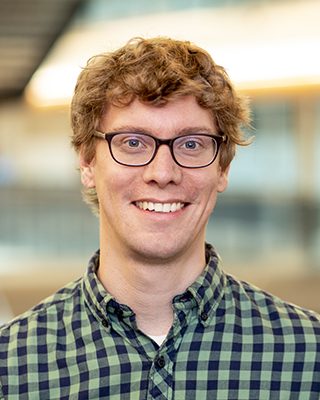
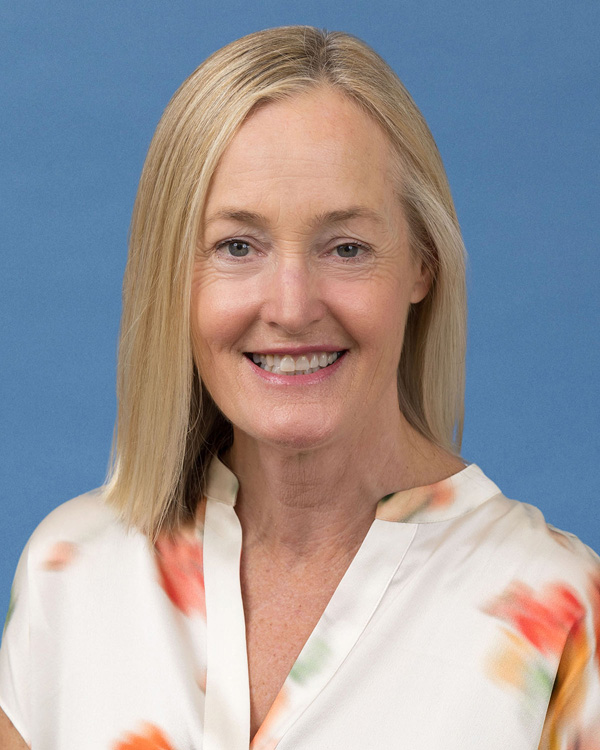
Matthew Louis Mauriello is an Assistant Professor in the Department of Computer and Information Sciences at the University of Delaware , where he directs the Sensify Lab . He holds a PhD in Computer Science from the University of Maryland (2018) and completed postdoctoral work at Stanford University (School of Medicine, 2020; School of Public Policy & Environmental Engineering Department, 2019). Research interests span Human-Computer Interaction (HCI), Ubiquitous Computing, and User-Centered Design with applications in: Sustainability Human-Building Interaction Wearable Technology Personal Informatics Educational Game Design Mental Health Interventions Recent publications highlight trends in stress monitoring (skin-like biosensors, workplace wellbeing), energy auditing (thermography systems), and educational technology (block-based programming tools for teachers). His work appears in ACM CHI, ACM Human-Computer Interaction, and Building and Environment. Scientific awards include: Best Paper Honorable Mention, CHI 2016 Best Paper Honorable Mention, CHI 2015 Best of WebSci'18 Teaching at University of Delaware encompasses courses like Educational Game Design Operating Systems Advanced Web Technologies Computing for Social Good with a focus on project-based learning and systems thinking.
Massachusetts Institute of TechnologyUnited States
Abhijit Banerjee is a Professor in the Department of Economics at the Massachusetts Institute of Technology (MIT). His research focuses on development economics, public health policy, and social protection programs, particularly addressing poverty and inequality in low- and middle-income countries. He has conducted large-scale experiments evaluating interventions such as conditional cash transfers, universal basic income, and healthcare policies. Key areas of interest include the design and implementation of anti-poverty programs, behavioral economics, and the long-term health impacts of infectious diseases like COVID-19. His work often integrates experimental methods to assess policy effectiveness, with contributions to global health studies and economic development strategies. Notably, his research on the RECOVERY trial evaluates treatments for hospitalized COVID-19 patients, while other studies explore financial spillover effects of electronic government transfers in Indonesia and savings behavior interventions in Chile. Banerjee has collaborated on projects analyzing post-COVID-19 health outcomes, labor market dynamics in India, and the role of trusted messengers in public health communication during crises. Despite the breadth of his contributions, specific details about his educational background, grants, or lab affiliations are not explicitly provided in the source text.
Maja J Matarić is the Chan Soon-Shiong Chaired and Distinguished Professor of Computer Science at the University of Southern California's Viterbi School of Engineering, with courtesy appointments in Neuroscience and Pediatrics. She serves as founding director of the USC Robotics and Autonomous Systems Center, co-director of the USC Robotics Research Lab, and Principal Scientist at Google DeepMind. Previously, she held leadership roles as USC's interim Vice President of Research (2020-2021) and Vice Dean for Research (2006-2019). Her educational background includes: PhD in Computer Science and Artificial Intelligence from MIT (1994) MS in Computer Science from MIT (1990) BS in Computer Science from University of Kansas (1987) Matarić pioneers Socially Assistive Robotics (SAR) , a field her lab named, focusing on human-robot interaction that provides assistance through social rather than physical support. Her research targets critical health and wellness challenges including post-stroke rehabilitation, autism spectrum disorder therapy, cognitive exercises for Alzheimer's patients, ADHD academic support, and mental health interventions. She develops systems modeling user engagement, personality, and motivation, with extensive real-world deployments in schools, rehabilitation centers, and homes. Analysis of her recent publications reveals dominant themes in cognitive health robotics (2025 CHI paper on LLM-powered elder care), pediatric assistive technology (2025 IDC speech therapy review), and adaptive preference modeling (2025 HRI contrastive learning work). Her research consistently bridges machine learning with human-centered design for vulnerable populations. Major scientific recognition includes: ACM Athena Lecturer Award (2024) ACM Eugene L. Lawler Humanitarian Award (2024) ACM Fellow (2020) Presidential Mentoring Award (2011) Multiple society fellowships (AAAS, IEEE, AAAI) As a dedicated mentor, Matarić has championed underrepresented groups through CRA-W, placing numerous women in faculty positions. She leads USC Viterbi's K-12 STEM Outreach Program serving low-income Los Angeles schools and authored The Robotics Prime for student education. Her research has secured significant funding enabling real-world technology transfer, with documented impact in rehabilitation centers and homes through deployable SAR systems. Her Robotics Research Lab at USC drives innovation in embodied AI, with current projects spanning LLM-integrated elder care robots, ADHD academic companions, and autism therapy systems. The lab emphasizes co-design with end-users and rigorous real-world validation across diverse populations.
Hilary Bernstein is an Assistant Professor at the Medical University of South Carolina (MUSC) within the College of Medicine , specifically affiliated with the Department of Psychiatry and Behavioral Sciences . Her academic profile emphasizes clinical practice and research in mental health disciplines. Degrees: MSW (Master of Social Work), DHA (Doctor of Health Administration) Research Focus: Her academic work spans individual and couples psychotherapy, with specialized expertise in Cognitive Behavioral Therapy (CBT) and Psychodynamic Psychotherapy. She investigates clinical research on mood disorders, depression, anxiety, relationship issues, and grief management.
Tim Althoff is an Associate Professor at the Paul G. Allen School of Computer Science & Engineering, University of Washington, specializing in Artificial Intelligence and Human-Centered Computing. His research focuses on behavioral data science, combining Data Science Natural Language Processing Social Computing Human-Centered AI Ethics & Fairness to extract insights about health and well-being. Recent publications highlight advancements in: Mental health support through AI Wearable sensor health monitoring Online community analysis Reproducibility in data science Public health interventions with notable papers in ACL, Nature Machine Intelligence, and NeurIPS. Scientific recognition includes: ACL 2023 Outstanding Paper Award WWW 2021 Best Paper Award Double ICWSM 2021 Best Paper Awards SIGKDD Dissertation Award 2019 Fulbright Scholarship German National Merit Foundation Actively mentoring postdoctoral researchers and seeking PhD students in areas like neural representation learning, NLP applications to psychology, and mobile health technologies through his Behavioral Data Science Group .
Dr. Sudie E. Back is a Professor in the Department of Psychiatry and Behavioral Sciences at the Medical University of South Carolina (MUSC), College of Medicine. She also serves as Director of the NIH-sponsored Drug Abuse Research Training (DART) program and is a Staff Psychologist at the Ralph H. Johnson VA's STAR program. Her expertise lies in treating substance use disorders and PTSD, particularly among veterans and civilians. She leads both behavioral and pharmacological clinical trials, as well as neuroimaging studies. Education: PhD in Clinical Psychology from the University of Georgia (2004), clinical internship at Yale University School of Medicine (2002–2003), and postdoctoral training at MUSC (2004–2005). Research Interests: Co-occurring substance use and PTSD, trauma-focused therapies, veterans' mental health. Funding: NIH, Department of Defense, and VA grants, including K23, R01, K02, and a Fulbright award. Dr. Back has pioneered integrated treatment approaches, such as combining oxytocin with exposure therapy for AUD and PTSD. She also developed COPEWeb , a web-based training program for providers treating PTSD and SUD. Her trials include randomized clinical trials on cognitive processing therapy and relapse prevention. Awards: Career Development Award (K23) R01 grants Independent Scientist Award (K02) Fulbright Scholar Award (Australia) Labs/Teams: Director of DART program at MUSC and STAR program at the VA, focusing on translational research and clinical training.
John Oakey is a Professor and Graduate Coordinator in the Department of Chemical and Biomedical Engineering at the University of Wyoming, with additional affiliations to the INBRE Program, Molecular and Cellular Life Sciences Program, and Materials Science and Engineering Program. Education Postdoctoral Fellow, Center for Engineering in Medicine, Massachusetts General Hospital & Harvard Medical School (2007–2010) Ph.D. Chemical Engineering, Colorado School of Mines (2003) M.S. Chemical Engineering, Colorado School of Mines (1999) B.S. Chemical Engineering, Penn State University (1997) Research Interests Oakey’s laboratory integrates fluid dynamics, colloidal science and materials science to understand how biological systems behave under flow, on surfaces and within complex 3-D geometries. A unifying theme is the use of microfabrication and microfluidics to create new diagnostic, prognostic and therapeutic platforms. Current thrusts include: Heterogeneous biomaterials: self-assembled particulate tissue scaffolds whose mechanical and transport properties can be temporally programmed. Inertial microfluidics: exploiting lift forces for membrane-free particle sorting, enrichment and diagnostics. Multi-temporal analysis by flow cytometry: development of closed-loop, high-throughput microfluidic cytometers for longitudinal single-cell studies. Publication Trends From 2025 back to 2010, Oakey’s articles reveal a consistent trajectory that marries fundamental physics (microtubule mechanics, inertial focusing) with translational applications (cell encapsulation, tissue scaffolds, drug delivery). Recent work (2023-2025) increasingly targets injectable granular hydrogels, single-cell therapeutic delivery and sustainable carbon-sequestering living materials, demonstrating an evolution from microscale transport phenomena to macroscopic biomedical and environmental impact. Scientific Awards No named awards are listed in the supplied text. Advising & Coordination Roles As Graduate Coordinator for the Department of Chemical and Biomedical Engineering, Professor Oakey oversees graduate program development and student mentoring. While no individual students are named, his role implies active supervision of M.S. and Ph.D. advisees in chemical and biomedical engineering. Laboratory & Teams The Oakey Research Group operates from the Energy and Environmental Research Building (EERB 435A) at the University of Wyoming. The lab enjoys R1-level research infrastructure and collaborates broadly with the Wyoming INBRE network, the Molecular and Cellular Life Sciences Program, and the Materials Science and Engineering Program.
Jeff Huang is an Associate Professor and Associate Chair of Computer Science at Brown University. His research focuses on Human-Computer Interaction (HCI), with emphases on personalized systems using behavioral data, health informatics, and user interfaces. Huang holds a PhD from the University of Washington and degrees from the University of Illinois at Urbana-Champaign. His work is funded by NSF, NIH, and ARO, and he has received awards including the NSF CAREER Award and ARO Young Investigator Award. Education: PhD in Information Science, University of Washington (2013) MS in Computer Science, University of Washington (2013) BS and MS in Computer Science, University of Illinois at Urbana-Champaign (2007) Research Interests: His work spans health informatics (e.g., sleep tracking systems like Self-E and SleepCoacher), user interface design, and leveraging behavioral data for personalized systems. Notable projects include WebGazer (webcam eye tracking), filtered.ink (creative illustration tools), and Sochiatrist (mental health analytics). Teaching: He teaches courses on user interfaces, HCI, and research methods, including CSCI 0130/1300 (User Interfaces), CSCI 2300 (HCI Seminar), and CSCI 2000 (Research Methods). Awards: NSF CAREER Award Facebook Fellowship ARO Young Investigator Award Grants & Advising: Huang leads a research group advising over 50 students, many of whom have pursued academic and industry roles. His grants support projects in HCI, health tech, and collaborative systems.
University of California, Los AngelesUnited States
Julienne Bower is a Professor at the University of California, Los Angeles (UCLA) with joint appointments in the Department of Psychology and the Department of Psychiatry/Biobehavioral Sciences. She serves as Director of the Mind-Body Research Lab, Associate Director of the Cousins Center for Psychoneuroimmunology, and as a Member of the Jonsson Comprehensive Cancer Center. Her research explores mind-body interactions in individuals facing stressful life events, particularly cancer patients and survivors, focusing on biological pathways linking psychological states to health outcomes and the effects of mind-body interventions. Ph.D. from UCLA Area Chair: Health Psychology Primary Area: Health Psychology Secondary Area: Clinical Psychology Location: 6538 Pritzker Hall, UCLA Dr. Bower's research examines how positive psychological factors (e.g., benefit finding, positive affect) influence physical health through immune and neuroendocrine pathways, while also investigating mind-body interventions like yoga and mindfulness meditation. Her work spans observational, experimental, and intervention studies, emphasizing the immune system as a central mechanism. The Mind-Body Research Lab, under Dr. Bower's leadership, has published extensively on topics including cancer-related fatigue, stress-induced inflammation, and the physiological impacts of psychosocial interventions. Key publications address NF-κB signaling, glucocorticoid resistance, and cortisol dysregulation in cancer survivors. Dr. Bower's lab is actively recruiting graduate students for 2024 through the UCLA Health Psychology Program, offering training in psychoneuroimmunology, cancer prevention, and mind-body research methodologies.
Maria Gorlatova is an Associate Professor of Electrical and Computer Engineering at Duke University's Pratt School of Engineering, where she leads the Intelligent Interactive Internet of Things (I3T) Lab. She also holds a secondary affiliation as Faculty Network Member of the Duke Institute for Brain Sciences and has previously served as Assistant Professor of Computer Science. Dr. Gorlatova earned her Ph.D. in Electrical Engineering from Columbia University (2013), following M.Sc. and B.Sc. (Summa Cum Laude) degrees in Electrical Engineering from University of Ottawa, Canada. Prior to joining Duke, she was an Associate Research Scholar in the Electrical Engineering Department and Associate Director of the Princeton EDGE Lab at Princeton University (2016-2018). She also has industry experience with Telcordia Technologies, IBM, and D. E. Shaw Research. Her research focuses on advancing intelligent behavior in Internet of Things systems and applications, particularly in mobile pervasive systems and the Internet of Things. Her work crosses traditional discipline boundaries, requiring thinking across multiple layers of system and protocol stacks. Current research themes include breaking barriers for technologies that enable fundamentally new deployments and experiences, such as energy harvesting, artificial intelligence adapted to IoT constraints, and augmented reality. Her lab specifically develops edge- and IoT-enabled intelligent augmented reality platforms, with applications in healthcare and human-robot collaboration. Analyzing her recent publications reveals a strong focus on augmented reality systems, particularly for medical applications. Her work spans computer vision for AR, spatial tracking, SLAM systems, vision-language models for AR security, and VR/AR applications in neurosurgery and rehabilitation. A significant portion of her recent work addresses challenges in mixed reality for medical procedures, demonstrating the translational impact of her research. Google Anita Borg USA Fellowship Canadian Graduate Scholar CGS NSERC Fellowships Columbia University Presidential Fellowship Columbia University Jury Award for Outstanding Achievement in Communications ACM SenSys Best Student Demonstration Award IEEE Communications Society Young Author Best Paper Award IEEE Communications Society Award for Advances in Communications Best Research Artifact Award, IEEE IPSN (2020) N2 Women Rising Star, Networking Networking Women (N2Women) (2019) Dr. Gorlatova's research has been supported by various funding sources that enable her work on edge computing for augmented reality, IoT systems, and medical applications. She actively mentors graduate students who frequently appear as first authors on her publications, indicating strong student involvement in her research. Her I3T Lab at Duke focuses on creating human-facing pervasive mobile computing platforms that enable transformative applications, with recent emphasis on creating advanced augmented reality platforms that integrate edge computing and IoT technologies. The I3T Lab is developing next-generation AR systems with capabilities in edge AI, collaborative spatial awareness, AR user cognitive context sensing, and AR QoS/QoE evaluation. Current projects include applications in healthcare (particularly neurosurgery guidance and rehabilitation) and human-robot collaboration scenarios, demonstrating the lab's focus on real-world impact of pervasive computing technologies.
Professor Rebecca Lawson is a Professor of Neuroscience and Computational Psychiatry at the University of Cambridge, affiliated with the Department of Psychology and Bye-Fellow at Peterhouse College. Her research focuses on understanding how humans learn to make predictions under uncertainty, with applications to mental health conditions such as anxiety and depression. She leads the Prediction and Learning (PaL) Lab, which combines computational modeling, neuroimaging (e.g., 7T MRI), and behavioral experiments to study cognitive processes in typical and atypical populations. Key research interests include computational psychiatry, autism spectrum disorders, neuroimaging techniques, and the neurochemical basis of learning mechanisms. She has received significant funding, including a £4.3m Wellcome Mental Health Award and the Sir Henry Dale Fellowship. Notable contributions include advancing theories of neural gain and sensory expectations in autism, as well as studies on uncertainty processing in anxiety and depression. Professor Lawson holds academic awards such as the BNPA Lishmann Prize and the BAP Psychopharmacology Award. She actively contributes to public engagement, including initiatives like Knit-a-Neuron and involvement with PrideinSTEM. Her lab collaborates internationally, with projects like the CamRAA study investigating autism-anxiety overlaps and the Chemical and Brain Basis of Uncertainty (CBBU) study exploring pharmacological interventions. Education: PhD in Cognitive Neuroscience (University of Cambridge), BA (Hons) Psychology & Philosophy (University of Glasgow). Grants: £4.3m Wellcome Award, Parke-Davis Fellowship, Lister Institute Prize. Labs/Teams: Principal Investigator of the PaL Lab; collaborations with MRC Cognition and Brain Sciences Unit, Yale University, and Brown University.
Andrew Holle is an Assistant Professor at the Mechanobiology Institute , National University of Singapore , where he leads the Confinement Mechanobiology Lab within the Department of Biomedical Engineering . His work spans mechanobiology, stem cell differentiation, cancer mechanobiology, and microfluidics, with a focus on understanding how physical confinement influences cellular behavior. Education: B.S.E. in Bioengineering (Minor in Statistics), Arizona State University (2008) Ph.D. in Bioengineering, University of California San Diego (2013) Research in the Confinement Mechanobiology Lab centers on the hypothesis that stem cell differentiation is driven by mechanical cues during migration through confined extracellular matrix (ECM) environments. The lab develops microfluidic systems to mimic ECM confinement and studies its impact on osteogenic differentiation , cancer cell migration , and cellular condensates . Recent publications highlight interdisciplinary approaches combining mechanobiology , nanotechnology , and microfluidics to explore nuclear morphological changes, volume regulation, and ligand signaling in confined cellular environments. Laboratory Members: Privita Edwina (Research Fellow) Vaishnavi Rangaraj (Research Assistant) Sriram Muthukumar (Research Fellow) Chang Ye Ji (PhD Student) Gao Xu (PhD Student) Lim Yuan Bin (PhD Student) Shinny Sunny (PhD Student) Lee Jia Wen Nicole (PhD Student) Li Yixuan (PhD Student)
Christopher M EARLS is a Professor in the Department of Psychology at Université de Montréal's Faculty of Arts and Sciences. He specializes in forensic psychology, psychopathology, and behavioral studies with a focus on sexual delinquency and juvenile prostitution. His research explores the intersections of psychopathy, criminal behavior, and mental health comorbidities. He teaches courses including Psychopathology: Introduction across undergraduate programs in psychology, social sciences, and cognitive neuroscience. His academic contributions span over two decades, with notable work on psychopathy assessment, parenting practices in non-criminal populations, and sexual behavior conditioning. Education Affiliations: Université de Montréal (primary) Teaching Programs: Baccalauréat en psychologie, Neuroscience cognitive, Social Work programs Dr. EARLS has directed 10+ theses and mémoires since 1998, focusing on forensic psychology topics like sexual delinquency correlates and psychopathy measurement validity. His work bridges clinical psychology with sociocultural factors, particularly in marginalized populations like sex workers and juvenile offenders. Research Highlights: Clinical assessment tools comparison (paper vs. digital psychopathy scales) Gender differences in psychopathy expression Impact of childhood trauma on sexual interest development Though no formal awards are listed, his extensive publication record reflects sustained contributions to forensic and clinical psychology research.
Elena Agapie is an Assistant Professor in the Department of Informatics at the Donald Bren School of Information & Computer Sciences, University of California, Irvine. Her research lies at the intersection of human-computer interaction (HCI), health, and behavior change, focusing on designing technologies that support individuals in adopting and maintaining healthy behaviors through human-centered approaches. She is affiliated with the Connected Learning Lab and the Institute for Future Health at UCI. Her educational background includes a PhD in Human Centered Design and Engineering from the University of Washington, an MS in Computer Science from Harvard University, and a BS in Computer Science from Jacobs University Bremen in Germany. She has also conducted research at Microsoft Research, FXPAL, Intel Labs, and NASA Jet Propulsion Lab. Elena's research focuses on designing tools that integrate evidence-based behavioral interventions with user needs, particularly in mental health, chronic disease management, and social support systems. She explores how technology can support therapist-client collaboration, enable tailored health interventions, and leverage crowd expertise for personalized behavior change plans. Her work often involves participatory design, qualitative studies, and prototyping of interactive systems for diverse populations, including youth, hospitalized patients, and underserved communities. Her recent publications, primarily in top-tier venues like CHI and CSCW, reflect a strong trend toward social computing in health, longitudinal behavior support, and the design of inclusive digital health tools. Key themes include goal setting, conversational agents, social sharing in health tracking, and cross-disciplinary collaboration in health technology development. Best Paper Award (top 1%) at CHI 2017 Honorable Mention Best Paper Award (top 5%) at CHI 2016 Best Paper Award (top 1%) at HCOMP 2015 Honorable Mention Best Paper Award (top 5%) at CHI 2013 Elena has been funded by the National Science Foundation, National Institutes of Health, and UCI internal grants. She actively mentors PhD students including Bruna Oewel, Meeshu Agnihotri, and Mehreen Masood, and is currently recruiting students interested in HCI, health, and behavior change. She previously led the outreach program in the HCDE department at the University of Washington, creating workshops that introduced K–12 students to engineering and human-centered design, reaching over 2,000 students across public schools and community events. She runs initiatives to broaden participation in computing and advises undergraduate students in outreach and curriculum development. Her lab collaborates with clinical partners and interdisciplinary teams to ensure real-world impact of her research.
Adriana Tapus is a Full Professor at ENSTA Paris, affiliated with Institut Polytechnique de Paris, leading the Autonomous Systems and Robotics Laboratory (SAR) within the Computer Science and Systems Engineering Unit (U2IS). She holds an HDR (Habilitation) and a PhD from EPFL, Switzerland, with postdoctoral experience at USC. Her research focuses on socially assistive robotics, human-robot interaction (HRI), and personalized therapy for individuals with physical/cognitive impairments. She directs the IP Paris Doctoral School and coordinates national/international projects like the EU-funded ENRICHME and SWEET. Education: PhD in Mobile Robotics, EPFL (2005) Habilitation (HDR), ENSTA Paris (2011) M.S. Computer Science, University Joseph Fourier Engineer, Politehnica University of Bucharest Research Interests: Tapus pioneers socially assistive robotics, integrating machine learning, human modeling, and multimodal communication (verbal/non-verbal/para-verbal). Her work addresses adaptive therapies for vulnerable populations using robotics, physiological data interpretation, and context-aware interaction. Key themes include: Human-robot cooperation and trust Emotion recognition and expression Personalized rehabilitation systems AI ethics and human-centered design Publications: Over 150 articles, with recent work exploring humor in HRI, teleoperation trust models, and cross-cultural intelligent vehicles. Notable 2025 contributions include studies on robot laughter efficacy and multimodal facial expression frameworks. Awards: 2025: 4 IROS papers accepted 2016: 25 Women in Robotics recognition 2010: Romanian Academy Award Multiple conference best paper awards (RO-MAN, ICRA, etc.) Advising & Grants: Supervised over 20 PhD students and led projects like EU Horizon 2020 ENRICHME. Current students focus on teleoperation dynamics, robot humor, and haptic interfaces. Active in editorial roles (IJSR, THRI) and conference organization (HRI General Chair 2019). Labs/Teams: Founder of RoboticsByDesign lab and co-initiator of the Hi! Paris interdisciplinary AI center. The SAR lab develops systems for healthcare, education, and human-robot collaboration.