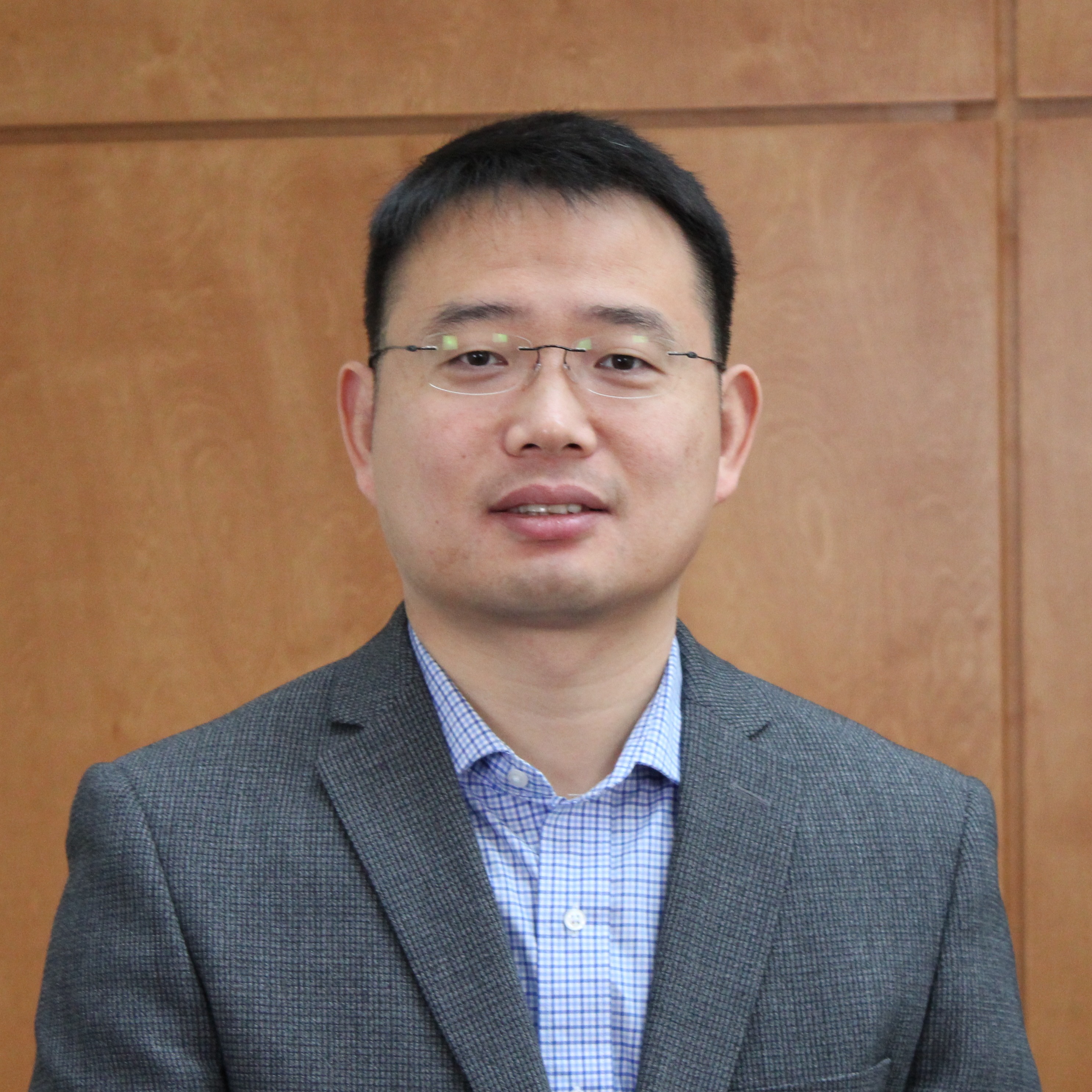
Christophe Danjou is an Associate Professor in the Department of Mathematical and Industrial Engineering at Polytechnique Montréal . He joined as a professor in January 2018 and serves as Scientific Director of the Poly-Industries 4.0 Laboratory since June 2021. His expertise spans Industrial Engineering , Industry 4.0/5.0 , Manufacturing Systems , and Blockchain . His research focuses on solving interoperability challenges in digital transformation through ontological approaches (OntoSTEP-NC) and blockchain technology. Key themes include strategic positioning frameworks for Industry 4.0/5.0, knowledge management , and smart manufacturing . Recent work explores digital twins for system-of-systems resilience , data integrity in IoT , and AI-driven food processing optimization . He teaches courses like Industry 4.0 and Manufacturing Processes . Under his supervision, 7 PhD and 6 Master’s students are advancing research in areas such as blockchain-based smart maintenance , distributed manufacturing , and carbon emission traceability . He is affiliated with institutions including IVADO (Member), CIRRELT (Member), and Data Intelligence Lab (Member). His publications highlight contributions to digital transformation across construction, agri-food, and SMEs, with 83 total publications (15+ recent articles shown).
Tiffany A. Radcliff, PhD , is Professor of Health Policy & Management in the Texas A&M University School of Public Health and concurrently serves as the Senior Associate Dean for Research . In this dual role she guides the school’s strategic research agenda while maintaining an active, federally funded research portfolio. Education PhD, Health Services Research, Policy & Administration – University of Minnesota BS (Magna Cum Laude), Economics; Minor, Political Science – Texas A&M University Research Interests Radcliff’s work lies at the intersection of health economics , health policy , and health-services research . Her overarching goal is to improve the quality, accessibility, and affordability of care—particularly for rural and underserved populations . Current emphases include: Economic evaluation of behavioral interventions for obesity and diabetes in rural settings Post-acute care transitions and long-term care quality Industrial organization of healthcare markets and provider responses to policy Disaster preparedness and health-system resilience Publication Trends Across 200+ peer-reviewed articles spanning 1997–2025, Radcliff’s scholarship shows a clear evolution from foundational work on rural hospital markets to large-scale comparative-effectiveness and implementation-science studies. Recent clusters (2020–2025) focus on COVID-19 policy impacts, telehealth cost-effectiveness, and VA transitional-care programs, reflecting a sustained commitment to policy-relevant, methodologically rigorous research. Scientific Awards & Honors (No specific awards listed in the provided text; extensive federal funding and invited lectureships implied by CV and publication record.) Grants & Advising Principal or Co-Investigator on multiple NIH, AHRQ, and VA Health Services Research & Development grants Faculty mentor for PhD, MPH, and post-doctoral trainees in health policy, economics, and implementation science Serves on dissertation and thesis committees for students across Texas A&M and collaborating institutions Labs & Teams Radcliff leads an active research group of graduate research assistants, post-docs, and biostatisticians housed within the Center for Health Organization Transformation (CHOT) and collaborates closely with the VA Health Services Research Center of Innovation and the Southwest Rural Health Research Center at Texas A&M.
Lianne Lefsrud serves as Associate Professor and Risk, Innovation, and Sustainability Chair (RISC) in the Department of Chemical and Materials Engineering at the University of Alberta's Faculty of Engineering. Her interdisciplinary research bridges engineering, social sciences, and policy to transform risk management practices across energy, mining, construction, and railroading industries, directly influencing regulations, building codes, and industry operations for sustainable development. Her academic credentials include: BSc in Civil Engineering (Cooperative Program), University of Alberta (1994) MSc in Interdisciplinary Civil & Environmental Engineering and Sociology, University of Alberta (1996) PhD in Strategic Management and Organization, Alberta School of Business (2014) Dr. Lefsrud's research centers on risk management frameworks for sustainability challenges. She examines hazard identification, social license to operate, and technology adoption drivers in high-hazard industries, with emphasis on prospective risk assessment (e.g., hydrogen infrastructure design) and retrospective analysis (e.g., microplastic pollution impacts). Her work integrates circular economy principles into energy systems while addressing unintended consequences across UN Sustainable Development Goals. Recent publications (2024-2025) demonstrate heavy focus on machine learning applications for rail and construction safety, hydrogen infrastructure risk analysis, and science denial mitigation. Key patterns show cross-industry adaptation of AI for incident prediction, regulatory gap analysis for emerging energy systems, and socio-technical approaches to reconcile sustainability goals with operational realities. Scientific recognition includes: Erb Post-Doctoral Fellowship (University of Michigan) Dow Sustainability Research Fellowship (Ross School of Business) Dr. Lefsrud mentors graduate students through industry-integrated projects like her Sustainable Design course where teams generated patents and city solutions. Her research secures Alberta Innovates funding with 1:4 industrial-to-federal matching, collaborating with Suncor, Transport Canada, and Canadian Standards Association. Grants target practical implementations including railcar inspection systems and hydrogen safety protocols. She co-founded Insight Risk Systems and leads the Lefsrud Lab, prioritizing inclusive teams with under-represented groups (women, Indigenous, LGBTQ2S+, neurodiverse) to tackle 'wicked problems' in sustainability. The lab leverages interdisciplinary partnerships across engineering, computer science, psychology, and environmental sociology for real-world risk management solutions.
James Smith is a Professor in Decision Science at the Tuck School of Business, Dartmouth College. He holds a PhD (1990), MS (1986), and BS (1984) from Stanford University. Education: PhD, MS, BS - Stanford University His research focuses on Decision Analysis , Operations Research , and Stochastic Optimization , with applications in energy systems, medical decision-making, and technology adoption. Recent work includes dynamic programming approaches to energy systems under uncertainty and information relaxation techniques in stochastic dynamic programs. Key publication trends: 15 most recent articles span 2025–2004, emphasizing stochastic dynamic programming , resource allocation , and risk evaluation across energy, finance, and public health domains. Scientific awards: Jack Byrne Distinguished Professor in Decision Science He has collaborated extensively in Operations Research and Management Science journals, with notable coauthors like David Brown, Canan Ulu, and Robert Winkler. His work addresses theoretical and applied problems in portfolio management, commodity pricing, and sequential decision modeling.
Veronica Roberta Cappelli is an Assistant Professor in the Department of Decision Analysis at IESE Business School. She earned a Ph.D. in Management – Economics and Decision Sciences from HEC Paris, an M.Phil. in Statistics from Bocconi University, and a B.Sc. & M.Sc. in Economics and Social Sciences from Bocconi University. Ph.D., HEC Paris M.Phil., Bocconi University B.Sc. & M.Sc., Bocconi University Her research spans behavioral economics, decision theory, and complex systems, focusing on individual and organizational decision-making under uncertainty and over time. She employs formal, computational, and experimental methods to explore firm growth dynamics and strategic behavior, with publications in the Journal of the European Economic Association and European Journal of Operational Research . Prior to joining IESE, she held postdoctoral positions at the Stanford Graduate School of Business, the Santa Fe Institute, and INSEAD.
Professor Kenneth M. Anderson is Chair of the Department of Computer Science and holds the Palmer Endowed Chair at the University of Colorado Boulder's College of Engineering & Applied Science. He co-directs Project EPIC, a $4M NSF-funded initiative on social media use during mass emergencies, and serves as Co-Director of the Center for Software and Society. Ph.D. in Computer Science, University of California, Irvine (1997) Joined CU Boulder in 1998; tenured in 2005 Former Associate Dean for Education (2016-2019) Former Associate Chair (2010-2013) His research bridges software engineering, crisis informatics, and human-computer interaction. Current projects focus on large-scale social media analytics, crisis response systems, and software architecture for data-intensive environments. Recent publications explore multilingual social media analysis (ML-EPIC), bug fix patterns in software development (FIXR), and collaborative big data platforms. Themes include disaster risk communication, data modeling challenges, and asynchronous analysis tools. ATLAS Fellow (2010) As department chair, he spearheaded initiatives for inclusivity, including creating a Bachelor of Arts in Computer Science and establishing the NSF Broadening Participation in Computing plan. He oversees major academic reforms and departmental operations.
Kevin Ponto is an Assistant Professor at the University of Wisconsin, Madison, holding dual affiliations with the Department of Industrial and Systems Engineering and the Living Environments Lab. His work bridges engineering, design, and digital humanities, focusing on virtual and augmented reality technologies for education, healthcare, and cultural heritage preservation. Ponto earned his B.S. in Computer Engineering from UW-Madison, followed by an M.S. and Ph.D. in interdisciplinary fields from UC Irvine and UC San Diego, respectively. His research interests include immersive visualization systems, AR/VR interfaces for accessibility, and embodied learning experiences. Notable projects include the Augmented Reality Home Assessment Tool (ARHAT) for home safety evaluations and Waddle , a VR empathy project simulating the life of an Adélie penguin. Ponto has collaborated on interdisciplinary initiatives such as the Center of Interdisciplinary Science for Art, Architecture and Archaeology (UCSD) and the Computation and Informatics in Biology and Medicine program. He explores spatiotemporal gait analysis in virtual environments, low-cost immersive display systems, and the usability of AR tools in healthcare and emergency response. His work emphasizes translating cutting-edge VR/AR technologies into practical applications for education, rehabilitation, and cultural preservation. Ponto actively publishes in journals and conferences covering human factors, computer graphics, and digital humanities, contributing to both theoretical and applied research in immersive technologies.
Yu Nie is a Professor in the Department of Civil and Environmental Engineering at Northwestern University, affiliated with the NU-TREND research group within the McCormick School of Engineering. His work focuses on optimizing transportation networks, integrating human behavior, infrastructure design, and network topology to enhance mobility, reliability, and sustainability. He holds a Ph.D. from the University of California, Davis, an M.S. from the National University of Singapore, and a B.S. (cum laude) from Tsinghua University. His research interests span interdisciplinary approaches combining optimization, network science, traffic flow theory, economics, and statistics. Key areas include congestion pricing strategies, ride-hailing market dynamics, autonomous vehicle integration, and transit system design. He has contributed to studies on dockless bike-sharing systems, ethics-aware transit design, and traffic management in autonomous vehicle zones. Nie’s recent publications (2024–2025) highlight advancements in modular autonomous vehicle systems, co-modal freight solutions, and policy frameworks for sustainable urban mobility. His work often bridges theoretical insights with practical applications, addressing challenges like EV charging chaos and ride-pooling impacts. He received the 2021 Transportation Science Meritorious Service Award for his editorial contributions. His research also explores freight exchange platforms, taxi market resilience during pandemics, and the role of route choice models in transit design. Labs/Teams: Yu Nie is associated with the NU-TREND research group, specializing in innovative transportation solutions through interdisciplinary collaboration.
Professor Michael Lewis holds the rank of Professor at the University of Bath’s School of Management, Department of Information, Decisions & Operations. His academic career began at the University of Cambridge (PhD, 1995), followed by roles at Warwick Business School (1995–2004) and visiting positions at Harvard Business School and Georgetown University. His research focuses on operations strategy, complex business relationships (including PFI/PPP contracts), and efficiency in public/private service sectors. He co-authored the influential textbook Operations Strategy and leads initiatives like the Cabinet Office/IPA Project Excellence Initiative and Cornell’s Healthy Futures program. His current projects include UKRI’s Secure & Resilient World Hub and green transition research. He advises government on industrial measurement and contributes to policy frameworks through roles like the Chartered Management Institute Advisory Council. Education: PhD in Competence Analysis and Strategy Process from University of Cambridge (1995). Research interests span operations management, supply chain governance, project scale dynamics, and sustainable systems. Recent work examines drone adoption methodologies, conflict resolution in supply chains, and post-crisis trauma recovery in uniformed services. He has supervised 9 students and holds grants totaling £multi-million across 13 projects, emphasizing governance, healthcare innovation, and project delivery excellence. Key affiliations include the Centre for Sustainable Chemical Technologies, Institute of Sustainability & Climate Change, and Institute for Digital Security & Behaviour. His work aligns with UN SDGs related to industry, innovation, and infrastructure. Professional activities include policy fellowships and participation in global expert groups shaping industrial and project management practices.
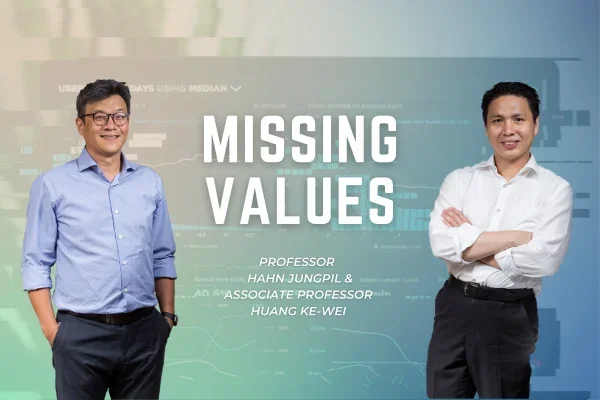
Ke-Wei Huang is an Associate Professor at the Department of Information Systems and Analytics, National University of Singapore (NUS), and Executive Director of the Asian Institute of Digital Finance (AIDF). He joined NUS in 2007, holding prior roles including Assistant Dean of Graduate Studies and founding director of NUS's FinTech MSc/PhD programs. Huang holds a PhD from NYU Stern and degrees from National Taiwan University. His research focuses on machine learning for social science, FinTech, data mining in finance, and IT labor economics. Notable works include studies on hierarchical forecasting, AI's impact on jobs, and pricing strategies for digital goods. Education: PhD in Information Systems, NYU Stern (2007) MSc in Information Systems, NYU Stern (2002) MBA in Finance, National Taiwan University (1997) BSc in Electrical Engineering, National Taiwan University (1995) Research Interests: Machine Learning applications in FinTech, data science for financial forecasting, labor economics of IT professionals, and pricing models for digital goods. His work bridges econometrics and computational methods, addressing challenges like missing data, measurement bias, and hierarchical variable decomposition. Awards & Grants: $1.6M Singapore NRF Grant (2020) for AI-driven financial text analysis Multiple teaching excellence awards (2013–2016) Best paper nominations at ICIS, WITS, and CSWIM Advising & Labs: Advised 8 PhD graduates, including faculty at Chinese University of Hong Kong and South China University of Technology. Active in FinTech education, leading courses like Machine Learning for Finance and Risk Analytics. Research teams focus on AI's societal impact, financial innovation, and data-driven decision-making.
Xiaolei Guo is a Professor of Management Science at the Odette School of Business, University of Windsor. His expertise spans transportation systems, supply chain optimization, and infrastructure pricing strategies. He holds a Ph.D. in Transportation from the Hong Kong University of Science and Technology (2008) and a B.A. in Hydraulic Engineering from Tsinghua University (2004). His research focuses on congestion pricing mechanisms, transportation network modeling, and toll road economics. Notable areas include optimizing toll designs under uncertainty, analyzing autonomous vehicle impacts on ridesharing, and evaluating strategic distribution channel decisions under environmental regulations. Dr. Guo has contributed to over 30 peer-reviewed articles since 2005, exploring topics such as Braess paradox under bounded rationality, Pareto-improving congestion schemes, and profit maximization for private toll roads. His work bridges theoretical optimization with practical policy applications. He is an active member of the Canadian Transportation Research Forum (CTRF) since 2011 and the Institute for Operations Research and the Management Sciences (INFORMS) since 2009.
Christoph Breuer is a Professor at the Institute of Sport Economics and Sport Management at the Deutsche Sporthochschule Köln. His work focuses on sports economics, club management, and policy analysis. He leads research initiatives examining sports integrity, club ownership dynamics, and volunteer engagement. Breuer is actively involved in editorial roles for journals such as the Journal of Global Sport Management and Sport Management Review. His research spans over 800 publications, including studies on pandemic impacts on athletes and clubs, sponsorship strategies, and logistics in sports organizations. He has received the SMAANZ Best Conference Paper Award 2024. Key projects include analyzing multi-club ownerships and evaluating prevention measures against sports match-fixing. He advises PhD students like Thomas Breuer and Christoph Pott. His grants include projects funded by third parties, such as the 'Sportentwicklungsbericht' series and investigations into sports integrity. Breuer collaborates internationally, addressing topics like equipment logistics and athlete well-being. His work bridges academic research with practical applications for sports policy and management. Editorial roles: Journal of Global Sport Management, Sport Management Review Key projects: Sport Development Report (SEB 3.0), UEFA EURO 2024 evaluation Media engagements: Over 100 press contributions on topics like sports economics and club financing
Prof. Dr. Tobias Brandt serves as a Full Professor and Chair of Digital Innovation and the Public Sector at the University of Münster's School of Business and Economics. His academic journey includes roles as Assistant Professor at Rotterdam School of Management (2016-2021) and Research Assistant at the University of Freiburg (2011-2015). He co-founded Geospin GmbH in 2016 and holds memberships in VHB, INFORMS, and AIS. Research Interests: Brandt focuses on digital innovation in public sectors, sustainable urban systems, e-government, and platform ecosystems. His work bridges information systems and operational research to address challenges in mobility, energy, and public service delivery. Recent projects include developing tools for sustainable urban planning, digital platforms for elderly care, and leveraging AI for crisis management. Notable Projects: Current initiatives include the PIONEER II Master's program on public innovation, SMARD-Gov (LLMs for government decision-making), and comuneo (digital sustainability management platform). Completed projects include INNO4S (integrating sustainability in business education) and studies on pandemic-driven digitalization in public administration. Awards: RSM Teaching Award (2020), Daniel H. Wagner Prize (2020), IBM Faculty Award (2016). Grants: €5M+ secured from EU Erasmus+, DFG, and German Federal Ministry of Research. Labs/Teams: Leads the Chair of Digital Innovation & Public Sector, collaborating with ERCIS (European Research Center for Information Systems). Active in GovTech and digital sustainability initiatives.
Wantao Yu is a Professor of Supply Chain Management at the Roehampton Business School, part of the University of Roehampton's Faculty of Business and Law. Previously, he held academic positions at the University of Kent, University of East Anglia, and Buckinghamshire New University. His expertise spans digital supply chain management, sustainability, and modern slavery prevention. He actively supervises PhD students in areas like agri-tech and LARG (Lean, Agile, Resilient, Green) supply chains. Research Interests: His work focuses on digital innovation in supply chains, sustainable practices, and ethical sourcing. Notable projects include STFC-funded initiatives in agri-food systems (UK, China, Kenya, Uganda) leveraging IoT and machine learning for sustainability and productivity. He emphasizes public-private partnerships with smallholder farmers and agribusinesses. Notable Achievements: Included in Stanford's World Top 2% Scientists (2020-2024) and recognized with multiple awards, including the Emerald/EFMD Doctoral Research Award (2010) and conference paper accolades (e.g., 2017, 2015). His pandemic-related research was featured in the WHO database. Teaching: Leads courses on Supply Chain Strategy & Processes and Digital Logistics. External roles include serving as an academic examiner at universities like Essex and Hertfordshire. Collaborations: Active in global research networks, with recent projects in Kenya, Uganda, and China. Key themes include data-driven supply chains, agri-tech, and resilience strategies for SMEs.
Monideepa Tarafdar is the Charles J. Dockendorff Endowed Professor of Information Systems at the Isenberg School of Management, University of Massachusetts Amherst. She holds a PhD in Management from the Indian Institute of Management Calcutta, specializing in Information Systems and Strategy. Her research focuses on technostress, AI ethics, and the societal impacts of digital technologies. She has held academic roles at Lancaster University and the University of Toledo, and visiting positions at MIT Sloan and LSE. A world-leading scholar, she was named AIS Fellow (2024) and featured in Stanford’s Top 2% Cited Scientists (2024). Her work examines technostress creators like overload, complexity, and invasion, offering coping strategies such as proactive reorientation and organizational support. She studies AI’s role in hiring bias, social media addiction, and gig economy well-being. As Editor-in-Chief of the Journal of AIS and coordinator of Isenberg’s PhD program, she drives interdisciplinary research in IS. Key achievements include over 120 papers, mentorship accolades, and grants addressing ICT-enabled inclusion and algorithmic transparency. Recent awards include the AIS Best Publication Award (2022), multiple Research Excellence Awards, and recognition for her impactful work on workplace resilience. She advises organizations on managing technostress and serves as a scientific advisor to Unplug (Dublin). Her current projects explore gender bias in job ads and the sociotechnical dimensions of climate change discourse.