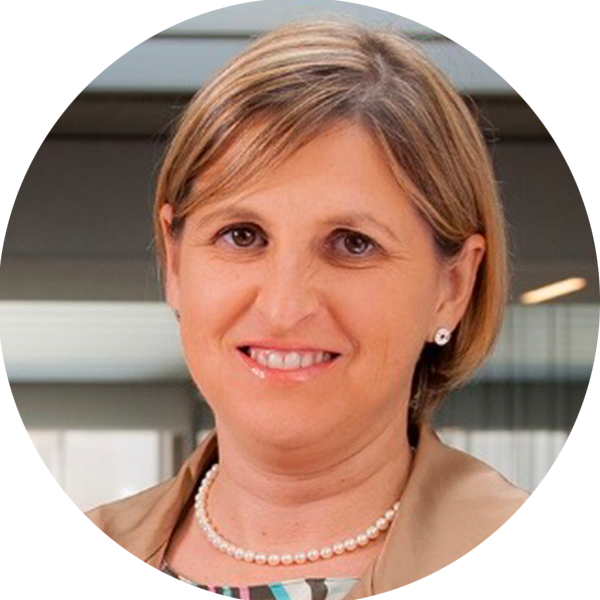
Anna Bernard is an Assistant Professor at the Department of Microeconomics , Universidade Católica Portuguesa (CATÓLICA-LISBON). Her work bridges Behavioral Economics , Experimental Economics , and Cultural Economics , focusing on crowdfunding dynamics, charitable giving, and diversity in cultural industries. Education: PhD in Economics, Paris School of Economics - Université Panthéon-Sorbonne Masters in Economics, Paris School of Economics - Université Panthéon-Sorbonne Her research combines empirical methods with experimental designs to explore public goods crowding effects, risk perception in crowdfunding, and socioeconomic impacts of policies like R&D tax credits. She has collaborated with the French Ministry of Culture and startups. Recent publications highlight trends in digital economy and cultural consumption , with a focus on teenager behavior , crowdfunding incentives , and redistribution dynamics . Despite no explicit awards listed, her work has been published in journals such as Revue Économique and Journal of Cultural Economics .
Luisa Domingues is an Assistant Professor in the Department of Information Science and Technology at ISCTE - University Institute of Lisbon. She serves as an Integrated Researcher at ISTAR-Iscte - Research Center in Information Sciences, Technologies and Architecture, specializing in Information Systems research. Her academic qualifications include a PhD in Information Science and Technology from ISCTE-IUL (2013). Her primary research interests focus on: Project Management : Methodologies, risk assessment, and knowledge sharing Database Systems : Management, interoperability, and standardization e-Government Solutions : Public sector information systems and shared services Ontological Frameworks : Particularly for architectural heritage documentation Educational Technologies : Blended learning approaches in higher education Her recent publications (2016-2024) demonstrate a strong focus on project management methodologies, knowledge transfer, and information systems in public sector contexts. Key thematic trends include PMBOK framework applications, agile methodology adoption challenges, data science project risks, and technological solutions for cultural heritage preservation. Most works employ case study research and empirical validation methods. Dr. Domingues maintains an active advising portfolio with 1 doctoral candidate and 36 master's students, primarily focusing on topics in project management, information systems, and data science applications. She has held significant academic leadership positions including: 4th Year Coordinator for Bachelor's in Computer Science and Business Management (2020-2027) Program Director for the same degree (2017-2019) At ISTAR-Iscte research center, she contributes to projects involving information systems architecture, data standardization, and knowledge management frameworks.
Prof. Raul Fangueiro is a Full Professor and Vice-Dean at the School of Engineering, University of Minho, Portugal. As a Senior Researcher, he leads FIBRENAMICS – Institute of Innovation on Fiber-Based Materials and Composites. His work spans advanced materials (nano, smart, composites) and structures (3D, auxetic, multiscale) with applications in defense, healthcare, construction, and automotive sectors. Supervised over 20 PhD and Post-Doc researchers Scientific coordinator of 20+ national/international research projects Author of 200+ journal papers (H-index: 47), 500+ conference publications, 36 books, 40 patents Research focuses on nanotechnology , electrospinning , and sustainable material systems : Auxetic composites for personal protection Biodegradable nanofibers for medical use Smart textiles for biological/chemical resistance Recycled mineral/wood-based composites Graphene-reinforced green materials Multiscale fiber architectures Scientific recognition includes: Top 2% most influential scientist (Elsevier/Stanford 2020) Founder of AUXDEFENSE and ICNF conferences Editorial board member of leading composite journals Advisor to European Defense Agency/NATO working groups Active in industry-academia partnerships through spin-offs (Sciencentris, B4Logic, Beyond Composites, Givaware, Pixartidea) and collaborative projects with institutions like Instituto Superior Técnico, University of Aveiro, and international universities.
Pedro Neves is a Full Professor in the Department of Management and Organizations at Nova School of Business and Economics (Nova SBE), Universidade Nova de Lisboa. His academic background includes a PhD in Industrial and Organizational Psychology/Organizational Behavior from ISCTE-IUL and post-doctoral research at the University of Delaware. He teaches courses in Organizational Behavior, Persuasion and Negotiation, and Entrepreneurship, and actively contributes to executive education programs. His research focuses on leadership processes , particularly the dark side of leadership , interpersonal relationships , organizational change management (especially resistance anticipation), occupational health (including stress perception), and entrepreneurial behavior . His work appears in leading journals such as the Journal of Applied Psychology , The Leadership Quarterly , and Human Resource Management . His recent publications show a consistent focus on leadership dynamics, organizational change, employee well-being, and ethical behavior, often using multi-level and cross-cultural frameworks. He has also edited key volumes such as the Handbook of Methods in Leadership Research and the Research Handbook on Destructive Leadership . He currently serves as Associate Editor of the Journal of Applied Behavioral Science and is on the Editorial Board of The Leadership Quarterly and other journals, reflecting his scholarly impact. Pedro Neves has collaborated with doctoral students and researchers globally and has contributed to both theoretical and applied aspects of organizational behavior. He has not received explicitly mentioned scientific awards in the text, but his editorial roles and publication record indicate significant recognition in the field. He is involved in the Leadership for Impact Knowledge Center and contributes to open and customized executive education programs at Nova SBE.
Il Memming Park is a Professor and Group Leader at the Centre for Restorative Neurotechnology within the Champalimaud Research division of the Champalimaud Foundation in Lisbon, Portugal. His work bridges computational neuroscience, machine learning, and statistical modeling to understand neural dynamics and computation. Dr. Park's research focuses on developing statistical and machine learning methods for analyzing neural time series data. His lab investigates the appropriate language for neural dynamics that can explain and generate specific predictions on neural data and behavior. He builds on foundations of dynamical systems and stochastic processes to create models of neural computation tightly tied to biology. His publications reveal a strong emphasis on developing methods like variational latent Gaussian processes and exponential family dynamical systems to extract meaningful patterns from complex neural recordings. His work spans both theoretical developments in computational methods and their application to real neural data from areas like visual cortex, parietal cortex, and other brain regions involved in perception and decision making. Dr. Park has previously held positions at Stony Brook University and the University of Texas at Austin, where he was affiliated with departments of Neurobiology and Behavior, Applied Mathematics and Statistics, Psychology, and Neuroscience. His lab at Champalimaud includes multiple PhD students, postdoctoral researchers, and research staff working collaboratively on various aspects of neural data analysis and modeling. The team employs an interdisciplinary approach combining neuroscience, statistics, machine learning, and dynamical systems theory.
David Lindlbauer is an Assistant Professor at the Human-Computer Interaction Institute (HCII) within Carnegie Mellon University's School of Computer Science. He leads the Augmented Perception Lab and co-directs the CMU Extended Reality Technology Center (XRTC) . His research bridges Human-Computer Interaction, Computer Graphics, and Computer Vision to create adaptive interfaces that enhance human-digital interaction. Education : PhD (summa cum laude) from Technische Universität Berlin , MSc and BSc from University of Applied Sciences Upper Austria Previous Affiliation : Postdoctoral Researcher at ETH Zurich (2018-2020) David's research focuses on understanding human perception of digital information and developing computational approaches to optimize AR/VR interface usability. Key areas include: Context-aware adaptive interfaces Visual saliency and attention modeling Spatial audio-haptic systems Optimal placement algorithms Object manipulation in Remixed Reality Diminished/ambient MR interfaces His 15 most recent publications (2024-2025) span topics in adaptive XR interfaces, multimodal notifications, haptic systems, and spatial cognition. These works appear at venues like ACM CHI, ACM UIST, IEEE VR, and Frontiers in VR. Common themes include: Machine learning for interface adaptation Human factors in XR design Real-time environment analysis Privacy-aware display systems Collaborative MR interfaces Accessibility enhancements Scientific Recognition : Best Paper Honorable Mention Award (ACM CHI 2024) Best Paper Award (ACM ISS 2023) ETH Zurich Postdoctoral Fellowship Multiple best paper recognitions at CHI, UIST, and IEEE VR Teaching & Leadership : Course developer for CMU's "Interactive Extended Reality" Mentor for NASA SUITS Challenge team Co-chair roles at CHI and UIST Overseeing PhD students and research interns
Stefania Borghini serves as an Associate Professor of Marketing Management at Bocconi University's School of Management, where she investigates critical intersections between consumer behavior and societal challenges. Her work bridges academic rigor with real-world applications in sustainable mobility, inclusive fashion practices, and data-driven cultural management. Her research program centers on how consumers navigate physical and digital marketplaces, with particular emphasis on generational shifts in urban mobility preferences and embodied experiences in retail environments. She employs mixed-method approaches to explore sensory marketing, store attachment dynamics, and the socio-cultural dimensions of consumption, consistently addressing sustainability and inclusivity imperatives. Analysis of her publication trajectory reveals a strategic evolution toward interdisciplinary societal impact: early work established foundational insights in marketplace ecology and consumer psychology, while recent output pivots toward Generation Z's sustainable mobility adoption and body-positive fashion marketing. This progression demonstrates increasing engagement with policy-relevant research on urban planning and industry transformation. Her scholarly contributions have earned significant recognition: Three-time recipient of Bocconi University's Excellence in Research Award (2020, 2010, 2009) Innovation in Teaching Award from Bocconi University (2016) Davidson Honorable Mention for Best Article in Journal of Retailing (2011)
João F. Mano is a Full Professor at the Department of Chemistry, University of Aveiro, and Director of the Doctoral Program on Biotechnology. He leads the COMPASS Research Group and serves as Vice-Director at CICECO - Aveiro Institute of Materials. His academic appointments include Invited Professor at University of Lorraine (France), Visiting Professor at KAIST (South Korea), and Adjunct Professor at Ajou University (South Korea). Education: PhD in Chemistry (1996, Technical University of Lisbon); D.Sc. in Tissue Engineering, Regenerative Medicine and Stem Cells (2012, University of Minho) Research Interests focus on Biomaterials for Regenerative Medicine , integrating Nanotechnology , Microtechnology , and Biofabrication . His group develops Bioinspired Materials using polymer chemistry, Decellularized Extracellular Matrix , and 3D Bioprinting to engineer Cell Microenvironments for therapeutic applications. Recent Publications highlight advancements in Human-Derived Hydrogels , Photopolymerizable Scaffolds , Magneto-Responsive Biomaterials , and Programmable Bioinks . Trends show emphasis on Organ-on-a-Chip integration, Smart Living Materials , and Green Bioprinting methodologies. Scientific Awards include: European Research Council Advanced Grants (2015, 2020) Fellow at IUPAC, European Academy of Sciences, and American Institute of Medical and Biological Engineering ERC Proof of Concept Grants Doctor Honoris Causa from University of Lorraine and Utrecht UNESCO Chair on Biomaterials George Winter Award (European Society for Biomaterials) Supervisions & Collaborations encompass 74+ MSc, 26+ PhD students, and 40+ postdocs. He co-founded METATISSUE and CELLULARIS Biomodels , and serves as Editor-in-Chief of Materials Today Bio .
Joe Paton is a Professor and Principal Investigator at the Champalimaud Neuroscience Programme, Champalimaud Foundation in Lisbon, Portugal. He leads the Paton Lab which focuses on understanding how animals determine which environmental cues are predictive of behaviorally relevant events, known as the credit assignment problem. His research combines behavioral experiments with neurophysiological recordings in rodents to investigate neural mechanisms of time perception and decision making. Dr. Paton's research interests center on interval timing, temporal processing in the brain, and the neural basis of learning. His work particularly examines how the striatum and dopamine systems contribute to time perception and how animals solve the credit assignment problem through statistical inference in the time domain. His lab employs advanced techniques including optogenetics, neural recordings, and computational modeling to address these questions. Analysis of Dr. Paton's recent publications reveals a strong focus on striatal function in timing processes, with particular attention to how neural populations encode temporal information. His work bridges behavioral neuroscience with computational approaches, demonstrating how timing mechanisms influence decision making and learning processes. The research spans multiple levels from cellular mechanisms to behavioral outputs. Midbrain dopamine neurons control judgment of time (2016) Striatal dynamics explain duration judgments (2015) A Scalable Population Code for Time in the Striatum (2015) The Neural Basis of Timing: Distributed Mechanisms for Diverse Functions (2018) Dr. Paton has mentored numerous PhD students and postdoctoral researchers through the INDP (International Neuroscience Doctoral Program) and supervises a diverse team including research technicians, postdocs, and students. His lab has contributed significantly to understanding the neural basis of time perception and its role in learning and decision making. The Paton Lab also develops experimental tools and frameworks like Bonsai for behavioral neuroscience research.
João Paulo Costeira is an Associate Professor at the Department of Electrical and Computer Engineering, Instituto Superior Técnico (IST), Lisbon. He holds a PhD in Electrical and Computer Engineering from IST (1995) and was a Visiting Scientist at Carnegie Mellon University's Robotics Institute (1991–1995). His research focuses on Computer Vision, 3D Reconstruction, and Structure from Motion, with contributions to object recognition, robotics, and multimedia analysis. Education: PhD in Electrical and Computer Engineering, IST (1995); Visiting Scientist, CMU Robotics Institute (1991–1995). Roles: Coordinator of the Signal and Image Processing Group (SIPg), Co-director of the Carnegie Mellon|Portugal Dual PhD Program in ECE and Robotics (2007–2018), and Scientific Director of Carnegie Mellon|Portugal (2014–2018). Research Interests: João's work emphasizes 3D reconstruction from video, rigid and non-rigid motion analysis, and applications in robotics and urban surveillance. He has pioneered methods for motion segmentation and robust correspondence problems in computer vision. Publications: His recent work includes advancements in apple counting systems, rotation averaging for robotics, and domain adaptation for traffic density estimation. These contributions highlight his expertise in real-world computer vision challenges. Awards: None explicitly listed. However, his extensive publication record and academic leadership reflect significant scholarly impact. Advising & Grants: Supervised 13 PhD students, many co-advised with CMU faculty. Active in projects like CityCam (vehicle counting) and MultiDrone (robotics collaboration). Funded by FCT, EU, and industry partnerships. Labs/Teams: Leader of the Signal and Image Processing Group (SIPg) at ISR. Involved in NETSyS program for networked systems and robotics.
Megan Carey is a Researcher at the Champalimaud Foundation , leading the Carey Lab . Her research focuses on understanding how cellular and synaptic mechanisms in the cerebellum influence motor behavior and learning. Key projects include studies on cerebellar neural circuits, locomotor adaptation, and sensory-motor integration. Her recent work highlights cross-species comparisons (mice and flies), zebrafish visual system neurobiology, and pharmacological modulation of motor learning. The lab employs genetic perturbations, optogenetics, and behavioral analysis to dissect neural circuit dynamics. Notable collaborators include senior scientists, postdoctoral researchers, and PhD students. The lab's publications span high-impact journals like J. Neurosci. , eLife , and Neuron , with funding from HHMI and NIH.
Ana Isabel Dias Lopes is a full-time Associate Professor (with habilitation) at the Accounting Department of Lisbon University Institute (ISCTE-IUL), where she also serves as Director of the MSc program in Accounting and Executive Director of the post-graduation in Finance and Accounting Applied. She is an integrated researcher at BRU-Iscte - Business Research Unit (IBS) in Lisbon, Portugal. Her academic qualifications include a PhD in Management, Specialty in Accounting (2012) from ISCTE-IUL, a Master's degree in Accounting and Corporate Finance (1994-1997), and a Bachelor's degree in Business Management (1993). She recently completed her Aggregation in Management (2024) from the University of Lisbon. Dr. Lopes' research focuses on international financial accounting and reporting, with particular emphasis on integrated and sustainability reporting, business combinations, and corporate governance. Her work bridges theoretical frameworks with practical applications in accounting standards, particularly IFRS. She has published extensively in leading academic journals including 'Australian Journal of Management', 'European Business Review', and 'Meditari Accountancy Research', with significant citation impact (Google Scholar: 330 citations, h-index: 9). Her recent publications demonstrate a clear evolution from traditional financial accounting topics toward sustainability and ESG reporting, reflecting the changing landscape of corporate disclosure requirements. The trajectory shows increasing engagement with integrated reporting frameworks and sustainability standards like SASB. Dr. Lopes has made notable contributions to accounting education through pedagogical case studies and simulation-based teaching approaches, particularly for complex topics like foreign currency accounting and strategic performance management. She actively supervises graduate students and has extensive experience teaching across all academic levels, from undergraduate to executive education programs, with courses focused on financial accounting, business reporting, and consolidated financial statements.
Professor Mark Petticrew is Professor of Public Health Evaluation at the London School of Hygiene & Tropical Medicine (LSHTM), where he is based in the Faculty of Public Health and Policy within the Public Health - Environments and Society department. He serves as Director of the NIHR Public Health Policy Research Unit and is an active member of the Commercial Determinants Research Group (CDRG) at LSHTM, which conducts research on the products and strategies of tobacco, alcohol, gambling, food, opioid and other industries. His work is also affiliated with the Centre for Evaluation and the Centre for Maternal Adolescent Reproductive & Child Health. Professor Petticrew's research primarily focuses on the Commercial Determinants of Health (CDOH), examining how corporate practices influence public health outcomes and policy. His work explores evidence-based policymaking approaches and public health evaluation methodologies, with particular emphasis on how unhealthy commodity industries shape scientific research and policy development. He investigates industry tactics including misinformation campaigns, marketing strategies, and political influence operations that affect population health. His research often employs systems perspectives to understand the complex interactions between commercial interests and public health outcomes. His extensive publication record demonstrates a strong focus on analyzing industry influence across multiple sectors. Recent work examines alcohol industry marketing tactics, tobacco industry narratives around e-cigarettes, gambling industry practices, and food industry strategies. He has developed frameworks for understanding corporate political activity and has contributed to methodological approaches for evaluating complex public health interventions. His research frequently appears in high-impact public health journals and informs policy development at national and international levels. Professor Petticrew has secured significant research funding from major organizations including the National Institute for Health Research (NIHR), UK Research and Innovation (UKRI), Wellcome Trust, and Medical Research Council. His current projects include "Countermarketing against the products and activities of unhealthy commodity industries: effectiveness mechanisms and inequalities" and the "NIHR PRP Public Health Research Policy Unit 2024-2029." He has led or contributed to numerous completed research grants examining population interventions, complex interventions, mental health, and policy research units. As Director of the NIHR Public Health Policy Research Unit, Professor Petticrew plays a key leadership role in translating research into policy. He has contributed to important policy discussions around alcohol marketing restrictions, as evidenced by his co-authorship of the influential 2024 BMJ Global Health commentary "Normative value of 'best buys' and the case of bans on alcohol marketing," which argued for comprehensive bans on alcohol marketing as an effective public health intervention. His work supports evidence-based policymaking in contested areas where commercial interests may conflict with public health goals.
Claudia Hanson is a Professor of Implementation Science and Perinatal Epidemiology at the London School of Hygiene & Tropical Medicine (LSHTM) and holds a Senior Lecturer position at Karolinska Institutet (90% time). She is a medical doctor specializing in gynaecology and obstetrics, with advanced degrees in epidemiology and international health. Her research focuses on health systems strengthening, implementation science, and maternal/newborn health outcomes in low-resource settings across Africa and Asia. Education: PhD in Epidemiology (LSHTM, 2013), MSc Epidemiology (LSHTM, 2007), MSc International Health (Charité, 2005), Medical Doctorate (Justus-Liebig-University, 1999). Research Interests: Evaluating quality improvement strategies, health system interventions, and maternal/perinatal health metrics. Leads 10+ projects in Tanzania, Uganda, Malawi, Benin, Burkina Faso, India, Laos, Vietnam, and Thailand. Teaching: Manages courses on Global Health, Research Management, and Quality Assurance at Karolinska. Previously taught Epidemiology and Control of Infectious Diseases at LSHTM. Awards: Sight award (2019) for Global Health contributions. Active in professional roles including Co-editor of BMC Pregnancy and Childbirth and member of WHO committees. Grants: Current funding includes Countdown2030 and C-Safe projects. Past grants include MRC and Children's Investment Fund Foundation support. Labs/Teams: Collaborates with global networks on maternal health data systems and quality improvement initiatives.
Pedro Oliveira is a leading academic and administrator with diverse roles across institutions. He currently serves as Dean at Nova School of Business and Economics , where he holds the Cascais Chair in Operations, Technology, and Innovation Management . Additionally, he is a Professor MSO at Copenhagen Business School , Academic Fellow at Cornell University , and Adjunct Professor at MIT Sloan School of Management . He also founded the Patient Innovation platform and co-founded PPL Crowdfunding . Education: Ph.D. in Operations, Technology, and Innovation Management (2004), University of North Carolina at Chapel Hill M.Sc. in Operations Research and Systems Engineering (2000), Instituto Superior Técnico Licenciatura in Naval Engineering (1996), Instituto Superior Técnico Research Focus: Pedro Oliveira's work centers on Open and User Innovation , Patient Innovation , and Social and Impact Innovation , with a strong emphasis on Service Operations Management and Artificial Intelligence in Innovation . His studies often bridge Technology Strategy with Healthcare and Financial Services , exploring how users can drive innovation in resource-constrained environments. Publication Trends: His recent works emphasize collaborative innovation in public and semi-public domains , patient-driven healthcare solutions , and user innovation in digital finance . He has also published extensively on knowledge commons and innovation during crises , such as the COVID-19 pandemic . Leadership and Advisory Roles: Pedro has held significant administrative roles, including Senior Associate Dean for Faculty & Research and Director of the Research Unit in Business and Economics . He has advised the Portuguese Ministry of Science, Technology, and Higher Education and served on the Environment & Sustainability Council at EDP Energias de Portugal . He is also the President of the Open and User Innovation Society and a counselor on the National Council for Science, Technology, and Innovation (CNCTI) and Economic and Social Council (CES) in Portugal. Labs and Teams: As founder of Patient Innovation , he has established a global platform for user-driven healthcare solutions. His work also includes collaborative digital health initiatives , such as the Saúde.Come Senior program addressing food insecurity in elderly populations through TV-based eHealth interventions.