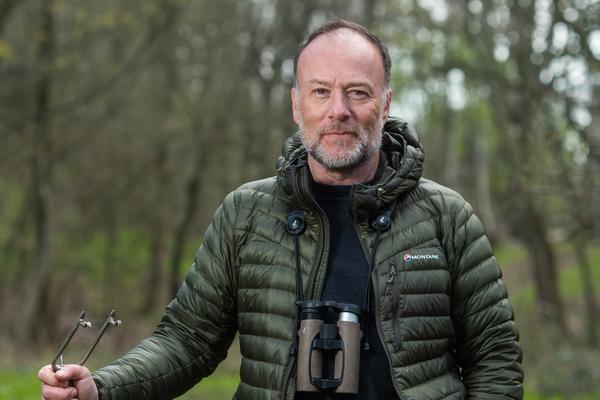
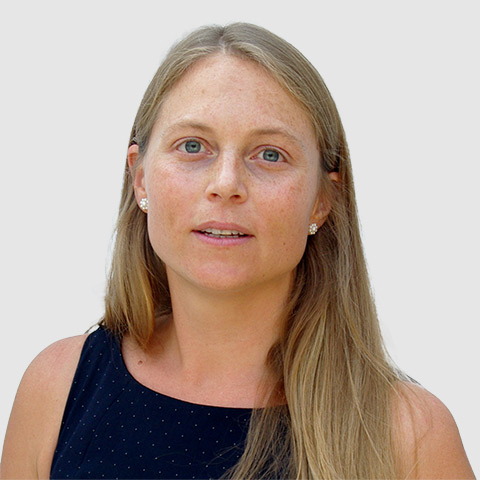
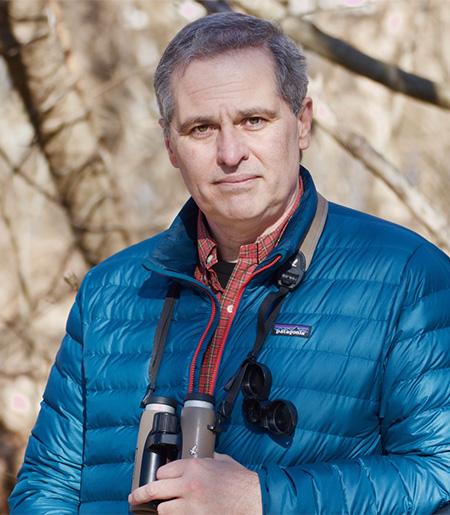
Professor Ben Sheldon FRS holds the Luc Hoffmann Chair of Ornithology and directs the Edward Grey Institute within the University of Oxford's Department of Biology. His research focuses on evolutionary ecology, particularly individual variation, environmental adaptation, and long-term ecological studies like the Wytham Woods great tit project. Current themes include spatial scaling of ecological interactions, life-history evolution, and social dynamics in bird populations. He has secured major grants from ERC, UKRI, NERC, and BBSRC, and hosted postdocs via Marie Curie Fellowships. Research interests integrate field studies, genetics, and quantitative analysis to explore how environmental and social factors shape animal behavior and adaptation. Recent work examines phenological mismatches, climate impacts, and social network effects on reproduction and survival. Awards include Fellowship of the Royal Society. Advising includes 7-8 graduate students and postdocs, with a focus on PhD and postdoc project supervision. Administrative roles include past Head of the Department of Zoology (2016–2021) and Senior User Representative for the Life and Mind Building (2019–2022). The Edward Grey Institute serves as a key research hub for avian ecology and ornithology.
Dr. Isabel D. W. Rechberg is an Associate Professor of Management at the Anderson College of Business and Computing, Regis University. She holds a Ph.D. in Management from the University of Kent, UK, a Postgraduate Certificate in Higher Education, and advanced degrees in Labor Law and Business Management from institutions in Australia and Belgium. Her research focuses on Knowledge Management, Organizational Learning, Emotional Intelligence, and Employee Engagement, emphasizing individual-centric approaches. She has published extensively in journals like the Journal of Knowledge Management and European Management Review, and co-authored chapters in Palgrave and Kogan Page publications. Recognized with awards including the 2021 Easter Academy of Management Best Conceptual Paper, her work bridges theory and practice, addressing ethical dimensions and human elements in organizational dynamics. Education: Ph.D. in Management, University of Kent, UK (2014) Postgraduate Certificate in Higher Education, University of Kent (2011) M.A. in Labor Law and Relations, University of Sydney (2008) B.A. in Business and Human Resources Management, Vesalius College (2006) Research Interests: Dr. Rechberg’s scholarship explores how mindfulness, emotional intelligence, and ethical frameworks enhance workplace relationships and organizational learning. Her work critiques traditional knowledge management paradigms, advocating for individual agency and fairness in knowledge ownership. Recent studies include the role of self-determination theory in knowledge sharing and cross-cultural challenges in global initiatives like the Belt and Road. Teaching & Service: She teaches graduate and undergraduate courses in Management, Leadership, and Organizational Behavior. At Regis, she serves on the Academic Council and previously held roles at CUNY, including College Council membership and curriculum development. Her industry experience includes coaching accreditation and roles in recruitment and human resources. Awards: 2021 Easter Academy of Management Best Conceptual Paper Award 2021 PSC-CUNY Grant 2020 Top-Downloaded Paper Recognition in Knowledge and Process Management 2011 British Academy of Management Best Full Paper Award Advising & Grants: Supervised honor students on topics like ethical leadership, gender inequality in HR systems, and corporate social responsibility. Secured grants including the 2021 PSC-CUNY award. Active in peer review for leading management journals and conferences.
Christian Newman is an Associate Professor in the Department of Software Engineering at the Golisano College of Computing and Information Sciences, Rochester Institute of Technology (RIT). He serves as the Graduate Program Director and has expertise in software engineering methodologies, refactoring techniques, and source code analysis. His research focuses on improving code quality, developer practices, and automated documentation. Education: Newman holds a BS, MS, and Ph.D. from Kent State University. His academic background aligns with his current research in software engineering and empirical studies. Research Interests: His work emphasizes identifier naming standards, technical debt management, refactoring strategies, and code reuse. He explores how developers perceive and implement refactoring tools, as well as the role of large language models (LLMs) in programming education and code generation. Publications: Newman's recent work includes studies on identifier semantics, part-of-speech tagging for code analysis, and the performance of LLMs in introductory programming tasks. His research often combines empirical studies with tool development, such as SATDBailiff for technical debt tracking and TSDetect for test smell detection. Teaching & Advising: He teaches courses like SWEN-250 (Personal Software Engineering), SWEN-331 (Engineering Secure Software), and graduate-level thesis supervision. His courses emphasize secure development, software design principles, and team-based projects. Tools & Contributions: Newman has developed tools like srcSlice (static slicing), srcType (type resolution), and SCALAR (identifier analysis). These tools support software evolution, code comprehension, and empirical research in the field.
Ian Owens is a Professor and Director of the Cornell Laboratory of Ornithology at Cornell University, affiliated with the College of Arts and Sciences and the Ecology and Evolutionary Biology department. He holds a Ph.D. in Evolutionary Biology from the University of Leicester (1991) and a B.Sc. in Zoology from the University of Liverpool (1988). His research focuses on avian ecology, evolution, and conservation, with an emphasis on global biodiversity, invasive species impacts, and the genetic basis of wild populations. Owens has held leadership roles at institutions such as the Smithsonian’s National Museum of Natural History and Imperial College London. His work integrates field experiments, genetic analyses, and big data to address ecological and evolutionary questions. He leads initiatives like eBird and the Macaulay Library, leveraging citizen science for biodiversity monitoring. Key themes include biogeographical patterns, evolutionary mechanisms, and conservation strategies for endangered species. His research interests span community ecology, evolutionary processes, and organismal biology, with a focus on applying ecological insights to global sustainability challenges. Notable contributions include studies on avian migration’s role in coevolution with parasites, phenotypic plasticity in island birds, and the ecological drivers of body size variation. Owens’ work emphasizes interdisciplinary collaboration, combining genomics, spatial analysis, and citizen science to inform conservation policies. Publications highlight his exploration of avian life history strategies, extinction risk factors, and the ecological impacts of invasive species. He has pioneered global biodiversity assessments, advocating for the integration of natural history collections to address environmental challenges. While no formal awards are listed, his leadership and research contributions have significantly impacted conservation science and ornithology.
Professor Michael Davies is Professor of Building Physics and the Environment at the UCL Institute for Environmental Design and Engineering (IEDE) within The Bartlett School of Environment, Energy & Resources at University College London. He is also a member of the UK Climate Change Committee. With over two decades of academic experience, Professor Davies leads research at the critical intersection of building physics, environmental design, and public health, focusing on how the built environment impacts human well-being. His educational background includes: Doctor of Philosophy from the University of Westminster (1994) Postgraduate Certificate in Education from the University of York (1990) Bachelor of Science from the University of Manchester (1986) Professor Davies has pioneered transdisciplinary research methods, particularly in modeling health impacts and applying system dynamics approaches to address urban health challenges. His work demonstrates how healthy sustainable development can be achieved through innovative stakeholder participation and methodological advancements. His research spans building physics, climate change adaptation, indoor environmental quality, and the health implications of urban design, with particular attention to vulnerable populations and environmental justice considerations. His extensive publication record (over 300 outputs) reveals a consistent evolution toward more integrated approaches that connect building science with public health and climate policy. Recent work shows growing emphasis on health equity in climate adaptation, advanced modeling of complex urban systems, and the application of system dynamics to understand interconnected challenges in housing and urban environments. His research bridges technical building performance analysis with broader policy implications, reflecting his commitment to solutions that address both environmental sustainability and social equity. Professor Davies has secured significant research funding, including the prestigious EPSRC Platform Grant funding the Complex Built Environment Systems group at UCL (awarded only to "world leading" centers) and the Wellcome Trust-funded 'CUSSH' project. In total, he has served as PI or Co-I on approximately 50 research projects, demonstrating exceptional ability to lead large-scale, transdisciplinary research initiatives addressing critical urban challenges. As an educator, Professor Davies leads the 'Energy Context' module in the Environmental Design and Engineering MSc course and supervises EngD and PhD students. His teaching emphasizes the integration of energy systems within broader environmental, social, and policy contexts, preparing students to address complex sustainability challenges in the built environment sector.
Dr. Wolfram Barfuss is the Argelander Professor of Integrated Systems Modeling for Sustainability Transitions at the University of Bonn, affiliated with the Center for Development Research (ZEF). He is a member of multiple interdisciplinary research areas including TRA Sustainable Futures, TRA Modeling, and TRA Individual and Societies, as well as the Cluster of Excellence PhenoRob and the Center for Earth System Observation and Computational Analysis (CESOC). He also collaborates with the Potsdam Institute for Climate Impact Research and the Earth Resilience Science Unit. His research focuses on understanding whether humanity is 'smart enough for the good life' by developing formal models of collective learning and decision-making in complex social-ecological systems. He integrates methods from complex systems, multi-agent reinforcement learning, and dynamical systems theory to explore sustainability transitions, cooperation, and Earth system resilience. The recent publications demonstrate a strong focus on modeling collective intelligence, cooperation in stochastic games, decision-making under uncertainty, and integrated World-Earth system modeling. His work spans disciplines including computer science, environmental science, game theory, and cognitive science, with frequent contributions to high-impact journals like PNAS , Nature Communications , and Environmental Research Letters . Argelander Professor for Integrated Systems Modeling for Sustainability Transitions Member, TRA Sustainable Futures Member, TRA Modeling Member, TRA Individual and Societies Cluster of Excellence PhenoRob Center for Earth System Observation and Computational Analysis (CESOC) Earth Resilience Science Unit (Potsdam) Earth Resilience and Sustainability Initiative (Princeton-Stockholm-Potsdam) Dr. Barfuss teaches graduate courses at the University of Bonn and Humboldt University Berlin, including Complex System Modeling of Human-Environment Interactions, Economics on Sustainability, Systems Modeling, and Introduction to Agent-Based Modeling. He leads the BarfussLab, where his team develops computational tools such as pyCRLD for modeling collective reinforcement learning dynamics. While specific student advisees are not listed, his lab and publications suggest active supervision and collaboration with early-career researchers. He has not received any explicitly mentioned scientific awards in the provided text. His research is supported through institutional affiliations and collaborative projects rather than individually listed grants.
Pascal Boyer is Professor of Sociocultural Anthropology and Psychology at Washington University in St. Louis, where he also holds the Henry Luce Professorship of Collective and Individual Memory. He is jointly affiliated with the Department of Anthropology and the Department of Psychology, reflecting his interdisciplinary research at the intersection of cognitive science, evolutionary psychology, and cultural anthropology. PhD, Université de Paris-Nanterre Graduate work with Jack Goody, University of Cambridge Fieldwork in Cameroon on Fang oral epics and traditional religion Former teaching positions at Cambridge, San Diego, Lyon, and Santa Barbara Boyer’s research investigates the cognitive foundations of cultural transmission, particularly focusing on religion, memory, and the evolution of human social cognition. He proposes that religious ideas and cultural norms are shaped by universal properties of the human mind, making certain concepts more cognitively 'natural' and thus more easily transmitted across generations. His work integrates experimental psychology, developmental studies, and ethnographic research to explore how brains evolved to process cultural information. His publications span cognitive development, agency detection, autobiographical memory, and the neural underpinnings of cultural concepts. Notable books include The Naturalness of Religious Ideas (1994), Religion Explained (2001), and Memory in Mind and Culture (2009). His most recent work, Minds Make Societies (2018), synthesizes insights from evolutionary biology, psychology, and economics to model the formation of human societies. The body of his work shows a consistent trend toward interdisciplinary integration, using cognitive science to explain cultural universals. Henry Luce Professor of Collective and Individual Memory Editor of Memory in Mind and Culture (2009) Contributor to major cognitive science and anthropology journals Boyer has mentored numerous students and collaborators, though specific names are not listed in the provided texts. He has secured significant academic recognition through his publications and endowed professorship, indicating sustained research funding and academic leadership. He is actively involved in both experimental and theoretical research, leading projects on early cognitive development and mathematical reasoning. His lab combines cognitive psychology paradigms with anthropological field methods, fostering a unique interdisciplinary team. Boyer continues to publish and contribute to the advancement of cognitive anthropology as a rigorous scientific discipline.
Jouni Taskinen is a Professor in the Department of Biological and Environmental Science at the University of Jyväskylä, affiliated with the School of Resource Wisdom. His research focuses on aquatic parasites and diseases, particularly their impacts on fisheries and conservation of endangered species like the freshwater pearl mussel (Margaritifera margaritifera). He leads projects addressing mussel population conservation, habitat restoration, and parasite dynamics in aquatic ecosystems. Taskinen's work integrates ecological, evolutionary, and applied approaches to understand host-parasite interactions, parasite virulence evolution, and conservation strategies for threatened species. His projects include captive breeding programs for freshwater mussels, studies on juvenile habitat requirements, and assessments of environmental stressors like nutrient enrichment and invasive species. He has secured funding from the Ministry of the Environment, the European Commission, and foundations for initiatives such as the LIFE Revives project, which aims to revive freshwater pearl mussel populations. Taskinen also collaborates on international projects, including studies in Lake Prespa (N. Macedonia) and European lake systems to explore parasite prevalence and host specificity. His research activities include lectures and presentations on topics like trematode parasitism, mussel growth dynamics, and the effects of environmental parameters (e.g., pH, temperature) on endangered species survival. Taskinen’s contributions bridge fundamental science and conservation practice, emphasizing the role of parasites in ecosystem health and biodiversity preservation.
Andrew M. Baker is an Associate Professor in the School of Biology & Environmental Science at Queensland University of Technology (QUT). He holds a Ph.D. in Evolutionary Biology from QUT and specializes in mammal taxonomy, conservation, and evolutionary ecology, with a focus on carnivorous marsupials. His research addresses threats to biodiversity from land-use changes, invasive species, and climate change. He leads the Baker Lab, investigating species like the Julia Creek Dunnart and Antechinus spp., using innovative methods such as barn owl pellet analysis and environmental DNA (eDNA) for detection. Current grants include a $1.1M project on the Julia Creek Dunnart and a $300K ABRS scholarship for Planigale taxonomy. He is a member of the Australian Mammal Society and the Genetics Society of Australia. His research spans taxonomy, ecology, evolution, and conservation, with over 100 publications. Recent work includes describing new species (e.g., Antechinus vandycki) and refining conservation strategies for threatened mammals. He collaborates internationally on projects like the IUCN Red List assessments for Antechinus species.
Uwe Jun is a Professor of Political Science specializing in the Political System of the Federal Republic of Germany at the University of Trier, where he has held his position since 2005. He served as Dean of Faculty III (Political Science) from 2011 to 2017 and has frequently taught at Södertörns Högskola in Stockholm, Sweden since 2009. His academic affiliations include membership in the European Consortium for Political Research (ECPR), German Political Science Association (DVPW), and Association for Parliamentary Affairs. Professor Jun's research focuses on party research, comparative parliamentary research, federalism, political communication, and coalition research. His work centers on German political parties and systems, with particular emphasis on party system evolution, subnational politics, and the changing dynamics of traditional Volksparteien. He has published extensively on topics including party organization, electoral behavior, political representation, and the impact of federalism on party competition. His recent publications (2023-2025) reveal a strong focus on analyzing the transformation of the German party system, with particular attention to subnational party systems across Germany's 16 states. His work examines the decline of traditional Volksparteien (SPD and CDU), the evolving role of smaller parties, and the regional variations in party competition. Jun frequently collaborates with researchers like Marius Minas, Anna-Sophie Heinze, and Torsten Oppelland on comprehensive studies of German party politics. Professor Jun serves as spokesperson for the Working Group 'Party Research' of the German Political Science Association since 2005 and is editor of the academic series 'Parties in Theory and Empirical Studies' and 'Publication Series Politics and Communication.' He has been an active member of numerous appointment committees and serves as a reviewer for various scientific journals. His expertise is frequently sought in media interviews and expert discussions on German politics. Before joining the University of Trier, Professor Jun taught and researched at the universities of Göttingen, Würzburg, the Free University of Berlin, Potsdam, and Harvard University in the USA, establishing a strong international academic profile in comparative party politics.
Tony Ingesson is a Senior Lecturer in the Department of Political Science at Lund University, specializing in intelligence analysis, counter-espionage, and military decision-making. With a background in the Swedish Armed Forces where he worked with technical data acquisition for airborne weapons systems and communications, he brings practical military experience to his academic work. His research interests span intelligence analysis methodologies, counterintelligence operations, deception and manipulation at tactical levels, clandestine communications, and industrial espionage. Ingesson has developed a particular expertise in how psychological mechanisms and biases influence intelligence analysis, as well as the historical connections between military conscription and democratization. His work bridges theoretical political science with practical security applications. Analysis of his recent publications reveals a strong focus on contemporary security challenges, particularly the intersection of traditional and emerging technologies in intelligence operations. His work examines how historical communication methods persist in modern conflicts, the evolving nature of espionage in high-trust societies like Sweden, and the application of intelligence analysis techniques to non-traditional fields such as precision oncology. Ingesson demonstrates consistent scholarly output across both academic journals and public-facing platforms like The Conversation, indicating his commitment to making complex security issues accessible to broader audiences. Ingesson actively participates in interdisciplinary research projects, including 'Clandestine Communications: Old Technologies, New Opportunities' and 'Greyzone genomics' at the Pufendorf IAS. His teaching portfolio encompasses political science methods, intelligence analysis techniques, counterterrorism, and deception studies, reflecting the breadth of his expertise. While specific details about student advising aren't provided in the available information, his role as Senior Lecturer indicates involvement in mentoring students through his teaching responsibilities. His research team involvement includes collaboration with researchers like Magnus Andersson on clandestine communications and David Gisselsson Nord on the intersection of genomics and security. These collaborations demonstrate his ability to bridge disciplinary boundaries while maintaining focus on core intelligence and security issues.
Danilo Brozovic is a Senior Lecturer in Business Administration at the University of Skövde, specifically within the School of Business and the Department of Commerce and Entrepreneurship. He maintains his office in Room E219 and serves as a course coordinator for multiple undergraduate and graduate business courses, each carrying 7.5 credits. His academic work spans teaching, research, and project leadership within the business administration domain. Brozovic's research interests focus on entrepreneurial resilience, particularly in family businesses and small-to-medium enterprises (SMEs), strategic flexibility in business growth, value creation processes, and service ecosystems. He has extensively examined organizational resilience during crises, including the COVID-19 pandemic's impact on retail and tourism sectors. His work also explores sustainability in business models, food tourism, societal collapse scenarios, and the evolution of service systems. Brozovic employs diverse methodologies including literature reviews, scenario-based analyses, and empirical studies to investigate how organizations adapt to multiple crises and changing market conditions. His publication record demonstrates a strong trend toward interdisciplinary research connecting business administration with futures studies, sustainability science, and crisis management. Recent work shows increasing focus on entrepreneurial resilience in the face of multiple concurrent crises, with projects examining how SMEs navigate complex challenges. His research bridges theoretical frameworks like service-dominant logic with practical business applications, particularly in tourism, retail, and family business contexts. Brozovic leads the research project 'Entrepreneurial resilience in small and medium-sized enterprises in the face of multiple crises' (July 2023 - June 2025), which develops knowledge about how SMEs manage multiple concurrent crises. His collaborative approach is evident in numerous co-authored publications with researchers like Börje Boers, Marco Tregua, and Hiroaki Saito across various business disciplines.
Ditte Alexandra Winther-Lindqvist is a Professor at the Danish Institute of Education (Aarhus University), specializing in Educational Psychology. Her work focuses on early childhood education, pedagogy of care, play theory, and grief psychology, with a strong emphasis on sustainability and ethical practices in educational settings. Research Interests: Ethics of care, pedagogy, children's wellbeing, play dynamics, grief in educational contexts, and sustainable development goals. Projects: Leads the UNESCO CHAIR initiative 'Supporting Early Years Care and Education' (2022–2027) and contributes to 'Strengthening pedagogical care in daycare institutions' (2024–2027). Scientific Awards: Recipient of the 2023 Award for best practice in School-Based Family Counseling for ‘Green transition and Worldcare in ECEC’. Collaborations: Active in international networks, including the International Society for Theoretical Psychology (ISTP) and the International Play Association, Denmark.
Dr Yongle Sun is a Lecturer in Additive Manufacture at Cranfield University , specializing in cross-scale modelling of metal manufacturing processes for aerospace and energy applications. BSc & MSc in Mechanics from Xi'an Jiaotong University PhD in Mechanical Engineering from The University of Manchester His research focuses on multi-physics modelling of additive manufacturing and welding processes, with particular emphasis on residual stress/distortion prediction and mitigation. Current projects include: NEWAM (cross-scale additive manufacturing) SAM (smart manufacturing) I-Break (process innovation) With over £10M in research funding, his work bridges mechanistic models with engineering applications through collaborations with: GE Avio Aero WAAM3D Airbus EPSRC Innovate UK Key achievements include: First author of 16 leading journal papers Co-author of 35+ peer-reviewed works H-index of 23 Queen's Anniversary Prize contribution Top-cited paper in International Journal of Impact Engineering
Daniel Pettersson is a Professor at University of Gävle specializing in educational science with a particular focus on international knowledge measurements, comparative education, and curriculum studies. His work critically examines the hegemony of comparisons in education, particularly through large-scale assessments like PISA, and explores how these influence educational policy and practice. Professor Pettersson's research spans several interconnected domains within educational science. He investigates how international comparisons shape educational discourse and policy, examining the historical development of assessment practices and their impact on national education systems. His work frequently analyzes the production of educational knowledge through data visualization and quantification, revealing how numbers become authoritative in educational decision-making. A significant portion of his research focuses on Swedish education within international contexts, exploring how global educational trends are adopted, adapted, and contested in national settings. His extensive publication record reveals several key trends in his scholarly work. Over the past two decades, Pettersson has traced the evolution of international large-scale assessments from marginal research tools to central policy instruments. His recent work increasingly examines data visualization techniques in educational research and the historical construction of educational knowledge through quantification. He also explores the intersection of teacher education with international assessment frameworks, revealing tensions between global educational discourses and local teaching practices. Professor Pettersson has made significant contributions to understanding how educational policy is shaped by international comparisons. His research demonstrates how assessment data becomes transformed into policy narratives that influence educational reform. He has documented the historical trajectory of international assessment research, showing how it evolved from marginal academic interest to central policy instrument. His collaborative work with scholars like Sverker Lindblad, Thomas Popkewitz, and Tatiana Mikhaylova has been particularly influential in critically examining the political dimensions of educational measurement. His research activities include extensive work with international research teams, participation in major conferences including the Nordic Education Research Association (NERA) and the International Standing Conference for the History of Education (ISCHE), and contributions to systematic reviews of international comparative research. Professor Pettersson's work bridges historical analysis, policy studies, and critical examination of educational measurement practices, providing valuable insights into how global educational knowledge is produced and circulated.