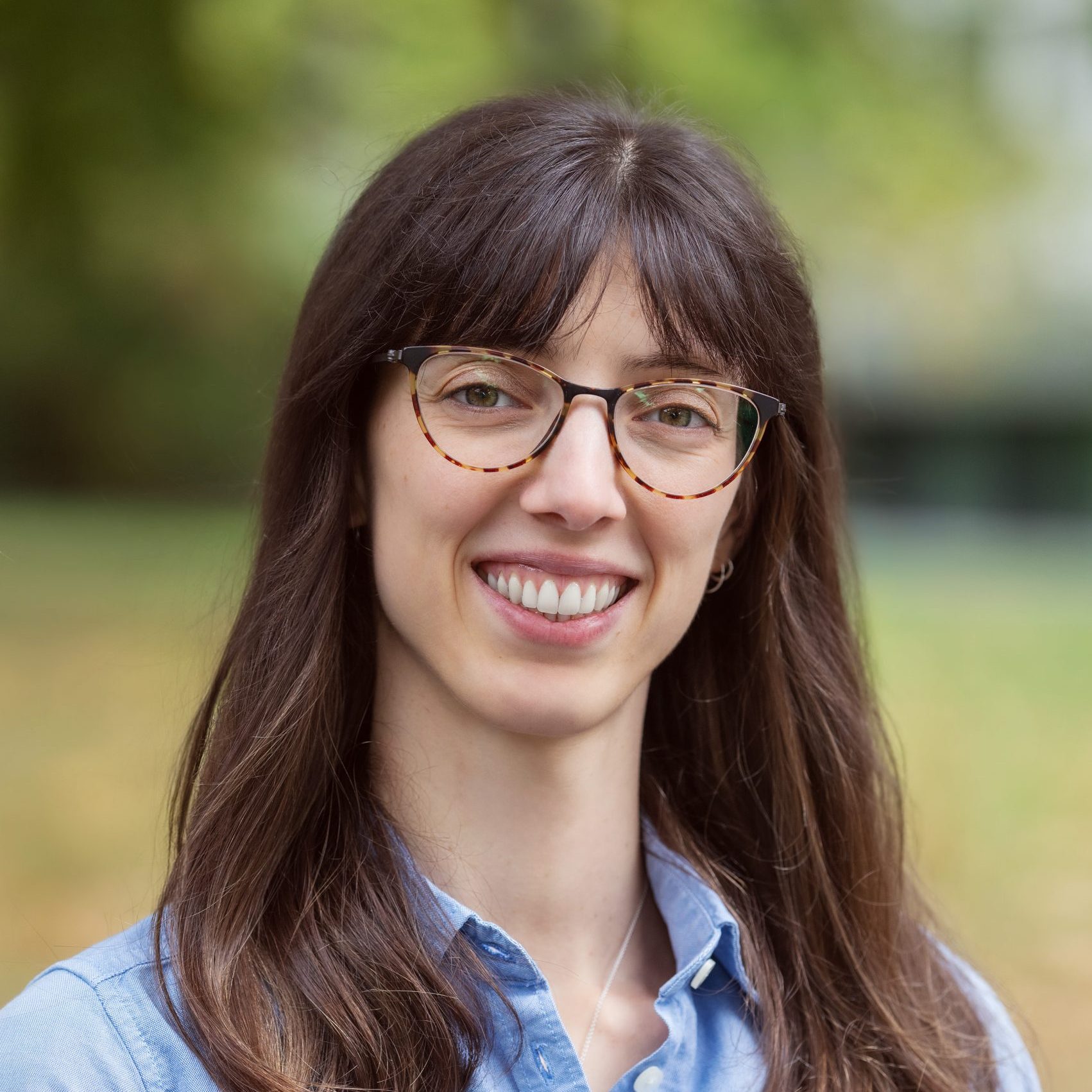
Joséphine Gantois is an Assistant Professor in Human Dimensions of Biodiversity Conservation at the University of British Columbia, jointly appointed in the Institute for Resources, Environment and Sustainability (IRES) and the Food and Resource Economics Program within the Faculty of Land and Food Systems. Her work bridges economics, ecology, and data science to address ecological footprints in agricultural and natural landscapes. She holds a Ph.D. in Sustainable Development from Columbia University, an M.P.A. in International Development from the London School of Economics, and advanced degrees in economics and the sciences from École Polytechnique. Research Focus: Dr. Gantois investigates practical solutions for reconciling land use incentives with conservation goals, particularly in agricultural areas. Her research emphasizes causal inference methods, integrating remote sensing, machine learning, and qualitative tools like interviews. Key areas include biodiversity monitoring, policy impact assessment, and ecosystem function analysis. She has explored habitat restoration in Ontario grain farms during her postdoctoral work under Dr. Claire Kremen at UBC. Teaching & Engagement: She teaches in the Master of Food and Resource Economics (MFRE) program, focusing on interdisciplinary approaches to sustainability challenges. Her work highlights the intersection of human behavior, policy design, and ecological outcomes, aiming to inform actionable conservation strategies.
Professor Paul Nugent is a Professor of Comparative African History at the School of History, Classics and Archaeology at the University of Edinburgh, where he also serves as Research Director in History. His work bridges historical scholarship with contemporary policy concerns, particularly regarding African borderlands, wine history, and governance dynamics across the continent. Professor Nugent holds a BA Hons from the University of Cape Town, and MA and PhD from the School of Oriental and African Studies (SOAS) in London. His academic journey began with a temporary lectureship in Comparative Politics at Keele University before joining Edinburgh, where he was promoted to Reader in 2003 and Professor in 2005. Professor Nugent's research primarily focuses on the comparative history of African borderlands, with particular attention to West Africa. His work examines how border regions have shaped state formation, governance, and everyday life, challenging conventional notions of margins and centers. He has also conducted extensive research on the history of the South African wine industry, exploring connections between race, consumption, and economic development. His scholarship spans colonial and postcolonial history, with special attention to Ghana, where he has studied electoral politics and social contracts. Professor Nugent approaches these topics through interdisciplinary frameworks that connect historical analysis with contemporary policy challenges. His scholarly output demonstrates remarkable consistency in exploring the intersections between space, power, and identity in African contexts. Over the past decade, his work has increasingly focused on the governance implications of infrastructure development and border management across the continent, while maintaining his longstanding interest in Ghanaian politics and the cultural history of wine production. ERC Advanced Grant (€2.5 million over 5 years) for "African Governance and Space: Transport Corridors, Border Towns and Port Cities in Transition" (AFRIGOS) Leverhulme Research Fellowship for research on South African wine history British Academy ODA-Challenge grant (2024-2025) for "Living Heritage, Climate Change and Sustainability in South African Agriculture" Fellow of the Stellenbosch Institute of Advanced Study (STIAS) Member of the Institute for Advanced Study (IAS) in Princeton FRHistS (Fellow of the Royal Historical Society) Professor Nugent has supervised 34 successful PhD projects and currently mentors doctoral students including Francesco Longo and Kpanie Addy. His supervisory interests span wine and cultural heritage, African borderlands, regional integration, consumption studies (particularly alcohol), West African politics, and comparative imperial and colonial history. He has received significant research funding including a major ERC Advanced Grant and multiple British Academy grants, demonstrating the impact and relevance of his work to contemporary policy debates. His engagement extends beyond academia through advisory roles with the African Union Border Programme, ECOWAS, and the UNDP African Borderlands Centre. Professor Nugent founded and chairs the African Borderlands Research Network (ABORNE), which has evolved into a major international collaborative platform. He has also led significant research projects including the ERC-funded AFRIGOS project, which examined governance effects of large-scale infrastructure investments across Africa, and currently serves as PI for a British Academy project addressing climate action in the South African wine industry.
Benjamin E. Hermalin is the Executive Vice Chancellor & Provost at the University of California, Berkeley. He holds dual appointments as the Thomas & Alison Schneider Distinguished Professor of Finance at the Haas School of Business and as a Distinguished Professor of Economics in the Department of Economics. His academic career at Berkeley spans over three decades since joining as an assistant professor in 1988 after completing his PhD at MIT. Professor Hermalin's research focuses on corporate governance, leadership, the economics of organization, industrial organization, contract theory, and law and economics. His work bridges theoretical economic models with practical applications in business and policy. He has developed influential frameworks for understanding board composition, executive compensation, organizational leadership, and two-sided markets. Hermalin's publications reveal a consistent focus on governance structures and organizational design. His research explores how formal and informal institutions shape economic outcomes, with particular attention to the interplay between leadership, incentives, and organizational culture. His work on two-sided markets has provided foundational insights for understanding platform economics and network effects. Schwabacher Award for outstanding teaching and research (1993) Earl F. Cheit Outstanding Teaching Award (1991) Throughout his career, Hermalin has held significant administrative positions including Economics Department Chair (2005-2008), Chair of the Academic Senate (2015-2016), and Vice Provost for the Faculty (2016-2022). He has served on the Board of Directors of the National Bureau of Economic Research and was co-editor of the RAND Journal of Economics.
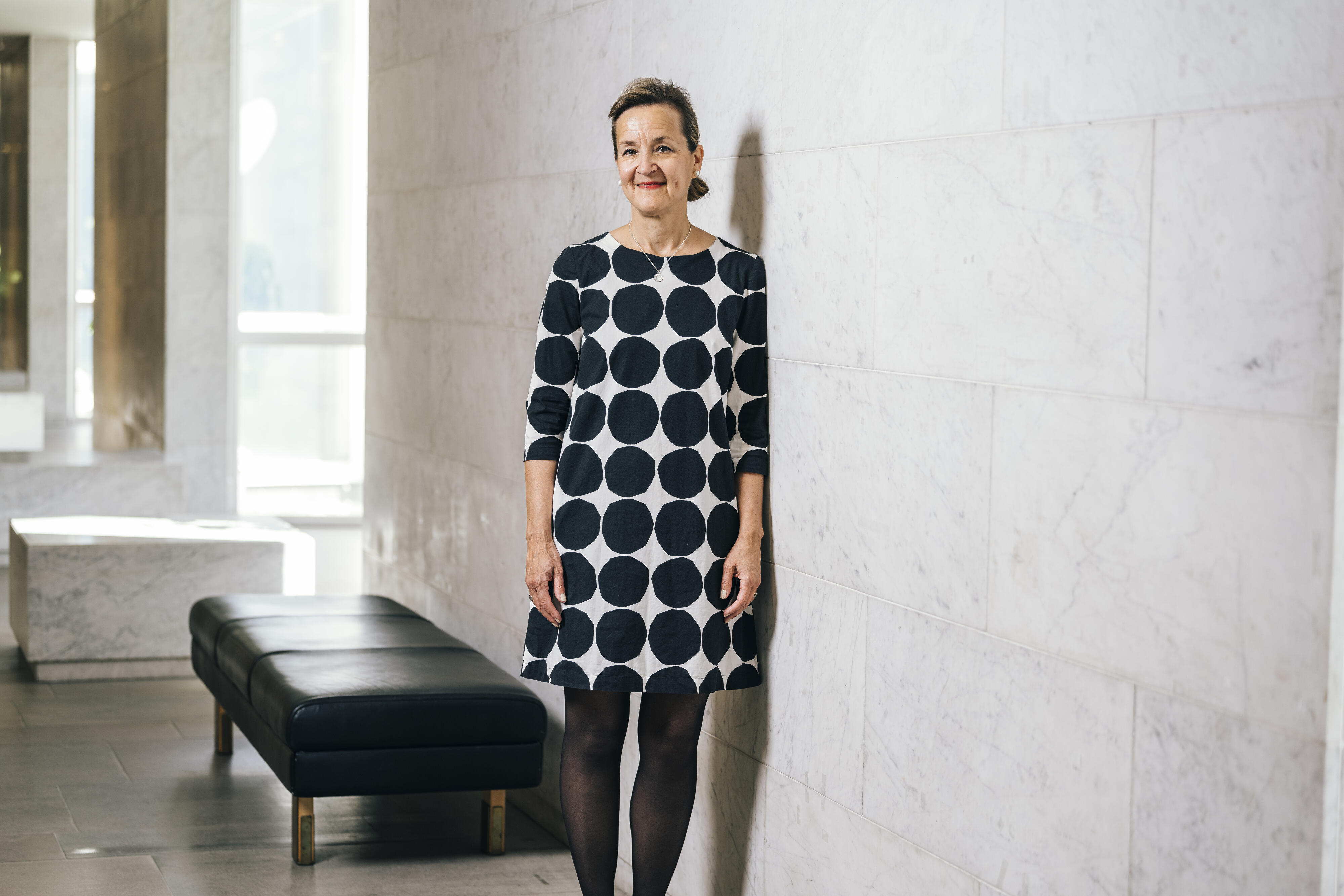
Tiina Ritvala is an Associate Professor and Assistant Dean (Teaching and Education) at the Department of Management Studies, Aalto University. Her research focuses on cross-sector collaboration between multinational corporations (MNCs), cities, and nonprofits in contexts like sustainable cities, energy transition, and cultural fields. She holds a D.Sc. (Econ.) from the Helsinki School of Economics (2008) and has been a Visiting Scholar at SCANCOR/Weatherhead (Harvard), Queen's University (Canada), and WU Vienna. Her work bridges organizational theory, international business, and social purpose. **Research Interests**: Cross-sector partnerships, multinational corporations, institutional change, sustainable cities, cultural and creative fields, energy transition. These areas are explored through case studies on global-local dynamics, MNE-NGO interactions, and sustainability initiatives. Recent work emphasizes spatial analysis in international business and geopolitical influences on corporate strategies. **Awards**: Received the Best Paper Award at EIBA 2017 for research on MNEs and sustainable development, the 1997 McKinsey Award for academic excellence, and a distinguished paper honor in the EDAMBA Thesis Competition (2009). **Professional Background**: Prior to academia, she worked in business consulting for a decade and engaged in volunteer work. Her teaching and administrative roles complement her research, focusing on international business education and institutional innovations. **Key Contributions**: Leads the Sustainability in Business research group, exploring topics like energy utilities' transition to renewables, MNC spatial strategies, and transnational commons governance. Her work often highlights the interplay between global institutions and localized action in addressing societal challenges.
Jennifer Gibbs is a Professor and Graduate Director in the Department of Communication at the University of California, Santa Barbara. Her research focuses on collaboration in global teams, distributed work arrangements, and the impact of technologies like AI and digital media on organizational practices. She holds affiliated appointments in TMP and CITS. Education: Ph.D. (2002) in Organizational Communication from the University of Southern California; B.A. (1992) in Philosophy from Pomona College. Research interests include distributed work dynamics, global team management, remote work challenges, and technology's role in organizational transformation. Her work combines qualitative and quantitative methods, emphasizing real-world field studies to explore communication processes and technological impact. Recent studies address boundary management in remote work, well-being in virtual teams, and AI's role in legal and organizational contexts. Her articles highlight trends in global work dynamics, technological affordances, and equity perceptions among remote workers. Gibbs has served as Editor of Communication Research and on editorial boards of top-tier journals. She teaches Organizational Communication, Communication Technology, and Qualitative Research at both undergraduate and graduate levels. Her contributions bridge theory and practice, addressing critical issues like work-life balance in digital environments and the future of hybrid workplaces.
Misagh Alidost is an Associate Lecturer (Education Focused) in the Department of Management and Marketing at the University of Melbourne's Faculty of Business and Economics. Their role emphasizes educational contributions within the university's academic framework. While specific research interests are not detailed in the provided text, their affiliation with Management and Marketing suggests expertise in areas such as organizational dynamics, marketing strategies, and educational methodologies in business contexts. No academic awards, grants, or publications are explicitly mentioned in the available information. Their professional focus appears to center on teaching and curriculum development within the department.
Filippo Carlo Wezel is a Full Professor of Organization and Management at the Faculty of Economics of Università della Svizzera italiana (USI), where he also serves as Director of the Institute of Management and Organisation. He holds additional research affiliations as a Visiting Research Professor at emlyon Business School (France) and a Research Fellow at Judge Business School, University of Cambridge. He plays a significant editorial role as Senior Editor at Organization Studies and serves on the editorial review boards of Organization Science , Strategic Entrepreneurship Journal , Strategic Organization , and the Advisory Board of Research in the Sociology of Organizations . His educational background includes a PhD in Management from the University of Bologna. Prior to joining USI in 2009, he held academic positions at the University of Groningen (post-doctoral researcher) and Tilburg University (Assistant and Associate Professor). He has also been a visiting scholar at leading institutions including Wharton, MIT, Columbia, Duke, London Business School, LSE, and Hong Kong University. His research centers on organizational identity, managerial and inter-firm mobility, entrepreneurship, and institutional theory. His recent publications explore identity hybridization in political parties, category dynamics in creative industries, historical organizational practices in colonial firms, and stigma in emerging markets. He frequently employs longitudinal, historical, and experimental methodologies, often bridging sociology and management. The most recent articles (2020–2025) reflect a strong trajectory in the sociology of organizations, with recurring themes of identity, categorization, legitimacy, and mobility. He investigates how social evaluations, historical constraints, and institutional environments shape organizational behavior and strategic positioning. His work spans diverse contexts—from 18th-century Lyon silk traders to modern ICT firms and medical marijuana markets—demonstrating a broad empirical and theoretical reach. Scientific Honors and Editorial Roles: Senior Editor, Organization Studies Editorial Review Board, Organization Science Editorial Review Board, Strategic Entrepreneurship Journal Editorial Review Board, Strategic Organization Advisory Board, Research in the Sociology of Organizations He has extensive experience in teaching organizational theory and behavior at undergraduate, master’s, PhD, and executive levels. His research has been published in top-tier journals such as Administrative Science Quarterly , American Sociological Review , Academy of Management Journal , and Strategic Management Journal . He leads a vibrant research agenda at USI, supported by a broad international network, though specific grants and funded projects are not detailed in the provided text. He is also involved in mentoring students and shaping the next generation of organizational scholars, though a list of advisees is not available. Filippo Carlo Wezel is a key figure in the European organizational studies community, leading the Institute of Management and Organisation at USI and fostering interdisciplinary dialogue between organization theory and strategy. His work combines deep historical insight with contemporary theoretical innovation, contributing significantly to our understanding of how organizations and careers evolve under institutional and social pressures.
Holger Straßheim is Professor of Political Sociology at Bielefeld University, affiliated with the Faculty of Sociology, Department 4 – Politics and Society. He also holds leadership roles as co-director of the Institute for Interdisciplinary Studies of Science (ISOS) and the Institute for World Society Studies, and is an elected member of the university’s Senate. He coordinates the MA program in Political Communication and serves on multiple examination and ethics committees. University: Bielefeld University School: Faculty of Sociology Department: Department 4 – Politics and Society Research Institutes: ISOS, Institute for World Society Studies Administrative Roles: Program Coordinator MA Political Communication, Member of BA/MA Examination Boards, Habilitation Committee His research centers on the interplay between science and politics, particularly the role of expertise and evidence in public policy. Key areas include behavioral public policy, climate and consumer policy, Arctic geopolitics, and the temporal dimensions of governance. He investigates how knowledge is produced, legitimized, and used in policy-making across transnational contexts. The most recent publications reflect a strong focus on evidence cultures, ethical expertise in crises, and the global spread of behavioral governance. These works analyze how expert advice functions under uncertainty, the paradoxes of evidence-based policy, and the institutionalization of ethical guidance during emergencies like the COVID-19 pandemic. The research often employs comparative and interdisciplinary methods, engaging with science and technology studies, political sociology, and policy analysis. Best Dissertation Award, University of Tübingen (2011) Visiting Fellow, Harvard Kennedy School (2014) Visiting Research Fellow, Collège d’études mondiales, Paris (2018) Visiting Research Fellow, University of Bologna (2022) Straßheim has supervised and advised in various research projects and PhD initiatives, particularly through his leadership in DFG and ESRC-funded programs. He has secured significant third-party funding, including projects on Arctic knowledge co-production and ethics in crisis governance. He is actively involved in academic service, reviewing for major journals and research councils, and shaping policy discourse through editorial roles in Critical Policy Studies and the Advances in Critical Policy Analysis book series. He leads the Straßheim Research Group, fostering interdisciplinary collaboration on science-policy interfaces. He is a key figure in research networks such as the Science and Democracy Network (Harvard) and the International Arctic Science Committee. His work bridges academic inquiry with real-world policy challenges, emphasizing democratic accountability, epistemic pluralism, and the ethical dimensions of expertise.
Stephen Weymouth is Provost's Distinguished Associate Professor and Dean’s Professor at Georgetown University’s McDonough School of Business. He holds a primary academic appointment as Associate Professor and focuses on the political economy of globalization and technological change. His research bridges international business, political science, and public policy. Weymouth earned his Ph.D. in Political Science and International Affairs from the University of California, San Diego (2010), an M.A. in Latin American Studies from the same institution (2006), and a B.S. in Economics from Arizona State University (1999). His research interests include the political environment of business, digital globalization, trade and exchange rate politics, governance of the digital economy, and the societal implications of artificial intelligence. He investigates how globalization, technological disruption, and economic change influence political behavior, voting, and policy outcomes. His work often employs quantitative methods and large-scale data to analyze firm-level and electoral dynamics. His recent publications, appearing in top journals like American Political Science Review , International Organization , and British Journal of Political Science , reveal a strong thematic focus on the intersection of economic globalization and political behavior. Trends include the impact of deindustrialization on voter backlash, the effects of inflation and pandemics on elections, and the political economy of digital trade and AI. His book Digital Globalization: Politics, Policy, and a Governance Paradox (Cambridge University Press) synthesizes these themes, emphasizing the growing tension between digital innovation and regulatory governance. Weymouth is actively engaged in policy discourse, having authored issue briefs for the Atlantic Council on digital trade policies in India and Bangladesh. He teaches core MBA courses such as Business and Policy in the Global Economy and specialized courses on AI and economic transformation. While no formal awards are listed, his named professorships reflect institutional recognition. He advises students and collaborates widely, though specific advisees are not named. His research contributes significantly to understanding how global economic forces shape political institutions and public sentiment.
David R. Lee is an International Professor at the Charles H. Dyson School of Applied Economics and Management, Cornell University. He holds a BA from Amherst College (1972), MA and PhD from the University of Wisconsin-Madison (1980/1981). His research bridges economic development, agriculture, and environmental sustainability, focusing on food security, climate change impacts, and policy interventions. He has advised global institutions like the World Bank, FAO, and USAID, and received the World Bank Green Award twice (2007, 2011). Education: PhD in Applied Economics, University of Wisconsin-Madison (1981) MA in Economics, University of Wisconsin-Madison (1980) BA in Economics, Amherst College (1972) Research Interests: Dr. Lee explores how economic policies can enhance sustainable agriculture while mitigating environmental degradation. His work emphasizes climate-smart practices, technology diffusion among smallholders, and gender dynamics in resource use. Recent studies include analyzing religious networks' role in information sharing and bioenergy systems' climate mitigation potential. Awards: World Bank Green Award (2007, 2011) Teaching & Advising: Teaches International Trade and Finance and Natural Resources and Economic Development . Mentors graduate students in development economics. No specific grants listed, but extensive consultancy work with global institutions reflects applied research impact. Global Engagement: Conducted research in ~30 countries across Latin America, Sub-Saharan Africa, and beyond. Served as visiting scholar at FAO, USDA, and universities in Italy, Netherlands, Venezuela, and Honduras.
Pieter Ballon is a Full Professor at Vrije Universiteit Brussel (VUB) and Director of imec-SMIT, part of the Studies in Media, Innovation and Technology (SMIT) research group. He holds dual affiliations in Communication Sciences and SMIT. His roles include leadership in interdisciplinary research projects and academic administration. Research expertise focuses on Smart Cities, Digital Platforms, and ICT business models. Key interests include platform urbanism, data ecosystems, and algorithmic systems' societal impacts. He has supervised 122 academic works, including 8 master’s theses listed here. Notable awards include the 1st Brussels Smart City Ambassador (2016-2017) and multiple Best Paper Awards. His work spans over 300 publications and 75 research projects, with active grants like SHALGO (2024-2028) and AMAI 5 (2025-2026). He frequently engages in public debates, academic conferences, and media discussions on topics like algorithmic governance and smart city technologies.
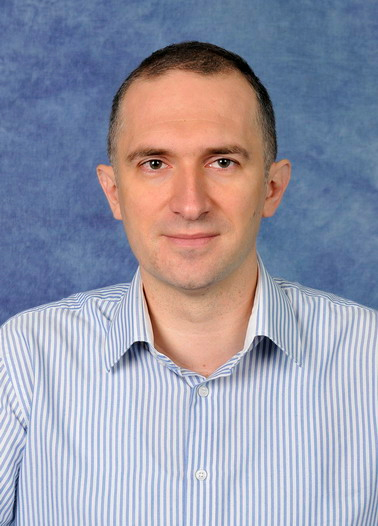
Zoran Kalinic serves as an Assistant Professor at the Faculty of Economics, University of Kragujevac, where he teaches Electronic Business since October 2012. Previously, he worked at the Faculty of Mechanical Engineering in Kragujevac from 1996 to 2005, and joined the Faculty of Economics in February 2005 as an assistant in Information Systems, later teaching Information Technology and Electronic Business from 2009 onward. Doctorate (2012): Faculty of Engineering, University of Kragujevac, specializing in information systems development and mobile communications Postgraduate studies: Faculty of Mechanical Engineering in Kragujevac (completed with average grade of 10) Bachelor's degree: Faculty of Mechanical Engineering in Kragujevac (1996, average grade 9.43) Professor Kalinic's research focuses on digital transformation and its economic implications, with particular expertise in mobile commerce, electronic business systems, digital payment technologies, and consumer behavior in online environments. His work frequently employs advanced analytical methods including artificial neural networks, structural equation modeling, and hybrid analytical approaches to investigate technology adoption patterns and digital marketplace dynamics. He has conducted extensive research on Serbian digital markets, including studies on mobile payment systems, e-commerce development barriers, and real estate price prediction using AI techniques. His publication record demonstrates a clear progression from foundational technology acceptance research toward more complex analyses of digital ecosystems, with recent work examining influencer marketing effects on TikTok, biometric payment systems, and gig economy measurement in Serbia. The integration of artificial intelligence methodologies with traditional consumer behavior theories represents a distinctive feature of his scholarly approach. Professor Kalinic maintains active international academic engagement through short study visits to institutions including the University of Udine, Vienna University of Economics, University of Maribor, Krakow University of Economics, Coventry University, Polytechnic of Turin, and Comenius University in Bratislava. He spent six weeks at the University of Maribor in 2007 through a Tempus IMG grant and served as a visiting lecturer at the Krakow University of Economics in 2012. Author/co-author of over 60 papers in international and domestic journals and conferences Participant in multiple scientific research and professional projects Recipient of academic awards during studies from University, Faculty, Ministry of Science and Technology of Serbia, Embassy of Norway, WUS-Austria, Zastava-Yugo Automobiles, and Kragujevac City Assembly His professional development includes a month-long visit to the Faculty of Informatics at the University of the Basque Country in San Sebastian (2004) and ongoing collaboration with regional and European academic institutions. Professor Kalinic's research bridges theoretical frameworks with practical applications in the Serbian and Western Balkan digital economy context.
Dr. Simon Thomas is a Senior Lecturer at the University of South Wales' South Wales Business School, specializing in Pilgrimage, Memorial & Tourism Studies. He leads the Doctor of Business Administration program and oversees the Tourism, Hospitality and Events Group. With a PhD in Pilgrimage Tourism (2013), he has extensive experience in doctoral supervision and external examining roles across UK institutions. Education: PhD Pilgrimage Tourism, University of South Wales (2013) MA Heritage Tourism, University of Wales Trinity College Carmarthen (2005) PgCert Education (Tourism), University of Wales Newport (2003) BA (Hons) Tourism & Leisure Management, University of Glamorgan (2001) Research Interests: Focused on pilgrimage tourism, heritage tourism innovation, and sustainable tourism development. His work bridges academic inquiry with practical applications, including a Knowledge Transfer Partnership (KTP) with the Cardiff Story Museum rated 'outstanding' by the KTP Board. Key themes include secular pilgrimage dynamics, autoethnographic methodologies, and cultural identity in tourism. Publications: Over 20 peer-reviewed articles and book chapters, including studies on Lourdes pilgrimage, Welsh heritage entrepreneurship, and thanatourism. Recent work explores NGO engagement strategies and digital tourism innovation. Awards: Fellow of the Higher Education Academy (FHEA) Outstanding KTP Board Rating (Cardiff Story Museum collaboration) 4* ABS Full Paper Award Advising & Grants: Supervised over 25 doctoral candidates across business and tourism disciplines. Active in external examining roles (e.g., Coventry University, Bishop Grossteste University) and curriculum design. Led projects funded by the Welsh Government and private sector partnerships. Labs & Teams: Research Lead for the Tourism, Hospitality and Events Group, fostering interdisciplinary collaboration on tourism policy, innovation, and cultural heritage.
Morgan Edwards is an Assistant Professor at the University of Wisconsin-Madison's La Follette School of Public Affairs, specializing in human-centered energy responses to the climate crisis. Her work bridges policy analysis, systems modeling, and equity considerations across global, national, and local scales. Education: PhD in Engineering Systems (MIT), SM in Technology and Policy (MIT), BS in Environmental Science and Economics (UNC Chapel Hill) Research focuses on: Equity implications of energy transitions Systems modeling for climate policy Natural gas leak detection and mitigation Coal power phaseout strategies Negative emissions technology assessment Her lab develops tools connecting global climate goals with local action, emphasizing partnerships with underserved communities. Recent publications analyze methane mitigation, corporate climate-tech investments, and equity challenges in electrification.
Mikaela Vasstrøm (b.1977) is an Associate Professor at the Department of Global Development and Planning, University of Agder. She holds a PhD from the University of Copenhagen and leads significant research projects including the Norwegian Research Council-funded WINDPLAN initiative, which analyzes social acceptance and governance challenges in onshore wind power development across Norway, Scotland, and Denmark. She co-leads work packages in the WINDREG project focusing on procedural justice and knowledge co-production for energy transitions. Her research examines: Just energy transitions and energy democracy Governance challenges in renewable energy deployment Public participation in environmental conflicts Local/regional development implications of energy policies She co-directs UiA's participation in the Empowered Futures research school, developing PhD-level expertise in energy policy frameworks. Publications focus on wind energy governance, policy legitimacy, and spatial planning conflicts, with consistent themes of: Energy justice in policy design Local government capacity in energy transitions Participatory approaches in sustainability planning Research group affiliations include: Energy and Society Urban and Regional Planning (URPLAN)