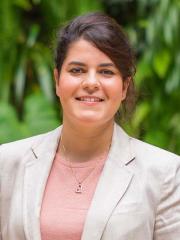
Dr. Kathryn Thier is a Postdoctoral Research Fellow in the Center for Climate Change Communication at George Mason University. She holds a Ph.D. in Communication Science and Social Cognition from the University of Maryland and previously taught journalism at the University of Oregon, where she co-founded The Catalyst Journalism Project. Her research examines Solutions Journalism and its capacity to drive pro-social outcomes in Climate Change Communication and Health Communication . She investigates how solution-oriented reporting influences public engagement, policy support, and health behaviors. Recent publications (2019-2025) demonstrate methodological diversity including meta-analyses, content analyses, and experimental designs. Dominant themes include: Health/climate misinformation mitigation Solution-oriented framing effects Equity-focused communication strategies Policy engagement mechanisms She maintains a strong emphasis on quantitative rigor and interdisciplinary applications.
Dr. Eva Maria Bauer serves as a Course Director in the Department for Knowledge and Communication Management at the University for Continuing Education Krems, Austria. Her academic work focuses on leadership communication, organizational learning, and case study methodology within business and management education. Her research interests center around practical applications of leadership and communication theories: Developing case studies as learning challenges for leaders and organizations Transitioning from individual to organizational learning frameworks Managing change processes in public sector organizations, particularly in healthcare Mentoring students through case study development and MBA thesis writing Dr. Bauer's scholarly work demonstrates a consistent focus on bridging theoretical knowledge with practical business applications. Her publications from 2013 reveal a specialization in case study methodology as an educational tool, with particular attention to leadership development and organizational change management. She has contributed significantly to the understanding of how case studies can transform both individual and organizational learning processes. Her scientific contributions include several publications in the field of business education and leadership development: Research Case Studies as Learning Challenges for Leaders and Organisations (2013) From individual learning to organisational learning (2013) Change while the engine is running - management challenges during an extensive change process in the public health sector (2013) As a course director, Dr. Bauer oversees academic programs related to leadership communication and appears to be actively involved in supervising student work, particularly guiding MBA students through the thesis process using case study methodology. Her work with family businesses suggests a specialized interest in this sector's unique leadership challenges.
Dr. Sotira Yiacoumi serves as a Professor in the School of Civil and Environmental Engineering at the Georgia Institute of Technology, where she leads research at the intersection of colloidal science, environmental systems, and nuclear applications. Her work bridges fundamental interfacial phenomena with critical challenges in nuclear waste treatment and carbon capture, positioning her as a key contributor to sustainable environmental engineering solutions with global implications. Education Diploma of Engineering, Aristotle University, Greece (1985) M.S. in Engineering, Syracuse University (1987) Ph.D. in Engineering, Syracuse University (1992) Research Focus Professor Yiacoumi's research centers on colloidal and interfacial phenomena within environmental and energy systems, with dual emphasis on nuclear waste remediation and carbon capture technologies. She investigates sorption mechanisms of metal ions and organic compounds, particle interactions in aquatic environments, and bubble dynamics in reactive systems. Her experimental and modeling approaches reveal how sorption kinetics influence colloidal stability and flocculation behavior, providing foundational insights for developing novel environmental processes. Publication Trends Her recent publications (2023-2025) demonstrate a strategic pivot toward climate mitigation and nuclear safety, with 60% focused on CO 2 capture (particularly direct air capture using amino acid solvents and phase-changing compounds) and 40% on nuclear applications (radioactive iodine capture and uranium recovery). This dual focus reveals an integrated approach where colloidal science principles are leveraged across energy and environmental domains, with recurring themes of solvent optimization, magnetic separation techniques, and atmospheric particle dynamics. Scientific Recognition National Science Foundation Career Award (1997) for research on sorption rates and particle flocculation kinetics Top Teacher Award at Georgia Tech (2021) recognizing excellence in engineering education Organizing Chair for the 77th American Chemical Society Colloid and Surface Science Symposium (2003) Academic Leadership Professor Yiacoumi has secured sustained research funding including her foundational NSF Career Award, directing projects that translate fundamental colloidal science into practical environmental solutions. Her teaching excellence is evidenced by the 2021 Top Teacher Award, while her leadership in organizing major scientific symposia demonstrates commitment to advancing her field. She actively mentors graduate students in experimental techniques spanning adsorption modeling, magnetic separation, and atmospheric particle analysis.
Cen April Yue is an Assistant Professor of Marketing, Advertising, and Public Relations at the University of Connecticut and a Visiting Lecturer at ISM (Lithuania). She holds an Affiliate Scholar position at the Internal Communication Research Hub, University of Florida. Her research focuses on internal public relations, leadership communication, organizational change, and corporate social responsibility. She serves as Chief Research Editor at the Institute for Public Relations' Organizational Communication Research Center. Her research explores topics such as employee advocacy, CEO social media engagement, artificial intelligence in communication, and the ethical dimensions of organizational behavior. She has published extensively in journals like the Journal of Public Relations Research and Journal of Brand Management , with a focus on leadership communication strategies, internal stakeholder management, and technology-driven communication trends. Education : Not explicitly listed in provided texts. Awards : Over 10 top paper awards and recognitions from communication associations and conferences. Teaching : Courses include Public Relations (MNG229), Communication Research Methods, and Communication Campaigns. Her work bridges theoretical and practical aspects of organizational communication, emphasizing the role of technology and leadership in fostering employee relationships and managing change. Current research trends include AI's impact on internal communication and ethical challenges in corporate social responsibility.
Ine van der Fels-Klerx is an Associate Professor in Business Economics at Wageningen University & Research, with a focus on food safety and risk management. She is also a Programme and Account Management lead, overseeing interdisciplinary projects. Her work integrates economic analysis with food safety challenges, particularly addressing mycotoxin contamination, climate change impacts, and circular economy solutions. Key collaborations include projects on early warning systems for mycotoxins and cost-effective monitoring strategies for contaminants in food supply chains. Her research spans topics such as alternative protein sources, insect-based feed production, and resilient supply chain designs. Notable projects include developing decision support tools for risk-based monitoring and assessing the economic feasibility of food safety interventions. She has advised multiple PhD candidates, including those studying mycotoxin management in maize and climate change effects on aflatoxins. Media contributions highlight her expertise in food safety, including interviews on predicting grain contamination and smart monitoring techniques. She actively participates in workshops and conferences, discussing digitalization in food systems and the role of artificial intelligence in food safety prevention.
Linda J. Graham is a Professor at Queensland University of Technology (QUT) and Director of the Centre for Inclusive Education (C4IE). Her research focuses on education policy, disruptive student behavior, and inclusive pedagogies. PhD, Master of Education, and Bachelor of Arts from QUT and Macquarie University Chaired the 2020 Inquiry into Suspension, Exclusion and Expulsion Processes in South Australia Her work explores the intersection of inclusive education , student voice , and teacher-student relationships . She advocates for systemic reform to address overrepresentation of Indigenous and disabled students in exclusionary discipline. Recent publications highlight accessible assessment redesign , equity in education , and student perspectives on discipline . Notable awards include the Spencer Foundation Mentorship Excellence Award (2021) and Macquarie University's Early Career Researcher of the Year (2011). Scientific Awards: Spencer Foundation Mentorship Excellence Award (2021) Macquarie University Early Career Researcher of the Year (2011) Paul Bourke Award (2011) She supervises PhD and professional doctorate students in projects related to language disorders , student voice , and curriculum adjustments . Her leadership extends to the AARE Inclusive Education Special Interest Group and collaborations with institutions like Speech Pathology Australia and the QCAA.
Jimmy Jaldemark is a Professor at the Department of Education, Mid Sweden University, Sundsvall, Sweden. He serves as Research Leader of HEEL (Higher Education and E-Learning) and Head of Subject for the Discipline of Education. His roles include membership in the Faculty Board of Humanities and representation in the university-wide Education Council. He co-founded GRADE, a national graduate school in digital education, and leads the EARLI Centre for Excellence in AI in Learning and Instruction (AILI). His research focuses on AI, digitalization, lifelong learning, and networked learning. He co-edited *Networked Professional Learning* (2019) and guest-edited special issues in the *British Journal of Educational Technology*. He is an editor for that journal and serves on editorial boards for *Educational Research Review*, *Postdigital Science and Education*, and others. He supervises doctoral students and teaches in Behavioral Science and Education programs. Current projects include HEaD (Higher Education and Digitization) and BLAD (Need-based Learning through Adapted Participation). He collaborates internationally, notably in the AILI network exploring AI's educational impacts. His work spans educational development, organizational learning, and policy frameworks for lifelong learning in the digital era.
Robert D. Zettle is a Professor of Psychology in the Clinical-Community Psychology Program at Fairmount College of Liberal Arts and Sciences, Wichita State University. He directs the Contextual Behavioral Science Lab and teaches Abnormal Psychology, Cognitive Behavioral Therapy, and Ethical and Professional Issues in Clinical Psychology. Dr. Zettle's educational background includes: Ph.D. in Psychology from University of North Carolina-Greensboro (1984) M.A. in Psychology from Bucknell University (1976) B.A. in Psychology from Wilkes College (1974) His research centers on Contextual Behavioral Science , examining how languaging and verbal behavior contribute to human suffering. Key areas include: Developing measures of psychological flexibility and self-as-context Experimental manipulation of processes in anxiety and mood disorders Comparing traditional CBT with Acceptance and Commitment Therapy (ACT) for depression Investigating mechanisms like defusion and acceptance in ACT Current projects focus on dissociative symptom induction, mood-enhancing versus value-congruent behavioral activation, and client treatment preferences in spider fear interventions. Dr. Zettle's recent publications (2019-2025) reveal a strong emphasis on self-as-context measurement , cross-cultural adaptations of ACT tools, and depression relapse prevention . His work increasingly integrates attention bias modification with ACT and explores client preference dynamics, while expanding applications to university counseling centers and international contexts. He mentors graduate students including Nakisha Carrasquillo, Angela Cathey, Suzanne Gird, Angie Hardage-Bundy, Sarah Staats, and Jeff Swails. His research is supported by ongoing projects in the Contextual Behavioral Science Lab investigating core ACT processes and clinical applications. The Contextual Behavioral Science Lab, directed by Dr. Zettle, maintains a collaborative team environment focused on both experimental psychopathology and clinical treatment development. Current work spans measurement validation, interoceptive exposure techniques, and comparative treatment studies for depression and anxiety disorders.
Prof. Dr. Vita Akstinaitė is a Professor and Vice-Rector for Research and Faculty at ISM University of Management and Economics (Lithuania). She leads the Master's program 'Global Leadership and Strategy' and the Executive Master's module on rhetoric/communication. As a Visiting Researcher at IDIAP (Switzerland) and Visiting Fellow at the University of Lausanne, she bridges academic and applied research. Her work focuses on leadership dynamics, hubris, linguistic markers, and AI applications in leadership assessment. Education: MSc Organizational Psychology (King's College London) and PhD in Business (University of Surrey), with research on linguistic markers of hubris. She co-founded The Hubris Hub and Knowledge4Hubris initiatives, fostering interdisciplinary collaboration. Notable projects include EU-funded AI leadership research (2021) and NordForsk's remote work study (2023-2026, €99k+). Research emphasizes innovative methods like AI-driven text analysis to evaluate leadership behaviors. Key areas include: executive hubris measurement, AI's role in leadership skill assessment, and ethical leadership frameworks. Her work spans international collaborations with institutions like Umeå University (Sweden), Murdoch University (Australia), and the London School of Economics. Awards include ISM Research Communicator of the Year (2023), Murdoch Teaching Excellence (2021), and EU research grants. Her publications explore topics like linguistic predictors of hubris, AI in leadership diagnostics, and pandemic leadership failures. Recent articles address data-driven executive role transformations and ethical leadership in AI contexts. Grants include €59k for AI leadership research (2021-2023) and €99k NordForsk funding. Active in conferences such as British Academy of Management and interdisciplinary leadership symposia. She advises on leadership development and serves as a module leader for global leadership courses. Labs/Teams: Co-leads The Hubris Hub research collective and directs ISM's executive communication initiatives. Current work explores AI ethics in leadership assessment and cross-industry sustainability leadership preferences.
Professor Ian Jefferson is a Professor in Geotechnical Engineering at the Department of Civil Engineering, University of Birmingham. He has held academic positions at Loughborough University (lecturer from 1992–1995) and Nottingham Trent University (Lecturer/Senior Lecturer from 1995–2001, Principal Lecturer from 2001–2002, and Reader until 2004 before joining Birmingham). His roles include teaching and research in civil engineering disciplines, with a focus on sustainability and geotechnical practices. He is affiliated with the School of Engineering at the University of Birmingham, located in Edgbaston, Birmingham, UK. Education: BEng (Hons) in Civil Engineering, Loughborough University PhD in Geotechnical Engineering Professor Jefferson’s research interests revolve around collapsible soils , particularly loess , and their geotechnical implications across Eastern Europe, Central Asia, and the UK. He explores ground improvement techniques , including chemical stabilization and vibro-stone columns, with a focus on sustainability. His work also addresses geohazards such as rising groundwater and problematic soils like glacial tills. He investigates sustainability in urban development , sustainable geotechnical processes, and the application of geophysical methods for assessing improved ground conditions. These areas highlight his commitment to integrating environmental and geotechnical challenges in engineering solutions. Professor Jefferson’s recent publications emphasize the intersection of geotechnical engineering and sustainability. His work explores sustainable infrastructure planning, emissions reduction in soil improvement techniques, and geophysical methods for ground assessment. Key themes include the mitigation of collapsible soils, optimizing ground improvement technologies, and sustainability indicators for urban redevelopment. His research frequently addresses environmental impacts, particularly in transportation and utility infrastructure contexts, alongside advancing methodologies for geotechnical practices. Fellow of the Geological Society (FGS) In terms of grants and funding, Professor Jefferson has secured over £4 million in research grants. While his role in advising students is not explicitly stated, he contributes to academic governance through his positions as a Marker/Moderator for the Postgraduate Teaching Certificate and as the Plagiarism Officer for Civil Engineering since 2013. Professor Jefferson is actively involved in several research initiatives, including Loess soil stabilisation , collapsibility in loess soils , and Ground Improvement using stone columns . He also leads projects on Assessment of improved ground using geophysics , Shear strength of glacial tills , and Sustainability Assessments in urban Development . His work contributes to the Sustainable urban redevelopment - Eastside project in Birmingham. These projects reflect his collaboration with interdisciplinary teams and his focus on practical, sustainable solutions in geotechnical engineering.
Associate Professor Ida Asadi Someh is affiliated with the UQ Business School at The University of Queensland and serves as a research affiliate at the Centre for Information Systems Research (CISR) , MIT Sloan School of Management. She completed her PhD at The University of Melbourne in 2015, receiving the best PhD thesis award from the Melbourne School of Engineering and the Vice Chancellor’s PhD Prize . Her research spans business analytics , artificial intelligence , and data governance , focusing on the organizational and societal impacts of data and AI. Key areas include ethics of AI , privacy , accountability , and synergy in analytics systems . Recent publications highlight generative AI in business transformation, algorithmic fairness in public welfare systems, and data governance frameworks for ethical AI. Her work addresses digital transformation in both corporate and public sectors. Scientific awards include the best PhD thesis and Vice Chancellor’s PhD Prize at The University of Melbourne. She supervises PhD and Master’s students in data-driven organizations , privacy-preserving AI , and sepsis management through data .
Dr. Michael P. Byrne is an Associate Professor at the School of Earth and Environmental Sciences , University of St Andrews, and a Marie Skłodowska-Curie Research Fellow at the Atmospheric, Oceanic and Planetary Physics Group , University of Oxford. His research focuses on climate dynamics, monsoons, land-climate interactions, and the water cycle. He leads the Climate Dynamics Lab at St Andrews, exploring topics like cloud feedbacks, tropical climate change, and continental-ocean temperature contrasts. He completed his PhD at MIT under Paul O’Gorman. His work bridges theory, models, and observations to address fundamental climate questions, including monsoon dynamics, intertropical convergence zone behavior, and extreme temperature amplification over tropical land. Key contributions include studies on ITCZ width impacts, elevation-dependent warming, and biases in precipitation projections. Education: PhD from Massachusetts Institute of Technology (advisor: Paul O’Gorman) Research Highlights: Cloud feedback mechanisms in tropical climates Land-ocean warming contrasts and their societal impacts ITCZ dynamics and global climate modeling Awards: Marie Skłodowska-Curie Fellowship (Oxford) Labs/Teams: Climate Dynamics Lab (St Andrews), ITCZ-MIP collaboration
Hannie A. Gijlers is an Associate Professor at the Digital Society Institute, affiliated with the Department of Instructional Technology in the Faculty of Behavioral, Management and Social Sciences at the University of Twente. Her work bridges technology and education, focusing on innovative learning environments and collaborative processes. Academic Rank: Associate Professor Institution: University of Twente Research Institute: Digital Society Institute Department: Instructional Technology Her research interests center on computer-supported collaborative learning (CSCL) , technology-enhanced STEM education , inquiry-based learning , and the role of emotions and feedback in learning. She investigates how digital tools and agent-facilitated environments support students and teachers in collaborative settings, often through cross-cultural comparisons. Her work integrates physiological and gaze-based data to understand implicit learner emotions, pushing the boundaries of learning analytics. The recent publications (2021–2024) reveal a strong focus on teacher guidance models , gamified STEM apps , clinical reasoning in medical education , and climate change literacy . These works span disciplines including educational psychology, computer science, and environmental education, indicating interdisciplinary collaboration. Keywords across these articles include collaborative learning, emotion detection, technology integration, and cross-cultural studies, reflecting a consistent research trajectory in digital pedagogy and learner support. While no specific awards are listed in the provided text, her sustained publication record in high-impact venues and leadership in collaborative research projects suggest recognition within the academic community. Hannie Gijlers actively supervises research, as evidenced by co-authored works with junior researchers and contributions to practitioner research models. Her involvement in datasets and conference presentations indicates ongoing grant-funded or institutionally supported research activities. She has contributed to both theoretical frameworks (e.g., four-phase mentorship model) and applied tools (e.g., Science Chaser app), demonstrating a balance between scholarship and practical innovation. She is part of a vibrant research network at the University of Twente, collaborating with scholars like T.H.S. Eysink, A.W. Lazonder, and N. Janssen. Her team explores agent-facilitated learning, gamification in STEM, and teacher development, often in international collaborations (e.g., Dutch-Finnish studies). These efforts are supported by digital infrastructure and interdisciplinary datasets, positioning her at the forefront of digital society research in education.
Dr. Saskia Peels-Matthey is a Senior Lecturer in Classics at the University of Groningen's Faculty of Arts, specializing in Ancient Greek religion, literature, and epigraphy. She holds MA degrees in English, Classics, and Linguistics from Leiden and Utrecht Universities, and a PhD in Classics from Utrecht University (2014). Her research integrates cognitive linguistics, digital humanities, and classical studies, notably through her NWO Veni project 'Polytheism as Language' exploring Greek divine semantics. She co-leads the open-access Collection of Greek Ritual Norms (CGRN) database and develops computational tools like AGILe lemmatizer. A board member of the Anchoring Innovation program, she also supervises interdisciplinary PhD projects blending classics with computational methods and climate communication. Her work spans semantic analysis of religious terms (e.g., hosios, hagnos), ritual innovations in inscriptions, and computational modeling of ancient Greek language evolution. Notable collaborations include organizing conferences on Artemis mythology and interdisciplinary workshops on ancient poetry's cognitive impact. She actively engages in public outreach through media appearances explaining classical studies' modern relevance.
Jeremy I. Borjon is an Assistant Professor in the Department of Psychology at the University of Houston, affiliated with the College of Liberal Arts and Social Sciences. He leads the Developing Systems Laboratory, focusing on infant cognitive, sensorimotor, and autonomic development. His research is supported by an NICHD R00 award and integrates multimodal technologies such as eye-tracking, motion capture, and wireless physiological sensors. Education: A.B. in Psychology and Neuroscience, Princeton University Ph.D. in Psychology and Neuroscience, Princeton University Dr. Borjon's research centers on how infants coordinate internal states with emerging cognitive and motor systems during the first two years of life. He investigates how visual, motor, and autonomic processes interact in real time, particularly during naturalistic caregiver interactions. His work emphasizes ecological validity by studying infants in dynamic, real-world contexts. He is particularly interested in sustained attention, language development, and how caregiver behaviors shape infant cognition. His recent publications reflect a strong trend in using dense, naturalistic behavioral sampling to understand developmental processes. The articles highlight interdisciplinary approaches combining developmental psychology, neuroscience, and engineering to study real-time cognitive and physiological dynamics in infants. Topics include physiological synchrony, attention regulation, and sensorimotor integration. Scientific Awards and Honors: R00 Pathway to Independence Award, NICHD K99 Pathway to Independence Award, NICHD NSF Postdoctoral Research Fellowship NICHD T32 Postdoctoral Fellowship 2019 Small Grant for Early Career Scholars, SRCD NSF Graduate Research Fellowship Princeton President’s Fellowship Simons Fellow in Computational Neuroscience Dr. Borjon has been actively involved in mentoring and is currently reviewing graduate applications for the Developmental, Cognitive, & Behavioral Neuroscience Program. His research is supported by federal grants, indicating active funding and research productivity. He previously held postdoctoral fellowships at Indiana University and positions at Yale and Emory. He directs the Developing Systems Laboratory, which employs cutting-edge technology to study infant behavior in naturalistic settings. The lab integrates head-mounted eye-tracking, wireless cardiorespiratory sensors, motion capture, and audiovisual recording to examine how cognitive achievements emerge within the context of a developing body and social environment.