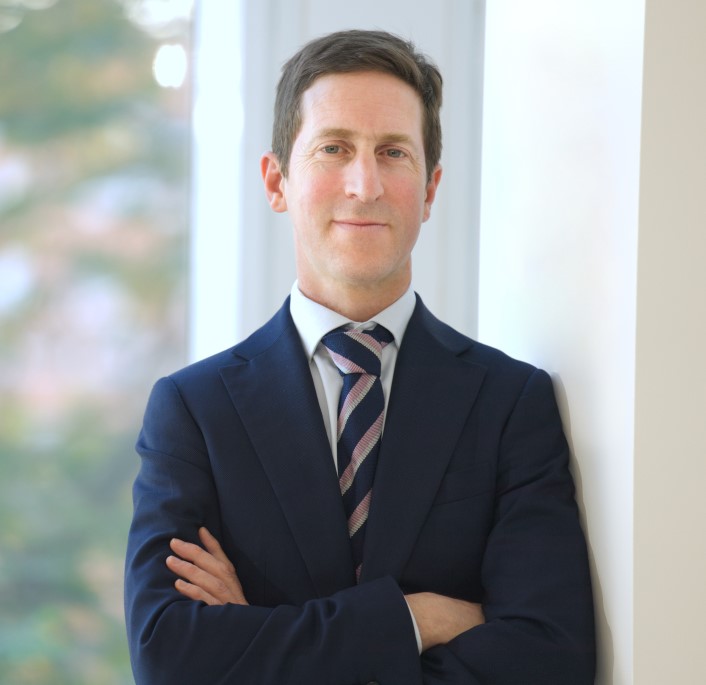
Lauren Rivera is the Peter G. Peterson Chair in Corporate Ethics and Professor of Management & Organizations at Northwestern University’s Kellogg School of Management , with a courtesy appointment as Professor of Sociology at the Weinberg College of Arts & Sciences . Her research focuses on how merit definitions in organizations perpetuate social inequalities, including studies on hiring bias, gender disparities, and elite labor markets. PhD, Sociology (Harvard University, 2009) AM, Sociology (Harvard University, 2006) BA, Sociology and Psychology (Yale University, 2000) Her work spans disciplines such as hiring discrimination , gender equity , and disability studies , often employing qualitative and mixed methods . Recent articles examine racial bias mitigation , disability exclusion in education, and gendered promotion regimes in law firms. She has authored the best-selling book Pedigree: How Elite Students Get Elite Jobs and contributed to media outlets like the New York Times and Harvard Business Review . Scientific awards include the Granovetter Award , Max Weber Book Prize , and multiple Kellogg Teaching Awards . Her editorial roles include positions at the American Sociological Review and Princeton University Press Series in Cultural Sociology.
Sara Abelson, PhD, MPH is an Assistant Professor in the Department of Urban Health and Population Science at Temple University Lewis Katz School of Medicine and serves as Senior Director at The Hope Center for Student Basic Needs. Her work focuses on advancing structural approaches to enhance student success, mental health equity, and basic needs security in higher education through applied research and program development. Dr. Abelson's educational background includes: PhD, School of Public Health, University of Michigan, Ann Arbor, MI MPH, School of Public Health, University of Michigan, Ann Arbor, MI BA, Cornell University Her research centers on adolescent and young adult mental health, health equity, and social determinants of health, with particular attention to structural and systemic drivers of health inequities. She investigates how school settings influence youth health outcomes and serve as intervention points for promoting wellbeing. Her work bridges research, policy, and practice to develop evidence-based approaches for reducing inequities in higher education settings. Dr. Abelson's publication record shows a clear evolution toward increasingly sophisticated analyses of mental health disparities in educational contexts. Recent work examines racial/ethnic disparities in mental health service utilization, gender minority mental health, and the impact of political events on vulnerable student populations. Her research consistently emphasizes structural interventions over individual-level approaches. Among her notable recognitions: 2022 Weiss Writing Prize for her pivotal publication on college mental health Lewis Barbato Award from the American College Health Association K. Patricia Cross Future Leader Award from the American Association of Colleges & Universities George Orley Mental Health Advocate Award Dr. Abelson has extensive consulting experience with major educational organizations including the American Council on Education, Center for Community College Student Engagement, and Association of Public & Land-grant Universities. Her current projects focus on evidence-based interventions for student mental health, community college mental health initiatives, and integration of basic needs and mental health resources to improve educational attainment. As Senior Director at The Hope Center, she leads initiatives addressing the critical intersection between mental health and basic needs security, developing comprehensive approaches to student wellbeing that recognize the interconnected nature of these challenges in higher education.
Karestan C. Koenen is Professor of Psychiatric Epidemiology at the Harvard T.H. Chan School of Public Health and an Associate Member at the Broad Institute of MIT and Harvard . She also serves as Affiliated Faculty at the Harvard University Center for the Environment , advising students in Epidemiology and Social Behavioral Sciences. BA in Economics, Wellesley College MA in Developmental Psychology, Columbia University PhD in Clinical Psychology, Boston University Post-doctoral Fellowship in Psychiatric Epidemiology, Columbia University Dr. Koenen's research focuses on three areas: (1) understanding PTSD resilience, (2) trauma's long-term physical health impacts, and (3) expanding access to evidence-based mental health treatments. Her work bridges genetics, global mental health, and trauma epidemiology, with recent studies on epigenetic aging, cognitive outcomes after trauma, and substance use comorbidities. Her 2025 publications span psychiatric genetics, trauma neurobiology, and women's health, emphasizing machine learning, neuroimaging, and population-level interventions. Current projects include the Broad Trauma Initiative and NIMH-funded training programs. 2025 Junior Faculty Mentoring Award 2021 Pamela Sklar Innovation Award 2017 Distinguished Alumnae Award 2015 Robert S. Laufer Memorial Award Dr. Koenen actively trains graduate students through the Trauma Epidemiology and Population Mental Health Research Group . She integrates advocacy into her work, having testified before Congress and consulted on documentaries about trauma, while publishing in outlets like the Boston Globe and Psychology Today . Her lab collaborates on mental health policy and global trauma research.
Gavin Schwarz is a Professor and Head of School at the School of Management and Governance within the UNSW Business School . He specializes in organizational change , organizational failure and inertia , and the dynamics of virtual teams , with a focus on how organizations fail during change processes and how to develop applied strategies for change management . His work spans diverse sectors including healthcare, technology, and education, with publications in leading journals such as Academy of Management Learning and Education and Administrative Science Quarterly . Education : PhD in Management (University of Queensland), MPhil (Hons) in Management (University of Auckland), BA in Management and English (University of Auckland). Grants : 2020 Brock University grant for "University communication in times of COVID-19" , 2020 UNSW Medicine grant for "Translation and change: Embedding effective change management in health" , and earlier Australian Research Council and Gordon J. Samuels Fellowship awards. His research explores the development of knowledge in organizational theories , with an emphasis on collective responses to change , HR management during crises , and technology strategy . He has contributed to understanding organizational communication , team innovation , and structural inertia . His 15 most recent publications cover topics from AI’s role in organizational change to pandemic-driven research adaptation, with keywords spanning management science , behavioral economics , and digital transformation . Scientific Awards 2021-2023 : Outstanding Reviewer Awards (Academy of Management Review) 2017-2020 : Best Reviewer Awards (Journal of Organizational Behavior) 2019, 2013, 2011 : Best Paper Finalist/Awardee (Academy of Management divisions) 2007, 2006 : Editorial Board Excellence (Academy of Management Journal) and Gordon J. Samuels Fellowship As an active supervisor in organizational change and HR development , his work supports healthcare innovation and digital transformation. He serves as Editor-in-Chief for the Journal of Applied Behavioral Science and is on the editorial boards of Academy of Management Review , Journal of Management , and Journal of Organizational Behavior . Contact: g.schwarz@unsw.edu.au
Dr. Alexandra Piotrowski-Daspit is an Assistant Professor in the Biomedical Engineering department and Internal Medicine – Pulmonary and Critical Care Medicine at the University of Michigan Medical School. She is a chemical/biological engineer with expertise in polymeric biomaterials for gene therapies, focusing on in vivo behavior of delivery vehicles and strategies to optimize biodistribution. Education: Ph.D. in Chemical/Biological Engineering Her research bridges polymer chemistry, gene delivery, and translational medicine, emphasizing in utero interventions and pulmonary targeting. Key areas include nanoparticle surface engineering, macrophage decoys, and computational pharmacokinetic modeling. Recent publications highlight systemic in utero gene editing for cystic fibrosis, poly(amine-co-ester) nanoparticle tunability, and mucosal vaccination platforms. She also explores miRNA therapies for congenital diaphragmatic hernia and triplex-forming PNAs for CFTR correction. PhRMA Foundation Awardee (2024) Her work involves interdisciplinary collaborations, DEI initiatives, and translational projects from postdoc foundations in W. Mark Saltzman’s lab. Labs like Saltzman and SCGE teams support her research.
Leid Zejnilovic is an Assistant Professor at Nova School of Business and Economics (Nova SBE), where he co-founded the Data Science Knowledge Center and serves as Academic Director, and co-founded the Open and User Innovation Knowledge Center as Scientific Deputy Director. He also co-founded the Patient Innovation platform, enabling patients and caregivers to share self-made healthcare solutions. With a double PhD from Carnegie Mellon University and Católica-Lisbon School of Business and Economics, his career spans over 20 years of international consulting, academic entrepreneurship, and teaching at institutions like Imperial College Business School and Ludwig Boltzmann Institute. PhD in Strategy, Entrepreneurship and Technological Change (Carnegie Mellon University / Catholic University of Portugal, 2014) Master in Engineering and Public Policy (Carnegie Mellon University, 2012) Master in Information Technology (Dzemal Bijedic University, 2007) Bachelor in Telecommunications (University of Sarajevo, 2002) His research focuses on Technology and Innovation Management, Human-Computer Interaction, and data-driven solutions across healthcare, tourism, and education. He has published extensively in journals like California Management Review , PLoS ONE , and Marine Policy , with recent work analyzing big data in tourism, machine learning for oral health, and pandemic impacts on fisheries. As an Associate Editor for Data & Policy Journal , his contributions bridge academic research and real-world applications. Co-founding the Data Science for Social Good Foundation and leading over 100 talks in industry and academia, Zejnilovic's career emphasizes translating innovation into social and economic impact through platforms, policy, and education.
Michelle CD Bridi is an Assistant Professor in the Department of Neuroscience at West Virginia University School of Medicine , with a joint affiliation at the Rockefeller Neuroscience Institute . Her research integrates synaptic plasticity , sleep physiology , and neurological conditions to investigate dynamic synaptic regulation under typical and atypical states. Education: BS , McGill University, 2006 PhD , University of Pennsylvania, 2013 Research Focus: The Bridi Lab explores how daily oscillations in excitation/inhibition (E/I) balance are disrupted in Autism Spectrum Disorder (ASD) , aging , and post-stroke states . Current projects address: 1) synaptic adaptation to sleep/wake cycles, 2) E/I imbalance in neurodevelopmental disorders, and 3) molecular mechanisms maintaining neuronal firing rate homeostasis. Publication Trends: Recent work spans REM sleep plasticity , autism models , and neurodegenerative interventions , emphasizing synaptic oscillations , NMDA receptor pathways , and gene therapy applications. Collaborative efforts with Morgan Bridi's lab extend findings to stress and stroke contexts. Grants & Collaborations: Research is funded by NIH/NIGMS , BBRF , and NSF . The lab actively collaborates with cross-institutional teams and is recruiting postdocs and students for ongoing studies.
Sophie Ryan is a Climate and Health Research Fellow at Appalachian State University's Department of Geography and Planning, supported by the National Academy of Sciences. She holds a Ph.D. in Geography (candidate) from the University of North Carolina at Chapel Hill and advanced degrees in Geography from Appalachian State University and the University of Vermont. Education : Ph.D. Candidate in Geography (UNC Chapel Hill), M.A. in Geography (Appalachian State), B.S. in Geography (University of Vermont) Ryan's research integrates medical geography and climate science to explore mental health impacts of extreme weather events. Her work combines spatiotemporal modeling , health data analysis , and disaster response studies , focusing on youth, older adults, and vulnerable populations. Recent projects examine greenspace effects on mental health , compound climate events , and pandemic-related health disparities . Her publications highlight climate-mental health linkages , spatial epidemiology , and social vulnerability in disaster contexts. Articles address topics like heat-stress and mental health , transgender youth post-disaster trauma , and suicide risk disparities during the COVID-19 pandemic. Ryan employs distributed lag models , cluster analysis , and geospatial techniques to assess environmental health impacts. Scientific Awards : NASEM Climate-Health Fellow
Heidi Brown is a Professor and Program Director at the University of Arizona , affiliated with multiple programs including the Mel and Enid Zuckerman College of Public Health, Entomology and Insect Science, Remote Sensing and Spatial Analysis, and the School of Geography and Development. PhD in Epidemiology of Microbial Diseases (Yale University) MPH in International Health Promotion (George Washington University) Postdoctoral experience at Oxford University (Zoology) and CDC (Bacterial Diseases Branch) Her research focuses on infectious disease epidemiology , emphasizing the spatial and temporal dynamics of diseases, vector-borne/zoonotic transmission, and environmental determinants of health. She integrates epidemiological and spatial analysis to address climate change impacts on disease patterns. Recent publications highlight her work linking climate variability to infectious diseases like Campylobacter, stakeholder engagement in climate adaptation, and dual hazard response strategies during the 2020 heat-COVID overlap. Her 2019 Fulbright in Brazil and 2023 sabbatical at Heidelberg Institute of Global Health underscore her international expertise. Scientific Awards: Fulbright (2019) She leads projects such as Adaptation Mal-Adaptation Assessment , Climate and Health Adaptation Monitoring Program (CHAMP) , and initiatives on heat health resilience. Her work bridges academic research with practical implementation for state and local health departments.
Lile Jia is an Associate Professor at the National University of Singapore (NUS) in the Department of Psychology. Their research focuses on goal pursuit, self-regulation, and social cognition, with applications to academic achievement and creativity. Jia holds a Ph.D. from Indiana University and a B.Soc.Sci. (Hons.) from NUS. They lead the Situated Goal Pursuit (SPUR) Lab, employing a multi-method approach that combines experimental designs, longitudinal studies, big data analysis, and interventions to explore goal dynamics. Key research topics include self-control, temptations, national identification, intergroup conflicts, and creativity. While their recent publications analyze growth mindsets, ego depletion, and gratitude's role in goal contagion, no scientific awards or student advisement details are mentioned in the provided text.
Betsy Foxman serves as the Hunein F. and Hilda Maassab Professor of Epidemiology at the University of Michigan School of Public Health. She directs three major initiatives: the Center for Molecular and Clinical Epidemiology of Infectious Diseases, the Integrated Training in Microbial Systems program, and the Certificate in Healthcare Infection Prevention & Control. Her academic leadership spans decades with continuous research contributions. Dr. Foxman earned her PhD and MSPH from UCLA (1983, 1980) and BS from UC Berkeley (1977). Her research centers on infectious disease transmission, microbiome ecology, antibiotic resistance, and wastewater surveillance . Key projects include analyzing the oral microbiome in dental caries using genomic methods, studying nose/throat microbiome associations with respiratory infections in nursing facilities, and developing wastewater monitoring for antibiotic-resistant pathogens. Her work integrates next-generation sequencing with epidemiological analysis to identify novel interventions. Publication trends reveal consistent focus on microbiome-pathogen interactions across multiple body sites (oral, vaginal, gut, respiratory). Recent articles demonstrate methodological innovation in wastewater epidemiology (2024 Norovirus GII monitoring) and clinical applications like predicting vancomycin-resistant enterococci contamination (2023 Lancet study). Her research bridges molecular microbiology with population health, emphasizing translational potential for diagnostics and public health interventions. Fellow of the Infectious Disease Society of America Fellow of the American College of Epidemiology Fellow of the American Academy of Microbiology Dr. Foxman's advising portfolio includes numerous NIH-funded projects on microbiome dynamics and infection control. Her leadership in the Center for Molecular and Clinical Epidemiology drives collaborative research across departments. Current initiatives focus on wastewater surveillance standardization and microbiome-based diagnostics for infection prevention. She maintains active laboratories for genomic analysis of microbial communities and clinical sample processing.
Michael G. Wheaton is an Assistant Professor of Psychology at Barnard College, specializing in the psychopathology and treatment of obsessive-compulsive disorder (OCD) and related conditions. He joined Barnard's faculty in 2017 after postdoctoral work at the New York State Psychiatric Institute and teaching roles at Yeshiva University. Education: B.A. from Cornell University; M.A. and Ph.D. from the University of North Carolina at Chapel Hill. Professional Affiliations: Association for Behavioral and Cognitive Therapies (ABCT), International OCD Foundation (IOCDF), Anxiety and Depression Association of America (ADAA). His research integrates cognitive-behavioral therapy (CBT) with neurobiological and psychological frameworks, emphasizing treatment outcomes for OCD, hoarding disorder, and anxiety-related conditions. Recent work explores the therapeutic working alliance, distress tolerance, and the impact of the COVID-19 pandemic on OCD symptoms. He has contributed to advancements in exposure and response prevention (ERP) and pharmacotherapy augmentation for OCD. Scientific Awards: Recognized among the top 2% of cited authors globally. Recipient of 2024 Barnard faculty grants and awards. He teaches undergraduate courses in Abnormal Psychology and Introduction to Clinical Psychology . His collaborations with Barnard graduates and institutions highlight his engagement with student research and public mental health discourse, including media contributions to Business Insider and Time .
Chelsey R. Carter is an Assistant Professor of Public Health in the Department of Social and Behavioral Sciences at Yale School of Public Health with a secondary appointment in the Department of Anthropology. A Black feminist anthropologist of medicine, public health, and race from St. Louis, Missouri, Dr. Carter's interdisciplinary work bridges public health, anthropology, and critical race studies to address health inequities, particularly focusing on neurodegenerative diseases like ALS in Black communities. Dr. Carter received her BA in Anthropology from Emory University (2012), followed by an MPH and PhD from Washington University in St. Louis (2021), and completed a Presidential Postdoctoral Fellowship at Princeton University (2022). Her educational background reflects her commitment to both anthropological theory and public health practice. Her research examines the relationship between social determinants of health (particularly anti-Black racism, socioeconomic status, and gender) and neurodegenerative diseases such as amyotrophic lateral sclerosis (ALS) and motor neuron diseases. Dr. Carter employs ethnographic research and qualitative methodologies to investigate how embodied inequality impacts diagnosis, treatment, and engagement in clinical trials for Black individuals with ALS. She also leads research on precision medicine and genomic research in Black communities through The Black Genome Project and studies caregiving among persons impacted by ALS. Her scholarship has been funded by the National Science Foundation, the Andrew Mellon Foundation, and the Wenner Gren Foundation. Analysis of Dr. Carter's recent publication trends reveals a strong focus on health equity, particularly examining how systemic racism manifests in medical settings and contributes to health disparities. Her work spans multiple domains including neurodegenerative diseases, HIV/AIDS care, genomics, and mental health, with consistent attention to intersectional approaches that consider race, gender, and socioeconomic status. A notable pattern in her scholarship is the use of qualitative and mixed methods to center the lived experiences of marginalized communities, challenging dominant biomedical paradigms through a Black feminist lens. Principal's Development Fund Visiting Scholar (2024) Distinguished Teaching Award from Yale School of Public Health (2023) Funding from the National Science Foundation Support from the Andrew Mellon Foundation Wenner Gren Foundation grant Dr. Carter actively mentors students and has developed innovative teaching approaches, including her course 'Biomedical Justice: Public Health Critiques and Praxis,' which encourages students to bring their full selves into the classroom. Her research has been supported by significant grants that enable community-engaged work addressing health disparities. She emphasizes the importance of community partnerships in her research, ensuring that academic work serves and is accountable to the communities being studied. Dr. Carter is Founder and Director of The LEITH (Lived Experiences Igniting Transformations in Health) Lab, which addresses Black invisibility and misdiagnosis for rare neurodegenerative and genetic diseases. The lab brings together persons and caregivers impacted by rare diseases, researchers, clinical providers, educators, students, and activists to develop more humanizing and critical approaches in the rare neurodegenerative field. The LEITH Lab's vision centers on advancing anti-racist research, fostering awareness through education, creating palliative networks for support, and developing a pipeline of health equity scholars.
Maria Cherba is an Assistant Professor in Communication at the Faculty of Arts, University of Ottawa. Her work bridges health communication, telemedicine, and Indigenous health equity. Ph.D. in Communication from Université de Montréal (2020) Research Interests span: Cultural and Health Telemedicine and Digital Health Patient Experience and Interpersonal Communication Indigenous Health Advocacy Organizational Communication in Healthcare Psychosocial Support Systems Publication Trends focus on telemedicine implementation, Indigenous health representation in policy, patient-physician interactions in chronic care, and pandemic impacts on end-of-life preferences. Her methodological emphasis lies in qualitative interaction analysis.
Adam M. Kleinbaum is Professor of Leadership and Organizations at the Tuck School of Business, Dartmouth College, where he teaches MBA courses in organizational behavior, social networks, and leads global expeditions to Israel. He also serves as interim faculty chair for Health Care Management Education at Dartmouth, teaching in both the Masters in Healthcare Delivery Science and Masters of Health Administration programs, as well as an organizational behavior class in the Thayer School of Engineering. Dr. Kleinbaum holds a DBA from Harvard University (2008) and an AB from Harvard College (1998). Prior to joining Tuck, he served as a post-doctoral fellow at Harvard Business School. His research examines the antecedents and evolution of social networks in organizations, investigating how formal and informal structures, career history, personality, and even brain structure shape network formation. A second research stream applies network science to study diversity, equity and inclusion practices. His work has been published in top journals including Nature Communications , Administrative Science Quarterly , Organization Science , and Strategic Management Journal . Analysis of his publications reveals consistent focus on network dynamics within organizational contexts, with increasing attention to DEI applications and remote/hybrid work implications in recent years. His work bridges theoretical organizational research with practical business applications. 2018 ASQ Award for Scholarly Contribution for 'Organizational Misfits' Featured in 2018's 'Top Ten Insights from the Science of a Meaningful Life' Third most-read Life and Biological Sciences paper in Nature Communications (2018) Recognized as one of Poets & Quants' Best 40-Under-40 MBA Professors Professor Kleinbaum serves as Deputy Editor at Administrative Science Quarterly , with previous editorial roles at Management Science and Academy of Management Annals . He co-founded the Dartmouth Interdisciplinary Network Research (DINR) Group, which brings together scholars from multiple disciplines to advance network science applications. His research has been featured in major media outlets including the New York Times , Wall Street Journal , Scientific American , and The Atlantic .