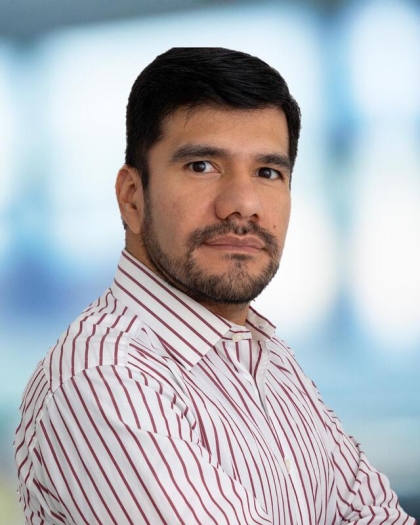
Hugo Jose Herrera de Leon is a Research Fellow at the Department of Geography, University of Bergen. His work focuses on socio-ecological resilience, system dynamics modeling, and policy planning for climate change adaptation. He is affiliated with the System Dynamics research group and has presented at major international conferences like the European Conference on Operational Research and the International System Dynamics Conference. His research explores bioeconomy transitions in Norwegian agriculture, resilience in farming systems, and participatory policy design. He has been funded by the Research Council of Norway (2021-2025) for projects investigating sustainable transitions in rural systems. Notable contributions include developing frameworks for assessing resilience through hybrid simulations and collaborative modeling approaches. Publications span topics like microworld simulations for policymaking, organizational impacts of group model-building, and system dynamics applications in food security. His doctoral thesis (2018) addressed public policy strategies for enhancing resilience in socio-ecological systems under climate change.
Habib Ullah is an Associate Professor in Data Science at the Norwegian University of Life Sciences (NMBU), Norway, where he conducts research at the intersection of computer vision and machine learning. He is affiliated with the Institute of Data Science under the Faculty of Science and Technology. He has previously held academic positions at COMSATS University Islamabad, Pakistan, and the University of Ha'il, Saudi Arabia, and served as a postdoctoral researcher at The Arctic University of Norway. Educational Background: PhD in Information and Communication Technology (Computer Vision), University of Trento, Italy (2011–2015) MSc in Electronics and Computer Engineering, Hanyang University, South Korea (2007–2009) BSc in Computer Systems Engineering, NWFP University of Engineering and Technology, Pakistan (2002–2006) Habib Ullah's research is primarily focused on computer vision and machine learning, with applications in aquaculture, agriculture, and human behavior analysis. He investigates underwater fish feeding sounds using audio classification, develops zero-shot learning models for recognizing unseen classes, and applies deep learning to detect stress in salmon via skin dot patterns. He also explores AI-driven controlled environment agriculture, leveraging sensors and automation for optimal crop growth. His work emphasizes practical AI solutions for real-world challenges in environmental and biological domains. The recent publications highlight a strong trend in leveraging deep learning for zero-shot and semi-supervised learning, particularly in computer vision tasks such as sea ice classification, crowd anomaly detection, and agricultural monitoring. His research spans remote sensing, biomedical signal processing, and human activity recognition, demonstrating interdisciplinary versatility. The keywords reflect a focus on robust feature representation, knowledge transfer, and model generalization. Scientific Awards and Funding: Industrial PhD grant 'Advancing Controlled Environment Agriculture AI' from The Research Council of Norway (Project number 354125, 2 million NOK, 2024) Team member (Coordinator-Participant) in the Battery Cell Assembly Twin (BatCAT) project funded by Horizon Europe (7 mEuro, 2023–2027) Development of an AI-Based Image Analysis System for Monitoring Plant Status (Funding: 1.8 mNOK, starting 2025) Habib Ullah actively supervises PhD projects and contributes to academic service through editorial and organizational roles. He has served as an Associate Editor for IEEE Access, Guest Editor for MDPI Remote Sensing, and Editor of the Springer book Machine Learning Techniques and Sensor Applications for Human Emotion, Activity Recognition, and Support (ML-SHEARS) . He has also been a Track Chair and Program Committee Member for several international conferences, reflecting his leadership in the academic community. His research is supported by significant grants and collaborative projects, indicating strong institutional and international engagement. He is involved in multiple research teams and projects, including the BatCAT project on battery manufacturing and AI applications in controlled environment agriculture with RIFT LABS AS. His lab work integrates deep learning, sensor fusion, and data analytics for environmental and biological monitoring systems.
Toril Aalberg is a Professor and Head of the Department of Sociology and Political Science at the Norwegian University of Science and Technology (NTNU) in Trondheim. She was previously Head of the same department from 2017-2021 and serves as Guest Professor at Mid Sweden University in 2024-2025. Aalberg is a member of the research networks NEPOCS (Network of European Political Communication Scholars) and EVPOC (Elections, Values and Political Communication). Her research interests include comparative politics , election campaigns , media effects , public opinion , and stereotypes in political contexts. She has led major projects like the COST Action IS1308: Populist Political Communication in Europe (2014-2018). Toril Aalberg has authored or co-authored 9 books, including Populist Political Communication in Europe (2016) and Communicating Populism (2019). Her recent articles focus on misinformation during crises , media’s role in political efficacy , and cross-national disinformation studies , often analyzing data from 17-19 democracies. She has conducted extensive research on media polarization , immigrant attitudes , and news consumption patterns . Aalberg has held visiting appointments at institutions including the University of California, Berkeley , Stanford University , and University of Oslo , with current affiliations at the Centre for Advanced Studies in Oslo and Mid Sweden University . Her work spans political communication theory , media sociology , and democratic processes .
Søren Holm is a Professor at the Center for Medical Ethics , University of Oslo. His work spans medical ethics, bioethics, and research ethics , with a focus on artificial intelligence in healthcare, pandemic ethics, and organ transplantation . Primary Affiliation: University of Oslo, Faculty of Medicine Research Themes: AI diagnostics, informed consent, research integrity, end-of-life ethics Key Collaborations: Thomas Ploug, Bjørn Hofmann, Daniel Warrington Recent Publications (2023-2025) analyze ethical challenges in AI-driven healthcare regulation, pandemic research ethics, and data governance . Notable topics include contestable AI diagnostics , equipoise in clinical trials , and conflict of interest disclosure . Contact: Email via soren.holm@medisin.uio.no . No scientific awards or student advisement details explicitly mentioned in the scraped text.
Reidar Staupe is an Associate Professor in Public Safety at the Department of Technology and Security, UiT The Arctic University of Norway. He previously held a Marie Skłodowska-Curie Individual Fellowship (2020-2022) at Roskilde University, Denmark. Research Interests: His work bridges civil security, disaster risk reduction, and anticipatory governance. Key themes include: Temporalities of crisis perception and response Cultural/political impacts of disaster declarations Creeping crises (AMR, climate change) Disaster terminology evolution Wind power development conflicts Polycrisis dynamics Publication Trends: Recent articles (2022-2025) explore the interplay between societal security, slow-onset disasters, and interdisciplinary collaboration. His work appears in journals like Time & Society , Policy & Politics , and International Journal of Disaster Risk Reduction , with forthcoming books on doomscrolling and global crisis cooperation. Scientific Awards: Marie Skłodowska-Curie Individual Fellowship Teaching: Courses include SVF-3202 Crisis Management SVF-3616 Crisis and Disaster Management His research group The Grey Zone – Secure Societies examines security narratives in crisis contexts.
Katrine Eldegard is a Professor at the Norwegian University of Life Sciences (NMBU), Faculty of Environmental Sciences and Natural Resource Management (MINA), Department of Ecology and Natural Resource Management (INA). She leads BatLab Norway and contributes extensively to national and international conservation science policy. Institution: Norwegian University of Life Sciences School: Faculty of Environmental Sciences and Natural Resource Management Department: Department of Ecology and Natural Resource Management Position: Professor Her research centers on understanding how human activities and land use affect natural ecosystems and species across taxa and spatial scales. She specializes in the behavioral, population, and community-level responses of mammals, birds, and insects to anthropogenic pressures such as energy infrastructure, transport networks, and forestry. A major focus is on bat ecology and conservation, pollination dynamics, and biodiversity monitoring in boreal and agricultural landscapes. Her recent publications reveal strong trends in climate change impacts on bat morphology and distribution, pollinator-plant interactions under environmental change, and the ecological consequences of infrastructure development. These works integrate field ecology with advanced modeling and policy-relevant assessments. She has played leading roles in key scientific committees: Chair, Mammal Committee, Norwegian Red List for Species (2021) Chair, Mammal Committee, Norwegian Alien Species List (2023) Member, Norwegian Scientific Committee for Food and Environment (VKM), CITES Expert Panel Norway’s representative, UNEP/Eurobats Advisory Committee Eldegard has supervised numerous research projects and collaborated with government agencies and private partners on applied ecology. She teaches courses including NATF200 Vern og forvaltning av norsk natur and the upcoming NATF300 Conservation Science. Her work is supported by extensive fieldwork, interdisciplinary collaboration, and integration of ecological theory with practical conservation. She leads BatLab Norway, a research group dedicated to advancing knowledge on bat ecology, behavior, and conservation through innovative methods including telemetry, acoustic monitoring, and landscape analysis.
Mikaela Vasstrøm (b.1977) is an Associate Professor at the Department of Global Development and Planning, University of Agder. She holds a PhD from the University of Copenhagen and leads significant research projects including the Norwegian Research Council-funded WINDPLAN initiative, which analyzes social acceptance and governance challenges in onshore wind power development across Norway, Scotland, and Denmark. She co-leads work packages in the WINDREG project focusing on procedural justice and knowledge co-production for energy transitions. Her research examines: Just energy transitions and energy democracy Governance challenges in renewable energy deployment Public participation in environmental conflicts Local/regional development implications of energy policies She co-directs UiA's participation in the Empowered Futures research school, developing PhD-level expertise in energy policy frameworks. Publications focus on wind energy governance, policy legitimacy, and spatial planning conflicts, with consistent themes of: Energy justice in policy design Local government capacity in energy transitions Participatory approaches in sustainability planning Research group affiliations include: Energy and Society Urban and Regional Planning (URPLAN)
Terje Andreas Eikemo is a Professor at the Department of Sociology and Political Science , Norwegian University of Science and Technology (NTNU) , and Head of the CHAIN research center . His work focuses on the intersection of social inequality , public health , and global policy , emphasizing how socioeconomic factors like education , income , and welfare systems influence mortality , chronic diseases , and mental health . He combines theories from sociology , epidemiology , and medicine to address health disparities across diverse contexts, including pandemics , climate change , and migration . 2009: Prize for Young Researchers in the Humanities 2010: SINTEF Prize for Outstanding Research 2014: NTNU Star Program Eikemo has published extensively in top journals like The Lancet and BMJ Open , with research themes spanning social determinants of health , policy interventions , and global health equity . His work includes GBD studies , European Social Survey analyses , and refugee health assessments. He serves as Editor-in-Chief of the Scandinavian Journal of Public Health and collaborates with international bodies like WHO and UNESCO .
Professor Inge Hoff is affiliated with the Norwegian University of Science and Technology (NTNU) in the Department of Civil and Environmental Engineering, where he has served since 2009. Prior to this, he held roles as senior researcher and research leader at SINTEF. Research Interests : Materials for road construction, frost protection, laboratory testing, pavement dimensioning, road rehabilitation, state development modeling, ground-penetrating radar surveys, and concrete/natural stone coverings. Students : Mentors active PhD fellows Lisa Hannasvik, Arman Hamidi, Clara Weber, and Shoiab Ahmad. Teaching : Coordinates courses like TBA4204/BYGT1102 Transport Infrastructure , BYGT2204 Road and Railway Construction , and BA8600 Pavement Structure Dimensioning . Recent publications highlight his expertise in granular material behavior, asphalt durability under climate stressors, and advanced structural assessment techniques. Collaborations with international researchers and presentations at major conferences (TRB, International Conference on Bituminous Mixtures) demonstrate his ongoing contributions to road engineering.
Agnes Fauske is a Researcher at the Department of Sociology and Human Geography, University of Oslo (UiO), since August 2024. Previously, she was a PhD candidate at UiO (2020–2024) and a research assistant/adviser at the Norwegian Institute of Public Health (2019–2020). She holds an MA (2019) and BA (2016) in sociology from UiO. Her research focuses on family sociology, gender equality, demography, quantitative methods, and social science genetics. Key interests include fertility trends, policy impacts on family formation, and the interplay between genetics and societal factors. She teaches courses such as SOS1000 Introduction to Sociology and Quantitative Methods at UiO. Fauske contributes to projects like OPENFLUX and the Research Group on Social Inequalities and Population Dynamics. Her work bridges demographic analysis with policy evaluation, emphasizing causal methods. She collaborates widely, including with the Norwegian Demographic Society and the Norwegian Sociological Association.
Nicola Paltrinieri is a Professor of Risk Assessment at the Department of Mechanical and Industrial Engineering, NTNU (Norway), and an Adjunct Professor at the University of Bologna (Italy). His expertise spans risk assessment, hydrogen technologies, process safety, and data-driven safety management. He holds Chartered Engineer and Chartered Scientist certifications and has served on editorial boards for journals like Safety Science and Journal of Risk Research . Education: PhD in Environmental, Safety and Chemical Engineering (University of Bologna, 2012) Master’s in Chemical and Process Engineering (University of Bologna, 2008) Research Interests: Focuses on hydrogen infrastructure safety, Natech accident analysis, risk-based inspection strategies, and AI integration in safety systems. His work emphasizes sustainable energy transitions and mitigating risks in emerging technologies like hydrogen. Key Projects (2022-2026): H2Glass : Decarbonizing glass and aluminum sectors via hydrogen HyInHeat : Hydrogen technologies for industrial heating HYDROGENi : Norwegian research center for hydrogen/ammonia Awards: Onsager Fellowship (2016–2021) Frank Lees Medal (2012) for safety-related publications Grants & Leadership: Head of NTNU Energy Team Hydrogen, coordinator for EU-funded projects like SUSHy , and active in international risk committees (e.g., EFCE, ESRA). His work bridges academia and industry, with over 8 PhD examinations supervised. Labs/Teams: Leads the NTNU Energy Team Hydrogen and collaborates on initiatives like SH2IFT-2 for safe hydrogen fuel handling. His research group focuses on AI-driven risk analysis and hydrogen infrastructure resilience.
Annechen Bahr Bugge is a sociologist and Researcher I at Consumption Research Norway (SIFO), Oslo Metropolitan University. Her work focuses on food culture, culinary heritage, and sustainable consumption patterns, with particular emphasis on Norwegian dietary traditions and their evolution from the 16th century to present day. PhD in Sociology (2005) from Norwegian University of Science and Technology (NTNU) Current leader of FoodStories project (2025-2028) examining Norwegian food heritage Previously led FoodLessons project (2021-2024) connecting culinary history with future food development Her research explores: dietary transitions, plant-based diets, food policy interventions, and the sociocultural dimensions of food consumption. She has published extensively on Norwegian food culture, including the book Fattigmenn, tilslørte bondepiker og rike riddere (2019) and upcoming Food Cultures of Norway: Cuisines, Customs, and Issues (2025, co-authored with Henry Notaker). Recent publications focus on: food heritage revitalization, sustainable diets, retail interventions for healthier choices, and digital marketing influences on youth consumption patterns. Her work combines historical analysis with contemporary food challenges to inform future sustainable food systems. For a complete overview of her research and publications, see her Cristin profile: Cristin Profile
Silje C. Wangberg is a Professor of Public Health and serves as Vice Dean for Research Education and Practice for Nursing BSc and further education programs at UiT The Arctic University of Norway, Campus Narvik. She is a psychologist with a holistic perspective on health and disease, focusing on supporting individuals in taking the best possible care of themselves to live a good life with optimal physical, mental, emotional, social, and spiritual well-being. Her primary research interests include: eHealth and mHealth applications Health behavior and behavior change Health promotion and prevention Physical activity and smoking cessation Diabetes and heart disease management Social inequality in health Mindfulness, yoga, and meditation Dr. Wangberg's extensive publication record demonstrates consistent focus on digital health interventions, particularly examining how internet and mobile technologies can support health behavior change across various populations. Her recent work shows increasing emphasis on specialized populations including individuals with intellectual disabilities and exploration of emerging technologies like augmented reality in healthcare education. She maintains a strong interest in addressing health inequalities through technological solutions while recognizing the continued importance of human factors in health management. She is an active member of the HEL research group focused on Public Health and Rehabilitation, and participates in the One Health project at Campus Narvik.
Deodat Edward Mwesiumo is a Professor of Supply Chain Management at Molde University College (HiMolde), part of the Faculty of Logistics. He holds a PhD in logistics from the same institution and has extensive teaching and research experience since 2012. His roles include Head of the Supply Chain Management Research Group and member of the PhD committee. Previously, he directed the Bachelor program in Supply Chain Management and Logistics. His research focuses on supply chain resilience, digital business transformation, and tourism management. Key areas include procurement strategies, sustainability, circular economy models, and interorganizational relationships in tourism. He has published in high-impact journals like Production Planning and Control , Journal of Purchasing and Supply Management , and Annals of Tourism Research . Dr. Mwesiumo has led externally funded projects and contributed to over 50 peer-reviewed publications. He is affiliated with research groups such as MIIBS (Marketing, Innovation, International Business & Strategy) and the Transport Research Group (TRG). His teaching spans BSc and MSc levels, including courses on value chain analysis, digital business, and supply chain theory. Recent work emphasizes airport digital maturity, supply chain risk mitigation, and the impact of data-driven decision-making in public procurement. He has authored books like Making Value Chains Work and Fundamentals of Digital Business Management , underscoring his commitment to both academic and applied knowledge dissemination.
Francesco Antonio Perotti is a PhD Alumni in Business and Management from the University of Agder, Norway, and the University of Turin, Italy. He holds a Lecturer position at the School of Management and Economics, University of Turin. His primary research focuses on Circular Economy, Knowledge Management, Innovation, and Digital Transformation. He contributes to high-impact journals and serves on editorial boards. His work bridges theoretical insights with practical applications, emphasizing sustainable business practices and organizational leadership. Perotti is also a member of national and international research groups and engages in academic dissemination through conferences and teaching. His research explores topics like open innovation in sustainability, digital transformation leadership, and mitigating knowledge sabotage in organizations. He has published in journals such as Innovation: Organization and Management , Creativity and Innovation Management , and Journal of Business Research . His recent studies analyze SMEs' adaptation to circular economy models and AI-driven leadership strategies. Perotti’s work addresses strategic drivers for business survival in sustainability transitions and the implementation of digital tools in circular enterprises.